
Thank you!
Your support is sustaining the future of local news in our communities.

Labor Day leader usually wins the presidency, but not always

It’s a rule of presidential politics that the candidate ahead on Labor Day almost always wins in November.  The key word, of course, is “almost,” and the prime exception after all these years remains Thomas E. Dewey, of The Chicago Tribune’s “Dewey Defeats Truman” headline fame. 

Dewey was convincingly ahead on Labor Day in 1948, so far ahead that he elected to play is safe, say nothing that would offend a voter and avoid excessive contact with the reporters.  This may remind you of someone.

While Dewey preferred to coast to victory, the underdog President Harry Truman traveled the country, seeming to stop his train at every junction, ranting at the crowds, giving them hell about the folly of voting for Dewey.  (Actually, Truman later explained, “I never did give anyone hell.  I just told the truth and it sounded like hell.”)

The major pollsters of the day—there were far fewer then—had been in the presidential polling business since the 1930s, when the man ahead on Labor Day was always Franklin D. Roosevelt.  But 1948 was different with not only Dewey challenging 15 years of Democratic presidents but also two much stronger third-party candidates than we have today, the left-leaning, Progressive candidate Henry Wallace and the segregationist Dixiecrat Strom Thurmond.  Both were expected to take most of their votes from Truman.

The polls—Gallup, Roper and Crossley—predicted a Dewey popular vote victory margin of 5 to 15 percentage points; Truman won by 4.4 percent.  What happened, said Burns Roper, son of the Roper Poll founder, was the consequence of an unwitting alliance of an energized labor force that feared Dewey’s victory and satisfied Republicans who “played golf” on election Day.   There was also the pollsters’  bad decision to stop polling two weeks before the election.

The post-Labor Day polls this time show this race tightening in the popular vote, with Clinton slightly ahead and Trump catching up in some key states.   But Clinton maintains a big advantage in the electoral college where the votes ultimately count.  (See Bush-Gore, Hayes-Tilden and others.)

The most interesting polling was announced the day after the holiday when The Washington Post joined with the Survey-Monkey organization to get responses from more than 74,000 registered voters in all 50 states.

The poll confirmed what others showed regarding the unprecedented disdain voters have for both Clinton and Trump.  The poll indicated 55 percent of the voters believe a Clinton presidency would threaten the nation’s well being. These are numbers that would doom a candidacy, were it not for the 61 percent who feel a Trump presidency would do the same.  Only four percent of the 74,000 polled say neither of them would threaten the well-being of the nation they seek to lead.

States with Democratic majorities, not surprisingly, contain most of the people who consider Trump a threat, but they are also states with lots of people — from California to Massachusetts.  You will be shocked to learn Connecticut is among them.  The bright red states whose well-being is most threatened by Clinton are in the wide open spaces, where the spaces outumber the people—Wyoming, Idaho, Utah, North Dakota.  

And, following other polling, this one finds most of the voters fearful of a Clinton presidency are men, residents of rural areas and whites, particularly those with less education.  Trump represents a frightening vision to women, younger voters, minorities, urban residents and those with bachelor’s degrees or higher.

Sadly, all of these groups share one area of broad agreement — what the newspaper called “a pervasive pessimism that no matter the outcome, the election will do little to unite the country.”  These voters, the ones who detest Trump and Clinton, fear they are being left behind by cultural changes that are transforming the country and that America reflects their values less today than it ever has in the past.

This is the state of the Union whose leadership will probably be assumed by Hillary Clinton next January 20.  Or maybe not.  The cliché about the candidate being ahead on Labor Day winning the presidency has been replaced for now with the one  about the October surprise. 


Simsbury resident Dick Ahles is a retired journalist. Email him at dahles@hotmail.com.

Latest News

‘So Little to Do,’ so much to discover at James Barron Art

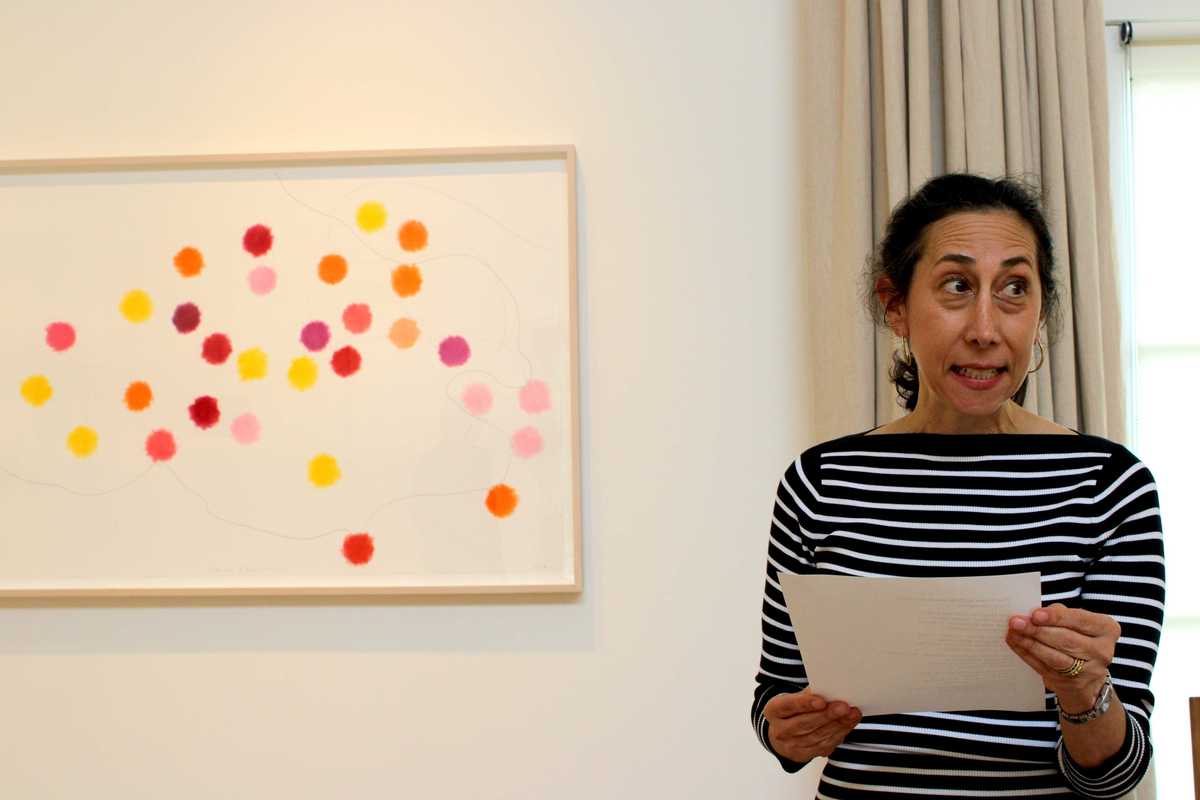
Curator Deborah Goodman Davis reads the Emily Dickinson poem “The Grass So Little Has to Do.” Spencer Finch’s “Following Three Bees (Zinnias)” buzzes in the background.

Photo by Natalia Zukerman

“The Grass Has So Little to Do,” on view at James Barron Art in Kent, takes its title from Emily Dickinson’s poem “The Grass So Little Has to Do,” written in 1862:

“The Grass so little has to do—
A Sphere of simple Green—
With only Butterflies to brood
And Bees to entertain—”

Keep ReadingShow less
Marina Kotchoubey is taking care of business

Marina Kotchoubey at the Ian Ingersoll Cabinetmakers showroom in West Cornwall.

Photo by D.H. Callahan

After 40-something years navigating the world of custom fine furniture, Ian Ingersoll was getting ready to retire. Starting off with a little dovetail stool that he sold at a shop in West Cornwall in the 1970s, he’d grown his skill and his business into something he — and the whole town — could be proud of. Shutting down that business was not an option.

Ingersoll built Ian Ingersoll Cabinetmakers, which produced mainly classical Shaker furniture, on passion: the passion he had to make a living through creative challenges and the passion of his employees, who all seem deeply in love with their craft.

Keep ReadingShow less
A legacy of giving at Norfolk Chamber Music Festival

One hundred and twenty years ago, Carl and Ellen Stoeckel commissioned New York architect E.K. Rossiter to design The Music Shed in Norfolk, Connecticut. After nearly a decade of entertaining their friends and neighbors with the finest music of the day, they built a permanent home for their beloved Litchfield County Choral Union.

The commission and full funding of the construction was not unheard of in an era when great fortunes led to public enrichment. Railroad tycoon John D. Rockefeller was instrumental in funding institutes of higher education. Steel baron Andrew Carnegie was building libraries all over the country, and famously said that a man who dies rich is a disgrace, challenging his peers to give their fortunes back to the people.

Keep ReadingShow less
google preferred source

Want more of our stories on Google? Click here to make us a Preferred Source.
Two unique exhibitions at Geary Gallery

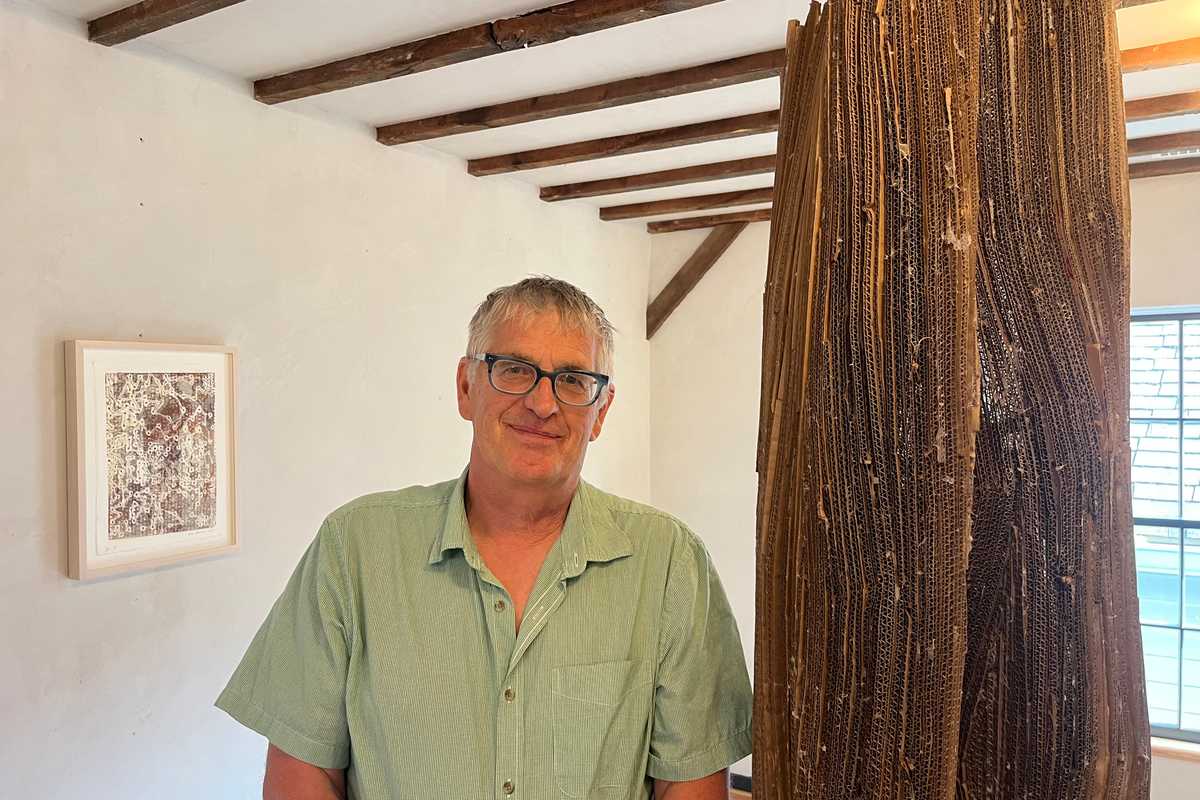
Henry Klimowicz with his sculpture, “Partial Pillar 1”

Photo by D.H. Callahan

On Saturday, Aug. 1, Geary Gallery opened its doors in Salisbury for two unique shows in its first- and second-floor gallery spaces. Art lovers flooded both floors over the course of the afternoon, giving the events a vibrant feeling that enhanced the importance of the art.

On the first floor is a show by Chicago-born, Colorado-based photographer Summers Moore, titled “Lobitos: Pueblo Fantasma,” or “Lobitos: Ghost Town.” The work centers around her daughter’s current hometown in Peru. Moore herself found a home away from home in Colorado in the mid-1980s and encouraged her children to seek out new places outside of their comfort zones.

Keep ReadingShow less

Writer’s retreat in the woods

Writer’s retreat in the woods

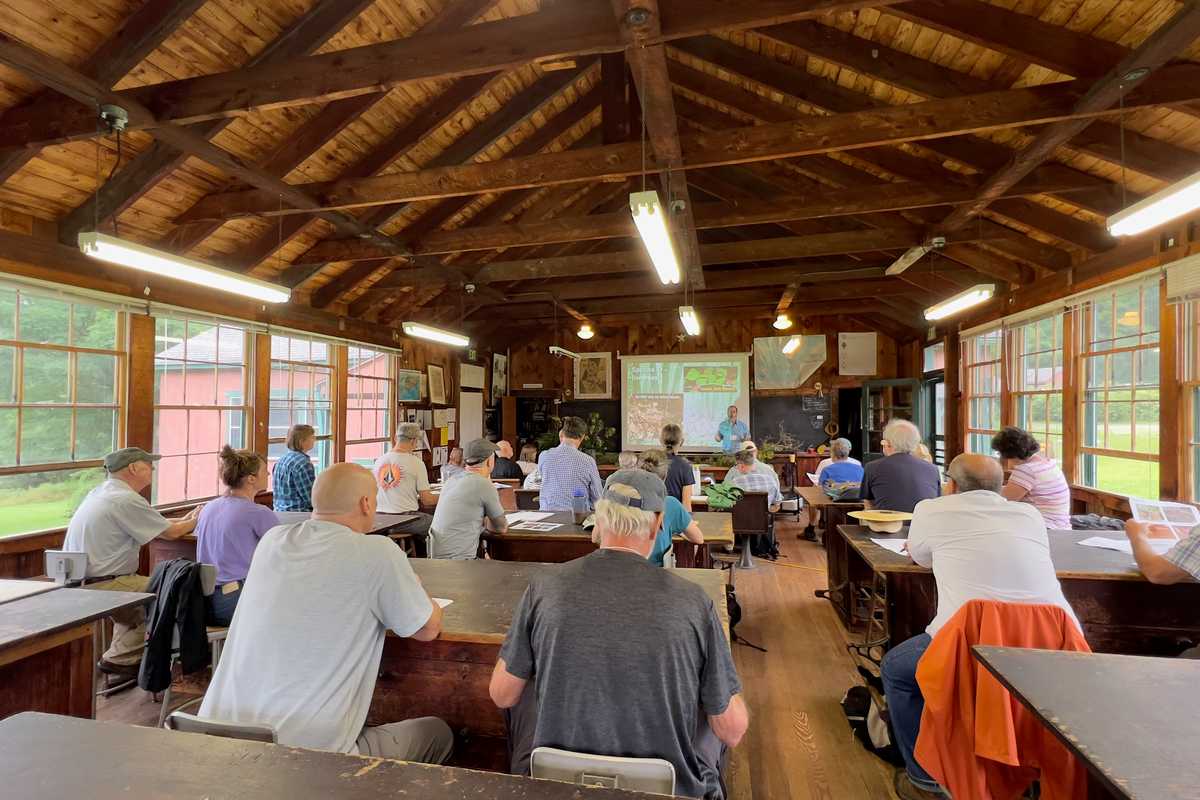
Participants in a 2024 Great Mountain Forest Woodland Academy workshop at Yale Camp.

Photo by Mike Zarfos

Great Mountain Forest (GMF) will host its first Nature Writing Retreat at the historic Yale Camp in Falls Village from Aug. 7-9, 2026. Writers of all levels are invited to draw inspiration from one of New England’s most notable forest landscapes. GMF envisions the retreat becoming an annual event celebrating writing, conservation and the relationship between people and forests.

This immersive three-day retreat reflects on the legacy of Hal Borland, the American writer and New York Times nature columnist whose work was deeply connected to this landscape. The retreat explores how wilderness shapes language, strengthens close observation and fosters environmental consciousness.

Keep ReadingShow less
From Cornwall to Rome, Adam Van Doren at Berkshire Botanical Garden

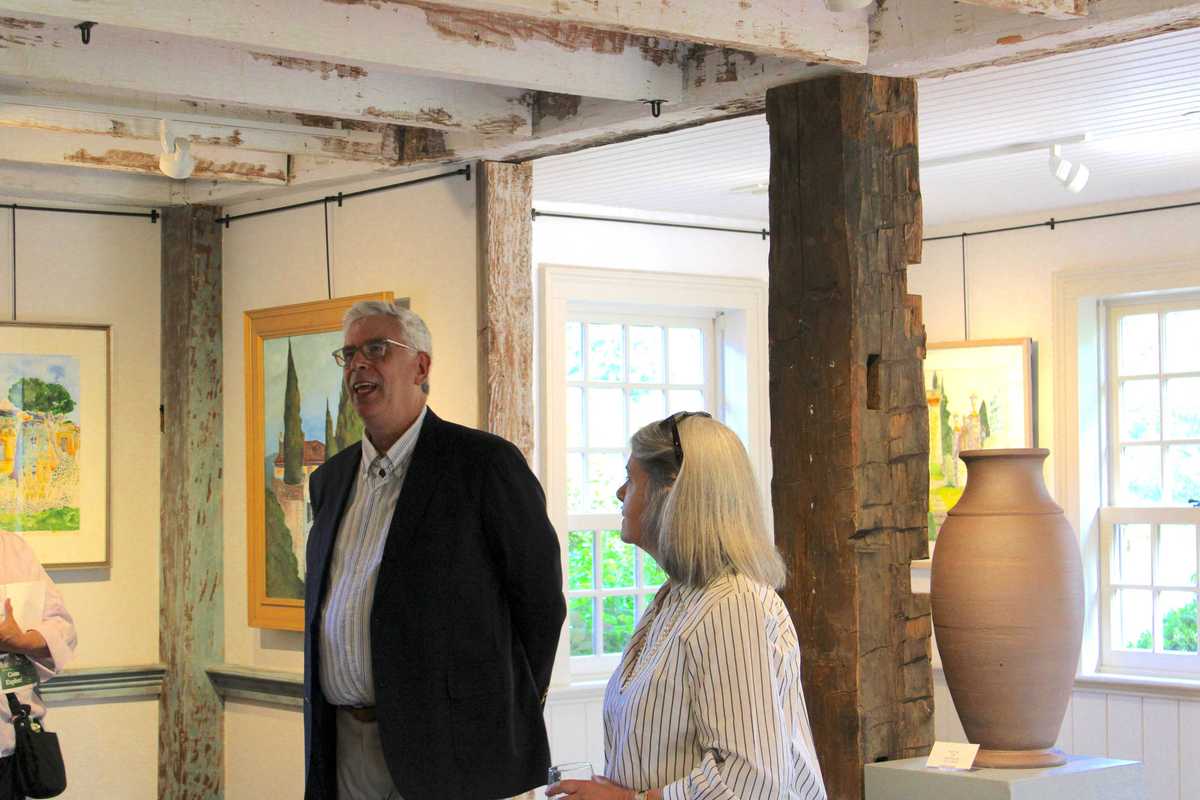
Artist Adam Van Doren and curator Donna Hassler talk to a group of visitors at the Berkshire Botanical Garden. A Stephen Proctor vessel sits to their left.

Photo by Natalia Zukerman

This summer, the Berkshire Botanical Garden in Stockbridge has hosted “Grounded in Nature: Paintings by Adam Van Doren,” an exhibition exploring the intimate relationship between architecture and the natural world.

On view for only a few more weeks in the Leonhardt Galleries, the exhibition features more than 35 watercolor and oil paintings by the New York-based artist, architect, author and Yale professor, curated by art historian Donna Hassler, director emerita of Chesterwood. The works span three distinct places that have shaped Van Doren’s artistic practice: New York City, Cornwall, Connecticut, and his travels throughout Europe.

Keep ReadingShow less
google preferred source

Want more of our stories on Google? Click here to make us a Preferred Source.
google preferred source

Want more of our stories on Google? Click here to make us a Preferred Source.