A discourse is defined as “a serious discussion of a particular subject” or “a formal and orderly expression of thought on a subject.”
You will note that neither definition mentions the use of guns or knives or axe handles or chemical sprays or baseball bats or riot shields or crowbars to enhance the formal and orderly expression of thoughts and ideas.
So why then did the Republican National Committee describe the Jan. 6 insurrection that vandalized the Capitol of the nation and injured more than 150 police officers as “a legitimate political discourse?”
The novel description of that terrible day came in a resolution the RNC passed to censure two of the party’s House members who are taking part in an investigation of the worst act of violence in Washington since the British set fire to the place in the War of 1812.
The two, Liz Cheney of Wyoming and Adam Kinzinger of Illinois, were censured at the committee’s winter meeting in Utah for participating in what the resolution describes as “the persecution of ordinary citizens engaged in legitimate political discourse.”
If there was any legitimate political discoursing going on as these “ordinary citizens” were smashing their way through locked doors and windows to force members of Congress to overturn the election of a president of the United States, it was rather effectively drowned out.
The censure, which was passed by a voice vote at the direction RNC chairwoman Ronna McDaniel, did not identify any of the persecuted citizens.
Later, however, McDaniel did try to sell the idea that the resolution was not meant to be about the rioters who violently stormed the building after being incited by Donald Trump to try to overthrow a presidential election.
You will recall that Trump, after prodding the rioters, did not join the march on the Capitol as he promised, but retired to the White House to enjoy the televised coverage of his thugs defiling the seat of our democracy. At the same time, he ignored the pleas of advisers and family members to call for a halt to the uprising.
The next day, he did discover he had been “outraged” by the “heinous attack” but he quickly returned to claiming, without a bit of evidence, that the election was stolen.
And, only a few days before the RNC’s censure vote, he announced that if he’s elected in 2024, “we will treat those people from January 6 fairly and if it requires pardons, we will give them pardons, because they are being treated so unfairly.” I don’t believe he was referring to those still unknown citizens who were waiting outside the Capitol for the discourse to begin.
It is somewhat heartening that the condemnation of Cheney and Kinzinger was not quite unanimous. Ronna McCaniel’s Uncle Mitt, the 2012 presidential candidate and current senator Mitt Romney, condemned the resolution.
“Shame falls on a party that would censure persons of conscience, who seek truth in the face of vitriol,” said Romney of his niece’s effort. “Honor attaches to Liz Cheney and Adam Kinzinger for seeking the truth when doing so comes at great personal cost.”
Senate Minority Leader Mitch McConnell also expressed disdain for the resolution, saying “we support all members of our party, regardless of their views on some issues.”
Gov. Larry Hogan of Maryland called Feb. 4, the day the resolution passed, “a sad day for my party — and the country.”
The resolution got mixed reviews in Connecticut Republican circles. GOP State Chairman Ben Proto, one of three Connecticut members of the RNC, revealed the controversial resolution was considered in a package with others he favored but he voted against all of them because of the Jan. 6 statement.
The other state members of the RNC, Leora Levy of Greenwich and John Frey of Ridgefield, voted for the resolution. Levy is one of several Republicans running for the Senate against Richard Blumenthal this year but the party’s nomination is expected to go to former legislative leader Themis Klarides.
Bob Stefanowski, the likely Republican candidate for governor again, wasn’t at the meeting but he wanted the state’s voters to know he didn’t support the rioters either.
“I condemned the acts of violence on the day they happened and feel the same way today. The Republican National Committee statement is wrong.”
And finally, let’s not forget that the committee’s resolution wasn’t the craziest thing said about Jan. 6.
That distinction goes to Rep. Andrew Clyde of Georgia who saw the attack on the Capitol as no more than “a normal tourist visit.” Clyde hasn’t been heard from since reporters found photos of him, looking quite agitated, as he helped colleagues barricade the doors to the House chamber to keep the visiting tourists out.
Simsbury resident Dick Ahles is a retired journalist. Email him at rahles1@outlook.com.
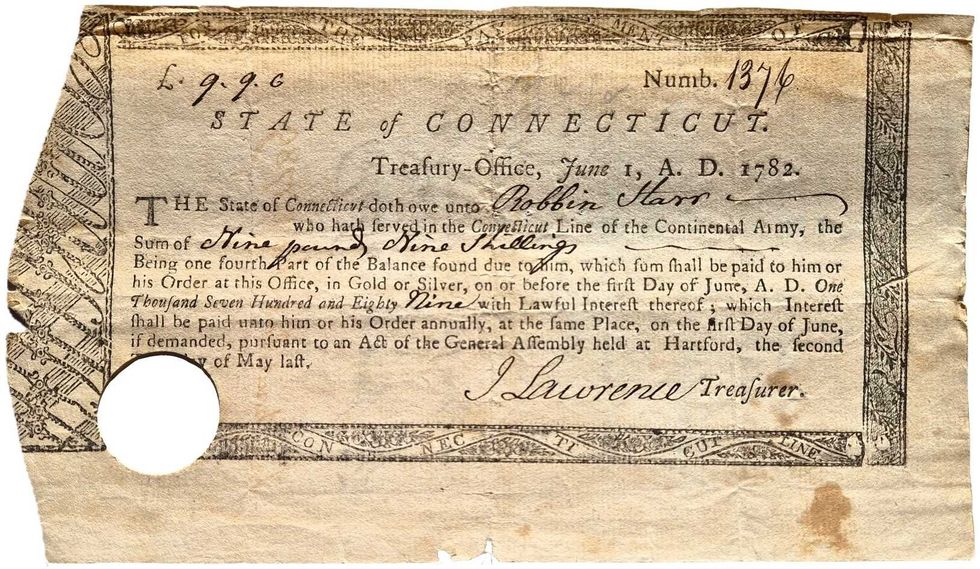 Pay Bill for Robin Starr’s service in the Continental Army.Courtesy the Alex Breanne Corporation
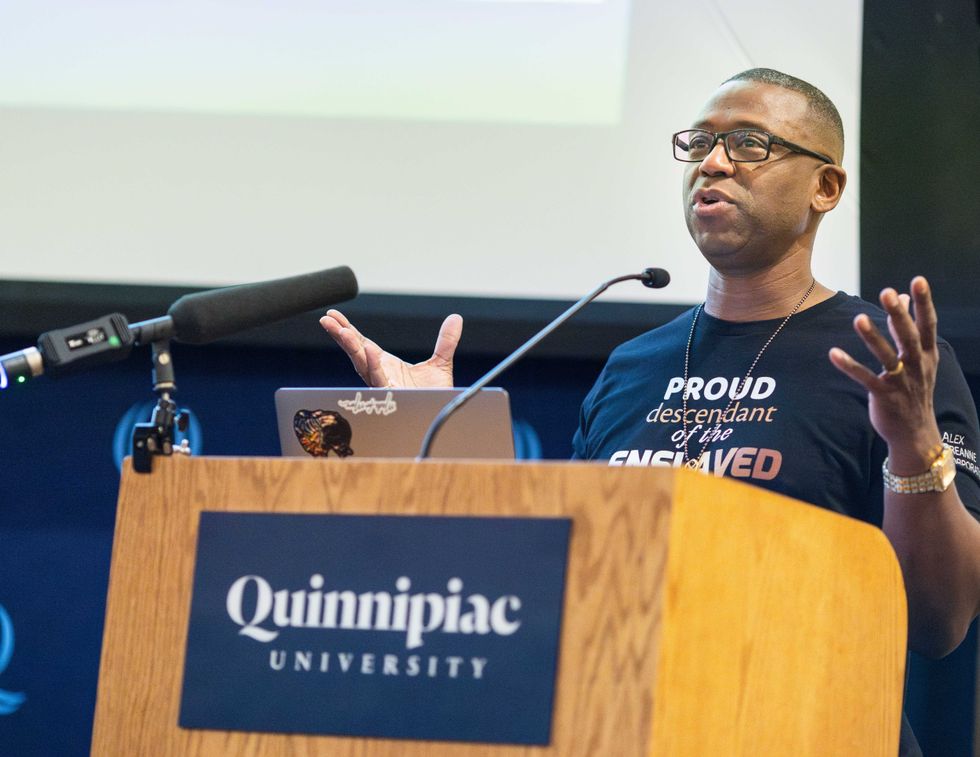 John Mills speaking at Quinnipiac University.Courtesy the Alex Breanne Corporation
 Stephanie Saetta,with her rescue dog George and Blue (left), a shepherd mix awaiting his forever home.Madi Long
 Blue, a 7 year-old Shepard mix, is waiting for his forever home. Madi Long