After a week without electricity (and with the threat of a hard winter coming) the strength and reliability of electricity distribution is on everyone’s minds — especially state government officials, most of whom also went without power for many days and all of whom received phone calls day and night from constituents and town leaders who wanted to know exactly what was going on and when it was going to be fixed.
Gov. Ned Lamont and Connecticut’s very active attorney general, William Tong, have demanded investigations into the actions of Eversource (which supplies power to 149 of the state’s 169 towns) and United Illuminating (UI, which supplies power to 17 towns, including Bridgeport and New Haven) following Tropical Storm Isaias.
Lamont and Tong had already demanded investigations into Eversource’s rate increase, announced days before the tropical storm (and ensuing power outage).
Their questions are reasonable and deserve answers. For the power outage, which is perhaps freshest in the minds of Connecticut residents, town officials have been universal in saying that Eversource is supposed to have liaison officers available to answer questions about the extent and expected duration of power outs.
They did not.
All the Northwest Corner selectmen and state Rep. Maria Horn (D-64) have said that there was a complete failure of communication, that questions weren’t answered, that customers were not able to report outages and that the Eversource outage map was at times wildly inaccurate.
New Englanders are pretty tough and can handle a lot but in any crisis, it’s harder to cope when you don’t know when it’s going to be over.
Eversource customers are all able to understand that this was a particularly challenging storm. But Tong and Lamont say that the job of the large electric suppliers is to be a “reliable” distributor of power (as compared to the “green” power sources such as hydro, wind and solar).
They are asking why Eversource didn’t make upgrades that were promised after the state’s other recent “biggest storms ever,” in 2011 and 2012 — including the hiring of liaison officers to keep in contact with town officials.
The short list of questions Tong has aimed at Eversource can be found at the attorney general’s website (search for “AG Tong Escalates Legal Actions to Hold Eversource and UI Accountable for Failed Storm Response”). They are not vindictive questions, they are functional and should be answered. Perhaps the happy outcome of the investigation will be that some of these upgrades will finally be made. They are certainly due.
Many area residents chatted with the out-of-state work crews who finally arrived in the region several days after the storm. Those crews said in some conversations that they were surprised by how antiquated Eversource’s system is.
For the rates it charges, Eversource should have plenty of money to make upgrades. According to the U.S. Energy Information Administration (www.eia.gov/state/rankings/?sid=US#/series/31), Connecticut’s electric rates are significantly higher than nearly every other state in the nation, second only to Hawaii — and Eversource is planning to ask for yet another rate hike next summer.
One Eversource worker in conversation with a Lakeville Journal staffer last week said that resources for workers have been cut, while company executives have received substantial pay increases. Tong and Lamont plan to look into compensation, to see if top brass is indeed being overpaid, at the expense of service to consumers.
On the day after Eversource announced its rate hike, both Tong and Lamont demanded that the state utilities authority suspend the increase so they could investigate what that money is going to be spent on. Again, their questions aren’t vindictive; they seek clarity. You can find these questions by searching online for “AG Tong Demands Answers From Eversource Following Rate Hikes.”
Tong and Lamont are after answers from Eversource. So are legislators in the General Assembly, where the Energy & Technology Committee has proposed The Take Back our Grid Act, which seeks to protect the rights of electric customers in the state; demands reimbursement for significant losses caused by the power outage (some of our area grocery stores reported losses of about a quarter of a million dollars in food; pharmacies and customers lost thousands of dollars in medications that had to be refrigerated); and more.
The state regulatory agency began its hearings about Eversource on Monday, Aug. 24, with questions from town leaders as well as our top state officials that can help ensure that the downward trend in services and response after Tropical Storm Isaias doesn’t become the new normal.
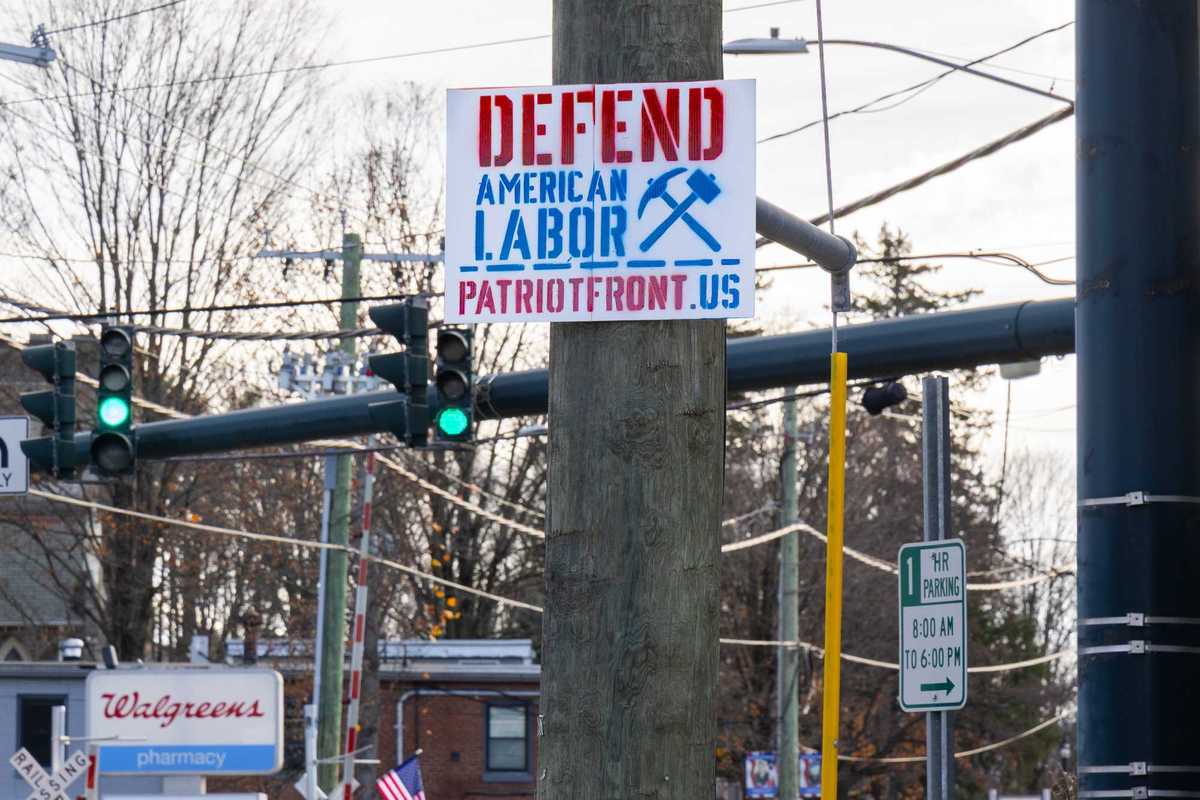
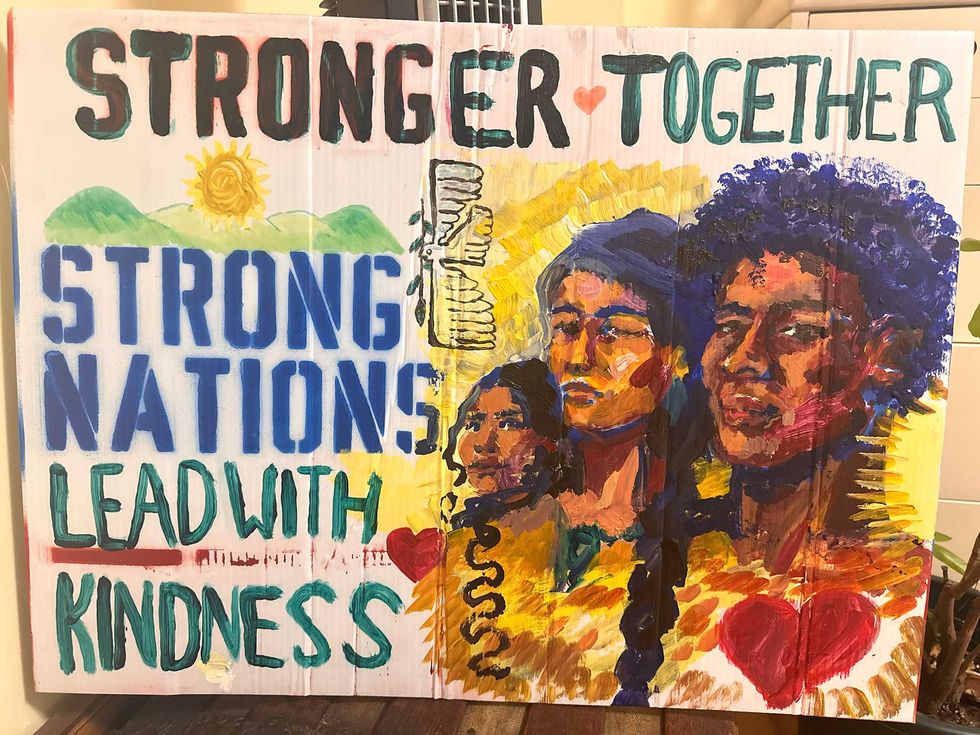 Some residents painted over a Patriot Front sign that had been removed and plan tohang it back up to spread a message of positivity and community.Provided