The magic of making friends on the AT

The magic of making friends on the AT
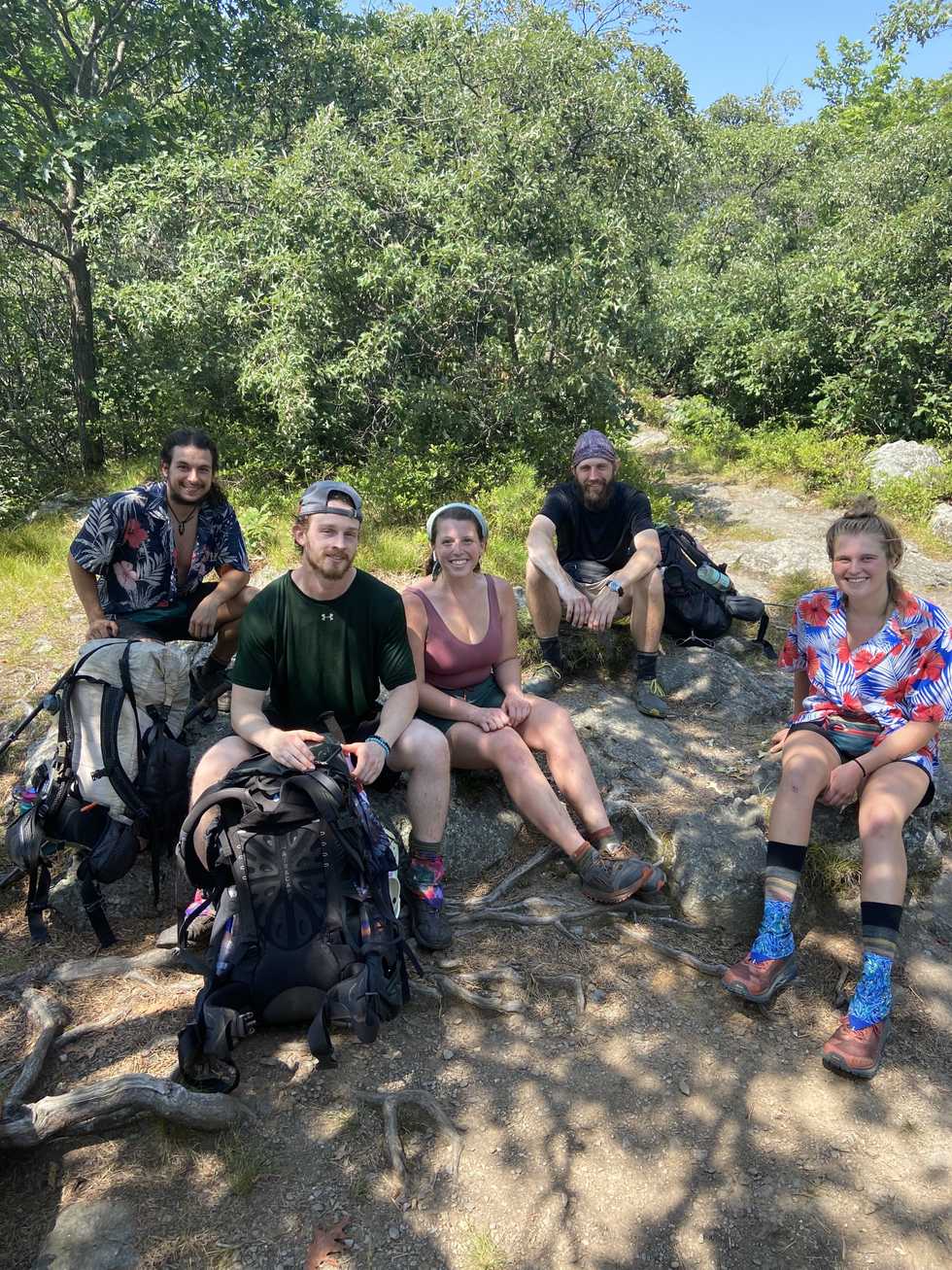
The Mountain Turtles is the name of a group of Appalachian Trail hikers, who all met each other on the path; from left to right, each with their own unique trail names, are Wizard, Bear!, Taco, Paddle and Bugs. 
Photo by Sadie Leite
The Appalachian Trail stretches through 14 states, from Maine to Georgia — an impressively long walk of 2,193 miles for anyone who chooses to traverse its full length. Each year, more than 3 million people choose to either hike the whole trail, as “thru-hikers,” or walk it in sections. 

Beginning in late spring, hundreds of thru-hikers, section hikers and day hikers pass through the Northwest Corner, mainly showing up in Salisbury, Kent and Falls Village. They are notable for their large backpacks, long hair and muscular legs. All have interesting stories to share from their days/weeks/hours on the trail and most are happy to chat. And while most will happily tell you their legal names, their first impulse will be to share a “trail name,” usually bestowed on them by fellow hikers.

Trail name Paddle

On Aug. 11, Paddle came through the trees shrouding part of the Connecticut portion of the trail to Lion’s Head, a famous Salisbury peak. Over the edge of some precarious rocks is a fantastic view of the Berkshires, which Paddle chose to take in before chatting about his experience.

Paddle is not a normal name for anyone — except a hiker. Most Appalachian Trail hikers have trail names, which become integral to their identities as they hike. The idea behind the trail names is to give the hikers a sense of anonymity — but also to allow them to shed their regular identity. In life, a hiker might be a doctor, lawyer or auto mechanic, a teacher, a nurse or an artist; but on the trail, everyone is first and foremost a hiker.

Paddle went on a side canoe trip back when he was in Maine — his trail name becoming clear after that adventure. 

It wasn’t until Paddle started to talk about his name that the friends he’d been hiking with realized — for the first time — that their companion had a paddle tattoo that he just hadn’t chosen to tell them about before.

Trail names Bear! and Bugs

Paddle’s friends had trail names of their own: Bugs and Bear!.

“The exclamation point is necessary if you’re going to write it down,” said Bear!, who has a tidy ginger beard after his weeks on the trail. 

And where did his name come from? “When I was starting out on the trail, I got chased out of the woods by a mama bear and her four cubs.”

“For me, I got my name because I carried a full bug net for 100 miles. I set it up — and got trapped. I learned what it felt like to be a bug caught in a trap, and it wasn’t very fun. After that I ditched the net,” said Bugs.

Though that wasn’t one of her best days on the trail, Bugs said, “Today’s been great. We got to hike Bear Mountain with Bear! himself.”

This group of hikers had just crossed into Connecticut that day. Bear Mountain is the first peak in the state for hikers coming from the north, and it’s also the highest point in the state.

“The last three states we have been in, we’ve been able  to hike to the highest points first. It’s nice to get them out of the way,” Bear! said.

Trail name Taco

“I should really call whoever is in charge of Connecticut and thank them,” joked Taco, the last of the hikers to stop at the trail head. 

Even with a heat advisory out for the day, she was in great spirits, enjoying the great views in Connecticut so far. To keep spirits up (and remain hydrated) they were all chugging large amounts of water. 

Taco’s name came from an experience with “trail magic.” Trail magic is when something extraordinary happens. It can be anything from snacks or drinks left along the trail by local people, or a show of generosity from another hiker, or experiencing a rarity, such as a once-in-a-lifetime view.

In Taco’s case, she came upon some people offering free tacos to thru-hikers. 

Trail name Wizard

Also walking with Bear! and Bugs was Wizard, whose trail name did not originate from a trail magic experience; rather, he said, “I’m just a magical being. I have no tricks; it’s just the way I am.”

Paddle said that earlier in the day they ran into another Wizard, one who did do tricks including some neat ones that involved rubber bands and playing cards. 

The group was also serenaded with musical instruments by some “no-bos,” a term Bugs used for north-bound hikers. 

It’s traditional for most thru-hikers to start in Georgia early in the year and head north, ending in Maine before the weather gets too cold.

This particular group started at the northern terminus of the trail in Maine, at Mount Katahdin. They are headed  south and will end their hike in Georgia. They are walking about 15 to 20 miles a day.

Why hikers love the PO

One consequence of racking up all those miles: broken and worn-out shoes. Taco picked at her hiking boots, which had split. “This is what happens to shoes after 300 miles. I ordered myself a new pair and am having them sent to the post office at Cornwall Bridge.” 

Most thru-hikers will arrange for supplies to be mailed to post offices along their treks. In addition to shoes, food can also be delivered.

The hikers remembered their trip through the 100 Mile Wilderness, a section of the trail in Maine that is unusually difficult to traverse because it is very remote. 

Bugs said she was foolish enough to try and carry the 10 days of food needed, learning quickly it was too difficult. 

On most parts of the trail, Bugs can hike into town to get more food — from a grocery store or a post office where a package of food awaits her. In the 100 Mile Wilderness, there are no towns. So she had to organize food drops, where drivers deliver food to the trail and leave it on specific logging roads, the only points connecting the hike to civilization.

The majority of the group did drops; they applauded Wiz (their nickname for Wizard) because he carried his 10 days of food. 

Bring on the cheese

When food was brought up, the friends delved into the specifics. “We just had a lunch of champions: tuna fish on Fritos and Honeybuns. With all this hiking, I never worry about my weight. I eat whatever I want,” said Bugs.

 Bear! agreed, “I eat so much cheese. It’s great.”

Taco clarified important hiking food terminology. “Raisins are ‘rabbit turds’ and squeezable peanut butter is ‘cat turds’ because of its consistency when it comes out of the pouch.”

A better lunch was a feast of hamburgers in Great Barrington. 

Another example of trail magic: Volunteers at a church were offering meals to thru-hikers. The group also ran into people giving out beer and offering hacky sack lessons.

Group name: Mountain Turtles

The Mountain Turtles is the group’s hiking name. They all started out on the trail as strangers to each other. Bugs and Taco met first, and now are best friends after two months of travel together. They met Paddle at a hostel and Bear! at a bus stop. There’s also Wiz, and one other (faster) friend was already down at LaBonne’s Market enjoying a beer. 

Between seeing moose, swimming in river pools, and surviving the 100 Mile Wilderness together, this group of strangers became friends. 

“It gets weird sometimes, but we are all so close it doesn’t matter,” said Taco. 

Bugs said, “In all, I’d give it a three-star experience. Put that in the paper.”

Latest News

To mow or not to mow?

To mow or not to mow?

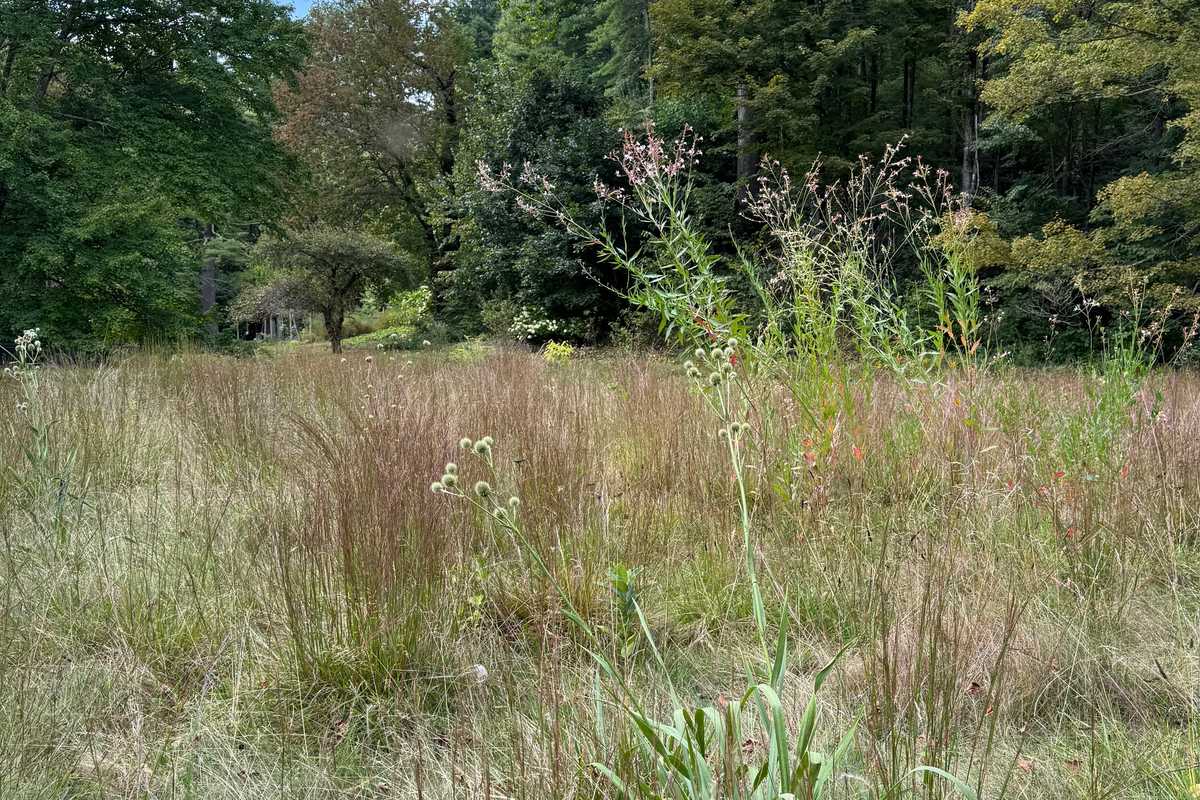
A partially mowed meadow in early spring provides habitat for wildlife while helping to keep invasive plants in check.

Dee Salomon

Love it or hate it, there is no denying the several blankets of snow this winter were beautiful, especially as they visually muffled some of the damage they caused in the first place.There appears to be tree damage — some minor and some major — in many places, and now that we can move around, the pre-spring cleanup begins. Here, a heavy snow buildup on our sun porch roof crashed onto the shrubs below, snapping off branches and cleaving a boxwood in half, flattening it.

The other area that has been flattened by the snow is the meadow, now heading into its fourth year of post-lawn alterations. A short recap on its genesis: I simply stopped mowing a half-acre of lawn, planted some flowering plants, spread little bluestem seeds and, far less simply, obsessively pluck out invasive plants such as sheep sorrel and stilt grass. And while it’s not exactly enchanting, it is flourishing, so much so that I cannot bring myself to mow.

Keep ReadingShow less

Where the mat meets the market

Where the mat meets the market

Kathy Reisfeld

Elena Spellman

In a barn on Maple Avenue in Great Barrington, Kathy Reisfeld merges two unlikely worlds: wealth management and yoga, teaching clients and students alike how stability — financial and emotional — comes from practice.

Her life sits at an intersection many assume can’t exist: high finance and yoga. One world is often reduced to greed, the other to “woo-woo” stretching. Yet in conversation, she makes both feel grounded, less like opposites and more like two languages describing the same human need for stability.

Keep ReadingShow less
Capitol hosts first-ever staging of Civil War love story

Playwright Cinzi Lavin, left, poses with Kathleen Kelly, director of ‘A Goodnight Kiss.’

Jack Sheedy

Litchfield County playwright Cinzi Lavin’s “A Goodnight Kiss,” based on letters exchanged between a Civil War soldier and the woman who became his wife, premiered in 2025 to sold-out audiences in Goshen, where the couple once lived. Now the original cast, directed by Goshen resident Kathleen Kelly, will present the play beneath the gold dome of Connecticut’s Capitol in Hartford as part of the state’s America250 commemoration — marking what organizers believe may be the first such performance at the Capitol.

“I don’t believe any live performances of an actual play (at the Capitol) have happened,” said Elizabeth Conroy, administrative assistant at the Office of Legislative Management, who coordinates Capitol events.

Keep ReadingShow less
google preferred source

Want more of our stories on Google? Click here to make us a Preferred Source.

Hunt Library launches VideoWall for filmmakers

Yonah Sadeh, Falls Village filmmaker and curator of David M. Hunt Library’s new VideoWall.

Robin Roraback

The David M. Hunt Library in Falls Village, known for promoting local artists with its ArtWall, is debuting a new feature showcasing filmmakers. The VideoWall will premiere Saturday, March 28, at 6 p.m. with a screening of two short films by Brooklyn-based documentary filmmaker and animator Imogen Pranger.

The VideoWall is the idea of Falls Village filmmaker Yonah Sadeh, who also serves as curator. “I would love the VideoWall to become a place that showcases the work of local filmmakers, and I hope that other creatives in the area will submit their work to be shown,” he said.

Keep ReadingShow less

A bowl full of stars

A bowl full of stars

A bowl full of stones.

Cheryl Heller

There’s a bowl in my studio where pieces of the planet reside. I bring them home from travels, picking them up not for their beauty or distinction but for their provenance. I choose the ones that speak to me — the ones next to pyramids, along hiking trails, on city sidewalks or volcanic slopes.

I like how stones feel in my hand: weighty, grounding. I don’t mind them making my pockets and suitcase heavier. The bowl is about the size of an average carry-on. It has been years since it was light enough for me to lift.

Keep ReadingShow less
One-woman show brings Mumbet’s fight for freedom to Scoville Library

On March 29, writer, producer and director Tammy Denease will embody the life and story of Elizabeth Freeman, widely known as Mumbet, in two performances at the Scoville Library in Salisbury. Presented by Scoville Library and the Salisbury Association Historical Society, the performance is part of Salisbury READS, a community-wide engagement with literature and civic dialogue.

Mumbet was the first enslaved woman in Massachusetts to sue successfully for her freedom in 1781. Her victory helped lay the legal groundwork for the abolition of slavery in the state just two years later. In bringing Mumbet’s story to life, Denease does more than reenact history.

Keep ReadingShow less
google preferred source

Want more of our stories on Google? Click here to make us a Preferred Source.

google preferred source

Want more of our stories on Google? Click here to make us a Preferred Source.