One-woman show brings Mumbet’s fight for freedom to Scoville Library

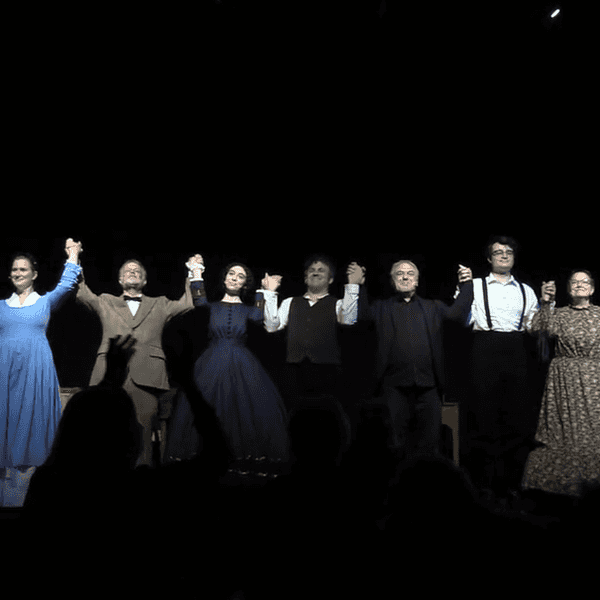
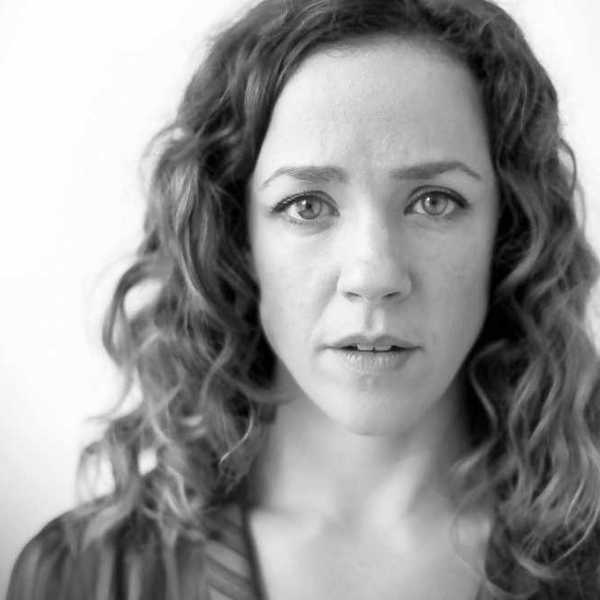
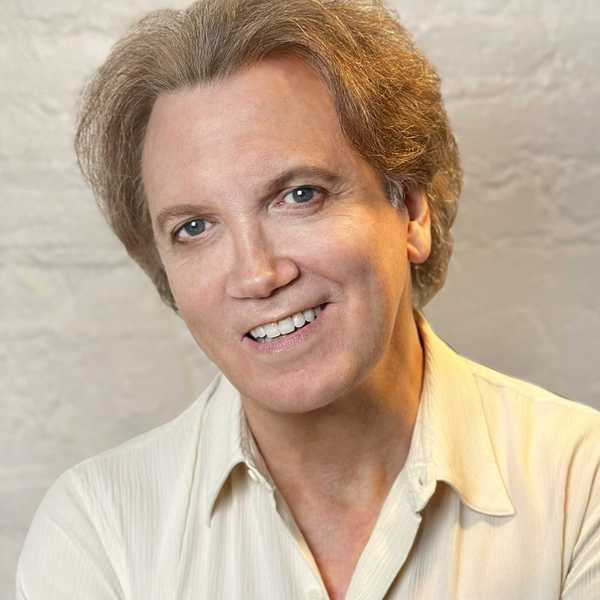
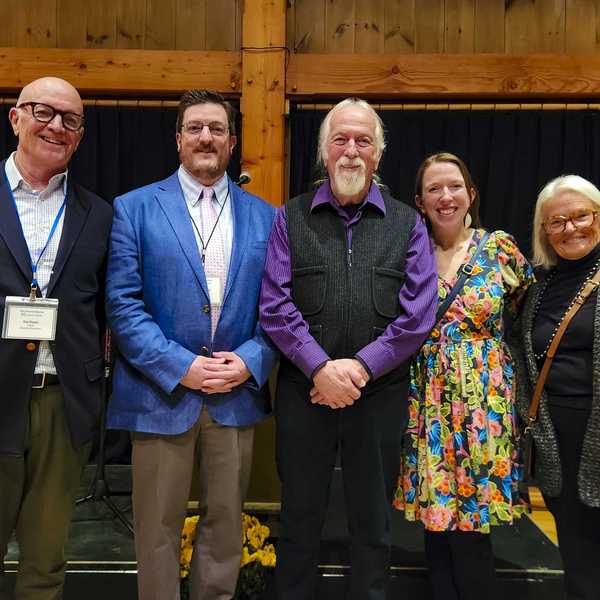
Tammy Denease portrays Elizabeth “Mumbet” Freeman in two performances at the Scoville Memorial Library on March 29.
Provided


Tammy Denease portrays Elizabeth “Mumbet” Freeman in two performances at the Scoville Memorial Library on March 29.
On March 29, writer, producer and director Tammy Denease will embody the life and story of Elizabeth Freeman, widely known as Mumbet, in two performances at the Scoville Library in Salisbury. Presented by Scoville Library and the Salisbury Association Historical Society, the performance is part of Salisbury READS, a community-wide engagement with literature and civic dialogue.
Mumbet was the first enslaved woman in Massachusetts to sue successfully for her freedom in 1781. Her victory helped lay the legal groundwork for the abolition of slavery in the state just two years later. In bringing Mumbet’s story to life, Denease does more than reenact history.
“I have been performing Mumbet for over 15 years now,” she said. What continues to resonate is “her self-awareness and self-worth even though she was enslaved. Her legacy of self-care and the ability to take care of others. That has not changed over time.”
Denease’s one-woman performance, “One Minute a Free Woman,” is part of her “Hidden Women” series, which centers figures too often pushed to the margins of historical memory. Drawing upon her own lineage and storytelling traditions passed down from her great-grandmother, a formerly enslaved woman, Denease creates work that bridges personal inheritance and collective history. Her background as a museum educator and interpretive guide shapes this approach.
“Being an interpretive educator helps me put the humanity back into history that has been removed when telling the stories,” she said.
The 2 p.m. program welcomes school-age audiences and families, while a 4 p.m. performance invites adults into a deeper and more intense exploration of Mumbet’s life.
“The format of the show will only change in the way I deliver the story,” Denease explained. “It will be more intense and in detail for the adults, less intense for the kids. However, it will not be watered down.”
For young people, Denease hopes the performance ignites curiosity and critical thought. “I hope school-age audiences’ imaginations are activated to want to know more and to never stop asking questions.” Adults, she said, are invited into a deeper investigation. “I hope for my adult audience that they will question what they were taught and see history through a different lens.”
That spirit of inquiry lies at the heart of Salisbury READS. “Literature and live performances go hand in hand,” Denease said. “Reading activates the imagination; living history helps that activated mind to make historical connections and keep the humanity and dignity in place where it was never given or taken away.”
Ultimately, the performance asks audiences to treat history not as distant fact but as shared responsibility. “I hope the audience will continue to question why knowing accurate and complete history is so important,” Denease said. “To understand that not knowing the whole story hurts everyone.”
To register for the event, visit scovillelibrary.org

Natalia Zukerman
Cohort 2026 members Abigail Horace, Adam Liccardi, Adrian Lynch, Cameo Brown, Chauncey Dozier, Claudette Grant, Erline Saintilet, Harmony Edwards, Kamayue Gomes, Mackenzie Colvin, Otis West, Shadre Domingo, TJ West and Tyeesha Keele-Kedroe and Blackshires’ leadership team John Lewis, Patrick Danahey, Dubois Thomas and Julie Haagenson gather at the Blackshires City Hall Fishbowl alongside Mayor Peter Marchetti and city officials Michael Obasohan, Brandon Gill, Katherine VanBramer, Heather Brazeau, Justine Dodds and Jesse Tobin McCauley.
When designer Abigail Horace joined the Blackshires Leadership Accelerator, she was looking for support as the founder of the Black Berkshires Social Club, which creates culturally grounded social spaces for Black and BIPOC residents in the region. What she found was something deeper: a community of peers invested in one another’s success.
“Finding Blackshires has been transformative,” Horace said. “Being a BIPOC founder in this region can feel isolating, and this community has changed that. They see my work, champion my business and have opened doors I couldn’t have opened alone.”
Horace is one of 13 fellows graduating from the Blackshires Leadership Accelerator on Juneteenth, June 19, at Ventfort Hall in Lenox. The free public ceremony marks the completion of a months-long civic and entrepreneurial leadership program created by the Blackshires Community Empowerment Foundation and R3SET Enterprises.
Founded in response to conversations among Berkshire County’s Black leaders about economic opportunity, representation and community development, Blackshires has grown into a BIPOC-led network focused on leadership development, economic empowerment and cultural equity. The organization’s flagship Leadership Accelerator combines civic engagement, entrepreneurship, storytelling, networking and project development to help participants turn ideas into action. Since its launch, the program has graduated more than 40 fellows and distributed more than $100,000 in grants and stipends.
The 2026 cohort includes entrepreneurs, educators, artists and community advocates whose projects address needs across the Berkshires.
Among them are Adrian Lynch of Stubborn Ibex Studios, Claudette Grant’s Reckless Optimism Women’s Circle, Erline Saintilet’s Caribbean-inspired food venture Carib In-Fusion, the Westside Crosswalk Remix Project led by Otis and Tajare West in Pittsfield, and Tyeesha Keele Kedroe’s Seen & Celebrated initiative, which promotes meaningful representation of Black and Brown children in early childhood classrooms.
For Horace, one of the program’s most important lessons has been recognizing the impact of her own work.
“Creating a network of BIPOC leaders and entrepreneurs has revealed something I didn’t fully see before: the real reach of my work and what it means in this community,” she said. “My peers look up to me, believe in me and show up for every milestone. That recognition has shifted how I understand my own impact and leadership.”
The Accelerator culminates with each fellow creating an Impact Charter, a blueprint for how their project will contribute to the community. Participants also take part in leadership retreats, workshops, civic forums and site visits throughout Berkshire County. The program was recognized by 1Berkshire with its 2023 Breaking the Mold Trendsetter Award.
John Lewis, president of the Blackshires Accelerator and CEO of R3SET Enterprises, said the program is designed to remove barriers and strengthen connections among emerging leaders.
“By removing barriers to success and encouraging a cooperative framework, the next generation of community leaders will be more connected and skilled in the ongoing development and revitalization of our community and its families,” Lewis said.
Horace said the experience has reinforced a simple but powerful lesson.
“Being a leader and entrepreneur can be isolating, but this group has shown me that I am not alone.”
The graduation ceremony will take place at Ventfort Hall, whose history includes its mid-20th-century role as Festival House, a guesthouse and cultural center that welcomed Black and Jewish visitors at a time when many area resorts maintained discriminatory restrictions. On Juneteenth, the mansion will provide a fitting backdrop for a celebration focused on leadership, community and the future of the Berkshires.
The Blackshires Leadership Accelerator Cohort 4 Graduation will be held Thursday, June 19, at Ventfort Hall Mansion and Gilded Age Museum in Lenox. Admission is free and open to the public.
Natalia Zukerman
Izzy Fitch at Battle Hill Forge in Wassaic.
I’m not really inventing anything new. I just tweak it a little bit.— Izzy Fitch
A steel praying mantis stands among garden accents at Battle Hill Forge in Wassaic, its folded forelegs ready for prayer and mischief in equal measure.
“She’s very nice,” said blacksmith, sculptor and Battle Hill Forge owner Izzy Fitch, patting the giant insect affectionately. Then he added, “Just don’t go out to dinner with her.”
The giant metal mantis, built by artist Jim Hackett, is now part of a summer contest Fitch devised. He’ll strap it to the roof rack of his car and drive it around. When people spot it, they can take a photo, post it on social media and tag @battlehillforge, @lakevillejournal and @themillertonnews. At the end of the contest, names will be drawn at random and gift certificates to Battle Hill Forge will be awarded.
“It’s just for fun,” said Fitch, whose work often blurs the boundaries between art, utility and play. “Who couldn’t use more fun these days?”
Fitch moves through his sprawling workshop spaces like an enthusiastic museum guide leading visitors through a collection he forgot he owned. Every few steps, something catches his attention. A hand-forged daffodil. A dragonfly. A prototype trellis. A powder horn his great-grandfather taught him to make. A concrete toad inherited from his grandmother.
“Oh, this is cool,” he says, veering off course.
A few minutes later:
“Oh, I forgot to show you this.”
Then:
“You want to see something really cool?”
The tour never quite follows a straight line.
Neither does Fitch.
Long before Battle Hill Forge became known for custom gates, garden structures and sculpture found everywhere from private estates to major cultural institutions, Fitch was a child building armor for toy animals.
“I had a Black Panther that was this big and I armored it,” he says, holding his hands a few inches apart. “I made all my little people and creatures, and I armored them all up and I made all the weapons for them.”
Fitch’s father was a logger. Tools were plentiful. Toys were not.
“He wouldn’t buy us toys really, so we would have to make our own.”
The family business, if there was one, was making things.

His great-grandfather was a master craftsman who made Windsor chairs in collaboration with his uncle, Bert Fitch. His father supplied the raw materials, Bert made the chairs, his great-grandfather carved the spindles. His relatives were renowned woodworkers. People would travel from far and wide to have his great grandfather make handles for them.
“I really learned a lot from spending time with my grandparents and my great-uncles,” he says.
Today, that inheritance is visible everywhere inside the forge.
Giant steel pumpkins wait beside elegant peony supports. Honeycomb sculptures support an endearing bee also made by Hackett. Giant orbs loom playfully. Metal mushrooms, used in classes Fitch teaches to children, line the windowsills.
Many are prototypes Some are commissions. Some exist simply because Fitch thought they might be fun to make.
“I just think of something cool,” he says. And then he makes it.
“Most of the metalworkers that I work with don’t want to talk to people,” he says. “They’re like, ‘Just tell us what you want. Give me the plans and I’ll make it.’”
Fitch is different. Part craftsman and part translator, he enjoys helping clients discover what they want before it exists.
Unless, of course, he’s distracted by a frog story.
The previous Battle Hill Forge location, in Millerton, included a small pond where Fitch often ate lunch.
“There was a dead mouse out there one time,” he recalls. “This frog was so clever. He would sit near the dead mouse and when flies came down, he would get a fly.”
He watched the frog for an entire lunch break.
The story arrived somewhere between explanations of Japanese patinas and custom railings.
It also explains a lot.Fitch notices everything: plants, insects, old tools, odd solutions, clever engineering tricks. His work is filled with observations gathered from gardens, forests, old European designs and conversations with other makers.
A peony support isn’t just a peony support. It’s an opportunity to improve something. A trellis isn’t just a trellis. Maybe it can come apart for shipping. Maybe it can help a plant grow differently. Maybe it can do something no one has considered before.
“I’m not really inventing anything new,” he says. “I just tweak it a little bit.”
After its beginning in Falls Village, moving to Millerton and eventually settling in Wassaic, Battle Hill Forge has become one of the region’s success stories. The shop is booked months in advance. Projects range from garden ornaments to monumental railings weighing hundreds of pounds. Designers seek him out. Gardeners collect his work.
Yet Fitch remains most animated when discussing collaboration.
The intern helping in the shop first met him as a student in one of his metalworking classes. Local glass artists add to his sculptures. Garden designers have helped refine his plant supports. For Burning Man this summer, he’s joining a team of fellow artists to build an installation featuring an oculus and a pair of metal sphinxes.
“We’ll have a little party,” he says.
The phrase could describe half the projects in the shop, especially the praying mantis. Technically, that sculpture belongs to Hackett.
“He makes all this cool stuff,” Fitch says. “I sell them for him because he’s one of those artists who doesn’t want to deal with the public.”
Fitch laughs.
“Which is totally smart.”
Outside, a dog wanders through the yard. A timber framer works next door. Metal rusts into beautiful shades of brown. New ideas wait in various stages of completion and there’s just a little magic around every corner.
To contact Battle Hill Forge, visit battlehillforge.com.
D.H. Callahan
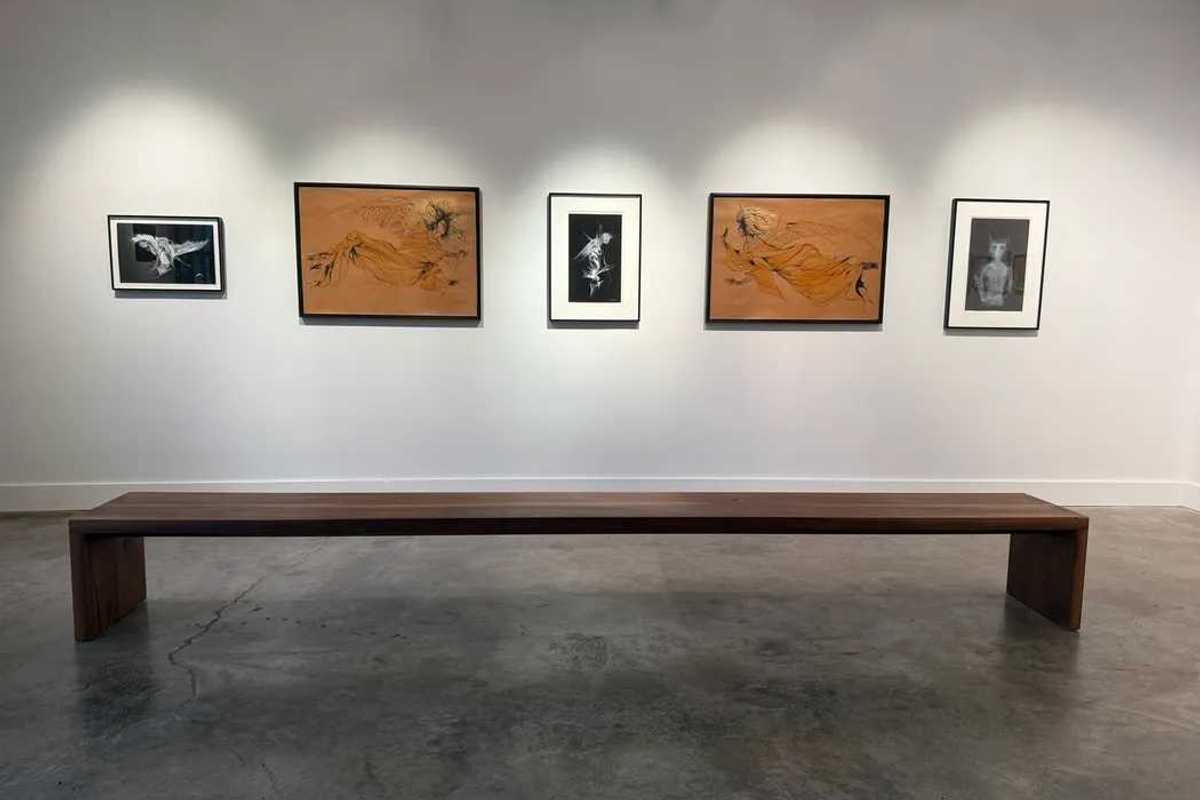
Kent Barns was alive with art on Saturday, June 13, as three new shows opened at Peggy Mercury and Kenise Barnes Fine Art, featuring a variety of fascinating paintings and drawings from four local artists.
Peggy Mercury, which in just two years has earned a reputation for curating remarkable collections of fine beauty products and accessories, continues to find exciting art to complement its offerings. The new show, “Portraits,” features four pairs of paintings by Millerton-based artist Alexis England. The “portraits” she paints, however, feature some pretty unexpected sitters.
England chooses some undercelebrated species, including the tarantula, vampire bat and even the lobster, and gives them the treatment she feels they deserve on large canvases with bold, vibrant colors.
The pairings work as delightful foils, as England inverts her color palettes within each duo. The pinks of the elegant flamingo serve as the background for the imposing stoicism of its partner, the mandrill. In turn, the mandrill’s deep grays set a dark canvas from which the flamingo can pop, its feathers flourishing in the juxtaposition. The results tie the unexpected couplings together while allowing each species to maintain its own visual identity.
Just steps away, the gallery at Kenise Barnes Fine Art opened two distinct shows in one packed room. On one side hangs “Behind My Eyes” by artists Gregory Hennen and David Konigsberg, both of whom have been represented by Kenise Barnes Fine Art for more than 20 years.
Konigsberg takes everyday items and abstracts them to a point of detached familiarity, giving light as much importance as the objects themselves. Hanging nearby is a series of landscapes painted in oils that seem as texturally considered as they are compositionally. “Each piece,” Hennen said, “is about a landscape, not of a landscape, as it does not necessarily depict an exact site or location. Finished paintings are often composites of several images that have evolved from a realistic portrayal to a more simplistic interpretation.”
The other side of the room features drawings by Margot Glass. Like England, Glass celebrates the undercelebrated. Her work frequently depicts weeds and other “undesirable” species of flora in elevated media such as silverpoint and 14-karat goldpoint.
With this collection, titled “On This Fresh Morning,” the artist takes a more naturalistic approach, using black walnut ink that she makes herself from walnuts she collects on hikes and walks in western and central Massachusetts. The ink is a remarkably rich hue of brown, which Glass layers to create floral scenes filled with intricate natural details. While she includes more traditional beauties, such as blooming anemones and daisies, she also features underappreciated misfits including dandelions and garlic mustard.
Kent’s artistic footprint continues to expand, with at least five dedicated art galleries and boutiques contributing exceptional shows for art lovers throughout the Northwest Corner.
For a directory and gallery hours, visit kentbarnsct.com

Want more of our stories on Google? Click here to make us a Preferred Source.
Natalia Zukerman
Stonewood Farm in Millbrook is expanding its educational and community food programs this summer with the launch of a new Chefs in Residence program, an eight-week immersion that brings culinary professionals to the nonprofit farm to live, cook, teach and work alongside farmers.
The program is led by Kristen Essig, Stonewood’s director of culinary outreach and development, an award-winning chef whose background includes work with Emeril Lagasse and multiple James Beard Award nominations.
“This is an opportunity for chefs to step outside the traditional restaurant environment and engage with farming, food access and community outreach,” Essig said.
The idea grew out of Stonewood’s broader mission and from a model more commonly associated with artists and writers than chefs.
“There are artist residencies everywhere,” Essig said. “But there are very few opportunities for chefs to have that same kind of dedicated time and space to think about their work outside the pressures of a restaurant.”
Founded by Ken Holzberg and Tom Kopfensteiner, Stonewood Farm began as a wooded 15-acre property that the pair spent years building before launching agricultural operations in 2013. The farm became a nonprofit in 2021 and now combines organic farming, educational programming and food justice initiatives.
Among those efforts is the First Harvest Food Pantry, which distributed fresh produce and prepared foods to approximately 2,800 food-insecure neighbors during the 2025 growing season through partnerships with local organizations including Meals on Wheels.
The inaugural residency cohort includes two chefs with extensive national and international experience.
Jocelyn Ueng, a Taiwanese-Chinese American chef, forager and former nonprofit professional, arrives this week for the first session, which runs through Aug. 7. Ueng has cooked at renowned restaurants including Noma, The French Laundry and Satoyama Jujo, and is currently developing a Hudson Valley restaurant slated to open in 2027.
The second residency session, Aug. 17 through Oct. 9, will feature Chatham native Daniel Conkling, a Culinary Institute of America graduate whose career has included Restaurant Daniel in New York City, Battersby in Brooklyn and Seattle’s L’Oursin. Conkling plans to lead workshops focused on food preservation, including pickling, canning and jam making.
In addition to cooking, the resident chefs will mentor Stonewood’s culinary assistant, Gabriella Hernandez, participate in youth education programs, contribute to prepared-food outreach efforts and work directly with the farm’s organic growing operation.
Essig said that connection to the land is central to the residency’s purpose.
“The farm creates a different pace,” she said. “Chefs spend so much time in kitchens that they don’t always get to see the larger picture. Here they can spend time in the garden, work alongside farmers, participate in community programs and really think about what food can do.”
The residency is one of several new and ongoing programs at Stonewood this season.
On July 11, the farm will host a flower-arranging workshop with Kate Farrar of Foxtrot Farm & Flowers. Additional workshops planned for later in the year include edible flower cake decorating and botanical pantry-making.
Stonewood’s guest chef Sunday Harvest Dinner series continues June 28 with chef Jovana Urriola, followed by dinners featuring Andrea Reusing on July 26, Jill Mathias and Juan Cassalett on Aug. 23, and Christine Lau on Sept. 20. The dinners showcase produce grown on the farm alongside ingredients from regional producers.
Visitors can also attend Stonewood’s seasonal on farm pop-up farm markets every other Friday, which offer freshly harvested vegetables, flowers, eggs, baked goods and prepared foods.
For Essig, the residency program reflects Stonewood’s larger mission.
“Chefs have an important role to play in local food systems,” she said. “We want to create opportunities for them to connect more deeply with agriculture, education and community service while continuing to develop their craft.”
For information about upcoming events and programs, visit stonewoodny.org and follow @stonewoodny on Instagram.
Natalia Zukerman
The Hollister House, aka Whitbeck Estate, is believed to have been built circa 1780.
For anyone who has ever stopped to admire an old house and wonder what it looks like inside, HisTOURy’s Colonial Home Tour on June 20 offers a rare opportunity.
The four-hour guided tour will take participants inside four private colonial-era homes in Salisbury and Falls Village while highlighting another 20 historic properties along the route. Presented as part of HisTOURy’s series marking America’s 250th anniversary, the tour explores the architecture and history of northwestern Connecticut’s colonial settlement period.
Allison Casazza, HisTOURy’s tour research and production manager, said selecting homes involves a combination of research and experience.
“We have really well-trained eyes to say, ‘I think this would be a good house,’” she said. “And then we approach the homeowners and take it from there.”
Interior stops include the Samuel Robbins House, considered one of Falls Village’s finest examples of Federal-style architecture, and an 18th-century home once occupied by the sister of Noah Webster. The homes featured on the tour represent several architectural traditions from the colonial era, including vernacular farmhouses, Cape Cod houses and Federal-style dwellings.
“There’s a lot of symmetry in colonial architecture,” Casazza said. “The homes are much simpler in terms of how much ornamentation you can expect on them.”
Many of the architectural forms brought by settlers from England and Holland evolved in response to local conditions, she explained.
“They were bringing the styles that they knew,” Casazza said, “and then adapting them to local needs based on available materials and the harsher climate of the Northeast.”
Founded by preservationist Georgette Blau, HisTOURy focuses on cultural heritage tourism and historic preservation. The tours combine architectural history, local history and discussions about preservation with the opportunity to visit buildings that are rarely open to the public.
“What we do would fall into the category of cultural heritage tourism,” Casazza said. “We’re talking about these historic things with the purpose of promoting how much people understand them, how much people appreciate them, and hopefully planting the seeds to keep them thinking about preserving these places.”
The homeowners themselves are often part of the experience. Casazza said many participate simply because they enjoy sharing the homes they have restored and maintained.
“They’re all wonderful people that are just excited about living in a historic home,” she said. “They love it so much that they want to show it to a bunch of strangers.”
When homeowners are present, visitors hear firsthand about restoration projects, maintenance challenges and daily life in centuries-old houses.
“It means a lot to hear from them,” Casazza said.
The Colonial Home Tour runs from 2 to 6 p.m. on June 20. Information and tickets are available at histoury.org
Dee Salomon
Eric Mendelson, owner of Salisbury Garden Center, stands with a selection of keystone native plants now available through a partnership with Homegrown National Park.
The Ungardener from May 13 was about a specific group of native plants called keystone plants. These are the ecosystem workhorses of our environment; they are essential to the survival of many animals that rely on them for food. Nutrition in this case includes, but goes beyond, nuts and pollen. It is the leaves of keystone native plants that make them superheroes. These leaves are essential to the survival of butterfly and moth caterpillars that, in their larval state, will eat only the leaves of very specific native plants.
And in this case, eating leaves is a good thing because caterpillars are relied upon by birds to feed their hatchlings. A single baby bird will be fed approximately 3,000 caterpillars from hatching to fledging; for most species, caterpillars are the sole source of food until they leave the nest. As native plants decrease, which they rapidly are, so do the numbers of caterpillars that rely on them. And as caterpillars decrease, so do the numbers of birds that rely on them.
Planting keystone species goes a long way toward restoring food webs: a serviceberry, or shadblow tree, supports 119 caterpillar species, pussy willow supports more than 400 and oak supports more than 500. While these particular plants are not hard to find in nurseries, other keystone plants, such as highbush blueberry and smooth blue aster, can be difficult to find at retail. Nurseries and garden centers tend to favor showier plants with greater shelf presence.
I dwell on the topic of keystone plants because Homegrown National Park, the organization co-founded by scientist and author Doug Tallamy, whose research on caterpillars led to our understanding of native plants’ role in food webs, and Sharon resident Michelle Alfandari, is partnering with three garden centers in the Northwest Corner to specifically promote Tallamy-designated keystone plants. There it is — a solution, and a local one at that!
Ward’s Garden Center in Great Barrington, Salisbury Garden Center and Paley’s in Amenia are now carrying ample inventory of beautiful keystone trees, shrubs and flowering plants in addition to the native plants they regularly stock.
“Every year we have seen an increase in customers asking for and buying native plants, so this partnership with Homegrown National Park is a great extension of the demand we are already seeing,” said Eva Ward of Ward’s Garden Center.
When you arrive at one of these garden centers — and I hope you will go this week — look for the “Homegrown National Park Native Plant Center” banner. Individual plant signs help inform customers about each keystone plant: what it looks like in bloom, its best growing conditions and why it is critical to butterflies, birds and other wildlife, including humans.
At Paley’s, owner Sarah Coon finds the signage a big step forward.
“Our customers and staff can now easily identify the native plants that will thrive in their gardens,” she said.
QR codes can be scanned for more information about each plant and to get on the HNP Biodiversity Map, which documents the number of people and acres being transformed through native plantings. The map currently records nearly 50,000 people committing more than 170,000 acres to native planting.
For Homegrown National Park, this program is a pilot it would like to expand nationally.
“A core objective of HNP is to make it easier for people to get started and making it easy to shop for productive native trees, shrubs and perennials does just that,” said Alfandari. “The leaders of these garden centers are visionary catalysts for positive change. They are passionate about making a difference and spreading the facts about native plants to their customers.”
For more information, visit homegrownnationalpark.org
Dee Salomon ungardens in Litchfield County.

Want more of our stories on Google? Click here to make us a Preferred Source.

Want more of our stories on Google? Click here to make us a Preferred Source.