SOMEWHERE IN NORTHWEST CONNECTICUT — The plan was to corral the Master and the Novice, take advantage of the clement early November weather, and hike to the obscure brook trout stream. There I would take many spectacular photographs and listen intently while the Master imparted Wisdom to the Novice.
The resulting column would return “Tangled Lines” to the award-winning list.
The plan started to fall apart Saturday, Nov. 5, when the Master bailed out. After further review, as they say in pro football, the notion of a) getting on the Mass Pike at 5 a.m. in order to get to the trailhead by 8 a.m. followed by b) the long, death-defying hike in, followed by c) three or four hours of fishing in difficult terrain, followed by d) the long, death-defying hike out, mostly uphill, followed by e) driving back to Boston seemed unusually insane.
(The Master shall remain anonymous, even though his name is Ian Davison, who is married to my cousin Julie. They live in Natick, Mass. But you didn’t hear it from me.)
So when I met Andrew Corrigan Sunday, Nov. 6, and we suited up, I reasoned that what I was losing in gnomic utterances from the Master I was gaining in, er, non-gnomic utterance.
We also noted that the official wild guess from the weather experts -- warm and cloudy, with maybe a light shower in the afternoon -- was wrong on the last count.
And of course the point and shoot camera decided to conk out midway through the exercise. Apparently getting a little damp is all it takes.
But hey — enough of my yakkin’. How was the fishing?
The fishing was pretty darn good.
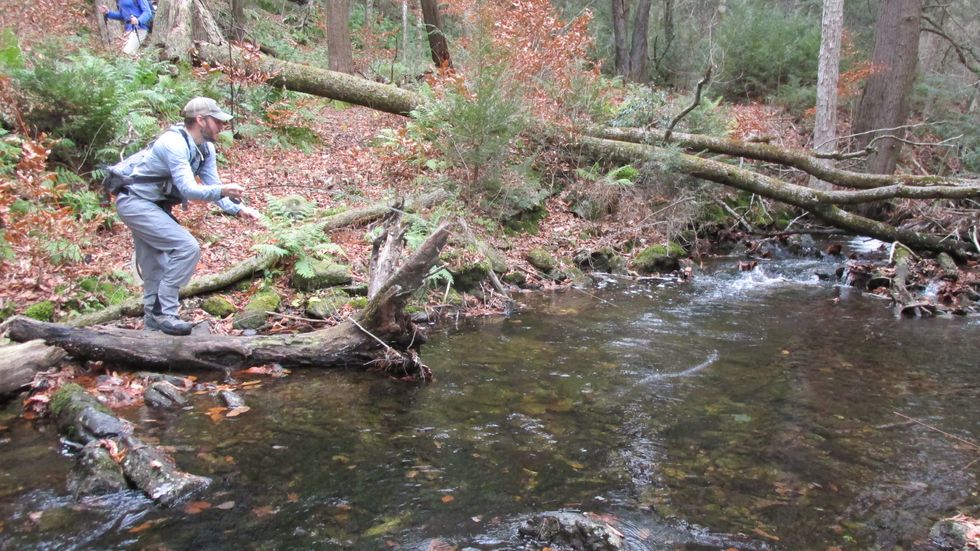
At spot number one, where I traditionally take the first whack, I courteously stepped aside so young Andrew could have the honors. (I also crossed the stream so I could get a photo,)
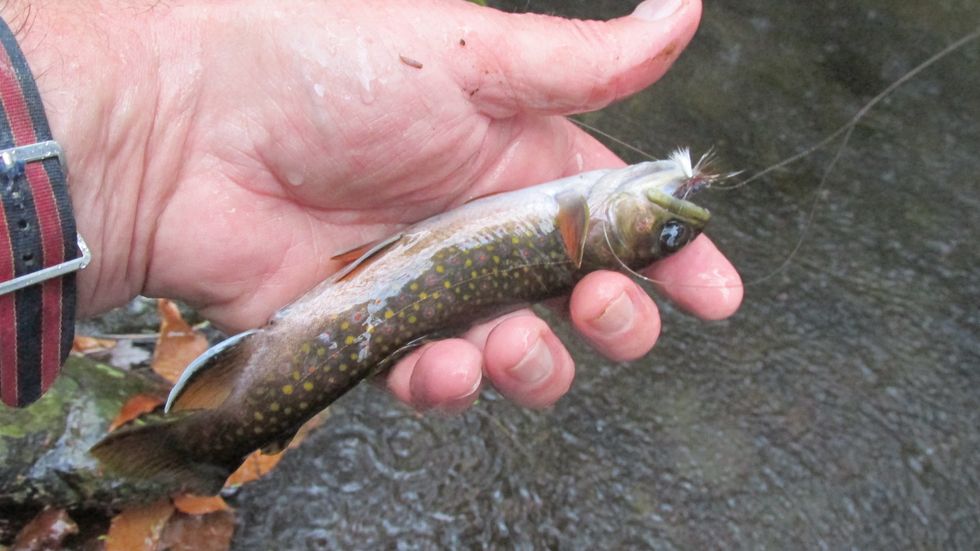
Andrew stuck a big Parachute Adams dry fly right in the soft water of the plunge pool, and right on cue a suicidal brook trout rose and snapped at it.
Andrew missed that one but he connected a few minutes later, and we were off.
I hovered around him like a nervous nanny for a while, ostensibly to get photos but also because I wanted to see if he had mastered the most essential technique of angling. Yes, could Andrew successfully ignore the idiotic, garbled instructions shouted at him from a distance and find out for himself what works and what doesn’t?
He could, and did.
I worked my lanes with a Parachute Adams, and when that got chewed up, I switched to a gigantic foam beetle thing (GFBT) that looks like hell and works really well.
The winning combo, eventually, was the GFBT with an unweighted Light Cahill nymph on a shortish dropper of about a foot.
Then the light shower scheduled for the afternoon turned into a regular rain, nothing special but highly irritating.
Andrew had prudently brought some rain gear. I trust my weather experts so I did not. This is how the camera got wet.
We leapfrogged each other moving downstream. From afar I could tell Andrew was getting along fine, so I concentrated on more pressing matters, such as not breaking my neck on the slick rocks.
I first introduced Andrew to little blue line fishing on the Wachocastinook (aka Riga Brook) back in June. I loaned him a little 6 ½ foot 4 weight fiberglass rod, and he subsequently bought one of his own.
Watching him covertly, I noticed he was duking and dapping, rolling and snapping, and a lot of other groovy stuff I don’t have a name for. He was also chucking 30 feet when the situation called for it. So I don’t think I can make that “novice” label stick.
After about four hours we clambered out. My back filed a formal complaint, and my progress up the World’s Longest Staircase was halting. Andrew considerately waited for me to catch up, and then loped off at the pace that is only possible when Social Security is a vague idea for the future and not an immediate threat.
So where is this stream? I am not going to tell you. Regular readers know the policy. If a stream is listed in the state’s official anglers guide (like the Riga brook) then I will name it.
If it isn’t, I won’t.
The reason for this is simple: Wild brook trout are a precious resource and we don’t want legions of galoots yanking them out of the stream and throwing beer cans around in the process.
Besides, the entire thing is nuts. Two grown men, solid citizens, sober and industrious, spending hours in considerable discomfort and inconvenience to catch little fish that they are not going to eat.
Does this sound rational to you? It does?
Well, in that case drop me a line in private and next time you can tag along.

 Pay Bill for Robin Starr’s service in the Continental Army.Courtesy the Alex Breanne Corporation
 John Mills speaking at Quinnipiac University.Courtesy the Alex Breanne Corporation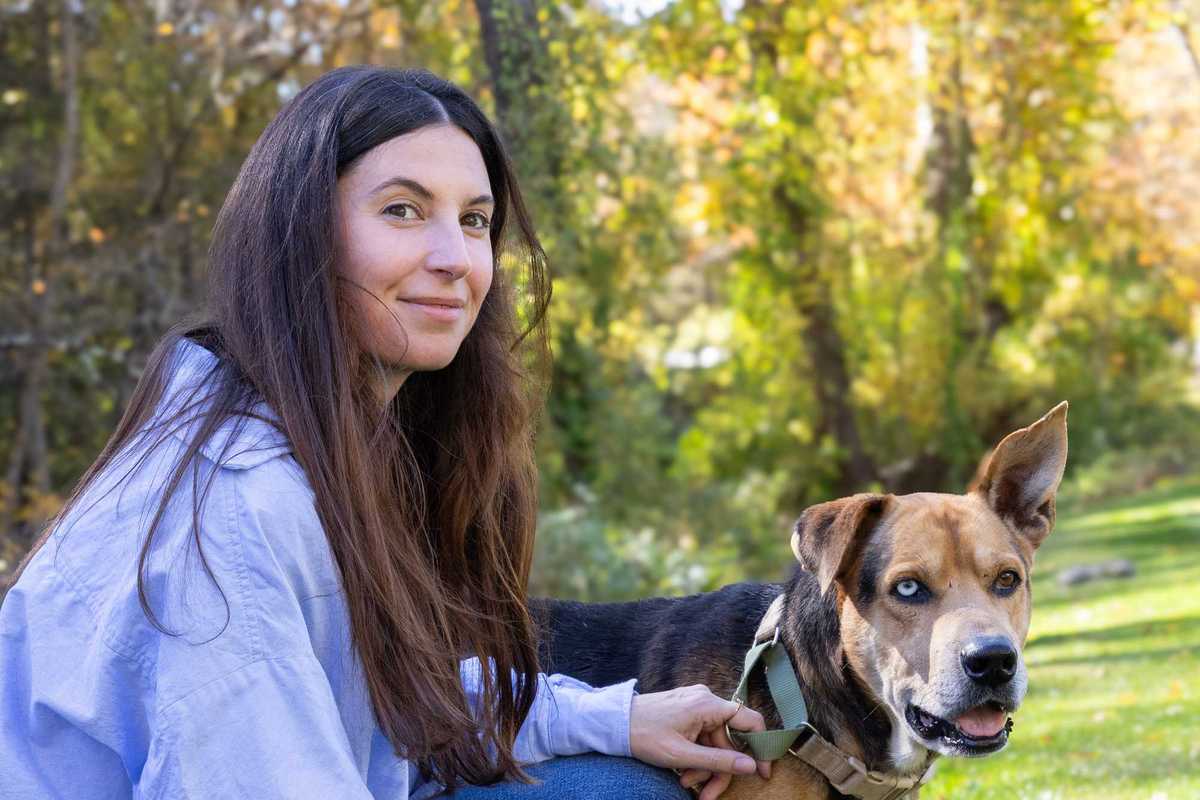
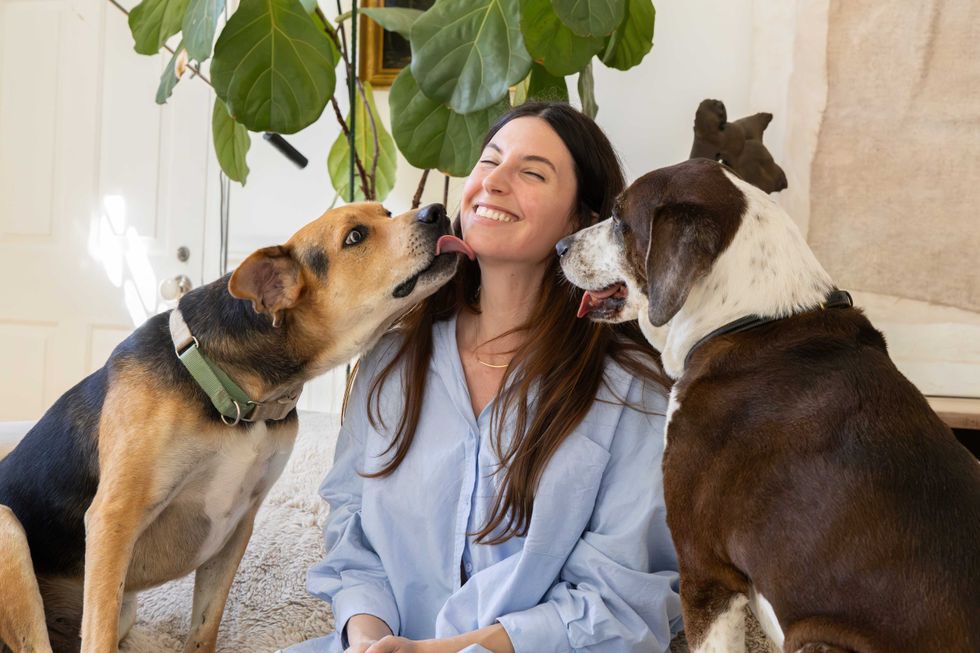 Stephanie Saetta,with her rescue dog George and Blue (left), a shepherd mix awaiting his forever home.Madi Long
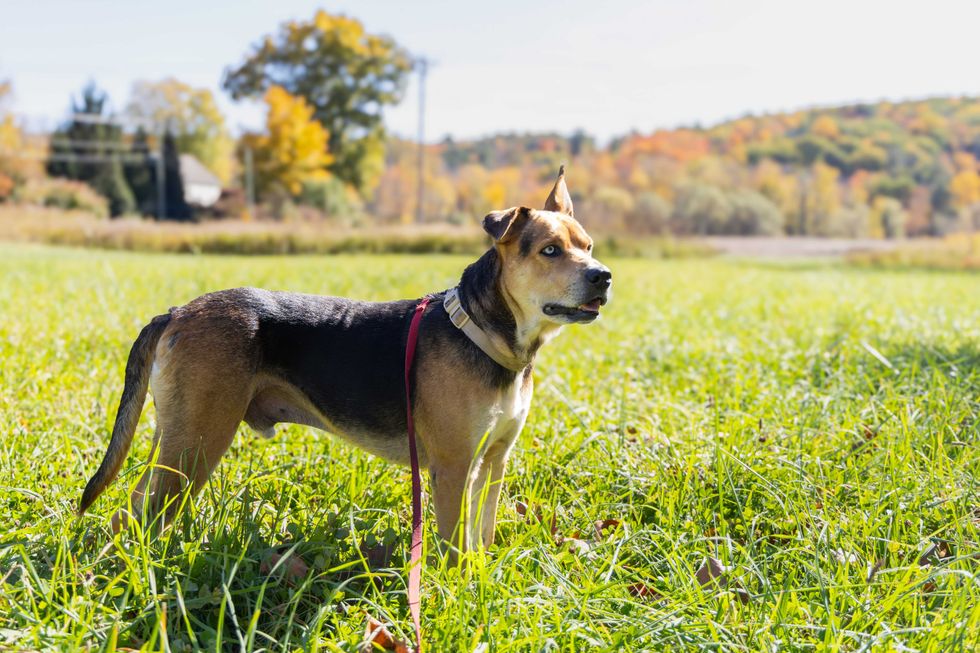 Blue, a 7 year-old Shepard mix, is waiting for his forever home. Madi Long