
Thank you!
Your support is sustaining the future of local news in our communities.

Landfill solar farm concerns

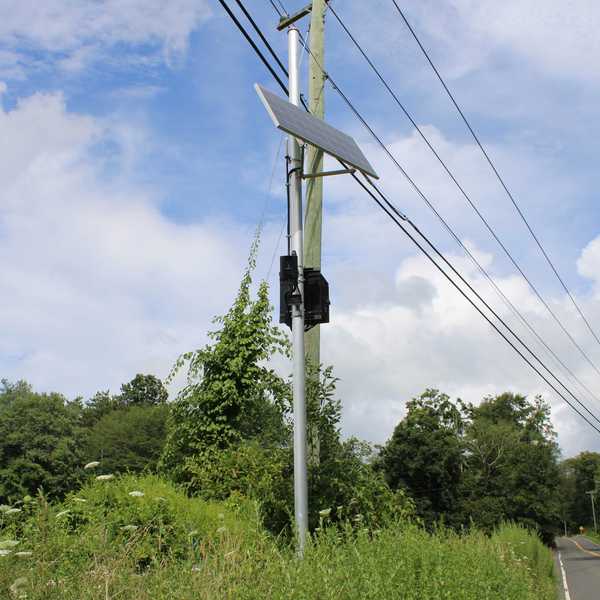
NORTH EAST — Plans to install a solar farm at the old North East Landfill have hit a snag — namely a public concerned with environmental impacts and rezoning issues. BQ Energy of Poughkeepsie had proposed installing solar arrays at the now defunct landfill at 41 Reagon Road two years ago; the 32-acre landfill borders private homes, the Harlem Valley Rail Trail and conservation areas. In exchange the town would receive $10,000 in annual rent. BQ Energy would “provide electricity to the town through an electrical meter at the landfill, to offset existing electricity costs through New York State Remote Net Metering,” according to a 2013 report from the energy provider.

So far there is no signed lease or completed deal.

“This is going to be a difficult project because it’s very involved,” said town Councilman Ralph Fedele. 

Fedele said that there were many objections made at a special meeting on the subject held Monday, Aug. 24, at the NorthEast-Millerton Library Annex.

He noted that the town was not looking to install a solar farm.

“The town did not go to BQ Energy; BQ Energy approached the town with a proposal to repurpose the landfill and to put it to a meaningful use that would provide income for the town,” he said. “So it was something that we needed to explore, and we did.”

So, too, did those who neighbor the landfill. 

Dr. Andrew Wallach spoke at the meeting.

“As a physician, I support efforts to decrease our carbon footprint, including the use of alternative energy sources — so long as they are in the proper setting and in proper scale and do not pose a public health risk,” he stated. “However, also as a physician, I stand before you tonight to loudly voice my significant and real concerns concerning the public safety risks of the proposed solar farm on the current Superfund site.”

Wallach mentioned that the landfill is a Level 2 Superfund site containing toxic waste materials illegally dumped by industries.

“Our landfill was capped in 1998 using older and less secure technology, and its ground surface specifically landscaped with the creation of berms planted with grass to minimize erosion and water penetration of the waste underneath the cap. All of this to prevent the release of toxic vapors and toxic materials which can cause contamination of the groundwater.”

Wallach said his home is within 50 feet of the site and he’s reliant on well water, as are his neighbors.

“This fact alone — the reliance of the surrounding community on local well water — prohibits the use of this site for solar energy,” he said, noting potential negative impacts on soil, water, air resources, vegetation, wildlife, wildlife habitats and endangered species.

“Any alteration to these existing, specifically engineered drainage channels will increase runoff and erosion,” he claimed.  He also worried that “placement of the solar panels on their footings [could cause] breachment of the landfill’s cap.”

He said not only could that contaminate the local wells, it could damage New York State Department of Environmental Conservation (DEC) designated wetlands.

Additionally, Wallach said, studies document that heavy metals and other materials in the photo voltaic solar panels can affect water quality.

Neighbors signed onto Wallach’s statement, including Steve and Mira Leven, Sunil and Stephanie Savkar, Bob and Encarnita Quinlan, Wendy Curtis and Jody Potter.

Another neighbor, David Elwell, also spoke at the special meeting. Elwell’s home sits directly above the landfill. He said that when he bought his home in 1998 he did his due diligence  researching the landfill. He was told by the Town Board at that time that the landfill would be the “best neighbor we could ever have as nothing will ever be able to go on this and/or change.”

It was at that time that he learned of the site management plan implemented by the town “in order to assure that the landfill and surrounding areas are always protected,” he said.

“Over the ensuing years, we regularly received results of water testing as part of the site management plan,” he added. 

Those reports stopped in 2008.

“Fifteen years later, in November of 2013, I received a call from a solar company saying that they had great news: he was buying a solar farm on the landfill and that I could buy the power from him,” Elwell said. “I was most surprised knowing the full history and extent of toxic waste on this site.”

He said a year later he received notification from the DEC that the Superfund site would be updated from a Level 2 status to a Class 4 status, going from “scary dangerous [to being] remedied and inactive.”

Elwell said the change was solely based on the fact that the homes nearby were on public water. But that’s not true, he said, as all residents surrounding the landfill are on well water.

He reached out to the DEC, the Department of Health and the town. There were concerns shared “due to the wetlands, wildlife and the way the plume from the site would flow into the aquifer for our surrounding areas.”

Elwell expressed concern that  the project was in motion.

“We cannot permit corporate greed from BQ Energy to take advantage of our community in order to profit while putting us all at a significant health risk,” he told the board.

Neighbor Lynn Mordas also spoke. She addressed BQ Energy’s other landfill solar farm projects.

“While there have been solar fields installations on former landfills, I have yet to find any documentation of one on a landfill site where hazardous waste remains in situ,” she said. “In my professional opinion as a geologist and based on my experience working in the Superfund program at the Environmental Protection Agency [EPA], the hazardous waste should have been removed from the landfill site, which is in part located in both federal and state freshwater wetlands and is also part in the Federal Emergency Management Agency [FEMA] flood hazard map and does lie within the 100-year floodplain and partly in the 50-year floodplain.”

Back in May, BQ Energy Managing Director Paul Curran acknowledged it’s more costly to place solar arrays on a landfill because of the sensitive nature of the land.

“The trick is it costs more to put it on an old landfill than on a golf course because there are more regulations,” he said. 

Mordas also noted that the landfill is in the A5A zone, which would not allow for a solar farm — which must be commercially zoned.

“These are not allowed uses in the A5A zone where the landfill is located,” she stated. 

The point is one that resonated with Fedele.

“I think what’s going to happen is zoning is going to be the key issue,” he told The Millerton News. “If this project passes the DEC it will have zoning issues that will have to be addressed, and that could be a very difficult issue. Once you set a precedent of allowing an industrial use in the A5A, you open up all other issues in the area.

“There is a lot of beauty in this county, that we love, and the agricultural nature of the area [is important],” he added. “So this has a long way to go as far as I can see at this point … it’s not going to be easy to resolve.”

Fedele said as a councilman he has to look toward protecting his constituents, and that while the income of $10,000 over the next 25 years is important, so, too, is the environmental and regulatory health of the community.

Latest News

‘So Little to Do,’ so much to discover at James Barron Art

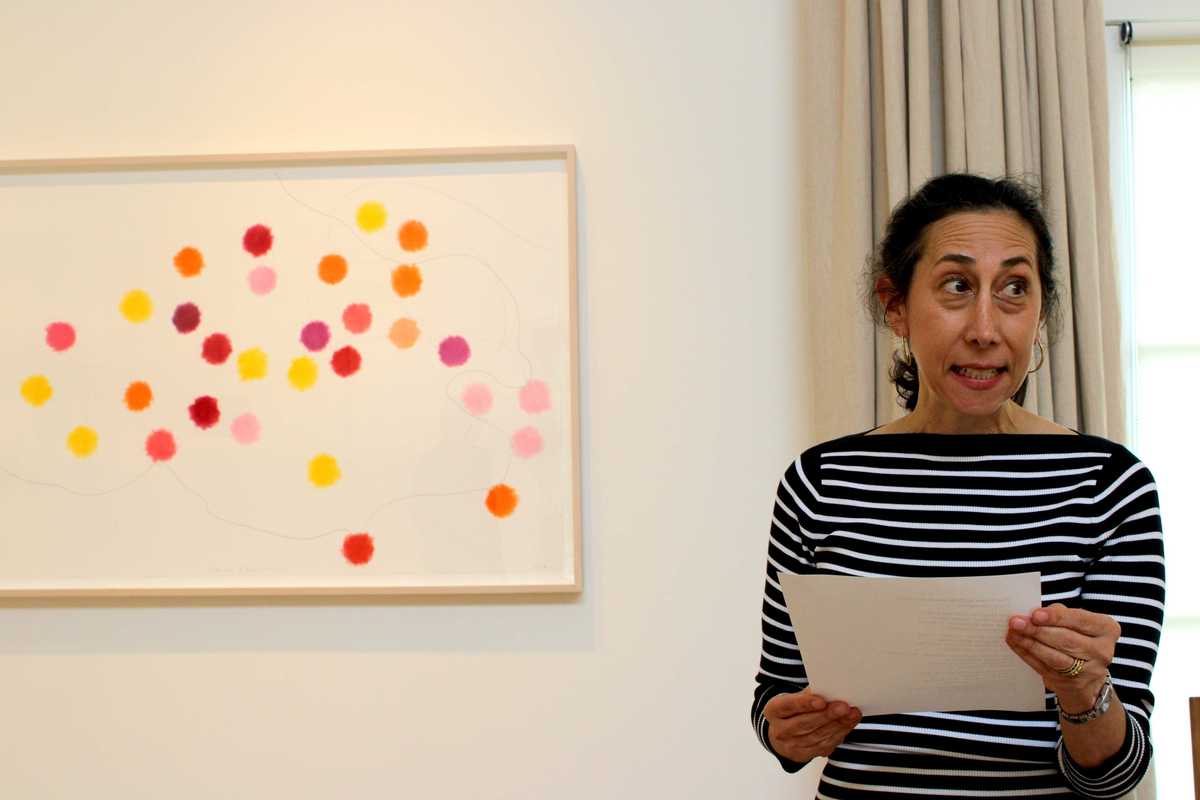
Curator Deborah Goodman Davis reads the Emily Dickinson poem “The Grass So Little Has to Do.” Spencer Finch’s “Following Three Bees (Zinnias)” buzzes in the background.

Photo by Natalia Zukerman

“The Grass Has So Little to Do,” on view at James Barron Art in Kent, takes its title from Emily Dickinson’s poem “The Grass So Little Has to Do,” written in 1862:

“The Grass so little has to do—
A Sphere of simple Green—
With only Butterflies to brood
And Bees to entertain—”

Keep ReadingShow less

Marina Kotchoubey is not a woodworker

Marina Kotchoubey is not a woodworker

Marina Kotchoubey at the Ian Ingersoll Cabinetmakers showroom in West Cornwall.

Photo by D.H. Callahan

After 40-something years navigating the world of custom fine furniture, Ian Ingersoll was getting ready to retire. Starting off with a little dovetail stool that he sold at a shop in West Cornwall in the 1970s, he’d grown his skill and his business into something he — and the whole town — could be proud of. Shutting down that business was not an option.

Ingersoll built Ian Ingersoll Cabinetmakers, which produced mainly classical Shaker furniture, on passion: the passion he had to make a living through creative challenges and the passion of his employees, who all seem deeply in love with their craft.

Keep ReadingShow less
A legacy of giving at Norfolk Chamber Music Festival

One hundred and twenty years ago, Carl and Ellen Stoeckel commissioned New York architect E.K. Rossiter to design The Music Shed in Norfolk, Connecticut. After nearly a decade of entertaining their friends and neighbors with the finest music of the day, they built a permanent home for their beloved Litchfield County Choral Union.

The commission and full funding of the construction was not unheard of in an era when great fortunes led to public enrichment. Railroad tycoon John D. Rockefeller was instrumental in funding institutes of higher education. Steel baron Andrew Carnegie was building libraries all over the country, and famously said that a man who dies rich is a disgrace, challenging his peers to give their fortunes back to the people.

Keep ReadingShow less
google preferred source

Want more of our stories on Google? Click here to make us a Preferred Source.
Two unique exhibitions at Geary Gallery

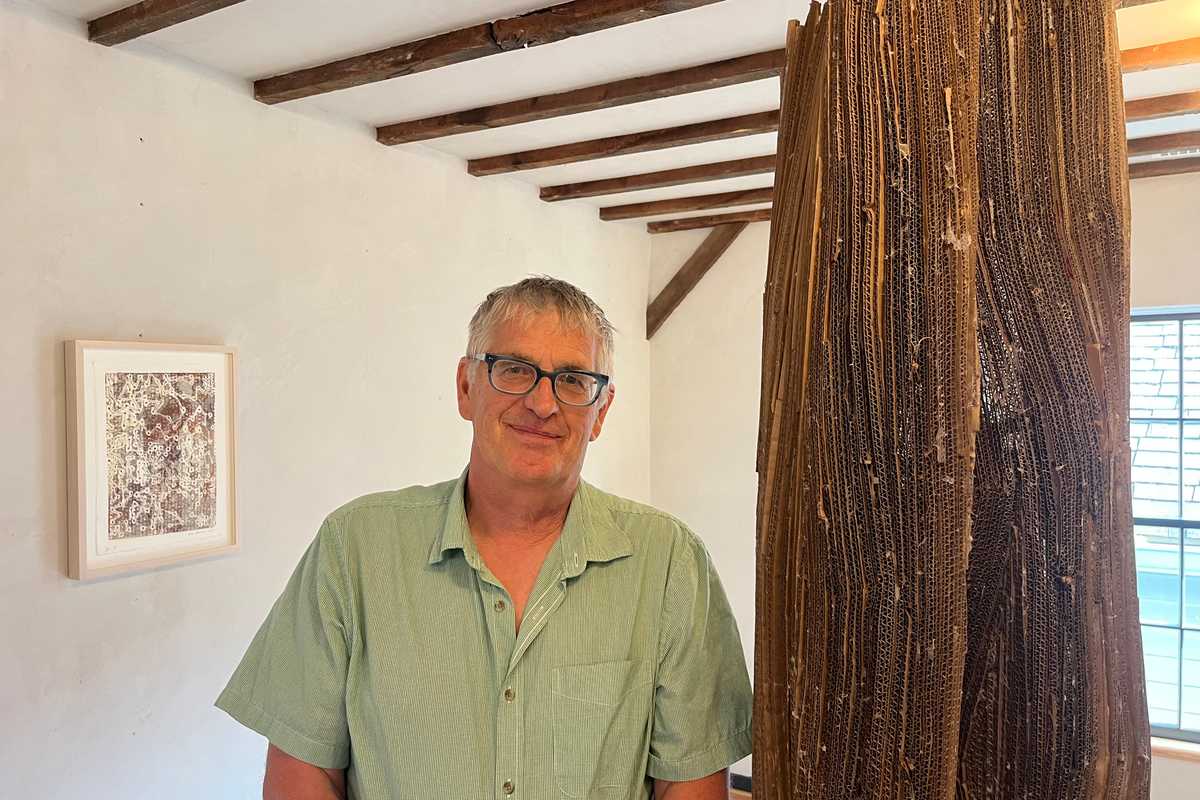
Henry Klimowicz with his sculpture, “Partial Pillar 1”

Photo by D.H. Callahan

On Saturday, Aug. 1, Geary Gallery opened its doors in Salisbury for two unique shows in its first- and second-floor gallery spaces. Art lovers flooded both floors over the course of the afternoon, giving the events a vibrant feeling that enhanced the importance of the art.

On the first floor is a show by Chicago-born, Colorado-based photographer Summers Moore, titled “Lobitos: Pueblo Fantasma,” or “Lobitos: Ghost Town.” The work centers around her daughter’s current hometown in Peru. Moore herself found a home away from home in Colorado in the mid-1980s and encouraged her children to seek out new places outside of their comfort zones.

Keep ReadingShow less

Writer’s retreat in the woods

Writer’s retreat in the woods

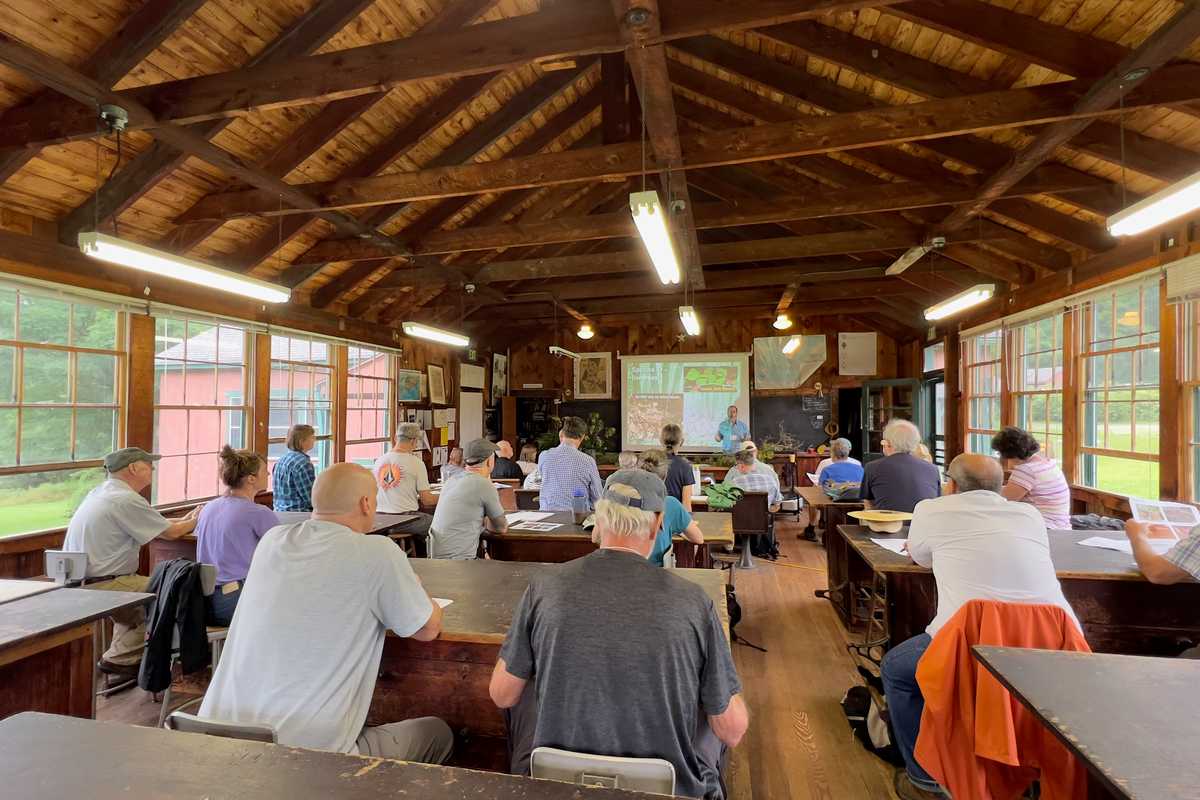
Participants in a 2024 Great Mountain Forest Woodland Academy workshop at Yale Camp.

Photo by Mike Zarfos

Great Mountain Forest (GMF) will host its first Nature Writing Retreat at the historic Yale Camp in Falls Village from Aug. 7-9, 2026. Writers of all levels are invited to draw inspiration from one of New England’s most notable forest landscapes. GMF envisions the retreat becoming an annual event celebrating writing, conservation and the relationship between people and forests.

This immersive three-day retreat reflects on the legacy of Hal Borland, the American writer and New York Times nature columnist whose work was deeply connected to this landscape. The retreat explores how wilderness shapes language, strengthens close observation and fosters environmental consciousness.

Keep ReadingShow less
From Cornwall to Rome, Adam Van Doren at Berkshire Botanical Garden

Artist Adam Van Doren and curator Donna Hassler talk to a group of visitors at the Berkshire Botanical Garden. A Stephen Proctor vessel sits to their left.

Photo by Natalia Zukerman

This summer, the Berkshire Botanical Garden in Stockbridge has hosted “Grounded in Nature: Paintings by Adam Van Doren,” an exhibition exploring the intimate relationship between architecture and the natural world.

On view for only a few more weeks in the Leonhardt Galleries, the exhibition features more than 35 watercolor and oil paintings by the New York-based artist, architect, author and Yale professor, curated by art historian Donna Hassler, director emerita of Chesterwood. The works span three distinct places that have shaped Van Doren’s artistic practice: New York City, Cornwall, Connecticut, and his travels throughout Europe.

Keep ReadingShow less
google preferred source

Want more of our stories on Google? Click here to make us a Preferred Source.
google preferred source

Want more of our stories on Google? Click here to make us a Preferred Source.