Thank you!
Your support is sustaining the future of local news in our communities.

Lee H. Kellogg long-range panel looks to school's future


FALLS VILLAGE — What will the Lee H. Kellogg School look like in five, 10 or 20 years? No one knows the precise answer to that question, but two changes are all but certain: There will be fewer students than there are now and the cost of running the school will continue to rise.

The recently formed Kellogg Long-range Planning Committee met Feb. 14 to consider what the future holds for the second smallest school in the state. The committee was appointed last fall by the town’s Board of Education to consider the physical plant, operations and staffing.

Newly elected co-chairs Ross Grannan and Doug Cohn agreed with other committee members that most residents view the Kellogg School as a gem and a key inducement for out-of-towners to consider moving to Falls Village.

But there was concern that careful consideration should be given to appropriate levels of staffing, an aging physical plant and increasingly expensive technology needs, as enrollments continue to decline at the 100-student K-8 school.

"It all comes down to the almighty buck," said committee member (and First Selectman) Pat Mechare. At about $17,000, Kellogg has the highest per-pupil costs in the state.


Options for a shrinking school


As the committee tried to establish the top four issues, Mechare offered three off the top of her head: staffing, enrollment and building maintenance.

In the past, some taxpayers have questioned whether it’s cost-efficient to run such a small school when Kellogg’s students could be sent on a tuition basis to other Region One elementary schools, almost of all of which have excess capacity.

Mechare said the town conducted a study in 1981 that determined if Kellogg’s enrollment dipped below 87 students, then it would be less expensive to bus the students to surrounding schools.

At that time, enrollment was in the 90s; it rose about 30 percent over the next 20 years. The student population has never reached the bottom-line threshold since then.

The town will face a dramatic increase in education spending in two years. This June, Kellogg will graduate 22 eighth-graders, most of whom will attend Housatonic Valley Regional High School. The tuition bill for those students will arrive the following year (costs are assessed in October of each year; towns are billed in the following fiscal year, which begins July 1).

Only 11 Kellogg students went to Housatonic this year, so the town’s spending on educating its secondary students could double. The cost for each student at Housatonic this year is $16,793.

This year the cost of running Kellogg rose from $1,672,732 to $1,712,288, or 2.4 percent. However, the town’s total education spending dropped from $2.85 million to $2.7 million, or by 5.2 percent, because of a decrease last year in the number of students from Falls Village attending Housatonic.

With only 101 students (down from 118 in 1999-2000) Kellogg is easily the smallest elementary/middle school among the six towns in the Region One School District. In the last three years alone, the school has lost almost 13 percent of its student population. The high cost of housing and the scarcity of good-paying jobs have been cited as factors.


A good school helps a town grow


"The demographics of the town are changing," said committee and school board member Betsy Howie. "This town has been extremely supportive of public education," added Mechare, a former board of education member and retired teacher at Kent Center School.

"The school is the main thing that will attract people here," Cohn said.

Still, change can stir the pot. Last year, first-year Principal Maria Bulson decided to expand the number of multi-age groups — or the number of grades that hold their classes together.

Previously, the school grouped kindergarten, first grade and second grade into one class; grades six and seven in another; and all other grades in their own classes.

But beginning last fall, there were four multi-age groupings: kindergarten and grade one; grades two and three; grades four and five; and grades six and seven. Grade eight remains a stand-alone class. The multi-age groupings are team-taught by more than one faculty member, so no teacher had to be let go.

Some members of the public objected, although many of the complaints were about the way in which the plan was decided and announced. Some felt there was not enough openness in the process.

Mechare said she thought current levels of staffing could be maintained, even as enrollments shrink, but that adding a new position could be a tough sell to taxpayers.


Future meetings


The committee agreed to look closely at several topics that could be grouped into four interrelated categories: building/technology/maintenance; assessments/programs/academics; enrollment/staffing; and school-community relations.

The committee will issue quarterly reports and hopes to complete its recommendations to the Board of Education by next March. The next meeting will be March 13 at 5:30 p.m. in the school library.

Other committee members who attended the Feb. 14 meeting included former school board chairman Kent Allyn, school custodian Bill Beebe, teacher Robin Faust, teacher Eileen Rogers, librarian Joan Wingard, Bulson and Region One Superintendent Patricia Chamberlain.

Latest News

‘So Little to Do,’ so much to discover at James Barron Art

Curator Deborah Goodman Davis reads the Emily Dickinson poem “The Grass So Little Has to Do.” Spencer Finch’s “Following Three Bees (Zinnias)” buzzes in the background.

Photo by Natalia Zukerman

“The Grass Has So Little to Do,” on view at James Barron Art in Kent, takes its title from Emily Dickinson’s poem “The Grass So Little Has to Do,” written in 1862:

“The Grass so little has to do—
A Sphere of simple Green—
With only Butterflies to brood
And Bees to entertain—”

Keep ReadingShow less
Marina Kotchoubey is taking care of business

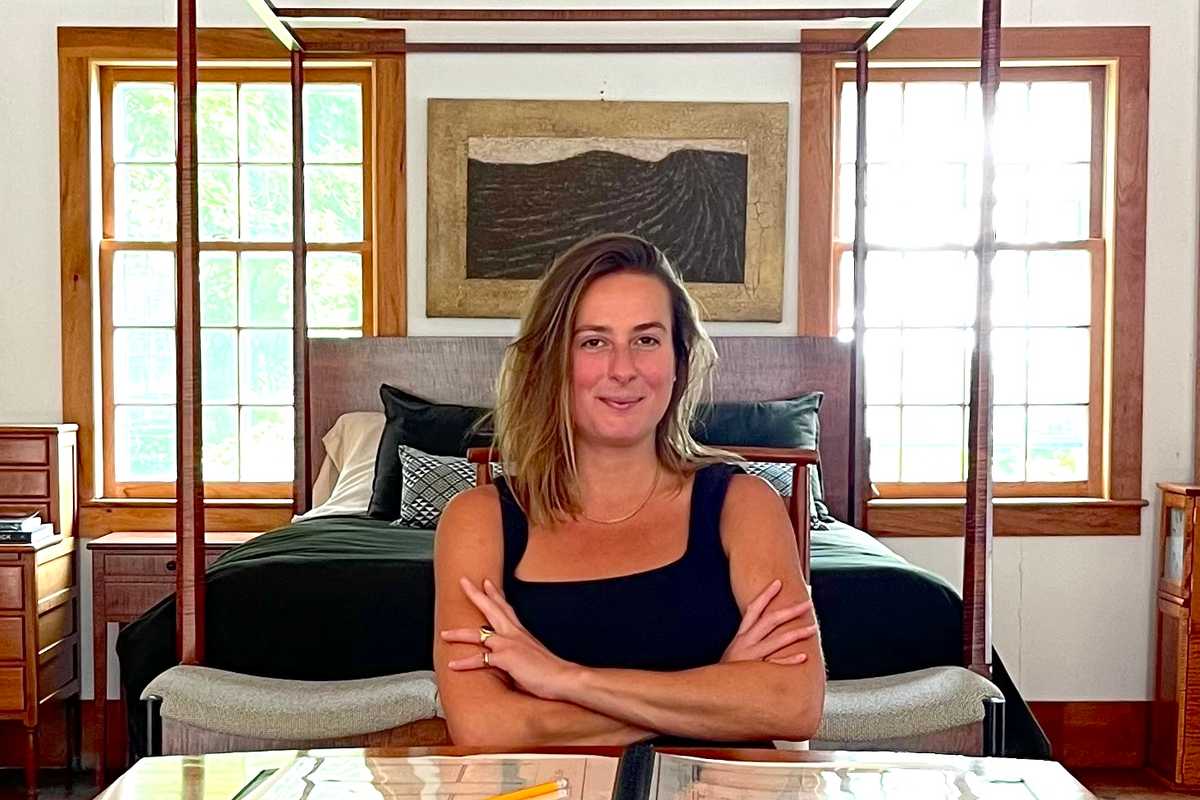
Marina Kotchoubey at the Ian Ingersoll Cabinetmakers showroom in West Cornwall.

Photo by D.H. Callahan

After 40-something years navigating the world of custom fine furniture, Ian Ingersoll was getting ready to retire. Starting off with a little dovetail stool that he sold at a shop in West Cornwall in the 1970s, he’d grown his skill and his business into something he — and the whole town — could be proud of. Shutting down that business was not an option.

Ingersoll built Ian Ingersoll Cabinetmakers, which produced mainly classical Shaker furniture, on passion: the passion he had to make a living through creative challenges and the passion of his employees, who all seem deeply in love with their craft.

Keep ReadingShow less
A legacy of giving at Norfolk Chamber Music Festival

One hundred and twenty years ago, Carl and Ellen Stoeckel commissioned New York architect E.K. Rossiter to design The Music Shed in Norfolk, Connecticut. After nearly a decade of entertaining their friends and neighbors with the finest music of the day, they built a permanent home for their beloved Litchfield County Choral Union.

The commission and full funding of the construction was not unheard of in an era when great fortunes led to public enrichment. Railroad tycoon John D. Rockefeller was instrumental in funding institutes of higher education. Steel baron Andrew Carnegie was building libraries all over the country, and famously said that a man who dies rich is a disgrace, challenging his peers to give their fortunes back to the people.

Keep ReadingShow less
google preferred source

Want more of our stories on Google? Click here to make us a Preferred Source.
Two unique exhibitions at Geary Gallery

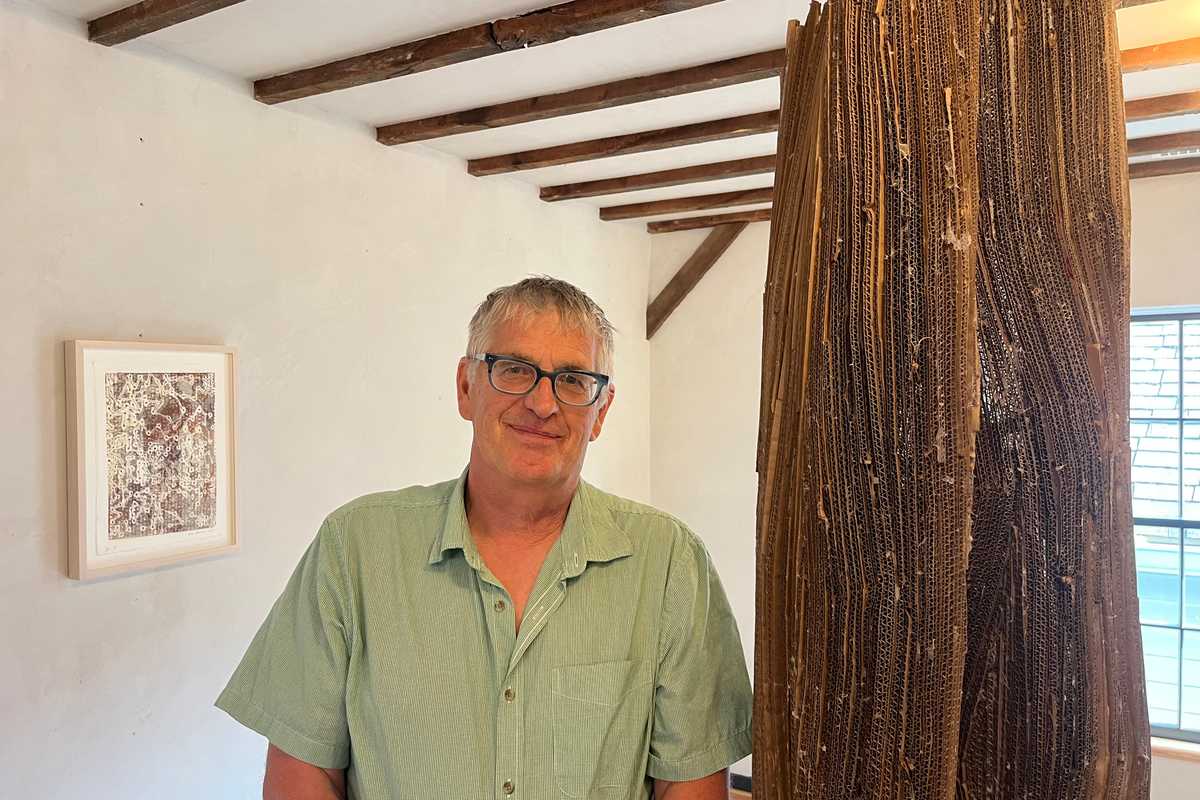
Henry Klimowicz with his sculpture, “Partial Pillar 1”

Photo by D.H. Callahan

On Saturday, Aug. 1, Geary Gallery opened its doors in Salisbury for two unique shows in its first- and second-floor gallery spaces. Art lovers flooded both floors over the course of the afternoon, giving the events a vibrant feeling that enhanced the importance of the art.

On the first floor is a show by Chicago-born, Colorado-based photographer Summers Moore, titled “Lobitos: Pueblo Fantasma,” or “Lobitos: Ghost Town.” The work centers around her daughter’s current hometown in Peru. Moore herself found a home away from home in Colorado in the mid-1980s and encouraged her children to seek out new places outside of their comfort zones.

Keep ReadingShow less

Writer’s retreat in the woods

Writer’s retreat in the woods

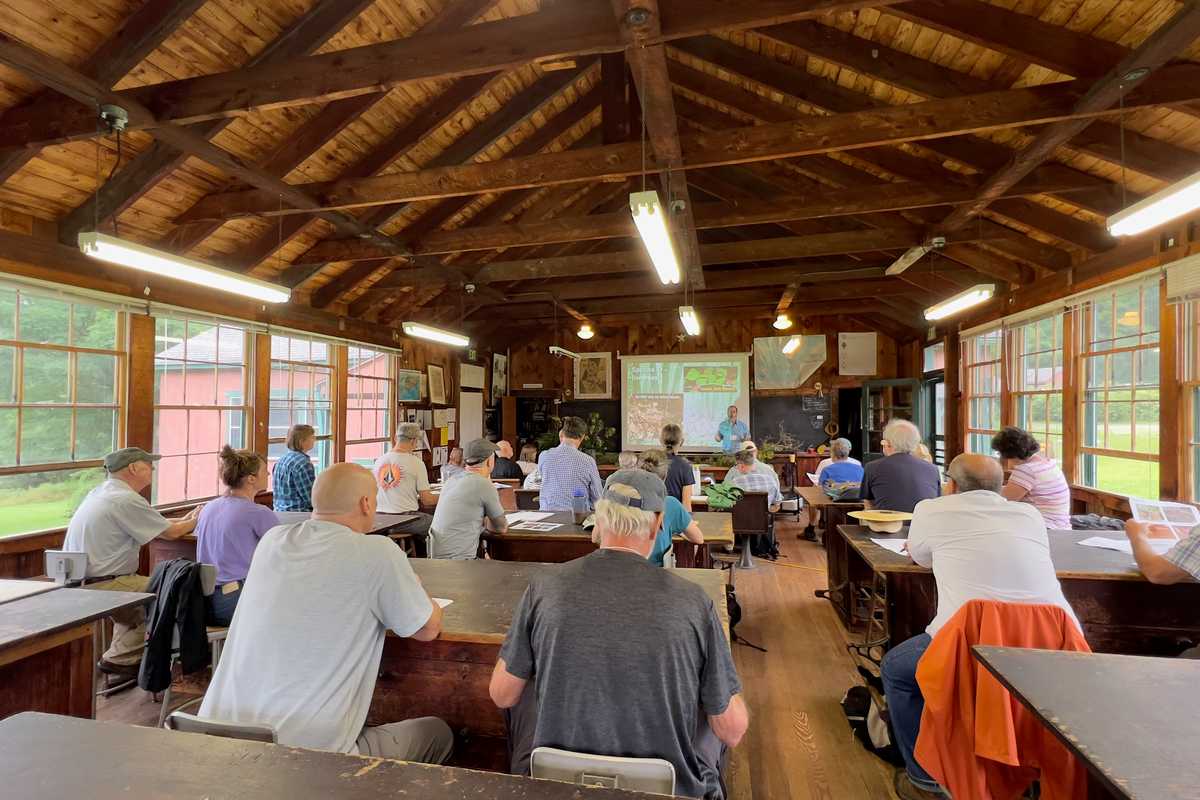
Participants in a 2024 Great Mountain Forest Woodland Academy workshop at Yale Camp.

Photo by Mike Zarfos

Great Mountain Forest (GMF) will host its first Nature Writing Retreat at the historic Yale Camp in Falls Village from Aug. 7-9, 2026. Writers of all levels are invited to draw inspiration from one of New England’s most notable forest landscapes. GMF envisions the retreat becoming an annual event celebrating writing, conservation and the relationship between people and forests.

This immersive three-day retreat reflects on the legacy of Hal Borland, the American writer and New York Times nature columnist whose work was deeply connected to this landscape. The retreat explores how wilderness shapes language, strengthens close observation and fosters environmental consciousness.

Keep ReadingShow less
From Cornwall to Rome, Adam Van Doren at Berkshire Botanical Garden

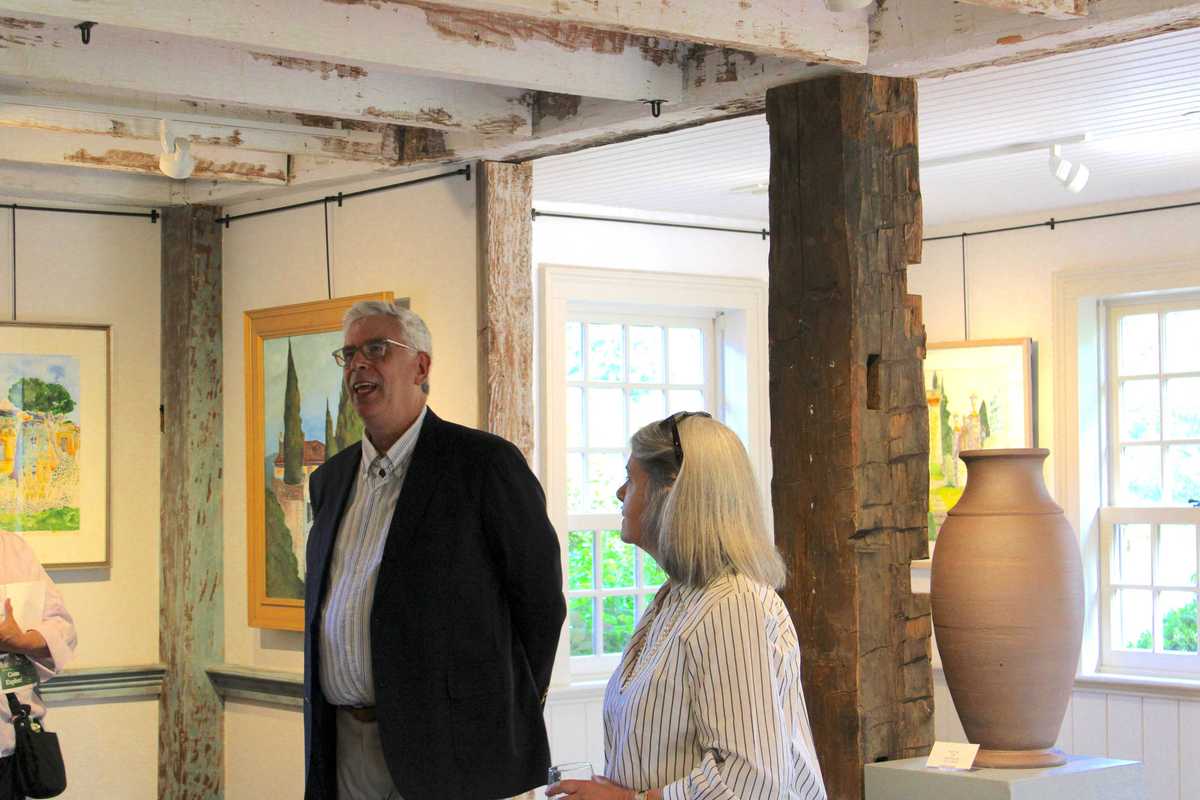
Artist Adam Van Doren and curator Donna Hassler talk to a group of visitors at the Berkshire Botanical Garden. A Stephen Proctor vessel sits to their left.

Photo by Natalia Zukerman

This summer, the Berkshire Botanical Garden in Stockbridge has hosted “Grounded in Nature: Paintings by Adam Van Doren,” an exhibition exploring the intimate relationship between architecture and the natural world.

On view for only a few more weeks in the Leonhardt Galleries, the exhibition features more than 35 watercolor and oil paintings by the New York-based artist, architect, author and Yale professor, curated by art historian Donna Hassler, director emerita of Chesterwood. The works span three distinct places that have shaped Van Doren’s artistic practice: New York City, Cornwall, Connecticut, and his travels throughout Europe.

Keep ReadingShow less
google preferred source

Want more of our stories on Google? Click here to make us a Preferred Source.
google preferred source

Want more of our stories on Google? Click here to make us a Preferred Source.