Thank you!
Your support is sustaining the future of local news in our communities.

Leftist, Middle-Class . . . and Iranian: Growing up different, at home and abroad


The film "Persepolis," based on Marjane Satrapi's graphic novel about her early life in Iran, tells the story of a bright little girl growing up during the 1980s, but it is completely unlike any other coming-of-age story.  

Told through Satrapi's starkly beautiful black-and-white drawings brought to simple and elegant life, the story begins as the Shah is deposed in 1979. Marjane is about 10 years old, a devotee of Bruce Lee and Adidas, and curious about everything. Her parents, leftist intellectuals and comfortably middle class, explain to her how terrible life under the Shah's rule has been and express their hope that the revolution will lead to greater freedom and progress.  At first their hopes seem justified: Her beloved Uncle Anoush is released from prison, but it isn't long before the new Islamist regime, and then a devastating war with Iraq, bring much greater repression.    

  Marjane wears the veil forced on her, but refuses to submit in spirit. She passes notes in class (about subversive Western music like the Bee Gees; she later discovers punk), speaks heresy to her teachers, and talks back to the authorities. In one of the funniest and loveliest scenes, she begs some money from her mother and heads out to a Tehran street corner, where shadowy looking men are whispering the names of the contraband they are selling - not drugs, but smuggled tapes of Michael Jackson and Iron Maiden.

She is not the only one rebelling - behind closed doors, her parents and their friends take off their veils, listen to Western music, dance, smoke and drink alcohol, insisting on carrying on their lives as they did before, but in fear of the consequences if they are caught.

  Increasingly afraid for their outspoken daughter's safety, her parents finally send her away to live with friends in Vienna. She attends a French school and befriends a group of pretentious anarchists. She quickly forgets her wise grandmother's advice (remember who you are and where you came from) in order to fit in. The alienation she feels while abroad, in which she must forsake her identity to be free, acutely illustrates her dilemma.  (It's why her parents don't leave - they know they'd be forced to work as menials.) She loves and is loyal to Iran but can't be herself fully there either.  Despite this, after a few years in Vienna, a love affair gone bad and a run-in with a crazy landlady leave her homeless.  After she winds up in the hospital after passing out on a wintry street, she goes home to Iran. 

  At first she is dazed by the return to fundamentalist society, and spirals into deep depression. But she snaps herself out of it (after a pep talk from God, with whom she chats from time to time) and enrolls in university, still rebellious to the core. She still passes notes to her friends, speaks heresy to her teachers, and talks back to the authorities - only the stakes are higher now as an adult.

  Absurdities mount. In art class she is forced to draw models who are completely covered from head to toe (they don't learn much anatomy but get really good at drawing drapery). One day, running down the street to catch a bus, she is stopped by the police, who admonish her not to run in public as it makes her rear end move obscenely.

"Then stop staring at my ass!" she screams back.

  While politics shapes Marjane's life and experiences, "Persepolis" isn't an explicitly political movie, except inasmuch as Satrapi wishes to show that Iranians cannot be defined by the few extremists seen on Western TV.  She paints, literally, a portrait of a lively and modern society, hidden under a veil but still waiting to burst free.

  "Persepolis" is rated PG-13 for violent images, sexual references, language and brief drug content. It opens Friday at the Triplex in Great Barrington, MA, and the following week at The Moviehouse in Millerton, NY.


Latest News

‘So Little to Do,’ so much to discover at James Barron Art

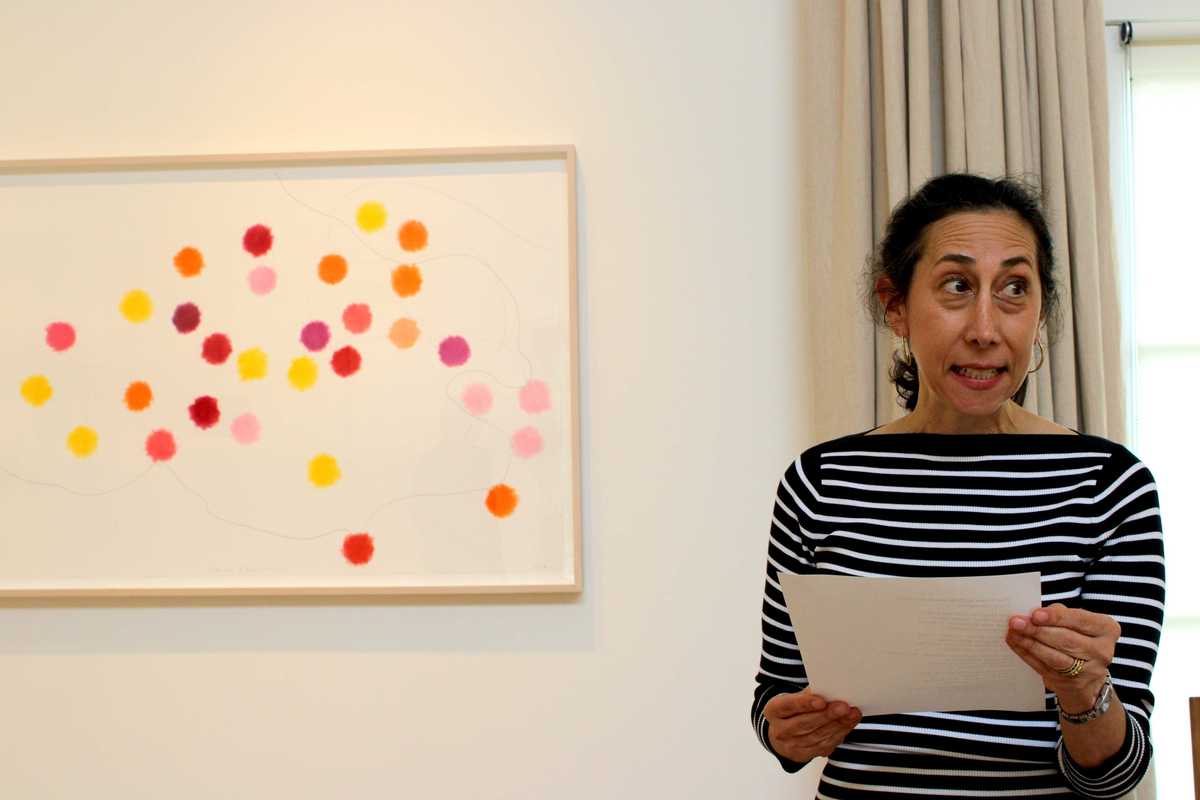
Curator Deborah Goodman Davis reads the Emily Dickinson poem “The Grass So Little Has to Do.” Spencer Finch’s “Following Three Bees (Zinnias)” buzzes in the background.

Photo by Natalia Zukerman

“The Grass Has So Little to Do,” on view at James Barron Art in Kent, takes its title from Emily Dickinson’s poem “The Grass So Little Has to Do,” written in 1862:

“The Grass so little has to do—
A Sphere of simple Green—
With only Butterflies to brood
And Bees to entertain—”

Keep ReadingShow less

Marina Kotchoubey is not a woodworker

Marina Kotchoubey is not a woodworker

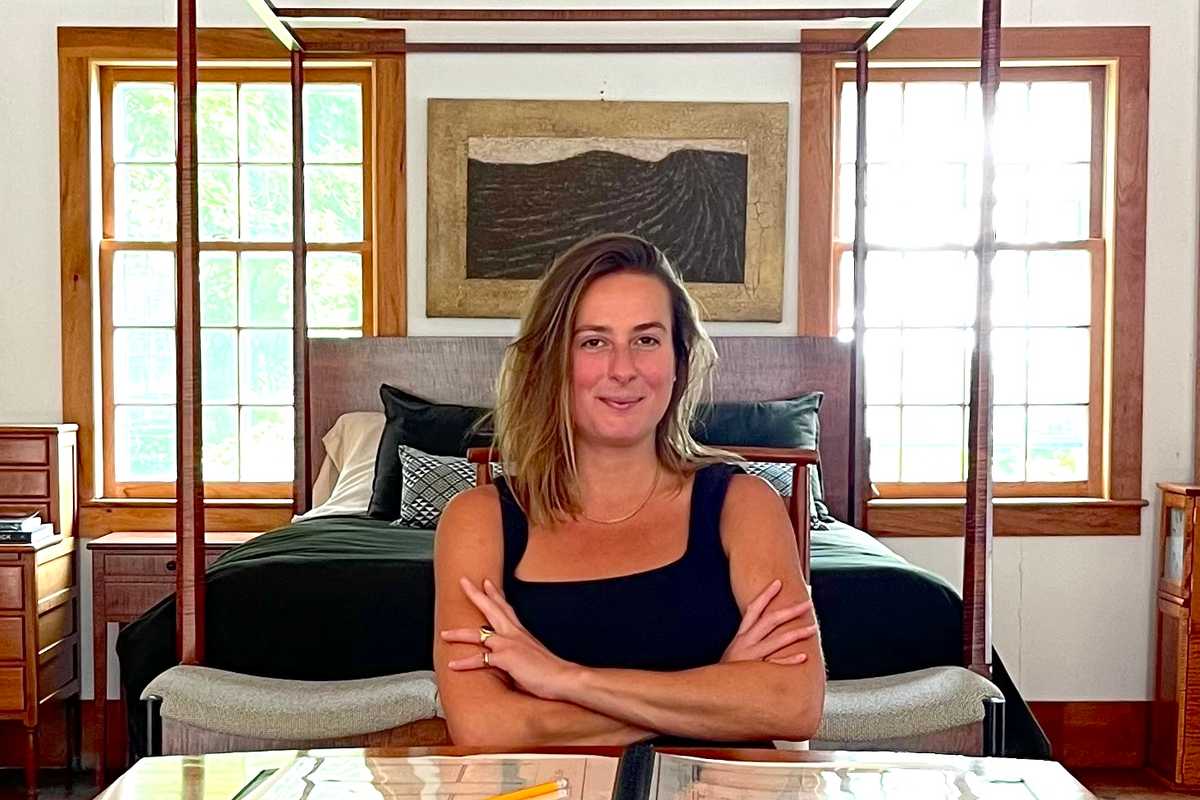
Marina Kotchoubey at the Ian Ingersoll Cabinetmakers showroom in West Cornwall.

Photo by D.H. Callahan

After 40-something years navigating the world of custom fine furniture, Ian Ingersoll was getting ready to retire. Starting off with a little dovetail stool that he sold at a shop in West Cornwall in the 1970s, he’d grown his skill and his business into something he — and the whole town — could be proud of. Shutting down that business was not an option.

Ingersoll built Ian Ingersoll Cabinetmakers, which produced mainly classical Shaker furniture, on passion: the passion he had to make a living through creative challenges and the passion of his employees, who all seem deeply in love with their craft.

Keep ReadingShow less
A legacy of giving at Norfolk Chamber Music Festival

One hundred and twenty years ago, Carl and Ellen Stoeckel commissioned New York architect E.K. Rossiter to design The Music Shed in Norfolk, Connecticut. After nearly a decade of entertaining their friends and neighbors with the finest music of the day, they built a permanent home for their beloved Litchfield County Choral Union.

The commission and full funding of the construction was not unheard of in an era when great fortunes led to public enrichment. Railroad tycoon John D. Rockefeller was instrumental in funding institutes of higher education. Steel baron Andrew Carnegie was building libraries all over the country, and famously said that a man who dies rich is a disgrace, challenging his peers to give their fortunes back to the people.

Keep ReadingShow less
google preferred source

Want more of our stories on Google? Click here to make us a Preferred Source.
Two unique exhibitions at Geary Gallery

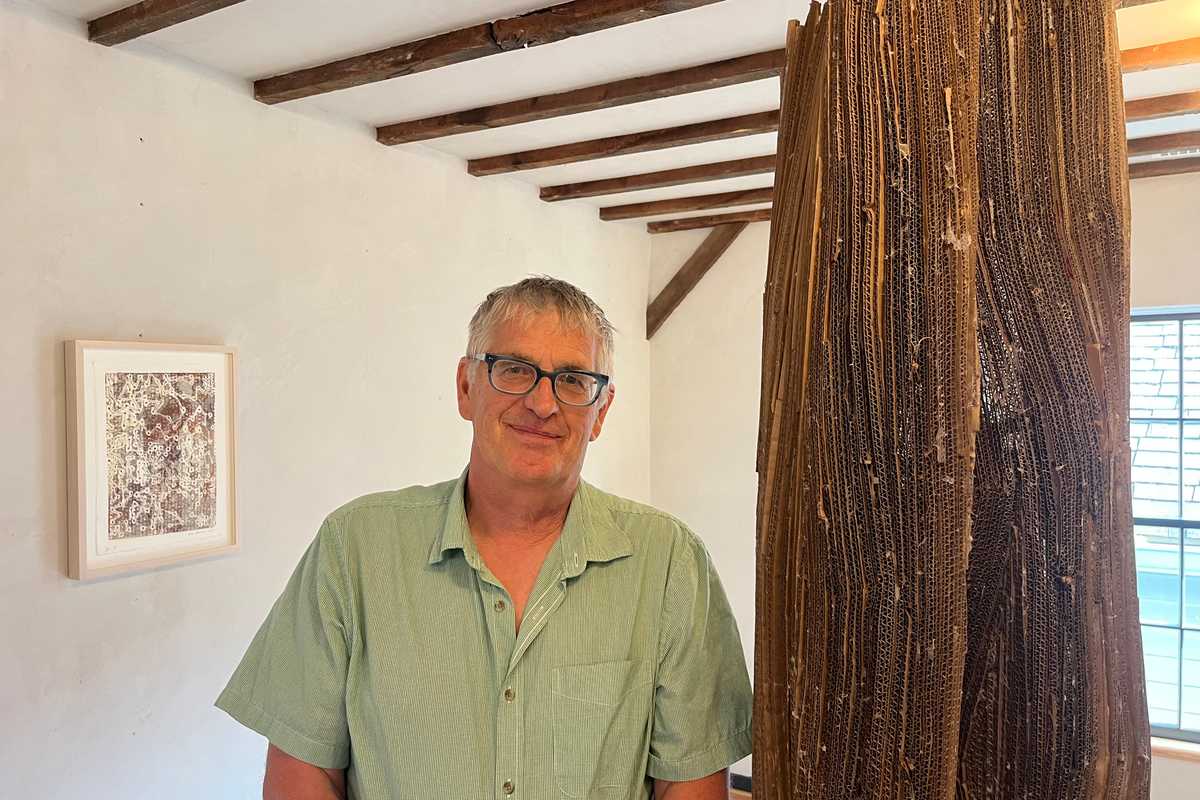
Henry Klimowicz with his sculpture, “Partial Pillar 1”

Photo by D.H. Callahan

On Saturday, Aug. 1, Geary Gallery opened its doors in Salisbury for two unique shows in its first- and second-floor gallery spaces. Art lovers flooded both floors over the course of the afternoon, giving the events a vibrant feeling that enhanced the importance of the art.

On the first floor is a show by Chicago-born, Colorado-based photographer Summers Moore, titled “Lobitos: Pueblo Fantasma,” or “Lobitos: Ghost Town.” The work centers around her daughter’s current hometown in Peru. Moore herself found a home away from home in Colorado in the mid-1980s and encouraged her children to seek out new places outside of their comfort zones.

Keep ReadingShow less

Writer’s retreat in the woods

Writer’s retreat in the woods

Participants in a 2024 Great Mountain Forest Woodland Academy workshop at Yale Camp.

Photo by Mike Zarfos

Great Mountain Forest (GMF) will host its first Nature Writing Retreat at the historic Yale Camp in Falls Village from Aug. 7-9, 2026. Writers of all levels are invited to draw inspiration from one of New England’s most notable forest landscapes. GMF envisions the retreat becoming an annual event celebrating writing, conservation and the relationship between people and forests.

This immersive three-day retreat reflects on the legacy of Hal Borland, the American writer and New York Times nature columnist whose work was deeply connected to this landscape. The retreat explores how wilderness shapes language, strengthens close observation and fosters environmental consciousness.

Keep ReadingShow less
From Cornwall to Rome, Adam Van Doren at Berkshire Botanical Garden

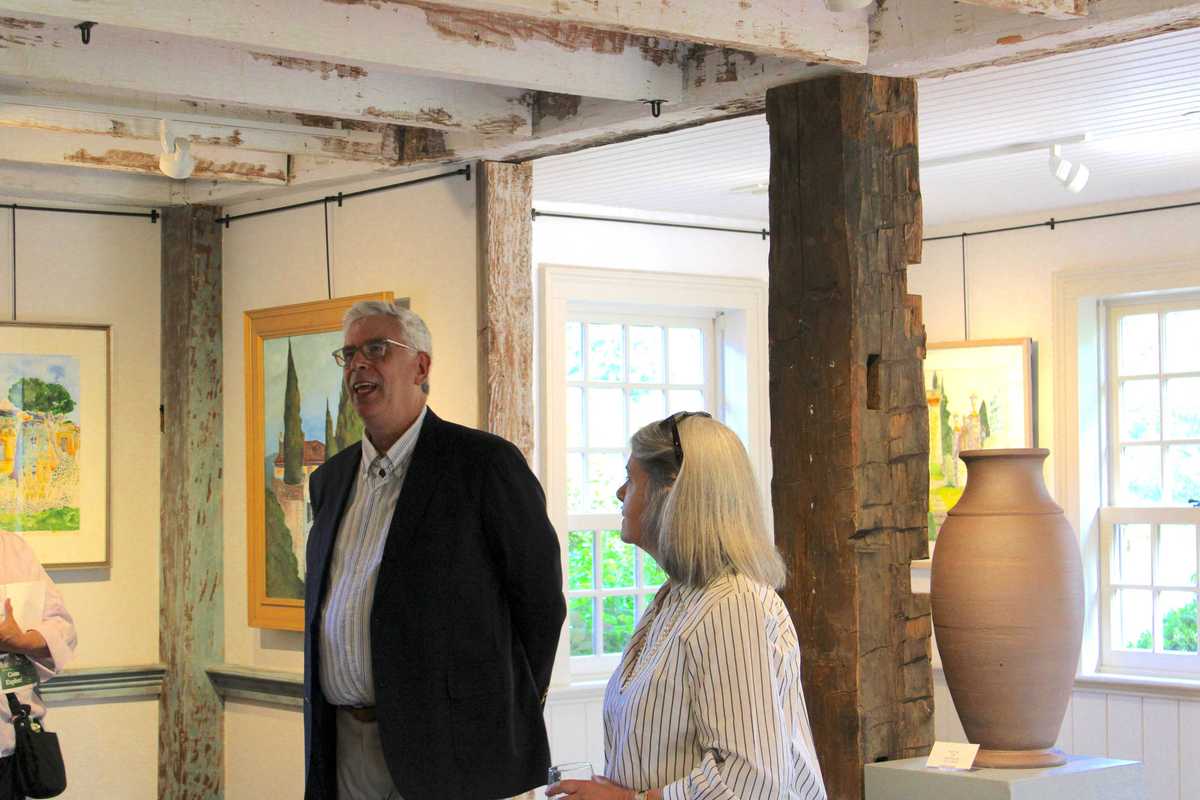
Artist Adam Van Doren and curator Donna Hassler talk to a group of visitors at the Berkshire Botanical Garden. A Stephen Proctor vessel sits to their left.

Photo by Natalia Zukerman

This summer, the Berkshire Botanical Garden in Stockbridge has hosted “Grounded in Nature: Paintings by Adam Van Doren,” an exhibition exploring the intimate relationship between architecture and the natural world.

On view for only a few more weeks in the Leonhardt Galleries, the exhibition features more than 35 watercolor and oil paintings by the New York-based artist, architect, author and Yale professor, curated by art historian Donna Hassler, director emerita of Chesterwood. The works span three distinct places that have shaped Van Doren’s artistic practice: New York City, Cornwall, Connecticut, and his travels throughout Europe.

Keep ReadingShow less
google preferred source

Want more of our stories on Google? Click here to make us a Preferred Source.
google preferred source

Want more of our stories on Google? Click here to make us a Preferred Source.