
Legitimate security surveillance versus unlawful, warrantless wiretapping


he New York Times reports this week that Congressional Democrats,fearing they will be called soft on terrorism, seem ready to extend the U.S. administration's wiretap powers. In fairness, the Democrats are also attaching strict conditions, including the requirement that records of who was wiretapped and why are kept, and not destroyed. This will facilitate future Congressional investigation of abuses in the exercise of those wiretap powers.

By a vote of 227 to 183, Congress recently endorsed amendments so broad and vague that they could be construed to grant the government power to collect an array of information on U.S. citizens taken from electronic sources, business records and physical searches — without court warrant. Does the extension of warrantless search powers conform to the highest law in the land? The short answer is No.


u u u


The basic constitutional law on search and seizure is, of course, as set forth in the Fourth Amendment: "The right of the people to be secure in their persons, houses, papers and effects, against unreasonable searches and seizures, shall not be violated, and no warrants shall issue, but upon probable cause, supported by Oath or affirmation, and particularly describing the place to be searched, and the persons or things to be seized."

The U.S. Supreme Court has consistently held, and notably in the 1961 case of Mapp v. Ohio, that government use of personal information is unconstitutional when obtained through an unlawful search and seizure, such as warrantless wiretapping or eavesdropping. This does not mean that all warrantless searches are illegal. Far from it. The courts have upheld warrantless searches in public schools, in government offices, and on border patrols — all special risk situations where there is no legitimate expectation of privacy.

Throughout the Cold War, from the late 1940s onward, U.S. intelligence agencies, police and security services have, without warrant, intercepted telephone, radio, voice and other communications, as a means of detecting and hopefully deterring the impending launch of intercontinental ballistic missiles, nuclear devices, clandestine explosives, biochemicals, other acts of sabotage, spy networks, as well as illegal trafficking in weapons and illicit drugs. The unstated, prevailing policy has been: Don’t ask, don’t tell.


u u u


Today we face the new prospect of international and home-grown terrorism. It is common to say that this changes everything. It does not. What has changed in the 21st century is the sheer volume of global communications and the advance in technical capabilities for both sending and intercepting communications. But the basic dilemma remains the same: We continue to need the freedom to carry out what I would call broad "epidemiological" surveillance, to detect and deter risks, but do so through a process that does not allow warrantless invasion of personal privacy.

This is the key distinction implicit in the Fourth Amendment. Certain kinds of impersonal surveillance may be a national necessity, but what is critical is the protection of personal freedom, the right of privacy and the sanctity of personhood embodied in the U.S. Constitution.

It is rare that I agree with Judge Richard Posner of the U.S. Court of Appeals for the Seventh Circuit, and professor at the University of Chicago Law School, but Posner has seized on this distinction where few others have: "Once you grant the legitimacy of surveillance aimed at detection rather than at gathering evidence of guilt, requiring a warrant to conduct it would be like requiring a warrant to ask people questions or to install surveillance cameras on city streets."

Failing to see this distinction, and failing to note what the Fourth Amendment intends to protect, the U.S. administration and Congress are thus wrongly slicing the pie in the amended FISA act. Instead of defining the legitimate zone of "epidemiological" detection surveillance and its limits, they are extending the government’s powers of warrantless search and seizure into the personal privacy domain. The logic of the Fourth Amendment is thereby violated.


u u u


The U.S. administration and Congress are caught up in debate about whether a communication is between U.S. citizens, whether it is overseas, and whether it involves persons already suspected of terrorist activities or leanings. Even if these distinctions were relevant, the fact of the matter is that today’s communications technologies, including switching systems, are so sophisticated that it is virtually impossible even to site the communication geographically, let alone by nationality — as if that mattered. The debate is impractical, and it takes the eye off the key issue.

The better way to address the problem and phrase and implement the law is this: Allow a defined lattitude of "epidemiological" risk detection surveillance without warrant, but when reasonable expectation of probable cause is detected, and targeted surveillance, active search or seizure, or invasion of a person’s privacy appears warranted, then require as a matter of absolute legal necessity the obtaining of a warrant from a reviewing court of law (e.g. the FISA court).

The argument that presenting to a court of law evidence of probable cause would somehow endanger national security is a false one. The court, which may be convened in closed session, wants to hear or see the actual evidence for reasonable suspicion, not the details of how a particular surveillance program or technology works. The current administration tends to use this false argument, not to protect national security, but to evade judicial oversight of illegal government search and seizure, and false imprisonment.


u u u


How should the system work? Example: Suppose the National Security Agency and the Federal Bureau of Investigation intercept a communication that could suggest that a dirty nuclear bomb is being sent to and picked up by a shipping agent in New York harbor. No warrant is required so far, since the interception is of a general "epidemiological" risk detection surveillance nature. Now, the NSA, FBI or NYPD want to specifically "wiretap" and track the shipping agent, and/or search his person, his phone records, his computer, his e-mails, his business records, and perhaps his home premises in Brooklyn. That requires a warrant. Concerned officials may go ahead and act immediately, provided that within three days they must absolutely apply to the court to obtain a warrant in accordance with constitutional and federal law.

We can sum this up succinctly: Legitimate security surveillance, yes. Unlawful warrantless wiretapping, eavesdropping, search or seizure, no. Your personal reading preferences at your local library, No way, never.

The difficult challenge to drafting and implementing intelligence surveillance legislation that will not contravene the clear intent of the Fourth Amendment will be to respect the bright line we must draw between legitimate risk detection surveillance and unlawful warantless violation of personal privacy. The task will not be easy. It must be bipartisan. Unless and until we do the work, the government will continue to make a perfect mess of it, and the price will be paid out of our personal freedom and security.


Sharon resident Anthony Piel is a former director and legal counsel of the World Health Organization.


Latest News

The Mozarts you don’t know at the Mahaiwe

Wolfgang Amadeus Mozart

Provided

For centuries, Wolfgang Amadeus Mozart has overshadowed nearly everyone in classical music, including the talented musicians in his own family: his father Leopold, his sister Maria Anna Mozart and his son Franz Xaver Wolfgang Mozart who were all prolific composers and musicians in their own right.

On March 15, Great Barrington’s Mahaiwe Theater will explore the legacy of Mozart with its “Meet the Mozarts” concert. It’s mostly Amadeus — a quartet will perform the maestro’s “Piano Trio in B-flat, KV 502” and “Quartet in G minor, KV 478” — but the evening will feature works from both the elder and younger Mozarts.

Keep ReadingShow less
Before the Oscars: watch it or skip it
Photo courtesy Los Angeles Times Photographic Collection/UCLA Library

With awards season upon us, it’s that familiar time of year when one might realize they have seen little to no buzzworthy films this past year. Perhaps you were too busy shoveling your driveway this February to catch “K-Pop Demon Hunter.” Or maybe, after realizing there are 469 known feature films featuring Frankenstein’s monster, you thought it untoward to see the latest iteration of “Frankenstein” by Guillermo del Toro before viewing the previous 468 installments.

Whatever the case may be, if you need some last-minute conversational guidance for your upcoming Oscar party, I am here to get you up to speed on some of the 2026 Academy Award nominees that are worth seeing — and worth skipping.

Keep ReadingShow less
Berkshire Waldorf School updates “Little Women”

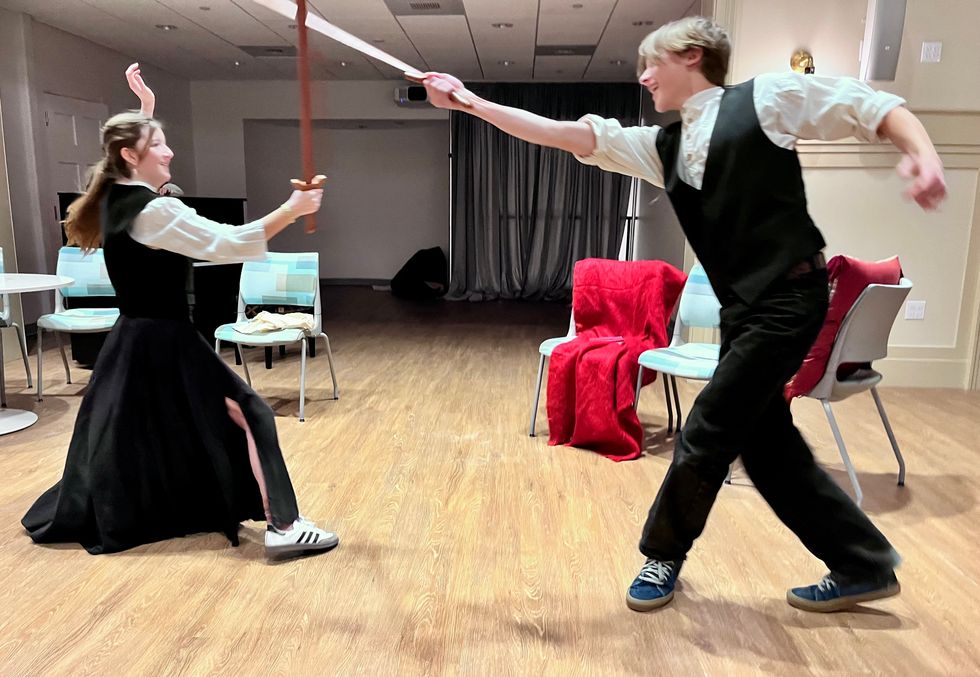
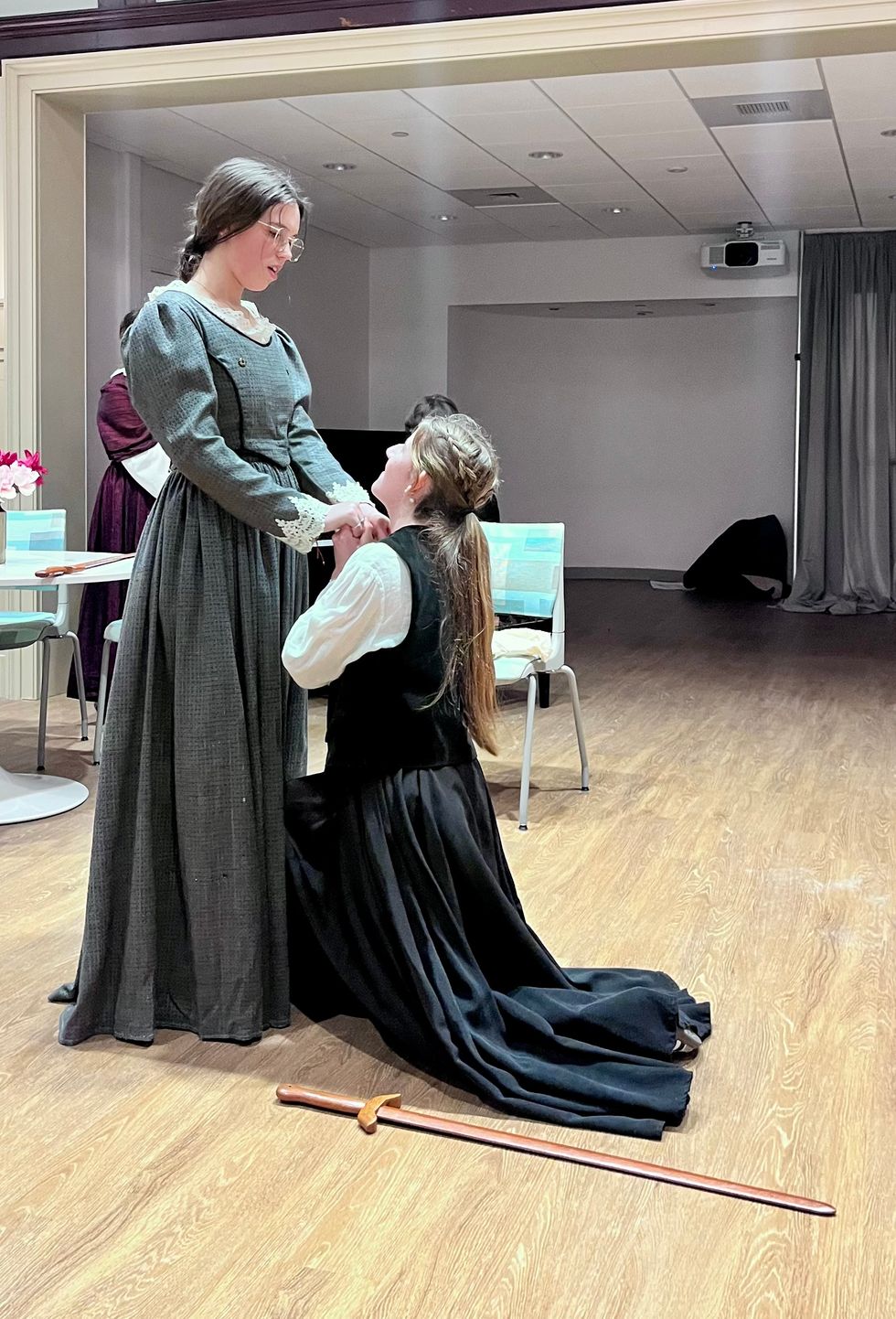
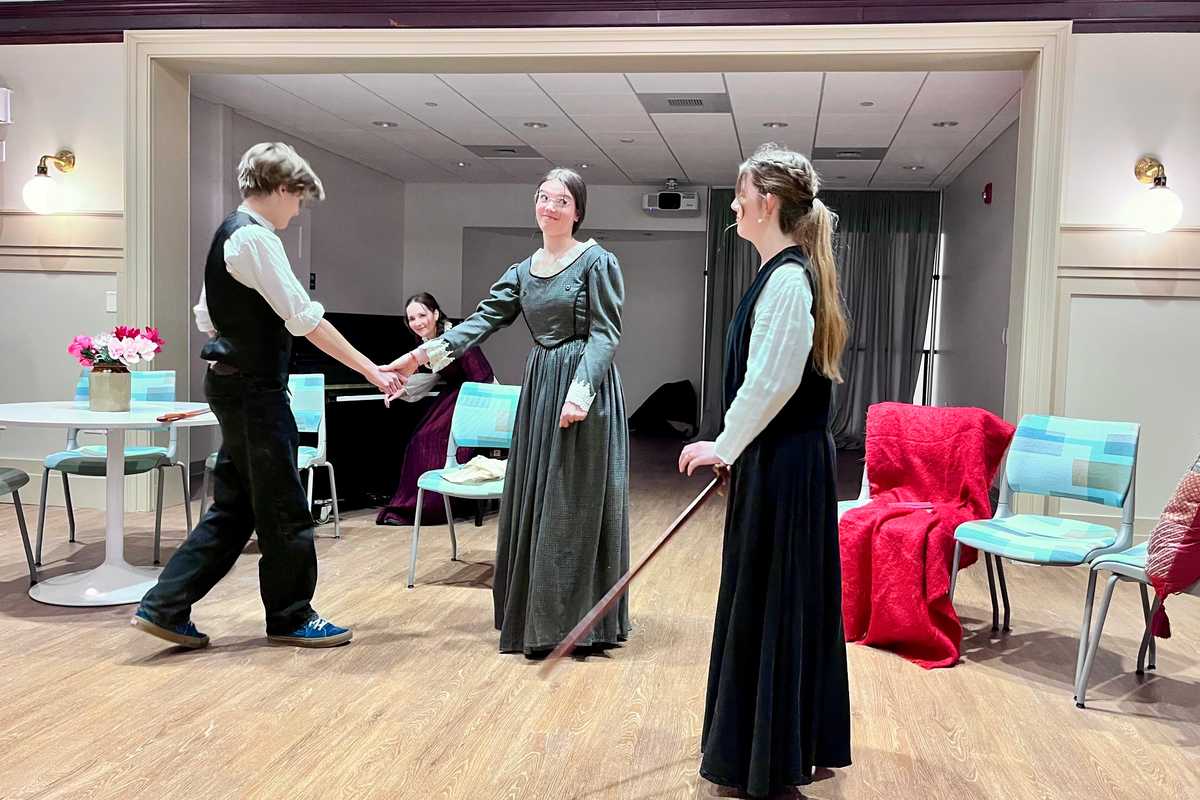
Students at Berkshire Waldorf High School rehearse for the performances of “Little Women” March 13-15 at The Unicorn Theater in Stockbridge.

Mike Cobb

The Berkshire Waldorf High School presents “Little Women” by Kate Hamill, adapted from the novel by Louisa May Alcott, at The Unicorn Theater in Stockbridge, Massachusetts.

Director Kendell Shaffer has taught screenwriting for the Writers Guild Foundation High School Screenwriting Workshops. About the choice of play, Shaffer said,

Keep ReadingShow less
google preferred source

Want more of our stories on Google? Click here to make us a Preferred Source.

Robin Wall Kimmerer at Cary Institute

Robin Wall Kimmerer at Cary Institute
Provided

On Friday, March 13, The Cary Institute of Ecosystem Studies in Millbrook will host a reception and lecture with Robin Wall Kimmerer, bestselling author of “Braiding Sweetgrass.” A plant ecologist and member of the Citizen Potawatomi Nation, Kimmerer blends Indigenous knowledge and Western science to explore how plants and ecosystems can teach us about reciprocity, resilience and our relationship to the natural world. The in-person event is sold out. To register for the online event, visit caryinstitute.org

Winter exhibit closes

Winter exhibit closes

Deborah Simon’s “Ecological Streams of Consciousness: Sika Deer (2025).”

Provided

This Must Be the Place, the winter exhibition at Wassaic Project, will have its closing reception on Saturday, March 14. The exhibition showcased the work of 11 artists throughout the seven floors of Maxon Mills, exploring personal and cultural history, material transformation, the sacred and speculative and immersive encounters. There will beartist talks beginning at 2 p.m. followed by open studios of the March artists-in-residence program.

Housy makes states

Housy makes states
Senior Olivia Brooks plays point guard for HVRHS.
Riley Klein

FALLS VILLAGE — Housatonic Valley Regional High School’s girls varsity basketball team advanced out of the first round of the Divison V state tournament with a 41-38 victory over Howell Cheney Technical High School Friday, March 6.

HVRHS was ranked 19th in the tournament and Cheney was ranked 14th.

Keep ReadingShow less
google preferred source

Want more of our stories on Google? Click here to make us a Preferred Source.

google preferred source

Want more of our stories on Google? Click here to make us a Preferred Source.