
Thank you!
Your support is sustaining the future of local news in our communities.

Lessons for today: the lead-in to the ‘phony war’

The 80th anniversary of the start of World War II in September 1939 approaches, and merits special efforts to remember it, because how that war began has renewed relevance today, as Europe is roiled by internal conflicts, right-wing factions are increasing their power, and NATO is being weakened. 

What immediately jumps out is the Western democracies’ indulgence of dictators, Hitler in Germany, Stalin in the Soviet Union, Franco in Spain and Mussolini in Italy. While on the eve of World War II their worst crimes continued to be successfully hidden from most people outside of their countries, enough about their actions was already known for the Western democracies to have been considerably less trusting of them. 

The Munich Agreement of Sept. 29, 1938, should have shown them that. Signed by Neville Chamberlain of Great Britain and Edouard Daladier of France, along with Hitler and Mussolini, it allowed Germany to take over the Sudetenland portion of Czechoslovakia without military opposition — in exchange for not beginning an all-out war. Today, we judge that as the epitome of “appeasement,” but when Daladier alit from his plane near Paris he expected to be booed and was stunned to be cheered, and Chamberlain upon returning to Great Britain celebrated the Munich Agreement as “peace in our time.”  Franklin Roosevelt did not disagree. Within a few months, Hitler had broken his promises and completely dismembered the remainder of Czechoslovakia. 

Stalin was not consulted on Munich and was supposedly upset about it, because the Soviet Union and France had previously agreed to jointly protect Czechoslovakia. Which reminds me of another matter forgotten today: that in the 1930s the greatest bulwark against the increasing power of Hitler’s Nazis had been Communism. Communists in Germany, Austria and the Soviet Union were the only large organized groups to oppose Hitler’s rise prior to 1933, and after that to oppose his territorial land grabs, as well as to oppose Franco’s during the Spanish Civil War.  Because Hitler’s fascism was perceived as merely capitalism on steroids, and as Christian, and because German oligarchs cooperated internationally with their counterparts in the West, the Third Reich was judged by Great Britain and the U.S. as less of an anathema than the godless, private-property-killing Soviet Union. Only France, whose governments throughout were radically socialist, steadily opposed Hitler’s expansions and repudiations of Germany’s obligations of the Great War, but not to the point of ultimate confrontation. Fighting the Depression, rather than the rise of a neighboring despot, had been France’s main concern.    

The third mistake was for countries to have counted on treaty-allies behaving as they pledged they would. 

The immediate trigger for World War II was the signing of a “non-aggression” pact between Germany and the USSR on Aug. 23, 1939, with its secret protocol allowing Hitler and Stalin to split Poland between them, and for Hitler not to interfere with Stalin taking over Latvia, Estonia and Finland.


The possibility of a German invasion of Poland had long since been understood: during a July Fourth celebration in Paris, when the Polish ambassador threw a ball for visitors including the leaders of the British and French military services, and participants cavorted to a mazurka, a guest made a pun about “jolie danzing,” a reference to the Polish city of Gdansk, which Hitler had promised to conquer for some time. In settling the Great War, Poland had received three German provinces, West Prussia, Poznan and Upper Silesia, which were a tantalizing target for Hitler. Recognizing that, Poland had signed a pact with Great Britain and France to protect its territorial integrity.  

Eight days after the Hitler-Stalin pact, on Sept. 1, 1939 the Nazi blitzkrieg began. Poland’s forces were so ill-equipped that units on horseback had to fight Panzer tanks. Great Britain and France declared war on Germany and pledged to make good on their compact with Poland. However, they were so far from Poland’s soil that they could only send airplanes to deter the invaders, which had only slight effect. On Sept. 8-9, German forces reached Warsaw; there, resistance was fiercer.

The caution of the Western generals became pronounced — and provides another lesson for today. If it was near physically impossible to get French and British land forces into Poland to counter the invaders, it was very possible to attack Germany to force a Nazi retreat from Poland to save their homeland. However, this was not done for reasons including the absence of detailed plans for such an invasion because the generals had been focused for 20 years only on defense. When on Sept. 17 the USSR invaded Poland from the East, the French and British generals basically gave up the fight, arguing that they must retain their forces to defend their own homelands, not send them to die in a hopeless cause. Warsaw was overrun on Sept. 27, and shortly thereafter Poland officially ceased to exist. 

The war continued, but not actively; a period known as the “phony war,” a dangerously idle time that I’ll cover in later articles, lasted until Hitler’s forces invaded the Low Countries and France in May 1940. 


Tom Shachtman, author of more than a dozen American and world histories and documentaries, lives in Salisbury, Conn. He will speak at the Hotchkiss Library of Sharon on “The Phony War, 1939-1940” on Sunday, June 9, at 4 p.m. 

Latest News

‘So Little to Do,’ so much to discover at James Barron Art

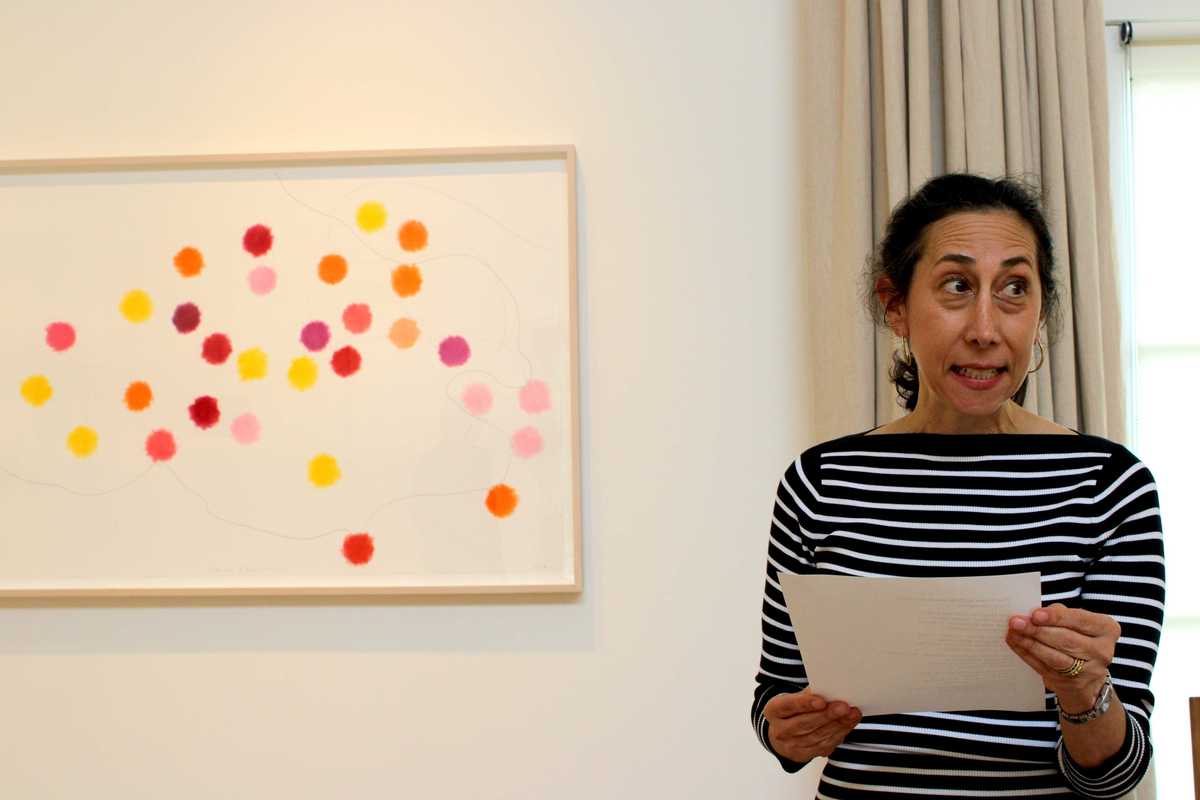
Curator Deborah Goodman Davis reads the Emily Dickinson poem “The Grass So Little Has to Do.” Spencer Finch’s “Following Three Bees (Zinnias)” buzzes in the background.

Photo by Natalia Zukerman

“The Grass Has So Little to Do,” on view at James Barron Art in Kent, takes its title from Emily Dickinson’s poem “The Grass So Little Has to Do,” written in 1862:

“The Grass so little has to do—
A Sphere of simple Green—
With only Butterflies to brood
And Bees to entertain—”

Keep ReadingShow less

Marina Kotchoubey is not a woodworker

Marina Kotchoubey is not a woodworker

Marina Kotchoubey at the Ian Ingersoll Cabinetmakers showroom in West Cornwall.

Photo by D.H. Callahan

After 40-something years navigating the world of custom fine furniture, Ian Ingersoll was getting ready to retire. Starting off with a little dovetail stool that he sold at a shop in West Cornwall in the 1970s, he’d grown his skill and his business into something he — and the whole town — could be proud of. Shutting down that business was not an option.

Ingersoll built Ian Ingersoll Cabinetmakers, which produced mainly classical Shaker furniture, on passion: the passion he had to make a living through creative challenges and the passion of his employees, who all seem deeply in love with their craft.

Keep ReadingShow less
A legacy of giving at Norfolk Chamber Music Festival

One hundred and twenty years ago, Carl and Ellen Stoeckel commissioned New York architect E.K. Rossiter to design The Music Shed in Norfolk, Connecticut. After nearly a decade of entertaining their friends and neighbors with the finest music of the day, they built a permanent home for their beloved Litchfield County Choral Union.

The commission and full funding of the construction was not unheard of in an era when great fortunes led to public enrichment. Railroad tycoon John D. Rockefeller was instrumental in funding institutes of higher education. Steel baron Andrew Carnegie was building libraries all over the country, and famously said that a man who dies rich is a disgrace, challenging his peers to give their fortunes back to the people.

Keep ReadingShow less
google preferred source

Want more of our stories on Google? Click here to make us a Preferred Source.
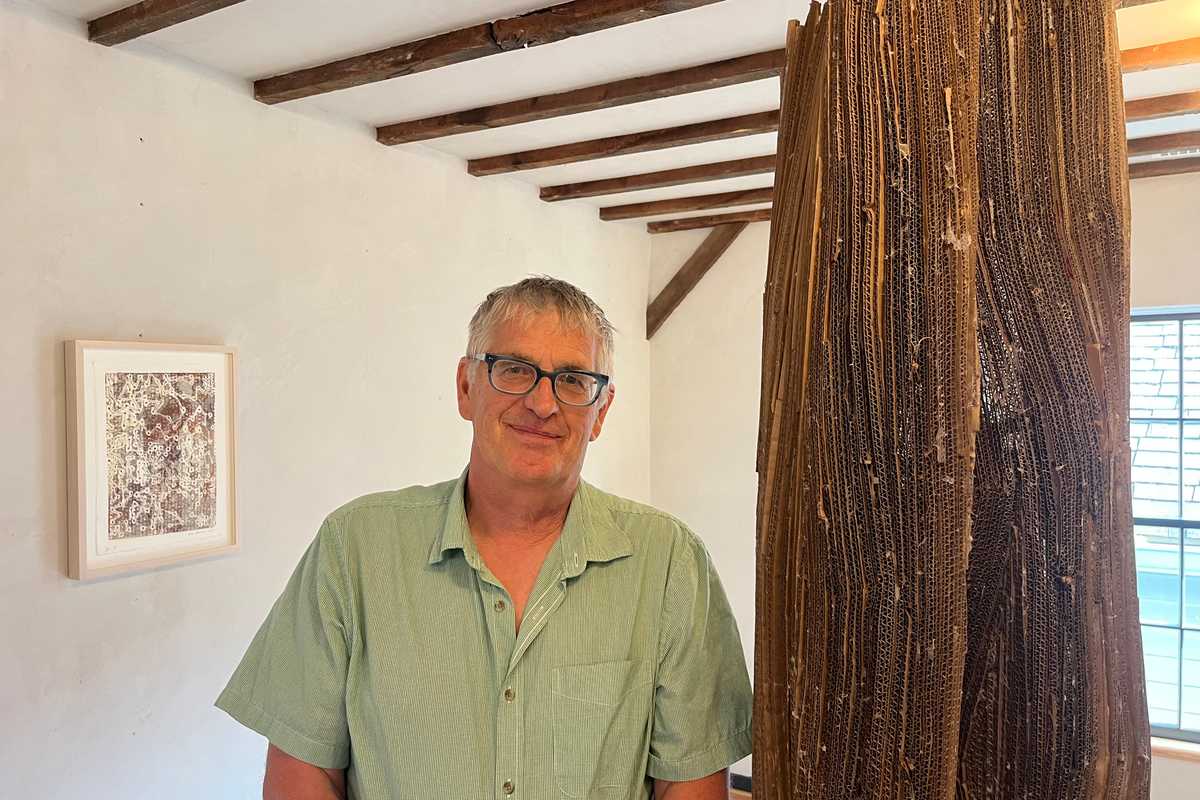
Two unique exhibitions at Geary Gallery

Henry Klimowicz with his sculpture, “Partial Pillar 1”

Photo by D.H. Callahan

On Saturday, Aug. 1, Geary Gallery opened its doors in Salisbury for two unique shows in its first- and second-floor gallery spaces. Art lovers flooded both floors over the course of the afternoon, giving the events a vibrant feeling that enhanced the importance of the art.

On the first floor is a show by Chicago-born, Colorado-based photographer Summers Moore, titled “Lobitos: Pueblo Fantasma,” or “Lobitos: Ghost Town.” The work centers around her daughter’s current hometown in Peru. Moore herself found a home away from home in Colorado in the mid-1980s and encouraged her children to seek out new places outside of their comfort zones.

Keep ReadingShow less

Writer’s retreat in the woods

Writer’s retreat in the woods

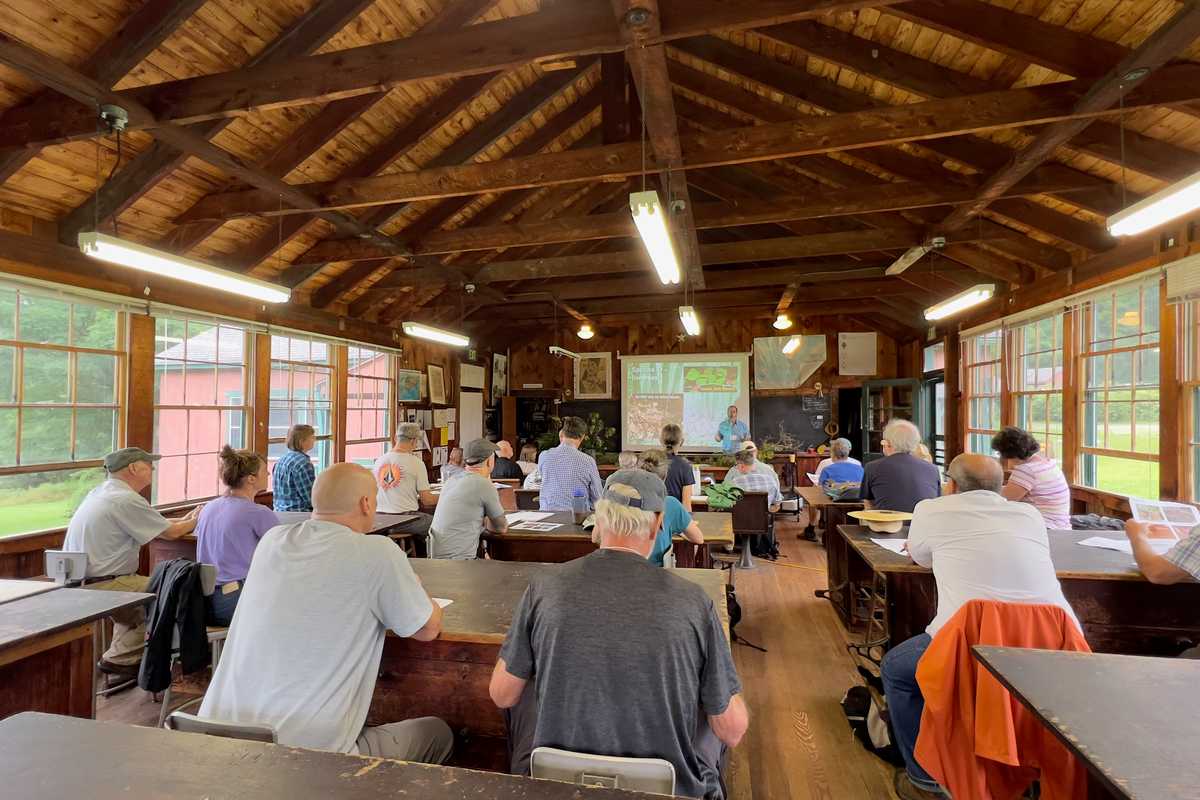
Participants in a 2024 Great Mountain Forest Woodland Academy workshop at Yale Camp.

Photo by Mike Zarfos

Great Mountain Forest (GMF) will host its first Nature Writing Retreat at the historic Yale Camp in Falls Village from Aug. 7-9, 2026. Writers of all levels are invited to draw inspiration from one of New England’s most notable forest landscapes. GMF envisions the retreat becoming an annual event celebrating writing, conservation and the relationship between people and forests.

This immersive three-day retreat reflects on the legacy of Hal Borland, the American writer and New York Times nature columnist whose work was deeply connected to this landscape. The retreat explores how wilderness shapes language, strengthens close observation and fosters environmental consciousness.

Keep ReadingShow less
From Cornwall to Rome, Adam Van Doren at Berkshire Botanical Garden

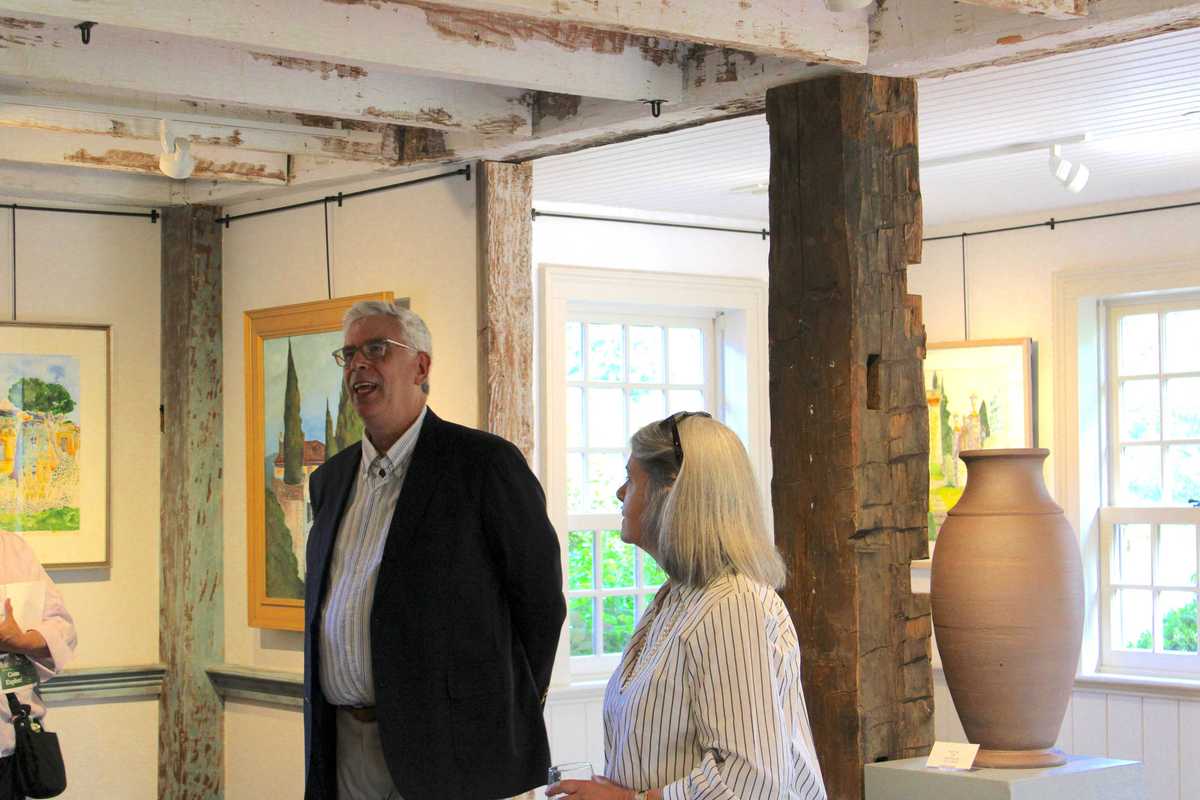
Artist Adam Van Doren and curator Donna Hassler talk to a group of visitors at the Berkshire Botanical Garden. A Stephen Proctor vessel sits to their left.

Photo by Natalia Zukerman

This summer, the Berkshire Botanical Garden in Stockbridge has hosted “Grounded in Nature: Paintings by Adam Van Doren,” an exhibition exploring the intimate relationship between architecture and the natural world.

On view for only a few more weeks in the Leonhardt Galleries, the exhibition features more than 35 watercolor and oil paintings by the New York-based artist, architect, author and Yale professor, curated by art historian Donna Hassler, director emerita of Chesterwood. The works span three distinct places that have shaped Van Doren’s artistic practice: New York City, Cornwall, Connecticut, and his travels throughout Europe.

Keep ReadingShow less
google preferred source

Want more of our stories on Google? Click here to make us a Preferred Source.
google preferred source

Want more of our stories on Google? Click here to make us a Preferred Source.