Letters to the editor - March 14 2013


Dear Gov. Malloy: Help save our Sharon Hospital


Now is the time to come to the aid of Sharon Hospital. I’ve been associated with the hospital as a general surgeon for almost 47 years. I’ve never seen the hospital so financially challenged. In 2003, with the help of then-state Attorney General Richard Blumenthal, Sharon Hospital became the first for-profit hospital in the state of Connecticut. As for-profit, the hospital pays more in taxes relative to its size than all of the remaining 28 nonprofit acute care hospitals in the state. Currently this amounts to an annual tax of $2,247,360. 


Governor, your two-year budget proposes to cut funding for all of the Connecticut hospitals by an amount of $550 million over two years. These funds are used for reimbursements for uncompensated care (people with no health insurance). The cost of this action in Sharon Hospital’s case will be $2,527,725 for 2014 and 2015.


This is not a level playing field! UConn’s John Dempsey Hospital in its preferred status as Connecticut’s only government-run hospital has proposed cuts of only $1 million in reimbursements, the smallest reduction among all of Connecticut hospitals. On top of this, your administration is giving John Dempsey a $1 billion grant for expansion and upgrades. And of course, if John Dempsey suffers any deficits, the state government (our tax dollars) will cover any losses on a yearly basis. Where is the fairness in all of this for little old Sharon Hospital?


For 103 years, Sharon Hospital has served a needy community in northwestern Connecticut. The hospital is almost 45 minutes from any other hospital north, south, east or west. Gov. Malloy, your proposed action is threatening Sharon Hospital’s existence and certainly our level of patient care.


This letter was sent to Gov. Malloy, and cc’ed to Sen. Richard Blumenthal and Sen. Chris Murphy.


W. Peter Reyelt Jr., MD

Lakeville


Do you know what’s in that next bite?


Will Connecticut make history with Vermont and Maine, and be among the first in the nation to mandate labeling of Genetically Engineered Foods (GEF)? Notably, there is a public hearing in Hartford on March 15 on Bill No. 6519 requiring labeling of GEF.


What is genetically engineered food all about? It generally involves combining genetic material from two or more different species employing viruses, bacteria and antibiotics during the gene insertion process. It is quite different from traditional plant breeding which typically results from selective crossbreeding of hardier or more desirable individuals within its own species. The end result has also been called a GMO — Genetically Modified Organism. 


In fact, internal FDA scientist memos at the time genetically engineered foods were declared safe showed consensus that GMO crops can have unpredictable, hard to detect side effects. While the scientists recommended comprehensive safety studies, they were overruled by FDA food safety czar, a new position created in 1991 for former Monsanto VP Michael Taylor.


Chemical company and other promoters of GEF have made robust promises of drought tolerant crops thriving in dry environments, vitamin and healthy oil fortified grains, and tastier, more highly productive crops to feed the world. In fact, very few of the promised GE seed traits have even panned out. With the exception of two traits — herbicide tolerance and/or pesticide protection — typified by most RoundUp Ready corn, soy and cottonseed planted here, promises to farmers are underperforming with unintended consequences from the GE monoculture crops. 


Remember the old saying, “Don’t fool around with Mother Nature?” Nature is defying Monsanto’s RoundUp herbicide built into its near monopolized seedstock. Farmers are increasingly finding they have to use more weedkiller as weeds become herbicide resistant. RoundUp doesn’t degrade as promised either. What does that mean for your dinner table? Well, if you don’t buy organically farmed crops or carefully grow your own, you’ll likely have more pesticides on your dinner plate than your parents did, and getting worse. 


False promises, escalating farmer and food costs, increased health risks from more pesticides, and worse, from the unstable GE process — viruses used as gene trait insertion catalysts, antibiotics as genetic markers, and new GE bacteria built into the seed, the effects of which have been demonstrated by independent scientists and the chemical companies’ own studies, to have created new allergenic entities and other health compromising impacts (reproductive, cancer, autoimmune disorders). FDA’s standard for GE crops is that the manufacturer simply states it is safe, without necessarily conducting rigorous, peer reviewed safety studies. With FDA an enthusiastic cheerleader for biotech foods, what kind of Pandora’s box of health, environmental and economic maladies has been opened up?


I’m joining others in Hartford for the GE Food legislative hearing Friday. If you want to know more, go to www.GMOFreeCT.org. Let your state legislators know that you indeed have a right to know what’s in your food, enough of hidden ingredients — Just Label It!


Leila Baroody

Lakeville


What I might tell a pollster


This is an imaginary poll, taken by an imaginary polling organization, and these are what my responses would be to that imaginary poll, tongue planted firmly in cheek:


Premise: It has come to our attention that you in Salisbury are afflicted with an unusual political controversy, especially so, given the quiet nature of your area. 


Question: Since the election of Selectman Mark Lauretano in Salisbury, has the tone of the selectmen’s meeting changed? 


Answer: Completely. In fact, I wonder whether we live in Lakeville/Salisbury, or in Washington, D.C. 


Question: He claims he is not divisive, it is those other people. True? 


Answer: Just go to a selectmen’s meeting, or watch it on television!


Question: Apart from that, do you think he is doing a good job? 


Answer: His wife thinks so. 


Question: What do you think? 


Answer: It seems to me he spends an inordinate amount of time in assiduous pursuit of nonissues and writing interminable and tiresome letters to The Lakeville Journal.


Question: What are the non-issues? 


Answer: Let me give you a couple of examples: One was a two-step proposal to make selectmen’s meetings more meaningful, even heart-warming. 1. The recitation of the Pledge of Allegiance in English and Spanish, and 2. All three selectmen to sing the Star-Spangled Banner in three-part harmony (perhaps harmony is not the right word, here). Fortunately, that did not fly. 


Question: What is the other example? 


Answer: Ah, this one has a somewhat longer shelf life. We all woke up one morning to find out that Lakeville/Salisbury is a hotbed of corruption and malfeasance, especially town government, all departments of which are rife with wickedness and immorality. Solution? A Code of Ethics, of course, with a special commission to enforce compliance. The discussion of that goes on — and on, and on. 


Question: But aren’t there some problems here, such as legal maneuvering, prosecution and eventual possible incarceration, all of which cost money? Who pays for this? 


Answer: Guess who! However, respecting possible punishment, a local law enforcement official who prefers to remain anonymous has come up with a perfect solution, one which will save the taxpayers a bundle. The miscreant will be placed under house arrest and condemned to read every single letter Mr. Lauretano ever wrote to The Lakeville Journal.


Question: Isn’t this a Republican Party problem?


Answer: Yes and no. It has become a town problem; yet, it is up to sane and sensible mainstream Republicans to take the lead in finding a solution. 


Question: Is there a time frame here? 


Answer: November, baby — November. You know, back in the day when the Dodgers were still in Brooklyn, we had two expressions: “Wait until next year,” and “Throw the bum out!” Fortunately, here in Lakeville/ Salisbury, we won’t have to wait until next year. 


Dick Boyle 

Salisbury


Criminal misuse of firearms is a serious issue


The emotional appeal by Dale Jones (Lakeville Journal, March 7) is another failed attempt at coming to a solution for criminal misuse of firearms. Interestingly, Mr. Jones fails to note the bait and switch offered by the politicians; mental health issues were to be an integral part of the review of laws. However, it is same old, same old; guns first, last, always. 


The National Rifle Association (NRA) is the premier organization for teaching firearm safety. It has been that way since 1871. How the firearms were obtained by the criminal is known only to Connecticut State Police. It is not public knowledge if the firearms were secured. However, consider that some of the laws broken were: murder of the lawful owner, theft of firearms and ammunition, theft of an automobile. All before he left the driveway.


Chicago has no gun shops; its laws do not allow them. The item referred to occurred in Augusta, Ga., from October 2009 to August 2012. The penalties faced by the felon were 10 years in prison and a $250,000 fine for each firearm sold. One could surmise that at least one firearm was sold in that time. His wife, the legal Federal Firearms License (FFL) holder faced the same penalties for violating the terms of the FFL. The penalty for the husband is recommended at five years; his wife is facing three years probation. That, my friends, is the problem; criminal misuse of firearms is not treated as a serious issue.


To address the most glaring mistake in Mr. Jones’ letter, the rifle used in Newtown is a semiautomatic rifle, with the standard issue 30-round magazine. The politicians in Hartford and Washington, as well as Mr. Jones, know that the proposed bans affect semiautomatic rifles that are no different than the sainted hunting rifle. Mr. Jones cites the law which regulates true assault rifles, the National Firearms Act, 1934. It did not outlaw private ownership, but it did place severe requirements on their purchase and storage. If we are to ever find that better way, we must start with honesty in the discussion.


Paul Bartomioli

Falls Village


Revisions can open loopholes


On Feb. 6, Messrs. Vail and Morrill sent a letter to the Salisbury Board of Selectmen (BOS) declaring that the code of ethics (COE) development process which I had undertaken in early 2012 had been too lengthy and time consuming. They submitted their own speedy solution in the form of a revision of the original 2005 Salisbury Code of Ethics. Their last sentence of the letter reads: “The time has come to resolve this issue.” 


Selectmen Rand and Dresser appear to disagree, considering their negative reaction to bringing the current draft COE and Commission to a town meeting vote. Now the urgency has shifted to stalling for time until Mr. Vail returns from out-of-town to help orchestrate confusion of the two COEs in the public square.


The Vail/Morrill revision of the 2005 Salisbury Code of Ethics is a separate proposal and has no bearing on the draft COE and Commission that are now ready for the townspeople to vote on. Let the chips fall where they may, Salisbury can vote separately on the two parts, adopting the COE and the Commission, or vote them both down. Alternatively, the town may vote to adopt the draft COE but reject the Commission. The town needs to make a decision on whether or not it wants the COE alone, without the proposed Commission. It makes no sense to confuse the public with a third question to vote on an alternative COE at the same time.


There is nothing to stop the town from choosing to vote on the Vail/Morrill revised COE at a later date when they are finished fine-tuning their revisions, and thereby replace whatever the town may or may not have already adopted. Our citizens need to take note, however, of several problems with the Vail/Morrill COE.


First, most of the proposed revisions open loopholes for corruption that had been closed in the original 2005 COE passed under the administration of Val Bernardoni. Those loopholes are detailed in my commentary dated Feb. 14, 2013, at www.salisburyrtc.org . Next, the public needs to consider whether or not they like the prospect of having no public input on the content and little opportunity to find out what is actually in it — you have to pass it before you get to find out what is in it. 


Then there is the question of whether or not it is legal for the BOS to vote the Vail/Morrill COE into effect instead of the townspeople at public meeting. Since it does include sanctions to be used against appointed municipal officers (officials?) and employee(s), including censure, fines, suspension or termination from employment, state law seems to require it be voted as an ordinance at town meeting. The handling of investigations is assigned to an unspecified Town Official and non-existent administrative processes. Slip-shod at best, useless at worst.


Finally, there is the issue that the BOS and all elected officials are exempt from any investigation of alleged wrongdoing, or sanctions. A blatant example of elitist political cronyism, up-front-and-in-your-face.


Mark A. Lauretano

Selectman

Salisbury

Latest News

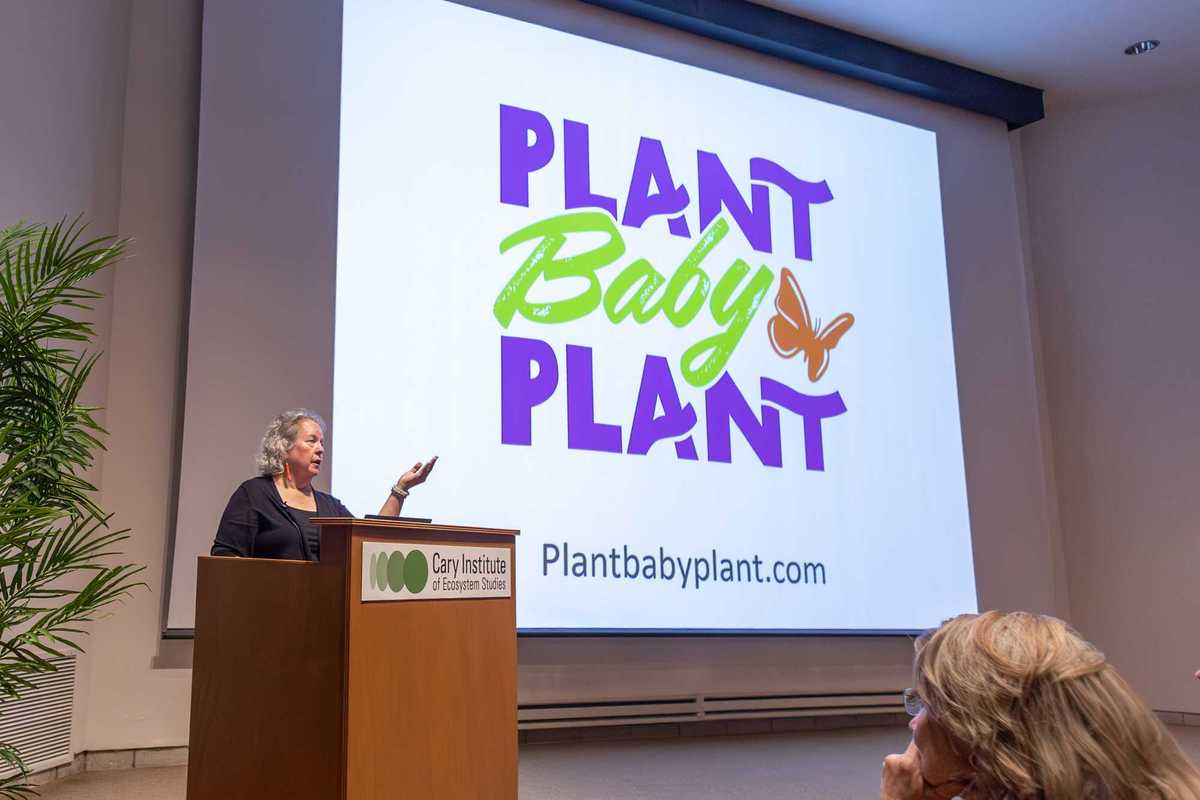
Robin Wall Kimmerer urges gratitude, reciprocity in talk at Cary Institute

Robin Wall Kimmerer inspired the audience with her grassroots initiative “Plant, Baby, Plant,” encouraging restoration, native planting and care for ecosystems.

Aly Morrissey

Robin Wall Kimmerer, the bestselling author of “Braiding Sweetgrass” and a member of the Citizen Potawatomi Nation, urged a sold-out audience at the Cary Institute of Ecosystem Studies on Friday, March 13, to rethink humanity’s relationship with the natural world through gratitude, reciprocity and responsibility.

Introduced by Cary Institute President Joshua Ginsberg, Kimmerer opened the evening by greeting the audience in Potawatomi, the native language of her ancestors, and grounding the talk in a practice of gratitude.

Keep ReadingShow less

Melissa Gamwell’s handmade touch

Melissa Gamwell’s handmade touch
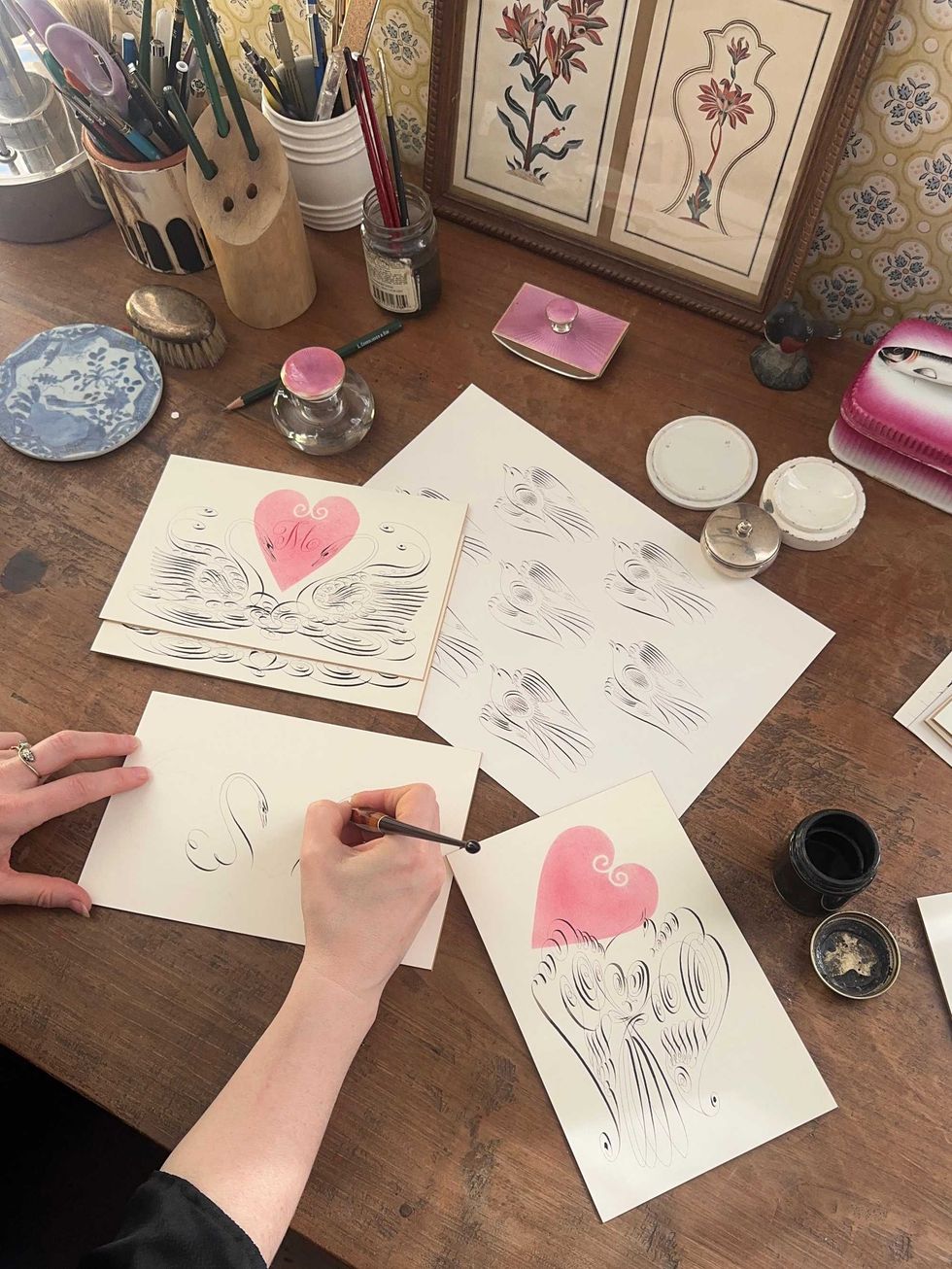
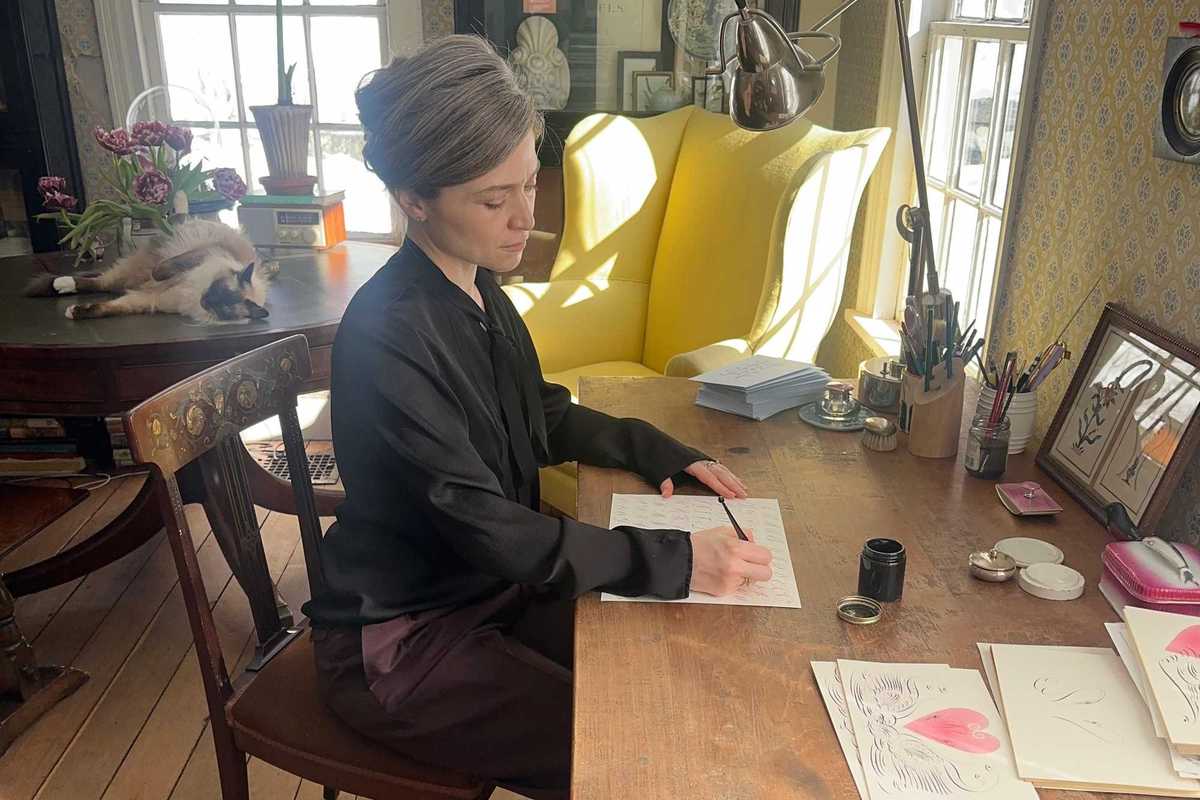
Melissa Gamwell, hand lettering with precision and care.
Kevin Greenberg
"There is no better feeling than working through something with your own brain and your own hands." —Melissa Gamwell

In an age of automation, Melissa Gamwell is keeping the human hand alive.

The Cornwall, Connecticut-based calligrapher is practicing an art form that’s been under attack by machines for nearly 400 years, and people are noticing. For proof, look no further than the line leading to her candle-lit table at the Stissing House Craft Feast each winter. In her first year there, she scribed around 1,200 gift tags, cards, and hand drawn ornaments.

Keep ReadingShow less
Regional 7 students bring ‘The Addams Family’ to the stage

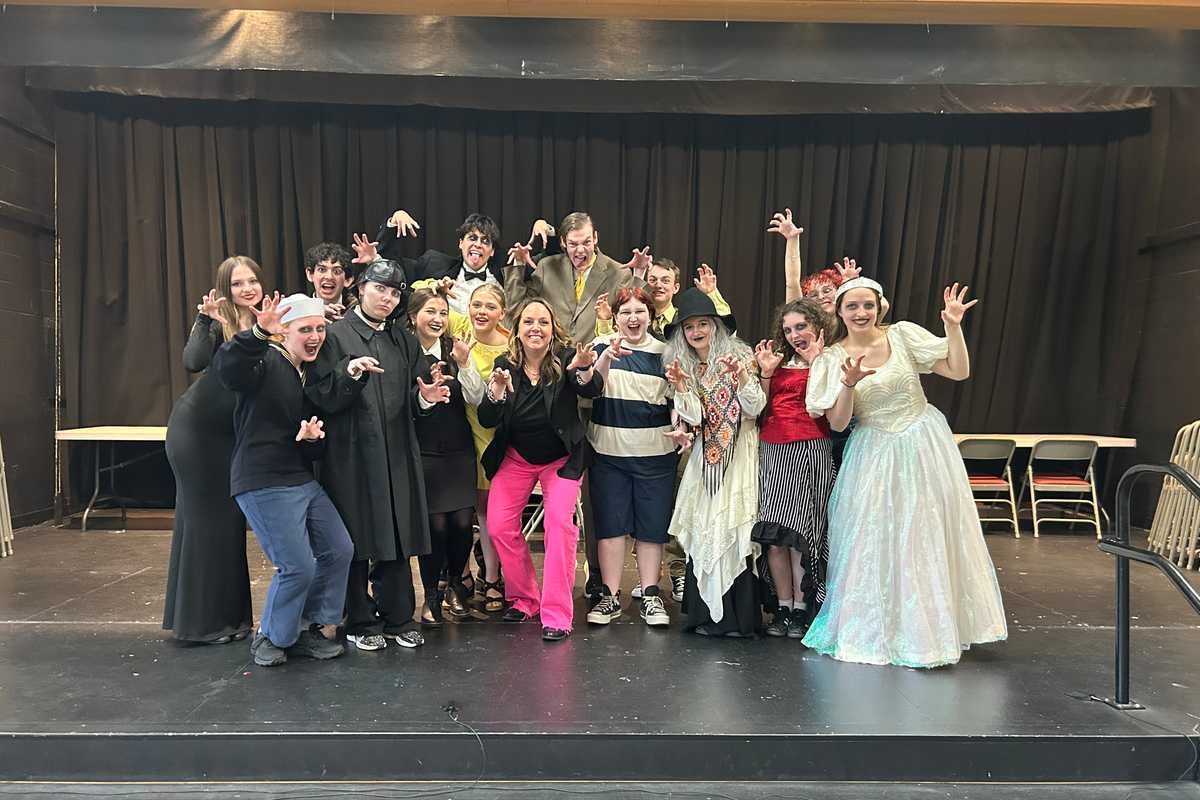
The cast of “The Addams Family” from Northwest Regional School District No. 7 with Principal Kelly Carroll from Ann Antolini Elementary School in New Hartford at Botelle Elementary in Norfolk.

Monique Jaramillo

Nearly 50 students from across the region are helping bring the delightfully macabre world of “The Addams Family” to life in Northwestern Regional School District No. 7’s upcoming production. The student cast and crew, representing the towns of Barkhamsted, Colebrook, New Hartford and Norfolk, will stage the musical March 27 and 28 at 7 p.m., with a 2 p.m. matinee on March 29 in the school’s auditorium in Winsted.

Based on the iconic characters created by Charles Addams, the musical follows Wednesday Addams, who shocks her famously eccentric family by falling in love with a perfectly “normal” young man. When his parents come to dinner at the Addams’ mansion, two very different families collide, leading to an evening of secrets, surprises and unexpected revelations about love and belonging.

Keep ReadingShow less
google preferred source

Want more of our stories on Google? Click here to make us a Preferred Source.
‘Quilts of Many Colors’ opens at Hunt Library

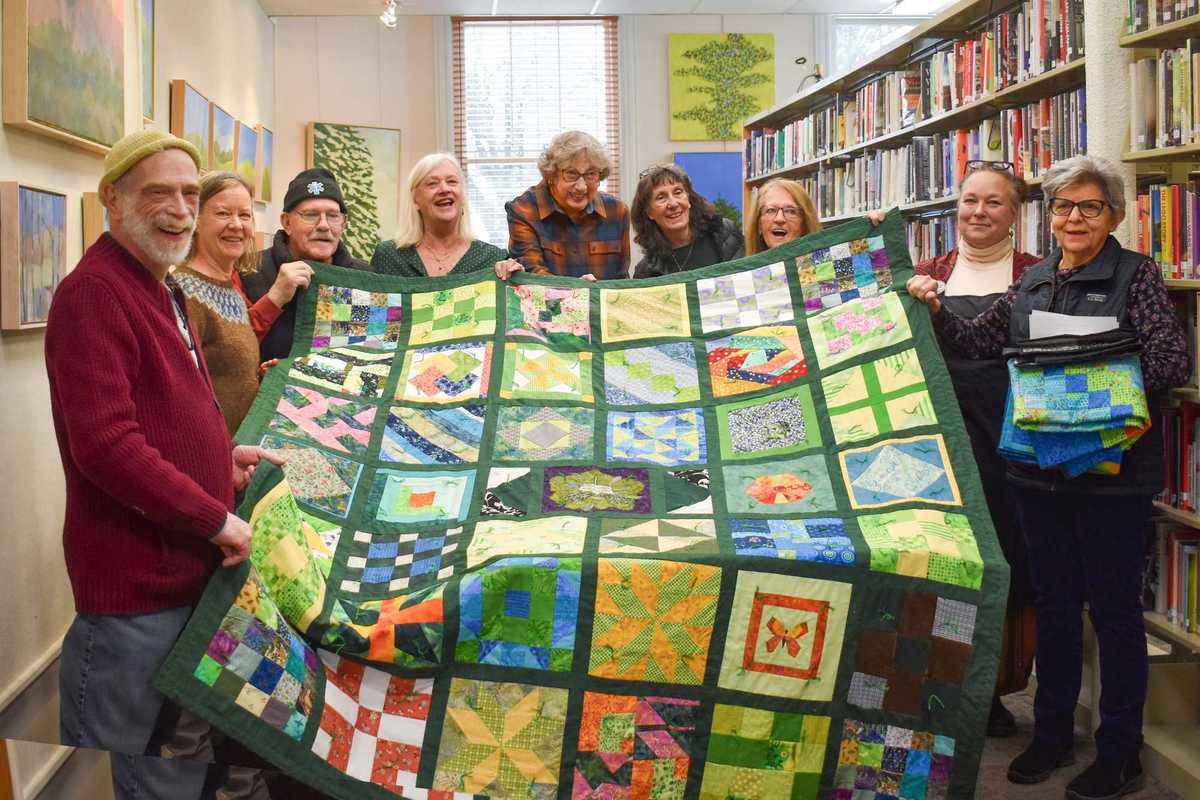
Garth Kobel, Art Wall Chair, Mary Randolph, Frank Halden, Ruth Giumarro, Project Chair, Maria Bulson, Barbara Lobdell, Sherry Newman, Elizabeth Frey-Thomas, Donna Heinz around “The Green Man.”

Robin Roraback

In honor of National Quilt Day, a tradition established in 1991, Hunt Library’s second annual quilt show, “Quilts of Many Colors,” will open Saturday, March 21, with a reception from 5 to 7 p.m. The quilts, made by members of the Hunt Library Quilters, will be displayed through April 17. All quilts will be for sale, and a portion of each sale goes to the library.

At the center of the exhibit is a quilt the Hunt Library Quilters collaborated on called the “Quilt of Many Colors,” inspired by Dolly Parton’s song”Coat of Many Colors.” Each member of the Hunt Library Quilters made two to four 10-inch squares for the twin-size quilt, with Gail Allyn embroidering “The Green Man” for the center square. The Green Man, a symbol of rebirth, is also a symbol of the library, seen carved in stone at the library’s entrance. One hundred percent of the sale of this quilt benefits the library.

Keep ReadingShow less

New in at Kenise Barnes Fine Art

New in at Kenise Barnes Fine Art

New works on display at Kenise Barnes Fine Art in Kent

D.H. Callahan

Since 2018, Kenise Barnes Fine Art in Kent has been displaying an impressive rotation of works across a range of artists and mediums. On Saturday, March 14, art enthusiasts arrived to see a new exhibition at the gallery featuring a wide variety of new pieces.

Large-scale paintings by David Collins and Melanie Parke alongside small 3-by-3 inch oil-on-panel works by Sally Maca.

Keep ReadingShow less
Trailblazing divorce attorney Harriet Newman Cohen to speak at Norfolk Library

Harriet Newman Cohen

Provided

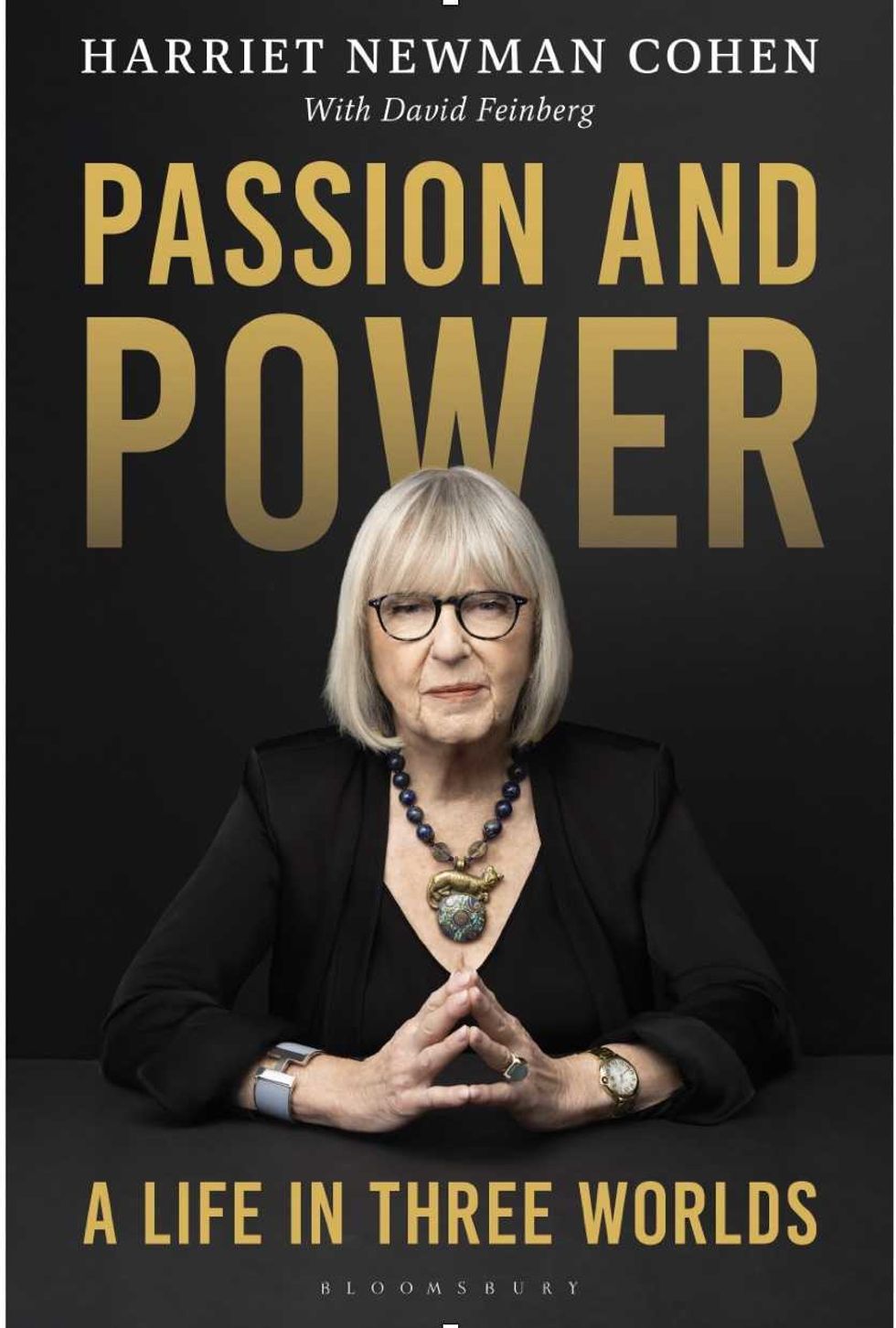
Harriet Newman Cohen weathered many storms in her five-decade-long journey to become one of the nation’s most celebrated divorce attorneys. Voted one of the top 100 attorneys in New York for many years, Cohen served as president of the New York Women’s Bar Association and has been a champion of divorce reform. She and her co-author, journalist David Feinberg, will give a book talk about her memoir, “Passion and Power: A Life in Three Worlds,” at the Norfolk Library on Sunday, March 22 at 2 p.m.

What began as a personal record of her life, intended for her family, grew into a memoir that journalist Carl Bernstein describes in his endorsement as “wise and riveting.” Born in 1932 in Providence, Rhode Island, to parents who immigrated in 1920 from Ukraine and Poland, Cohen traces the arc of her life and the challenges she faced entering a legal profession that was overwhelmingly male at the time, leading to her success as a maverick divorce attorney fighting for women’s rights and equity in the law. She received her Juris Doctor, cum laude, from Brooklyn Law School in 1974, one year after Roe v. Wade was decided. She is a founding partner of Cohen Stine Kapoor LLP in New York City, a family and matrimonial law firm she formed in 2021, at age 88, with her daughter Martha Cohen Stine and Ankit Kapoor.

Keep ReadingShow less
google preferred source

Want more of our stories on Google? Click here to make us a Preferred Source.

google preferred source

Want more of our stories on Google? Click here to make us a Preferred Source.