


Letters to the editor - March 7 2013


Sharon Hospital is so important to community


Having just spent 30 hours in the Sharon Hospital with chest pains, I am recommitted to the fact that the hospital is of vital significance to me and my family. I applaud everything from the volunteer ambulance service to the nursing care and the medical doctors, equipped with modern-day technology. The existence of this substantial health-care facility is vital.


The readers of this paper must become aware that the hospital is in financial trouble. It behooves all of us in the Northwest Corner of Connecticut and the adjoining communities in New York state and Massachusetts to be aroused about the hospital’s stress. Affecting not only the health care for us citizens, it also affects the economic life of those who are employed there, who pay taxes and stimulate local economic activity. 


Hospital financing is very complex. To sustain the operation requires committed professional analysis. Many of the financial problems are dependent upon legislation and government rules and regulations. Major factors can be resolved only with government participation.


I urge all citizens to contact their representatives, including but not limited to Gov. Malloy, state Rep. Willis, state Sen. Chapin and U.S. Rep. Esty as well as senators Blumenthal (who was intensely involved in establishing this for-profit hospital and knows many of the ins and outs) and Murphy.


Please write or call them. Get involved for your own sakes and for the sake of all of us. There is no matter locally of greater importance.


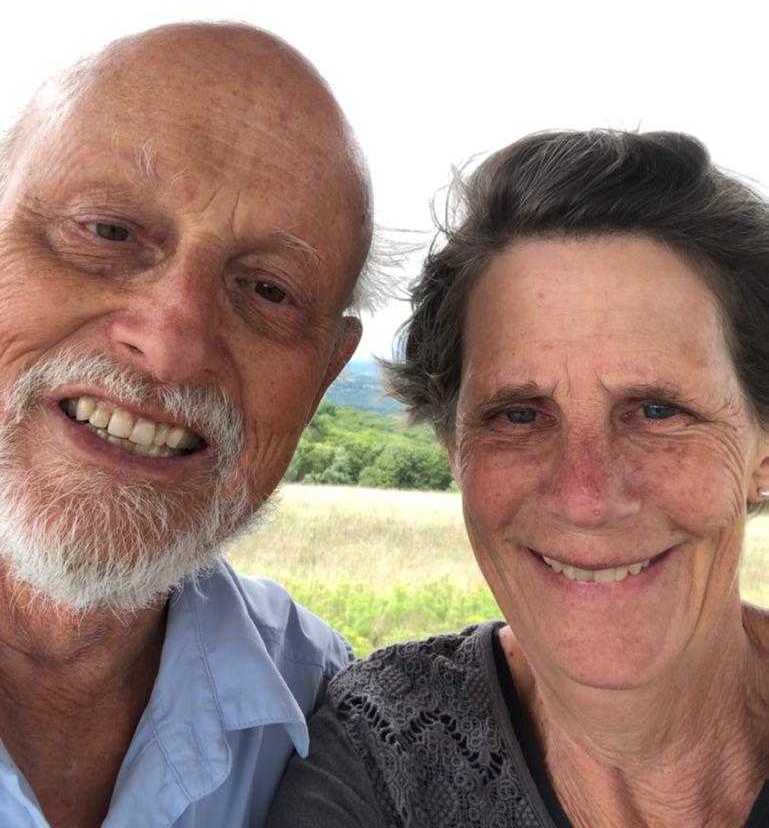
Harry Hall

Sharon


We’re a republic


A recent column by Daniel Klau (Lakeville Journal, Jan. 24) truly amazed me. Here is a lawyer who specializes in First Amendment rights who has no clue why our country is set up the way it is. One statement that I found was about our Constitution being “undemocratic.” While this is a true statement it misses the point. 


First and foremost our Constitution sets up our government as a republic, not a democracy. Therefore it is “undemocratic.” The Constitution outlines two parts of the Legislative Branch of the government: the Senate and the House of Representatives. Mr. Klau made the statement that he could not understand why all states had two senators despite the size of the population. The Senate has two representatives for each state. The House of Representatives is based on population. Hence, California has more representatives in the House than Connecticut. The idea of the Senate is to give all of the states an equal voice. 


This was done to ensure that the more populous states did not overrule the smaller states. In a democracy the many are protected from the few. In a republic the few are protected from the many. As can be seen in this instance and others that I have noticed: The main problem we have with interpreting our Constitution is not the fault of our founding fathers — it is with us. We keep trying to read into the Constitution things that just are not there. 


I suggest that anyone who has a few moments — read the Constitution. It is simple and yet eloquent. When each of the articles is read in its entirety you will find that there is no need to read between the lines. It is not written in modern day legalize — it is written in English so that all who read it may understand it. The next time someone refers to the Republic of the United States of America as a democracy — please point out the full name of our country and that the word “democracy” is not in its name.


Kevin McGivern

Lakeville


Democrats are in charge


The last two editorials in this newspaper have been about the proposed code of ethics and its author, Selectman Mark Lauretano.


This media outlet has essentially called for his ouster should he run in November, accused him of being divisive and confrontational, and now outlined a plan for how he can become submissive to the will of a handful of political operatives.


The author of these editorials, who fails to sign a name on their work, surmises that Mr. Lauretano is not listening to what they refer to as “a broad-based and bipartisan group of citizens.” My own observations tell me that this group is comprised of members of the Democratic Town Committee, a limited number of public officials, and a group of public employees who are resistant to having a written and enforceable set of standards for those who serve the public. I would hardly call this a “broad-based and bipartisan group.”


The anonymous author accuses Lauretano of being unwilling to compromise or to hear of other proposals. There is encouragement to sit down with Mssrs. Vail and Morrill to “hammer out” a code.


I grow weary of these misleading characterizations. Mr. Lauretano has been out there in assorted sessions since September to seek input concerning the code and has made many changes based on input from those sessions.


Both Mssrs. Vail and Morrill have attended some of those sessions and done nothing more than criticize the document, offering little if any constructive suggestions until they decided to reveal an entirely different proposal at the last BOS meeting. Their proposal has not been shared with the public and there have been no informational sessions with anyone, or at least that we know of.


Why is it that Lauretano is depicted as the one who needs to reach out when he has been doing that all through this process? It appears the author believes that compromise is only legitimate when the end result is agreeing with those who are favored by this media outlet.


The writer attempts to dismiss the idea of the need for a code by making reference to the woes of Waterbury’s political establishment, a characterization which seeks to marginalize any unethical behavior which may be occurring in the town of Salisbury.


The author needed to toss in some rhetoric about how the town meeting is the centerpiece of our system in order to make a little pull at “ye olde heart strings.” The fact is that the town meeting was hijacked years ago by those who occupy positions of power and have turn it from a meeting into a “B” rated theater production.


Your editorials’ portrayal of the debate over the code of ethics is highly inaccurate and carries the stench of political bias on your part.


Michael J. Flint

Lakeville


Mark Lauretano is respectful and cooperative


Last week’s editorial extolled the New England tradition of “respect, cooperation and willingness to talk, listen and compromise.” Mark Lauretano’s work as selectman has exemplified those virtues. He has consistently voted with his colleagues to move town business along, despite often having expressed reservations or objections to some issues. He listens to his colleagues, weighs the pros and cons, finding a way to compromise. Would that his colleagues could do the same.


Selectman Lauretano has maintained his respectful demeanor, even in the face of the arrogance, condescension and rudeness of Messrs. Rand and Dresser. He continues to communicate with them despite being openly shunned by both who, outside of public meetings are incapable of civilly greeting, much less exchanging small talk, with Mr. Lauretano on any subject. The Democratic selectmen have displayed open disrespect and a complete lack of cooperation to their Republican colleague since the 2011 election.


The editorial states that self-imposed Codes of Ethics — exactly what Mr. Lauretano has been working on — are stronger than those imposed by government. The continued possibility of a state-imposed universal COE and commission is much less desirable than one in which everyone in Salisbury has been able to hash out and contribute to, ultimately setting it in place by a town meeting vote.


It is unfortunate that some Town Hall employees have allowed fear and misunderstanding of the COE to rule them, but that is their right. Their inflexibility and lack of understanding despite Mr. Lauretano’s patience and willingness to incorporate many of their concerns into the document is unfortunate. It is no excuse, however, for abandoning the project that so many others have constructively contributed to and hope that it will go to a vote of the whole town. 


Mr. Lauretano’s vision of the Ethics Commission, prompted by Mr. Dresser’s and CT Common Cause’s insistence that there is no COE without an adjudication arm, has been constantly evolving with the suggestions of others.


There has only been one other COE format suggested just a few weeks ago. It is a revision of the old one Mr. Lauretano had the BOS reaffirm in December 2011. He has pointed out the pros and cons of the revisions, but not rejected it. Mr. Lauretano is the only person in this debate who has made himself available to all by phone, email and in person to discuss the COE.


Mr. Rand bemoans the failure of his Herculean efforts over seven years to enlist the COG in developing a joint Commission. There are legitimate issues over members having to memorize eight different town COEs, getting the towns to agree to one set of hearing procedures and the question of how to deal with litigation issues. Salisbury can wait another seven years for these problems to perhaps be resolved, or it can show courage, character and leadership by taking responsibility through the town meeting tradition and adopting its own COE and commission. Mark Lauretano is the only selectman upholding the values of New England town meetings.


Kathy Lauretano

Lakeville


SRTC supports Lauretano


On the evening of Thursday, Feb. 28, the Salisbury Republican Town Committee gave Republican Selectman Mark Lauretano a unanimous vote of confidence for the work he has done since his election in November of 2011.


An anonymous 20-question survey (done at Selectman Lauretano’s request during his absence out of state) by mail of the SRTC membership during January 2013 showed overwhelming support for Selectman Lauretano and his handling of the issues he has been dealing with in Salisbury. The results of the survey led to the unanimous Vote of Confidence this past week.


The SRTC looks forward to Mark Lauretano’s continued efforts to help the town develop a Code of Ethics the townspeople will adopt, and his work to bring greater openness and transparency to Salisbury’s government. 


We all thank Mark Lauretano for a job well done.


Chris Janelli,Chairman

Salisbury Republican
Town Committee

Salisbury


Wrong turn


In my last letter on Jan. 31, 2013, I wrote about work planned for drainage on East Street and mentioned seeing the “Call before you dig” markings on the road. I have since discovered that the markings are not where they plan to dig, but are reference marks for work to be done on the other side of the fence.


It is a relief to know they are not going to cut into our newly paved road. But there are still drainage issues — including a potentially dangerous ice patch over the road in that same area — that need to be addressed. Hopefully, any future road work will include planning for proper drainage as part of the overall design.


Pictures of the ice patch on East Street can be seen at www.bubsviews.com.


Howard Randall

Sharon


Thanks to all


This will be my last letter. I would like to thank all the people I came in touch with throughout my life. I enjoyed my time while I was on the Earth. 


I can’t mention everyone in person, so I thought I would do it this way.


This is my last thank you.


Michael Murtagh

Kent

Michael Murtagh died on Feb. 19, 2013, in Kent. His obituary ran in last week’s Lakeville Journal.


Ask voters about ethics code now


The town of Salisbury should hold a referendum in about four weeks on the question of an ethics code. Voters already know how they would vote.Why wait until November? The vote could take place the day after April Fool’s day — April 2 — when everyone has stopped kidding around.


Judith Mellecker

West Cornwall


There’s got to be a better way


While it is heartening to see so much passion and determination following the horrific Newtown murders, it won’t prevent the next tragedy. More gun control is the centerpiece of the legislative effort on both the state and federal level. This is short-sighted and it is woefully inadequate. 


Like many others, I support the Second Amendment, and I support smaller magazine clips, background checks and a ban on assault-style weapons; however, most murders by gun are committed with handguns, not rifles. I was disappointed that the National Rifle Association chose to go into combat mode post-Newtown, missing a golden opportunity to be part of the solution. Why didn’t the NRA pledge to promote greater gun safety? Encourage more safety courses, and most important promote securing firearms so they don’t fall into the wrong hands? After all, if Adam Lanza was denied access to the weapons kept in his home, those horrible killings never would have happened. 


Attention Washington: There are 310 million firearms in the USA, owned by 55 million voters. Gun control efforts began in the mid-1930s when Al Capone menaced Chicago. The Feds outlawed machine guns as a first measure. Here we are nearly 80 years later, and guess which American city owns some of the highest murder-by-gun rates in the nation? Chicago, a city with some of the tightest gun laws. Federal authorities recently raided a gun shop containing contraband rifles owned by a convicted felon! Yes, a convicted felon, who legally can’t even own a firearm, is found running a full-fledged gun store. I know common sense rarely applies, but shouldn’t we adequately fund and apply existing laws before we make a bunch of new ones?


 But it’s not just gun violence, it is violence in general. In the 1960s, civil rights activist H. Rap Brown said: “Violence is necessary, it’s as American as apple pie.” We must address how we resolve conflict in America. It will take years, probably decades. 


As someone who works in an industry that relies on advertising, I have a lot of experience with messaging. A prevalent message in movies, television, video games, the news, music and more is: You want revenge? Want to be somebody? Get a gun. The answer to your personal challenge can be resolved at the point of a gun. Killer Christopher Dorner, who pledged to kill L.A. cops and their families over his firing from the LAPD, had supporters defending his actions after he died in a firefight with police. Until we change that kind of warped reasoning, until we responsible gun owners secure our weapons and teach everyone else to secure theirs, and until our gun laws are properly enforced, rather than just writing new laws, this will keep happening. 


Finally, until we Americans — all of us — coast to coast, north to south, promote conflict resolution that doesn’t involve bloodshed, we’ll live in constant fear of another senseless shooting tragedy.


Dale Jones

West Cornwall

Latest News

Living art takes center stage in the Berkshires

Contemporary chamber musicians, HUB, performing at The Clark.

D.H. Callahan

Northwestern Massachusetts may sometimes feel remote, but last weekend it felt like the center of the contemporary art world.

Within 15 miles of each other, MASS MoCA in North Adams and the Clark Art Institute in Williamstown showcased not only their renowned historic collections, but an impressive range of living artists pushing boundaries in technology, identity and sound.

Keep ReadingShow less
Persistently amplifying women’s voices

Francesca Donner, founder and editor of The Persistent. Subscribe at thepersistent.com.

Aly Morrissey

Francesca Donner pours a cup of tea in the cozy library of Troutbeck’s Manor House in Amenia, likely a habit she picked up during her formative years in the United Kingdom. Flanked by old books and a roaring fire, Donner feels at home in the quiet room, where she spends much of her time working as founder, editor and CEO of The Persistent, a journalism platform created to amplify women’s voices.

Although her parents are American and she spent her earliest years in New York City and Litchfield County — even attending Washington Montessori School as a preschooler — Donner moved to England at around five years old and completed most of her education there. Her accent still bears the imprint of what she describes as a traditional English schooling.

Keep ReadingShow less
Jarrett Porter on the enduring power of Schubert’s ‘Winterreise’
Baritone Jarrett Porter to perform Schubert’s “Winterreise”
Tim Gersten

On March 7, Berkshire Opera Festival will bring “Winterreise” to Studio E at Tanglewood’s Linde Center for Music and Learning, with baritone Jarrett Porter and BOF Artistic Director and pianist Brian Garman performing Franz Schubert’s haunting 24-song setting of poems by Wilhelm Müller.

A rejected lover. A frozen landscape. A mind unraveling in real time. Nearly 200 years after its premiere, “Winterreise” remains unnervingly current in its psychological portrait of isolation, heartbreak and existential drift.

Keep ReadingShow less
google preferred source

Want more of our stories on Google? Click here to make us a Preferred Source.
A grand finale for Crescendo’s 22nd season

Christine Gevert, artistic director, brings together international and local musicians for a season of rare works.

Stephen Potter

Crescendo, the Lakeville-based nonprofit specializing in early and rarely performed classical music, will close its 22nd season with a slate of spring concerts featuring international performers, local musicians and works by pioneering composers from the Baroque era to the 20th century.

Christine Gevert, the organization’s artistic director, has gathered international vocal and instrumental talent, blending it with local voices to provide Berkshire audiences with rare musical treats.

Keep ReadingShow less

Leopold Week honors land and legacy

Leopold Week honors land and legacy

Aldo Leopold in 1942, seated at his desk examining a gray partridge specimen.

Robert C. Oetking

In his 1949 seminal work, “A Sand County Almanac,” Aldo Leopold, regarded by many conservationists as the father of wildlife ecology and modern conservation, wrote, “There are some who can live without wild things and some who cannot.” Leopold was a forester, philosopher, conservationist, educator, writer and outdoor enthusiast.

Originally published by Oxford University Press, “A Sand County Almanac” has sold 2 million copies and been translated into 15 languages. On Sunday, March 8, from 3 to 5 p.m. in the Great Hall of the Norfolk Library, the public is invited to a community reading of selections from the book followed by a moderated discussion with Steve Dunsky, director of “Green Fire,” an Emmy Award-winning documentary film exploring the origins of Leopold’s “land ethic.” Similar reading events take place each year across the country during “Leopold Week” in early March. Planning for this Litchfield County reading began when the Norfolk Library received a grant from the Aldo Leopold Foundation, which provided copies of “A Sand County Almanac” to distribute during the event.

Keep ReadingShow less

Erica Child Prud’homme

Erica Child Prud’homme

WEST CORNWALL — Erica Child Prud’homme died peacefully in her sleep on Jan. 9, 2026, at home in West Cornwall, Connecticut, at 93.

Erica was born on April 27, 1932, in Doylestown, Pennsylvania, the eldest of three children of Charles and Fredericka Child. With her siblings Rachel and Jonathan, Erica was raised in Lumberville, a town in the creative enclave of Bucks County where she began to sketch and paint as a child.

Keep ReadingShow less
google preferred source

Want more of our stories on Google? Click here to make us a Preferred Source.

google preferred source

Want more of our stories on Google? Click here to make us a Preferred Source.