Full steam ahead—toward a bad investment
“The appeal of old railroad stations is usually less about the building’s architectural quality than about what a station represents: departure, return, possibility, reunion, and a visible connection to an earlier rhythm of public life. A plain depot can feel emotionally charged because it is a threshold—a place where private lives briefly met a larger world. Research on nostalgia suggests that revisiting such associations can strengthen feelings of social connection, personal continuity, and meaning.”
Ok … I get it. However, I am unconvinced of the merit of an expenditure of over $600,000 of taxpayer money to move the one in Lakeville. If sufficient community nostalgia for the old station exists, perhaps the town can solicit donations from the community, as was done for updating the ski jumps, which raised a sum of this magnitude in a short time.
I listened to the rationale as set forth by Curtis Rand at a Board of Finance and Selectboard meeting held on Aug 19 at 6:00 PM -- the Zoom recording of that meeting is on the Town website. One rationale was safety. Perhaps the area will become safer, but no evidence of any accident or incident of note was cited. Another was that the building was being hit by box trucks, but simple guardrails, bollards, or other alterations could alleviate this issue. Expansion of parking for the three restaurants is another rationale, but I don’t see those establishments suffering, and the Rail Station predates all of them.
It was stated that ultimately, the currently unoccupied building could be used as a town facility or by a nonprofit organization. What was not stated is that the building has been unoccupied for years with no party expressing a need for the space. Are we to give free rent to a nonprofit and favor one worthy entity over another, or charge a market rent? No specifics are offered. Buildings need management and Mr. Rand specifically stated that the town does not wish to manage it without offering a concrete alternative. Being on the National Register of Historic Places does not impose restrictions on preservation, alteration, or demolition. Undefined in the meeting are the further costs required to replace the furnace, interior restoration costs, paving, and landscaping. These costs could add many thousands more to this project, as the $600,000 is only for the foundation and moving the building. It was stated that SHPO will pay for a full restoration after the move. Do we have a firm written open ended commitment for what could prove very costly or is this based on hope? Why spend a large sum that might escalate significantly for a structure that may bring in no income when the main benefit to the town is a few parking spots?
Most galling to this geezer is the proposal to divert funds earmarked to pay down debt. I know the world is awash in debt. Banks and others promote debt, but many of my generation see it for what it is. Mr. Rand and others rightly point to the low interest cost on our current town obligations and brush over the fact that some will reset in the near future to market interest rates, which are currently higher and perhaps rising.
Why not auction it off to some train buffs who might find it appealing, with the stipulation that they must move it within 6 months to their own property either here in CT or elsewhere? We could pay down debt and perhaps bring in extra money for paving and landscaping. Parking spaces would be added without the obligation to maintain the unneeded structure.
A final observation. This is being presented as a matter needing swift attention. One might wonder what lies behind this new found urgency on Mr. Rand’s part.
I am opposed to the $600,000 expenditure for a building that has no special significance for most in town but welcome opposing opinions or additional facts.
No matter your opinion, please attend and vote at a Town Meeting tentatively scheduled for Wednesday, Sept 16, 7:30 PM. Confirmation of the date/time will be forthcoming & also on the Town website.
Philip Oppenheimer
Lakeville
Scientific research affects us all
In 1863, Abraham Lincoln signed the congressional charter creating the National Academy of Sciences, established to give the government independent, objective scientific advice. This helped spark decades of federal investment in technological innovation that modernized the nation.
After World War II, the US led the world in scientific research in medicine, space engineering and physics. Federal grants funded state universities and laboratories, including the Center for Disease Control in Atlanta, attracting the smartest scientists in the world to the United States to work. Nearly all major medical breakthroughs to protect us from disease, we owe to that research. Federal grants have also paid for us to explore space. This leadership in innovation made us the most powerful country in the world and has given us the quality of life we enjoy today.
That legacy is now at risk.The Big Beautiful Bill included huge cuts to federal grants, so we now risk losing 10,000 scientists, according to the White House Agency for Personnel Management, as researchers look abroad to work in laboratories in Canada, Europe and China, countries which are actively trying to seduce our scientists away.Under the Trump administration, the National Institutes of Health has frozen, cut, or terminated 5,800 research grants, and the National Science Foundation has cut roughly $1 billion dollars in research funding. This administration is proposing large cuts to research agencies in the future.
Will we still lead the world in advanced medicine, physics and space in the future? Not if this administration is allowed to continue its relentless attack on the advancement of science at our universities and research facilities.
Lizbeth Piel
Sharon
Letter from the Falls Village Recreation Chair
Dear Falls Villagers,
The other evening I was at the Town Farm, looking out across the pool towards the Litchfield Hills. The water was clean and still. The birds were making their usual racket. The sun was beginning to drop behind the hills. And I had one of those moments when something very ordinary suddenly looks rather extraordinary.
“This is ours!” I thought. Not mine. Not the Recreation Commission’s. Ours. The people of Falls Village. A piece of land in one of the most beautiful places imaginable, paid for and cared for by this community, with a pool, woods, water, open space and, soon, a pavilion.
It made me wonder whether we have become so accustomed to having it that we’ve forgotten to imagine what else it could hold.
That thought leads to something else I love about this town: how much lives quietly beneath the surface. You meet someone who has written extraordinary books. Someone else spent years working in theatre. Another can build a stone wall that will probably still be standing when the rest of us are dust. Someone knows how to tie a fishing fly. Someone else understands the land, the birds, the old roads, or how to grow something properly. We have our own dairy farm, craftspeople and stories.
What would happen if we made a little more room for all of this to be shared?
We are currently exploring a community gathering at the Town Farm this October, and I would love for it to become something the community helps create.
If you know how to do something, make something, grow something, teach something, tell something, or simply care deeply about something, we would love to hear from you.
Bring a stone with a story. Show someone how a fishing fly is made. Teach a child something about the woods. Share a recipe. Bring an old photograph. Explain how a stone wall is built. What is the thing you know that the rest of us might not?
The point is not performance. The point is participation.
This is what I hope the Town Farm can become: a place where the community can gather, explore, learn, walk, swim, fish, make, teach, talk and celebrate throughout the year. Not because we are trying to turn Falls Village into something else. Quite the opposite. The opportunity is to help Falls Village become more fully itself.
For now, we are also focused on keeping our pool open as many days as possible through Labor Day. Updated hours will be posted on our Facebook page, or simply keep an eye out for the OPEN flag on Route 63.
For October gathering updates and other Recreation news, follow us on Instagram at @fallsvillagerecreation.
If you have something you would like to contribute, or an idea for the Town Farm, email me at chair@canaanfallsvillage.org. No application or commitment. Just start the conversation.
For the love of the village.
Catherine Wales
Chair
Falls Village Recreation Commission
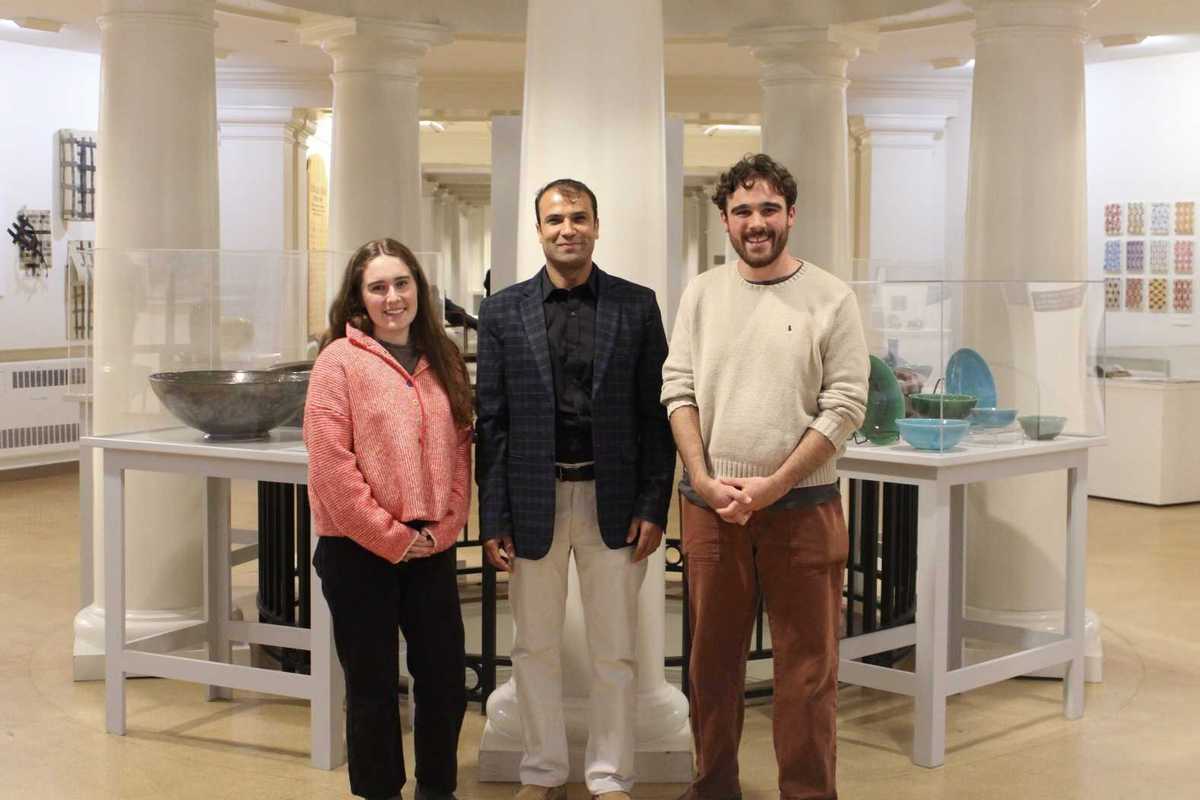
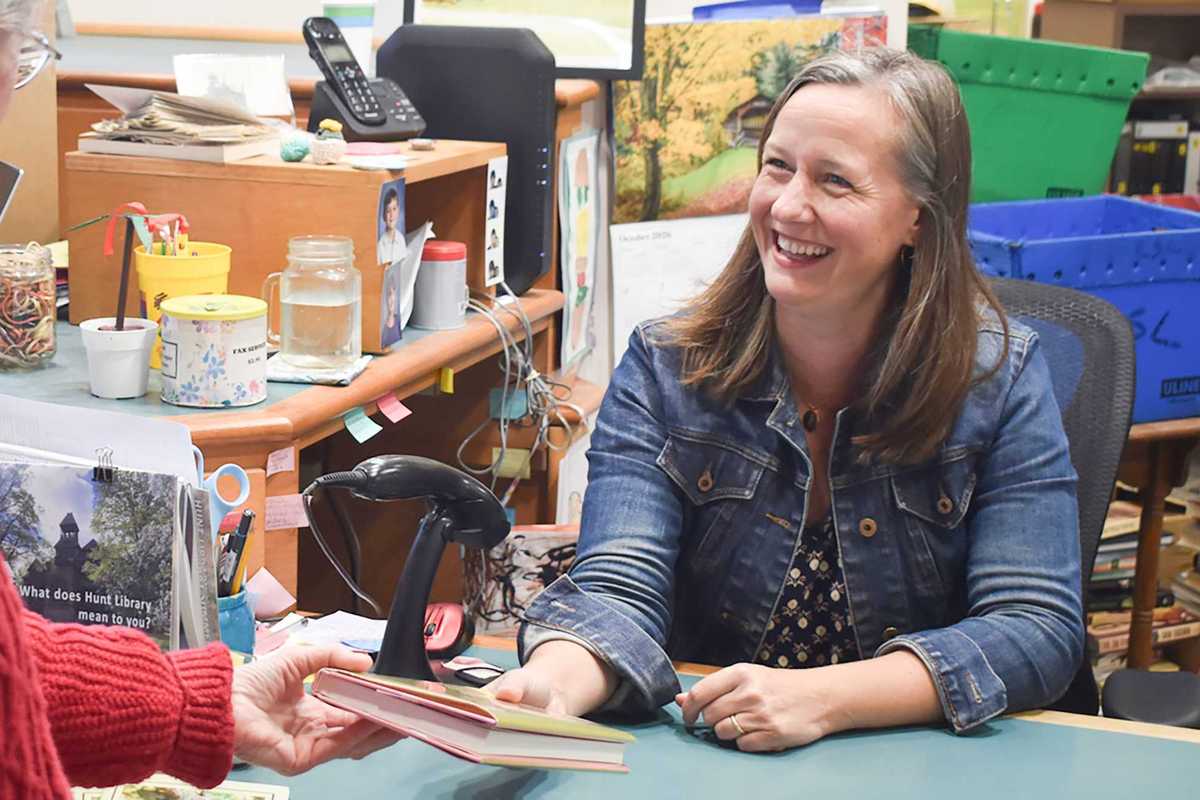
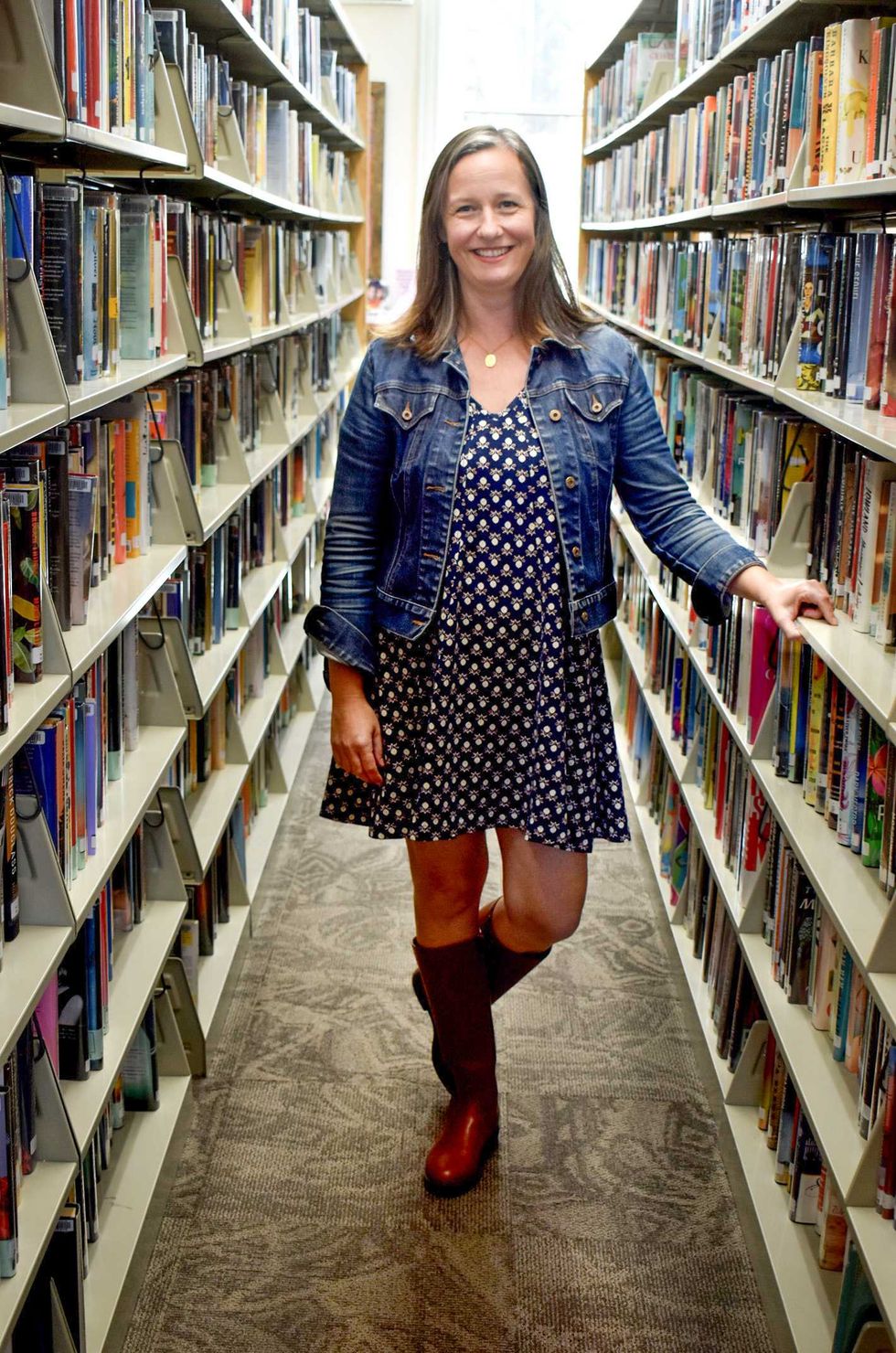 Meg Sher, executive director of the David M. Hunt Library in Falls Village.L. Tomaino
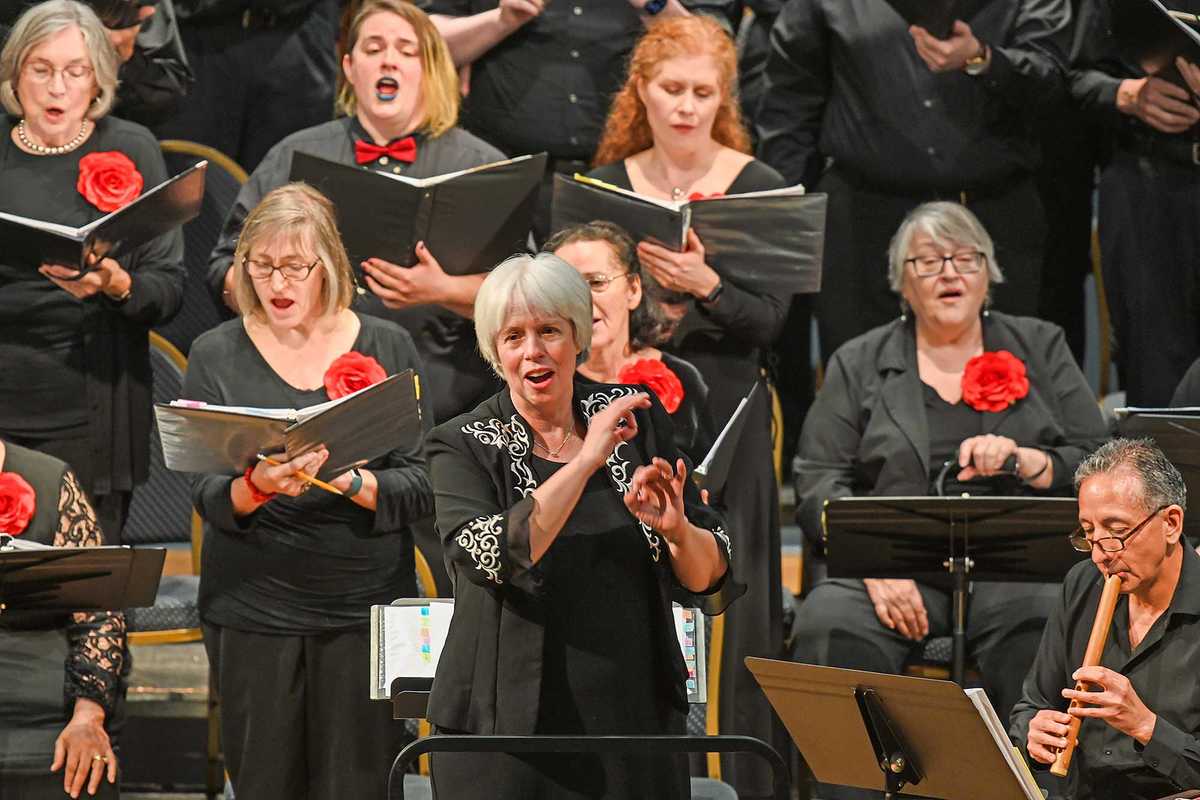


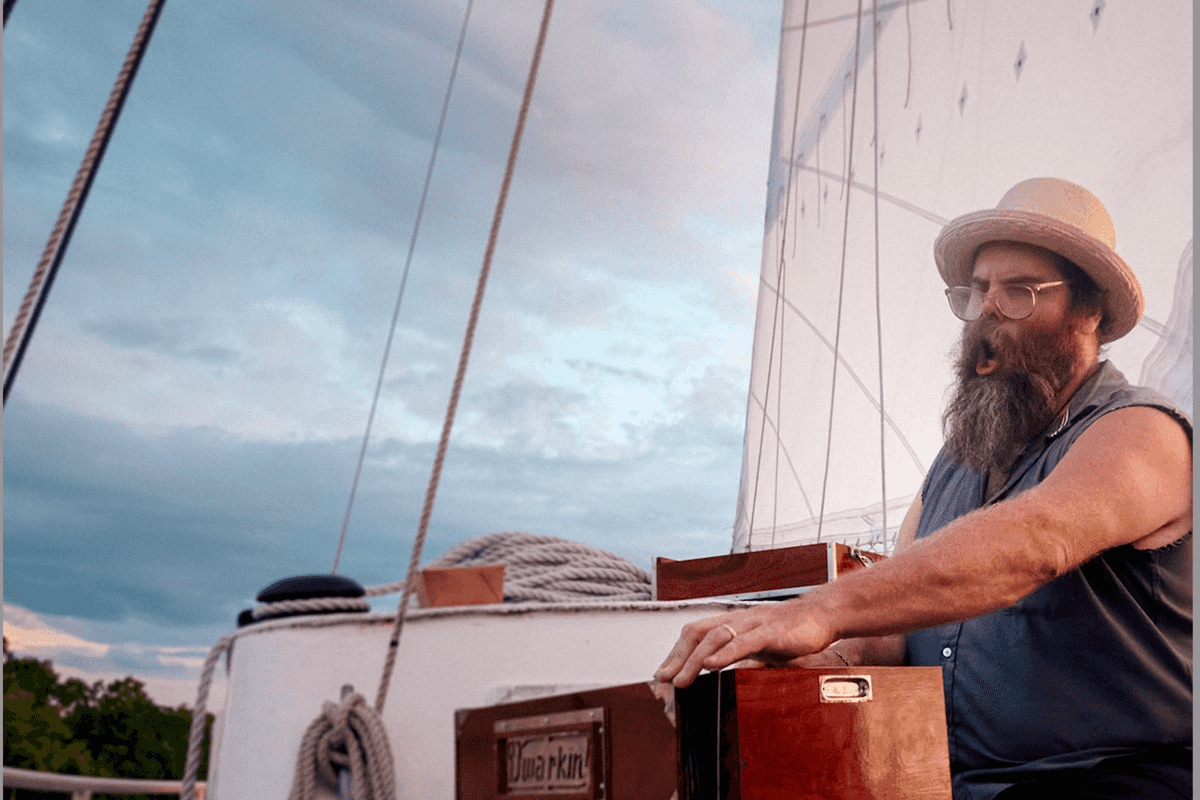

 Samir LanGusProvided