Health care safety net under strain
For nearly ten years, our community fought to keep labor and delivery(L&D) open at our local hospital. Once a hospital loses maternity services, it quietly loses something even larger: the capacity to provide 24/7 emergency surgical care for not just for birthing mothers, but anyone facing a life-threatening crisis. That is not a theoretical risk for NWCT: it is our lived experience.
Sharon Hospital has been under Connecticut’s Certificate of Need (CON) oversight since its sale to for-profit Essent Healthcare was approved in the early 2000s. Since then, the hospital has repeatedly used the CON process for major decisions, including the recent attempt to terminate inpatient labor and delivery. The Office of Health Strategy (OHS) ultimately denied that closure request because the hospital could not show that eliminating the only rural maternity unit in this region would improve quality, access, or cost-effectiveness.
In 2025, lawmakers advanced SB 1539, “An Act Concerning Certificates of Need,” which would require state review of private equity investments that give controlling power over a health care facility and would direct regulators to deny applications to terminate L&D services unless another hospital with those services is within 25 miles. For communities like ours, this proposal shows what many advocates believe is needed: strong oversight of ownership changes and service closures that can create “maternity care deserts.” But those protections have not yet been fully enacted.
As of July 1, Connecticut is dissolving OHS, the agency that has overseen these CON decisions and enforcement of agreements. The process we used to stop the closure of our hospital’s services is changing, and it is far from clear where CON authority will reside or how SB 1539-style protections will be implemented.
This uncertainty comes as rural hospitals and clinics already face serious financial pressure. Sharon Hospital has been identified in research as one of hundreds of rural hospitals endangered by potential Medicaid funding cuts. Federally Qualified Health Centers across Connecticut are also struggling with historically low Medicaid reimbursement rates and federal funding freezes. Our new FQHC in North Canaan has become a “healthcare oasis” in what was a medical desert, but it cannot thrive if reimbursement and grant support fail to cover the real cost of care.
Taken together, this means our safety net in the Northwest Corner is under strain from both sides: rural hospitals that are one CON decision away from losing L&D and community health centers that cannot sustain expanded access if funding and Medicaid support lag behind reality.
As we enter an election season in which Governor Lamont, Representative Maria Horn, Senator Stephen Harding and others seek new terms ahead of the January 2027 legislative session, the voters of Northwest Connecticut deserve clear answers:
• Will they commit to enacting and enforcing strong CON protections—like those proposed in SB 1539—for labor and delivery closures and private equity control?
• Where will CON authority live, and how will rural communities be guaranteed a meaningful voice in decisions that affect our hospitals?
• How will they stabilize Medicaid reimbursement and use new rural health funds to keep essential services and the North Canaan FQHC fully staffed and fully open?
Our region has shown that we are willing to organize, testify, and negotiate to protect maternal care and emergency services. What we need now is a firm public commitment that the rules will not be changed in ways that weaken community protections, and that rural hospitals and clinics will receive the reimbursement and oversight they need to remain true lifelines, not just names on a sign.
Deborah Moore
Sharon
Time for storm response and recovery plan
The July 4th storm was a powerful reminder of both nature’s force and our community’s resilience.
First, credit is due where it belongs. Utility crews, the Connecticut Department of Transportation, local public works departments, first responders, and countless contractors worked tirelessly under difficult conditions. Roads were reopened, power was restored, and dangerous situations were addressed remarkably quickly. Their efforts deserve our thanks.
At the same time, the storm raises an important question that extends beyond this event: What if the damage had been even more widespread or the outages had lasted longer?
Many residents have emergency generators. Many do not. Some can weather several days without electricity; others depend on refrigerated medications, well pumps, internet access, or electrically powered medical equipment. If roads remain blocked, how do people reach a hospital in an emergency? How do residents know which roads are open? Where can they charge a phone, access Wi-Fi, or receive reliable information when normal communication breaks down?
Perhaps it is time for our towns to develop a simple Community Storm Response & Recovery Plan, a practical framework that can be activated whenever a major storm strikes.
Such a plan might include regular updates on road closures and conditions through multiple channels, a designated information officer, a charging and information center for residents without power, guidance on shelters and available assistance, lists of licensed contractors and debris disposal procedures, and outreach to neighborhoods that have suffered the greatest damage. It could also identify volunteers and community organizations willing to assist older adults, people with disabilities, and others who may need extra help.
This is not about expecting local government to solve every problem. It is about ensuring that residents know where to turn, what resources are available, and how communities can work together during and after a disaster.
The July 4th storm showed us how quickly dedicated professionals can restore essential services. Now is an ideal time to ask an equally important question: before the next major storm arrives, do we have a shared plan to help our communities recover?
David Becker
Salisbury
Shoutout to Lorenzo, Marks for cleanup effort
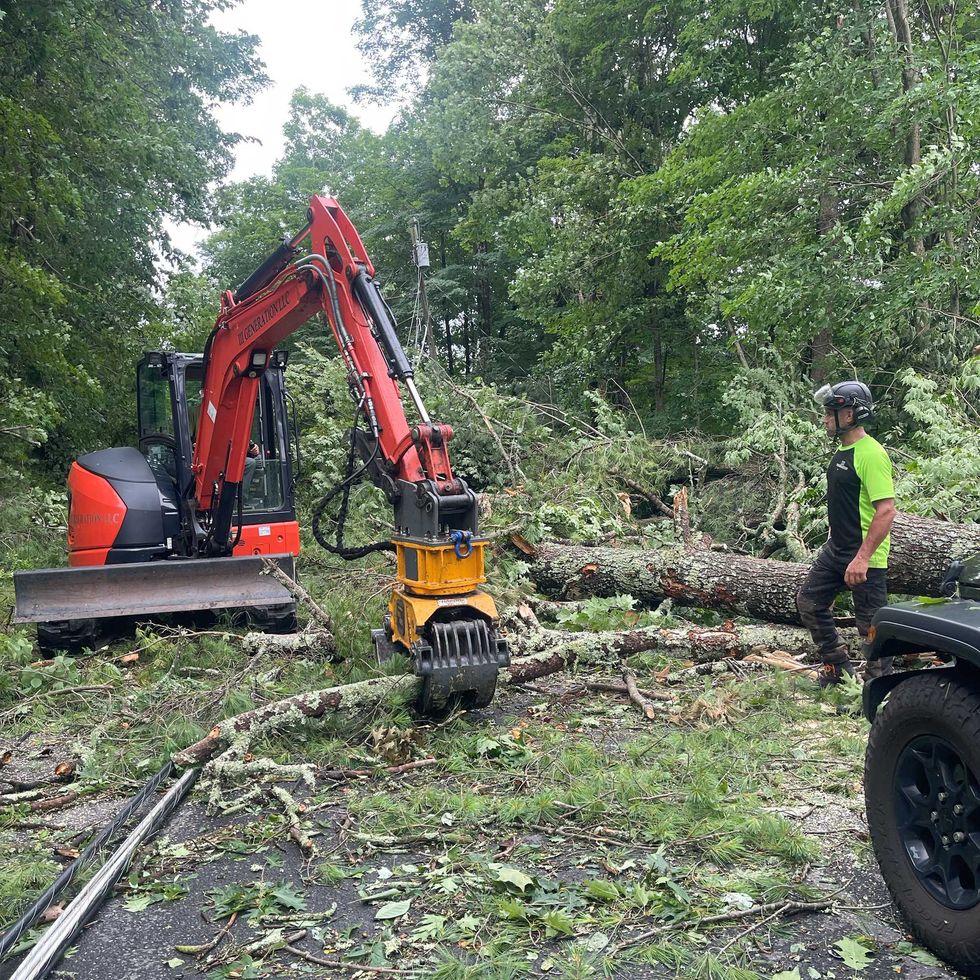
I am writing this email in response to your post about the unsung heroes. The damage to Salisbury was incredible but I truly do not think a lot of people know exactly just how much damage was done to Factory Street in town. The entire roadway was blocked with numerous trees down, wires down, transformers down, making it impassable by any sort of vehicle, ATV and almost to the point of impassable by foot. Anyone who owned a house from the bottom of Factory street up to Bunker Hill were trapped from any access to the town. There was a 7 month pregnant woman alone, a man with a 9month old baby, elderly, an entire family with small children trapped with their driveway blocked.
Pete Lorenzo who owns III Generation Tree Service in Salisbury went out there first thing with Gary Marks. They showed up with a chainsaw and an excavator and cleared the entire road, only the two of them all the way to Bunker Hill. The road was filled so many trees that required finesse and proper knowledge of cutting and balancing weight that your average joe would not be able to cut through. Prior to that, Pete was driving home Factory street in the middle of the storm when everything came down. His friends who were in the Jeep Wrangler (the picture circulating) were 75 yards in front of them.
There has been a lot of footage and photos circulating of the storm damage in town, but I have yet to see anything shared about Factory Street and just how bad the destruction was. I really believe Pete and Gary deserve a shout out for their hard work.
Molly Lorenzo
Lakeville
A generous leader and dedicated volunteer
On July the 7th, our friend, colleague and Chairman, Stacie Weiner passed away after a year and a half battle with cancer. She was the quintessential chairman, always patient, always willing to explain and always focused on the job in hand. As a leader, she provided a fair and open forum that was enhanced by her generous personal warmth.
Additionally, Stacie was the type of person who volunteers and whom small towns like Salisbury rely upon. In addition to chairing the Zoning Board of Appeals, she was one of the two Salisbury representatives to the Housatonic River Commission (HRC), was at one time the Salisbury representative to the Region 1 High School Board of Education and served on the investment board of the Northwest Connecticut Community Foundation.
To Danella Schiffer, her spouse and partner of fifty-one years, we send not only our heartfelt condolences but also our thanks for having been given the opportunity to share Stacie with us.
Peter Menikoff
On behalf of Members of the Salisbury Board of the Zoning Board of Appeals
Good fences make good neighbors, and the other way around as well
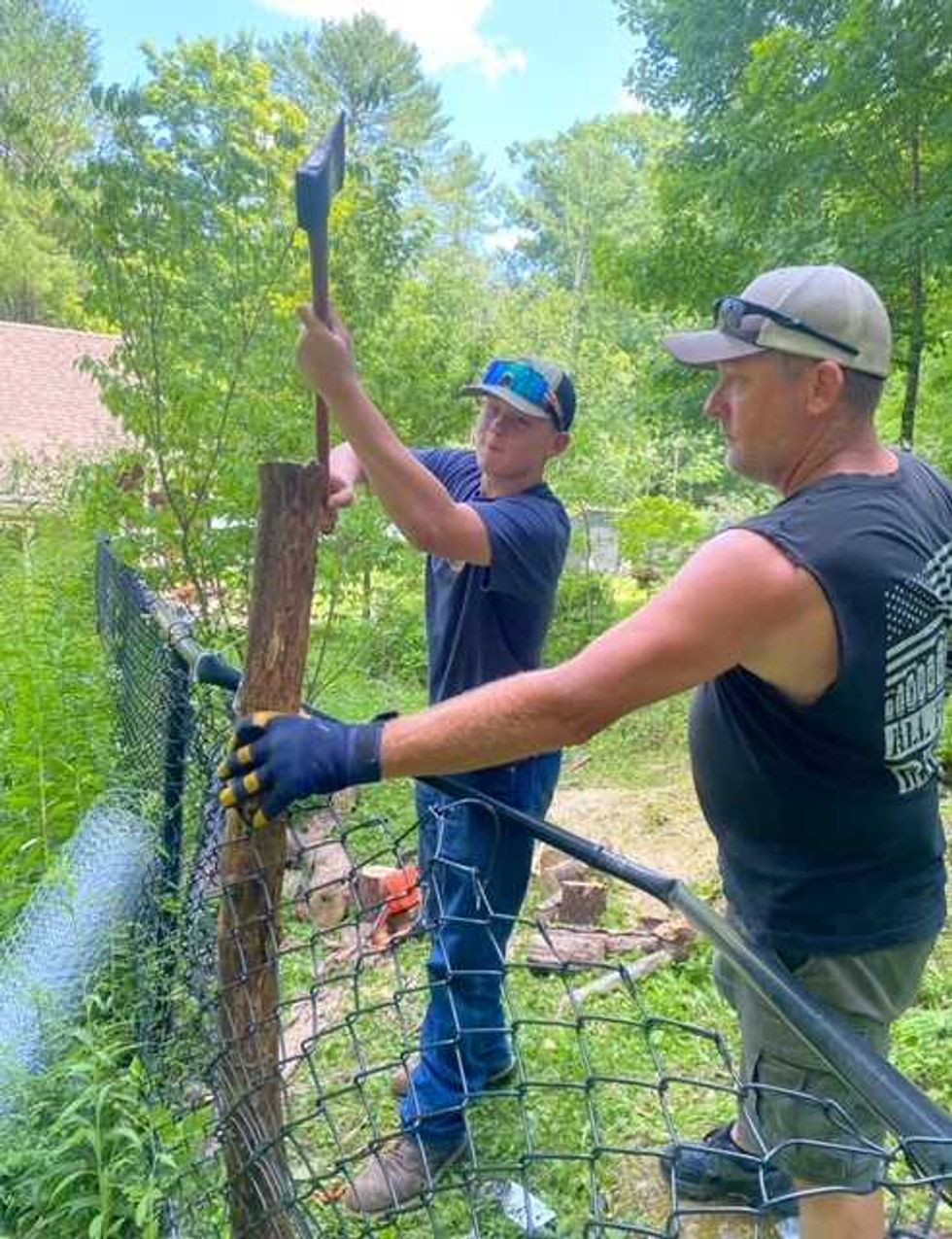
We are deeply grateful by all the supports Salisbury and Lakeville neighbors gave to one another in the aftermath of the Storm of July 4th. Repair work is of course ongoing as we all know. Pictured, Chris Ohmen, Assistant Fire Chief, and Skyler Ohmen, Junior Firefighter and Rising Freshman at HVRHS, repair a neighbor’s fence.
 Rachel Berg


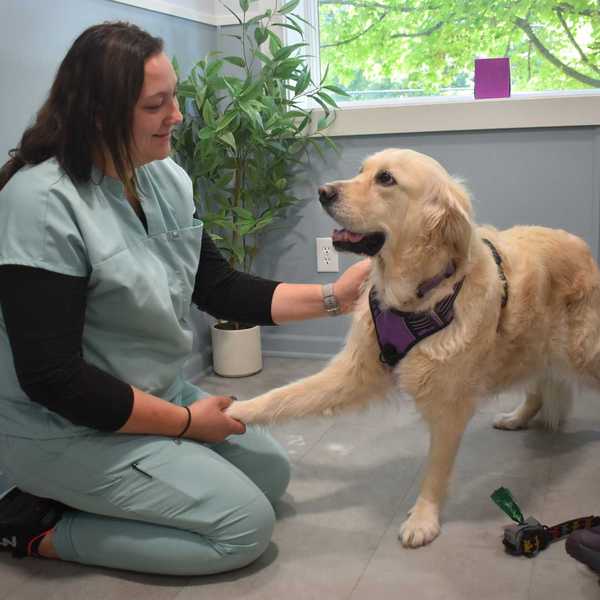
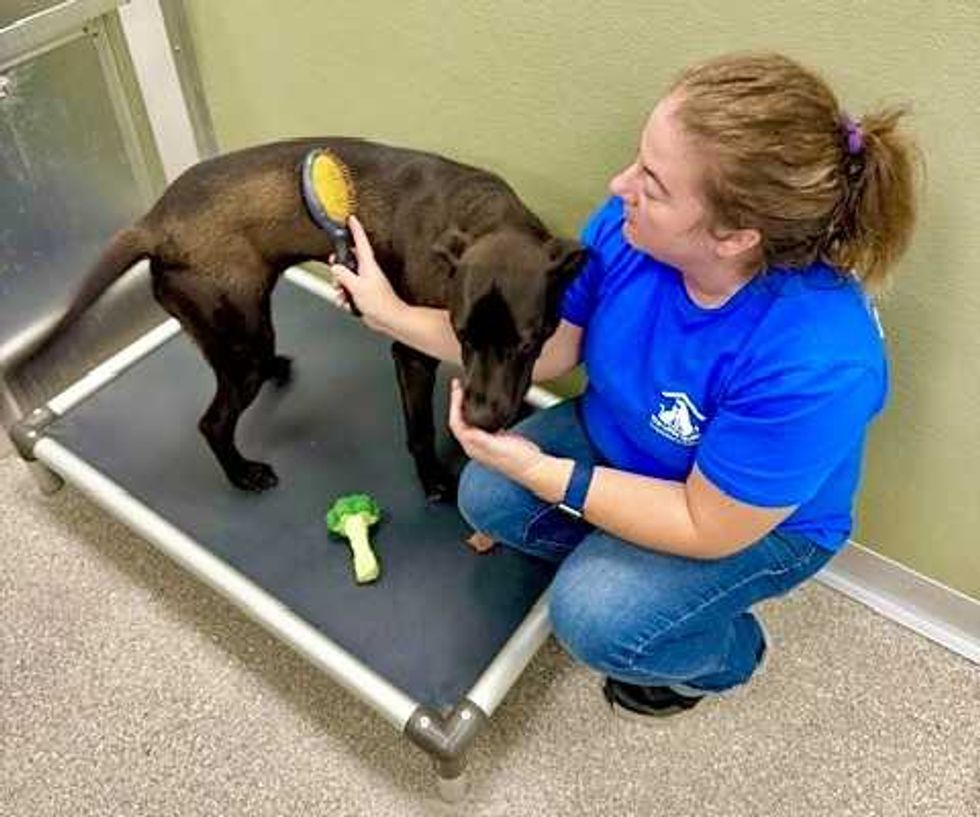 Tiffany Lemelin, shelter manager, brushing Marsala upon arrival.Provided
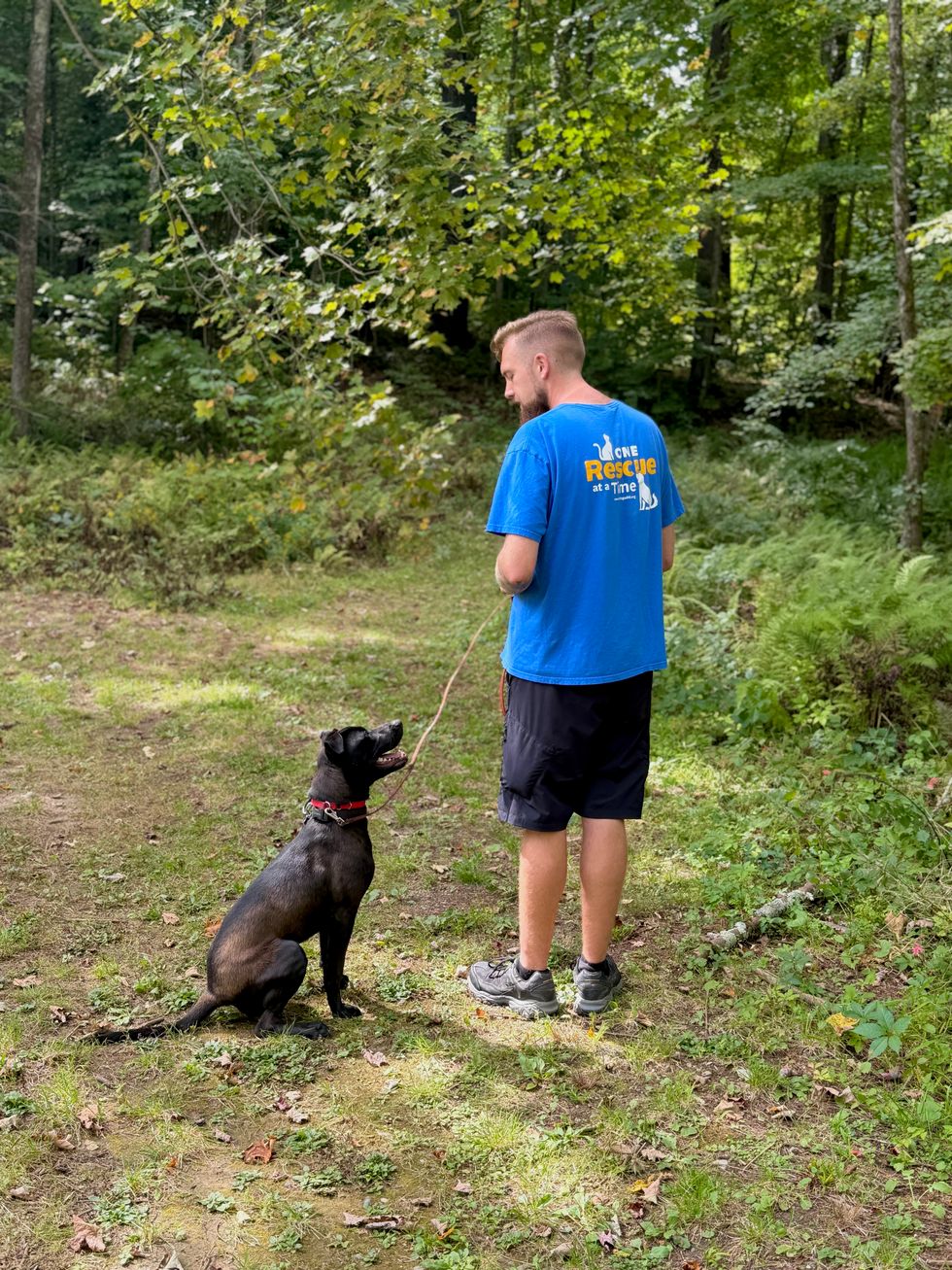 Michael DeBarba, certified dog trainer working with Marsala.Jennifer Almquist
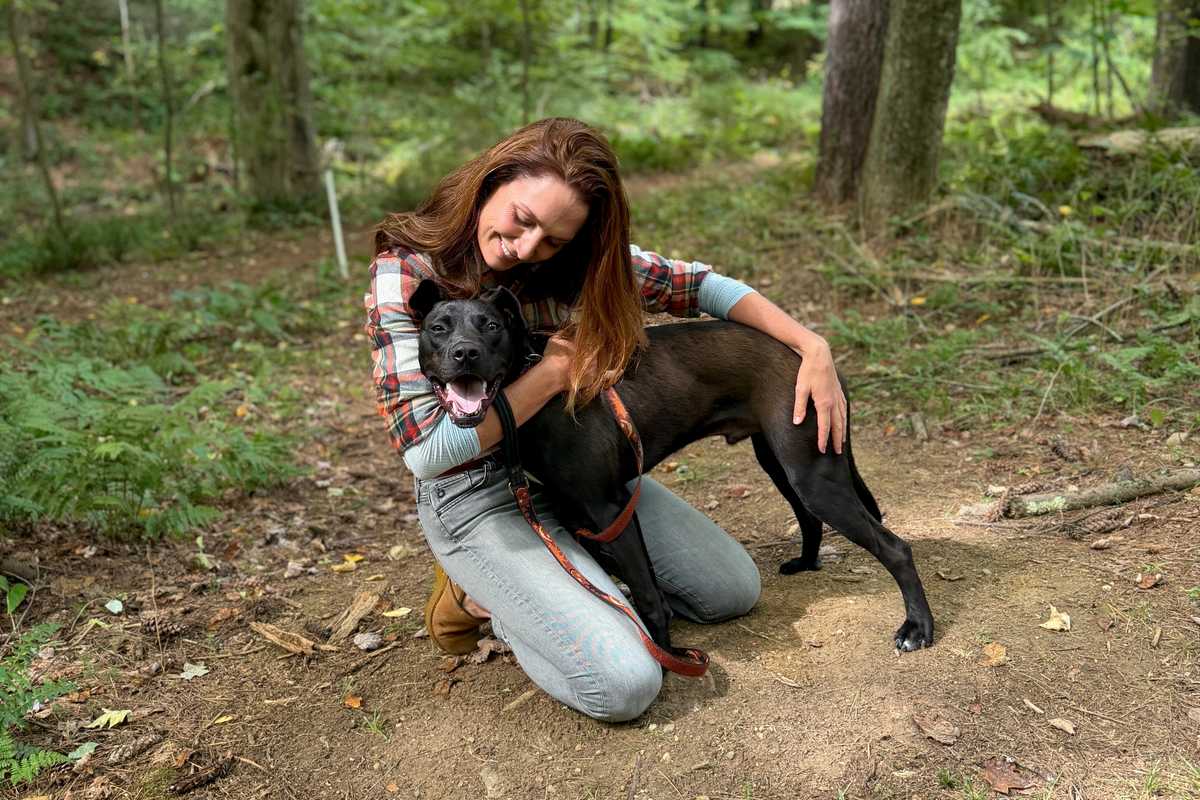 Marsala wins a heart.Jennifer Almquist

 Sadie, center, a Carolina dog, plays with her friend Negra, a terrier mix. Bella Linda, the small poodle, has since been adopted.L. Tomaino
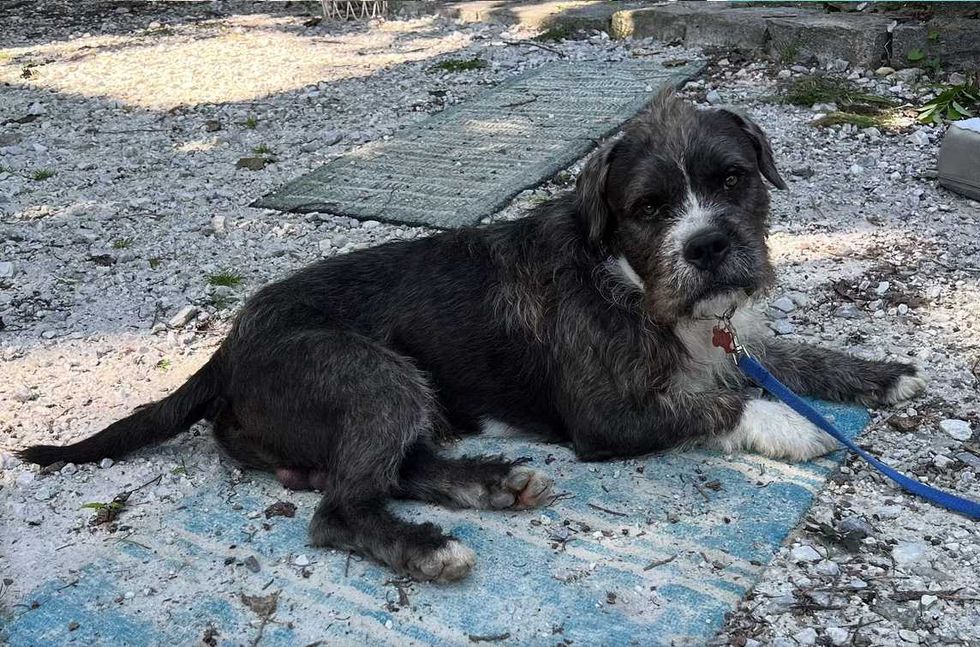 Wesley, a young, exuberant mix, is looking for an active home.L. Tomaino
 Bonnie and Clyde, an affectionate terrier pair.L. Tomaino
 Provided