Thank you!
Your support is sustaining the future of local news in our communities.

Letters to the Editor - July 30, 2026

A crisis in affordable housing

In 1968 the world population was 3.5 billion, today it is over 8.3 billion. No wonder affordable housing is a world-wide problem. But in Washington the administration cut 13% of the Department of Housing and Urban Development.

Purchasing a house is the most important investment people can make, and it helps them start accumulating wealth. A homeowner becomes a part of a community and meets his neighbors. As the owner pays property tax, he becomes aware of the town government, schools, fire and ambulance service. Home ownership is an important part of the American Dream, and it is important for our towns and suburbs.

Young people used to be able to buy their first home in their twenties, now the average age of first-time buyers is thirty-eight. The medium price of a family home in the US is $440 000.

The 21st Century ROAD to Housing Act was passed as bipartisan legislation despite the President refusing to sign it. Among its benefits is to stop institutional investors from purchasing small family homes and reselling them at a higher price. The Act gives renters credit for purchasing a home. It encourages building factory-built modular homes to reduce prices and it creates a pilot program to make available small mortgage grants to pay for down payments and closing costs. It is time for the young people working at Walmart and other low-entry jobs to afford to buy a home too.

The administration with the legislature in Connecticut is doing its part, they built twenty-one thousand new units of housing for rentals and built ten thousand new starter homes. We need affordable housing to convince young people to stay in Connecticut. There are just not enough houses available for the demand.

The National Low Income Housing Coalition says there is no state in the country with adequate affordable rental housing.

Lizbeth Piel

Sharon


This year, how you vote matters

Starting with August’s Democratic gubernatorial primary, Connecticut’s voters will have an option they’ve never had before: to cast a mail (aka “absentee”) ballot with no excuse required. Here’s why all voters should cast a mail ballot.

Mail voting is under attack by those who want to make voting harder. Donald Trump and his allies keep insisting it can’t be trusted, even though it has been used safely and securely for decades in thousands of elections with tens of millions of ballots cast, in red and blue states alike. Mail voting is convenient and makes voting more accessible for everyone — especially people juggling work and family responsibilities, caregivers, students, older voters, younger voters, and people with disabilities. Choosing to vote by mail is a way of pushing back against Trump’s fearmongering and standing up for voting rights.

There’s a practical reason, too. Connecticut only recently gained no-excuse absentee voting, after voters approved a constitutional amendment in 2024 and the legislature followed up this year with the law needed to implement it. But lawmakers kept the existing schedule of in-person early voting intact — 14 days before general elections and 7 days before primaries — meaning every town, large or small, must still fully staff polling operations for that entire stretch, even on days when barely anyone shows up.

That made sense back when early voting was the only alternative to voting in person on Election Day itself. It makes little sense now. A mail ballot is, in effect, early voting, but without requiring a trip to a polling place, and it opens up a longer window: 31 days before a general election and 21 days before a primary.

It is also considerably cheaper for municipalities to administer than staffing an early-voting site. That’s why town clerks and voter registrars across the state, Republicans and Democrats alike, have pushed for the legislature to scale back early voting days. Skeptics of that idea argue we don’t yet have enough experience with the new absentee system to justify the change. The best way to prove them wrong is for voters to actually use it. Every mail ballot cast this year makes the case that Connecticut doesn’t need to keep running expensive early-voting operations alongside a mail option that does the job better.

And remember: despite the name, a “mail ballot” doesn’t have to go through the mail at all. You can drop it off in person at your town clerk’s office, use the secure drop box outside your town hall, or send it by U.S. mail — whichever is easiest. To get an application, reach out to your town clerk or visit the Secretary of the State’s online portal.

Voting is always important. But this year, how you vote matters, too.

Lee Greenhouse

Salisbury
The views expressed here are not necessarily those of The Lakeville Journal and The Journal does not support or oppose candidates for public office.

Latest News

A life reshaped by clay in “Matin”

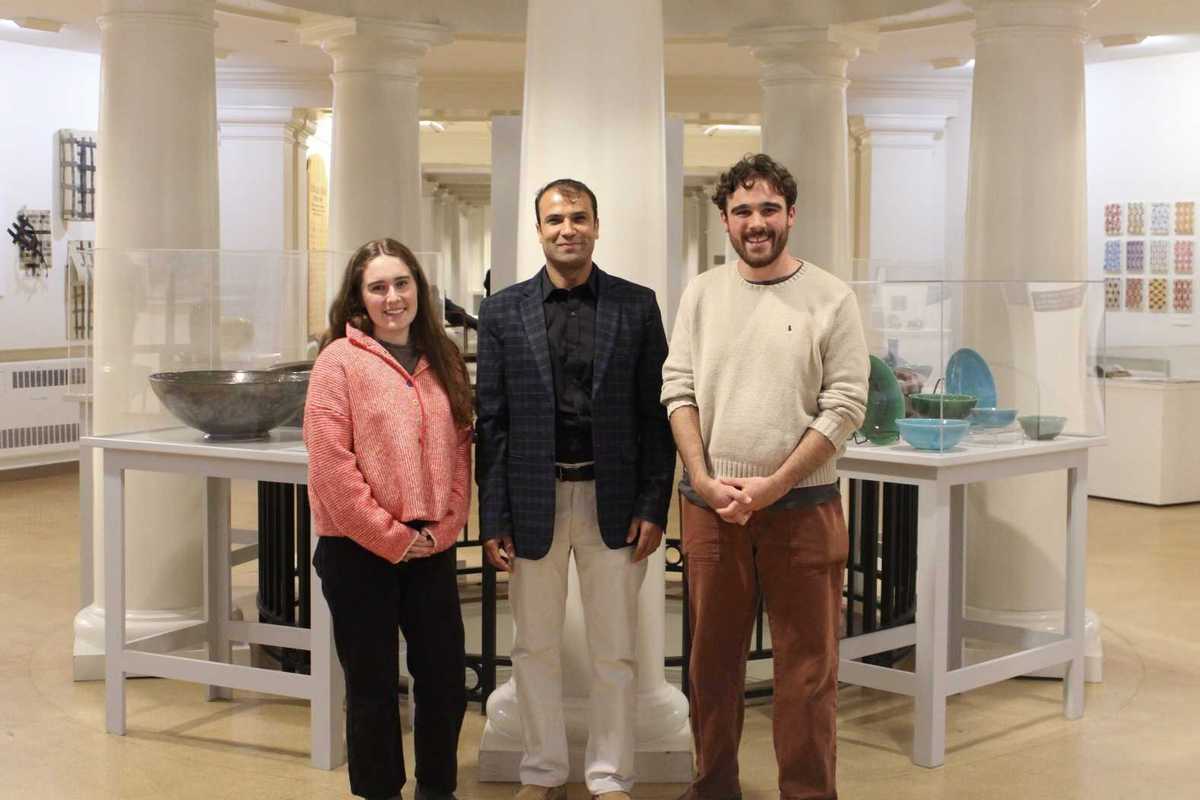
Left to right: Hannah Wheeler, Matin Malikzada and Yonah Sadeh.

D.H. Callahan

On Monday, Oct. 26, a group of students, teachers and local residents gathered at the Hotchkiss School in Lakeville for a screening of the new short documentary “Matin.” The film tells the story of Matin Malikzada, a seventh-generation Afghani potter making a new life in New Milford, Connecticut. The film was made by local filmmaker Yonah Sadeh, creator of the Video Wall at the David M. Hunt Library, and Berkshires-based potter Hannah Wheeler, who were both present for the screening, along with Malikzada himself.

As a member of the seventh generation of his family to master the art of pottery, Malikzada had done things the way his family had for over a century. Istalif, the village where his family has lived for generations, was known throughout Afghanistan for its pottery, with wares sent across the country for use as everyday cups, bowls, plates and other vessels. The pottery-making families of Istalif gathered clay from the same mountain, about 30 to 45 minutes away by donkey. Every July, they would head north toward the Uzbekistan border to gather ishkar, a plant they processed by hand to make their signature glazes.

Keep ReadingShow less
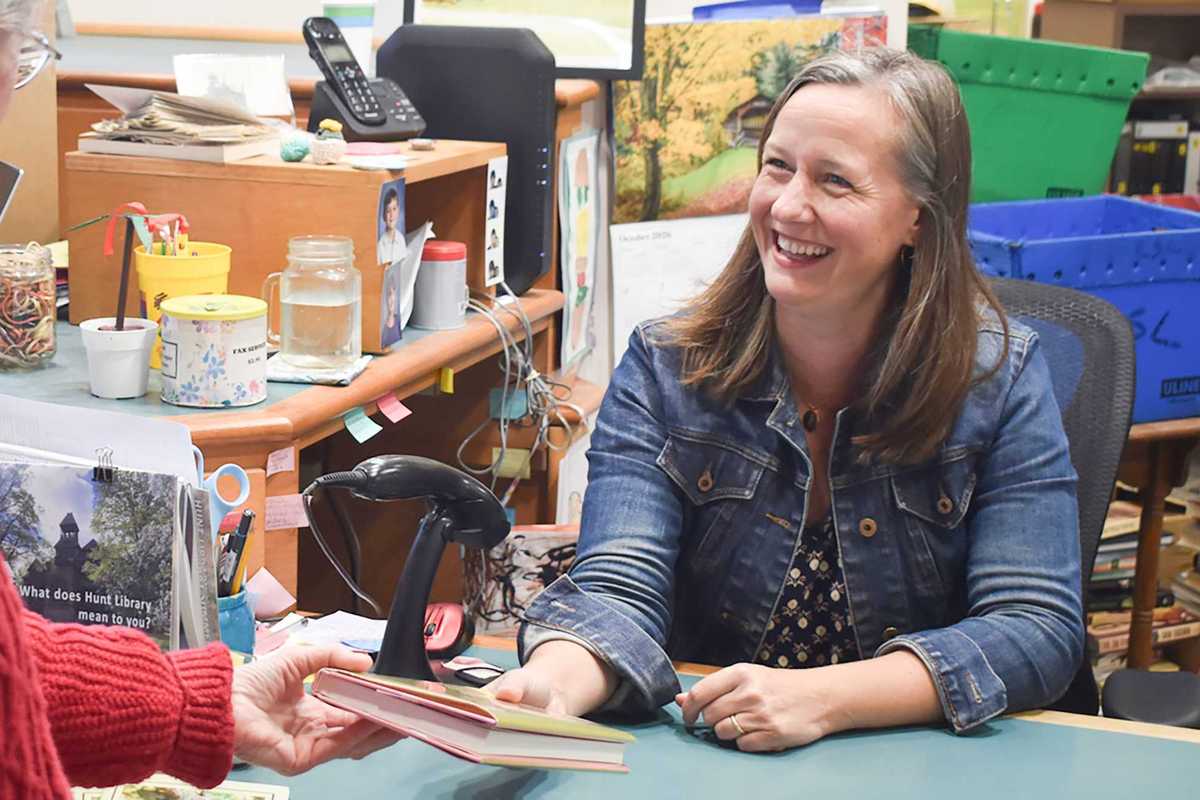
Meg Sher finds her calling among the stacks

Meg Sher, executive director of the David M. Hunt Library in Falls Village.

L. Tomaino

When Meg Sher came to Falls Village in 2006 from Old Lyme, Connecticut, where she grew up, she never imagined she’d someday be the executive director of the David M. Hunt Library.

Although, in hindsight, perhaps it makes sense.

Keep ReadingShow less
Crescendo’s 23rd season speaks to the heart and mind

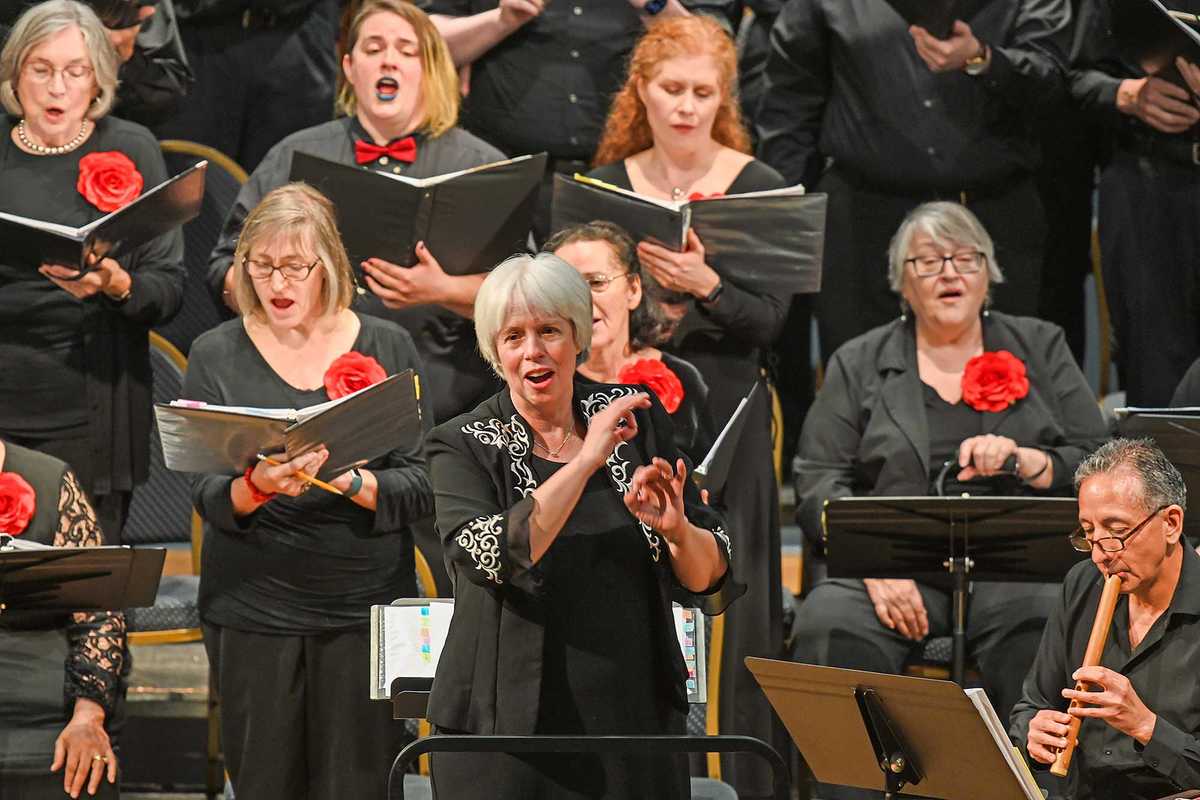
Christine Gevert, founding artistic director of Crescendo, conducts the audience at a performance.

Steve Potter

For Christine Gevert, founding artistic director of Crescendo, music from centuries past is anything but a relic. It is a living, breathing art form, full of drama, emotional complexity and, occasionally, surprises. As the regional choral and period-instrument ensemble launches its 23rd season, Gevert is once again bringing forgotten masterpieces into the present.

“Early Music has been my lifelong passion and the focus of my specialization in Europe and South America,” Gevert said. “Bringing this repertoire to our audiences in a nuanced way that does justice to its incredible depth, intensity, and beauty is deeply important to me.”

Keep ReadingShow less
google preferred source

Want more of our stories on Google? Click here to make us a Preferred Source.

Close Encounters with Music celebrates 35 years of musical discovery

Close Encounters with Music’s 35th season opens with “Saluting the Clarinet” featuring clarinetist Alexander Fiterstein.

Provided

For 35 years, cellist Yehuda Hanani has been inviting audiences to experience classical music in unexpected ways. As founder and artistic director of Close Encounters with Music, Hanani has built a concert series that goes beyond the music itself, exploring connections to literature, history, politics and the human experience.

This year, Close Encounters celebrates its 35th season with “Celebration & Discovery,” a seven-concert series that opens Sunday, Nov. 1, at the Mahaiwe Performing Arts Center in Great Barrington.

Keep ReadingShow less
Shinbone Alley brings spooky songs to Spencertown

Seeing isn’t always believing. Sometimes it’s the lack of a defined picture that can be the most compelling. And when Alex Harvey of Shinbone Alley sings his supernaturally charged sea shanties and street ballads, the unseen will be downright scary. On Oct. 30, the historically inclined storyteller and performer will create a spooky evening of forbidden tales and yarns through a carefully chosen series of songs at Spencertown Academy of Arts.

The repertoire for the performance is a bit fraught. Over the years, Shinbone Alley has explored the world of folklore through music. Though the group usually features two musicians, Harvey, a multi-instrumentalist and singer, will be performing solo. That is, of course, unless you include the spirits.

Keep ReadingShow less
Malian blues and Moroccan Gnawa meet in Sheffield
Vieux Farka Touré
Proivded

Desert winds rarely blow into the Berkshires, but on Nov. 5, they will carry the Malian blues and Moroccan Gnawa music to Race Brook Lodge.

That evening, Malian guitarist Vieux Farka Touré, often called “the Hendrix of the Sahara,” and Moroccan musician Samir LanGus will play at the lodge’s Event Barn in Sheffield, Massachusetts, at a benefit for the foundation Touré directs.

Keep ReadingShow less
google preferred source

Want more of our stories on Google? Click here to make us a Preferred Source.

google preferred source

Want more of our stories on Google? Click here to make us a Preferred Source.