Thank you!
Your support is sustaining the future of local news in our communities.

LGBTQ clubs at schools build community

WINSTED — Lena Teixiera started her senior year at The Gilbert School this fall. After transferring from Housatonic Regional High School as a sophomore, she has settled right in at the school. Known to her teachers as a diligent, engaged student, Lena is deeply involved in school clubs and activities, including membership in the Leo Club, working as a student ambassador and as a peer leader. She hopes to follow a passion for biology as she starts looking at colleges later this year and plans to remain active politically wherever she goes, using a strong voice and earnest attitude that has already earned her the respect of her community in Winsted.

Lena is also, as a member of the LGBTQ (lesbian, gay, bisexual, transgender and queer) community, statistically at a much higher risk for a variety of negative health and social outcomes. Youth who identify as gay or bisexual are almost twice as likely to be bullied at school nationwide, according to a 2016 Centers for Disease Control and Prevention (CDC) study. The same study found that one in ten gay and bisexual students have reported missing school during the past month due to safety concerns. More than half of all transgender and queer youth in the United States will attempt suicide by their 20th birthday, according to the Youth Suicide Prevention Program, with the vast majority of those having reported rejection or discrimination in their families and peer groups.

Clubs offer support

Progress has been made at the national level in providing resources and support for young LGBTQ people, and court cases and legislation have disallowed some discriminatory practices and laws, but ignorance and numerous other structural factors continue to harm gay and transgender kids in communities across the country.

“I think if somebody needed help [at Gilbert] I think they would be able to get it,” Lena said. “I think everyone might be a little nervous, they might not know where to go at first, whether to go to a teacher, or to a counselor, or where exactly to go. But I think once they find that person to talk to, they’ll be okay.”

Lena has support from her family, as well as a network of encouraging peers through Gilbert’s Gay-Straight Alliance (GSA), which she is the president of. She says that for the most part, she feels safe and accepted in her school and in her community. For others, though, who don’t have access to a support structure like Lena’s, or whose needs outstrip the scope or expertise of family members and teachers, finding help can be hard. 

Looks for support

As far as looking for support outside of the school or her family, Lena said she has never considered where she would go, or who she would talk to.

Robin McHaelen is the executive director of True Colors, a nonprofit based in New Britain whose mission is to provide mentoring, counseling and other resources to LGBTQ youth in Connecticut, while advocating and educating other community organizations on how best to provide for LGBTQ people. She has spent the last two decades working with gay, transgender and queer youth, and says that while a lot of things have changed for the better, many communities still fall short of providing appropriate help and resources.

“People who provide services to youth have to make sure that their policies are in place,” McHaelen said. “In terms of non-discrimination, they need to look at each program, and look at the places where it includes LGBT folks, and [where it] leaves them out,” McHaelen said.

While Connecticut state law for the most part protects the rights of LGBTQ people, McHaelen said, schools and other organizations still lag behind in providing training for staff or making their services affirming and inclusive.

“If I come to you, your organization for example, and your form only says my legal name, if I’m a trans person who has changed my name but not legally yet, and the form only says ‘sex,’ that was assigned at birth, what if your sex is different than your gender, where does that go?” McHaelen said. “All of those little things send messages that you’re not welcome here, that they don’t know what to do with you.”

 True Colors, which has operated in Connecticut since 1994, sends its members around the state to provide training and help rectify these omissions that serve to create an environment that is unwelcome and unsafe for vulnerable LGBTQ youth.

“You have to work from the top down and the bottom up,” McHaelen said.

Positive legislation

“Top down” means legislation, McHaelen said, which in Connecticut has been mostly positive in providing needed protections for LGBTQ people, though enforcement of these laws continues to lag. In 2011, Governor Dannel Malloy  signed a bill that outlaws discrimination based on gender identity or expression, adding transgender and gender non-conforming people to a 1991 law that bars discriminatory practices against gays and lesbians.

But schools “often don’t know what they’re supposed to do, by law” for transgender students specifically, according to McHaelen, a problem that True Colors continues to address in its work.

“It’s been five years, and you would think people would get it by now, but they don’t,” said McHaelen.

True Colors has not encompassed Litchfield County in recent outreach efforts, but McHaelen said they will in the near future.

Shortcomings and

 opportunities

Lena’s experience reflects some of the structural shortcomings. While she said she has never had a bad experience with Gilbert staff, she said most of her support comes through unofficial channels, including teachers and peers, who might not be directly involved in the LGBTQ movement or community but still provide understanding and empathy.

“I talk more to teachers than I do to administrators or guidance counselors,” Lena said. “There are a lot of young [teachers], and young people are typically more accepting, more liberal.”

With an issues related to her identity, Lena said she “probably wouldn’t” first go to an administrator or guidance counselor. She said the GSA faculty advisory, Peggy Steinway, or her biology teacher, Lauren Golden, were two adults she felt most comfortable talking to.

Organizations like the Gilbert GSA are part of the bottom-up  aspect of McHaelen and True Colors’ work. Visibility, and community and peer support are tremendously important in creating positive outcomes for LGBTQ young people, McHaelen said, with acceptance by family and peers being the number-one indicator.

The mere presence of a GSA in a school is enough to significantly reduce the risk of suicide for gay and transgender students, according to McHaelen.

Karen Hunter, a biology professor at Northwest Connecticut Community College (NCCC), leads another LGBTQ organizations. The “REAL Club” brings LGBTQ students at the college together for community service projects and to support each other in an inclusive environment. Hunter began working with the club about five years ago, she said.

“I’m...attracted to people who are brave, and strong enough to say, ‘Hey, this is me,’” Hunter said. “And members of the LGBTQ community have a lot of courage to do that.”

High school vs. college

The experience of an LGBTQ person at college is very different from that of students at high school age and younger, Hunter said, though there are some much more difficult decisions and struggles that go along with increased independence.

“Even before they can choose a place to live, they have to go and do the research, about how many people lose their lives because [they are LGBTQ]. ”

As an educator, Hunter said what she hopes to change is what people in the community understand about LGBTQ people. Ignorance, whether willful or incidental, and failure to understand one’s privilege are factors that contribute to marginalization and discrimination, she said.

“You have the person who is transgender, a student, person of color who is also female,” said Hunter. “So they have biases compounded in many different areas. So it’s hard for the typical middle-class white straight American to understand their struggles, because...we don’t realize it, we’re born and we’re privileged.” 

Hunter and the REAL club think that some of the best work they can do is simply go out and be visible, engage in their community and “poke the bear,” as Hunter put it, meaning challenge some of the larger biases and societal prejudices directly, through conversations and continuing to live fearlessly. 

“I think the root of it is ignorance,” said Lena. “I think that if people took the time to talk to someone they may not understand, and educate them, and kind of enlighten it, and make it not so scary and taboo.”

Hunter said she is continuing to network with various groups in the area, including the Gilbert GSA and True Colors, to create more opportunities for young LGBTQ people to meet, support and learn about each other.

Latest News

‘So Little to Do,’ so much to discover at James Barron Art

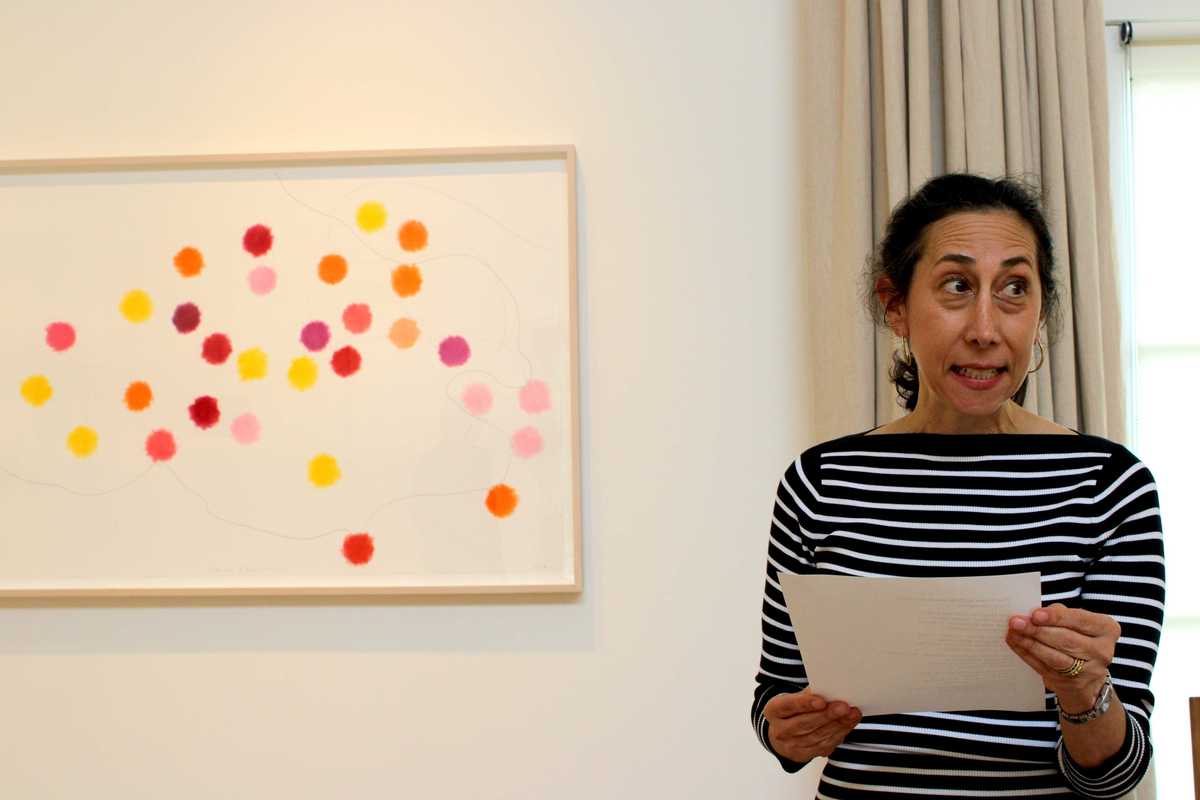
Curator Deborah Goodman Davis reads the Emily Dickinson poem “The Grass So Little Has to Do.” Spencer Finch’s “Following Three Bees (Zinnias)” buzzes in the background.

Photo by Natalia Zukerman

“The Grass Has So Little to Do,” on view at James Barron Art in Kent, takes its title from Emily Dickinson’s poem “The Grass So Little Has to Do,” written in 1862:

“The Grass so little has to do—
A Sphere of simple Green—
With only Butterflies to brood
And Bees to entertain—”

Keep ReadingShow less

Marina Kotchoubey is not a woodworker

Marina Kotchoubey is not a woodworker

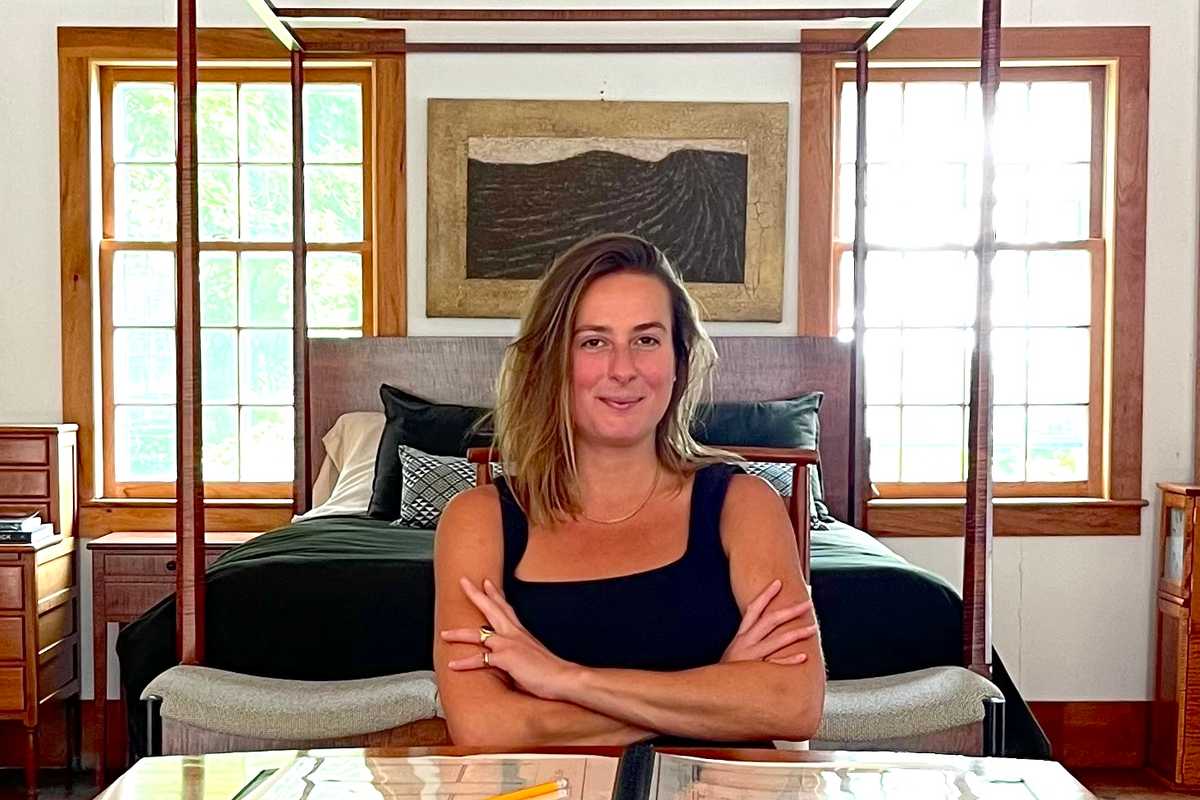
Marina Kotchoubey at the Ian Ingersoll Cabinetmakers showroom in West Cornwall.

Photo by D.H. Callahan

After 40-something years navigating the world of custom fine furniture, Ian Ingersoll was getting ready to retire. Starting off with a little dovetail stool that he sold at a shop in West Cornwall in the 1970s, he’d grown his skill and his business into something he — and the whole town — could be proud of. Shutting down that business was not an option.

Ingersoll built Ian Ingersoll Cabinetmakers, which produced mainly classical Shaker furniture, on passion: the passion he had to make a living through creative challenges and the passion of his employees, who all seem deeply in love with their craft.

Keep ReadingShow less
A legacy of giving at Norfolk Chamber Music Festival

One hundred and twenty years ago, Carl and Ellen Stoeckel commissioned New York architect E.K. Rossiter to design The Music Shed in Norfolk, Connecticut. After nearly a decade of entertaining their friends and neighbors with the finest music of the day, they built a permanent home for their beloved Litchfield County Choral Union.

The commission and full funding of the construction was not unheard of in an era when great fortunes led to public enrichment. Railroad tycoon John D. Rockefeller was instrumental in funding institutes of higher education. Steel baron Andrew Carnegie was building libraries all over the country, and famously said that a man who dies rich is a disgrace, challenging his peers to give their fortunes back to the people.

Keep ReadingShow less
google preferred source

Want more of our stories on Google? Click here to make us a Preferred Source.
Two unique exhibitions at Geary Gallery

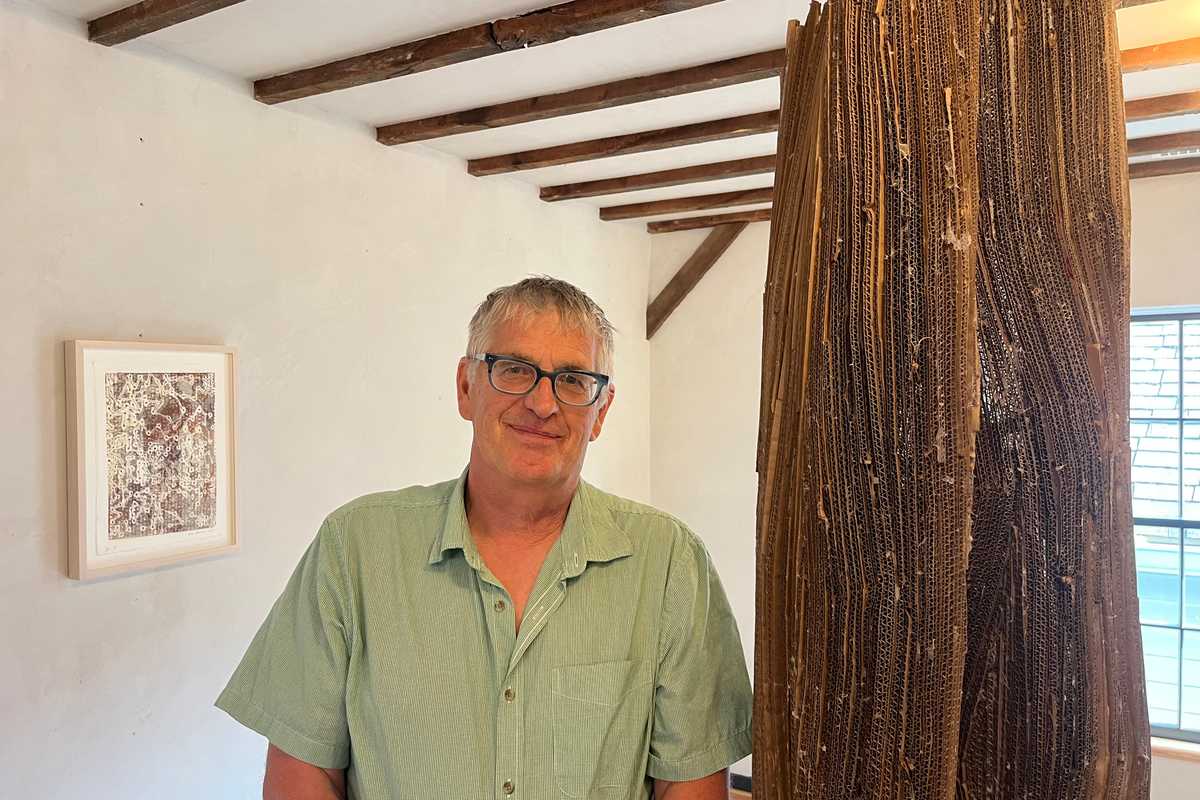
Henry Klimowicz with his sculpture, “Partial Pillar 1”

Photo by D.H. Callahan

On Saturday, Aug. 1, Geary Gallery opened its doors in Salisbury for two unique shows in its first- and second-floor gallery spaces. Art lovers flooded both floors over the course of the afternoon, giving the events a vibrant feeling that enhanced the importance of the art.

On the first floor is a show by Chicago-born, Colorado-based photographer Summers Moore, titled “Lobitos: Pueblo Fantasma,” or “Lobitos: Ghost Town.” The work centers around her daughter’s current hometown in Peru. Moore herself found a home away from home in Colorado in the mid-1980s and encouraged her children to seek out new places outside of their comfort zones.

Keep ReadingShow less

Writer’s retreat in the woods

Writer’s retreat in the woods

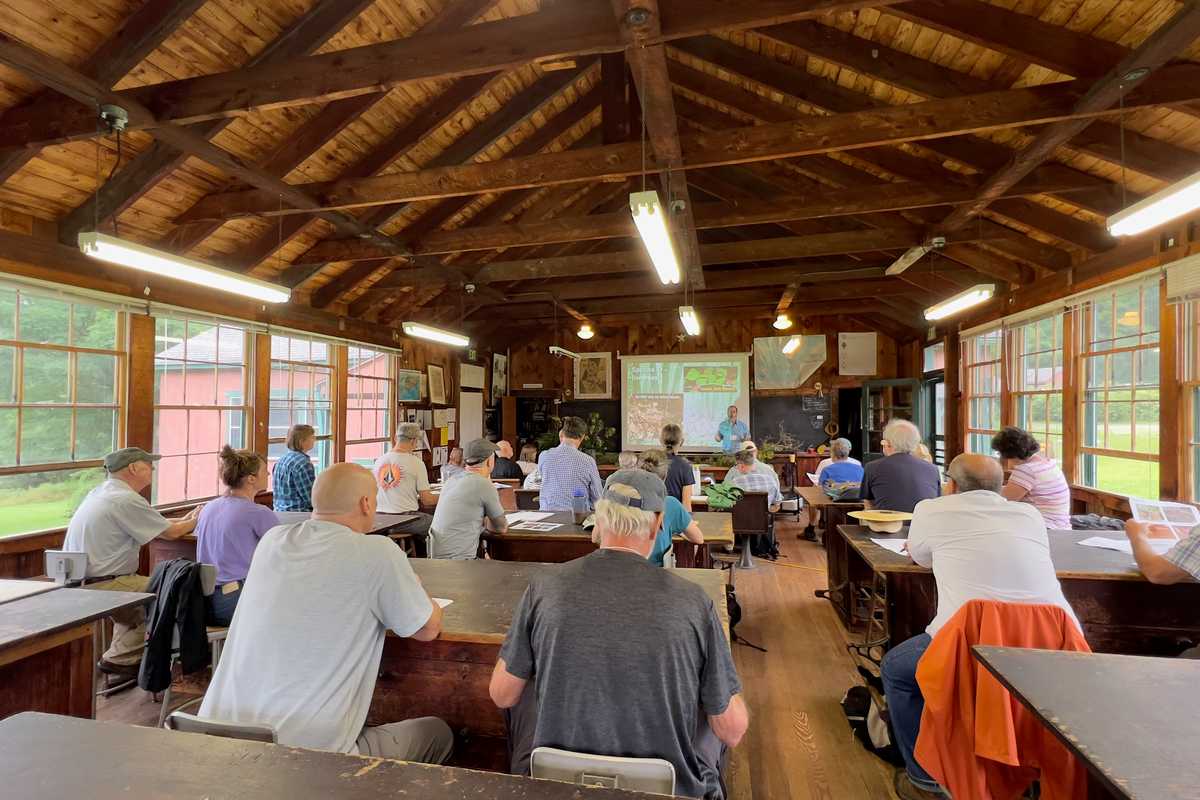
Participants in a 2024 Great Mountain Forest Woodland Academy workshop at Yale Camp.

Photo by Mike Zarfos

Great Mountain Forest (GMF) will host its first Nature Writing Retreat at the historic Yale Camp in Falls Village from Aug. 7-9, 2026. Writers of all levels are invited to draw inspiration from one of New England’s most notable forest landscapes. GMF envisions the retreat becoming an annual event celebrating writing, conservation and the relationship between people and forests.

This immersive three-day retreat reflects on the legacy of Hal Borland, the American writer and New York Times nature columnist whose work was deeply connected to this landscape. The retreat explores how wilderness shapes language, strengthens close observation and fosters environmental consciousness.

Keep ReadingShow less
From Cornwall to Rome, Adam Van Doren at Berkshire Botanical Garden

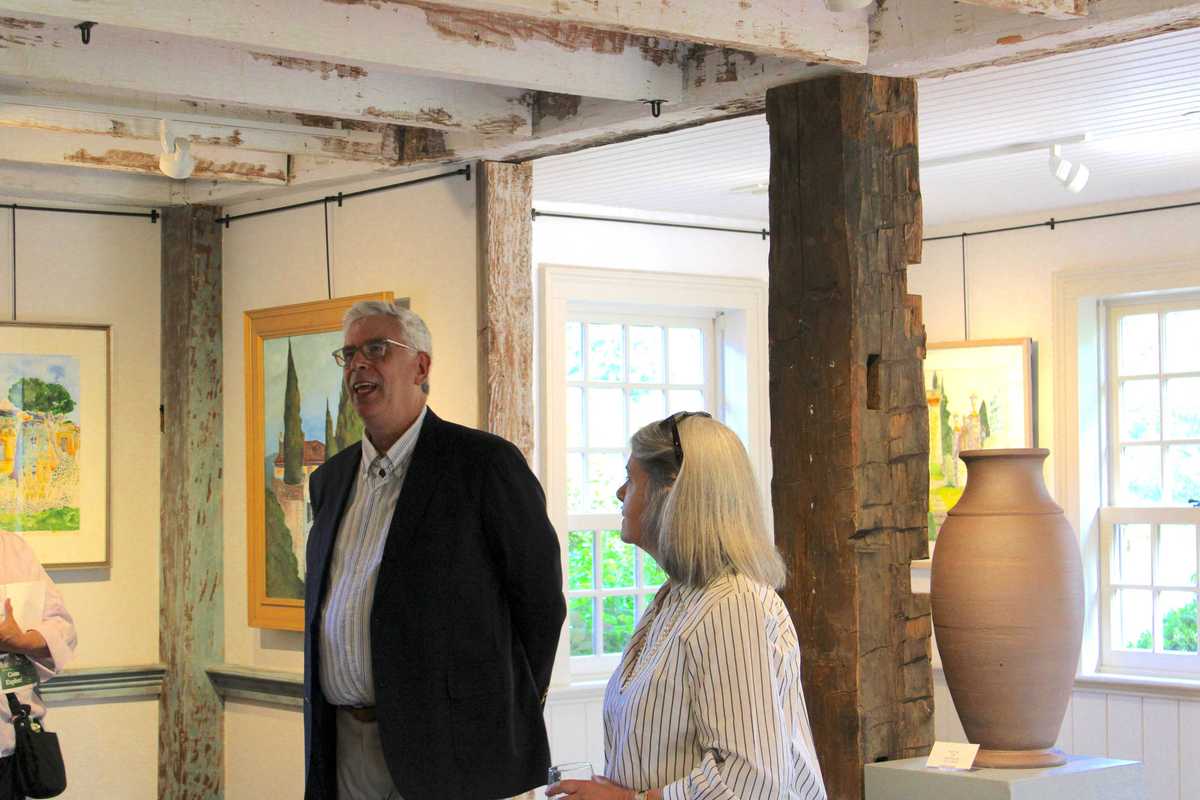
Artist Adam Van Doren and curator Donna Hassler talk to a group of visitors at the Berkshire Botanical Garden. A Stephen Proctor vessel sits to their left.

Photo by Natalia Zukerman

This summer, the Berkshire Botanical Garden in Stockbridge has hosted “Grounded in Nature: Paintings by Adam Van Doren,” an exhibition exploring the intimate relationship between architecture and the natural world.

On view for only a few more weeks in the Leonhardt Galleries, the exhibition features more than 35 watercolor and oil paintings by the New York-based artist, architect, author and Yale professor, curated by art historian Donna Hassler, director emerita of Chesterwood. The works span three distinct places that have shaped Van Doren’s artistic practice: New York City, Cornwall, Connecticut, and his travels throughout Europe.

Keep ReadingShow less
google preferred source

Want more of our stories on Google? Click here to make us a Preferred Source.
google preferred source

Want more of our stories on Google? Click here to make us a Preferred Source.