
Thank you!
Your support is sustaining the future of local news in our communities.

Long-term strategy to defeat ISIS-style terrorism Contradictions between Shariah law and the Quran n

Part 2 of 3

A good way to examine the enormous rift within Islam is to select a major issue, such as the treatment of women, and then compare the moral (or immoral) prescriptions, proscriptions and attitudes under various Shariah laws, with what is clearly stated in the one and only Quran.

Let’s examine three particular aspects of the question: 1. marriage equality; 2. punishment for adultery; 3. the right to an education. In general, Shariah law is surprisingly hostile toward women, who should be covered up, kept at home and refused an education, work opportunity or a driver’s license. This is quite unlike the actual teaching of the Prophet and the Quran, which respects the abilities and rights of women.

Sharia law encourages polygamy. Men are entitled to four replaceable wives. They can divorce any of them just by saying so three times on the doorstep. In contrast, and contrary to popular belief, the Quran does not promote polygamy for Muslims. Yes, it is true that the possibility of having up to four wives is indeed mentioned in the Quran, but this is not stated as a recommendation for such marriage, but merely as a reference to storied historical facts mentioned in the Old Testament of the Hebrew Bible — a sacred text that is revered in Islam.

But in the Quran, the Islamic conditional authorization of polygamy  only comes up under the heading of “Widows and Orphans.” It refers to the possibility of taking on up to three more wives of brethren fallen in battle, together with their children, provided, however, that one’s estate is then equally divided among all four wives, and per stirpes among their children. 

This explains how, in accordance with the Quran, but contrary to Shariah law, polygamy  been outlawed in several Islamic countries, such as Morocco. Monogamy is consistent with the Quran, while polygamy is not, except for humanitarian reasons — namely the care of widows and orphans.

According to some prescriptions of Shariah law, if a woman commits adultery, she is to be put in a bag and publicly stoned to death. (And yes, sometimes they actually do this. Curiously, the treatment of adulterous males is left somewhat ambiguous.) Reference is then made in the Shariah text to a specific verse in the Quran on adultery.

But when you check out the Quranic reference, you read that the Quran simply endorses the view of Moses that adultery is wrong, and if a woman commits adultery she should be told she has done wrong and she should repent.  Nothing in the Quran suggests that she should be put in a bag and stoned to death. The Shariah law is deceptive on this point, and on many others.

Even the Shariah proscription of education of women is a direct violation of the Quran. According to Shariah law, women do not need or deserve to be educated.

The education of women is mentioned only once in the Quran, and it goes like this: “Any man who gives his daughters an education has a special place waiting for him in Heaven.” So, what are the self-appointed, fundamentalist, ISIS-style believers doing when they shoot a 14-year-old girl in the head because she has the temerity to walk to school to get an education? If you ask me, under both the Holy Quran and the Bible, these evil-doers are themselves going straight to Hell, and we should say so loud and clear.

Shariah law contains numerous exhortations to hate, violence, retribution and punishment, which can be and are being used by ISIS-style militants to promote and justify terrorism. Nearly every act of violence perpetrated by terrorist extremists and fighters for the Caliphate and the so-called Islamic State (also known as ISIS, ISIL or Daesh, and which is neither Islamic, nor a state) under the banner of Shariah law, and leveled against imagined unbelievers, is in direct violation of the Holy Quran. 

Thus, the Prophet Muhammad in the Quran expressly forbids the killing of innocents, forbids killing by fire, forbids poisoning with chemicals, forbids torture, and forbids mistreatment of prisoners — all acts routinely performed by ISIS-style terrorists.  The Quran even specifically forbids the piratical taking of hostages for ransom, which is practically a national sport in some countries. 

We in WHO have made successful use of this last provision banning hostage-taking for ransom as the winning argument to free hostages taken in the Middle East. Examples include six Doctors Without Borders workers kidnapped and taken out into the Ogaden desert by renegade Somali tribesmen, as well as a dozen International Red Cross workers taken hostage for ransom by warlords up in the mountains of Afghanistan. The hostages were all successfully found and released.  Not a dollar was paid, not a drop of blood was shed. The Quran was the winning weapon.

Part 3 next time. 


Sharon resident Anthony Piel is a former director and general legal counsel of the World Health Organization.

Latest News

‘So Little to Do,’ so much to discover at James Barron Art

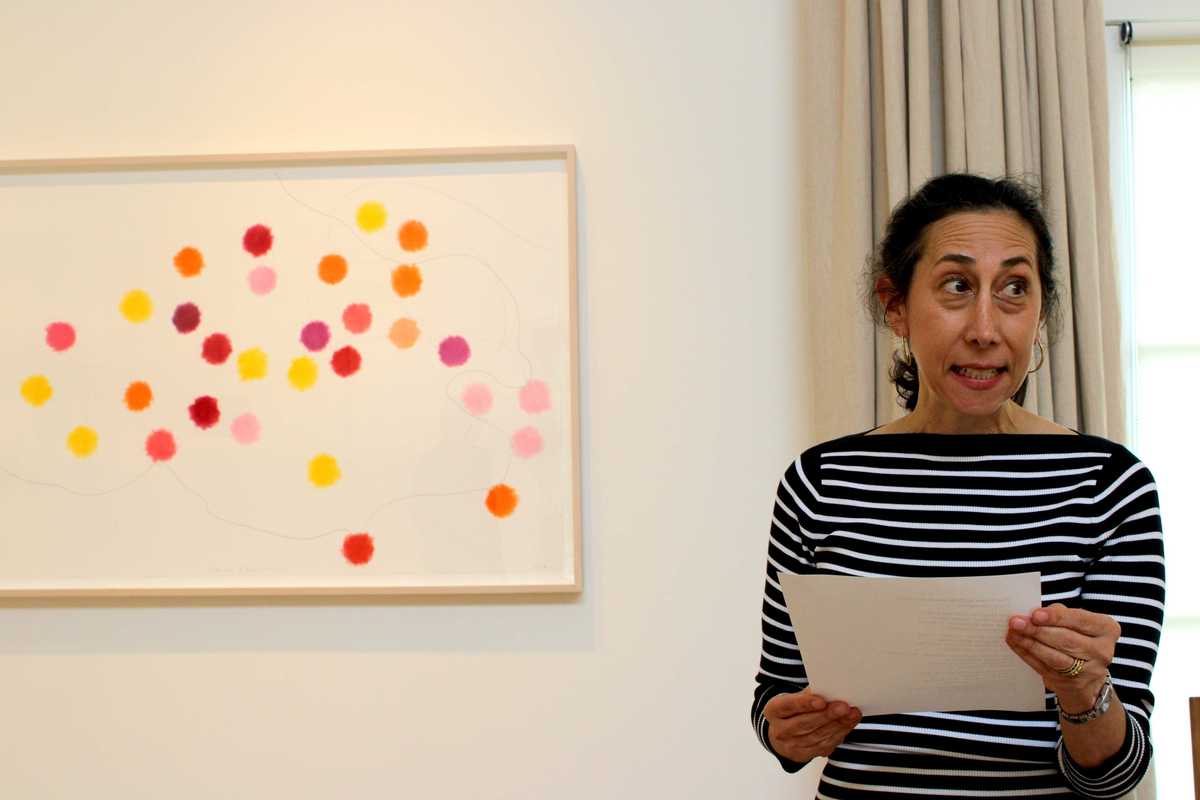
Curator Deborah Goodman Davis reads the Emily Dickinson poem “The Grass So Little Has to Do.” Spencer Finch’s “Following Three Bees (Zinnias)” buzzes in the background.

Photo by Natalia Zukerman

“The Grass Has So Little to Do,” on view at James Barron Art in Kent, takes its title from Emily Dickinson’s poem “The Grass So Little Has to Do,” written in 1862:

“The Grass so little has to do—
A Sphere of simple Green—
With only Butterflies to brood
And Bees to entertain—”

Keep ReadingShow less

Marina Kotchoubey is not a woodworker

Marina Kotchoubey is not a woodworker

Marina Kotchoubey at the Ian Ingersoll Cabinetmakers showroom in West Cornwall.

Photo by D.H. Callahan

After 40-something years navigating the world of custom fine furniture, Ian Ingersoll was getting ready to retire. Starting off with a little dovetail stool that he sold at a shop in West Cornwall in the 1970s, he’d grown his skill and his business into something he — and the whole town — could be proud of. Shutting down that business was not an option.

Ingersoll built Ian Ingersoll Cabinetmakers, which produced mainly classical Shaker furniture, on passion: the passion he had to make a living through creative challenges and the passion of his employees, who all seem deeply in love with their craft.

Keep ReadingShow less
A legacy of giving at Norfolk Chamber Music Festival

One hundred and twenty years ago, Carl and Ellen Stoeckel commissioned New York architect E.K. Rossiter to design The Music Shed in Norfolk, Connecticut. After nearly a decade of entertaining their friends and neighbors with the finest music of the day, they built a permanent home for their beloved Litchfield County Choral Union.

The commission and full funding of the construction was not unheard of in an era when great fortunes led to public enrichment. Railroad tycoon John D. Rockefeller was instrumental in funding institutes of higher education. Steel baron Andrew Carnegie was building libraries all over the country, and famously said that a man who dies rich is a disgrace, challenging his peers to give their fortunes back to the people.

Keep ReadingShow less
google preferred source

Want more of our stories on Google? Click here to make us a Preferred Source.
Two unique exhibitions at Geary Gallery

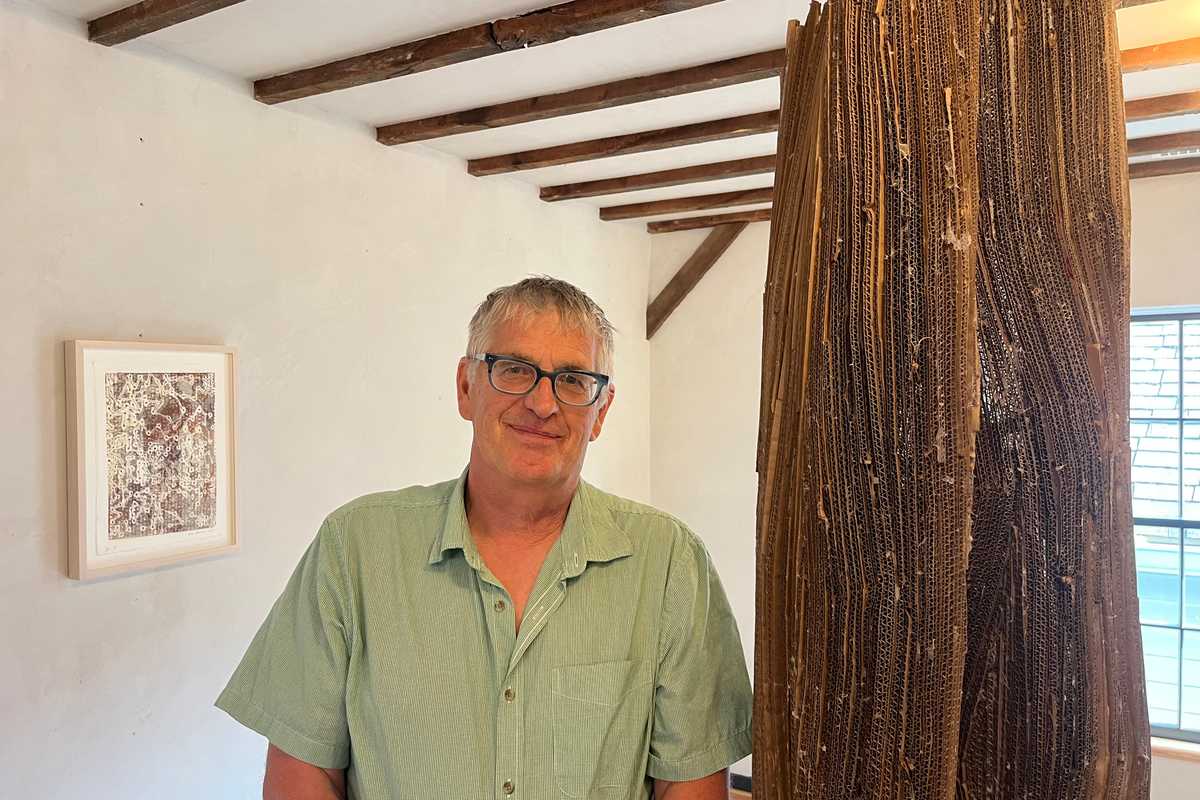
Henry Klimowicz with his sculpture, “Partial Pillar 1”

Photo by D.H. Callahan

On Saturday, Aug. 1, Geary Gallery opened its doors in Salisbury for two unique shows in its first- and second-floor gallery spaces. Art lovers flooded both floors over the course of the afternoon, giving the events a vibrant feeling that enhanced the importance of the art.

On the first floor is a show by Chicago-born, Colorado-based photographer Summers Moore, titled “Lobitos: Pueblo Fantasma,” or “Lobitos: Ghost Town.” The work centers around her daughter’s current hometown in Peru. Moore herself found a home away from home in Colorado in the mid-1980s and encouraged her children to seek out new places outside of their comfort zones.

Keep ReadingShow less

Writer’s retreat in the woods

Writer’s retreat in the woods

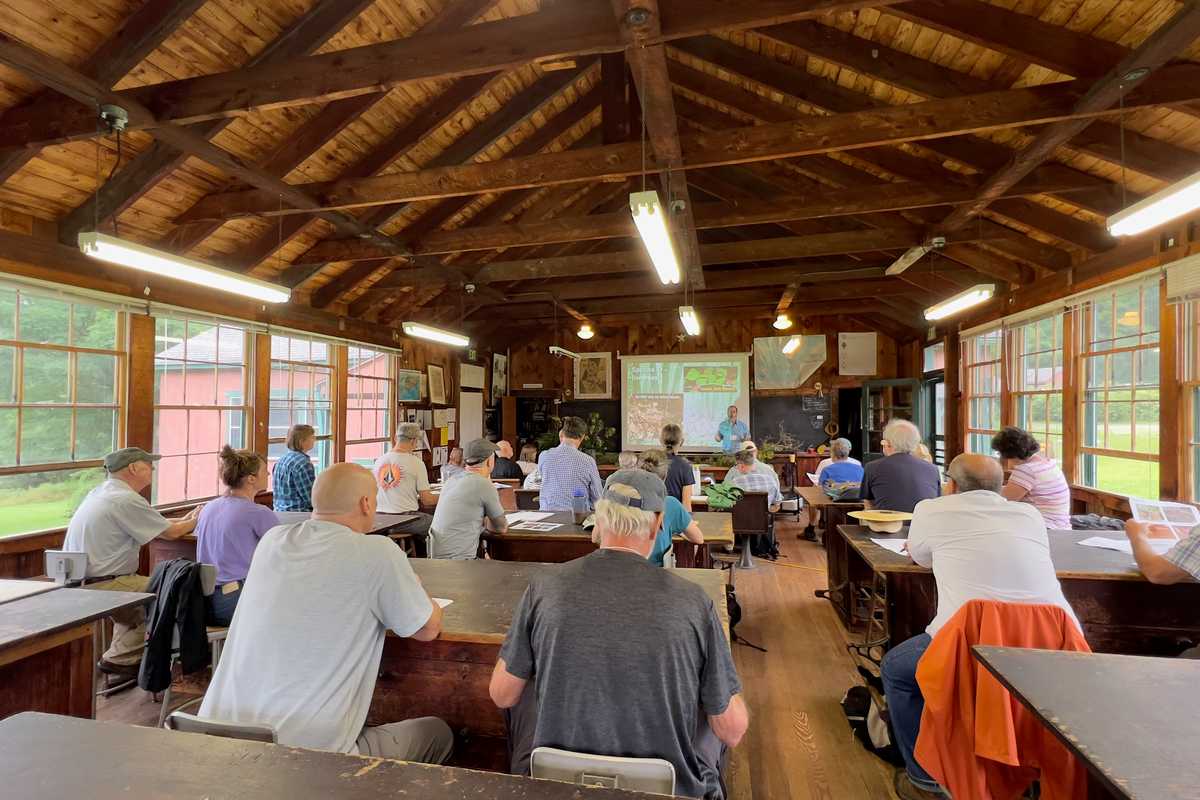
Participants in a 2024 Great Mountain Forest Woodland Academy workshop at Yale Camp.

Photo by Mike Zarfos

Great Mountain Forest (GMF) will host its first Nature Writing Retreat at the historic Yale Camp in Falls Village from Aug. 7-9, 2026. Writers of all levels are invited to draw inspiration from one of New England’s most notable forest landscapes. GMF envisions the retreat becoming an annual event celebrating writing, conservation and the relationship between people and forests.

This immersive three-day retreat reflects on the legacy of Hal Borland, the American writer and New York Times nature columnist whose work was deeply connected to this landscape. The retreat explores how wilderness shapes language, strengthens close observation and fosters environmental consciousness.

Keep ReadingShow less
From Cornwall to Rome, Adam Van Doren at Berkshire Botanical Garden

Artist Adam Van Doren and curator Donna Hassler talk to a group of visitors at the Berkshire Botanical Garden. A Stephen Proctor vessel sits to their left.

Photo by Natalia Zukerman

This summer, the Berkshire Botanical Garden in Stockbridge has hosted “Grounded in Nature: Paintings by Adam Van Doren,” an exhibition exploring the intimate relationship between architecture and the natural world.

On view for only a few more weeks in the Leonhardt Galleries, the exhibition features more than 35 watercolor and oil paintings by the New York-based artist, architect, author and Yale professor, curated by art historian Donna Hassler, director emerita of Chesterwood. The works span three distinct places that have shaped Van Doren’s artistic practice: New York City, Cornwall, Connecticut, and his travels throughout Europe.

Keep ReadingShow less
google preferred source

Want more of our stories on Google? Click here to make us a Preferred Source.
google preferred source

Want more of our stories on Google? Click here to make us a Preferred Source.