Thank you!
Your support is sustaining the future of local news in our communities.

Lunch: a labor of love for Wells

WINSTED — For more than 40 years, Phyllis Wells has been an integral part of The Gilbert School community, serving as the semi-private high school’s food services director since she took over the post in the late 1970s.

But after serving as a staple in the school’s kitchen for decades and feeding three generations of students, the Barkhamsted resident will retire from Gilbert at the end of this month.

“I love my job as much today as the first day I started,� Wells told The Journal during an interview at her office last Thursday.

Wells began her food service career a few years after she and her husband, Jim, moved from their native Vermont to Winsted a short time after being married in 1959.

“We moved down here because there was no work for us up there,� she said.

After working at various odd jobs the first few years after the move, Wells took a temporary position at Gilbert during the 1966-67 school year.

“It was in the dish room, and I was only supposed to be here for three month,� Wells said. “It was the perfect opportunity, and I’ve been here ever since.�

During her first 10 years at the school, Wells worked under the close eye of Barbara McKie, who at that time was the district’s food services director.

“She was a great, great teacher,� Wells said, adding that McKie had been the school’s first food services director. “She is a special lady.�

One of the main benefits of working at the school was being close to her three children, each of whom graduated from Gilbert, as well as having a work schedule that mirrored their school schedule.

“It was the perfect scenario for a mother,� Wells said of working in the school.

She said the most difficult part of taking over for McKie was not the actual cooking or managing a kitchen that at that time fed some 750 children, but the administrative aspect of the post.

“It was learning all the government regulations, the bookkeeping ... and all the paperwork. It was like so many other administrative jobs,� she said.

Over the years, those state and federal public school food service requirements have continued to grow. Wells said that has made cooking nutritious, as well as delicious, meals for students more and more difficult.

And for many children, she said, their school lunch is the one main meal they eat each day.

“You can make the most nutritionally well-balanced meal you can make,â€� Wells said. “But if you can’t get a student to eat it, what have you accomplished?  Nothing but waste.â€�

State and federal laws already limit the amounts of fat and sugar student lunches can contain. Wells said there will soon be restrictions on the amount of salt that can be used to season a meal as well.

“Now, with all the restrictions coming down, it just became too hard to do that,� Wells said.

She decided it was time to retire from her position at the school and perhaps try her hand at something new.

But Wells’ years of service to The Gilbert School community have not gone unrecognized. The class of 2010 has decided to dedicate this year’s yearbook to the retiring director.

“I was very shocked and honored,� she said of the dedication, adding that over the years, she has also been lucky to work with a professional and talented staff.

“I never dread coming to work,� she said. “And Gilbert is a very special place to work.�

Although Wells said she would like to find work in a field that’s not necessarily food related, with most of her professional career in the kitchen, that might be difficult.

Still, Wells said, she is excited about the new opportunities the future  may hold for her.

“The door’s wide open and anything is possible,� she said. “But I know I am going to miss coming up that hill to Gilbert next September.�

Latest News

‘So Little to Do,’ so much to discover at James Barron Art

Curator Deborah Goodman Davis reads the Emily Dickinson poem “The Grass So Little Has to Do.” Spencer Finch’s “Following Three Bees (Zinnias)” buzzes in the background.

Photo by Natalia Zukerman

“The Grass Has So Little to Do,” on view at James Barron Art in Kent, takes its title from Emily Dickinson’s poem “The Grass So Little Has to Do,” written in 1862:

“The Grass so little has to do—
A Sphere of simple Green—
With only Butterflies to brood
And Bees to entertain—”

Keep ReadingShow less

Marina Kotchoubey is not a woodworker

Marina Kotchoubey is not a woodworker

Marina Kotchoubey at the Ian Ingersoll Cabinetmakers showroom in West Cornwall.

Photo by D.H. Callahan

After 40-something years navigating the world of custom fine furniture, Ian Ingersoll was getting ready to retire. Starting off with a little dovetail stool that he sold at a shop in West Cornwall in the 1970s, he’d grown his skill and his business into something he — and the whole town — could be proud of. Shutting down that business was not an option.

Ingersoll built Ian Ingersoll Cabinetmakers, which produced mainly classical Shaker furniture, on passion: the passion he had to make a living through creative challenges and the passion of his employees, who all seem deeply in love with their craft.

Keep ReadingShow less
A legacy of giving at Norfolk Chamber Music Festival

One hundred and twenty years ago, Carl and Ellen Stoeckel commissioned New York architect E.K. Rossiter to design The Music Shed in Norfolk, Connecticut. After nearly a decade of entertaining their friends and neighbors with the finest music of the day, they built a permanent home for their beloved Litchfield County Choral Union.

The commission and full funding of the construction was not unheard of in an era when great fortunes led to public enrichment. Railroad tycoon John D. Rockefeller was instrumental in funding institutes of higher education. Steel baron Andrew Carnegie was building libraries all over the country, and famously said that a man who dies rich is a disgrace, challenging his peers to give their fortunes back to the people.

Keep ReadingShow less
google preferred source

Want more of our stories on Google? Click here to make us a Preferred Source.

Two unique exhibitions at Geary Gallery

Henry Klimowicz with his sculpture, “Partial Pillar 1”

Photo by D.H. Callahan

On Saturday, Aug. 1, Geary Gallery opened its doors in Salisbury for two unique shows in its first- and second-floor gallery spaces. Art lovers flooded both floors over the course of the afternoon, giving the events a vibrant feeling that enhanced the importance of the art.

On the first floor is a show by Chicago-born, Colorado-based photographer Summers Moore, titled “Lobitos: Pueblo Fantasma,” or “Lobitos: Ghost Town.” The work centers around her daughter’s current hometown in Peru. Moore herself found a home away from home in Colorado in the mid-1980s and encouraged her children to seek out new places outside of their comfort zones.

Keep ReadingShow less

Writer’s retreat in the woods

Writer’s retreat in the woods

Participants in a 2024 Great Mountain Forest Woodland Academy workshop at Yale Camp.

Photo by Mike Zarfos

Great Mountain Forest (GMF) will host its first Nature Writing Retreat at the historic Yale Camp in Falls Village from Aug. 7-9, 2026. Writers of all levels are invited to draw inspiration from one of New England’s most notable forest landscapes. GMF envisions the retreat becoming an annual event celebrating writing, conservation and the relationship between people and forests.

This immersive three-day retreat reflects on the legacy of Hal Borland, the American writer and New York Times nature columnist whose work was deeply connected to this landscape. The retreat explores how wilderness shapes language, strengthens close observation and fosters environmental consciousness.

Keep ReadingShow less
From Cornwall to Rome, Adam Van Doren at Berkshire Botanical Garden

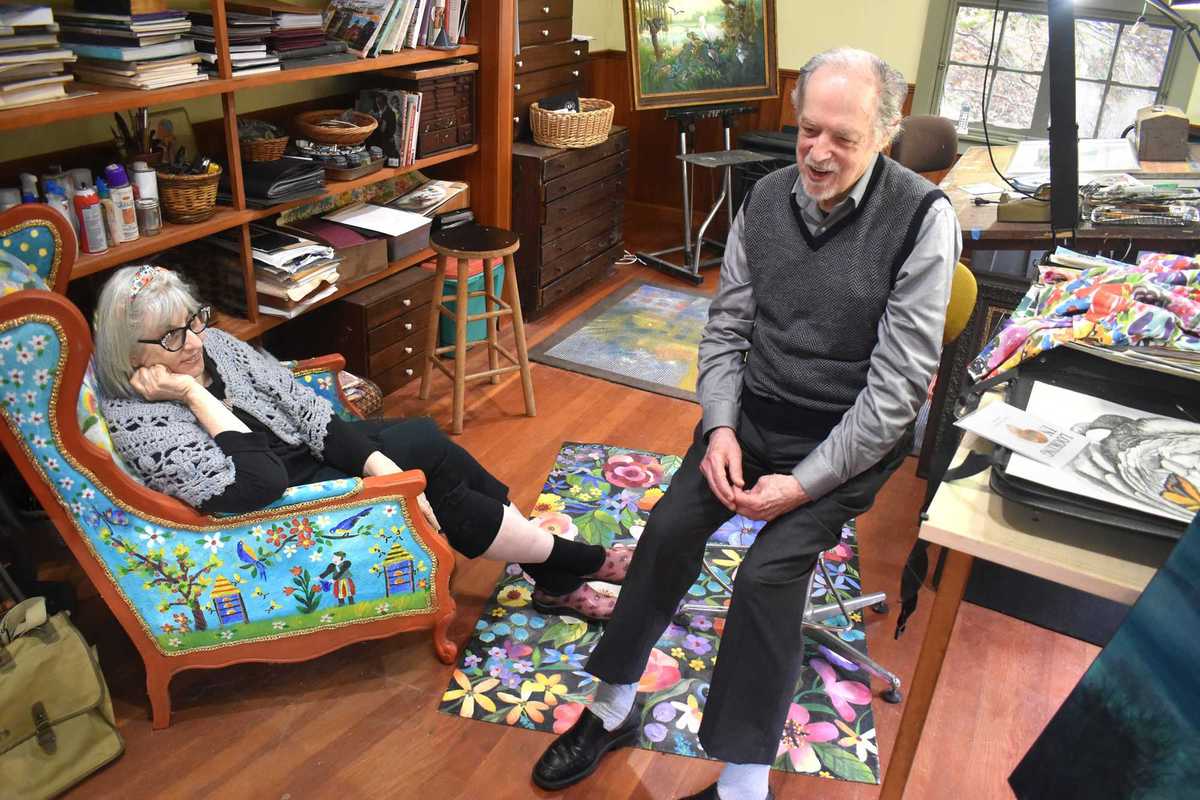
Artist Adam Van Doren and curator Donna Hassler talk to a group of visitors at the Berkshire Botanical Garden. A Stephen Proctor vessel sits to their left.

Photo by Natalia Zukerman

This summer, the Berkshire Botanical Garden in Stockbridge has hosted “Grounded in Nature: Paintings by Adam Van Doren,” an exhibition exploring the intimate relationship between architecture and the natural world.

On view for only a few more weeks in the Leonhardt Galleries, the exhibition features more than 35 watercolor and oil paintings by the New York-based artist, architect, author and Yale professor, curated by art historian Donna Hassler, director emerita of Chesterwood. The works span three distinct places that have shaped Van Doren’s artistic practice: New York City, Cornwall, Connecticut, and his travels throughout Europe.

Keep ReadingShow less
google preferred source

Want more of our stories on Google? Click here to make us a Preferred Source.

google preferred source

Want more of our stories on Google? Click here to make us a Preferred Source.