The Music Mountain chamber music season is in full swing. A packed house in Gordon Hall is about to take in the superlative musicality of the Arianna String Quartet and cellist Colin Carr playing Mozart, Boccherini, and Grieg.
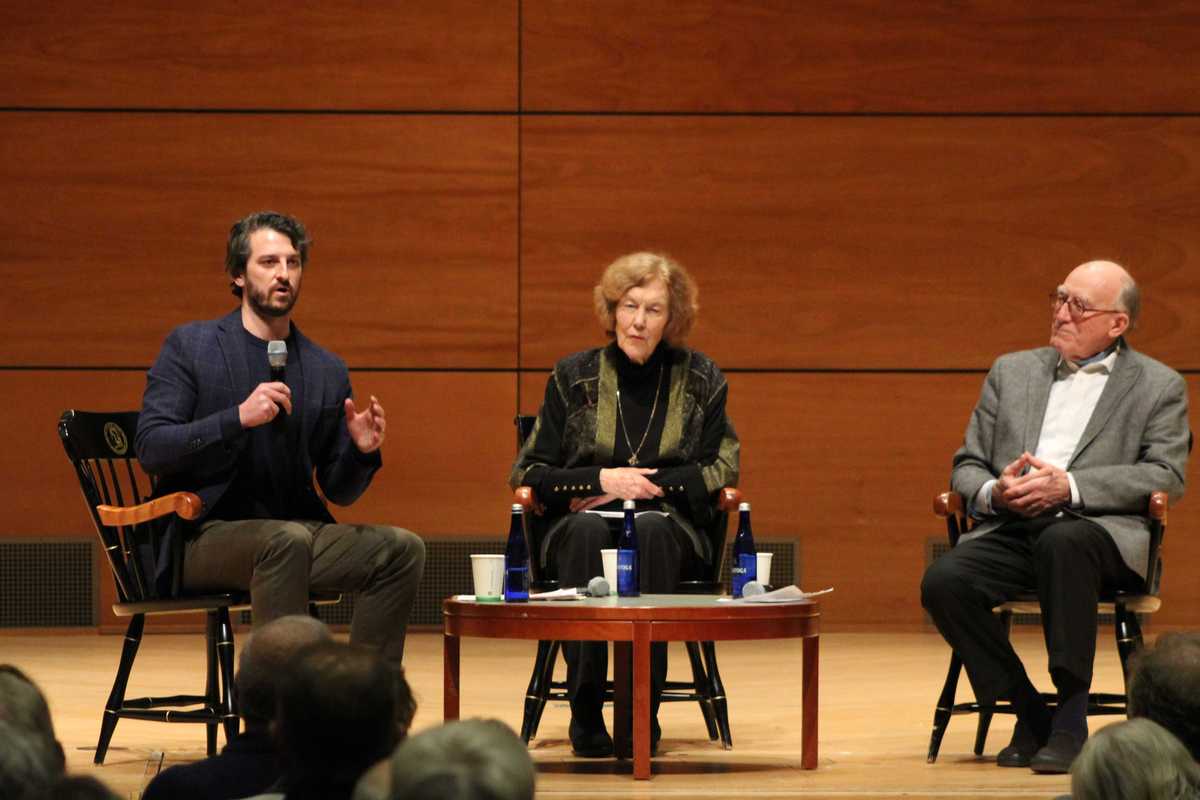
For Jonathan Yates, an energetic young Harvard and Juilliard graduate who this year assumed the position of Music Mountain’s music director — taking over for the venerable Nick Gordon — it’s all in a day’s work. Moving about in a dark blazer, attending to details and greeting visitors, Yates beams with obvious pleasure.
Not that Gordon is going anywhere, mind you. Dressed in his trademark red blazer, Gordon still introduces the concert (as he does on Music Mountain radio broadcasts) with his customary patrician lilt. He’s far more than a figurehead as he gradually passes the reins to Yates.
“Nick and I love each other” and enjoy working together, Yates tells me an hour before the concert. “I have enormous respect for him.” A professional pianist, Yates played his first concert on the Mountain in 2007. “Nick enjoyed my playing, and they kept inviting me back.” And when it came time to choose his successor, Gordon turned to Yates — who continues as music director of the Norwalk Symphony and Norwalk Youth Symphony.
For anyone taking on the daunting task of running an arts organization, especially one tucked into a country corner, the challenge is to keep loyal audiences coming while building new audiences and staying fresh and relevant. Fortunately, Yates seems to have his finger firmly on that pulse.
“To find ways to look forward, I’m looking back into our history. Specifically, education has been a big push of mine. When it started, Music Mountain was basically a music education institute. We’ve gone from two weeks of music education last year to eight weeks this year, and curated our own educational festival. We also held chamber music master classes. We had a total of 40 students over three weeks.”
Yates radiates pride as he speaks, but he quickly reminds me, “Our mission remains intact: to promote the string quartet repertoire, presenting great quartets played by great artists.”
At the same time, he is not afraid to subtly experiment and broaden the concert-going experience. One program he created and is looking forward to is a French “salon” centered on the two great French string quartets, by Debussy and Ravel, but with the addition of songs by Fauré and others.
“What’s exciting is that there’s so much to mine in the history of this august institution that it makes innovating really fun. You can do it in such a way that you’re honoring the institution.”
There’s much more on Yates’s roadmap: getting out to play more in the community, adding post-concert talks and commissioning works from living composers. (The first of these “Dialogues with the Past,” by Paul Moravec, premièred on July 19.) Yates’s fascination with precursors comes from an interesting personal pedigree: His family, though all lawyers, included Sidney Yates, the senator from Illinois who was one of the greatest champions of the National Endowment for the Arts.
Just then, Nick Gordon comes in. It’s concert time. Old meets new. Beautiful music rings out over the solid wooden beams of Gordon Hall.