
Negative declaration concludes environmental review

NORTH EAST ­­— At the end of the three-and-a-half hour Planning Board meeting on Wednesday night, Feb. 27, the capacity crowd broke into applause, but not just because the environmental review for the proposed 36,000-square-foot supermarket (believed to be a Hannaford) had concluded. The emotional outburst was for the board’s 4-3 vote in favor of passing a negative declaration for Part 3 of the Environmental Assessment Form (EAF), which means the majority of the board decided the proposed action will not have a significant adverse environmental impact and a Draft Environmental Impact Statement (DEIS) need not be prepared.“They took a hard look and I’m happy for that,” said Southern Realty and Development LLC (SRD) principal John Joseph, the applicant. “Now we have to see what happens next.”Getting to that point, however, took much time, energy, patience and conversation, as Planning Board members, the applicant and consultants on both sides pored over documents, renderings and maps to answer any and all questions raised about the project during the extensive review process. Part 2 of the EAF began in February of 2012; Part 3 of the EAF began on Jan. 23 of this year.Public commentsBefore delving into the review of Part 3, the board reconvened the public hearing. Millerton resident Eva Yuranich spoke first.“I would like to support the idea of a new supermarket in Millerton,” she said, discounting the opposition and its claim that the store would chip away at the local business community. Yuranich said if built, she would shop locally rather than drive miles away to the out-of-town supermarkets she now prefers. “It would keep me in Millerton being able to shop here and spend more time here.”Millerton resident Mary Howard had another take on what the ramifications of a new, large supermarket would be.“What happens when a large box store comes into a small town?” she asked. She listed potential negative impacts on aesthetics, infrastructure, social capital, employment issues (including wages and health insurance) and neighboring small businesses. “I would like to be on the record that those are some of the larger issues that concern me.”Amenia resident Sharon Kroeger, a Wassaic shop owner, has been a vocal critic of the proposal. One of her complaints is the project is too large for the community’s needs and the surrounding environment. Kroeger read from a prepared statement. “In the EAF you are allowing your consultants to state untruths — that it ‘won’t cause adverse cumulative land-use impacts’ and that it ‘will encourage economic development,’ when the communities have been telling you the opposite is true.”Kroeger went on to mention the 100- versus the 300-foot buffer issue, bog turtles found “within the same wetlands area” (though on different lots), the 10 family-run food stores that have petitioned in opposition to the project and concerns of “undermining long-term sustainability, ongoing economic development and historical preservation.”Millerton resident Peter Greenough said he read the entire EAF and had “nothing but praise for the diligence [of the board],” but added “there are some issues,” many technical. Greenough asked why the village was not getting anything in return for providing water to the supermarket. He said most municipalities would have bargained for something in exchange. He also raised concerns about how pharmaceuticals would be disposed of at the site, worrying they would leech into the water supply. He also said considering the impact a new store would have on the village’s commerce and character, he didn’t understand why there were no negative impacts listed in the EAF document. Greenough asked if the board could finally determine whether the developer would be seeking any tax abatements or special treatment from the assessor. (Joseph later confirmed he will be taking advantage of a tax law that provides a 50 percent break to new businesses for three years and then provides a sliding scale during the next seven years. )Lastly, Greenough asked why there was no letter cementing SRD’s intention to cover all costs in constructing the water line needed to extend the water supply out to the proposed supermarket site. The issue was settled later in the meeting, with Joseph agreeing to the letter.While there was additional backlash against the project, with concerns expressed that surrounding businesses and their employees would be hurt by a new store, there were also supporters in favor of the project. Andrew Stayman was among the supporters.“If there’s no Hannaford, you don’t even have a shot of local employment in this town,” he said to a cheering crowd. “Millerton deserves to finally have a grocery store. If other people come to it they’ll say, ‘Let’s see what’s in these other nice stores.’ It will only help the town. It will not be a detriment.”With that the comments concluded, and Attorney to the Town Warren Replansky suggested the public comment session temporarily close so the board could do business, but the public hearing remain open.EAF Part 3Board members rolled up their sleeves as they delved into the 39-page EAF document, which addressed specifics about the proposed project, anticipated environmental impacts and the best way to mitigate those impacts in detail.Planning Board member Bill Kish read from a memo he had sent to his fellow board members addressing the required 100-foot wetland buffer, versus the optional (and many say recommended) 300-foot wetland buffer. He spoke specifically about endangered bog turtles, and the fact they were found not on the property, but in wetlands “which form a part of the larger complex” of which the property is a part.“I believe that it is our duty to ensure that there is no possibility of harm to the wetlands, both adjacent to the project and to the larger wetlands complex,” Kish stated. “My interpretation of SEQRA [State Environmental Quality Review Act] is that if we have any reasonable doubt that no environmental harm could result from the project, then we should pos. dec. [declare a positive declaration] and allow the EIS [Environmental Impact Statement] process to resolve any lingering concerns.”Planning Board member David Shapiro asked if a biologist had reviewed the matter. One had, and according to Replansky, it was satisfactory to both the biologist and the Department of Environmental Conservation (DEC). He also explained the fine points of the review.“It isn’t that it says there are no impacts. What’s relevant is are there ‘significant’ impacts,” Replansky said. “Your charge is, of the impacts there are, [to determine] do they rise to the level where they are significant under SEQRA?”The board members then spoke with SRD engineer Rich Rennia about some of the systems that will treat water at the site, including the wastewater system, which will process 2,500 gallons per day. They also talked about the stormwater provisions and the vortech system, which will manage gas, oil, antifreeze and other contaminants and remove toxic by-products from the water. The talk then circled back to bog turtles, and Kish said he wanted more discussion on habitat and federal recovery “and less about things that justify a neg. dec.” among his colleagues.“This has been pushed in that direction, but it’s not what I feel,” he said. “I think it’s more a pos. dec.”“We designed all systems to protect the habitat. That is what has been done,” said Rennia.“I’m not complaining about what you’ve done,” Kish said. “I’m complaining about what we’ve done. I don’t like what we’ve done here.”“I’ve said all along we’ve acted as if they don’t exist,” said Planning Board Chairman Dale Culver of bog turtles.“The problem for me is that the U.S. Fish and Wildlife Service did not come out and say we should have a 300-foot buffer, they didn’t,” said Planning Board member Leslie Farhangi. “If they did I would have something to hang my hat on.”“They seemed satisfied with the 100-foot buffer,” said Shapiro. “We have to rely on our experts at some point.”“I’m not saying it’s not that we shouldn’t rely on experts, but the ultimate responsibility lies with us,” Kish responded. PedestriansAnother issue that raised concern was pedestrian traffic, and the fact there are no sidewalks along Route 44 in the Boulevard District where the supermarket is being proposed. Kish acknowledged there are limitations where sidewalks are allowed, but said just as important is the need to provide a safe walkway for people who travel by foot.“You see people walking to the Grand Union ... and people are going to walk to the supermarket, and they’re putting their lives at risk,” he said. “Is this a potential impact? Is this a serious problem? I think it is.”Shapiro said it could be mandated that other businesses connect to a sidewalk if one is created by the supermarket site, planned for a 10-plus acre lot adjacent to Thompson Plaza, behind Basil Auto Sales and Services. Planning Board member Evelyn Garzetta said there are already popular businesses on Route 44 without sidewalks leading to their doors.“There’s no sidewalk to McDonald’s,” she said. “I have sat at the McDonald’s and watched kids run around that parking lot because there are no sidewalks.”“Is it dangerous?” Kish asked.“Yeah!” Garzetta replied. “But I don’t think it should be a significant impact.”“The first person who gets hit will think it should be a significant impact,” Kish said.It was also mentioned by Shapiro that “there’s no sidewalk to Freshtown [in Amenia], and it’s a good deal further from the center of town.” He added, “we’ve all agreed it’s an issue; it’s on the record in Part 2 and I’m very comfortable with that.”Town Planner Will Agresta confirmed sidewalks were listed as a small to moderate impact in Part 2 of the EAF, and “should be included as an impact.” Replansky said he thought the mention in Part 2 was adequate, to which the majority of the board agreed.The issue of competition among community businesses was also raised, with views ranging from concern about hampering existing businesses to hopes for sparking a more active commercial base. In the final analysis Replansky said, “pure economic and competitive interest falls outside SEQRA review. It’s not a part of the environment and cannot be discussed or treated by SEQRA.” Motions and actionsAfter finishing their review, board members were prompted by Replansky to make a motion to accept Part 3, to vote on as they deemed appropriate, with the directive to amend the document according to the night’s discussion. Shapiro made the motion, it was seconded before a roll-call vote was made. Chairman Culver and members Shapiro, Garzetta, Farhangi, Chip Barrett and Willem de Vogel voted in favor of adopting the EAF Part 3. Kish voted against the motion. The board then discussed whether it should vote on making a positive or negative declaration. Replansky suggested members make sure they were comfortable with their decision and perhaps wait until their next meeting before casting their vote. Shapiro, however, said he was “perfectly comfortable” and made the motion to adopt a negative declaration. A roll call vote was made. Shapiro, Garzetta, Barrett and Farhangi voted in favor of a neg. dec.; Culver, de Vogel and Kish voted against it. The vote carried, 4-3.Once the board adopted the EAF Part 3, all of the issues that were raised during the review process shifted and were consequently settled. As a result they no longer need to be mitigated by the applicant, unless specifically mentioned by the board or its consultants.Next stepReplansky told the board that next it should move on to the site plan review and lot line adjustment necessary for the project to progress. It also must square away the operations and maintenance agreement with the applicant for all of the systems on the site.Joseph requested the negative declaration be filed with the proper agencies as quickly as possible, which he was told would be done. There was a Planning Board meeting scheduled for Wednesday, March 6, which the developer was expected to attend. Look for continuing coverage of the SRD application in upcoming issues of The Millerton News.

Latest News

Chion Wolf brings ‘Audacious’ radio show to Winsted with show-and-tell event
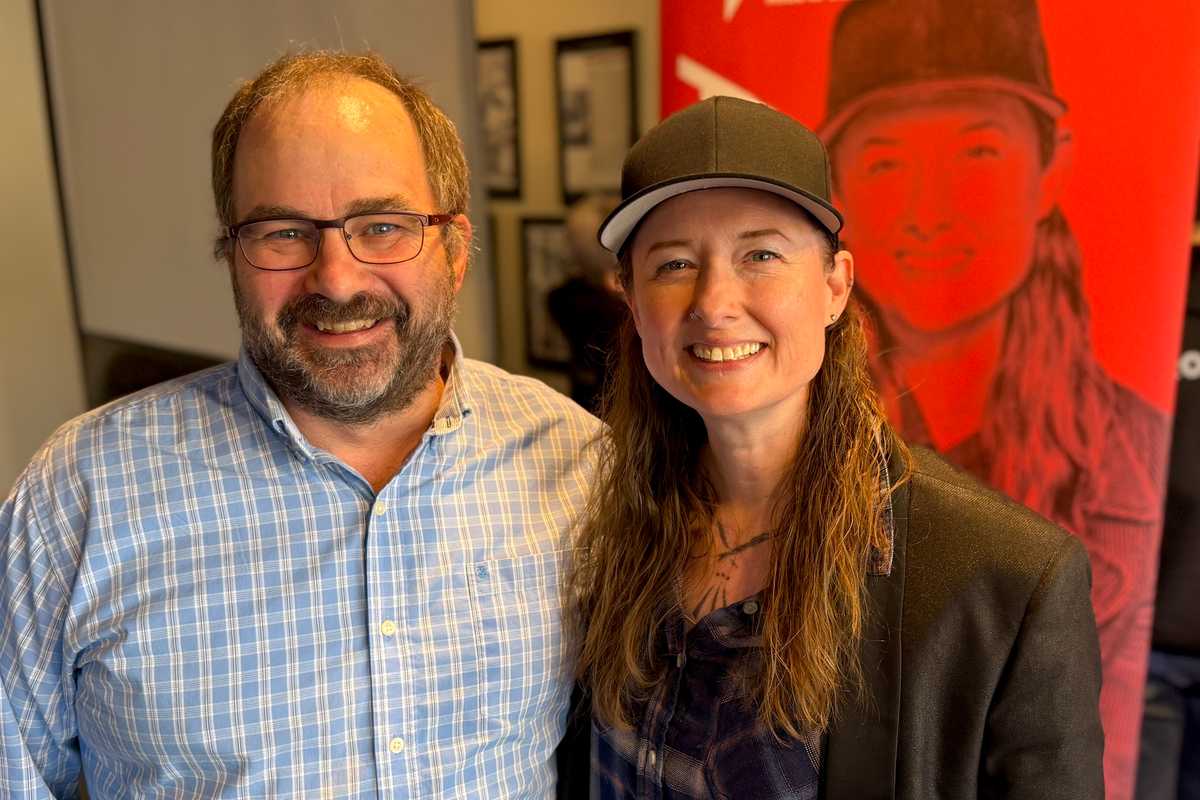
Nils Johnson, co-founder and president of The Little Red Barn Brewers in Winsted, hosted Chion Wolf and her Connecticut Public show “Audacious LIVE: Show and Tell,” which was broadcast on April 8, drawing a sold-out crowd.
Jennifer Almquist

The parking lot of The Little Red Barn Brewers in Winsted was full on Wednesday, April 8, as more than 100 people from 43 Connecticut towns — including New Haven and Vernon — arrived carrying personal treasures for a live taping of “Audacious LIVE Show & Tell.”

Chion Wolf, host and producer of Connecticut Public’s “Audacious,” and her crew, led by production manager Maegn Boone, brought the program to the packed brewery for an evening of story-driven conversation and shared keepsakes.

Keep ReadingShow less
Marge Parkhurst, the preservation detective

Marge Parkhurst with a collection of historic nails recovered from wall cavities during restoration work.

Photo courtesy of Marge Parkhurst/Cottage & Country Painting Company
Walls still surprise me. If you look hard enough, you can find buried treasure.
Marge Parkhurst

After nearly 50 years of painting some of Litchfield County’s oldest homes and landmark properties, Marge Parkhurst has developed an eye for the past—reading the clues left behind in stenciled vines, forgotten bottles and newspapers tucked into walls, each revealing a small but vivid piece of Connecticut history.

Parkhurst was stripping wallpaper in a farmhouse in Colebrook — the kind of historic home she has spent decades restoring — when she noticed something odd. Three layers of paper had already come off — each one a different era’s idea of decoration — and beneath them, just barely visible under dull, off-white plaster, a pattern emerged.

Keep ReadingShow less
Wings of Spring performance at the Mahaiwe Theater
Adam Golka
Provided

On Sunday, April 19, at 4 p.m., Close Encounters With Music (CEWM) presents On the Wings of Song at the Mahaiwe Performing Arts Center in Great Barrington.

The program focuses on Robert Schumann’s spellbinding song cycle Dichterliebe (“A Poet’s Love”), a setting of sixteen poems by Heinrich Heine that explores love, longing, and the redemptive power of beauty. Featured artists include John Moore, baritone; Adam Golka, pianist; Miranda Cuckson, viola; and Yehuda Hanani, cello.

Keep ReadingShow less
google preferred source

Want more of our stories on Google? Click here to make us a Preferred Source.

New climbing gym planned for Great Barrington

Photo by Alec Linden

A climber explores Great Barrington’s renowned bouldering areas, reflecting the growing local interest in the sport ahead of the planned opening of Berkshire Boulders.

Alec Linden

Berkshire Boulders, a rock climbing gym, is set to open in the Berkshires later this year, aiming to do more than fill a gap in indoor recreation — it could help bring climbing further into the region’s mainstream.

Its co-founders already have their sights set beyond the roughly 2,000 square feet of climbable wall planned for a site off Route 7, just north of downtown Great Barrington.

Keep ReadingShow less
Wind, tarps and trail wisdom: a day learning how to camp smarter

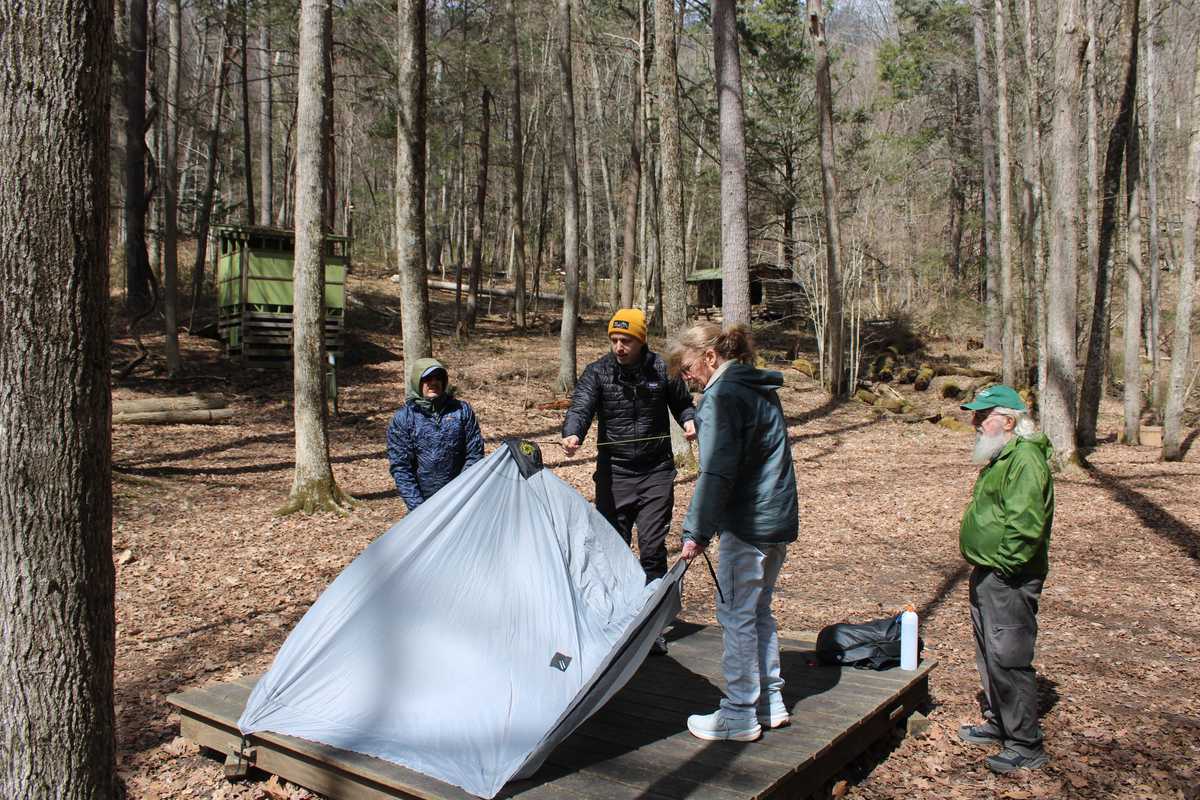
Mat Jobin teaches the group how to use a permanent platform to rig a tent. The privy and lean-to of the Appalachian Mountain Club’s Limestone Spring Shelter are visible in the background.

Alec Linden

A happy day on the trail all starts with a good night’s sleep the night before. That’s local trekking guide Mat Jobin’s mantra, and he affirms that a good night’s sleep is possible even if it has to be on the trail itself – with the right preparation, that is.

Jobin, of Simsbury, Connecticut, is a 16-year professional guide and the founder and owner of Reach Your Summit, an outdoor experiences company that promotes self-confidence and leadership skills through a variety of excursions and educational workshops in the forests of New England. On Saturday, April 11, Jobin hosted the inaugural Campsite Selection & Skills workshop just off the Falls Village section of the Appalachian Trail.

Keep ReadingShow less
Grandmother Moon: Wunneanatsu Lamb-Cason book talk in Torrington
Wunneanatsu Lamb-Cason (Schaghticoke/Ho-Chunk), an educator, traditional storyteller and author, will read from her new book Grandmother Moon, inspired by her grandmother, Indigenous educator Trudie Lamb Richmond, who lived on Schaghticoke land along the Housatonic River in Kent.
Provided

The story comes full circle when educator, traditional storyteller and author Wunneanatsu Lamb-Cason (Schaghticoke/Ho-Chunk) comes to Litchfield County to read from her new book, Grandmother Moon, inspired by her grandmother, Indigenous educator Trudie Lamb Richmond, who lived on Schaghticoke land along the Housatonic River in Kent.

On Saturday, April 18, from 2-4 p.m., the Torrington Historical Society at 192 Main St. will host the book talk and sharing of traditional stories.

Keep ReadingShow less
google preferred source

Want more of our stories on Google? Click here to make us a Preferred Source.
google preferred source

Want more of our stories on Google? Click here to make us a Preferred Source.