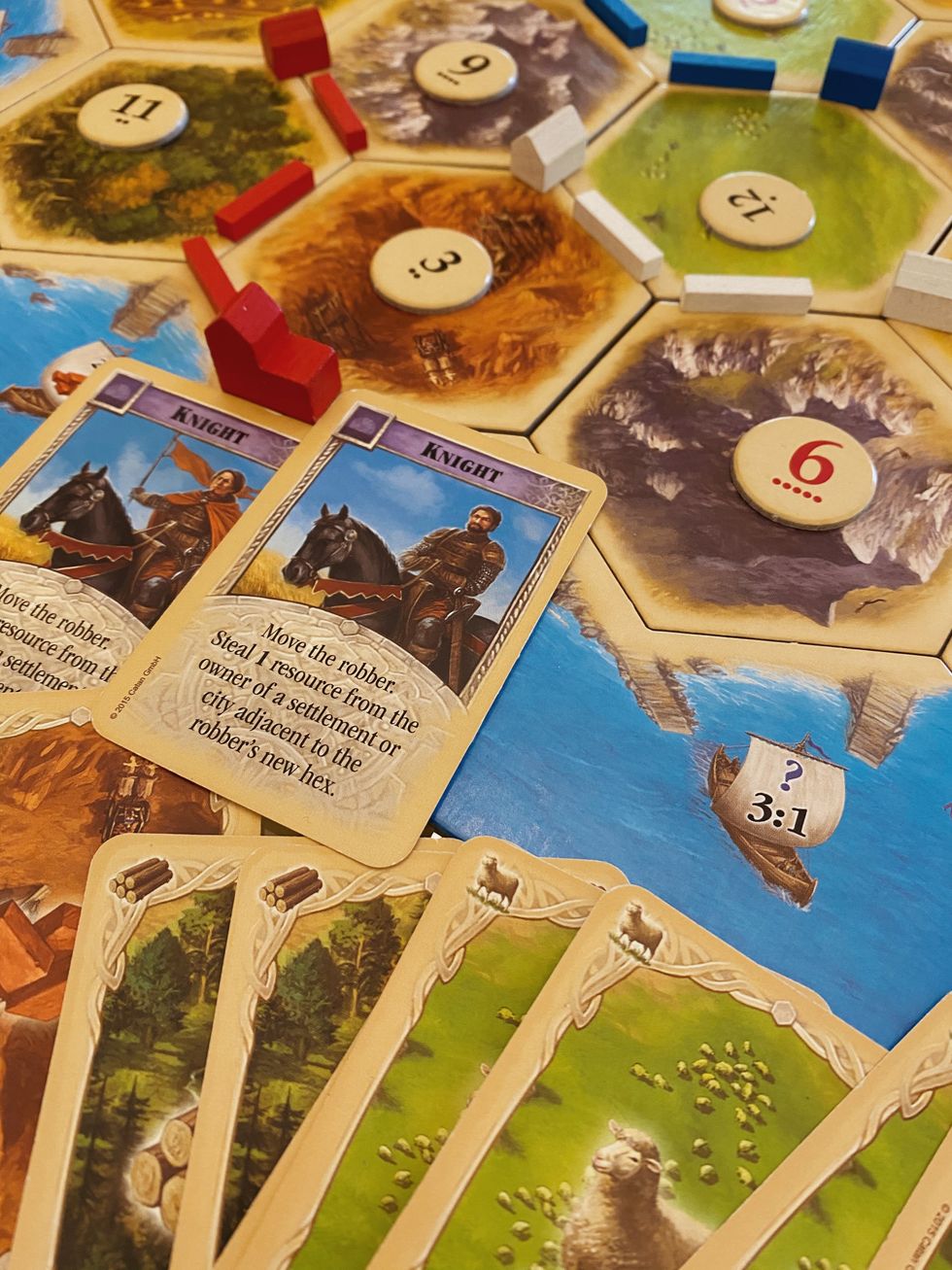
During quarantine I have mostly learned to surrender to the unexpected. The days are long, the news cycle dreary and the future unknowable. In a time of powerlessness, the one thing I have power over is a cardboard island called Catan. Let me explain.
Settlers of Catan, developed by German board game designer Klaus Teuber in the mid 1990s, pits players against each other as they race to build and develop properties, all while sabotaging and stealing from their opponents.
There are elements of Hasbro’s classic Monopoly, but Catan trades the robber baron imagery of industrialist Manhattan for the pastoral life of feudal farming. There’s no money to obtain. Instead, resources such as wheat, sheep and lumber make up the currency; and the game encourages open dialogue in an ever-moving free market where players can hawk amenities like vendors selling knock-off handbags on Canal Street.
“I’ve got two sheep for a brick. Anyone got a brick? I’ll give you two sheep. Or I could do three sheep and a lumber if you’ve got two bricks?”
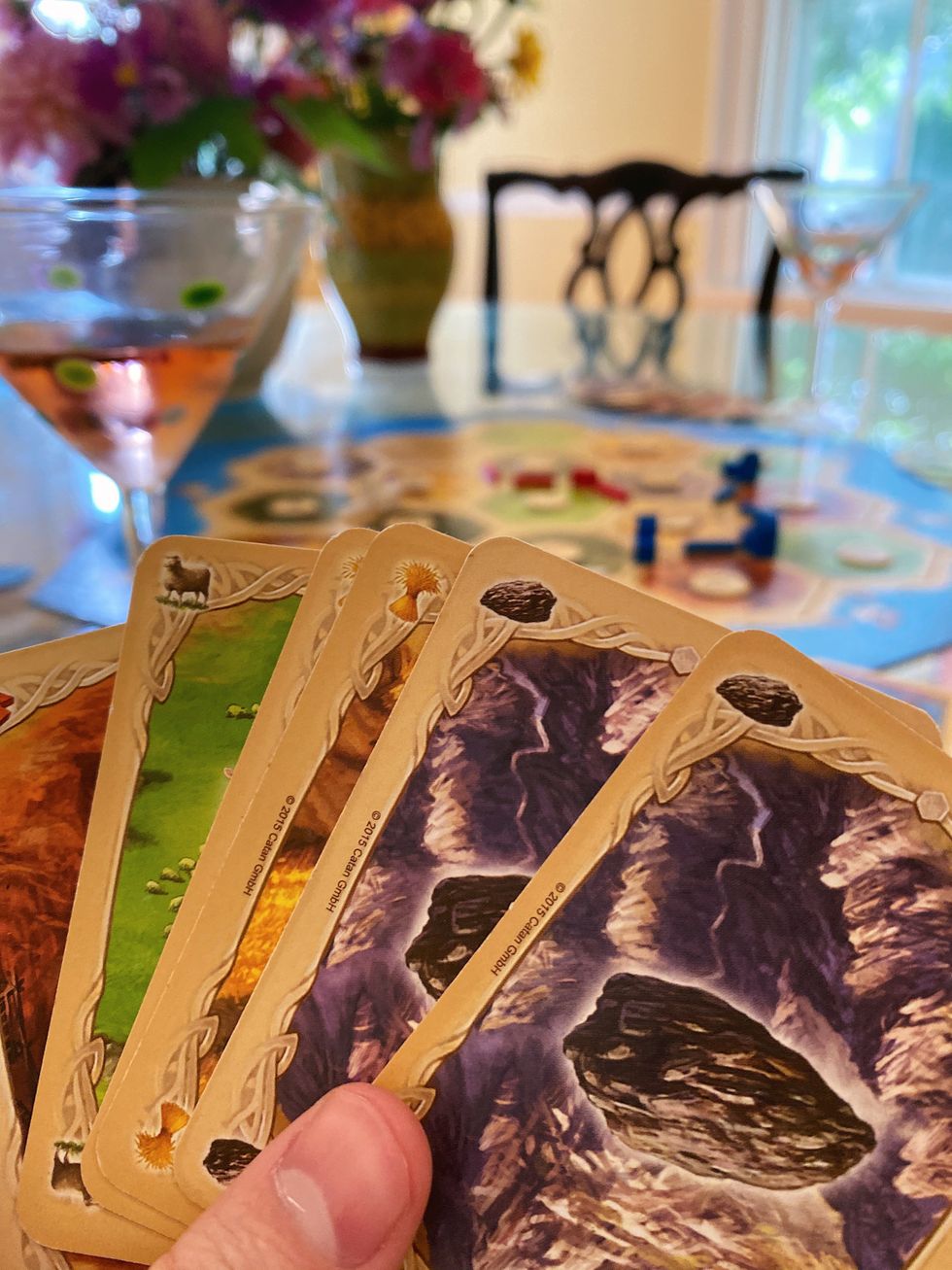
While staying indoors, Catan has been a nightly ritual in my household this year, splayed out across the dining room table with a few glasses of wine. Since purchasing the board game in April I have won 45 times. My father has won 14. You can understand the pressure this has put on the relationship. I have briefly considered purposefully losing, gracefully flubbing my strategies in order to create a more egalitarian, albeit fictional, sense of play.
Except that by its nature, Teuber’s game seems to plunge players into a ruthless preoccupation with seizing dominance. Monopoly, whose lengthy runtime puts middle school children into a near coma by the second hour, can largely be played with decorum.
But Catan’s combination of chance, bartering and quick maneuvering requires a steady flow of vocal participation. Which is why my family can now be regularly heard saying things like: “How could you do this to me?” “You’ve ruined everything I’ve built!” and “If I do nothing else, I’m going to make sure I destroy you.”
In short, we have all become Joan Collins on “Dynasty.”
The game was first introduced to me by my sister (a banker in New York City) and her fiancé. I thought of it as a novelty item, an odd hobby that they picked up at some retro parlor game party. As it turns out, the more that I mentioned the game to my friends, the more I realized I had been living under a rock. People who I know that are in their 20s and 30s, corporate assistants in Boston, fashion writers in New York, tech managers in San Francisco, had all been playing Catan long before the pandemic struck. They were as likely to be “trading brick for lumber” over Thanksgiving with their parents as they were to be hosting their own weekend game nights with their friends. So what is it about viciously collecting and trading sheep that resonates?
Perhaps the biggest reason old-fashioned board games are still alive and well, even with the younger crowd, even with screens of all sizes chirping for our attention, is that they force us to really acknowledge each other. If you’re like me, I’m sure you’ve felt a monotony set in through these last five months. “Did you read in the Times…?” “Yes, I saw that column,” my father and I say as we unpack another carton of eggs and put them into the refrigerator. I call my sister and she says, “You know, I’m busy and not busy.” “What are you up to?” “I might take the dog for a walk.” “Talk to you later.”
But for an hour of Catan, even when I lay down my trap card, and my father has to turn over all his sheep to me, and he’s waving his hands in the air bemoaning, “You don’t know what I had planned for those sheep!” — well, we’re sitting at a table really looking at each other.
Competition is one of the oldest forms of social connection, and as it turns out, Catan’s ability to bring out the conniving side of its players is exactly what makes it such an addictive social space. When it’s easy to feel like you’ve lost an entire year to COVID-19, there’s comfort to sitting down at a game, picking up your cards and thinking, “OK, how can I win?”
Catan can be purchased at Oblong Books and Music in Millerton, N.Y., at wwww.oblongbooks.com; or at Tom’s Toys in Great Barrington, Mass., at www.tomstoys.com.
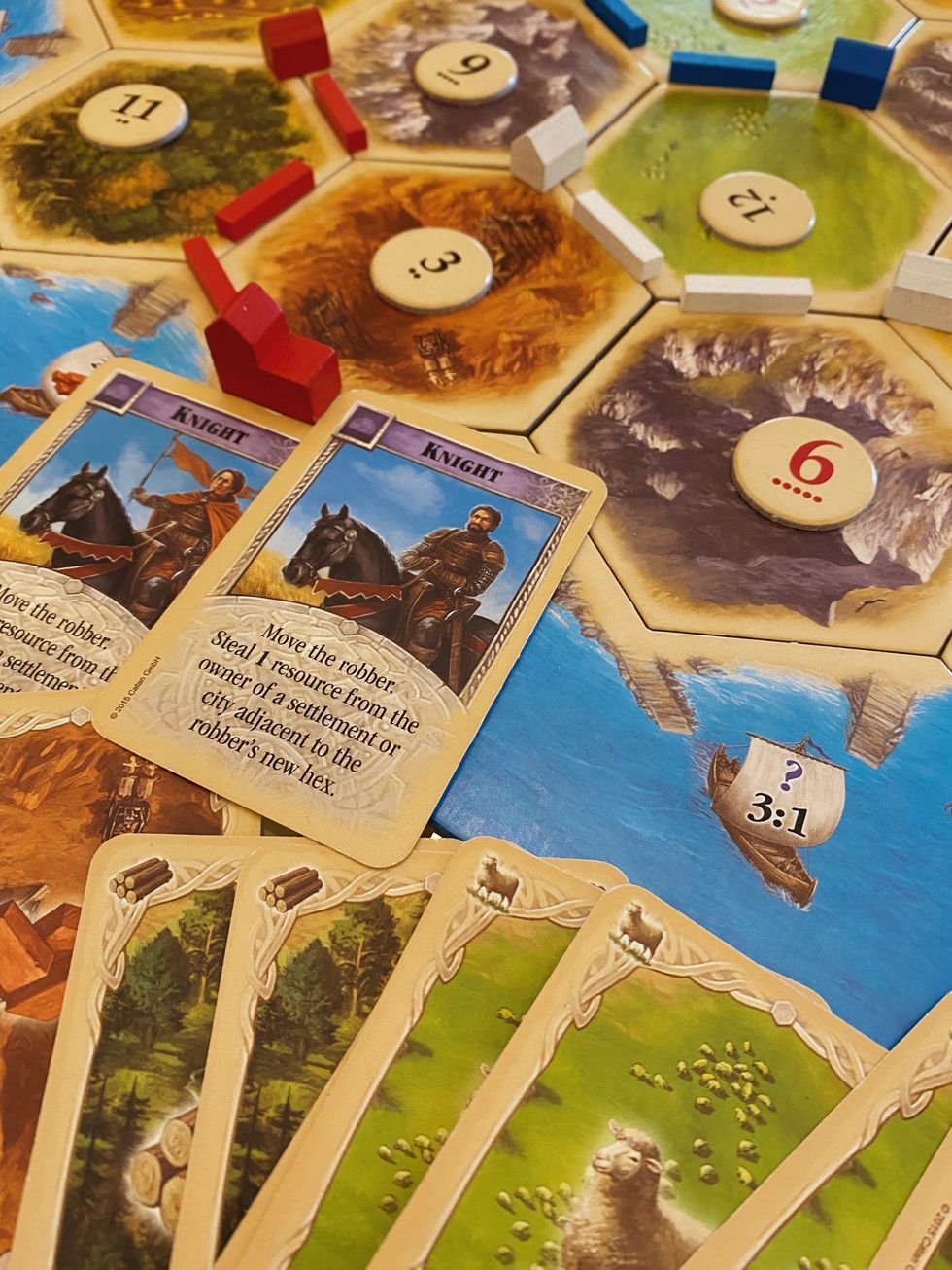
Board games like Catan, purchased at Oblong Books and Music at the start of quarantine, helped break up the tension with a little healthy competition. Photo by Alexander Wilburn
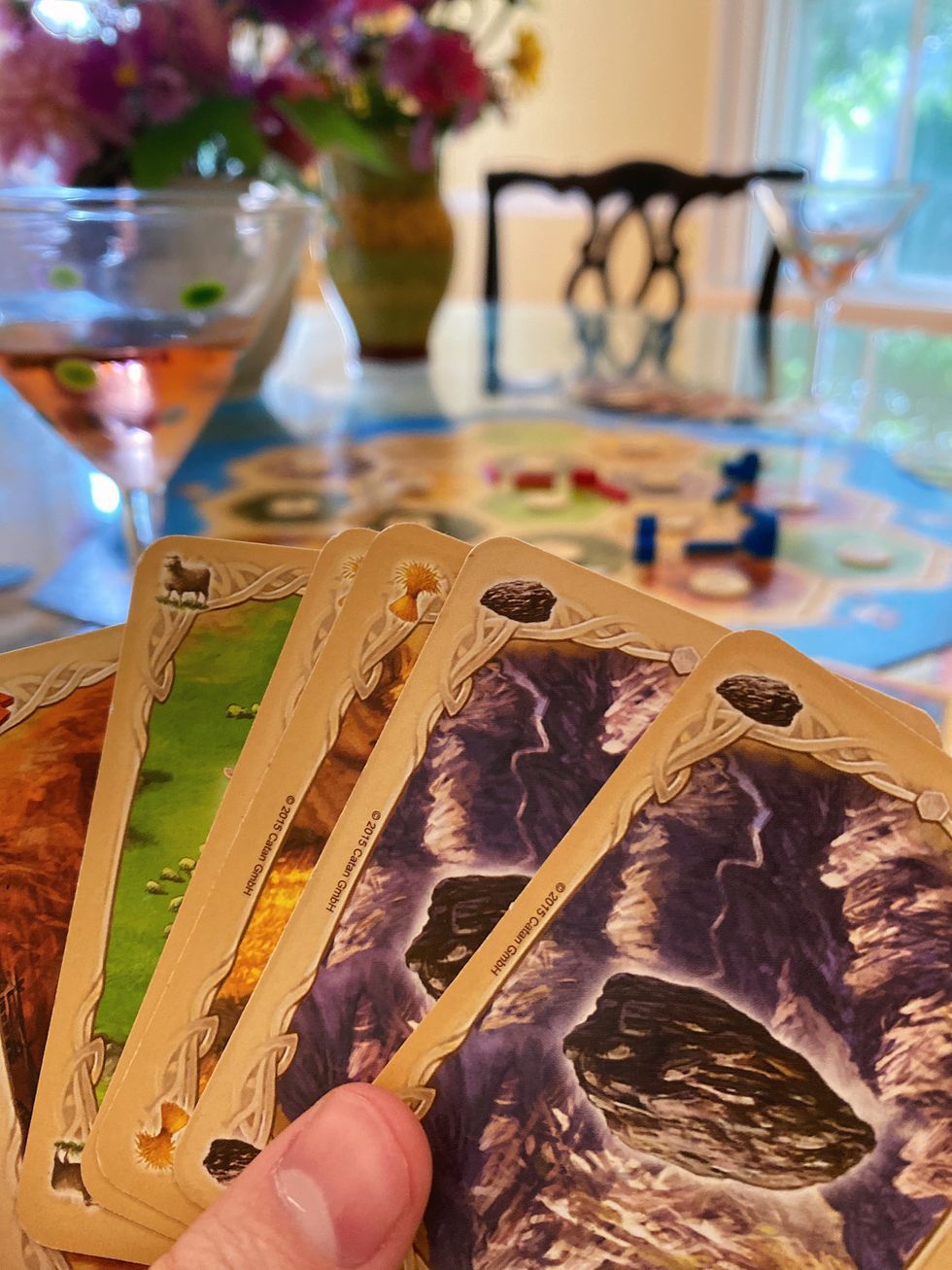
Originally created as a German language game, Catan has become an international success. Photo by Alexander Wilburn