Norfolk celebrates Earth Day

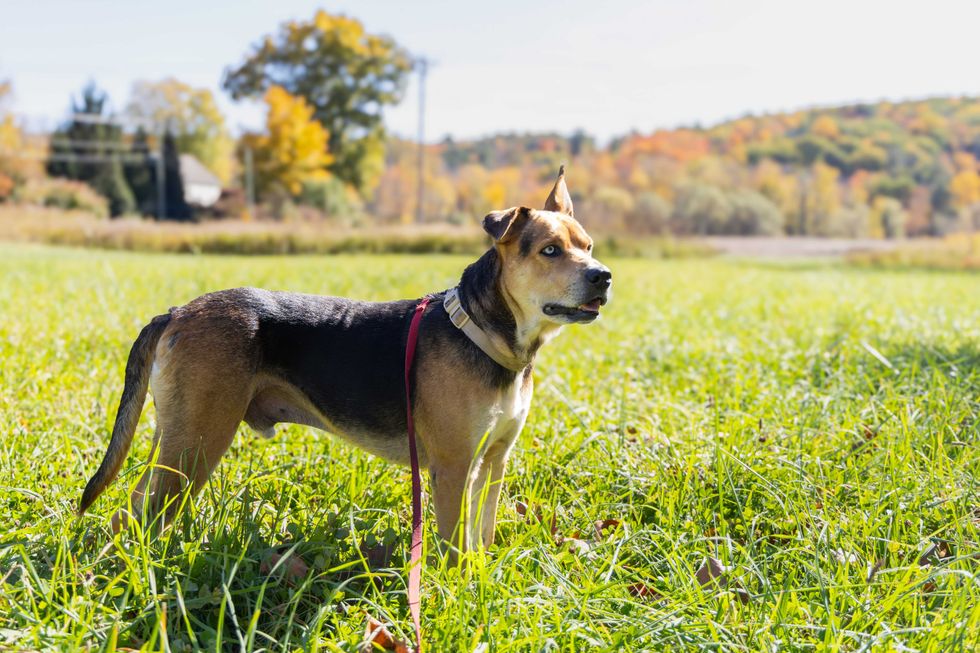
A scene from last year’s Norfolk Earth Forum.
Provided


A scene from last year’s Norfolk Earth Forum.
Norfolk prides itself for being known as “The Icebox of Connecticut.” It also boasts some of the densest wilderness in the state with several species of animals and plants unique to the area.
The tiny town shows its deep appreciation for nature annually with The Norfolk Earth Forum, which takes place this year April 25 to 27. This year, the forum is called “Our Glorious Northwest Corner: Celebrating the Connectedness of All,” with events centered on biodiversity, conservation, and our shared relationship with the natural world.
“The Norfolk Earth Forum brings together experts, artists, and community members to address the critical biodiversity challenges facing our region and to celebrate our profound interconnectedness with all living beings,” said Erick Olsen, Pastor at Norfolk Church of Christ Congregational, which founded the first forum in 2024.
On display at The HUB until April 30, “Imperiled Species in Our Community: The Biodiversity Crisis At Home,” is a unique exhibit on loan from the Salisbury Association that highlights local endangered species and showcases an educational poster created by the Norfolk Land Trust.
On Friday, April 25, Tim Abbott, Conservation Director of the Housatonic Valley Association, will discuss the national significance of local conservation efforts.
A screening of “A Road Not Taken,” a fascinating documentary on Jimmy Carter’s solar energy initiatives, will be shown at the Norfolk Library, followed by a Q&A session with Norfolk resident Tom Strumolo, who helped install 32 solar hot water panels on the roof of the White House.
On Saturday, April 26, the “Books & Boots” nature walk, inspired by Peter Wohlleben’s book “The Hidden Life of Trees,” will be led by Bina Thomson and Hartley Mead.
Later on Saturday, Dr. Mike Zarfos, executive director of Great Mountain Forest, will lead a walk through spring wildflower blooms. Finally, Craig Repasz from Lights Out Connecticut will shed light on the critical Connecticut Bird Atlas project and the urgent need for bird conservation.
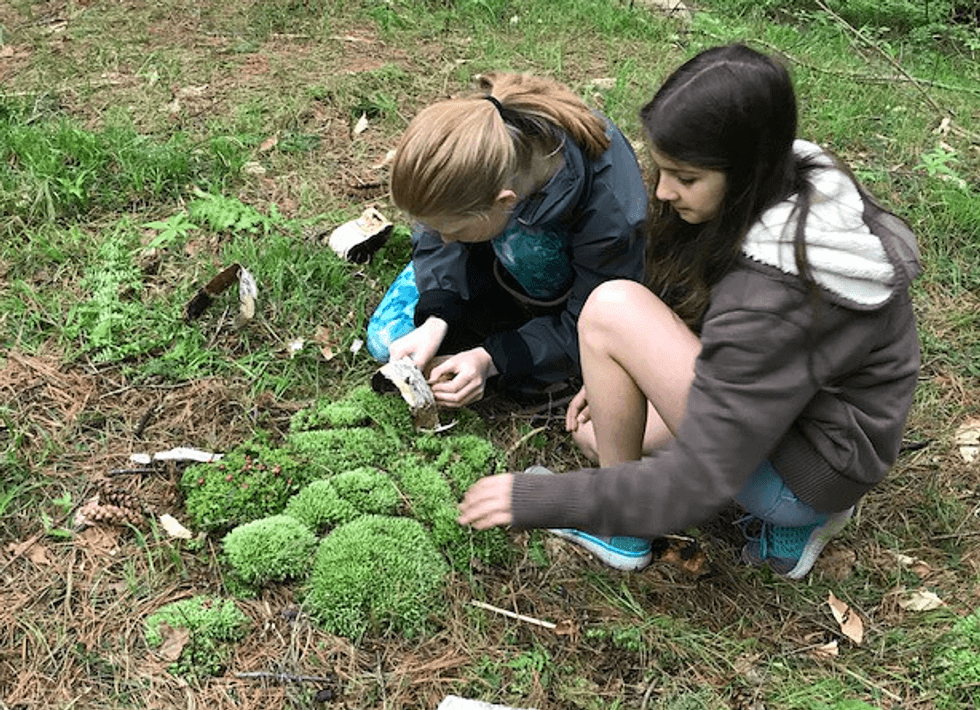
On Sunday, April 27, families can enjoy a children’s craft workshop and learn to create toad houses, followed by an educational program on reptiles and amphibians with the Roaring Brook Nature Center.
The weekend concludes on a magical note with Paul Winter’ breathtaking concert, “This Glorious Earth,” at the Church of Christ. Winter is well known for blending music with sounds of nature, and his performances celebrate the beauty of life on Earth. Keetu Winter from Wellspring Commons will introduce the concert and speak on the concept of bioregionalism.
Visit www.norfolkhub.org/norfolk-earth-forum for more information and registration details.
Roxana Robinson
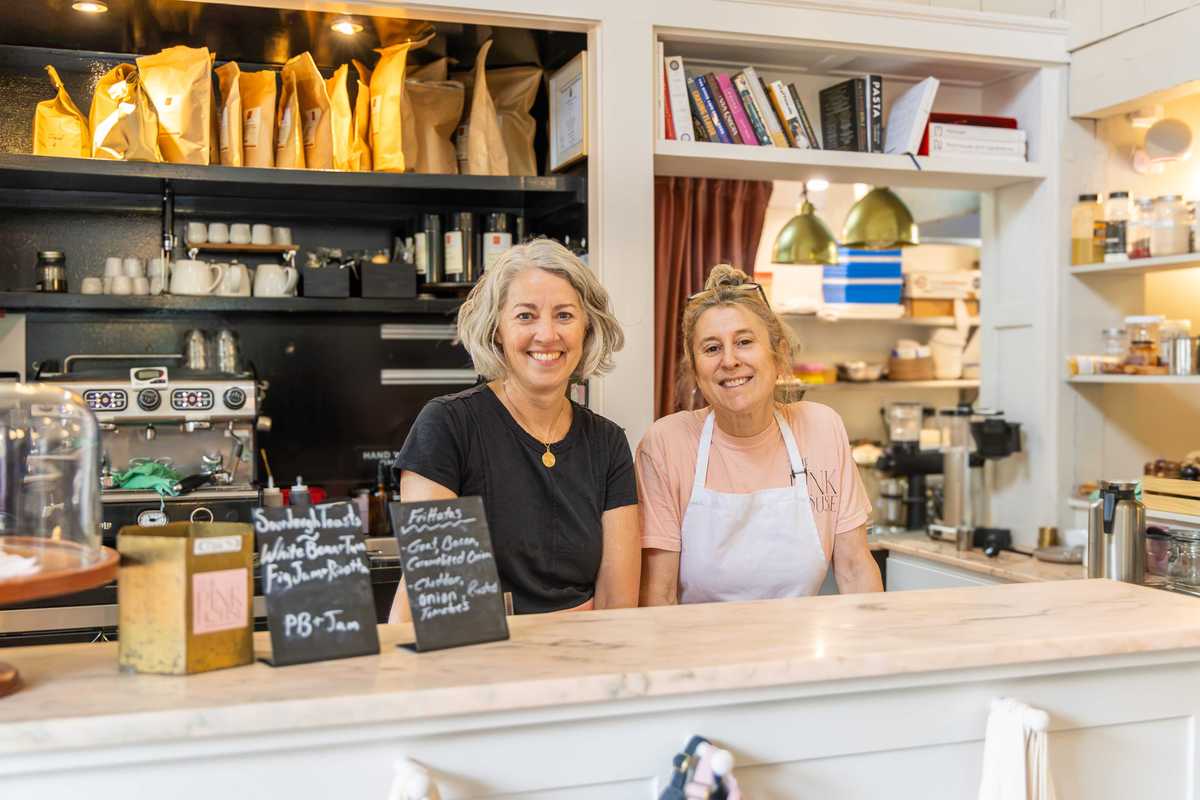
Tom Pannullo, Chris Dunlop, and Ed and Kim Bahr of Mike’s Beehives, in their store at 80 Holmes Road in Goshen.With them is a honeycomb that a bear pulled from a tree in Sharon at Mudge Pond. The team was called to save and relocate the hive.
“When you are working with bees, you are entering their world. The vibration from the wings, the wax smell, the movement of the bees. It’s all very relaxing.” — Ed Bahr, Owner of Mike’s Beehives
GOSHEN — What do you do when yellow jackets invade a shed and defend it by stinging people and dogs who trespass? One solution is to call Mike’s Beehives in Goshen. With knowledge of all things bees, the company will relocate everything from honey bee swarms to hornet and yellow jacket nests.
Ed Bahr of Mike’s Beehives recently removed a yellow jacket nest from a local shed, dressing himself in protective gear and suctioning the insects into what’s known as a bee box. The process is designed to avoid harm to bees.
Not only does Bahr remove the bees from various locations, he saves the nests as part of an elaborate relocation process. Despite a couple stings to his legs, he remained cheerful and took the yellow jackets to a wooded area in northwest Connecticut.
Bahr said he has been working with bees since he was about five-years-old, when he began helping his father with beekeeping.
“My job was turning the handle on the honey extractor,” Bahr said. As he grew older, he would accompany his father on visits to the hives, learning by watching.
Eventually, Bahr partnered with and worked alongside Mike Rice, founder of Mike’s Beehives, and after learning more about bees, bee removal and how to build hives, he bought the business.
“Beekeeping has made a huge surge since Covid,” Bahr said, adding that gardens, canning produce, raising chickens, and keeping bees became popular after the COVID-19 pandemic. Chickens seem to be declining, he said, but beekeeping is still “going strong.”
In addition to bee swarm removal and hive maintenance services, Bahr’s team — including his wife, Kim, Tom Pannullo and Chris Dunlop — offers a variety of products. From beekeeping tools, handmade artisan hives, bees themselves and local raw honey, their store on 80 Holmes Road in Goshen is a one-stop-shop for aspiring beekeepers.
Classes on beekeeping are also offered in February and March and are taught by Bahr himself.
“I’ve taught hundreds of people,” he said.
They sell honey from their own hives and also lip balm and salves, made from the beeswax that results from honey extraction. Books about honey and bees are also available. On the second floor of the store is a viewing room where visitors can observe bees through glass as they work.
Beyond the shop’s walls, more than 100 honey bee hives can be found on the property.
Bahr, Dunlop, and Pannullo recently removed a decades-old honeybee colony from a tree at Mudge Pond in Sharon after a bear had ripped out a large section of honeycomb.They relocated the bees to Goshen. A video of the procedure, taken by Dunlop is on view at the store.
Everyone at Mike’s Beehives seems to enjoy their work, in spite of the hazards of being stung.Bahr emphasized that a calm attitude is necessary in beekeeping.“They can sense fear and nervousness and that puts them on alert. I talk to them calmly.They can’t hear you, but they feel the vibration.”
He described beekeeping as being peaceful. “When working with bees, you are entering their world, and it is very soothing and calming. The vibration from the wings, the wax smell, the movement of the bees. It’s all very relaxing,” he said.
The bee language involves the “wag tail dance,” Bahr said. “Bees have no ears and can’t talk.Communication is done by vibration and scent.”
When a bee returns to the hive, “it shakes its back end, turns and shakes, turns and shakes, to tell the others the directions to find clover, an orchard, or wherever there is nectar and pollen.”
He added, “They pick up on that vibration. They feel it through their feet in the honeycomb.”
For more information, visit mikesbeehivesllc.com.
Patrick L. Sullivan
‘It’s about dam time,’ reads one of the cheeky display cards at a new exhibit on rewilding at the Salisbury Association, now on view.
SALISBURY — A new exhibit at the Salisbury Association explores ways to reintroduce native plants, animals and landscapes to the region.
“Rewilding” looks at conservation efforts large and small, including steps homeowners can take on their own properties.
For “small landscapes” such as gardens and backyards, homeowners can remove invasive plants and replace them with native flowering plants, shrubs and trees.
Other measures include adding window stickers that are visible to birds but unobtrusive to people inside, helping to reduce avian crashes into homes.
Minimizing outdoor lighting also cuts down on light pollution that impacts insects, and not allowing cats to roam freely protects the bird and small rodent populations.
The exhibit text points out that a century ago, northwest Connecticut was largely deforested as a result of trees being cut for agriculture and for the charcoal and iron industries. As a result, only about one to three percent of the local forest is truly “old growth.”
Land trusts, including the Salisbury Association Land Trust, have been acquiring undeveloped properties in an effort to reconnect forest habitats with each other. The “Follow the Forest” initiative, for example, is a multi-state program that connects forested areas from the Hudson Highlands to the Canadian border.
The exhibit covers river bank and aquatic habitat restoration efforts by groups such as the Housatonic Valley Association and Trout Unlimited. This includes removing old dams and fixing culverts so that fish and other animals can move freely from one side of a stream that runs under a road to the other.
And, the exhibit covers the reintroduction of native animals, such as the New England cottontail rabbit, which has been largely supplanted by a lookalike species, the Eastern cottontail rabbit.
A reception for the exhibit will be held at the Salisbury Association building at 24 Main St. in Salisbury on Friday, Sept. 4, from 4 to 6 p.m.
Patrick L. Sullivan
FALLS VILLAGE — The year-long celebration of America’s 250th anniversary continued in Falls Village on Saturday, Aug. 15, with a bustling downtown and volunteers dressed in Colonial-era garb at a festival hosted by the Falls Village-Canaan Historical Society.
Highlights included reenactors, house tours, horse-drawn carriage rides and music.
Shortly after the event kicked off, the Historical Society’s Judy Jacobs rolled out from the Society’s headquarters on Railroad Street behind the wheel of a modern-day utility vehicle while dressed in period costume.
Jacobs made her way up to the Beebe Hill Schoolhouse, where Krista Barger and Tanya Golden delivered lessons on writing in cursive with a quill pen to a group of students.
Everyone was in period costume and character, except for a couple of moments when the teachers added some contemporary context for the child actors or visitors crowded into the tiny schoolhouse.
Golden said the one-room schoolhouse served students in kindergarten through eighth grade from 1843 to 1914. Its largest enrollment was 51 students.

Golden told the children that Beebe Hill was staffed almost exclusively by single women who boarded with local families.
The one exception was a male teacher who was allegedly strict and unpopular. The teacher was so disliked, volunteers said, that the boys decided the best course of action was to gang up on him and throw him out the window.
“That window,” said Golden, pointing to the north side of the building.
Some wondered about the fate of the strict and unpopular male teacher.
“He didn’t die,” Golden said. “But he didn’t come back either.”
At the Green, Marlinspike – a musical group consisting of Rachel Gall on fiddle, Cole Vanseters on guitar and Dan Whelan on banjo and vocals – started their set with a spirited rendition of “Paul Jones’ Victory.”
A horse-drawn carriage clopped by en route to pick up passengers farther up Main Street, while visitors ambled over to the Historical Society for reenactors and demonstrations. The Center on Main hosted a program on Alexander Hamilton later in the afternoon, and students from Lee H. Kellogg School sold drinks and snacks to raise money for the eighth grade class trip to Washington, D.C.

Want more of our stories on Google? Click here to make us a Preferred Source.
Kathy Herald-Marlowe
“The picture of the world’s richest man killing the world’s poorest children is not a pretty one,” Bill Gates on Elon Musk, May, 2025
Lifesaving food and medicines were denied internationally as DOGE, Musk, irradicated the US Agency for International Development – slashed it, irrevocably as it also cancelled grants to hospitals that helped women from transmitting HIV to their babies.
Musk, no longer chainsawing domestic and international policies and grants, has lately, in The Economist July interview, acknowledged the pace and suddenness of his DOGE cuts of funding and long-time initiatives likely caused unnecessary “friction.” Oddly, Musk continued that the Gates Foundation should have stepped in to bridge the negatives when he, Musk, went “too fast.” Gates should have saved Musk and the world from his acts although in 2012, Musk, along with a cadre of ultra wealthies, signed the Giving Pledge:to contribute at least 50% of their wealth to charity in or after their lifetimes. Musk had his own deep pockets,
In the same Economist interview, Musk vehemently claimed 0.0 children died as a result of his USAID actions though multiple agencies report 700,000+ child victims/deaths have been counted as arising from the pull out of USAID medicines, foods, aids – adults add hundreds of thousands more.
Adamantly anti-government handouts, the wealthiest person on the plant is beholding to the US for a king’s ransom. Over the first two decades of Musk ventures, the US government provided him over $38 billion in the form of loans, tax credits, subsidies, manufacturing incentives, and regulatory credits – add to this his 52 ongoing US contracts.DOGE would more appropriately stand for Dependent on Government Enrichments. Billionaires are up globally to 3,482 – increasing at an ever-faster clip. Just 700 of the 1200 US billionaires have a combined net wealth exceeding the worth of the entire bottom half of Americans (165 million).
Mark, Matthew, and Luke all have scripture with Christ’s plea to “Suffer the Children” -include them, bring them forth, forbid them not.However, since January, 2025, children abroad have suffered as have domestic children robbed of grants, precluded from policies already passed for their well-fare and growth – food, education, health.
The spectacular cruelty and corruption of Musk, DOGE, aligns well with the maneuvers fostered against children by Robert F. Kennedy Jr* regarding children’s health: deaths from measles (94% unvaccinated kids), the falsehoods about vaccines and autism, the shredding of health and environmental regulations, and stark reductions/cancellations of research by the 10’s of million$ for children – moneys already appropriated by Congress.Measles in the US were eradicated in 2000 and gifted back to the US by RFJ Jr with 4,800 deaths in 2025-2026.After famously ranting against the evils of vaccines, RFJ Jr now admits that he and his six children are all, totally vaccinated –none with autism.Backpedaling on the MMR vaccine (Measles, Mumps, Rubella) as a measles outbreak skyrockets, RFK J is saying “A measles vaccine is effective, it stops measles in about 97% of cases. So people should get vaccinated.” Not all are.
The “Big Beautiful Bill” made tax reductions from 2017 permanent while tax provisions favoring high-income households and corporations expanded. The bill’s attractive benefits for the rich will be paid for primarily by reductions in SNAP (Supplemental Nutrition Assistance Program), the Affordable Care Act, Medicaid, tax credits, clean air initiatives and student loans. Free meals for children are denied to millions of low-income, poverty level families – children to go hungry to learn.
Erasing Head Start is Kennedy’s next target as HHS removes 1,000 provisions for local and state control that regulated these highly effective programs. Structural changes for Head Start centers go into effect in October including removal of limits on class size, removal of routine annual health screenings, slashes to funding student expansion. Studies, over decades, indicate positives accrued:increased readiness for school, increased likelihood of completion of high school and attendance in college, lower poverty. Commencing in 1965, with Johnson’s War on Poverty, Head Start has had 6 decades, 60 years, of positive impacts now negated by a Secretary* unworthy of his name – a Junior so distance from a trio of Kennedy legends.
“You judge a society by how it treats its citizens. We must do our best to ensure that every child can live in comfort and security with the best possible education”.Melania Trump
*Bobby might share the same name as our father, but he does not share the same values, vision or judgment.” RFK Junior siblings
Kathy Herald-Marlowe lives in Sharon.
Lakeville Journal
‘Speed at your own risk, not mine’
If I hadn’t laughed at Richard Kopec’s letter of August 12, 2026 about speed limits I would have been furious. Speed limits at 25 mph aren’t solely for drivers and car traffic, they’re for the safety of pedestrians and wildlife, especially on roads with no place to walk along the sides.
Last I checked, our bodies and those of animals are not any better built or more “sophisticated” than they were 70 years ago. The idea that we “accept certain numbers of accidents as a price we pay…” is not only dismissive of human life but it abrogates our society’s responsibility to protect the well being of ALL citizens from other including bad drivers. I do not advocate “big brother” cameras or attacks on our privacy as solutions, however — speed bumps, speed ditches and other physical impediments make far more sense.
The funny part of Mr. Kopec’s proposal was speed limits as “suggestions”!
Speed limits are legal limits, period. Speed on our roads at your own risk, not mine. And good luck with state troupers when you try to talk your way out of a ticket saying 25mph is just a suggestion.
Robert Becker
Cornwall

Want more of our stories on Google? Click here to make us a Preferred Source.

Want more of our stories on Google? Click here to make us a Preferred Source.