It’s been nearly two years since the town of North East received a state grant for $25,000 to draft an Agricultural and Farmland Protection Plan (AFPP), for which a special committee was organized. The Agricultural and Farmland Protection Plan Committee was chaired by Lynn Mordas and populated by members of the town’s Conservation Advisory Council (CAC), local farmers and others invested in the future of local agriculture and agricultural land, along with consultants from the American Farmland Trust (AFT). It successfully mapped out a plan to help protect North East’s 18,402 acres of farmland. And while there have been other opportunities in the past that have been overlooked by the Town Board to do so, now, in particular, the time has come for this plan to be adopted.
The committee has done its part. Numerous presentations have been made about the plan before the Town Board and residents. The Town Board has been diligent in discussing the plan, as there have been many conversations at board meetings. The requisite public hearings have also been held, although one scheduled back in January had to be canceled because not all Town Board members made attending that meeting a priority. Because of that, in January, there wasn’t a quorum present, and the meeting therefore did not satisfy the legal requirements for a public hearing, which delayed the entire process even further.
Let’s face it; the Town Board has been dragging its feet in adopting the AFPP. In February it had to vote to extend its contract with the New York Department of Agriculture and Markets as a precautionary measure to ensure it wouldn’t lose any of its grant money. If it had only acted in a timely manner, that step would not have been necessary. At a certain point the board simply needs to take action; the perfect opportunity is at its next meeting on Thursday, Aug. 12.
Agricultural and farmland protection just makes sense. It ensures farmers and others in ag-related businesses will have land to work in the future, while also protecting environmental resources. In a town like North East, where farming is an integral part of so many residents’ lives already, that’s really important. And then there’s the reality that “cows and corn don’t go to school,� as David Haight from the AFT said. Farmland simply requires significantly less in services than developed areas, and that means less money spent by taxpayers. And there are a myriad of other reasons to support keeping agricultural land as such, from keeping working farmers working to boosting the local economy with concepts such as agri-tourism.
Agriculture is an important part of this community. Despite the region’s growth and development, many people would be impacted by the loss of agricultural land.
Farmers need our support, and they need the town’s support. Farmers need to know their land will be preserved so they can make a living, and their families can make a living, for years to come. The Agricultural and Farmland Protection Plan will help serve that cause. It’s a good plan. It’s well thought out and smartly written. It deserves to be adopted and implemented by a board that is looking out for farmers’ and farm-related businesses’ interests now and in the future. Such a plan will help this town grow into an even more fertile community, home to villagers, townspeople, city-dwellers and, yes, farmers, alike.
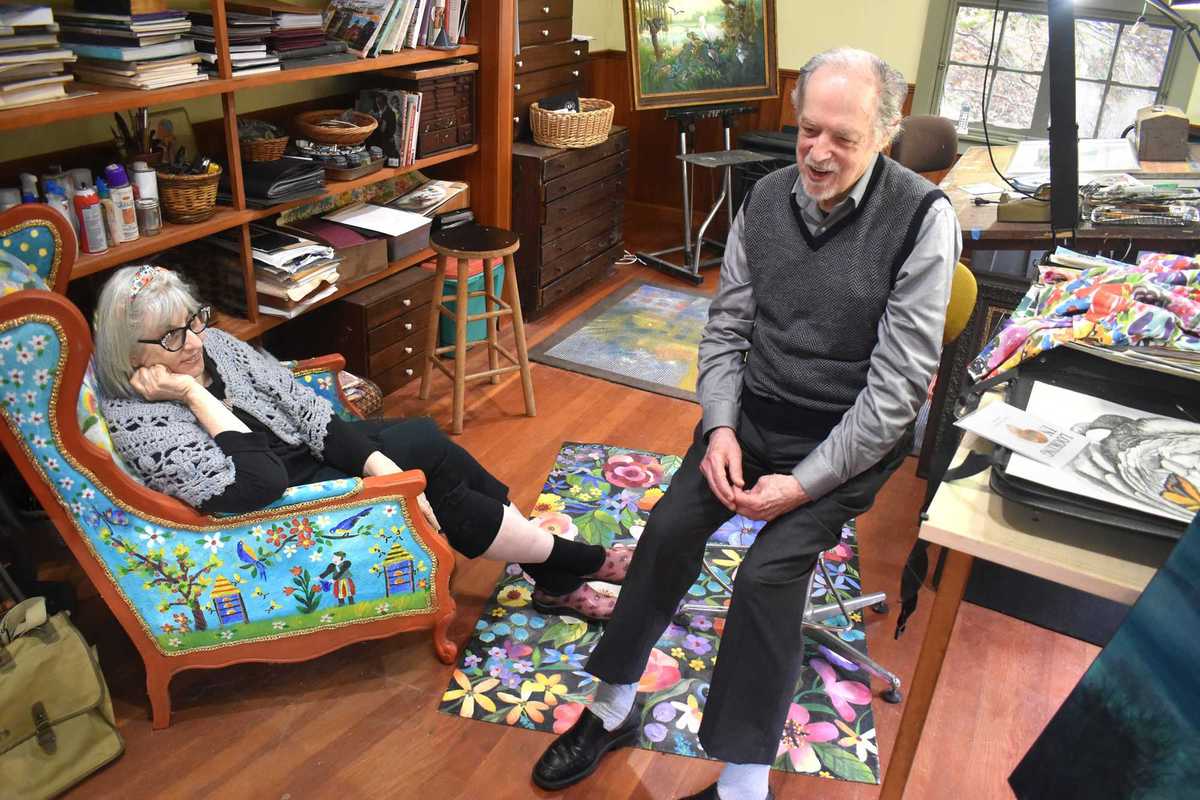
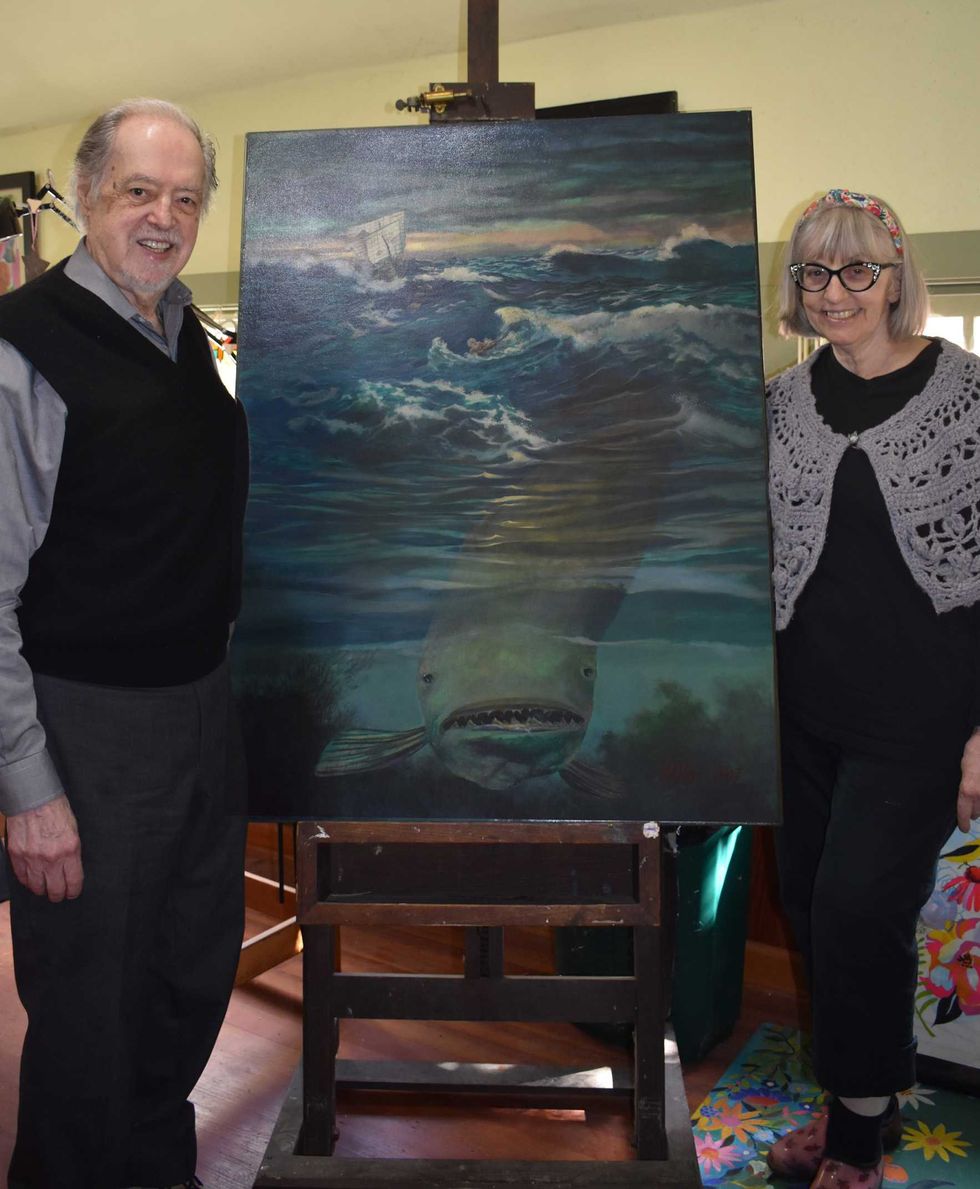 Justine and Victor Valla in their studio with a painting of Victor’s,”Jonah and the Whale.” Robin Roraback

 A ceramic vase by Kathleen Heidemann.Provided
 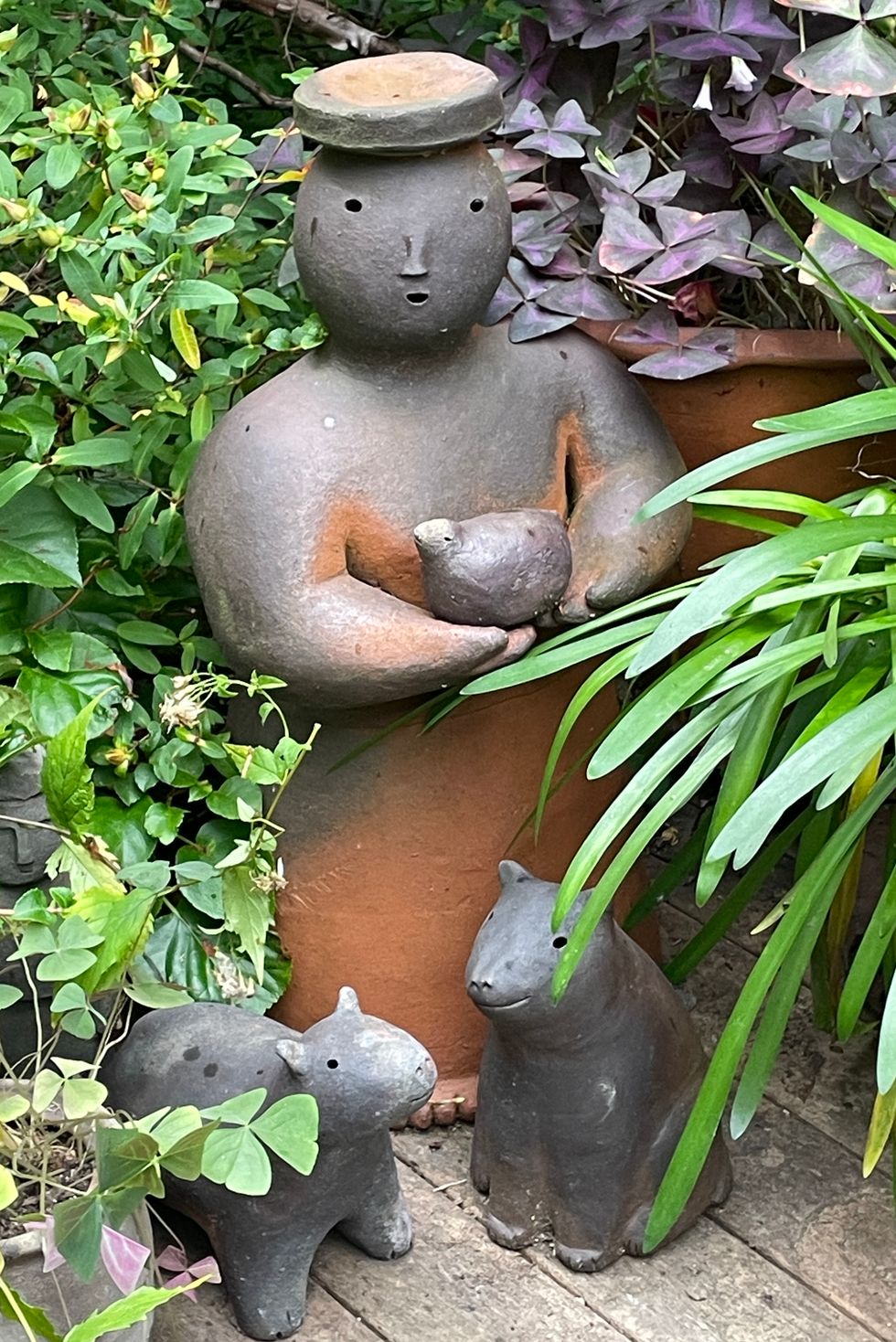 Joy Brown’s delightful ceramic sculptures.Provided