Thank you!
Your support is sustaining the future of local news in our communities.

Party bases pick poor candidates in their closed primaries

While celebrating Tom Foley’s victory over veteran legislator John McKinney in the Republican gubernatorial primary four years ago, the party chairman predicted “our base will turn out in big numbers this November to overturn Malloy and his failed economic policies.”

The base did turn out but Malloy’s failed economic policies won anyway because the Republican base wasn’t enough to win the election. The base was able to give the nomination to Foley, a wealthy Republican never elected to anything in a closed primary, just as the base was able to give this year’s nomination to Bob Stefanowski, a wealthy Republican (and former Democrat), also never elected to anything. Not to be outdone, the state’s Democratic base gave its nomination to Ned Lamont, also a wealthy Democrat never elected to anything above the town level in that party’s closed primary.

But the Republican Party’s base is too small to go it alone or nearly alone in a Connecticut general election and as the third largest voting bloc out of three, it will never be. It’s true even in years like this one, when the Republicans richly deserve to beat a discredited Democratic Party in the races for governor and state legislature. But to do it, they have to nominate someone whose appeal goes well beyond the base. It doesn’t look as if they have.

Party bases, also known as true believers or extreme right- or left-wingers, depending on the party, do one thing well. They pick candidates lacking in much appeal to voters from the other party or to the ever-growing number of unaffiliated voters.  

That number of Connecticut citizens, who don’t particularly care for either party, is 857,000 and counting, nearly 100,000 more than all the registered Democrats and more than 400,000 more than all the registered Republicans.  They should have something to say in the selection of candidates but Connecticut’s two not-so-great political parties choose to maintain the myth that they have a loyal, enthusiastic base, strong enough and smart enough to go it alone.

Ned Lamont, the current Democratic gubernatorial nominee, disproved that myth more than a decade ago when, in 2006, the party’s base chose him over incumbent Senator Joe Lieberman because of Lamont’s anti-Iraq War position and Lieberman’s hawkish views.  

Lieberman ran as a third-party candidate and easily won with a little help from the Republicans, who chose one Alan Schlesinger.   Schlesinger had some renown — as a card counter banned from casinos in Connecticut and New Jersey. The Republican candidate couldn’t even get the endorsement of Republicans like Gov. Jodi Rell and George W. Bush. He received nine percent of the vote.

This time, Lamont easily won the nomination for governor because no viable Democrat chose to compete in what didn’t look like a Democratic year, thanks to the challenge of succeeding the most unpopular governor in the nation. He easily defeated a smarter politician, Bridgeport Mayor Joe Ganim, who couldn’t overcome the small matter of his criminal record.

Republican Stefanowski had more opposition but managed to get more votes than four other obscure Republican candidates by the simple tactic of outspending them in TV ads. He won the nomination by attracting a whopping 29 percent of the base, getting 42,000 of the 143,000 Republican votes cast.  

In some states, he would have had to engage in a runoff vote with the runner-up, but not in Connecticut. And so, the Republicans are offering a former Democrat who didn’t bother to vote in any election in memory.  And to add to his appeal, he most recently ran a payday loan company, an institution that preys on poor people by providing them loans at usurious rates. They are illegal in Connecticut.

It’s early, of course, but so far, the two are running as conventional, boilerplate Democrats and Republicans. Neither has provided a detailed way to solve Connecticut’s principal problem: the inability to pay its expenses, especially the biggest expense incurred by the state’s unfunded and overly generous obligation to its unionized employees.

It’s doubtful many of us will buy Lamont’s plan for property-tax relief or Stefanowski’s equally dubious ideas about eliminating the income tax that produces more than half of the state’s revenue.

Looming over the race is Donald Trump. Stefanowski welcomed Trump’s endorsement the day after it was Twittered and Lamont cleverly labeled his opponent “Bob Trumpanowski,” to which Stefanowski brilliantly replied, “Ned Malloy.” A distracting argument over Donald Trump would be bad for the state and for our future.

We have to do better than that in the coming weeks, but don’t count on it.


Simsbury resident Dick Ahles is a retired journalist. Email him at rahles1@outlook.com.

Latest News

‘So Little to Do,’ so much to discover at James Barron Art

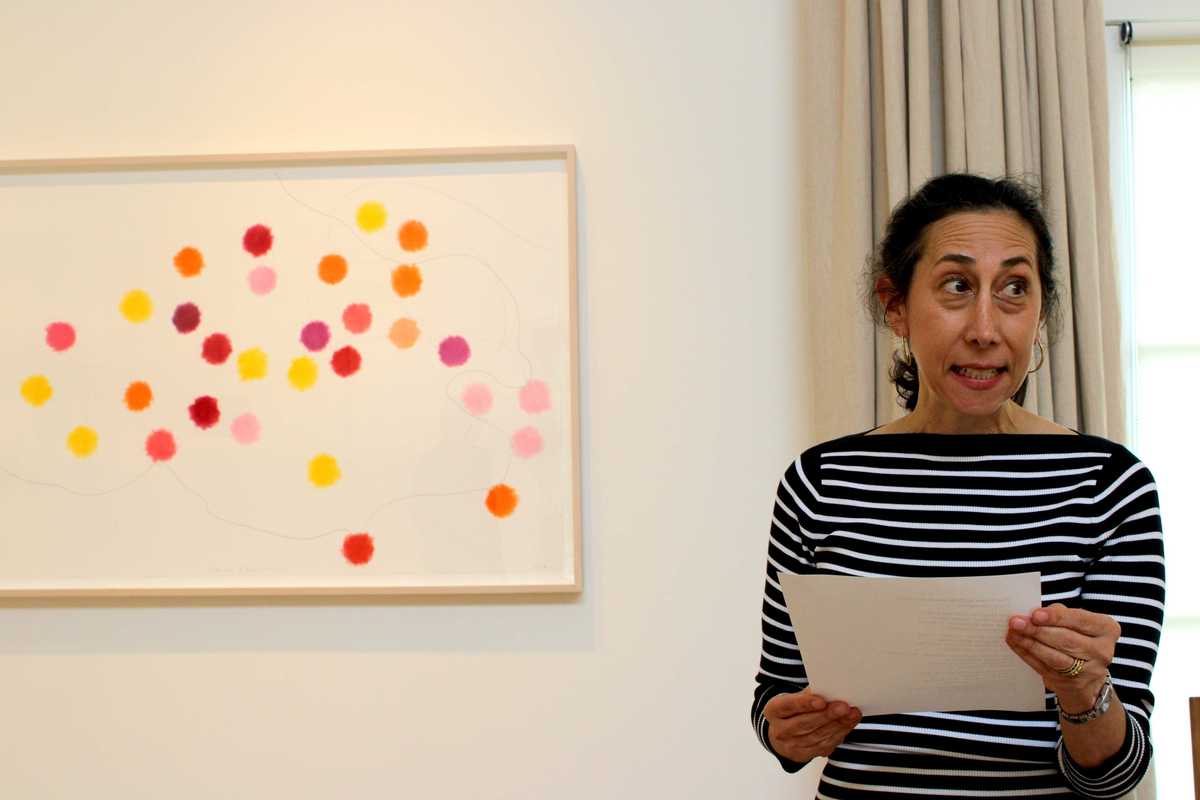
Curator Deborah Goodman Davis reads the Emily Dickinson poem “The Grass So Little Has to Do.” Spencer Finch’s “Following Three Bees (Zinnias)” buzzes in the background.

Photo by Natalia Zukerman

“The Grass Has So Little to Do,” on view at James Barron Art in Kent, takes its title from Emily Dickinson’s poem “The Grass So Little Has to Do,” written in 1862:

“The Grass so little has to do—
A Sphere of simple Green—
With only Butterflies to brood
And Bees to entertain—”

Keep ReadingShow less

Marina Kotchoubey is not a woodworker

Marina Kotchoubey is not a woodworker

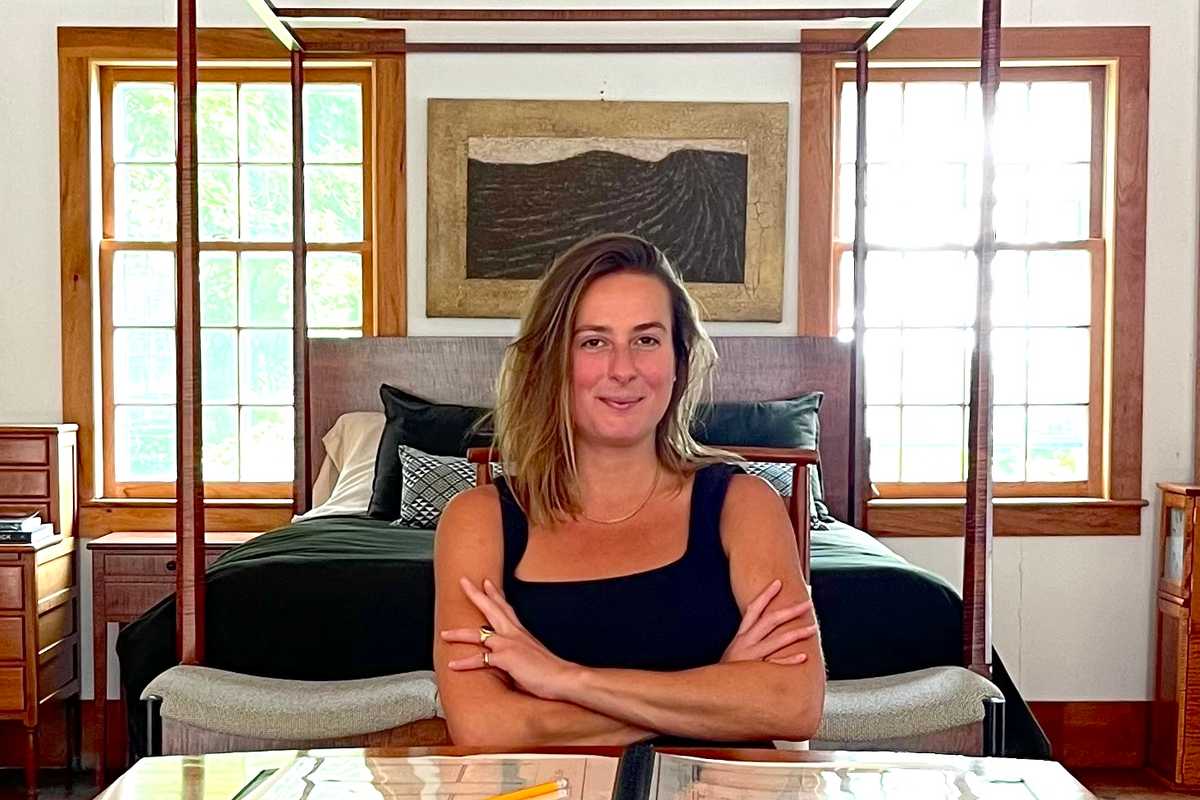
Marina Kotchoubey at the Ian Ingersoll Cabinetmakers showroom in West Cornwall.

Photo by D.H. Callahan

After 40-something years navigating the world of custom fine furniture, Ian Ingersoll was getting ready to retire. Starting off with a little dovetail stool that he sold at a shop in West Cornwall in the 1970s, he’d grown his skill and his business into something he — and the whole town — could be proud of. Shutting down that business was not an option.

Ingersoll built Ian Ingersoll Cabinetmakers, which produced mainly classical Shaker furniture, on passion: the passion he had to make a living through creative challenges and the passion of his employees, who all seem deeply in love with their craft.

Keep ReadingShow less
A legacy of giving at Norfolk Chamber Music Festival

One hundred and twenty years ago, Carl and Ellen Stoeckel commissioned New York architect E.K. Rossiter to design The Music Shed in Norfolk, Connecticut. After nearly a decade of entertaining their friends and neighbors with the finest music of the day, they built a permanent home for their beloved Litchfield County Choral Union.

The commission and full funding of the construction was not unheard of in an era when great fortunes led to public enrichment. Railroad tycoon John D. Rockefeller was instrumental in funding institutes of higher education. Steel baron Andrew Carnegie was building libraries all over the country, and famously said that a man who dies rich is a disgrace, challenging his peers to give their fortunes back to the people.

Keep ReadingShow less
google preferred source

Want more of our stories on Google? Click here to make us a Preferred Source.
Two unique exhibitions at Geary Gallery

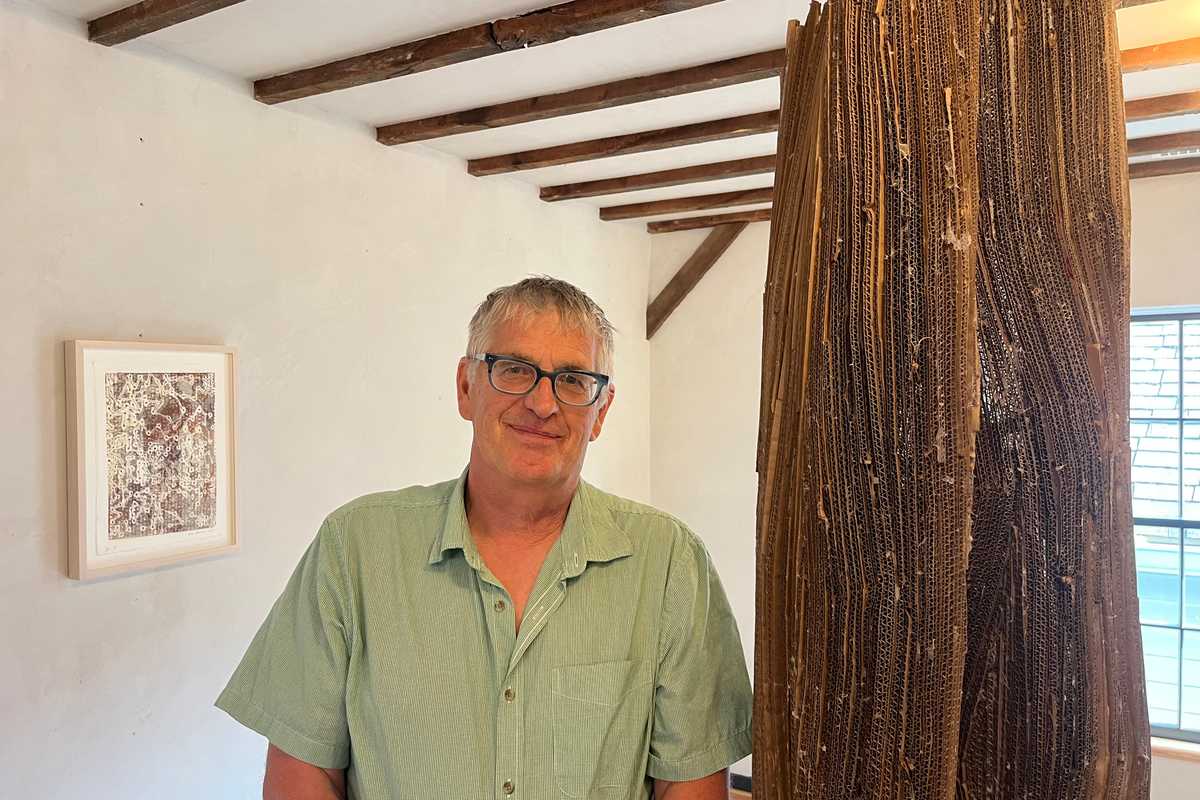
Henry Klimowicz with his sculpture, “Partial Pillar 1”

Photo by D.H. Callahan

On Saturday, Aug. 1, Geary Gallery opened its doors in Salisbury for two unique shows in its first- and second-floor gallery spaces. Art lovers flooded both floors over the course of the afternoon, giving the events a vibrant feeling that enhanced the importance of the art.

On the first floor is a show by Chicago-born, Colorado-based photographer Summers Moore, titled “Lobitos: Pueblo Fantasma,” or “Lobitos: Ghost Town.” The work centers around her daughter’s current hometown in Peru. Moore herself found a home away from home in Colorado in the mid-1980s and encouraged her children to seek out new places outside of their comfort zones.

Keep ReadingShow less

Writer’s retreat in the woods

Writer’s retreat in the woods

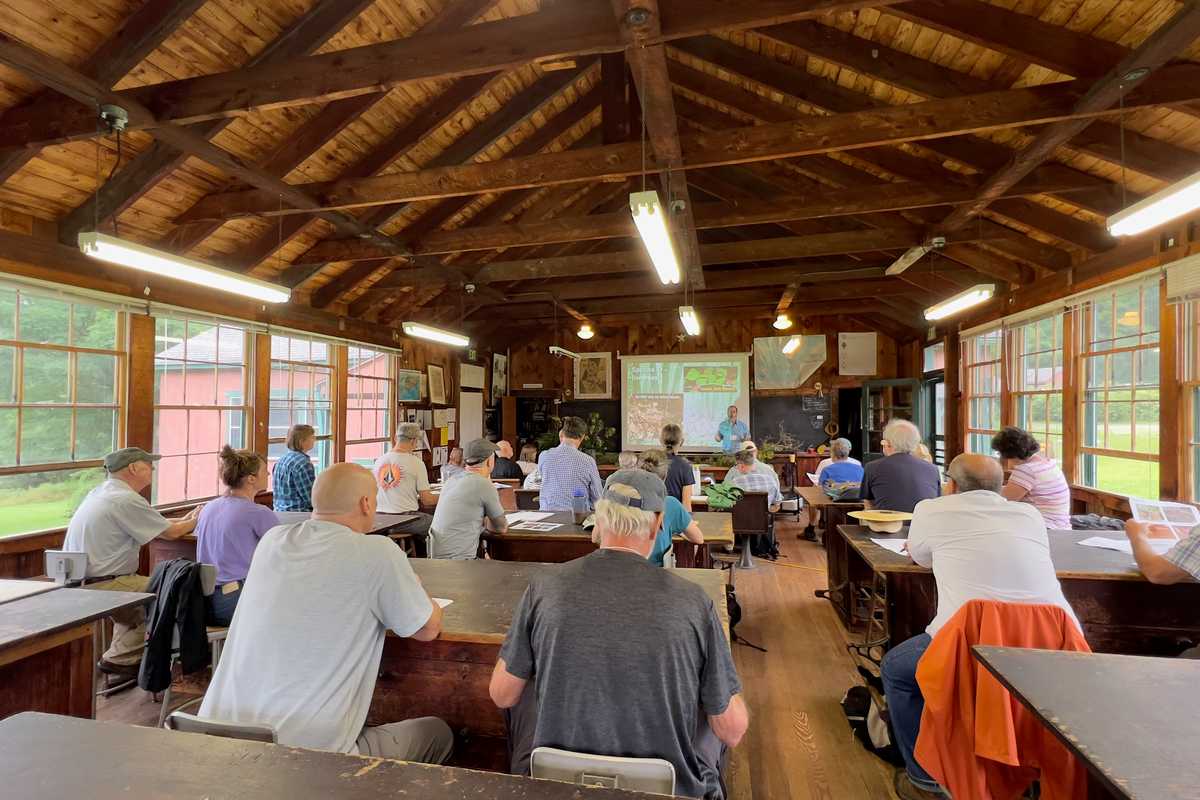
Participants in a 2024 Great Mountain Forest Woodland Academy workshop at Yale Camp.

Photo by Mike Zarfos

Great Mountain Forest (GMF) will host its first Nature Writing Retreat at the historic Yale Camp in Falls Village from Aug. 7-9, 2026. Writers of all levels are invited to draw inspiration from one of New England’s most notable forest landscapes. GMF envisions the retreat becoming an annual event celebrating writing, conservation and the relationship between people and forests.

This immersive three-day retreat reflects on the legacy of Hal Borland, the American writer and New York Times nature columnist whose work was deeply connected to this landscape. The retreat explores how wilderness shapes language, strengthens close observation and fosters environmental consciousness.

Keep ReadingShow less
From Cornwall to Rome, Adam Van Doren at Berkshire Botanical Garden

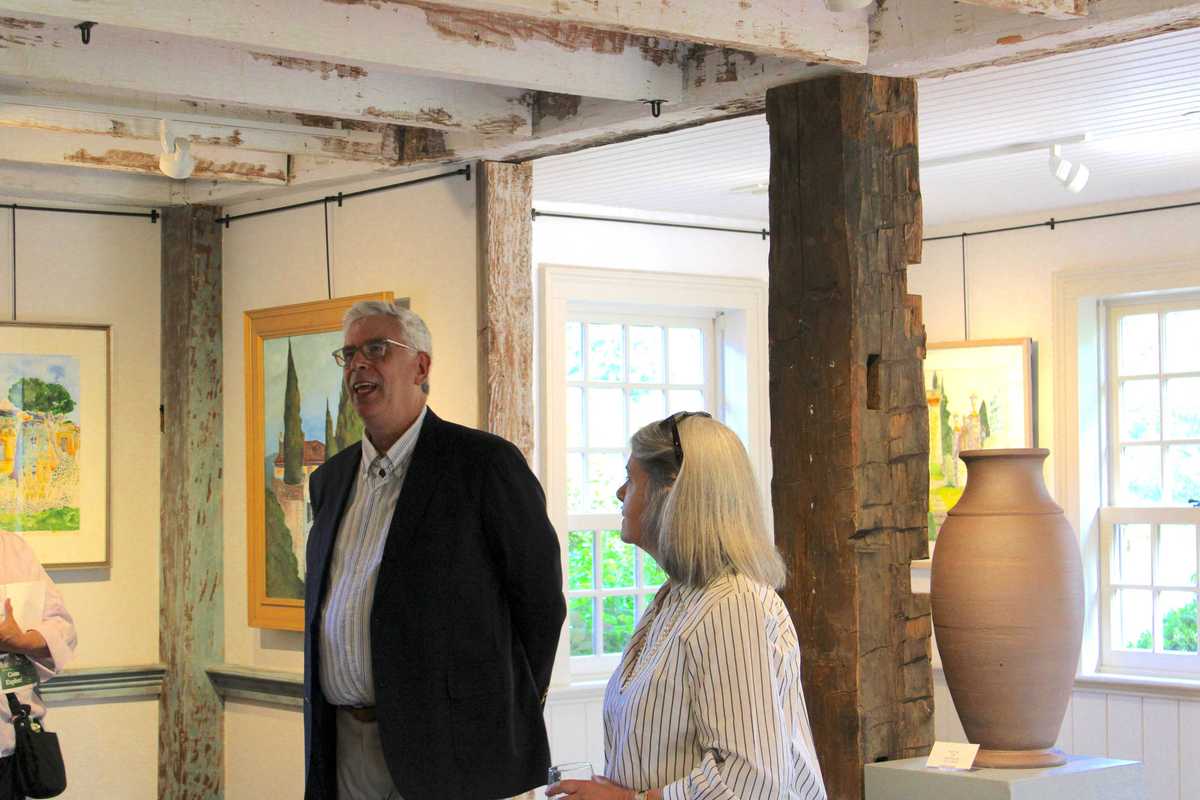
Artist Adam Van Doren and curator Donna Hassler talk to a group of visitors at the Berkshire Botanical Garden. A Stephen Proctor vessel sits to their left.

Photo by Natalia Zukerman

This summer, the Berkshire Botanical Garden in Stockbridge has hosted “Grounded in Nature: Paintings by Adam Van Doren,” an exhibition exploring the intimate relationship between architecture and the natural world.

On view for only a few more weeks in the Leonhardt Galleries, the exhibition features more than 35 watercolor and oil paintings by the New York-based artist, architect, author and Yale professor, curated by art historian Donna Hassler, director emerita of Chesterwood. The works span three distinct places that have shaped Van Doren’s artistic practice: New York City, Cornwall, Connecticut, and his travels throughout Europe.

Keep ReadingShow less
google preferred source

Want more of our stories on Google? Click here to make us a Preferred Source.
google preferred source

Want more of our stories on Google? Click here to make us a Preferred Source.