SALISBURY — Lou Bucceri, who teaches social studies at Salisbury Central in the middle school, started his March 17 talk, “The Legacy of Irish Immigration in Salisbury,” with an apology.“I am not one of you,” he said. His tie, with a pattern from an illuminated Book of Kells, “is as close as I get.”He was speaking at the Scoville Memorial Library as part of the Salisbury Association Historical Society’s series of Heritage Talks.He gave a vest-pocket sketch of the history of Christianity in Europe and how events affected Ireland, starting with the conversion of the Roman Emperor Constantine in 305 AD, the activities of St. Patrick and the lesser-known Palladius in Ireland around 431 AD; English King Henry VIII’s very public split with the Catholic Church in 1532; the battles between Protestant England and Catholic Spain between 1560 and 1588, and the British (and Protestant) expansion during the 17th century.Catholic ownership of land in Ireland fell from 59 percent in 1641 to 22 percent in 1688 and 14 percent in 1703, Bucceri said — a period known in Ireland as “The Protestant Ascendancy.”Bucceri referred to subsequent “decades of discontent.” The Irish were heavily influenced by three revolutions — the American, the French and the Industrial.In order to fight in the rebellious colonies, British troops were removed from Ireland. This was accompanied by modest British reforms to give some rights back to the country’s Catholics.Irish nationalists tried an alliance with the French after that country’s upheaval, Bucceri said — an alliance that was short-lived.And finally, in 1801, William Pitt the Younger dissolved the Irish Parliament.Bucceri said it was the combination of the Industrial Revolution, the political situation and the forces of nature that ultimately combined to cause the Irish exodus to North America.The British established an industrial and colonial relationship with Ireland, exporting raw materials (mostly agricultural) to England. The British also controlled the prices.“But the rural population booms anyway,” Bucceri said. “More poor, landless farmers who couldn’t afford the rent.” Evictions multiplied, as did resentment.Then came the Potato Famine in 1845 — a blight, possibly from potatoes imported from America, wiped out much of what was the staple food of Ireland.“The potato became popular in Europe,” said Bucceri. “It was nutritious and easy to grow.”And with that popularity came dependence. Ireland’s population doubled between 1780 and 1841 — “without an expansion of industry or improved agriculture.”“The Irish survived on milk and potatoes.”By the early 1840s fully half the Irish population depended on potatoes — two high-yield varieties in particular.Potato stalks were used to make thatched roofs, and peels were fed to livestock.During the Potato Famine, from 1845 to 1849, Bucceri said that while the blight occurred elsewhere, the effect was most profound in Ireland. “One million died of starvation or fever, and two million left.” Between 1841 and 1851 the population of Ireland declined by 50 percent.Emigration, like almost everything else in Ireland, was regulated by the British, Bucceri said. The Passenger Acts of 1803 were designed to keep workers in British territories. “So emigration to Canada was much cheaper and easier.”The Irish bound for Canada could leave directly from Ireland. To go to the United States, one had to travel first to England, adding significant costs to the journey — money the cash-strapped Irish did not have.“Why not stay in Canada?” asked Bucceri. Canada did not have jobs for the newcomers. “Industrial expansion was far greater in the U.S.“And they wanted to get away from British rule.”“The Irish had no money and no skills. They literally walked south and found jobs as they went” into New England.New England was experiencing a boom between 1820 and 1860, and there was a need for unskilled labor. The Irish in Connecticut found work building the Enfield and Farmington canals, and later the canals in Falls Village.The railroads also needed warm bodies for grunt work — the New Haven and Hartford railroads and later the Housatonic. “By 1840 over half the Irish in the U.S. were in New England.”In 1836 the Housatonic Railroad began building a line between Bridgeport and the state line in what is now North Canaan. By 1840 the Bridgeport to New Milford section was open; the line reached to North Canaan in 1842.“The Housatonic Railroad introduced the Irish to the iron industry,” Bucceri said, with the Ames Iron Works, located above the Great Falls in what is now the Amesville section of Salisbury, a major employer.Puddlers Lane, Dublin RoadThe Irish workers couldn’t quite shake the English, however. At Ames, “the skilled workers for puddling techniques were English,” Bucceri said. The iron works built housing on the Salisbury side of the Housatonic River to entice “married, sober workers.”“The Irish, unskilled, lived across the river in Falls Village.” Dublin Road was the primary neighborhood for the Irish iron workers. They lived in modest dwellings — “I saw them described as ‘ramshackle,’” Bucceri said — and worshipped as best they could. (There is still a small cemetery named after St. Patrick in Falls Village.)There was not a big Catholic presence in the American colonies, save for Maryland. (The first American diocese was established in Baltimore in 1789.)By 1808 there was a diocese in Boston, and in 1843 a see in Hartford.But in the Northwest Corner, by 1848, “Mass was said in private homes, with priests from Albany, Poughkeepsie and Norwalk.”In 1850 the Rev. Christopher Moore “secured the use of the Amesville schoolhouse” for Catholic worship.“Well … not everybody in the community was happy about that. There were complaints.”In June of 1850 Moore and his parishioners found the schoolhouse locked to them. (The building still exists as a private home.)“So they said Mass under an apple tree on Beebe Hill.”In 1850, Bernard O’Reilly became the first Bishop of Hartford, and the Rev. Peter Kelly succeeded Moore.Kelly was “one of the clerical characters of the day,” said Bucceri. “He charmed Horatio Ames,” and got the “phlegmatic Teuton” to concede that a priest for the Irish workers and their families would be a good thing.The parish of St. Patrick was established in Falls Village in 1851 — the first Catholic church in the Northwest Corner — and by 1854 a church was built on the present-day Warren Turnpike. “It was the only Catholic church between Danbury and Pittsfield,” Bucceri said.St. Patrick’s burned down in 1915, likely from a fire caused by sparks from a passing train igniting dry grass.The Catholic and the ethnic were inextricably intertwined. “Patrick, Kelly, O’Reilly — I think I get the idea,” Bucceri said.The Ames Iron Works survived a financial panic in 1857 but went bankrupt in 1863, and the Irish workers headed for Lakeville’s iron ore mines.Church of St. MaryBucceri said that in 1874 there were 400 Catholics in Lakeville, most of them working at the Ore Hill and Davis concerns.In 1875, the Rev. Henry Lynch established the new parish of St. Mary. The church was completed in 1876, built with money donated by the miners.Keeping to the ethnic theme, Bucceri rattled off the names of the priests of St. Mary’s between 1875 to 1957: Lynch, Fox, Donahue, Bannon, Honohue, Lawlor, Flynn and Noonan.Relations between the Roman Catholics and the established townspeople “were not always cordial,” said Bucceri. One conflict in 1883 even attracted the attention of The New York Times.Lynch erected a 12-foot cross in front of the church, with a life-like (and almost life-sized) Christ, complete with trickling blood.The neighbors were not amused. “They regarded it as sacrilege, and talked of lawsuits to compel its removal,” said Bucceri, quoting from a New York Times piece from Aug. 27, 1883.Lynch was also working on plans for a convent and parochial school, which would be similarly adorned.The nearby merchants of Lakeville signed a petition to get rid of the cross. (They found it to be “not in harmony with American ideals and customs.”)And they enlisted former Gov. Alexander Hamilton Holley to head a delegation.Things really came to a head when the shopkeepers of Lake-ville noticed that the Roman Catholics weren’t bringing their business any longer. Bucceri said the Catholics in Lakeville spent about $1,000 a week in the town’s stores.“They were taking their business to the merchants of Salisbury.”Countermeasures were threatened — layoffs from the employers, the Housatonic Railroad refused to run special trains for the dedication of the church, and a boycott of Catholic charities.The rhetoric got hot, Bucceri said. “Lynch was referred to as a ‘drunkard and ignoramus.’”Lynch responded that the anger stemmed from envy over increased influence of Catholics in town government.The matter “drew such attention that The New York Times editorialized, admonishing both sides for their silliness.”By 1883 the fight had died down, and the convent and school were in place.In the meantime the iron industry here was nearing its end. Bucceri said that between 1850 and 1900, 80 percent of the miners on Ore Hill were Irish. Bucceri said there was an attempt in the late 1800s to bring in Chinese workers, who were less costly. But according to a sinister tale of the time, the first group of Chinese workers went into the mine — and never returned. As the iron industry declined and finally ended in 1923, Irish workers relocated — to Pittsfield, to work on railroad construction in the West, and to coal mines in Pennsylvania, Kentucky and West Virginia.And once again history repeated itself. The exodus following the death of the iron industry meant that the population of Salisbury between 1910 and 1920 declined by 29 percent. “Over a thousand people left,” said Bucceri, and the economy began to change from agriculture, industry and manufacturing to education, services and leisure.The legacy of the Irish in the Northwest Corner, Bucceri said, is an American story. “They came seeking new opportunities and found them. Maybe they had to keep moving, but that’s our history as a nation.”
Latest News
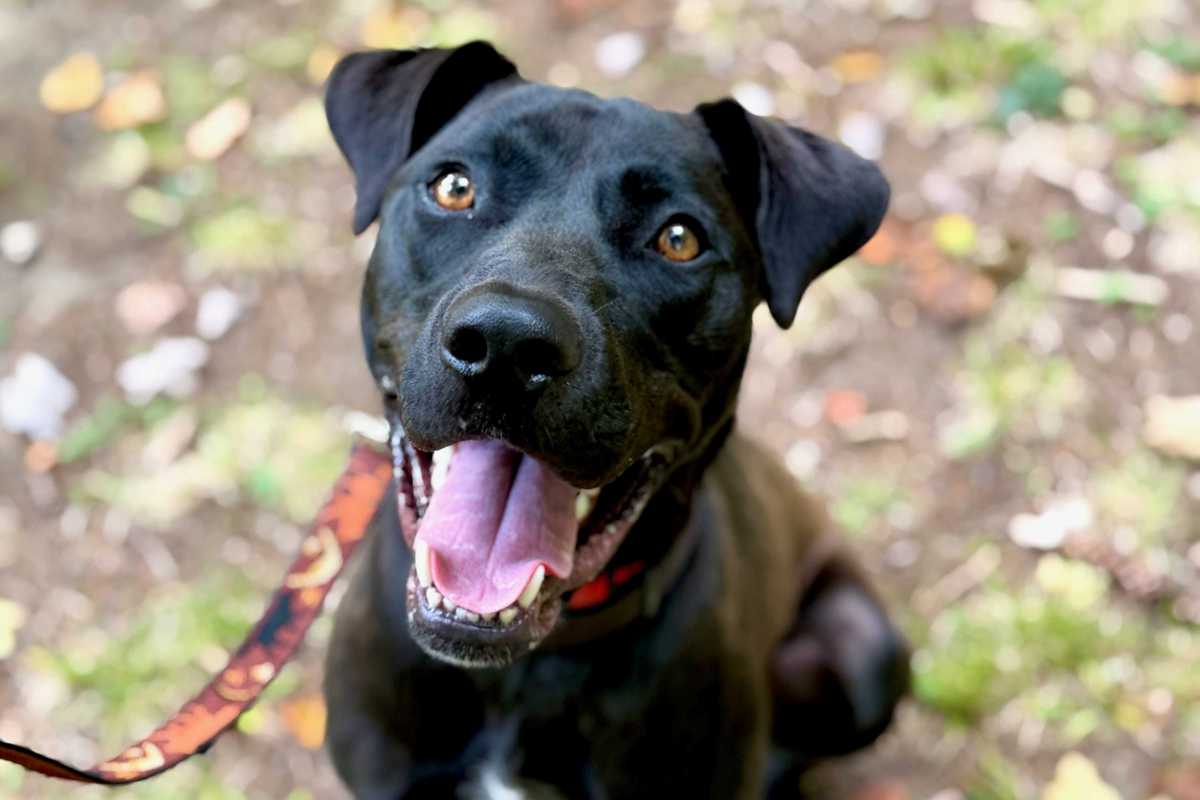
Marsala is eager to go home with you.
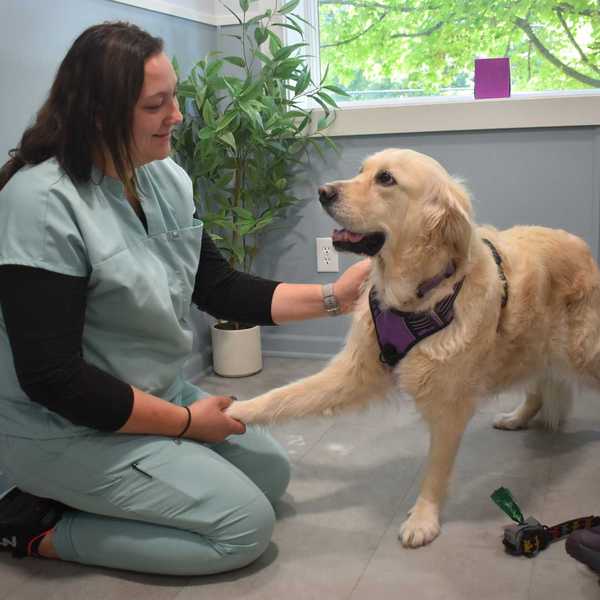
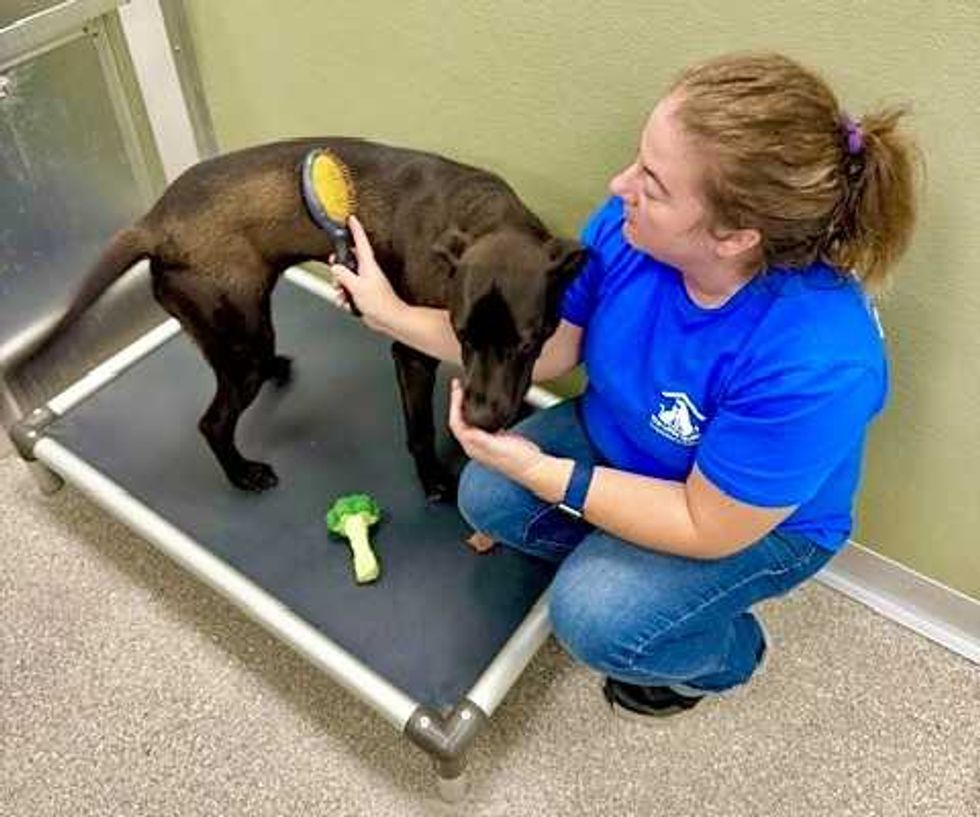 Tiffany Lemelin, shelter manager, brushing Marsala upon arrival.Provided
The Little Guild is an animal shelter at 285 Sharon-Goshen Turnpike in West Cornwall. Founded in 1957, the organization rescues animals from local surrenders and under-resourced shelters. When a rescue animal arrives at The Little Guild, staff begins a careful intake and transition process to ensure the animal is safe, healthy and ready for adoption.
New arrivals are quarantined in-house. Vaccinations are verified as up to date, and staff assesses each animal’s medical, behavioral and placement needs. Rescues receive medical care, daily support and behavioral training to ease shelter stress. Once a dog has finished quarantine and is ready for a home, its profile is published at littleguild.org.
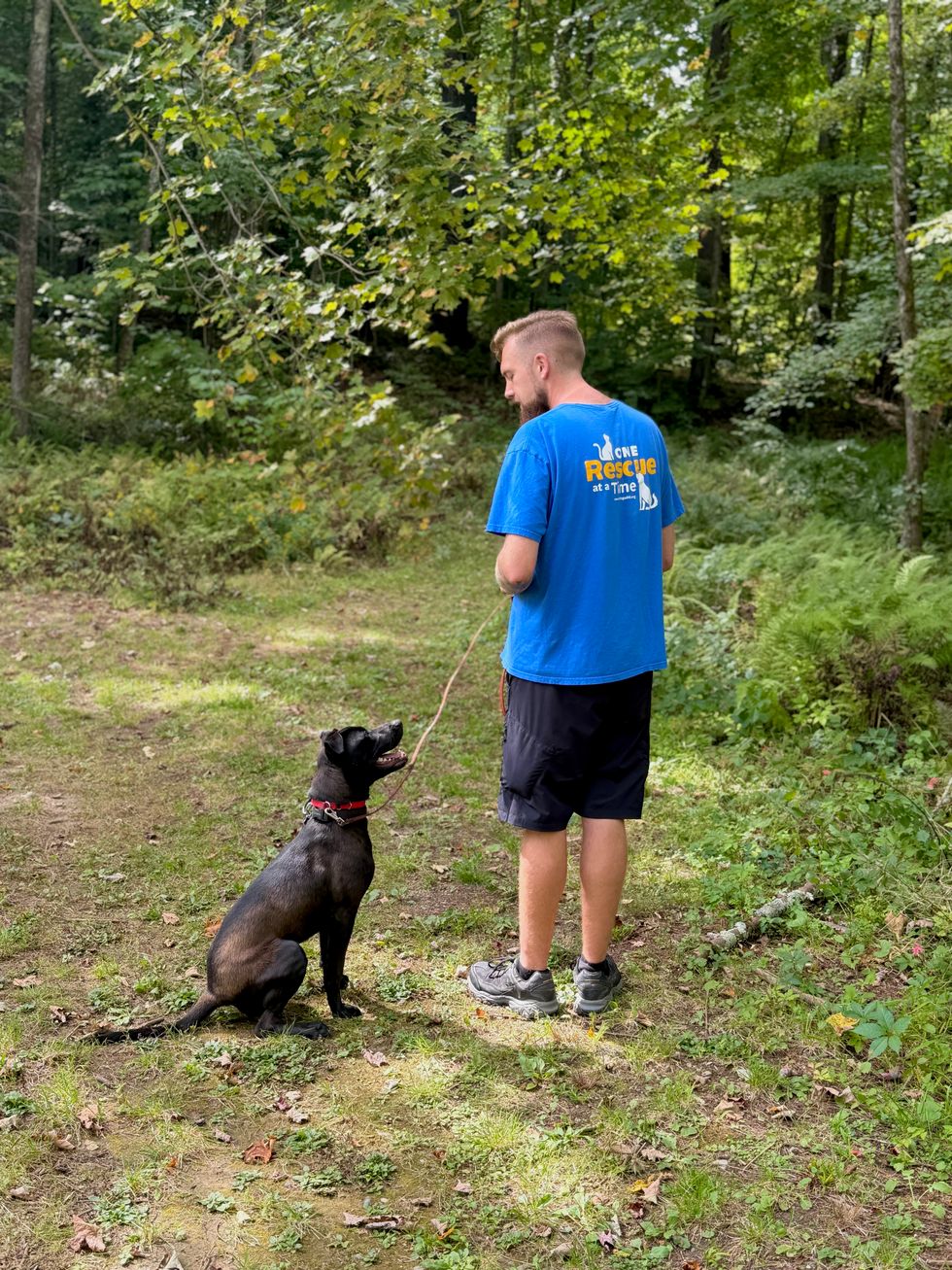 Michael DeBarba, certified dog trainer working with Marsala.Jennifer Almquist
Prospective adopters fill out an online application with information about their household and veterinary and personal references.
The next step is for the prospective adopter and family members to meet the dog. If there is already a dog in the household, a meet-and-greet is scheduled so the dogs can get acquainted.
The animal care staff offers guidance based on its knowledge of each animal’s personality, needs and quirks to help families find the best fit.
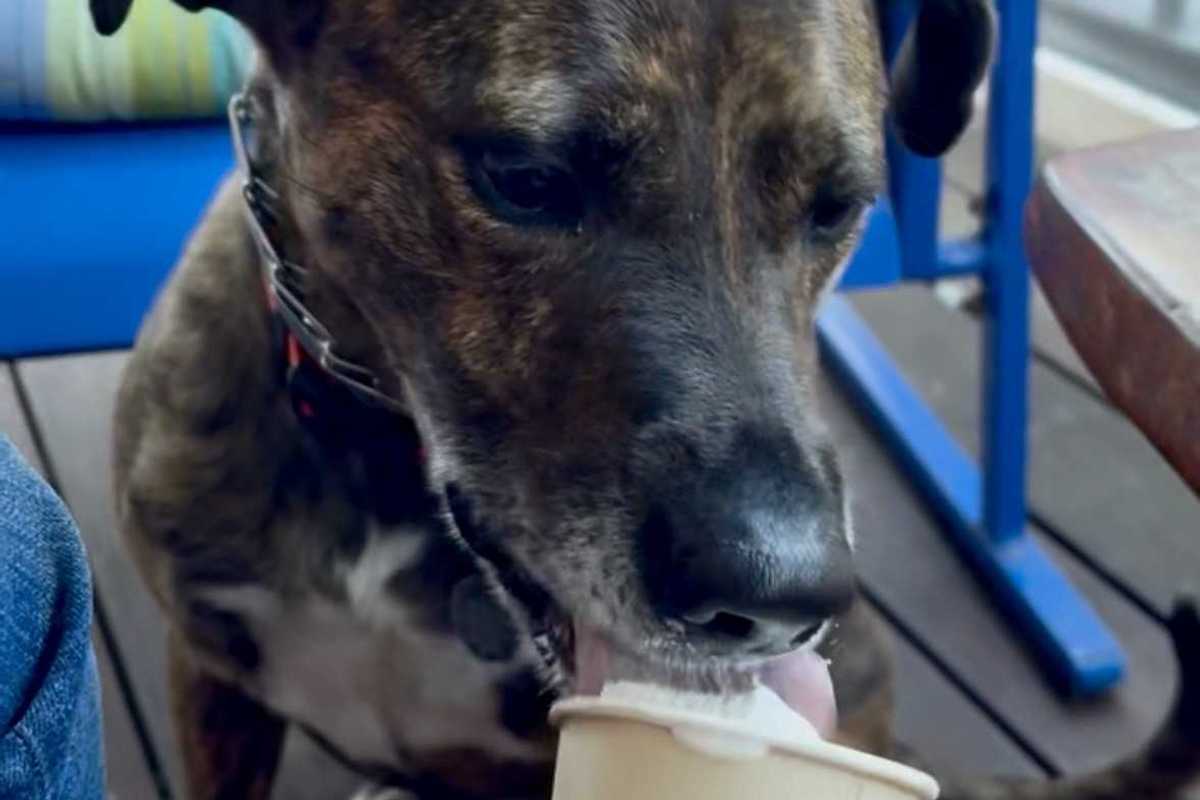
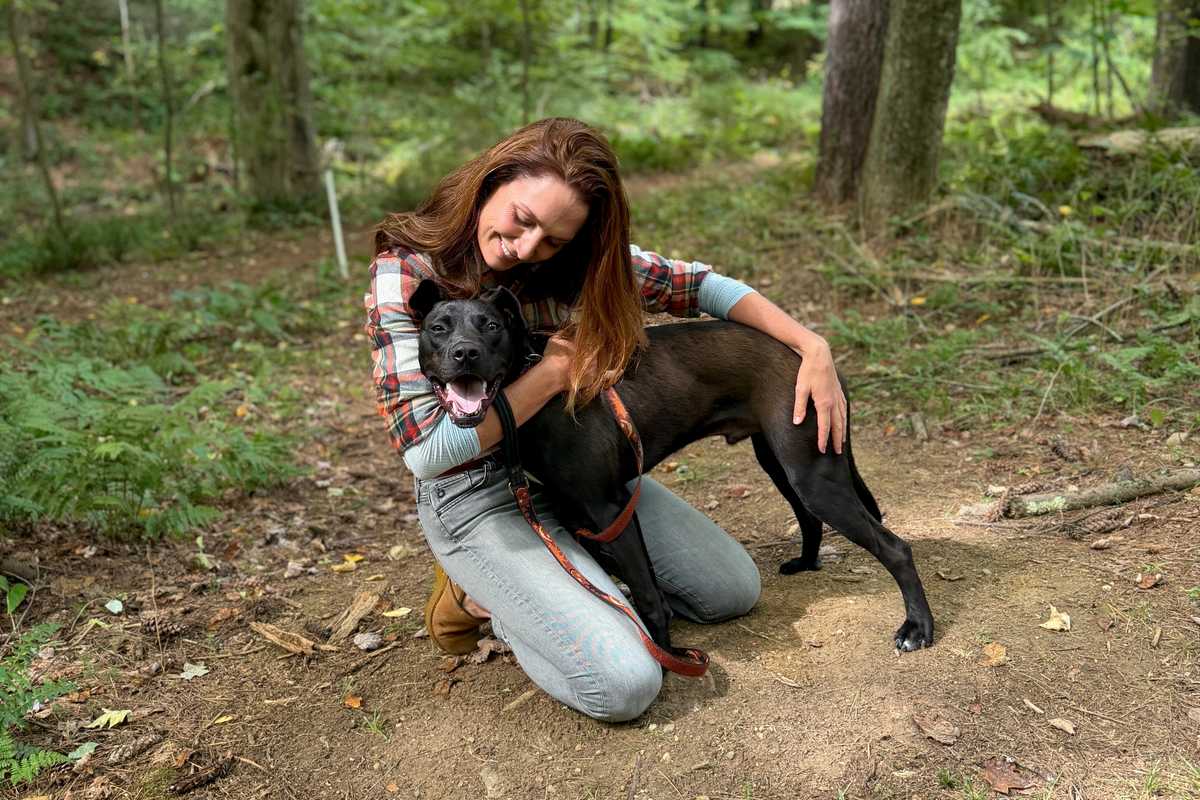 Marsala wins a heart.Jennifer Almquist
Once a match is made, the adoption contract outlines aftercare. Adopters agree to return the animal to The Little Guild if the adoption doesn’t work out. The organization’s commitment continues after adoption, with six months of free training and follow-up from staff to answer questions or address concerns.
“Please don’t pass Marsala by,” Lemelin said. “He loves people and other dogs. He’s a lap dog who lives for snuggles, cuddles and face kisses. Marsala deserves a family, a soft bed and a lifetime of being chosen.”
To find out about Marsala and other rescue dogs and cats, visit littleguild.org

Want more of our stories on Google? Click here to make us a Preferred Source.
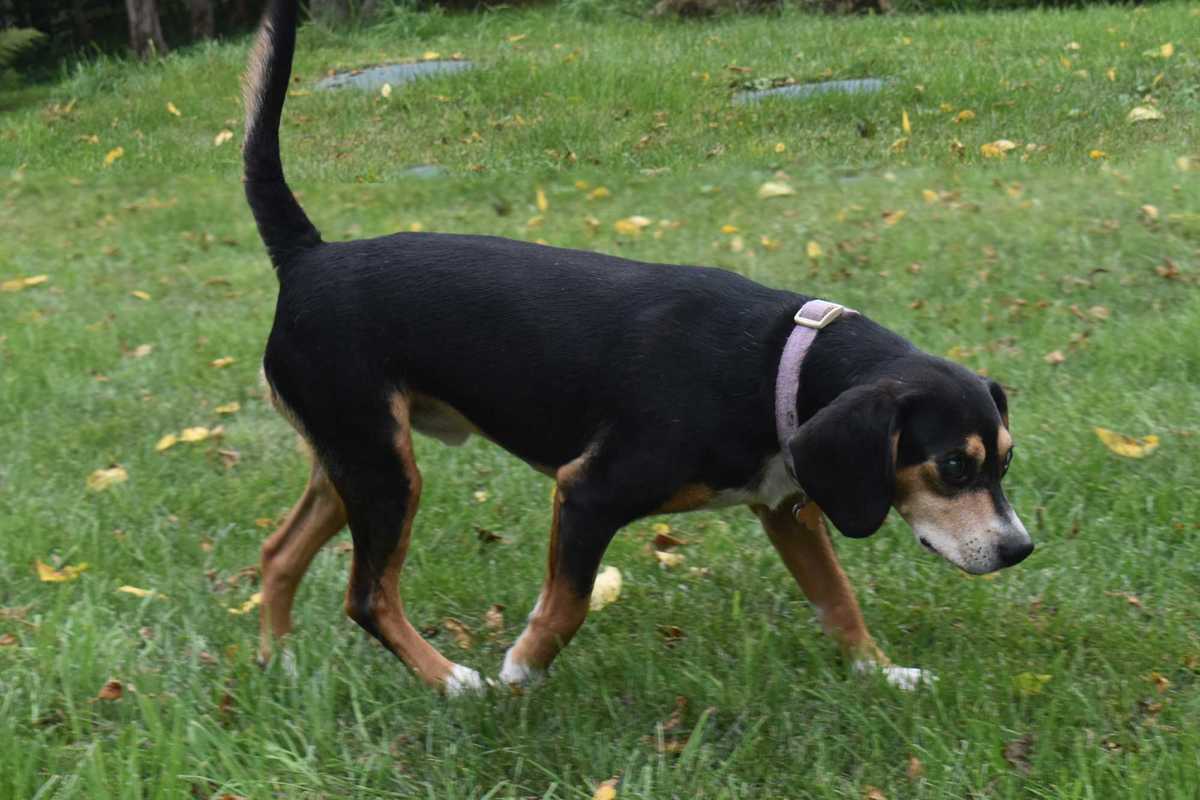
Sampson, a playful and independent blind hound mix, explores the rescue’s large yard.
Though she takes in dogs of all ages, including some with disabilities — and one resident cat — the rescue’s motto is “Giving old dogs new lives.”
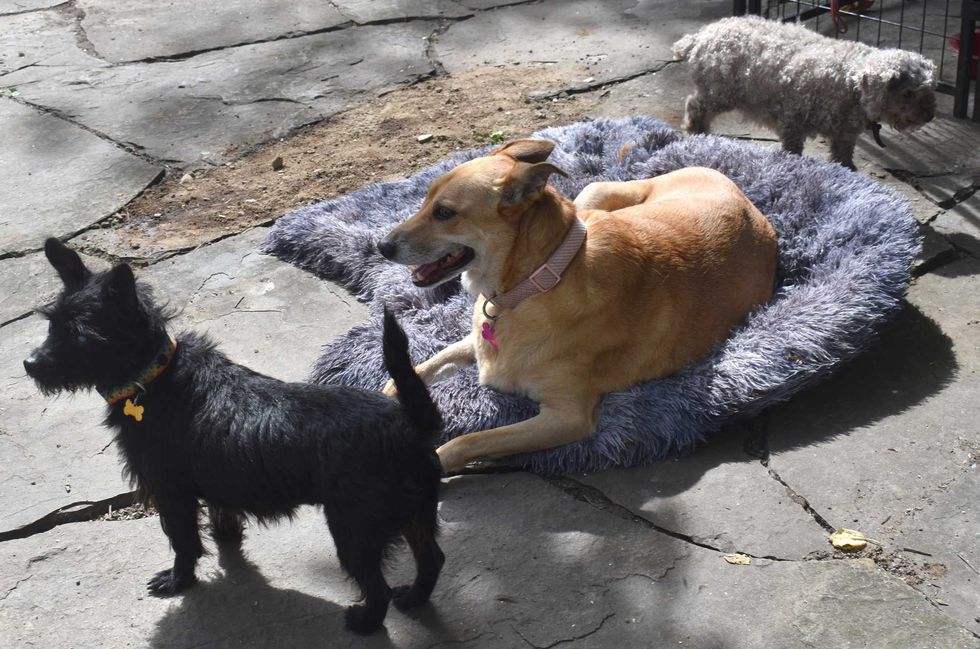 Sadie, center, a Carolina dog, plays with her friend Negra, a terrier mix. Bella Linda, the small poodle, has since been adopted.L. Tomaino
Sadie, a sweet Carolina dog, was the first to greet visitors.
“She could really use a home,” Meade said.
Then came Bonnie and Clyde, rat terriers; Negra, a small terrier mix; Sampson, a blind hound mix; and Jay Z, a terrier mix who was emaciated when Meade took him in and has since filled out, with fur regrowing over previously bald patches. Wesley, a young, shaggy mix whom Meade calls “a very good boy,” is also in need of a home.
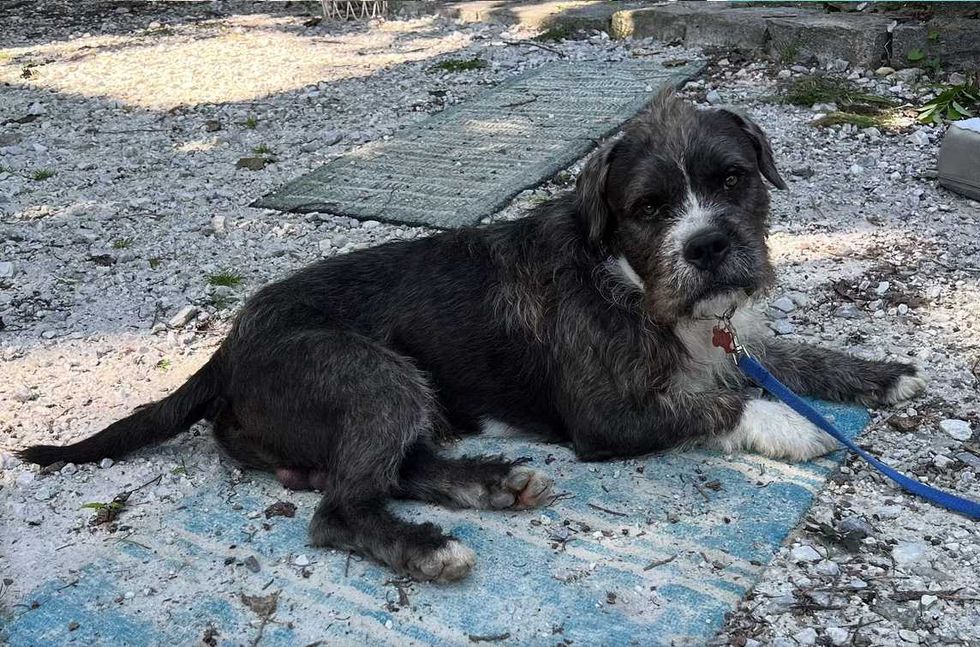 Wesley, a young, exuberant mix, is looking for an active home.L. Tomaino
Meade began rescuing dogs after going to Waterbury to adopt one and learning that, by the end of the three-day weekend, the dogs she was looking at would be euthanized to make room for others.
She went home and started her rescue in New Preston, Connecticut. After five years there, she moved to California, where she rescued dogs from overcrowded pounds for 13 years.
Meade, a busload of dogs and her cat moved back to the Northeast a little more than a year ago.
Ninety-nine percent of the dogs at the rescue come from pounds, both locally and in California and New York City.
“We are more than happy to place dogs with older people, and we are also willing to give support after the adoption,” Meade said, noting that some rescues will not adopt to people over 60.
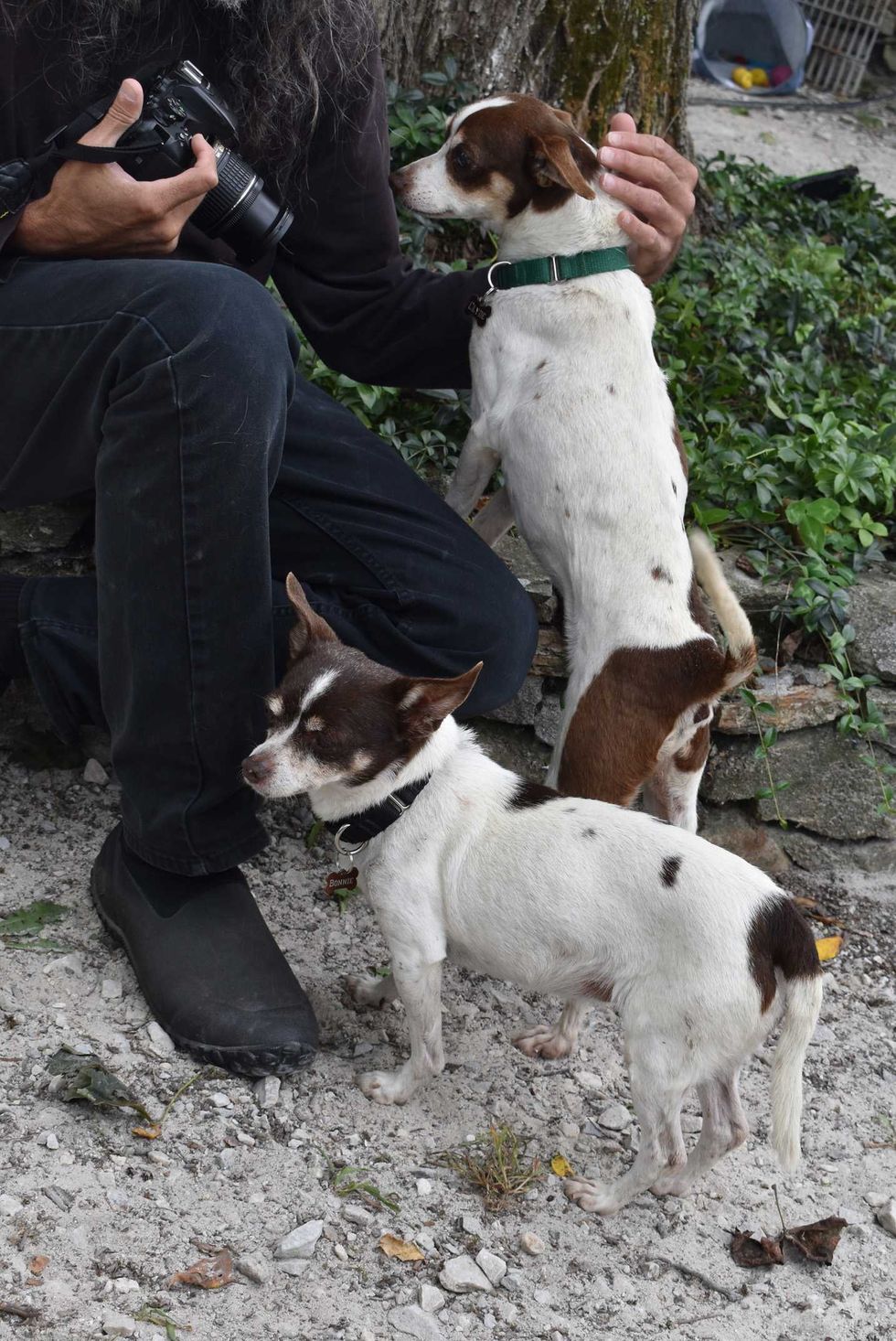 Bonnie and Clyde, an affectionate terrier pair.L. Tomaino
For those who cannot adopt, the rescue needs donations of old blankets, dog and cat food, cleaning supplies, puppy pads and dog treats. Monetary donations are also welcome and can be made through the rescue’s website. Meade also welcomes volunteers to help with the dogs.
Contact Meade at 805-239-4004, 860-866-7986 or 4dots@att.net to arrange a visit or drop off donations. For available dogs and more information, visit meadecaninerescue.org.
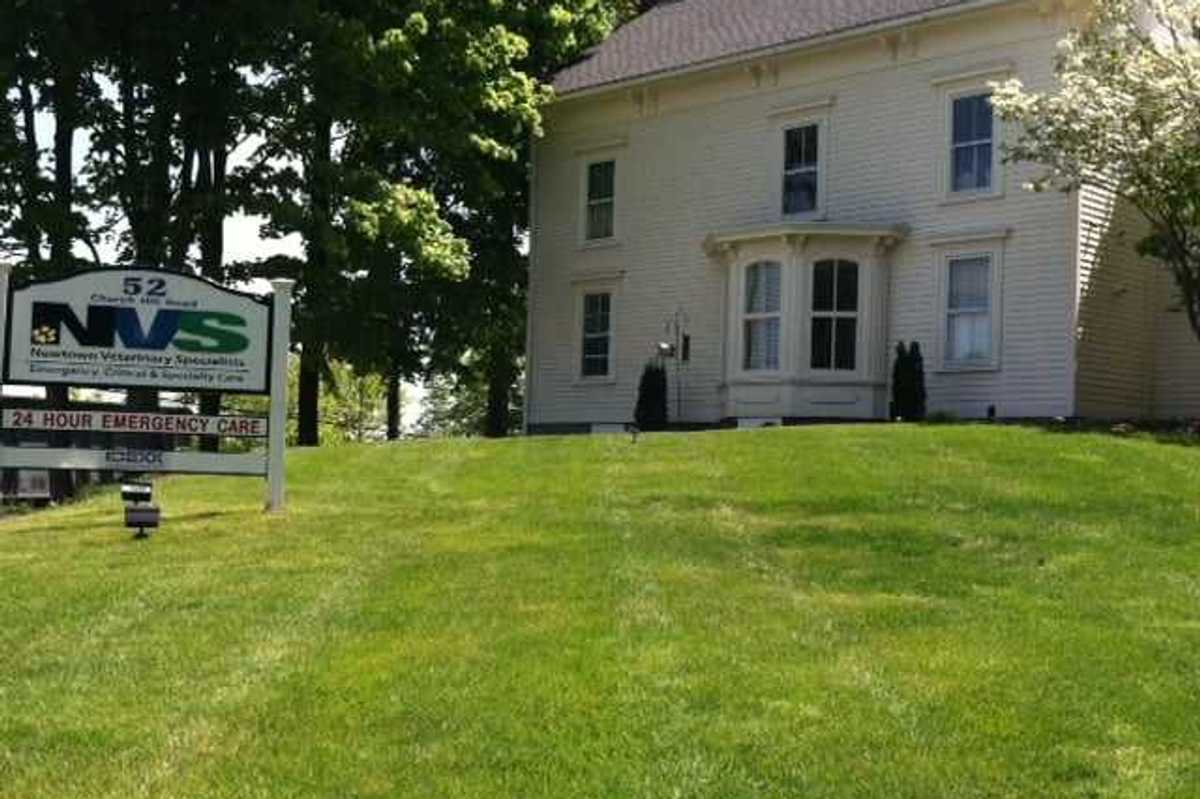
Newtown Veterinary Specialists
For Berkshire County residents, VCA All Caring Animal Hospital, 440 Stockbridge Road in Great Barrington, can be a nearby first call. The full-service hospital offers diagnostics and hospitalization and asks clients with an emergency or a pet requiring immediate attention to call rather than use its online contact form. It is not a 24-hour emergency hospital, however. Current hours are 7:30 a.m. to 5 p.m. Monday through Friday and 8 a.m. to 1 p.m. Saturday. It is closed Sunday. Call 413-528-8020.
Poughkeepsie also has several options for urgent care. Creature Comforts Animal Hospital, 64 Pine St., is a full-service veterinary hospital offering emergency and critical care during regular business hours. The hospital treats dogs and cats as well as birds, reptiles and other exotic pets. Hours are 9 a.m. to 8 p.m. Monday, 9 a.m. to 6 p.m. Tuesday through Friday and 9 a.m. to 2 p.m. Saturday. It is closed Sunday. For after-hours emergencies involving dogs and cats, the hospital refers patients to regional emergency facilities. Call 845-625-2474.
Community Animal Care, 269 Titusville Road, offers urgent and emergency care during operating hours and asks pet owners to call ahead. Regular hours are 8 a.m. to 6 p.m. Monday through Thursday, 8 a.m. to 5 p.m. Friday and 8 a.m. to 1 p.m. Saturday. Urgent care is available daily by calling ahead, with extended hours until 9 p.m. Tuesdays and Thursdays. The practice also offers after-hours veterinary triage by video to help owners determine whether a pet can safely wait or should be taken to a 24-hour facility. Call 845-471-7459.
When an animal needs care in the middle of the night, on a holiday or for a potentially life-threatening condition, the options become more limited.
Guardian Veterinary Specialists, 4 Hardscrabble Heights in Brewster, is a 24-hour emergency and specialty hospital, open seven days a week, 365 days a year. Its emergency department is staffed around the clock, with on-site imaging and laboratory services. No appointment is necessary for an emergency, although calling ahead is encouraged when possible. Call 914-704-3400.
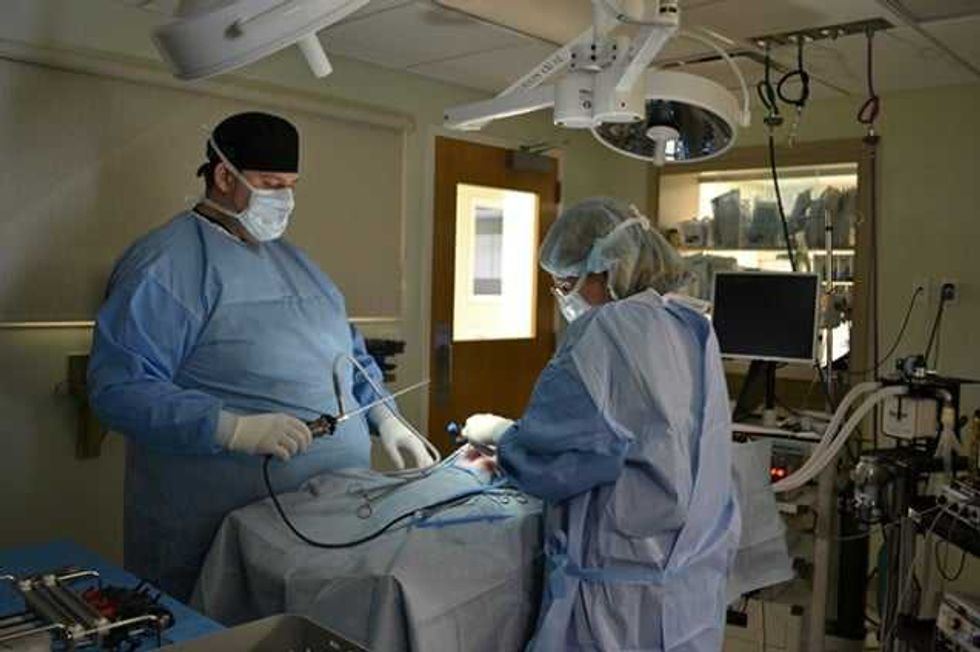 Provided
Newtown Veterinary Specialists, 52 Church Hill Road in Newtown, Connecticut, also provides emergency care 24 hours a day, seven days a week, including holidays. No appointment is required for emergency care, although the hospital recommends calling ahead when possible. Call 203-270-8387.
Pet owners should remember that emergency veterinary hospitals operate much like human emergency rooms in that patients are triaged according to the severity of their condition, so animals with less critical problems may have to wait.
The best preparation is simple. Keep the number of your regular veterinarian and at least one 24-hour emergency hospital in your phone, and know roughly how long it will take to get there. If circumstances allow, call before leaving home to confirm where your pet should be seen.
When something goes wrong at 10 p.m. on a Sunday, knowing where you’re headed can make a frightening situation a little less overwhelming.
Want more of our stories on Google? Click here to make us a Preferred Source.