Thank you!
Your support is sustaining the future of local news in our communities.

The bear necessities of living in bear country

Local Matters

The bear necessities of living in bear country

A bear outside Cornwall Consolidated School in West Cornwall.

D.H. Callahan
Take down bird feeders when bears are active. Secure garbage cans left outside, and never leave pet food or trash on porches, screened-in or otherwise.

This here is bear country. In fact, Connecticut has an unusually high rate of bear home entries compared with neighboring states. So far this year, the state has documented more than 60 home entries, and bears have been spotted in all 169 towns and cities.

Bears are also part of life in neighboring Dutchess County. But don’t worry. It’s not as bad as it sounds.

The first thing to know is that we only have black bears round these parts. Black bears are generally not aggressive toward humans, although they are wild animals and can behave unpredictably. Even in autumn, when bears are actively bulking up for hibernation, attacks on humans are very rare. Luckily, the Connecticut Department of Energy and Environmental Protection, or DEEP, has tips and tricks for living safely and comfortably in bear country.

If you see a bear from your car, stay inside and enjoy nature’s majesty from a safe distance. Give the bear plenty of room and never approach it.

If you encounter a bear while outside, additional caution should be taken. Do not approach or corner it. DEEP recommends “hazing,” or scaring a bear away, in certain circumstances.

Leave the bear alone if you are in its habitat, it is already running away or climbing a tree, it is a lone cub, or scaring it could drive it toward people, dogs or traffic.

If a bear lingers in your yard or another developed area, however, hazing may be appropriate, but first get children and pets inside.

The best way to scare a bear is to make eye contact, get big and get loud. If you have a whistle or air horn, use it. Pots and pans can also do the trick.

Barring those instruments, your hands and voice can work wonders. Clap loudly and yell firmly.

If a bear enters your house, keep your distance and back away. Next, open as many doors and windows as possible to give the bear an easy escape route. Again, do not approach the bear.

Making sure your home is not actively attracting bears in the first place is even better. Take down bird feeders when bears are active. Secure garbage cans left outside, and never leave pet food or trash on porches, screened-in or otherwise. And make sure you pack away those pick-a-nic baskets.

Contact wildlife authorities if a bear is highly agitated, sick or injured, approaches people or does not leave after hazing. In Connecticut, call DEEP’s 24-hour emergency dispatch line at 860-424-3333. In Dutchess County, contact the New York State Department of Environmental Conservation at(518)402-8044.
Latest News

A life reshaped by clay in “Matin”

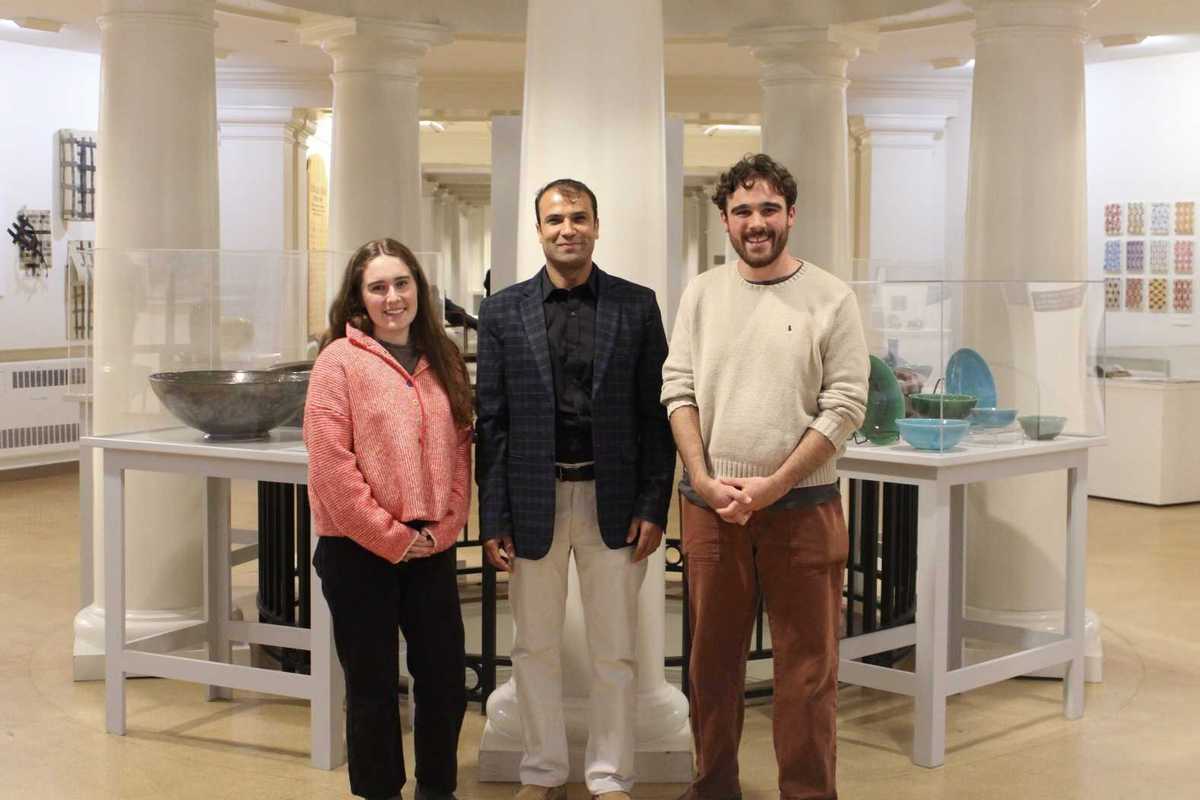
Left to right: Hannah Wheeler, Matin Malikzada and Yonah Sadeh.

D.H. Callahan

On Monday, Oct. 26, a group of students, teachers and local residents gathered at the Hotchkiss School in Lakeville for a screening of the new short documentary “Matin.” The film tells the story of Matin Malikzada, a seventh-generation Afghani potter making a new life in New Milford, Connecticut. The film was made by local filmmaker Yonah Sadeh, creator of the Video Wall at the David M. Hunt Library, and Berkshires-based potter Hannah Wheeler, who were both present for the screening, along with Malikzada himself.

As a member of the seventh generation of his family to master the art of pottery, Malikzada had done things the way his family had for over a century. Istalif, the village where his family has lived for generations, was known throughout Afghanistan for its pottery, with wares sent across the country for use as everyday cups, bowls, plates and other vessels. The pottery-making families of Istalif gathered clay from the same mountain, about 30 to 45 minutes away by donkey. Every July, they would head north toward the Uzbekistan border to gather ishkar, a plant they processed by hand to make their signature glazes.

Keep ReadingShow less
Meg Sher finds her calling among the stacks

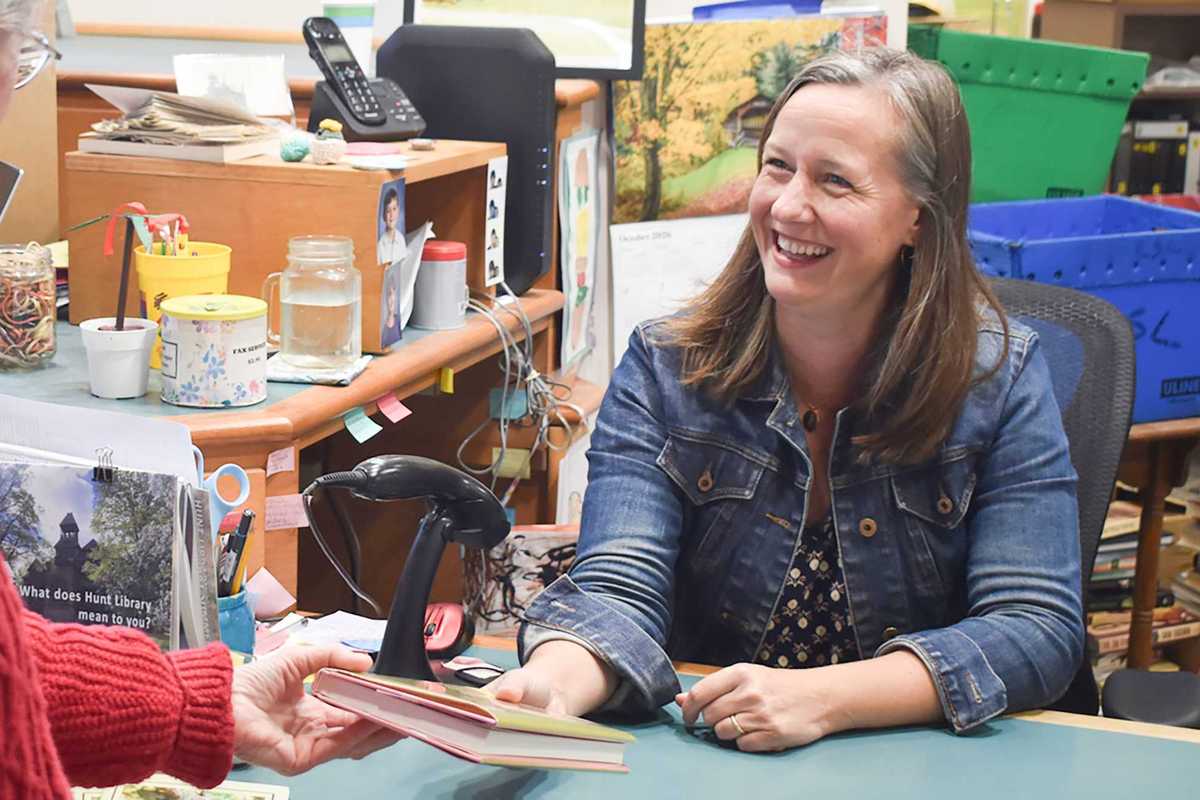
Meg Sher, executive director of the David M. Hunt Library in Falls Village.

L. Tomaino

When Meg Sher came to Falls Village in 2006 from Old Lyme, Connecticut, where she grew up, she never imagined she’d someday be the executive director of the David M. Hunt Library.

Although, in hindsight, perhaps it makes sense.

Keep ReadingShow less
Crescendo’s 23rd season speaks to the heart and mind

Christine Gevert, founding artistic director of Crescendo, conducts the audience at a performance.

Steve Potter

For Christine Gevert, founding artistic director of Crescendo, music from centuries past is anything but a relic. It is a living, breathing art form, full of drama, emotional complexity and, occasionally, surprises. As the regional choral and period-instrument ensemble launches its 23rd season, Gevert is once again bringing forgotten masterpieces into the present.

“Early Music has been my lifelong passion and the focus of my specialization in Europe and South America,” Gevert said. “Bringing this repertoire to our audiences in a nuanced way that does justice to its incredible depth, intensity, and beauty is deeply important to me.”

Keep ReadingShow less
google preferred source

Want more of our stories on Google? Click here to make us a Preferred Source.

Close Encounters with Music celebrates 35 years of musical discovery

Close Encounters with Music’s 35th season opens with “Saluting the Clarinet” featuring clarinetist Alexander Fiterstein.

Provided

For 35 years, cellist Yehuda Hanani has been inviting audiences to experience classical music in unexpected ways. As founder and artistic director of Close Encounters with Music, Hanani has built a concert series that goes beyond the music itself, exploring connections to literature, history, politics and the human experience.

This year, Close Encounters celebrates its 35th season with “Celebration & Discovery,” a seven-concert series that opens Sunday, Nov. 1, at the Mahaiwe Performing Arts Center in Great Barrington.

Keep ReadingShow less
Shinbone Alley brings spooky songs to Spencertown

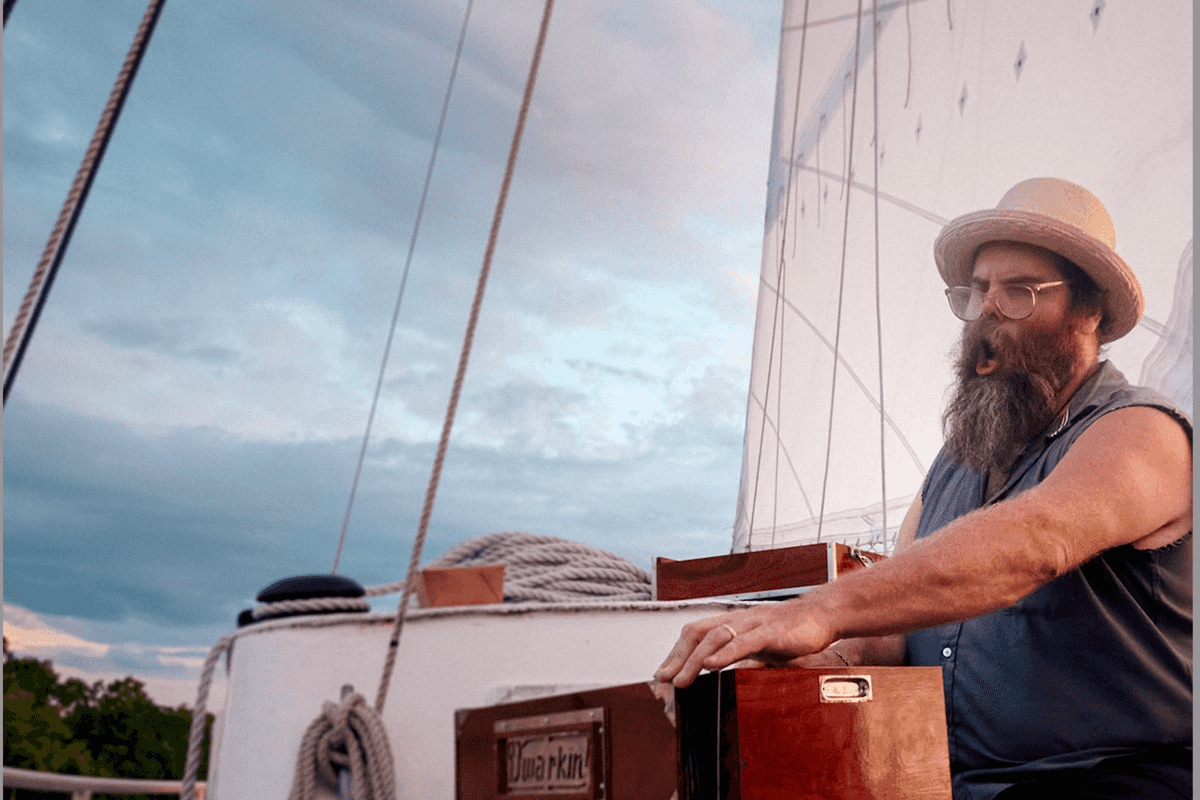
Seeing isn’t always believing. Sometimes it’s the lack of a defined picture that can be the most compelling. And when Alex Harvey of Shinbone Alley sings his supernaturally charged sea shanties and street ballads, the unseen will be downright scary. On Oct. 30, the historically inclined storyteller and performer will create a spooky evening of forbidden tales and yarns through a carefully chosen series of songs at Spencertown Academy of Arts.

The repertoire for the performance is a bit fraught. Over the years, Shinbone Alley has explored the world of folklore through music. Though the group usually features two musicians, Harvey, a multi-instrumentalist and singer, will be performing solo. That is, of course, unless you include the spirits.

Keep ReadingShow less
Malian blues and Moroccan Gnawa meet in Sheffield
Vieux Farka Touré
Proivded

Desert winds rarely blow into the Berkshires, but on Nov. 5, they will carry the Malian blues and Moroccan Gnawa music to Race Brook Lodge.

That evening, Malian guitarist Vieux Farka Touré, often called “the Hendrix of the Sahara,” and Moroccan musician Samir LanGus will play at the lodge’s Event Barn in Sheffield, Massachusetts, at a benefit for the foundation Touré directs.

Keep ReadingShow less
google preferred source

Want more of our stories on Google? Click here to make us a Preferred Source.

google preferred source

Want more of our stories on Google? Click here to make us a Preferred Source.