


Region One could follow Hotchkiss lead on energy plant

LAKEVILLE — The Sharon Energy and Environment Commission is taking the lead on trying to persuade local towns and schools to convert to the new, efficient system of energy production now in use at The Hotchkiss School.

Hotchkiss (an independent co-ed boarding school for grades nine to 12) is on a quest to be carbon neutral by 2020. As part of that effort, the school spent roughly $14 million to build a biomass plant that provides heat for most of the campus (an area that is in excess of a million square feet).

On Friday morning, July 24, committee members met in the Mars Athletic Center’s parking lot and were joined by Sam Herrick, business manager for the Region One School District; Frank Perotti, who is on the Standing Building Committee for Housatonic Valley Regional High School; and Steve Hassig, head custodian for Sharon Center School. 

Committee member and Sharon resident Roger Liddell led the tour, along with John Tuke, who is Hotchkiss’ chief financial officer, and Dave D’Andrea, the school’s senior engineer. 

The tour began in the athletic center, with a visit to the two massive oil burners that were installed there about 15 years ago. They were used in summer, mainly for the swimming pool and “domestic hot water” uses such as washing machines and the showers in the locker rooms.

Those two units are now used only for back-up. 

The work they used to do is now mainly done by a diminutive and very efficient machine called the Ilios heat pump, which is about the size of a medium  household closet. 

The water heater is powered by a modified Ford Taurus engine that runs on about $10,000 of propane per year (compared to about $30,000 worth of heating oil that was needed to run the two boilers). 

Liddell said, “This is not ‘heroic’ technology. It’s a car engine.”

“And it’s very small,” said Sharon Energy and Environment Committee member Kathleen Fuhr. “Could you find a place for this at the high school?”

“We could find a place for this,” Herrick said.
“And it’s in our capital plan to replace the boilers there.”

The heat pump is only used in summer and the shoulder seasons, when the central biomass plant is turned off (in April) and until it is turned on again (in October).

The group then went over to take a tour of the biomass facility, housed in the wavy-topped building off Route 41, beside the golf course.

Tuke explained that the decision to build the new facility was made because the school’s old central heating plant “was at the end of its life.”

It was also located next to a dormitory. The school decided to see this as an opportunity: It could build the most efficient possible plant and site it in the most intelligent location.

After extensive research, the school decided to build a biomass facility that burns wood chips. 

D’Andrea said, in response to a question, that wood pellets are a little easier to store and handle than wood chips but they’re also more expensive and they are sometimes treated with chemicals. 

Wood chips are simpler, cheaper and cleaner. The school has several suppliers of chips, but one of the major vendors is J&J Lumber in Dover Plains, N.Y. 

The chips cost, on average, $41 a ton. A single ton has a BTU output that is equivalent to 59 gallons of No. 2 heating oil. The cost savings equal about $600,000 to $700,000 a year, Tuke said.

When asked why the small and efficient water heat pump is not used all year, D’Andrea said, “The water heater uses propane, which is more expensive than the wood chips.” 

“And you can’t use that little heat pump to substitute for the wood-fired boilers and the chillers needed to cool the hockey rinks,” Tuke said.

The decision was made to put the plant in a very central and also very visible location, not only because it efficiently connects all the buildings but also because, Tuke said, “it’s an educational opportunity.”

Centerbrook Architects, an award-winning firm based in Essex, Conn., designed the plant (as well as  the school’s Katherine M. Elfers Hall and Esther Eastman Music Center).

The facility itself doesn’t require a beautiful exterior, Tuke noted, but “the school chose to make the investment in an esthetically attractive building given its prominent location and because we view it not just as a heating plant but as a classroom.”

He estimated that the technology for the biomass facility cost about $3 million. The other costs were for pipes to carry the heat throughout the campus, and for the design and construction of the building. He also estimated that a traditional central heating system would have cost about $11 million.

Latest News

Rocking for a cause at Infinity Hall

Rocking for a cause at Infinity Hall

Blues musician James Montgomery

Provided

When the Rock n’ Roll Circus rolls into Infinity Music Hall in Norfolk on Saturday, April 11, it will bring together an all-star lineup of musicians and a mission that reaches far beyond the stage.

Presented by Rockin’ 4 Vets, this concert will benefit the United Way of Northwest Connecticut’s “Stock the Shelves” program, which supports food pantries across the region. The United Way, part of a national network founded in the late 19th century, has long worked to mobilize communities in support of local health, education and financial stability initiatives, efforts that continue today through programs like Stock the Shelves, which helps ensure families have access to essential food resources.

Keep ReadingShow less

Robert Donald Stevens

Robert Donald Stevens

MILLERTON — Robert Donald “Bob” Stevens, 63, a lifelong area resident died unexpectedly on Monday evening, March 30, 2026, at his home in Millerton, New York. Bob had a 40-year career with the Town of North East Highway Department where he currently served as the Town of North East Highway Superintendent for nearly two decades. One of Bob’s proudest accomplishments was seeing the completion of the new Town of North East Highway Department Facility on Route 22 in Millerton.

Born Dec. 20, 1962, in Sharon, he was the son of the late Kenneth W. and Roberta K. (Briggs) Stevens. Bob was a 1981 graduate ofWebutuck High School in Amenia, he also attended BOCES Technical School in Salt Point, New York, while enrolled at Webutuck. Bob served his community for many years as an active member of the Millerton Fire Company and was a longtime member of the New York State Association of Town Superintendents of Highways, Inc., where he always enjoyed attending highway training school in Lake Placid. Bob really enjoyed traversing the local roadways in Millerton in his iconic orange pick-up truck, and could often be seen at all hours of the day and night making sure that the main roads and side roads were in the best possible condition for his friends and neighbors. Bob loved the Town of North East and he will be dearly missed by those he served throughout his decades long career. In his spare time, he enjoyed texting with his son Robert, time on the Hudson River and rebuilding engines for many friends in his younger years.

Keep ReadingShow less

Lucille A. Mikesell

Lucille A. Mikesell

CANAAN — Lucille A. Mikesell passed away peacefully on April 3 with family at her home in Canaan Valley, Connecticut. She was 106.

Born on Sept. 5, 1919 in Cedar Rapids, Iowa, she was the daughter of William Harvey Cohea, of Mason, Illinois, and Lillian Amanda Williams of Morley, Iowa. She graduated from Roosevelt High School in Cedar Rapids in 1937, and married her husband, Ralph J. Mikesell in 1938.

Keep ReadingShow less
google preferred source

Want more of our stories on Google? Click here to make us a Preferred Source.
In a time of fear, John Carter revives a network of “neighboring”

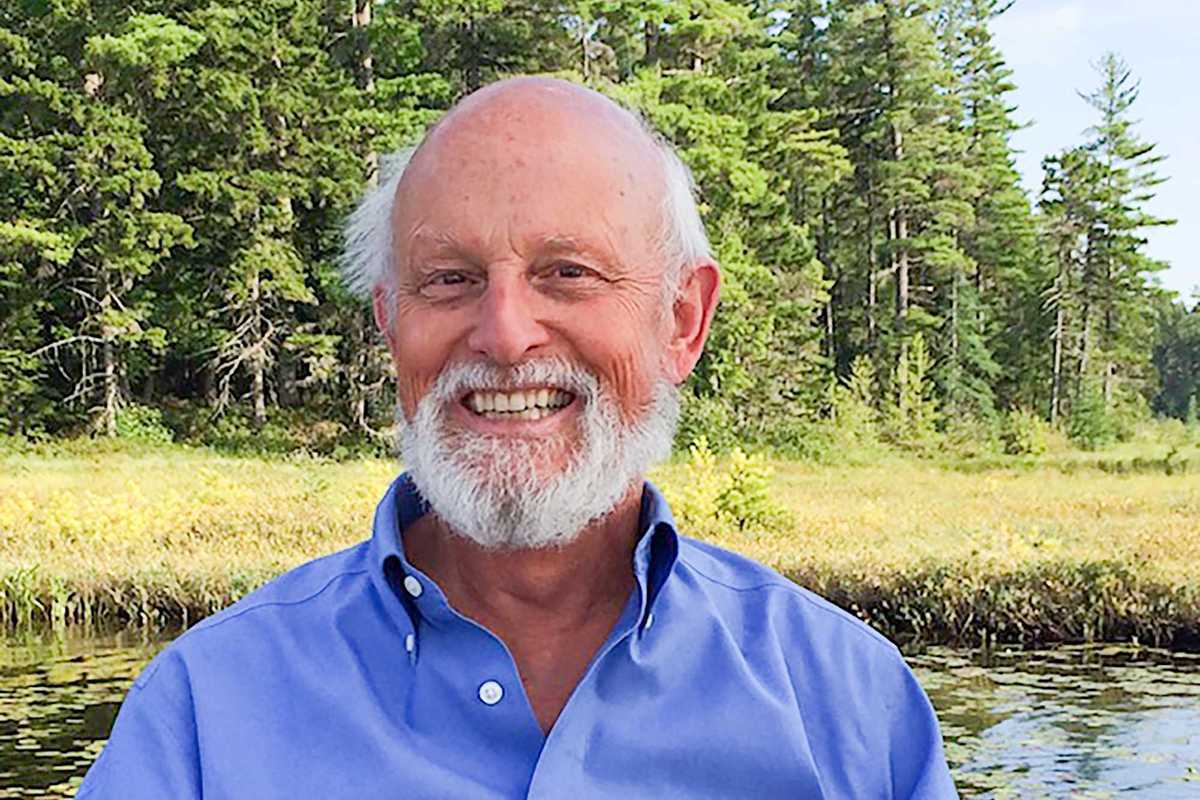
John Carter

Photo by Deborah Carter
"The human cost of current ICE practices is appallingly high."
John carter

John Carter, who served as rector of St. John’s Episcopal Church in Salisbury from 1999 until his retirement in 2014, launched the first iteration of the nonprofit Vecinos Seguros 1 (Safe Neighbors) in 2017 by introducing a misa, a Spanish-language worship service, at Trinity Lime Rock Episcopal Church.

In December 2024, amid concerns over a renewed federal crackdown on immigrants, a group of volunteers revived the program as Vecinos Seguros 2 (VS2). According to its 2025 annual report, the initiative “created a network of trusted allies to help those who may be targeted by immigration enforcement agents,” taking a low-key approach that prioritizes in-person connections.

Keep ReadingShow less

Anthony Louis Veronesi

Anthony Louis Veronesi

EAST CANAAN — Anthony Louis Veronesi , 84, of 216 Rocky Mountain Way in Arden, NC formerly of East Canaan, died March 26, 2026 at the Solace Center in Ashville, NC.Anthony was born December 14, 1941 in North Canaan, CT son of the late Claudio Serene and Genevieve Adeline (Riva) Veronesi.

Following graduation from Housatonic Valley High School in Falls Village, Anthony worked at the former Pfizer Company in Canaan for a short time before entering the US Air Force.He served for four years in active duty rising to the rank of Sergeant.He was released from active duty on April 9, 1968.After leaving the Air Force,Anthony worked at the Becton Dickinson Company in Canaan.He was transferred to North Carolina and retired from BD.Anthony then began his career for the United States Postal Service, for many years as a mail handler, before his retirement from the Postal Service.

Keep ReadingShow less

Joan Tuncy

Joan Tuncy

SALISBURY — Joan Tuncy, 92, passed away peacefully on March 27, 2026, at Noble Horizons.

Born on Oct. 27, 1933, in Sharon, Connecticut, she was the daughter of the late Robert and Vera Bejean.

Keep ReadingShow less
google preferred source

Want more of our stories on Google? Click here to make us a Preferred Source.

google preferred source

Want more of our stories on Google? Click here to make us a Preferred Source.