Thank you!
Your support is sustaining the future of local news in our communities.

Residents donate to flood victims

NEW HARTFORD —   This past August, an unprecedented rainfall caused catastrophic flooding across large swaths of southern Louisiana, destroying homes and infrastructure and leaving over 100,000 people in need of emergency disaster relief, with many families and homes still waiting due to the incredible scale of destruction and damage.

On Friday, Sept. 9, a Federal Express truck arrived in the Livingston Parish, located just east of Baton Rouge, loaded with desperately needed supplies, ranging from freshwater to pet food to feminine hygiene products.

The truck had left East Hartford at the end of August, a little over one week after a heartfelt call to action from one man on social media began a scramble that brought people and communities from Windsor to New Hartford together.

Nicole Misko, children’s librarian and program director at Beekley Community Library, was on Facebook one day when a video caught her eye.

“It was just him, sitting at his desk at work, talking so frankly and sincerely to all his friends, anyone,” Misko said. “Trying to just motivate everybody and it was so beautiful. That’s when I picked up the phone, I’m like ‘Bill, what are you doing and how can I help you?’”

“Bill” is Bill Moore, a Simsbury resident and retired Marine who owns an East Hartford sporting goods store named Soccer N Moore. His message, recorded through Facebook’s live streaming video service, was a very simple one.

“The last time there was a flood down there, I really was bothered by the fact that we had American citizens that we couldn’t get food and water to in a timely fashion,” Moore said. “So when I saw this happen this time I said, ‘I’m going to do something about it.’”

He called the Department of Homeland Security, who put him in touch with relief-effort coordinators in Louisiana. Moore asked what items were most needed and how he could get them there.  

“We only had three days,” said Misko, “He was doing it really fast, because they needed relief like, immediately. On the first day, someone came in and put some water in the donation box in front of the library. And then one of our patrons is like, ‘Well this is terrible.’ So she went to Maradino’s Supermarket and purchased bottles of water to donate.”

As more people continued to come into the store for water, Peter Maradino, owner of Maradino’s Supermarket, started to donate items directly to the library. Misko said more and more people who heard the story and saw the library’s signs began traveling further afield to find needed supplies, and soliciting local businesses to donate whatever they could.

Pet food and supplies she specifically named as items that people went out of their way to bring in. Moore said he eventually sent almost 1,000 pounds of cat and dog food down to Louisiana.

“Everybody had the same message: ‘Great thing that we’re doing, glad we could help,’” said Moore. “And I heard over and over ‘Is there anything else we can do? Do you want me to go get more?’ I think a lot of people were really glad that we were collecting items that people were actually going to get, and be able to use, as opposed to donating money that you don’t know where the money goes to.”

Misko said the library contributed “10 to 20 big boxes” of water, along with a multitude of other necessities such as diapers, toothbrushes and soap. Moore came to pick up the items personally, and continued to travel all around the area to reach people who had collected items.

Moore said he thought all the people who donated truly understood, and felt a real and deep sympathy for those affected by the flood, despite the geographic or any other differences between them.

“I really feel strongly that this donation drive resonated with a lot of people who said ‘If that was me, I would wish that there was somebody in this country who would answer the call,’” Moore said. “I felt that it was necessary, and apparently my friends and customers did as well.”

Latest News

‘So Little to Do,’ so much to discover at James Barron Art

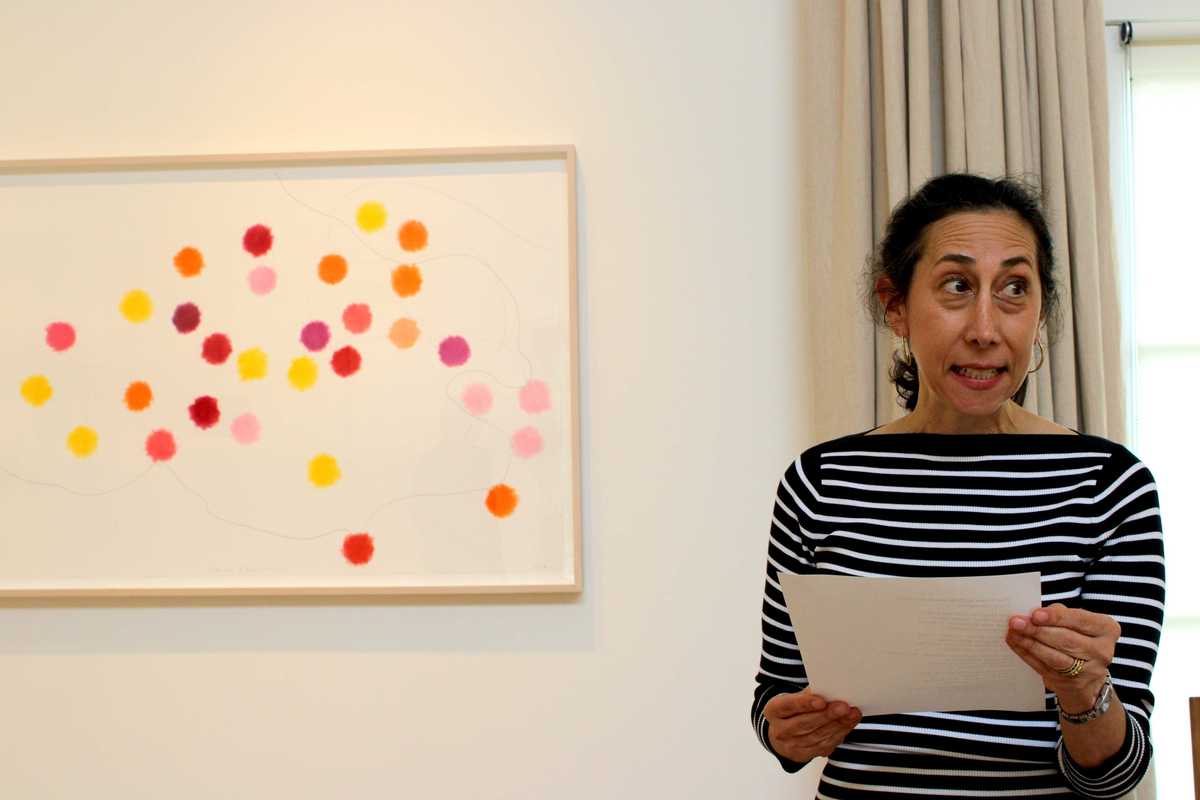
Curator Deborah Goodman Davis reads the Emily Dickinson poem “The Grass So Little Has to Do.” Spencer Finch’s “Following Three Bees (Zinnias)” buzzes in the background.

Photo by Natalia Zukerman

“The Grass Has So Little to Do,” on view at James Barron Art in Kent, takes its title from Emily Dickinson’s poem “The Grass So Little Has to Do,” written in 1862:

“The Grass so little has to do—
A Sphere of simple Green—
With only Butterflies to brood
And Bees to entertain—”

Keep ReadingShow less

Marina Kotchoubey is not a woodworker

Marina Kotchoubey is not a woodworker

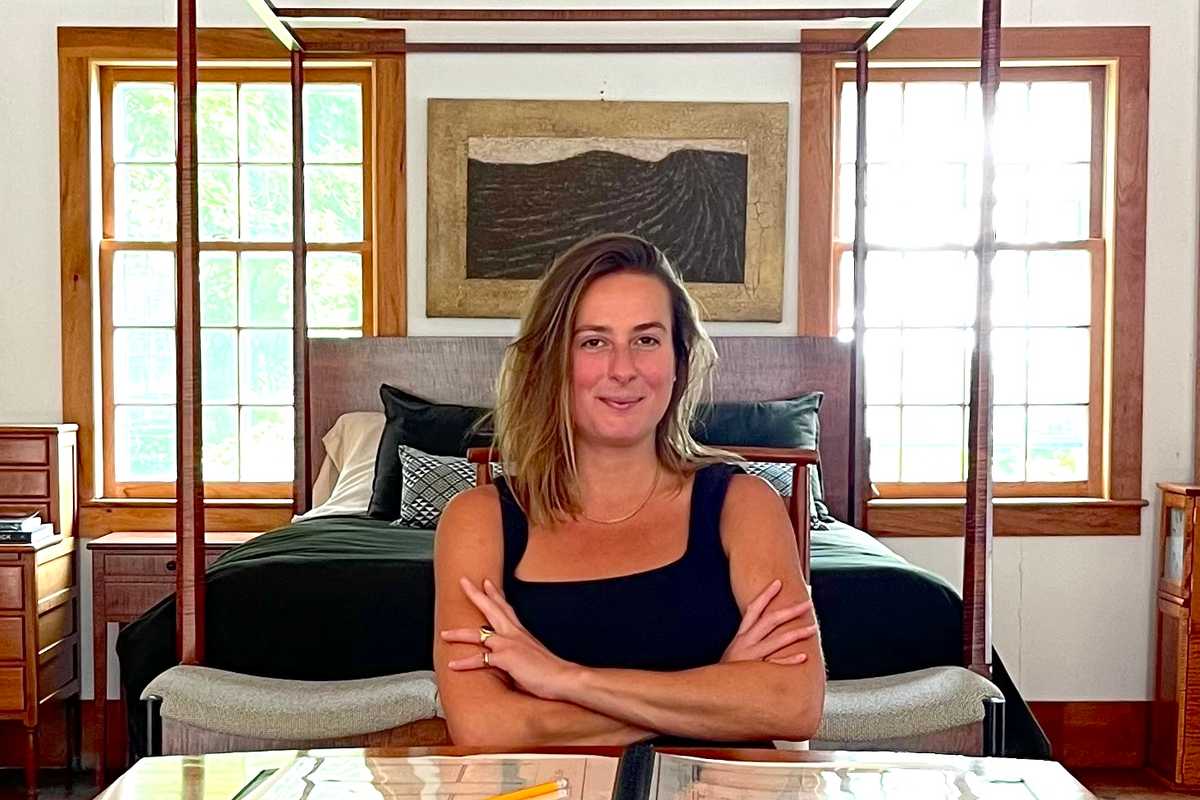
Marina Kotchoubey at the Ian Ingersoll Cabinetmakers showroom in West Cornwall.

Photo by D.H. Callahan

After 40-something years navigating the world of custom fine furniture, Ian Ingersoll was getting ready to retire. Starting off with a little dovetail stool that he sold at a shop in West Cornwall in the 1970s, he’d grown his skill and his business into something he — and the whole town — could be proud of. Shutting down that business was not an option.

Ingersoll built Ian Ingersoll Cabinetmakers, which produced mainly classical Shaker furniture, on passion: the passion he had to make a living through creative challenges and the passion of his employees, who all seem deeply in love with their craft.

Keep ReadingShow less
A legacy of giving at Norfolk Chamber Music Festival

One hundred and twenty years ago, Carl and Ellen Stoeckel commissioned New York architect E.K. Rossiter to design The Music Shed in Norfolk, Connecticut. After nearly a decade of entertaining their friends and neighbors with the finest music of the day, they built a permanent home for their beloved Litchfield County Choral Union.

The commission and full funding of the construction was not unheard of in an era when great fortunes led to public enrichment. Railroad tycoon John D. Rockefeller was instrumental in funding institutes of higher education. Steel baron Andrew Carnegie was building libraries all over the country, and famously said that a man who dies rich is a disgrace, challenging his peers to give their fortunes back to the people.

Keep ReadingShow less
google preferred source

Want more of our stories on Google? Click here to make us a Preferred Source.
Two unique exhibitions at Geary Gallery

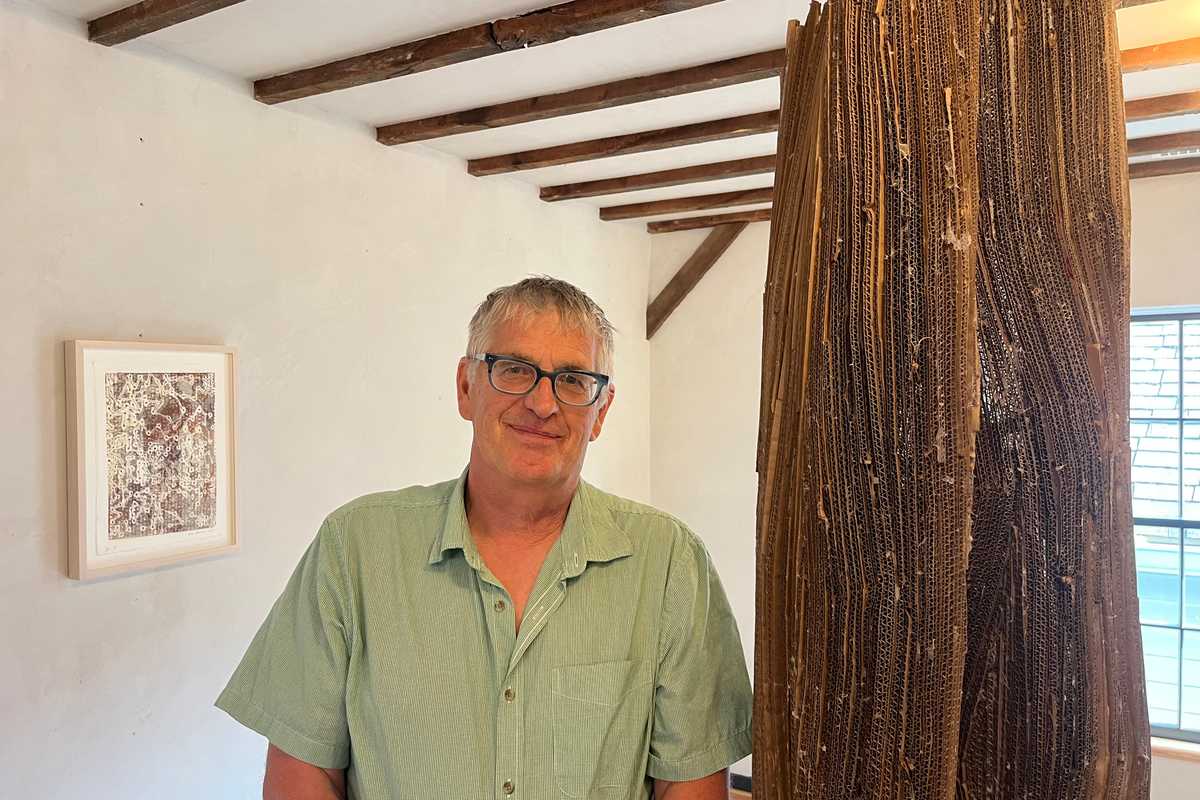
Henry Klimowicz with his sculpture, “Partial Pillar 1”

Photo by D.H. Callahan

On Saturday, Aug. 1, Geary Gallery opened its doors in Salisbury for two unique shows in its first- and second-floor gallery spaces. Art lovers flooded both floors over the course of the afternoon, giving the events a vibrant feeling that enhanced the importance of the art.

On the first floor is a show by Chicago-born, Colorado-based photographer Summers Moore, titled “Lobitos: Pueblo Fantasma,” or “Lobitos: Ghost Town.” The work centers around her daughter’s current hometown in Peru. Moore herself found a home away from home in Colorado in the mid-1980s and encouraged her children to seek out new places outside of their comfort zones.

Keep ReadingShow less

Writer’s retreat in the woods

Writer’s retreat in the woods

Participants in a 2024 Great Mountain Forest Woodland Academy workshop at Yale Camp.

Photo by Mike Zarfos

Great Mountain Forest (GMF) will host its first Nature Writing Retreat at the historic Yale Camp in Falls Village from Aug. 7-9, 2026. Writers of all levels are invited to draw inspiration from one of New England’s most notable forest landscapes. GMF envisions the retreat becoming an annual event celebrating writing, conservation and the relationship between people and forests.

This immersive three-day retreat reflects on the legacy of Hal Borland, the American writer and New York Times nature columnist whose work was deeply connected to this landscape. The retreat explores how wilderness shapes language, strengthens close observation and fosters environmental consciousness.

Keep ReadingShow less
From Cornwall to Rome, Adam Van Doren at Berkshire Botanical Garden

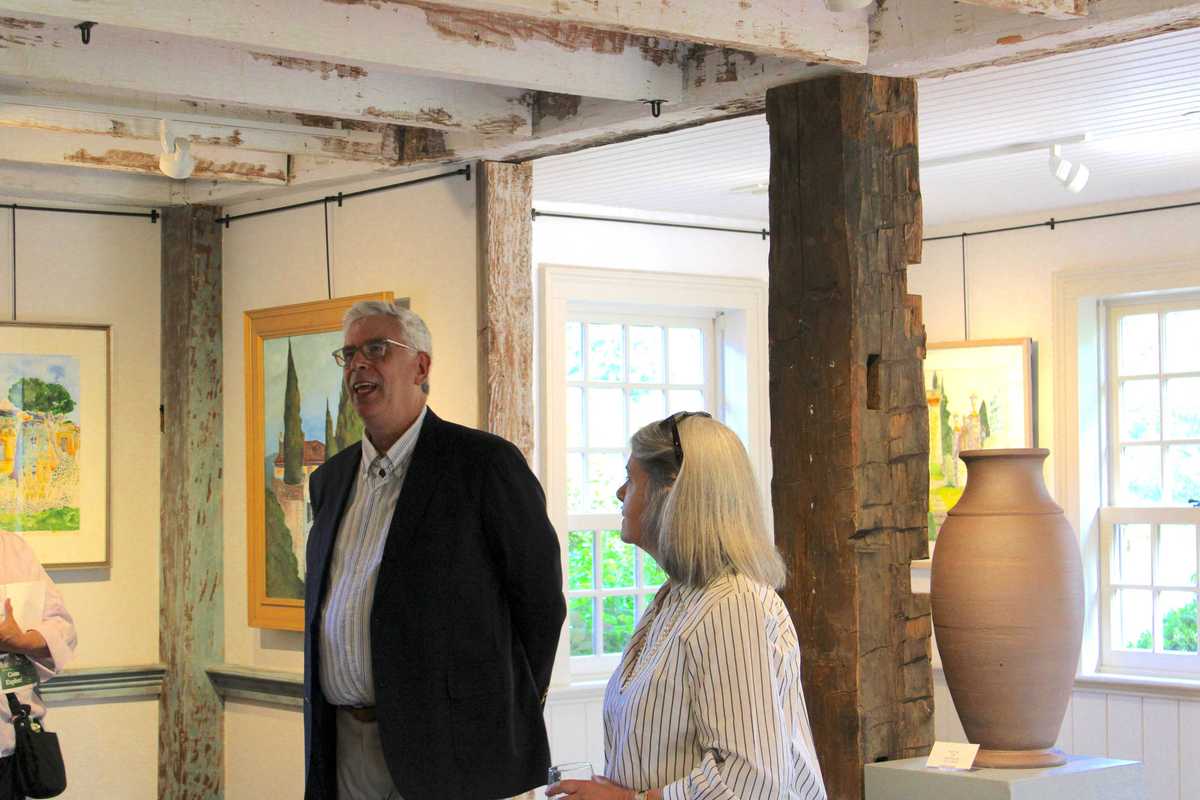
Artist Adam Van Doren and curator Donna Hassler talk to a group of visitors at the Berkshire Botanical Garden. A Stephen Proctor vessel sits to their left.

Photo by Natalia Zukerman

This summer, the Berkshire Botanical Garden in Stockbridge has hosted “Grounded in Nature: Paintings by Adam Van Doren,” an exhibition exploring the intimate relationship between architecture and the natural world.

On view for only a few more weeks in the Leonhardt Galleries, the exhibition features more than 35 watercolor and oil paintings by the New York-based artist, architect, author and Yale professor, curated by art historian Donna Hassler, director emerita of Chesterwood. The works span three distinct places that have shaped Van Doren’s artistic practice: New York City, Cornwall, Connecticut, and his travels throughout Europe.

Keep ReadingShow less
google preferred source

Want more of our stories on Google? Click here to make us a Preferred Source.
google preferred source

Want more of our stories on Google? Click here to make us a Preferred Source.