Thank you!
Your support is sustaining the future of local news in our communities.

Brutal pothole season is taking a toll on road crews, drivers’ wallets
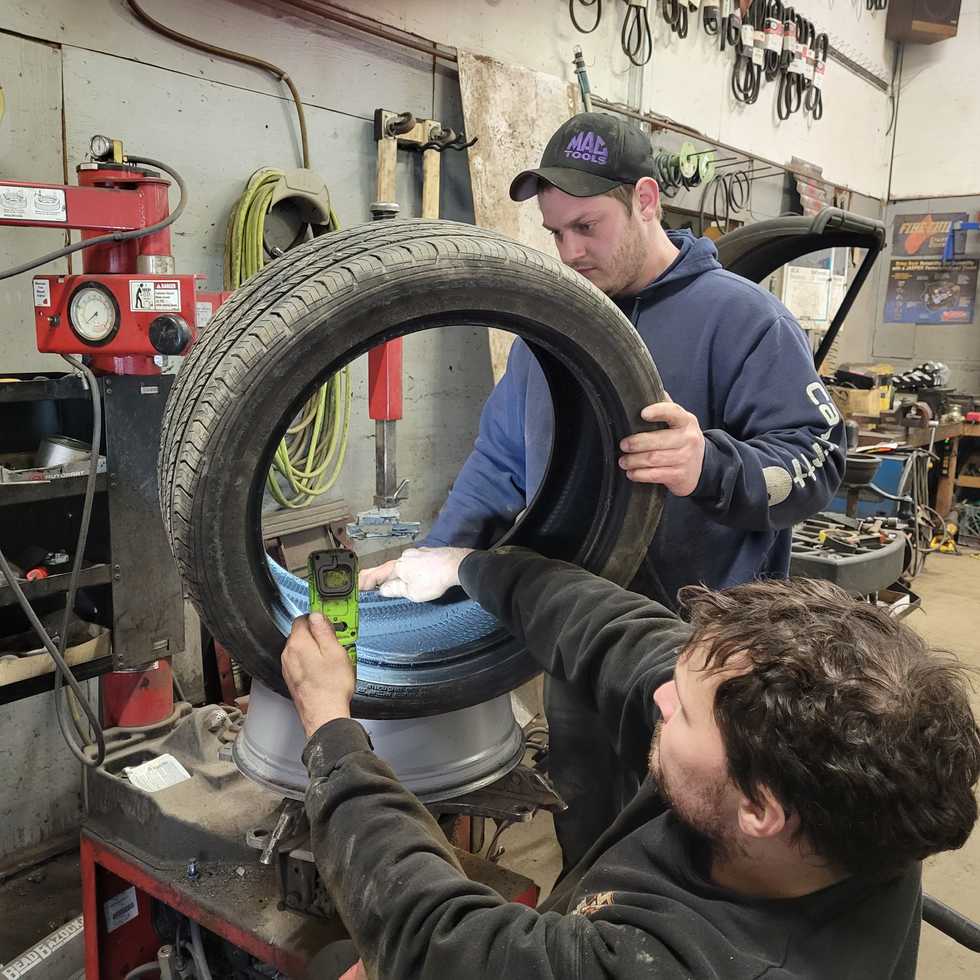
Brutal pothole season is taking a toll on road crews, drivers’ wallets
Buddy Dawson, foreground, and Kyle McLoughlin, mechanics at Hall’s Garage in West Cornwall,  inspected a tire damaged by a pothole. 
Photo by Debra A. Aleksinas

LAKEVILLE — Buddy Dawson, a mechanic at Hall’s Garage Auto Repair in West Cornwall, said a customer recently shelled out more than $1,000 for repairs to her Mercedes-Benz after hitting a nasty pothole.

“It’s on the lift now,” said Dawson, who had difficulty locating a replacement wheel for the newer-model car, which alone cost $700. The customer is in the same camp as a growing number of drivers, he said in an interview in late February. “We’re seeing a lot of low-profile cars. They don’t have a lot of suspension and the front-end parts do take a beating.”

While pothole season is nothing new to Northwest Corner drivers or town road crews assigned to patch them up, this year’s weather pattern of repeated freezing and thawing, plus heavy downpours, has created the perfect storm for road damage.

Highway department budgets take a hit

“It’s bad,” said Brian Carlson, highway foreman for North Canaan, summing up this year’s battle with potholes. “The water is not getting off the roads in many places. You fill one pothole and before long you’re going right back out to fill it again.”

Highly traveled roads tend to take the biggest beating, said Carlson, whose department oversees 33 miles of paved roads and about two miles of dirt roads. “North Elm is a busy street and water runs down the side. We are there daily checking it.”

The temporary cold patch material used to plug up gaping holes in the road surface during winter has little staying power, he said. “The cars are hitting and hammering it and it ends up on somebody’s lawn.”

It’s also expensive. Carlson noted that the temporary cold patch costs $120 a ton, while the more permanent hot patch costs $70 a ton. The longer into the season his crews need to make temporary repairs, the more costly the process. “It will take away from our paving budget, we won’t be able to pave quite as much” once warmer weather arrives, said Carlson.

Challenging time for road crews

This winter’s wildly varying temperatures and heavy rains are the perfect setup for potholes, which are created when moisture gets beneath the asphalt and then freezes and pushes the road surface upward. As warm temperatures thaw the ground, the weakened pavement is further damaged by traffic. Heavily traveled roads, as well as older roads, are more prone to potholes.

For town road maintenance crews, this year is akin to a game of pothole Whack-A-Mole. The gaping holes in the asphalt are filled with temporary patch material which weakens during the freeze/thaw cycle, “and that tends to blow them back out again,” said Jamie Reid, Road Foreman for the Sharon town highway department.

While most of Sharon’s 85 miles of roads are structurally sound thanks to a major paving project about a decade ago when roughly 30 miles were resurfaced, potholes are a recurring problem, said Reid, particularly on unpaved dirt roads. His crews do the best they can by laying crushed stone on unpaved roads, yet with every warm-up, “it gets really muddy.”

The scenario is similar in Salisbury. “Like every other town, we have potholes. We have guys out patching potholes right now,” reported Don Reid, the town’s road foreman. While complaints have been few, he said, the highway department is keeping an eye on problem areas, particularly Race Track Road. “There is a swampy area on the side of the road, and that makes it kind of hard to keep up” with recurring damage, said Reid.

It’s all in the timing

Tim Downs, supervisor for the Town of  Canaan/Falls Village highway department, said timing is the name of the game when it comes to repairing potholes. When craters in the road get filled with water and then freeze, road crews have to either wait for Mother Nature to melt the ice, or they take out a torch to do the job themselves.

The latter option, said Downs, is time consuming and can put a big dent in his department’s budget. Falls Village has 31 miles of paved roads, and roughly three miles are unpaved.

“How much money are you going to pour into a pothole when you can wait a couple of days to fix it?” said Downs. “It’s a matter of when you are going to get to it and then the conditions are right to patch it.”

Dangerous gashes on roadways, however, are a priority to repair under any circumstance, he said.  Some of the highly traveled areas that are taking a beating from this winter’s freeze/thaw cycle include portions of Sand Road, Johnson Road and Warren Turnpike.

Downs said he is not a fan of temporary repairs.  “It’s kind of a headache. You see a pothole and know you can’t really fix it right this time of the year. So the same guy who complained is going to call again next week and say, ‘Why didn’t you fix it?’”

On the bright side, said Downs, “Most of the town roads are 30-mile-per-hour roads, unlike the state highways” where higher speed limits and heavy traffic worsen the pothole potential.

How to report damage on state roads

State road crews, too, have their share of pothole woes, and safety of motorists is a priority for the Connecticut Department of Transportation, according to a statement from spokesman Josh Morgan.

“Every year the freeze/thaw cycle impacts the pavement and creates potholes, cracks and other road imperfections. We are constantly working to expand and improve our paving program to minimize future problems.

“It’s important to remember that CT DOT only maintains state roads, such as interstates, parkways and major roads. Issues on local roads should be reported directly to the municipality.”  Potholes on state roads can be reported to the CT DOT Customer Care Center by calling 860-594-2560 or emailing DOT.customercare@ct.gov.

Latest News

‘So Little to Do,’ so much to discover at James Barron Art

Curator Deborah Goodman Davis reads the Emily Dickinson poem “The Grass So Little Has to Do.” Spencer Finch’s “Following Three Bees (Zinnias)” buzzes in the background.

Photo by Natalia Zukerman

“The Grass Has So Little to Do,” on view at James Barron Art in Kent, takes its title from Emily Dickinson’s poem “The Grass So Little Has to Do,” written in 1862:

“The Grass so little has to do—
A Sphere of simple Green—
With only Butterflies to brood
And Bees to entertain—”

Keep ReadingShow less
Marina Kotchoubey is taking care of business

Marina Kotchoubey at the Ian Ingersoll Cabinetmakers showroom in West Cornwall.

Photo by D.H. Callahan

After 40-something years navigating the world of custom fine furniture, Ian Ingersoll was getting ready to retire. Starting off with a little dovetail stool that he sold at a shop in West Cornwall in the 1970s, he’d grown his skill and his business into something he — and the whole town — could be proud of. Shutting down that business was not an option.

Ingersoll built Ian Ingersoll Cabinetmakers, which produced mainly classical Shaker furniture, on passion: the passion he had to make a living through creative challenges and the passion of his employees, who all seem deeply in love with their craft.

Keep ReadingShow less
A legacy of giving at Norfolk Chamber Music Festival

One hundred and twenty years ago, Carl and Ellen Stoeckel commissioned New York architect E.K. Rossiter to design The Music Shed in Norfolk, Connecticut. After nearly a decade of entertaining their friends and neighbors with the finest music of the day, they built a permanent home for their beloved Litchfield County Choral Union.

The commission and full funding of the construction was not unheard of in an era when great fortunes led to public enrichment. Railroad tycoon John D. Rockefeller was instrumental in funding institutes of higher education. Steel baron Andrew Carnegie was building libraries all over the country, and famously said that a man who dies rich is a disgrace, challenging his peers to give their fortunes back to the people.

Keep ReadingShow less
google preferred source

Want more of our stories on Google? Click here to make us a Preferred Source.

Two unique exhibitions at Geary Gallery

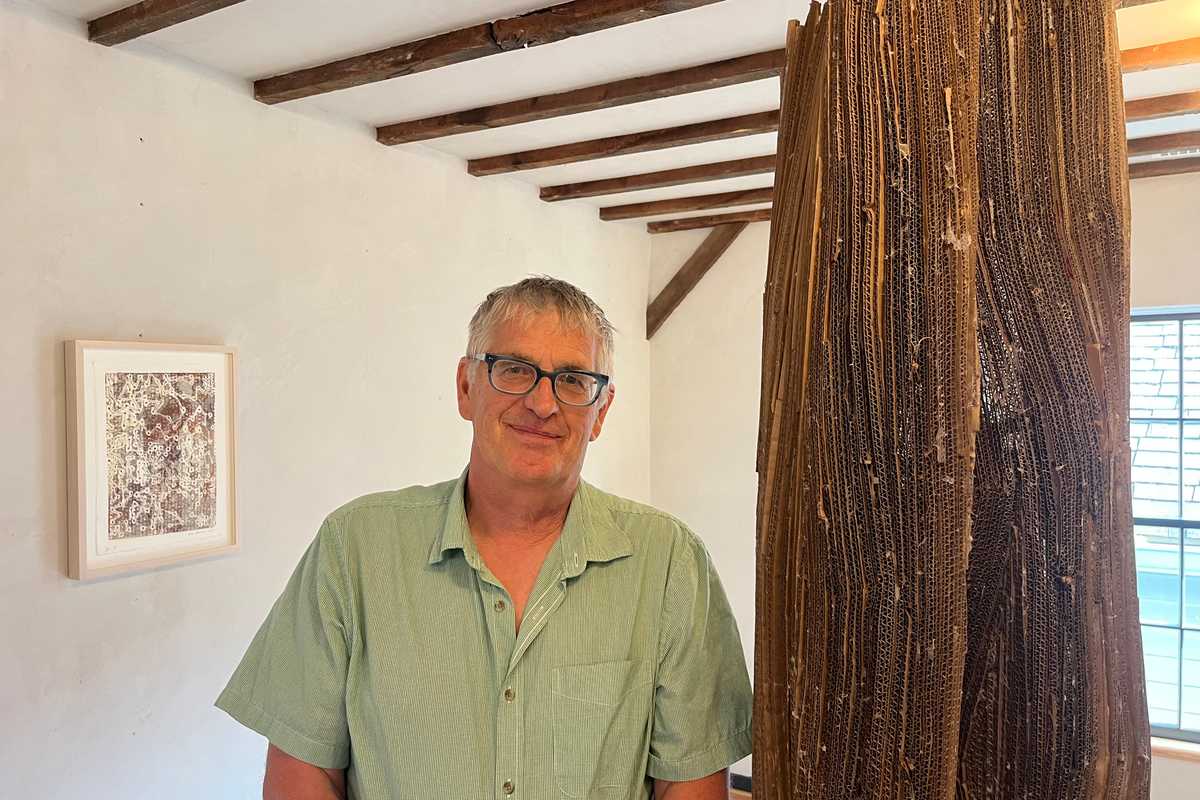
Henry Klimowicz with his sculpture, “Partial Pillar 1”

Photo by D.H. Callahan

On Saturday, Aug. 1, Geary Gallery opened its doors in Salisbury for two unique shows in its first- and second-floor gallery spaces. Art lovers flooded both floors over the course of the afternoon, giving the events a vibrant feeling that enhanced the importance of the art.

On the first floor is a show by Chicago-born, Colorado-based photographer Summers Moore, titled “Lobitos: Pueblo Fantasma,” or “Lobitos: Ghost Town.” The work centers around her daughter’s current hometown in Peru. Moore herself found a home away from home in Colorado in the mid-1980s and encouraged her children to seek out new places outside of their comfort zones.

Keep ReadingShow less

Writer’s retreat in the woods

Writer’s retreat in the woods

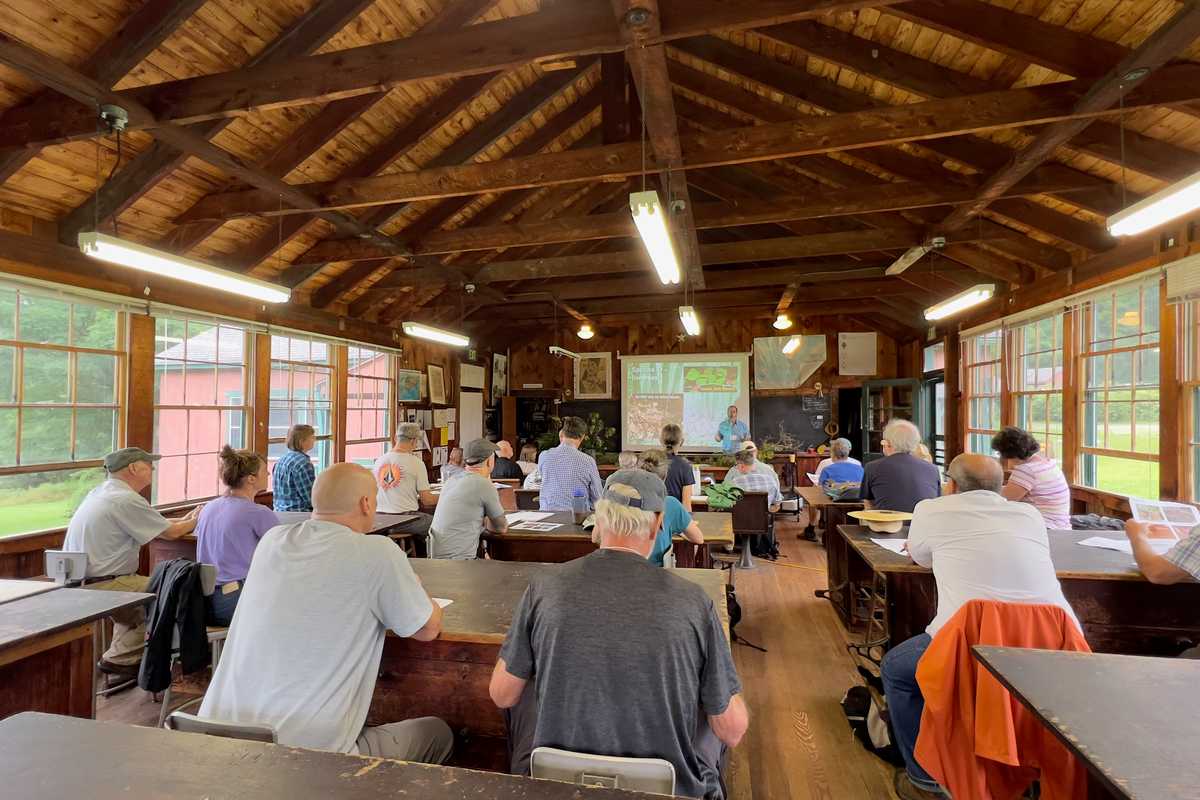
Participants in a 2024 Great Mountain Forest Woodland Academy workshop at Yale Camp.

Photo by Mike Zarfos

Great Mountain Forest (GMF) will host its first Nature Writing Retreat at the historic Yale Camp in Falls Village from Aug. 7-9, 2026. Writers of all levels are invited to draw inspiration from one of New England’s most notable forest landscapes. GMF envisions the retreat becoming an annual event celebrating writing, conservation and the relationship between people and forests.

This immersive three-day retreat reflects on the legacy of Hal Borland, the American writer and New York Times nature columnist whose work was deeply connected to this landscape. The retreat explores how wilderness shapes language, strengthens close observation and fosters environmental consciousness.

Keep ReadingShow less
From Cornwall to Rome, Adam Van Doren at Berkshire Botanical Garden

Artist Adam Van Doren and curator Donna Hassler talk to a group of visitors at the Berkshire Botanical Garden. A Stephen Proctor vessel sits to their left.

Photo by Natalia Zukerman

This summer, the Berkshire Botanical Garden in Stockbridge has hosted “Grounded in Nature: Paintings by Adam Van Doren,” an exhibition exploring the intimate relationship between architecture and the natural world.

On view for only a few more weeks in the Leonhardt Galleries, the exhibition features more than 35 watercolor and oil paintings by the New York-based artist, architect, author and Yale professor, curated by art historian Donna Hassler, director emerita of Chesterwood. The works span three distinct places that have shaped Van Doren’s artistic practice: New York City, Cornwall, Connecticut, and his travels throughout Europe.

Keep ReadingShow less
google preferred source

Want more of our stories on Google? Click here to make us a Preferred Source.

google preferred source

Want more of our stories on Google? Click here to make us a Preferred Source.