SALISBURY — “Looking for Color,” a short film made by students at Salisbury School, made its debut online Wednesday, May 26, via the Noble Horizons website.
Salisbury School is an independent boarding school for boys in grades nine to 12.
The documentary came out of history teacher Rhonan Mokriski’s “Searching for Slavery in Connecticut” class.
Director Caleb May, who is from Salisbury, said the story of the Cesar family of Salisbury and Sharon caught his eye among the list of possible topics, because of the local connection.
Working with several other students, a trailer for the film was made.
May said he thought the project was finished, and was a little taken aback when Mokriski told him to go ahead and finish the film.
The film makes the point that while Salisbury’s past, especially the town’s connection to the American Revolution, is well-known and highly visible, the contributions of African-Americans remain largely unknown.
The film includes remarks by Dennis Culliton of the Witness Stone Project. (Mokriski’s students commemorated the life of James Mars with the placing of a witness stone at the Congregational Church in Norfolk earlier this month.)
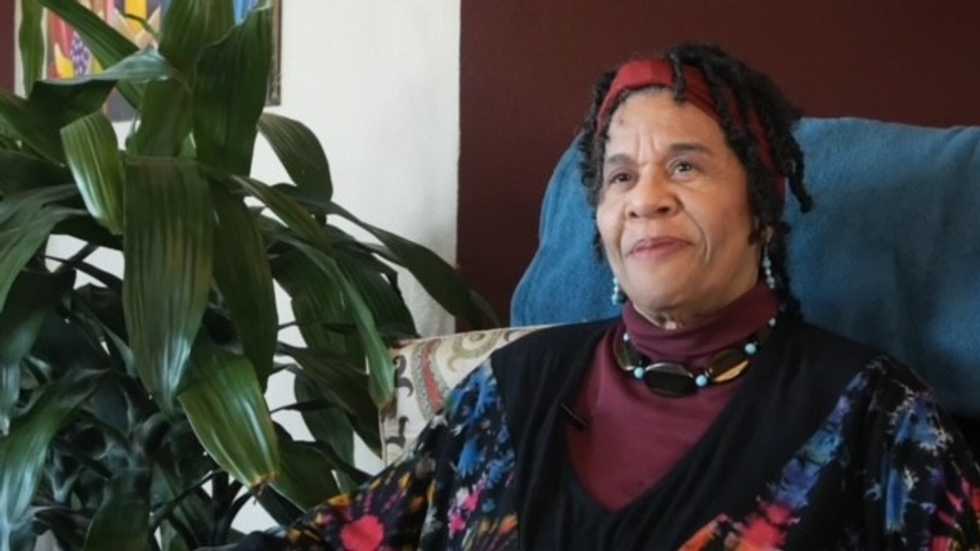
Culliton says in the film that there are few mentions of African Americans in Connecticut historical records, a point picked up by Katherine Overton, a descendant of the Cesar family and a historian and genealogist.
She says she grew up hearing stories about her ancestors and became really interested when, after considerable digging, she finally found a Revolutionary-era record of Timothy Cesar.
She says she decided to learn more about this history and about her family. But the lack of records was a recurring difficulty.
“It’s like going to the library and finding a whole section missing.”
Overton says it’s important to find these missing pieces of the historical puzzle.
“If you take the narrative out you don’t have the whole story.”
One document came to light: a “broadside,” meaning a small poster, inviting the community to the Sharon farm of George Cesar for a Fourth of July and 15th Amendment celebration in 1870. (The 15th Amendment: “The right of citizens of the United States to vote shall not be denied or abridged by the United States or by any State on account of race, color, or previous condition of servitude.”)
Overton said she interpreted this to mean that George Cesar, whose farm was on Sharon Mountain, was a man of some means and standing in the town, to be in the position to invite everyone for a party.
The film shows students hiking up to what is believed to be the site of the George Cesar farm, and looking around the differently spelled “Caesar’s Brook” campsite, where they used a metal detector, found a few objects (which they left) and made informed guesses about the size and layout of the farm.
After the screening, Overton and other Cesar family members thanked the students for their work.
Overton said during the discussion, “It’s going to live with them just like it lives with me.”
“Looking for Color” can be seen on the “Searching for Slavery in Salisbury” YouTube page.