Thank you!
Your support is sustaining the future of local news in our communities.

Twin Lakes boating clamor triggers nerves as season nears
Twin Lakes boating clamor triggers nerves as season nears
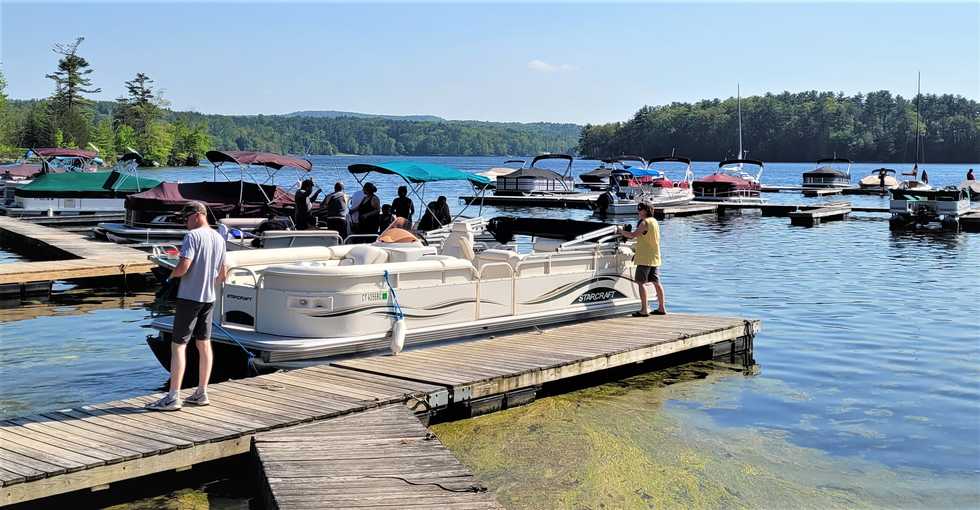
A steady flow of pontoon boats launched from O’Hara’s Landing on Twin Lakes in Salisbury last weekend, as part of a growing trend in popularity. 
Photo by Debra A. Aleksinas

SALISBURY — The “whatever floats your boat” concept is not OK with a group of Twin Lakes shoreline homeowners, especially when it involves loud music laced with profanity, boisterous party boats and water safety concerns.

That message was expressed loud and clear during a membership meeting of the Twin Lakes Association (TLA) last summer, as 50-plus members sought solutions from the board, and the town, in the hopes of avoiding a repeat scenario this summer.

However, with no immediate remedy in sight, the complaints are likely to surface again with the arrival of Memorial Day weekend and the 2022 boating season and buoyed by burgeoning lake usage tied to the COVID-19 pandemic as well as a shortage of state lake patrols.

Grant Bogle, TLA president, said his group has brought proposed solutions to the “growing problem” on the lakes to the town’s attention, and he credited First Selectman Curtis Rand for being responsive to lake property owners’ concerns.

“As we got into the winter months, the state evidently changed some of its regulations regarding town constables, and as a result we don’t have anyone to man the patrol boat that would go out on the water,” he noted. “We have just been striking out with options. We think there may be a longer-term solution, but I am concerned about this year. We are a long way from saying that we have a plan.”

Bogle said the topic is sure to surface at the TLA’s membership meeting on June 18. “I haven’t shared this with members yet. I know people are going to be concerned.”

Noise complaints not new, but growing

While noise complaints have always existed, they are rising due to increased lake usage. More lakefront property owners are working from home, out-of-town visitors are seeking outdoor  recreation at lakes throughout the Northwest Corner and boat rentals and sales are skyrocketing.

Taylor Hammond has manned the bait shop at O’Hara’s Landing for about a decade, and the most significant change he’s noticed is the proliferation of pontoon boats, which can accommodate up to 14 passengers.

“It’s more like driving a minivan rather than an Aston Martin,” he said, referring to the pontoons as “party boats.” As for the noise out on the lake, Hammond said it unfortunately comes with the territory when you own waterfront property. “It’s not like you bought a private lake for yourself.”

COVID-19 accentuated the problem

Another ripple effect of the pandemic has been that people have canceled long-distance vacations, are working remotely and are staying closer to home.

“As far as the lake population goes, many people came up from the city and worked from home here,” noted Bill Littauer, president of the Lake Wononscopomuc Association.

Bogle said the same is true at the Twin Lakes.

“It was more than just last year. This has been a growing challenge. People are not aware how intrusive their music is, and how far it travels. We want everyone to have fun and enjoy the lake, it’s just that we want people to be safe and respectful.”

Issues are many,
solutions are few

Last June, the idea of an ordinance banning music on the water after 5 p.m. was floated at a June TLA meeting, but an after-hours prohibition on music has never been discussed at an official level, Rand said at the time. Other potential strategies, such as measuring decibels or banning externally facing tower speakers, pose enforcement challenges, but have not been ruled out.

Officer Mike Brenner of the State Police water patrol acknowledged the noise issue at that time and noted that music from tower speakers on some ski boats can be heard across the lake, but that the state does not have resources to be on the water all day.

He and Rand have encouraged lake goers to politely ask offending boaters to turn down the volume. When that doesn’t work, law enforcement gets called in, as was the case last September when Connecticut State Police removed a boat well after sundown from East Twin Lake after at least three callers complained of loud music and profanity.

Reached by phone on Sunday, May 22, Rand said although he “hasn’t pulled the trigger yet,” he is pursuing an option he hopes will put a patrol presence out on the lake in about a week.

“We are doing something this year that we hope is temporary and next year we will really push on getting the person trained and in the DEEP program,” said the first selectman.

“I think we have a solution to get some people to fill in on the weekends, but that’s about it. We are not going to be up there every day. It’s like policemen can’t be everywhere speeders are.”

He said Salisbury no longer has a town constable, so the challenge is to find individuals who can “handle the liability” out on the lake.

Two fishermen and a radio

“This is not a new problem. It’s been going on as long as I can remember,” said David Haab, owner of the marina at O’Hara’s Landing. “Around the late ’60s, early ’70s, someone called the State Police barracks because some guys in a boat were making noise out on the lake. They were two fishermen who had a Red Sox game on.”

The problem, he said, is that noise travels across the water. “It’s only a few people and generally speaking they can be talked to.”

Haab said he knows of a father/son duo who are among the offending boat owners and he has had conversations with them about keeping the music at a respectable level. “You can’t tell people how to outfit their boat, it’s just not going to work.”

Rather, his recommendation is to hire a lake patrol officer for weekends or holidays. “People know they are making noise and if someone is going out there with blue flashing lights asking you to turn your radio down,” it usually works, said Haab.

Bogle noted that the State Police have indicated they do not have the manpower for patrols this year.

If necessary, he said, the town and TLA could come up with resources to fund a patrol position. “We’ve got a boat and we need somebody who is trained and able to go out on the water. But I don’t know about this season, and that’s a problem.”

Latest News

‘So Little to Do,’ so much to discover at James Barron Art

Curator Deborah Goodman Davis reads the Emily Dickinson poem “The Grass So Little Has to Do.” Spencer Finch’s “Following Three Bees (Zinnias)” buzzes in the background.

Photo by Natalia Zukerman

“The Grass Has So Little to Do,” on view at James Barron Art in Kent, takes its title from Emily Dickinson’s poem “The Grass So Little Has to Do,” written in 1862:

“The Grass so little has to do—
A Sphere of simple Green—
With only Butterflies to brood
And Bees to entertain—”

Keep ReadingShow less

Marina Kotchoubey is not a woodworker

Marina Kotchoubey is not a woodworker

Marina Kotchoubey at the Ian Ingersoll Cabinetmakers showroom in West Cornwall.

Photo by D.H. Callahan

After 40-something years navigating the world of custom fine furniture, Ian Ingersoll was getting ready to retire. Starting off with a little dovetail stool that he sold at a shop in West Cornwall in the 1970s, he’d grown his skill and his business into something he — and the whole town — could be proud of. Shutting down that business was not an option.

Ingersoll built Ian Ingersoll Cabinetmakers, which produced mainly classical Shaker furniture, on passion: the passion he had to make a living through creative challenges and the passion of his employees, who all seem deeply in love with their craft.

Keep ReadingShow less
A legacy of giving at Norfolk Chamber Music Festival

One hundred and twenty years ago, Carl and Ellen Stoeckel commissioned New York architect E.K. Rossiter to design The Music Shed in Norfolk, Connecticut. After nearly a decade of entertaining their friends and neighbors with the finest music of the day, they built a permanent home for their beloved Litchfield County Choral Union.

The commission and full funding of the construction was not unheard of in an era when great fortunes led to public enrichment. Railroad tycoon John D. Rockefeller was instrumental in funding institutes of higher education. Steel baron Andrew Carnegie was building libraries all over the country, and famously said that a man who dies rich is a disgrace, challenging his peers to give their fortunes back to the people.

Keep ReadingShow less
google preferred source

Want more of our stories on Google? Click here to make us a Preferred Source.

Two unique exhibitions at Geary Gallery

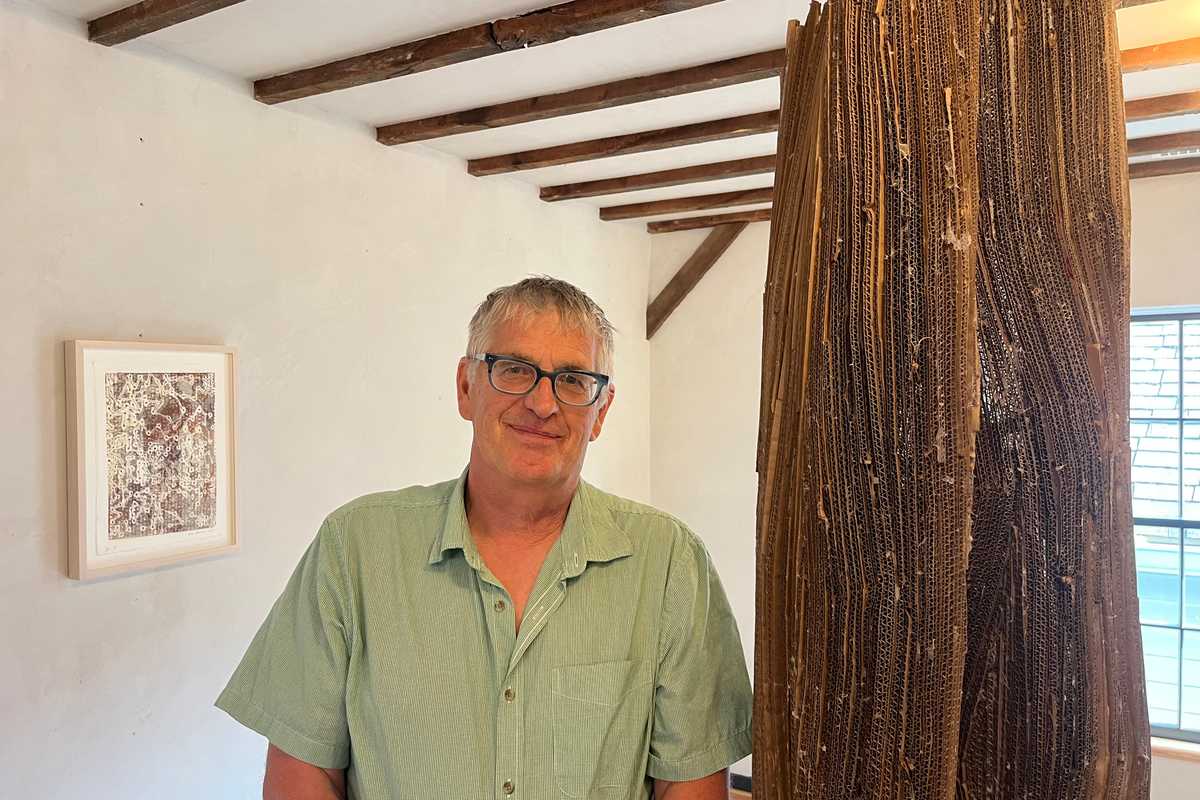
Henry Klimowicz with his sculpture, “Partial Pillar 1”

Photo by D.H. Callahan

On Saturday, Aug. 1, Geary Gallery opened its doors in Salisbury for two unique shows in its first- and second-floor gallery spaces. Art lovers flooded both floors over the course of the afternoon, giving the events a vibrant feeling that enhanced the importance of the art.

On the first floor is a show by Chicago-born, Colorado-based photographer Summers Moore, titled “Lobitos: Pueblo Fantasma,” or “Lobitos: Ghost Town.” The work centers around her daughter’s current hometown in Peru. Moore herself found a home away from home in Colorado in the mid-1980s and encouraged her children to seek out new places outside of their comfort zones.

Keep ReadingShow less

Writer’s retreat in the woods

Writer’s retreat in the woods

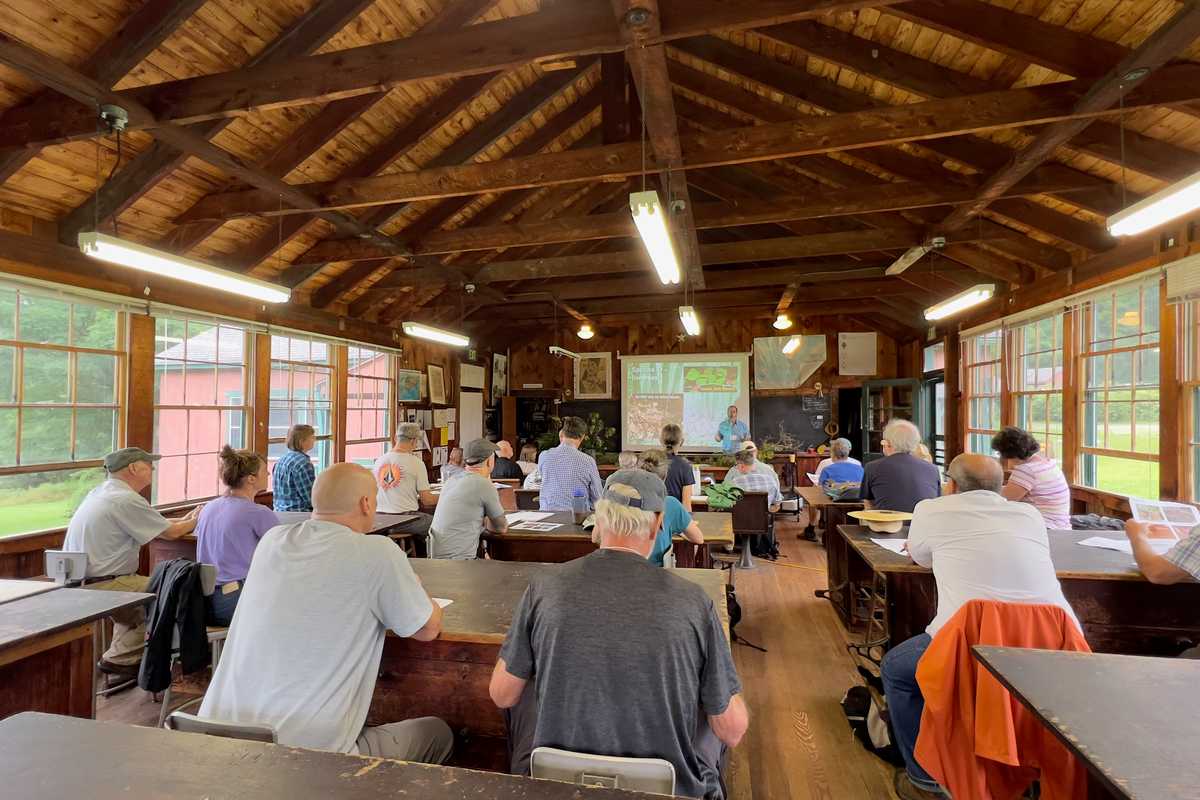
Participants in a 2024 Great Mountain Forest Woodland Academy workshop at Yale Camp.

Photo by Mike Zarfos

Great Mountain Forest (GMF) will host its first Nature Writing Retreat at the historic Yale Camp in Falls Village from Aug. 7-9, 2026. Writers of all levels are invited to draw inspiration from one of New England’s most notable forest landscapes. GMF envisions the retreat becoming an annual event celebrating writing, conservation and the relationship between people and forests.

This immersive three-day retreat reflects on the legacy of Hal Borland, the American writer and New York Times nature columnist whose work was deeply connected to this landscape. The retreat explores how wilderness shapes language, strengthens close observation and fosters environmental consciousness.

Keep ReadingShow less
From Cornwall to Rome, Adam Van Doren at Berkshire Botanical Garden

Artist Adam Van Doren and curator Donna Hassler talk to a group of visitors at the Berkshire Botanical Garden. A Stephen Proctor vessel sits to their left.

Photo by Natalia Zukerman

This summer, the Berkshire Botanical Garden in Stockbridge has hosted “Grounded in Nature: Paintings by Adam Van Doren,” an exhibition exploring the intimate relationship between architecture and the natural world.

On view for only a few more weeks in the Leonhardt Galleries, the exhibition features more than 35 watercolor and oil paintings by the New York-based artist, architect, author and Yale professor, curated by art historian Donna Hassler, director emerita of Chesterwood. The works span three distinct places that have shaped Van Doren’s artistic practice: New York City, Cornwall, Connecticut, and his travels throughout Europe.

Keep ReadingShow less
google preferred source

Want more of our stories on Google? Click here to make us a Preferred Source.

google preferred source

Want more of our stories on Google? Click here to make us a Preferred Source.