Severe flu season strains hospitals, schools, care facilities across the region

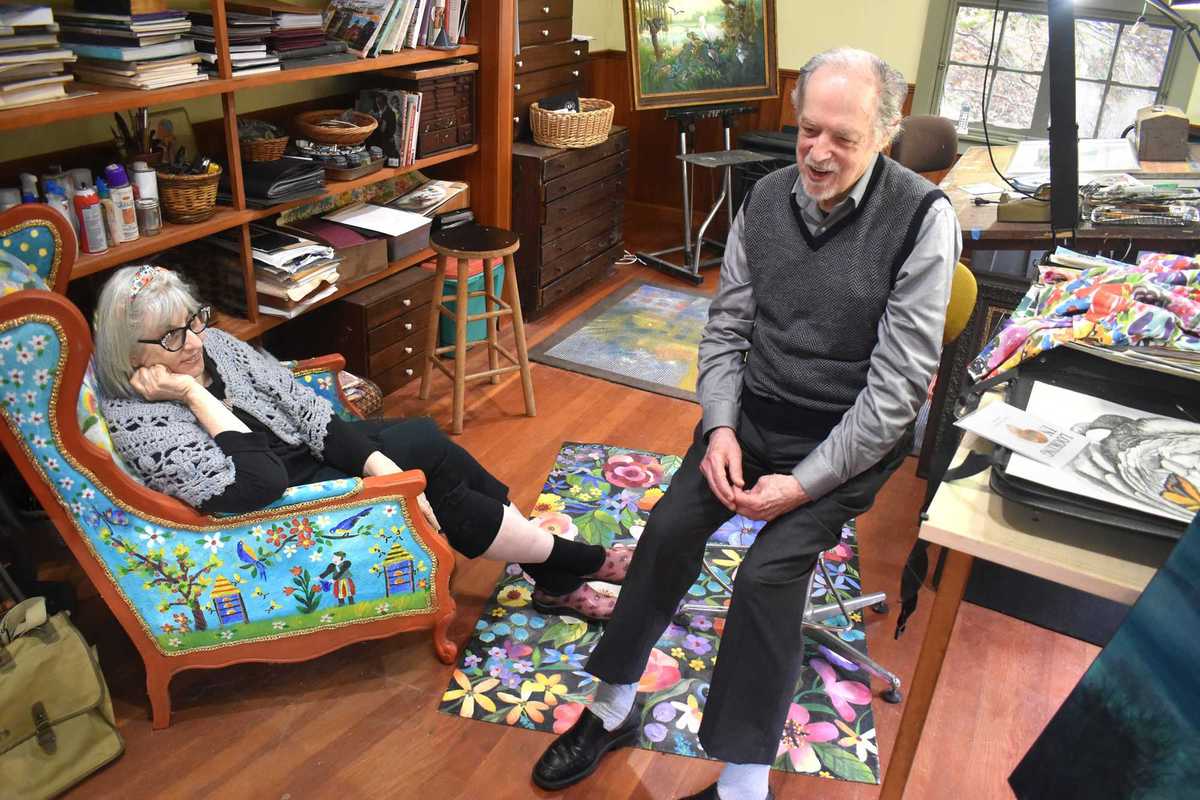
Dr. Mark Marshall, an internist at Sharon Hospital, said, “The statistics suggest it’s the worst flu season in 30 years.”
Photo by Bridget Starr Taylor

Dr. Mark Marshall, an internist at Sharon Hospital, said, “The statistics suggest it’s the worst flu season in 30 years.”
A severe and fast-moving flu season is straining health care systems on both sides of the state line, with Connecticut and New York reporting “very high” levels of respiratory illness activity.
Hospitals, schools and clinics are seeing a surge in influenza cases—a trend now being felt acutely across the Northwest Corner.
“The statistics suggest it’s the worst flu season in 30 years,” said Dr. Mark Marshall, an internist at Sharon Hospital.
According to the U.S. Centers for Disease Control and Prevention, respiratory illness activity is currently classified as “very high” in both Connecticut and New York. Emergency department visits for influenza in Connecticut are very high and increasing, the agency reported, while COVID-19 and respiratory syncytial virus (RSV) activity remain at low levels but are also trending upward.
Health officials say the holiday season created prime conditions for the virus to spread, as people gathered indoors in close quarters and traveled more frequently, increasing exposure and transmission.
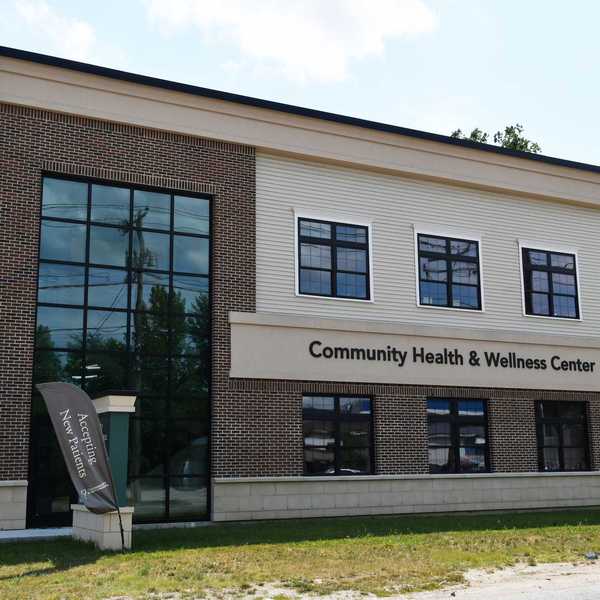
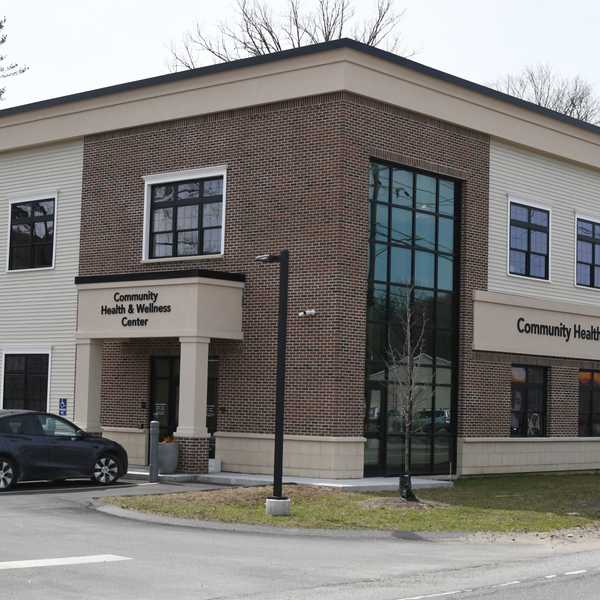
Dr. Sarah Humphreys, chief medical officer at Community Health and Wellness Center in North Canaan, said influenza has dominated patient visits since the holidays.
“We’re seeing a ton of influenza. People are coming in with body aches, fever, congestion and gastrointestinal issues,” Humphreys said.
She noted that clinicians are also seeing many infected children, particularly those connected to boarding schools. One private school in the region, she said, shut down prior to winter break after reporting more than 100 flu cases. “At boarding schools it spreads like wildfire.”
The Connecticut Department of Public Health (DPH) confirmed the state’s first influenza-related death of the 2025-26 season on Oct. 25. The death involved a Hartford County resident between the ages of 80 and 89, underscoring the heightened risk influenza poses to older adults and those with chronic health conditions.
At Sharon Hospital, emergency department physicians are reporting a sharp increase in influenza cases, with more patients requiring hospitalizations than in a typical winter.
Between Dec. 1 through Dec. 9, “Our emergency department saw 100 patients who tested positive for influenza A,” said Marshall. Of those patients, he said, 11 required hospitalizations.
The Sharon Hospital physician said clinicians have seen an uptick in flu cases since the COVID-19 pandemic eased, which he attributed in part to people becoming less vigilant about preventive measures such as staying home when sick, masking when appropriate and hand hygiene.
He also noted that a mutated strain of influenza A, H3N2 subclade K, which is associated with more severe illness, particularly among older adults and individuals with preexisting health issues, is contributing to higher hospitalization rates.
That local experience mirrors what health officials are reporting across New York.
The New York State Department of Health announced Jan. 2 that the state recorded the highest number of flu-related hospitalizations ever reported in a single week.
“We are having a more severe flu season than prior years,” State Health Commissioner Dr. James McDonald said in a statement. “Almost 12,000 more people were admitted to a hospital during this most recent seven-day period compared to the prior week.”
The department’s most recent data shows a total of 4,546 flu-related hospitalizations statewide, nearly 1,000 more than the previous week.
Marshall said the impacts of the flu season extend beyond Sharon Hospital and the Northwest Corner, with mounting pressure within the broader Nuvance/Northwell health network, underscoring the pace at which the virus continues to spread.
He described what clinicians refer to as “surging,” a rapid influx of patients arriving with respiratory illness, many of whom require hospitalization, which leads to backups as patients wait in emergency departments for inpatient beds.
“We’re seeing a little of that in Sharon, but at Vassar, they are seeing severe surging,” Marshall said, referring to Vassar Brothers Medical Center, a 349-bed, acute care hospital in Poughkeepsie.
The North Canaan Community Health and Wellness Center has been inundated with flu-infected children in recent weeks, and officials advise families to isolate sick children from older adults and others most at risk for serious illness.
The facility’s chief medical officer emphasized that clinicians continue to recommend the seasonal flu vaccine, despite misinformation suggesting this year’s vaccine is ineffective because it was distributed before the emergence of the H2N3 strain.
“The flu vaccine will decrease the severity of the illness. Unfortunately, it has not stopped spreading,” said Humphreys, who also advised people to protect themselves by wearing a mask in waiting rooms or while moving through health care facilities where the virus may be airborne.
The surge is also affecting home health providers caring for patients after their release from hospitals.
AnnMarie Garrison, vice president of clinical services at Visiting Nurse & Hospice of Litchfield County (VNHLC), said the respiratory virus season arrived earlier than usual and has been unusually severe.
“And it’s not letting up any time soon,” Garrison noted.
She said since the holidays the Winsted-based agency has experienced at least four staff callouts daily, with employees sick from influenza, other respiratory viruses and some COVID-19.
VNHLC, a nonprofit home health and hospice agency serving Litchfield County and the Farmington Valley, has also experienced an influx of patients requiring home care after being discharged from the hospital with flu diagnoses, she said.
“This is probably the most severe flu season in many years,” noted Garrison. “The urgent care centers, hospitals and nursing homes are super busy, and it’s difficult to get an appointment with your physician.”
At the Noble Horizons senior community and nursing home in Salisbury, Administrator Bill Pond reported three current flu cases among residents as of Jan. 8. “Symptoms are relatively mild, and there have been a couple of staff members over the past month that have had it as well.”
Pond said the facility’s layout allows staff to quickly isolate infected residents while continuing to provide therapy and other services.
Public and private schools across the region have also been affected by this year’s brutal flu season, particularly in the weeks leading up to the holiday break.
At Housatonic Valley Regional High School, school nurse Jackie Nichols said tracking flu cases is difficult because illnesses are self-reported.
On Dec. 19, the last day before winter break “about 12 percent of the high school’s population, 39 students, were absent,” Nichols noted. Teachers, too, caught the flu, with about 36 staff members falling ill prior to the break.
A similar pattern was reported across Region One elementary schools, according to Superintendent Melony Brady-Shanley.
However, once students returned to class after break, flu cases declined. “As of Jan. 7, absences temporarily dropped to 15 students, a decline Brady-Shanley attributed to reduced crowding after the holiday.
“When you don’t have 200 to 300 kids in the same space, you lessen the transmission,” though the superintendent cautioned numbers could rise again.
“I wouldn’t be shocked if in the next couple of weeks to 10 days, between COVID, RSV and flu, that the numbers go up.”
Brady-Shanley stressed the importance of keeping children home when sick until they are fever-free, and reinforced basic hygiene.
“If you can get kids to wash their hands three to four times per day, they are less likely to get sick.”

Aubrey Funk passes.
LITCHFIELD — Housatonic Valley Regional High School’s girls and boys basketball teams traveled to Lakeview High School Friday, Jan. 9, for back-to-back rivalry games.
Both games were competitive and the score differential was within one possession into the second half. Ultimately, Lakeview won the boys game 65-48 and the girls game 49-35.

The cheerleaders, prep band and roaring student sections made for a lively atmosphere with high energy. HVRHS fans dressed in a “Men in Black” theme, save for one supporter in a fox-fur Mountaineer cap.
The boys game was played first. HVRHS was missing its starting guards Owen Riemer and Nick Crodelle, who were both out with the flu.

Lakeview opened up a lead early and was up by seven points at halftime. HVRHS caught wind in the third quarter and narrowed the gap, bringing the score to 43-41. Lakeview regained control in the fourth quarter to win 65-48.
Lakeview’s leading scorers were Jack Gollow with 29 points, Quinn Coffey with 20 points and Max Guma with 14 points. For HVRHS, Anthony Foley scored 14 points, Anthony Labbadia scored 13, Tyler Roberts scored 10, Simon Markow scored nine and Wyatt Bayer scored two.

The girls game followed. The score went back and forth in the first half with HVRHS leading by one-point at the break. Lakeview caught fire in the third quarter and opened up an 11-point lead. The Bobcats held on to win 49-35.
Lakeview’s leading scorers were Allie Pape with 20 points, Christina Barone with 17 points and Eleanor Turturo with six points. For HVRHS, Olivia Brooks scored 12 points, Carmela Egan scored 10, Victoria Brooks scored seven, Maddy Johnson scored four and Aubrey Funk scored two. Egan had a double-double with 14 rebounds.
The snack bar sold more than 100 slices of pizza.
Noah Fitzsimmons takes a shot for Kent School.
KENT — Loomis Chaffee School boys ice hockey defeated Kent School 7-4 Saturday, Jan. 10.
The rivalry game promised to be a tough Founders League match-up.
Two minutes in, with spectators hardly seated, Logan Ferrara of Loomis scored. In a blink, two and a half minutes later, Nikolai Bazalitski made it a 2-0 game.

The rest of the first period maintained a fierce pace of attacks by both teams with many great saves by both goalies.
The second period started and again stunned the crowd when Kent’s Calvin Gustafson scored 50 seconds later.Loomis took control of the period with three more goals with Ferrara emerging as the real danger, accounting for two scores.
The 5-1 Loomis lead looked like an uphill fight for Kent as the third period began. With seven minutes left, Kent’s Aiden Grinshpun and Jack Broderick scored three consecutive goals to come within one point with four minutes left.
Kent fans were given hope, but Owen Schwarz and Ferrara scored again to give Loomis a 7-4 final score.
Kent’s record moved to 6-8-1 and Loomis advanced to 6-3-1.

Friends of Silver Lake co-chairs Andrew Wicks and Brian Lapis outlined the mission of the newly formed nonprofit to roughly 40 attendees on Dec. 28.
SHARON — Silver Lake Camp & Retreat Center, a long-running Christian summer camp and conference center in Sharon, is slated to close after its final summer this year.
All may not be lost, however, according to leaders of the newly formed Friends of Silver Lake, a nonprofit dedicated to preserving the mission and community of the camp beyond its planned closure.
The grassroots group was established by former “conferees” (campers) Andrew Wicks and Brian Lapis the morning after a November announcement by the Southern New England Conference of the United Church of Christ, which cited declining enrollment and financial challenges in its decision to end camp operations following the 2026 season.
The SNEUCC, as it is commonly known, assumed ownership and management of the Low Road camp after the state conferences of the Protestant denomination combined to form one regional body in 2020.
Speaking to The Lakeville Journal in mid-December, Wicks, who co-chairs Friends of Silver Lake with Lapis, said that upon receiving the closure announcement he felt that the “intangibles” of the Silver Lake experience “deserved to be preserved.”
To do that, he said, the alumni body needed to come together. “To have a voice of collective power around making those choices, we need to have some organization that networks all these people that, over the last 70 years, have called Silver Lake home and had life-changing and transformative experiences.”
Lapis, who was also present on the call, echoed that Friends of Silver Lake is dedicated to preserving that legacy and mobilizing it toward a continuation of the camp’s mission. “That’s where we’re starting from — to say that in 2027 we want to continue to provide these transformational outdoor ministry experiences for young people in southern New England.”
Wicks currently serves as the minister of the First Church of Christ in Woodbridge, Connecticut, and has a long history with Silver Lake, beginning with church youth group retreats in middle school. He later joined as a conferee, then spent six summers as a staff member, seven years on the camp’s board of directors, and also served on the board of the Connecticut Conference of the UCC before it was enveloped into the SNEUCC.
He also held a brief stint as interim executive director of Silver Lake and, for the past 15 years, has volunteered for a summer “Olympics”-style sports event for high schoolers at the camp.
Lapis, who is older than Wicks and now works as a television weather anchor in Springfield, Massachusetts, has been similarly intertwined with the camp since first visiting as a conferee in 1982.
He grew up in an eastern Connecticut UCC congregation and worked for five summers as a staff member,later joining the board of directors for several years. He has volunteered off and on since the 1980s and sent his children, now in their 20s, to Silver Lake as well.
By mid-December, the group had garnered more than 400 members and assembled a 13-person board ranging from a recent staff member to a camper who attended the first session in 1957.
Intergenerational connection is important to Friends of Silver Lake’s mission, Wicks said: “We were really intentional about a diverse cross section of the Silver Lake community — by age, by geography, by professional experience.”
Lapis emphasized that Friends of Silver Lake is not intended to be exclusively an alumni organization. “This is an organization that hopes to capture and leverage the love of Silver Lake from all people who have been exposed to it, either directly or tangentially.”
The Silver Lake that continues may not be the same as the one that existed in the past, the two chairs cautioned.
“There are a lot of ways that we can preserve what happened at Silver Lake,” Wicks said, noting that the SNEUCC, which still owns the Low Road camp, has said it is open to passing the property along to “mission-aligned partners.”
“We think we can be those partners that step up,” Wicks said, adding that such an opportunity depends on many uncertain variables, including funding. As a result, Friends of Silver Lake is also strategizing how to advance the camp’s mission outside of Sharon if necessary.
During the nonprofit’s first in-person meeting on Dec. 28 at the Congregational Church in South Glastonbury, Connecticut, Wicks and Lapis outlined the situation to the roughly 40 members in attendance. “Everybody in the room had emotional and historical ties to the property on Low Road, so that’s ideally where people would want this program to continue,” Lapis reported during a follow-up call. “But I think people are cognizant of the fact that that may not happen.”
Former campers were upset by the possibility, but were nevertheless motivated by the Friends of Silver Lake mission.
Kristin Vineyard, 60, of East Haven, Connecticut, who began attending the camp as a conferee in the 1970s, said she cried when she heard that the camp would close. “It felt like there was a death in the family,” she said in a follow-up interview. When she learned of Friends of Silver Lake, though, she said she felt motivated: “I was in instantly.”
While she would prefer to see the programming continue on Low Road, she noted that the ethos of Silver Lake is not confined to one location. “Can it take place somewhere else? I think it can.”
Others agreed. The prospect of losing the Sharon campground “really is kind of heartbreaking,” said Katherine Hughes, 39. Hughes, a native of Norwich, Connecticut, now living in Ledyard, has attended, staffed, and volunteered at the camp since the late 1990s. She said seeing the diverse and passionate crowd at the meeting was heartening despite the difficult news.
“The whole notion of Silver Lake is that it isn’t a physical place,” she said in a phone interview after the meeting. “The community has been built physically on site but can be translated to other places.”
The Salmon Kill runs through White Hollow Preserve, now owned by the Salisbury Association Land Trust.
SALISBURY — In mid-December, the Salisbury Association Land Trust completed the purchase of 63 acres at the corner of Route 112 and Route 7.
The property was acquired from John Kuhns, fulfilling his wish to preserve the land from future development. The site has been named the White Hollow Preserve.
The Salmon Kill runs through the center of the property, and joins the Housatonic River there.
The existing boat launch next to the bridge over the Housatonic on Route 7 will remain open to the public.