Latest News
Sharon town officials sound alarm on invasive species
Alec Linden
Jun 03, 2026
SHARON – The threat of invasive species emerged as a key concern during a recent discussion on conservation and farmland preservation, as town officials and representatives from seven local groups and organizations worked to shape recommendations for Sharon’s Plan of Conservation and Development (POCD)on Wednesday, May 27.
The meeting marked the second of three public discussions focused on priorities identified through a town survey earlier this year for the state-required plan, which guides land use and growth. The current plan was adopted in 2006 and must be updated every decade. An April 22 meeting focused on economic development, and housing will be the focus of the final session in June.
“I don’t think we can overemphasize the importance of invasives,” said Michael Dudek, secretary of the Inland Wetlands Commission and the land and buildings manager at Sharon Audubon Center. “More things come in every year,” he added, “and we’re not just talking about plants – we’re talking about insects.”
In addition to common invasive shrub plants like Japanese barberry, multiflora rose and burning bush, which can overtake the understory, and climbing vines like oriental bittersweet, tree diseases resulting from bugs have become a primary invasive threat in New England’s forests.
The eastern hemlock has been under attack for decades by a pest called the hemlock wooly adelgid, while beeches, one of the Northeast’s most common forest trees, are now existentially threatened by beach leaf disease caused by invasive nematodes. The spotted lanternfly is also capable of inflicting ecological and agricultural damage.
Sharon Energy and Environment Commission member Michael Nadeau said that there are steps to take at the municipal level to help mitigate the spread of destructive invasives, pointing at the Town Garage’s road materials stockpiles.
“It is riddled with invasives,” he said of the facility, noting that contaminated salt and sand can spread the plants to vulnerable locations. “The easiest way to control invasives is to prevent them,” he said.
Several participants also advocated for updates to the town’s online conservation and land protection resources. Robin Zitter, horticulturalist and member of the IWC, called for an update of the Natural Resources Inventory, a 94-page document compiled by the Conservation Commission in 2005.
Zitter pointed specifically to documenting and mapping out vernal pools, which are transient ponds that flood each spring and dry by summer. They serve as a vital breeding habitat to several amphibian species, Zitter said, and are at risk from development.
Janell Mullen confirmed that the Conservation Commission had also indicated a desire to update the Natural Resources Inventory.
Zitter also asked for updated mapping that would be easily available online to both town commissions and members of the public, which was echoed by Sharon Land Trust Executive Director Carolyn Klocker.
Mullen said one of her priorities is to create a single online database of maps for both commissions and residents alike. Resources could range from Sharon Land Trust trail maps to the Historic District map, which is currently only available as a physical document at Town Hall.
Several in attendance directly addressed how the town’s zoning regulations might guard its resources. Resident Carol Flaton expressed a desire to see ridgeline protections explicitly stated in town code.
David Moore, speaking on behalf of the Mudge Pond Association, suggested the establishment of a Mudge Pond overlay district that would establish site-specific restrictions around the lake.
“Mudge Pond is a huge asset to this town,” he said. “It’s increasingly apparent how at risk water bodies in Connecticut are right now.”
The next planning session, which is open to the public, will take place at Town Hall at 4:30 p.m. on Wednesday, June 24, and will focus on housing.
Keep ReadingShow less
Let's Hear it - June 4, 2026
Lakeville Journal
Jun 03, 2026
This Week
Groceries are a basic need, but in many parts of our region, buying them can mean careful planning, multiple stops, or a drive to another town.
Where do you shop for groceries? What works well, and what makes grocery shopping harder than it should be? How do price, selection, distance, hours, or transportation shape where you go?
Send your responses to publisher@lakevillejournal.com by Monday, June 8 at 10 a.m. or comment on Facebook or Instagram.
We’ll publish a selection in next week’s paper.
Last Week’s Question
Have you had a run-in with a bear? What happened, and how did you handle it? And what do you think towns and neighbors should be doing to keep both people and bears safer?
“I think Connecticut should make it mandatory for EVERY household, restaurant, school, hotel, campgrounds, etc. to have a DEEP approved bear proof garbage receptacle. Bears won’t keep wasting their time and energy to go back to a place when they figure out it’s not worth the effort to wrestle something they can’t get into. It will help push them back into the woods to forage where they belong.”
— Mary McDade Shaffer, Kent

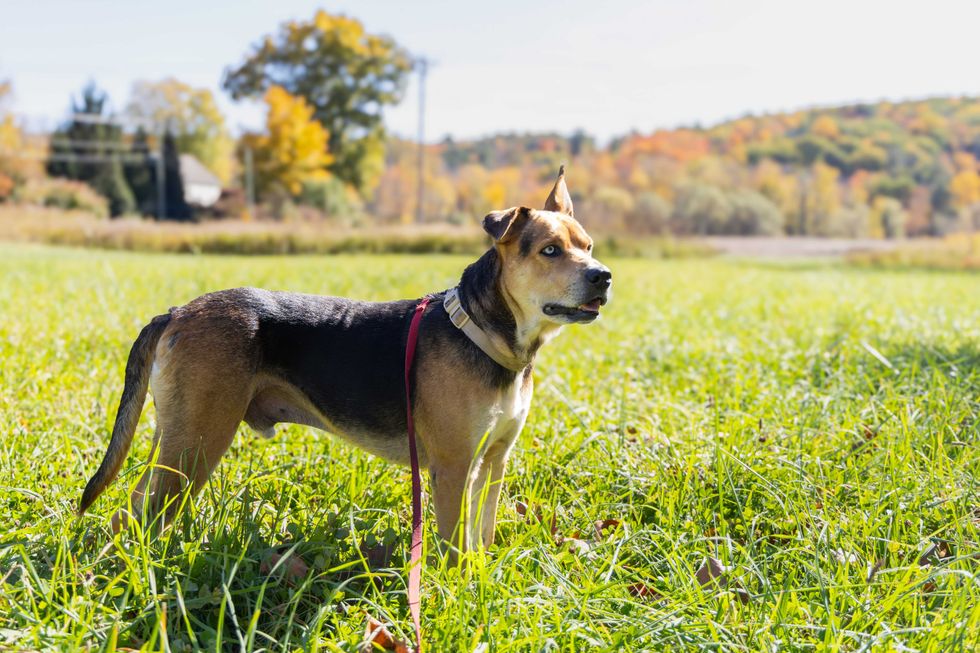
“This 16-pounder chases them away.”
— Jake J. Feathers, North Canaan
“I have come across bears multiple times while outside on runs and it has been a matter of being aware (headphones out) and making some noise to have them quickly run off. It still increases my anxiety for the rest of the run though!”
— Maggie Windsor Gross, Sharon
“Anytime that I’ve come across a bear, it is turning to run. Even with my dogs, it usually leaves.”
— Susan Hervieux, Lakeville
“We just had a big one in our pond having a good time swimming. We don’t leave any trash cans out. I contact my neighbors when I see them. We live over the bridge on Kent Falls as I worry about the hikers but so far nothing has happened. Been here for 40 years!”
— Marion Whynott, Kent
“I had a sow charge while I was in the woods. All I had time to do was yell and wave my arms. She came at me fast, stood up looking at me and went back to her three cubs that are in their second year — surprised she was still so protective. I carry bear spray now because that day I was looking for antlers with my head down and unknowingly walked right into it.”
— Jim Vanicky, Cornwall
“They have become super curious with my kids and dogs. We had to put an electric fence up for our livestock.”
— Cluckers Farm, North Canaan
“Sounds like it’s time for a bear hunt.”
— Caitlyn Ellis, The Berkshires

“I had a bear come on my back porch and crack open a can of Sprite with its teeth!”
— Jessie Lawrence, Canaan
“We had one break into our garage and got a lot of damage this year. Last year one headed straight for a kiddie pool my son was in and we acted fast and grabbed my son and eventually scared the bear off. No amount of yelling and banging really seems to scare them off. I walked to my car a few weeks ago and then to my house and in those two minutes a bear came out of the darkness and my cameras went on to record. I must have been twenty feet from the bear and didn’t even realize while carrying in groceries.”
— Tam Curtis, Lakeville
“I’ve seen a lot of bears. Closest was at the end of my hammock while I was on it (2020 during Covid). He was as surprised as I was and we each ran in opposite directions. I’ve never had an issue as I do not feed birds, leave trash out or anything to attract them. I think a [hunting] season is overdue as they have no fear of humans and due to people being careless they associate people with food and are raising cubs to depend on dumpsters & trash, pet food and even small pets and livestock. All of that said, I love seeing them but would never intentionally attract them.”
— Brian Shippa, North Canaan
“Wiped out my chickens last year. Put up an electric fence. Praying it works. Definitely need a bear season.”
— Amanda Miller Levesque, East Canaan
“When you don’t have birdseed out, bear-proof trash cans out only for pick up day and cleaned grills, the bears just pass on through. There is a human problem, not so much a bear problem.”
— Lynn Gray, Kent
Keep ReadingShow less

Want more of our stories on Google? Click here to make us a Preferred Source.
Letters to the Editor - June 4, 2026
Lakeville Journal
Jun 03, 2026
Jam: Sad be leaving Sharon, excited for future
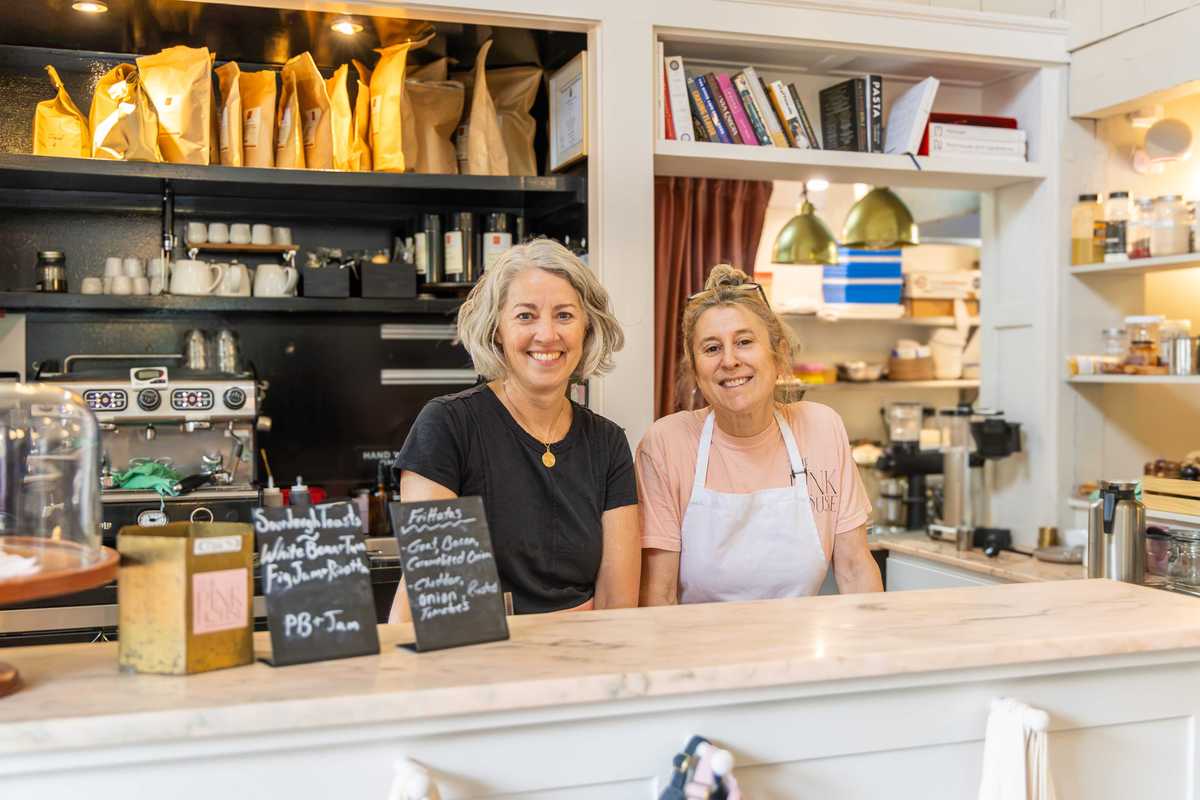
In October, after seventeen years of proudly serving the Sharon community, Jam Food Shop will be relocating to 19 Main Street, Salisbury, CT. This decision was not made lightly. Sharon has been our home and the heart of our business since its inception. For years, we have made attempts to gain clarity around our lease renewal at the Sharon Farm Market. Unfortunately, in the end, we were unable to reach an agreement with the market, leaving us with a short amount of time to find Jam a new home. Please know we will be fully operational in the Sharon Farm Market through the summer.
While we would have loved to continue operating in Sharon, limited time and few available retail spaces put us in quite the pickle! That being said, we are so excited to welcome you all to the new location this fall. We will be offering all the wonderful foods you’ve enjoyed over the years while also adding new menu items to our repertoire. Our team is working tirelessly to make this new standalone Jam the best experience possible for our loyal customers, who we value so much.
Thank you from the bottom of our hearts for your unwavering support. We look forward to continuing to serve the Northwest Corner community in our new home for years to come!
Lee Kennedy
Colin Kennedy
The Jam Team
Sharon
Music hath charms
As Secretary of the 501(c)3 not-for-profit known as “The Music Lab”, I’m compelled to extend gratitude and appreciation to Robin Roraback and The Lakeville Journal for their November 13, 2005 article on our entity.Their willingness to visit and report on a local business with their objective views is a testament to their longevity as a local periodical.While The Music Lab certainly serves as a weekly meeting space for local musicians to gather and perform, we also serve the community as a learning institution for lessons, rehearsals, and music theory.Our mission statement, “To teach, inspire, and promote music in our community” could easily add the suffix “and our world”, given the broad reach we now have using the internet and social media. Many of our repeat patrons boast decades in composing and performing.In fact, some of us are professional musicians in local bands.And why?It is said that “music hath charms to soothe a savage breast.” In short, we gather because we believe that there is real power in music to calm, heal, and have a relaxing or emotional impact on people.Have you ever felt this way about a song or band? This is why I volunteer my time toward the betterment of this organization. Additionally, we provide event support and entertainment for local organizations (i.e. Railroad Days, VFW events, St. Martin Of Tours, NECS, etc.). Given the challenges of our daily lives, what better remedy is there to unify us with a mutually beneficial goal for a few hours each week?This is also the crux of our mission.Like The Journal, we feel it’s important for the community to know of our existence, purpose, and future goals for our growth.We ask that any person with an interest in music come and visit us on any given Thursday evening or call to schedule a private tour to view our facility and equipment.Then, perhaps, one may realize that the sentiment of our mission statement emphasizes music’s power to inspire, move, and transform people.Many thanks to Sean Claydon for his efforts in maintaining his dream, to Mark Yard for creating the weekly acoustic night, and to Jason Tindall for his consistent loyalty in hosting that event.To all the other musicians that are too numerous to mention though you know who you are, your dedication and donations are most appreciated that breathe true life into The Music Lab.
Geoffrey Klish
North Canaan
Housing: ‘One voice should not hold such sway’
Is there a reason that the author of the letter to the editor “Falls Village should not retreat on affordable housing” has signed his letter Lyman Whelan, Litchfield as opposed to Bob Whelan, President of the Board of Directors of Habitat for Humanity of Northwest Connecticut?
There are a few errors that in his capacity as Board Chair and long time employee of Habitat he might be aware. The most important correction is that Falls Village Housing Trust has another better affordable housing project which has been generously supported by the CT Department of Housing (DOH), the rehabilitation of two structures on Prospect and Miner Streets in downtown Falls Village. There is ample room there for expansion. It’s on town water.
The River Road project has been twice rejected for funding by CT DOH.
Might I echo Lyman Bob’s own words, one voice should not hold such sway over so critical an issue as the providing of affordable housing! The meeting room could have been packed with an enormous chorus of sensible Falls Villagers in agreement that our Wild and Scenic River Road is not the appropriate location for a high density subsidized housing development. We want our development downtown, in our back yard, if you will, where our POCD directs, and where Prospect and Miner Streets are located.
Alas small turnout for these meetings seems to be a challenge for the village but surely does not reflect the care and concern of the towns folk. ‘Tis more the channel of communication.
D. Catherine Reville
New York City
Celebrating the Sewing and Mending Team at the Fix-It Pop-Up Event
The Fix-It Pop-Up event in Salisbury was a tremendous success. Local experts generously helped customers repair a wide range of items, creating a welcoming and resourceful atmosphere throughout the event.
My mother, Liudmila, and I are especially grateful to the volunteers at the Sewing and Mending table—Angela Lomanto, Barb Reeves, and Pat Palmer. Their kindness, efficiency, and creativity stood out. It was remarkable to see them help customers with such care, whether that meant matching the right thread color, choosing the right size of a cut, or simply offering thoughtful, attentive service.
Thank you Congregational Church of Salisbury and Scoville Library for organizing this event. We hope for more events like this in the future.
Natalia Smirnova
Liudmila Smirnova
Salisbury

Keep ReadingShow less
Uncomfortable speech still needs protection
Nora Kallusky
Jun 03, 2026
Spending a week at the Foundation for Individual Rights and Expression (FIRE) forum at American University changed how I think about free speech, especially in difficult moments like the aftermath of Charlie Kirk’s killing. In the days that followed, people were fired or punished for comments seen as insensitive or supportive of the violence. What stood out to me was not just what people said, but how quickly reactions shifted depending on who was speaking. People who often criticized cancel culture suddenly supported consequences for speech they found offensive. It made me question whether free speech is truly a principle we believe in, or something we defend only when it is convenient.
That question feels personal to me. My grandparents lived in Argentina during the military dictatorship in the early 1970s, when speaking out against the government was dangerous. People who spoke out were not just silenced socially, they were arrested, and many were tortured or killed. Some simply disappeared. My mom was born during this time, and her family fled when she was just one year old. Growing up, I have heard these stories not as distant history, but as something that shaped my family’s life. Because of that, I cannot think about free speech as an abstract idea. I see what can happen when it is taken away.
With that perspective, my time at FIRE helped me better understand why the First Amendment is written the way it is. It is not designed to protect speech that is widely accepted or easy to hear. It exists to protect speech that people may strongly dislike. One of the most impactful moments of the forum was hearing from Daryl Davis, a black musician and activist,who spent years engaging directly with members of the Ku Klux Klan. Instead of shutting down conversations with people who held deeply racist beliefs, he chose to talk with them, listen, and challenge them through dialogue. Over time, many of those individuals left the Klan, not because their opinions were silenced, but because their views were confronted and changed through conversation. These conversations eventually helped build long lasting relationships, to the point where Davis stepped in to walk a former Klansman’s fiancé down the aisle. His experience showed me that allowing speech, even when it is offensive, can create opportunities for understanding and change in ways that punishment or censorship cannot.
The First Amendment should protect people from being punished by the government for what they say, except in cases of inciting violence or real threats. If we only defend free speech when we agree with it, then it is no longer something we can all rely on. It becomes something we apply selectively, depending on who is speaking.
My family’s history makes that danger feel real. Once speech began to be controlled inArgentina, it no longer mattered what people believed or said. The system decided who wasallowed to speak and who was not. That is why I believe the legal limits on speech should benarrow. At the same time, I believe we all carry responsibility in how we use our words. Freespeech gives us the right to speak, but it also challenges us to use that right thoughtfully.
Protecting speech, even when it is uncomfortable, is not easy. But from what I havelearned, both from my family and from my experience at FIRE, it is necessary.
Nora Kallusky is a 12th grader at Ridgefield High School
Connecticut Foundation for Open Governement high school essay contest
Each year, the Connecticut Foundation for Open Government sponsors an essay contest open to all high-school students in the state. The contest focuses on First Amendment and open information issues. This year, students chose from three prompts (edited here for space constraints): 1.) the potential limitations on hate speech following the fatal shooting of conservative activist Charlie Kirk; 2.) the arrest and revocation of the student visa of a Tufts University Ph.D. student from Turkey who had written an opinion piece for the school newspaper critical of the university’s position on the war in Gaza; 3.) the banning of the Associated Press from Oval Office events and Air Force One following its refusal to refer to the Gulf of Mexico as the Gulf of America, which is President Trump’s preferred name.
The Lakeville Journal has obtained permission to publish the 2026 top three winners out of 70 entries from across Connecticut. First place went to Nora Kallusky, a senior at Ridgefield High School. There was a tie for Second Place, so Mayumi Iwai, a junior at Greenwich High School, and Prithika Venugopal, a senior at Rocky Hill High School, both received that honor.
Keep ReadingShow less

Want more of our stories on Google? Click here to make us a Preferred Source.
loading