Thank you!
Your support is sustaining the future of local news in our communities.

Sharon Hospital feels the budget crunch

SHARON, Conn. — Gov. Dannel P. Malloy’s multi-year spending plan would have a devastating effect on Sharon Hospital if it is approved, and could change the range of services the hospital currently provides, according to hospital administrators.At a press conference at the hospital March 7, Chief Financial Officer Mark Reyngoudt said the hospital has made about $1.5 to $2 million a year in profits over the past couple years after taxes. The governor’s budget plan would essentially hit the hospital with $2.2 million in unreimbursed taxes and fees.Reyngoudt said, “$2.2 million is unsustainable for us. It’s a significant burden for us and for other hospitals that cannot be overcome.“If we make $1.5 to $2 million and have to pay $2.2 million, that money is just not here. We have already made significant cuts and I don’t know where more cuts can be made without severely impacting the hospital’s operations.”Speak out nowThe purpose of the conference was to alert the public to the dangers posed by the spending plan, and to ask constituents in the area to contact their legislators at the state and federal levels. Malloy’s proposed spending plan is now before the state Appropriations Committee. The budget will be finalized by April. As with all government spending plans, Reyngoudt noted that it is always easier to make changes before a budget is finalized and approved.Also at the conference were the hospital’s president and chief executive officer, Kimberly Lumia; Ben Heller, who is chairman of the hospital’s board of governors; Janet Nickson, chairman of the Advisory Board; Associate Administrator Kathy Berlinghoff; and Jill Musselman, who is business development and communications officer.Sharon Hospital’s profits are reinvested in capital improvements such as maintaining the building and in buying new equipment, Reyngoudt said.“Health care is a very capital-intensive business,” he said.The problem facing the hospital is not necessarily that it must pay $2.2 million; the problem, Reyngoudt said, is that none of the money will be funneled back into the hospital by the state.Previously, Sharon Hospital got back about $1.7 million of the $2.2 million it paid to the state, thanks to federal matching funds.Under the governor’s spending plan, those funds would no longer be returned to Sharon Hospital. The plan cuts reimbursements to Sharon down to $1.3 million this year and to $900,000 next year. Eventually, the reimbursement would be eliminated completely. The elimination of the refunds will impact most of the hospitals in the state. Some of that money (about $350 million) will go back into the state’s general fund. Heller said he believes the portion of that money that must be dedicated to health care could go to the University of Connecticut Health Care Center in Farmington. “Wherever it ends up going,” Reyngoudt said, “one thing is clear: It isn’t coming back here.”Impact of ObamacareIn an email regarding the hospital and the budget concerns, state Rep. Roberta Willis (D-64) explained that the governor is justifying “these cuts by presuming that hospitals will enjoy a ‘windfall’ when the uninsured and under-insured are able to buy insurance through the exchanges or receive Medicaid under the Affordable Healthcare Act.”Willis explained the history of the reimbursement system by saying that, “Two years ago, the state instituted a user fee on hospitals aimed at bringing more federal money to the state.“By taxing hospitals, then redistributing the money back to hospitals, the state was able to capture federal matching funds and then pay out the proceeds to the hospitals by way of a distribution formula based on the number of uninsured and Medicaid patients.“Sharon Hospital was an outlier and unlike the other hospitals it lost funding because of the relatively small Medicaid population and also because many of their Medicaid patients are from New York and not reimbursable by Connecticut.”First for-profit in stateHeller, a Sharon resident, was instrumental 12 years ago in helping the hospital convert from a nonprofit to the first for-profit hospital in the state. It remains the only for-profit hospital in Connecticut. The company that first took over the hospital was Essent Healthcare, of Nashville, Tenn. Recently, Essent merged with RegionalCare Hospital Partners, also in Nashville. At the time of Sharon Hospital’s conversion (which was completed in 2002), Essent was chosen in part because the company promised to keep Sharon a full-service hospital. It is the smallest hospital in the state, with 78 beds. Substantial upgrades have been made in recent years, including the expansion of maternity and wound-care services.“We’ve invested $37 million in capital and programs over the last 12 years,” Heller said. Lumia said that the hospital must continue to provide emergency room, cardiac and obstetrics services. But if the governor’s budget succeeds, the hospital might have to shut down outpatient chemotherapy, pain management, wound care and more. “We’re looking at every single thing.”She said there is also “a perception that CEO salaries are high. I’m the lowest paid in the state. I get $257,000 a year.”Reyngoudt said he is paid $195,000 a year, and he is the lowest-paid hospital CFO in the state. Neither has been paid a bonus in recent years because the hospital has not met its budget.The hospital has 285 full-time equivalent employees and a total of 401 workers. It has paid property taxes to the town of Sharon since the conversion in 2002. This year, its property was assessed for the Sharon grand list at $19,999,900. It is the top taxpayer in the town. Second on the list is the Weatherstone estate, which was assessed at $10,124,330.Although Lumia said she feels that the budget plan will be changed to lessen the hit on the hospitals, it is still essential to reach out to legislators and express concern. “We’re fighting. Very hard,” Heller said.

Latest News

‘So Little to Do,’ so much to discover at James Barron Art

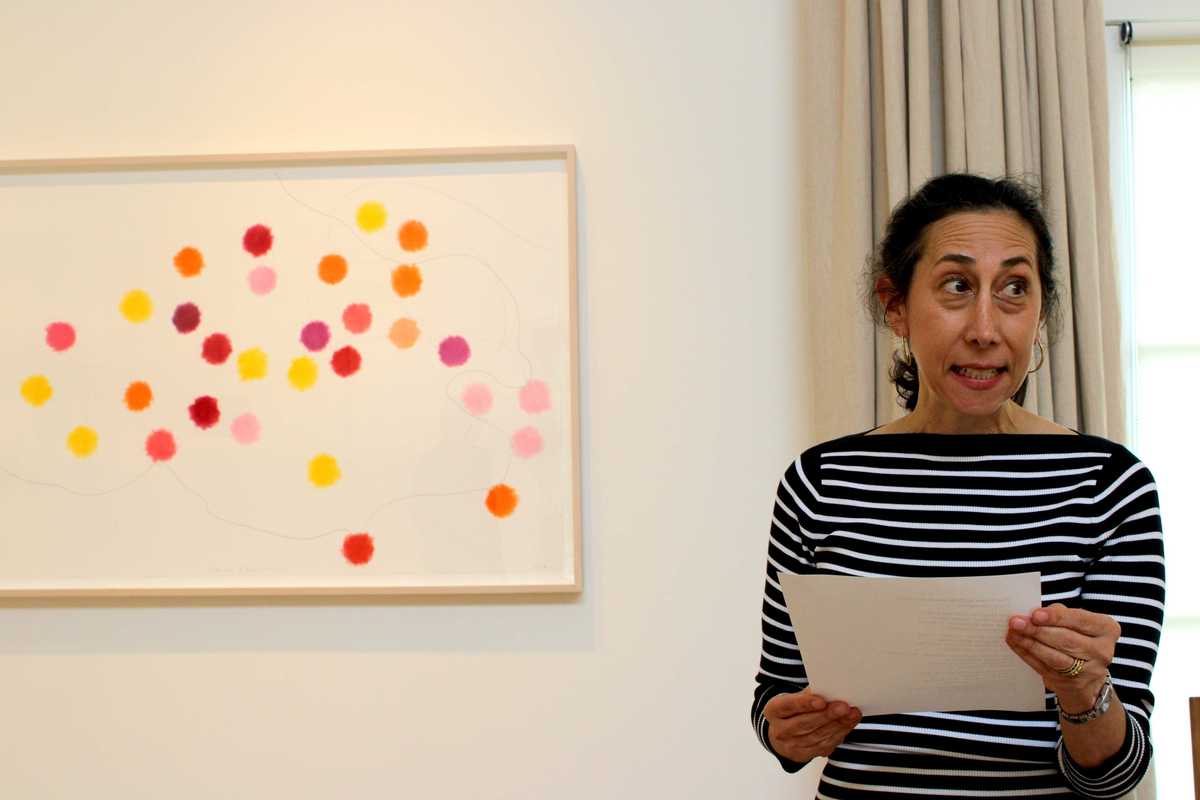
Curator Deborah Goodman Davis reads the Emily Dickinson poem “The Grass So Little Has to Do.” Spencer Finch’s “Following Three Bees (Zinnias)” buzzes in the background.

Photo by Natalia Zukerman

“The Grass Has So Little to Do,” on view at James Barron Art in Kent, takes its title from Emily Dickinson’s poem “The Grass So Little Has to Do,” written in 1862:

“The Grass so little has to do—
A Sphere of simple Green—
With only Butterflies to brood
And Bees to entertain—”

Keep ReadingShow less

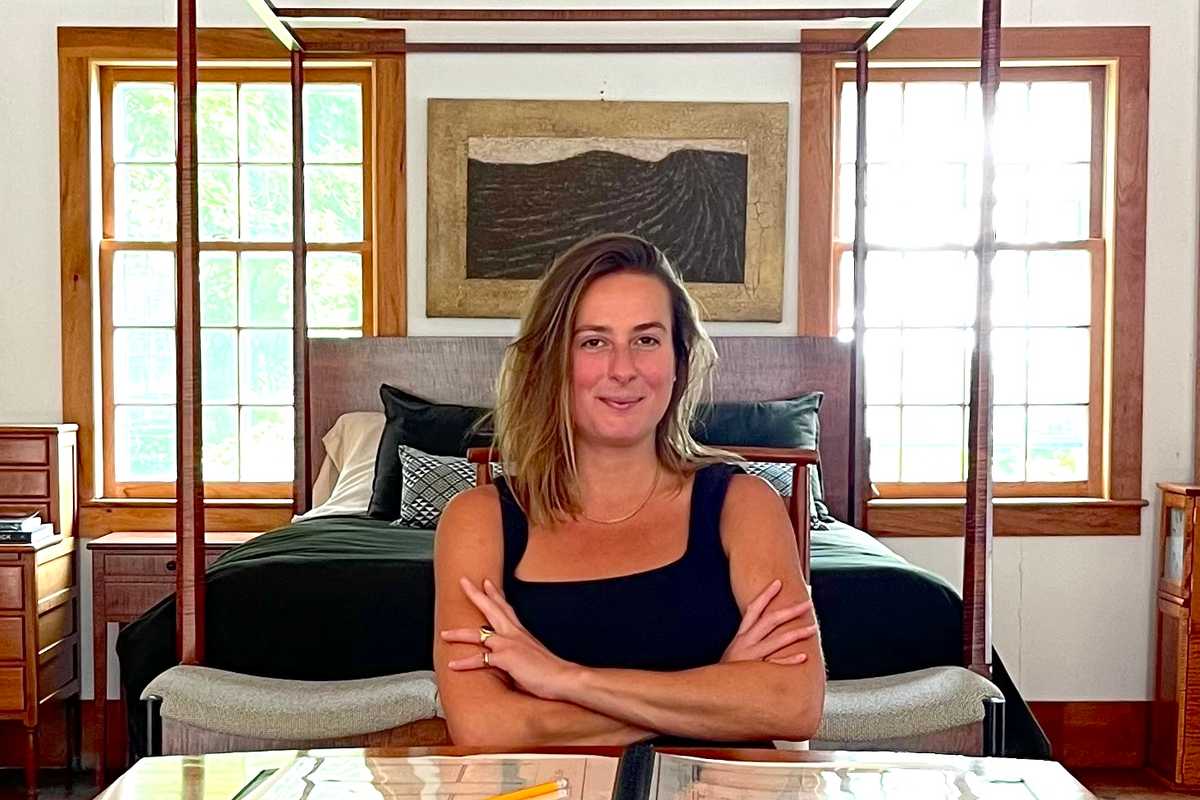
Marina Kotchoubey is not a woodworker

Marina Kotchoubey is not a woodworker

Marina Kotchoubey at the Ian Ingersoll Cabinetmakers showroom in West Cornwall.

Photo by D.H. Callahan

After 40-something years navigating the world of custom fine furniture, Ian Ingersoll was getting ready to retire. Starting off with a little dovetail stool that he sold at a shop in West Cornwall in the 1970s, he’d grown his skill and his business into something he — and the whole town — could be proud of. Shutting down that business was not an option.

Ingersoll built Ian Ingersoll Cabinetmakers, which produced mainly classical Shaker furniture, on passion: the passion he had to make a living through creative challenges and the passion of his employees, who all seem deeply in love with their craft.

Keep ReadingShow less
A legacy of giving at Norfolk Chamber Music Festival

One hundred and twenty years ago, Carl and Ellen Stoeckel commissioned New York architect E.K. Rossiter to design The Music Shed in Norfolk, Connecticut. After nearly a decade of entertaining their friends and neighbors with the finest music of the day, they built a permanent home for their beloved Litchfield County Choral Union.

The commission and full funding of the construction was not unheard of in an era when great fortunes led to public enrichment. Railroad tycoon John D. Rockefeller was instrumental in funding institutes of higher education. Steel baron Andrew Carnegie was building libraries all over the country, and famously said that a man who dies rich is a disgrace, challenging his peers to give their fortunes back to the people.

Keep ReadingShow less
google preferred source

Want more of our stories on Google? Click here to make us a Preferred Source.
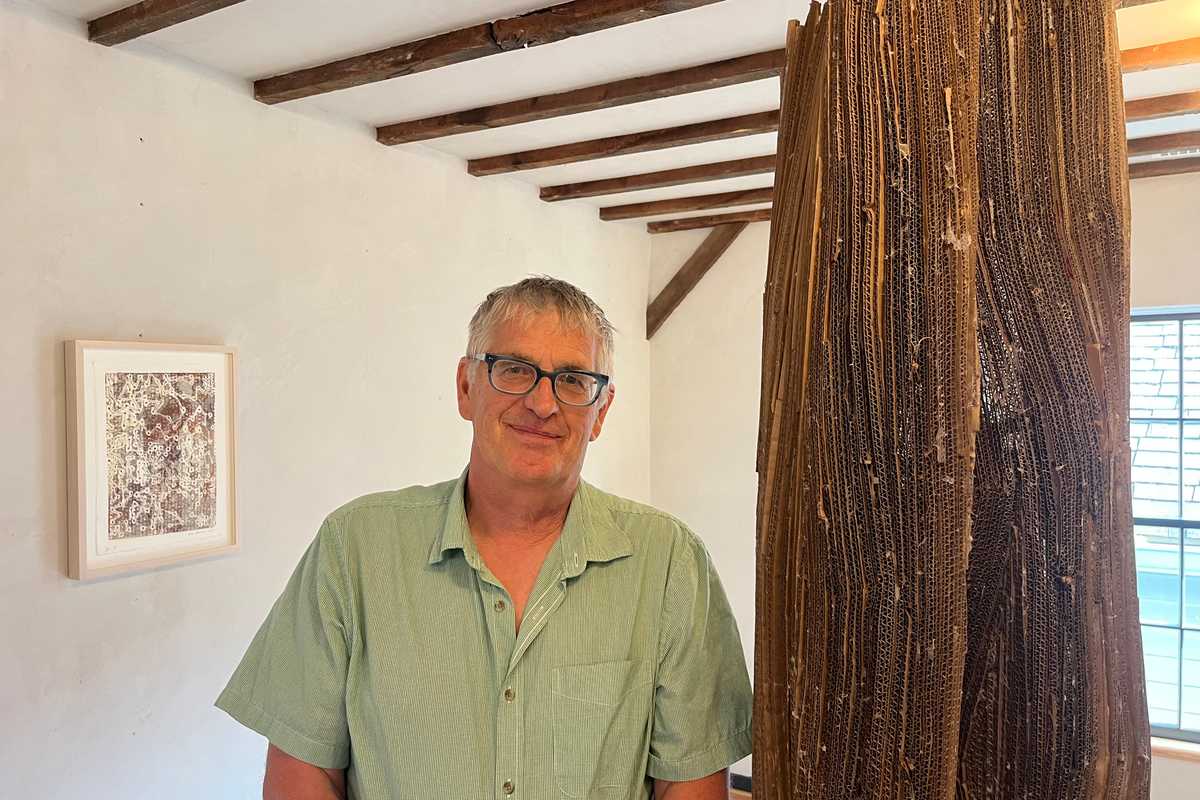
Two unique exhibitions at Geary Gallery

Henry Klimowicz with his sculpture, “Partial Pillar 1”

Photo by D.H. Callahan

On Saturday, Aug. 1, Geary Gallery opened its doors in Salisbury for two unique shows in its first- and second-floor gallery spaces. Art lovers flooded both floors over the course of the afternoon, giving the events a vibrant feeling that enhanced the importance of the art.

On the first floor is a show by Chicago-born, Colorado-based photographer Summers Moore, titled “Lobitos: Pueblo Fantasma,” or “Lobitos: Ghost Town.” The work centers around her daughter’s current hometown in Peru. Moore herself found a home away from home in Colorado in the mid-1980s and encouraged her children to seek out new places outside of their comfort zones.

Keep ReadingShow less

Writer’s retreat in the woods

Writer’s retreat in the woods

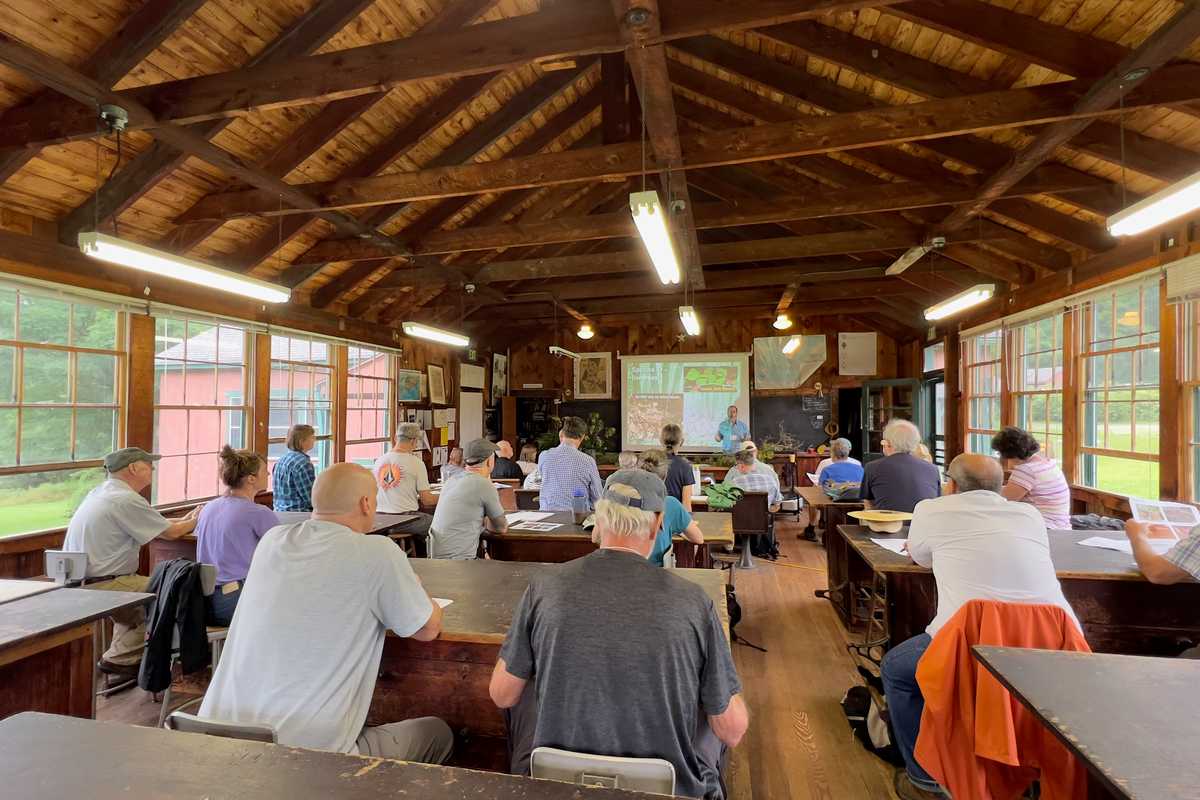
Participants in a 2024 Great Mountain Forest Woodland Academy workshop at Yale Camp.

Photo by Mike Zarfos

Great Mountain Forest (GMF) will host its first Nature Writing Retreat at the historic Yale Camp in Falls Village from Aug. 7-9, 2026. Writers of all levels are invited to draw inspiration from one of New England’s most notable forest landscapes. GMF envisions the retreat becoming an annual event celebrating writing, conservation and the relationship between people and forests.

This immersive three-day retreat reflects on the legacy of Hal Borland, the American writer and New York Times nature columnist whose work was deeply connected to this landscape. The retreat explores how wilderness shapes language, strengthens close observation and fosters environmental consciousness.

Keep ReadingShow less
From Cornwall to Rome, Adam Van Doren at Berkshire Botanical Garden

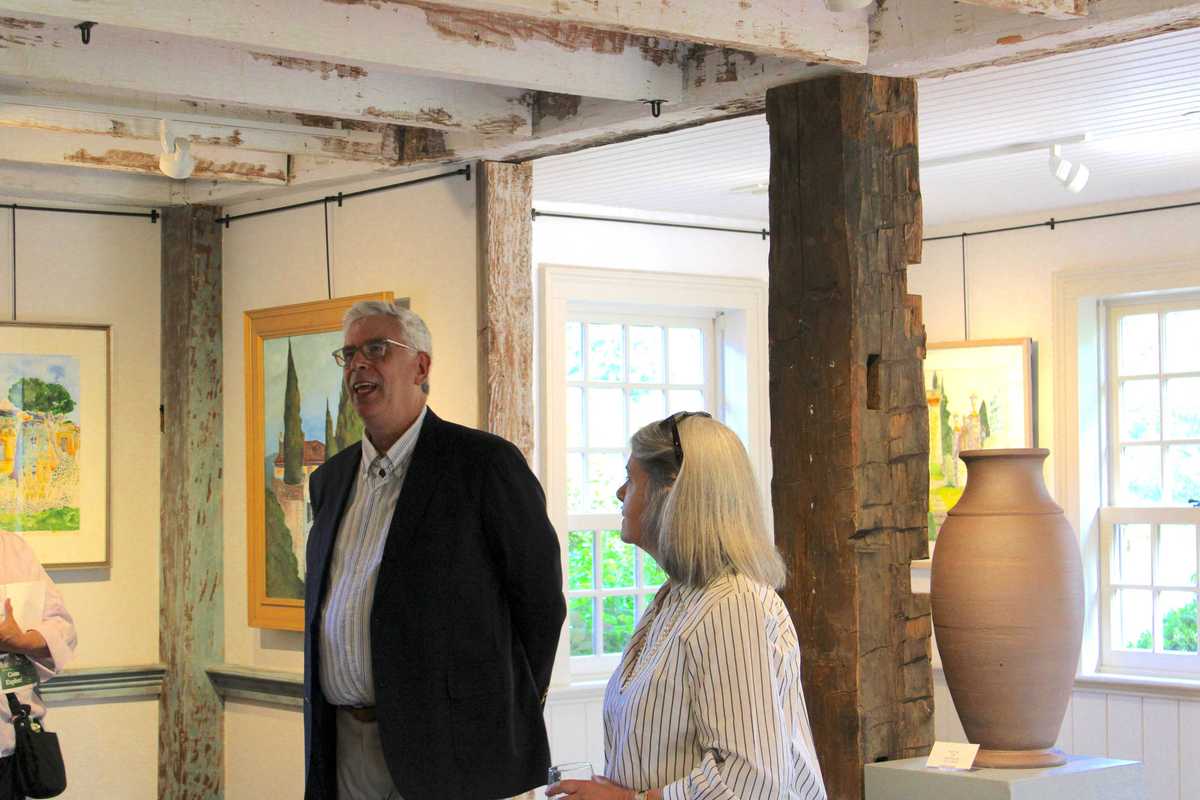
Artist Adam Van Doren and curator Donna Hassler talk to a group of visitors at the Berkshire Botanical Garden. A Stephen Proctor vessel sits to their left.

Photo by Natalia Zukerman

This summer, the Berkshire Botanical Garden in Stockbridge has hosted “Grounded in Nature: Paintings by Adam Van Doren,” an exhibition exploring the intimate relationship between architecture and the natural world.

On view for only a few more weeks in the Leonhardt Galleries, the exhibition features more than 35 watercolor and oil paintings by the New York-based artist, architect, author and Yale professor, curated by art historian Donna Hassler, director emerita of Chesterwood. The works span three distinct places that have shaped Van Doren’s artistic practice: New York City, Cornwall, Connecticut, and his travels throughout Europe.

Keep ReadingShow less
google preferred source

Want more of our stories on Google? Click here to make us a Preferred Source.
google preferred source

Want more of our stories on Google? Click here to make us a Preferred Source.