A letter to the editor from Liz Piel was published in the July 9 Lakeville Journal concerning six doctors leaving the Sharon Hospital medical staff. It paints a bleak picture, but I don’t think it is fair to the efforts of the administration, the medical and nursing staff, and the employees who all work hard to make the place meet the needs of our communities.
Medicine has drastically changed in America in the past half-century, and that change has a lot to do with why doctors and patients are now unhappy and behave differently than they did in the past.
Our medicine used to be a direct relationship between patient and doctor. The patient would go to the doctor, the doctor would serve the patient and a bill would be presented to the patient. Usually the doctor got paid, but not always.
Hospitals were largely independent and voluntary institutions. Most were not privately owned. Few physicians were employed by hospitals. This is now all changed.
Insurance companies have worked to control the relationship between doctor and patient. Community hospitals may be sold to for-profit corporations, but that does not change the fact that all of today’s community hospitals face increasing taxation and decreasing reimbursement from the government. Corporate money can provide much needed capital, but the corporations may then have expectations as to how things should work.
Until about the 1960s, many doctors graduated debt-free from medical school. Now the average medical school graduate has in excess of $250,000 in debt from a private medical school, and about half of that from a public institution. That indebtedness has driven doctors away from less remunerative primary care and toward specialties where their earning power is greater, which helps to pay debts.
Many doctors are now employed by hospitals or insurance companies and have to please their employers, and not just the patient.
The government has stepped in to place strict controls on reimbursement from Medicare and Medicaid and will want to control reimbursements through the Affordable Control Act. The government has imposed the Electronic Medical Record on medicine, which has been a difficult and poorly controlled process resulting in frustration for doctors and hospitals trying to get the systems to work, or even communicate with other systems.
Of the six MDs mentioned in the letter, the two emergency room physicians have been replaced by board-certified ER doctors. The two pediatricians left for largely personal reasons, and the hospital is searching hard to fill that gap. One OB-GYN has left, and it will be difficult to replace her, but three full-time obstetricians remain.
Our cardiologist is still here full-time. His association with St. Francis Hospital in Hartford is an administrative choice on his part, and gives patients direct access to an excellent tertiary care cardiac center.
The internist who was also a sleep specialist left because he found what he considered to be a better situation elsewhere. The Smilow Cancer Center doctors all retired or decided not to travel here.
It must be remembered that New England is an area where physician earnings are below the rest of the nation, and the cost of maintaining a practice is higher. Malpractice suits may have higher settlements here than elsewhere and appear to be brought against doctors more frequently than in other parts of the country, all of which makes it rather difficult to attract and retain physicians.
After World War II, the government funded medicine heavily, but today we have a huge national debt and a very large defense budget. Medicine has taken a back seat and our government now taxes medicine and hospitals heavily and supports them poorly.
In my mind, looking at this after 32 years of practicing medicine in Sharon, and four years as Sharon’s first selectman, there are no clear heroes or villains here. Our society is simply scrambling for money to make things work, and there is not as much money to go around as there used to be.
We need our local hospital, and as local citizens we need to support it in whatever way we can. That includes not only using the services of the hospital, but also volunteering to make the connection between the community and the hospital even more meaningful and enduring.
Malcolm M. Brown, M.D., lives in Sharon.
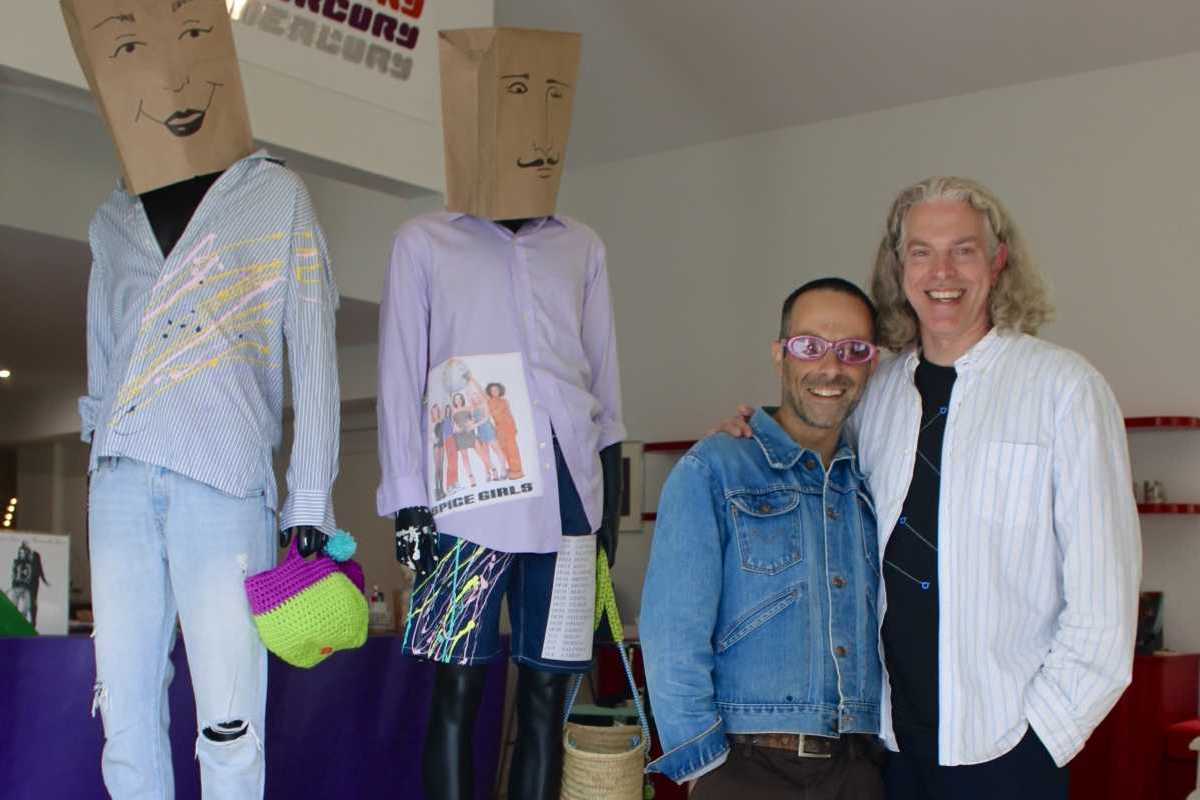
 Classic styles, bold colors, and creative concerts make up the “Imaginary Concerts” line at Peggy Mercury.Provided
 Shirts from Peggy Mercury’s first fashion line, “Imaginary Concerts,” hang on display.Provided