Thank you!
Your support is sustaining the future of local news in our communities.

Sharon Hospital will join New York’s Health Quest, return to nonprofit status

SHARON, Conn. — Sharon Hospital will return to not-for-profit status when it joins Health Quest, a nonprofit healthcare provider based in the mid-Hudson Valley.

The largest member of the Health Quest group is Vassar Brothers Medical Center in Poughkeepsie. 

The group also includes Northern Dutchess Hospital in Rhinebeck, a 68-bed acute care community hospital. Sharon Hospital is a 78-bed acute care community hospital. 

Peter Cordeau, who has been Sharon Hospital’s CEO since last November, will remain, as will CFO Christian Bergeron. They had been employees of hospital owner RegionalCare and Capella Healthcare. Lori Puff, the hospital’s chief nursing officer, will also remain at Sharon. After the state of Connecticut approves the proposed partnership, Cordeau, Bergeron and Puff will become employees of Health Quest.

Once the hospital files its certificate of need (CON) with the state, it could take nine months to a year for the plan to be approved. Until then, Sharon Hospital will remain a for-profit and part of Essent Healthcare of Connecticut, which is an affiliate of RCCH HealthCare Partners (which is the same as RegionalCare/Capella).

Regionally focused care

It was RegionalCare/Capella that orchestrated the transfer of Sharon Hospital to Health Quest.Discussions between the two healthcare groups and a small group of community members, including state Rep. Roberta Willis (D-64), have been held quietly over the course of the past year.

In a statement, Mike Browder, the chief financial officer of RCCH said, “Over the last several months, the leaders of the involved parties determined the best way to ensure a strong future for the delivery of healthcare in Sharon and the surrounding region would be for Sharon Hospital to align with another regionally focused health system.

Also involved in the discussions over the past year was the Foundation for Community Health, a nonprofit organization that was formed as part of Sharon Hospital’s conversion to a for-profit entity in 2002.

All parties privy to the discussions expressed enthusiasm and optimism about the merger. 

A larger medical center

For Cordeau, the Sharon Hospital CEO, this new step is not a statement about whether hospitals should be for profit or not for profit.

“In my opinion, the model we need here in Sharon relies heavily on a tertiary care relationship with a large medical center,” said Cordeau, who was Sharon’s chief nursing officer until he was promoted to CEO last autumn.

Vassar Brothers describes itself on its website as “a 365-bed facility that houses the first and only cardiothoracic surgery center between Westchester and Albany, a state-of-the-art birthing center, pioneering centers for advanced surgery and wound care and a Level III Neonatal Intensive Care Unit.”

In all its online materials, Health Quest and its hospitals stress that they are a community-focused, nonprofit group that has been around for many years and offers stability and longevity in addition to high-quality care.

Hiring new doctors

Cordeau said that the stability of Sharon’s new partner will not only widen the medical options for area residents; it will also help Sharon to recruit new physicians.

Health Quest President Robert Friedberg said last week  that the group’s intention is to hire more physicians specifically for Sharon Hospital. 

“A rotating staff doesn’t work,” he said. “We will recruit the physicians who fill the needs we have here.”

Having a larger local network helps attract doctors, he said. The Health Quest Medical Practice has more than 264 providers in three counties in nearby New York state.

“It’s very hard to recruit, for example, one surgeon to an area,
Friedberg said. “It’s better to be part of a group, so the doctors can share ideas and cover call. They will also have access to the Vassar campus for advanced surgery.”

Cordeau added that, “Frankly, the stability of our group has been in question. Now the future looks very bright; this new partnership will help us grow, and attract both recent medical school graduates and seasoned physicians.”

Foundation for Community Health

The Foundation for Community Health (FCH) has been involved in the discussions since the beginning, thanks to the efforts of Rep. Willis.

The foundation was formed in 2003 with several million dollars in funds that had been donated to Sharon Hospital over the years by community members. As a condition of Sharon’s conversion to a for-profit entity,  those funds were set aside in the care of the foundation; and as a condition of the for-profit conversion, FCH was not allowed to fund any programs at the hospital.

“Sharon Hospital is the central part of our region’s health-care delivery system,” said FCH CEO Nancy Heaton. “With this transition back to not-for-profit status, we can once again work closely with the hospital and provide more services to the community.”

The foundation will remain a separate entity and its funds will not revert to the hospital.

Advisory board

Another change that will come with the conversion to not-for-profit status: Sharon Hospital will no longer have an advisory board made up of community members. 

Janet Nickson, a Sharon resident and head of the board, said, “Having served on the advisory board since 2002 I have seen the hospital go through many changes as per owners, CEO personnel, renovations/innovations, and I am not surprised by change. I hope to move forward with it and trust that those involved will do all that is possible to keep Sharon Hospital alive and well for the communities it serves.”

The hospital will continue to have a governing board, whose membership is likely to change when the conversion is approved by the state. Sharon resident Howard Fuhr is head of the governing board. 

Tax impact

A third important change: Once Sharon Hospital returns to not-for-profit status, it will no longer pay property taxes to the town of Sharon.

Like many substantial not-for-profit property owners in the Northwest Corner, the hospital is likely to work out a deal in which it will make an annual donation to the town, known as a payment in lieu of taxes, or PILOT payment.

Willis and Sharon First Selectman Brent Colley said that it’s too early to know exactly what the tax implications will be for Sharon. But both said Health Quest has promised that there will not be a sudden withdrawal of taxes. 

Colley said that, “As a member of the hospital advisory board and first selectman of Sharon, I feel this opportunity (should it be approved by state and federal regulators) would be a positive for both the hospital and the town.

“Hospitals across the country are partnering with other hospitals to expand their care options, better their bargaining power with the insurance exchanges and reduce their operating costs.Partnering is how hospitals are surviving.

“I am hopeful that this partnership is approved and feel it is exactly what this community needs at this moment. Sharon Hospital’s future impacts the town of Sharon’s future and we stand behind them and applaud them in their efforts to improve and expand what this town has to offer.”

Friedberg stressed that Health Quest considers itself to be a community-owned healthcare system.

“The community will once again own Sharon Hospital. The profits and benefits will be reinvested in the community.”

The hospital will still be required to pay the $3 million per year provider tax to the state.

Public comment

Friedberg and Cordeau both promised that there will be numerous public meetings and opportunities for the community to ask questions and weigh in on the future partnership of Sharon Hospital and Health Quest.

Latest News

‘So Little to Do,’ so much to discover at James Barron Art

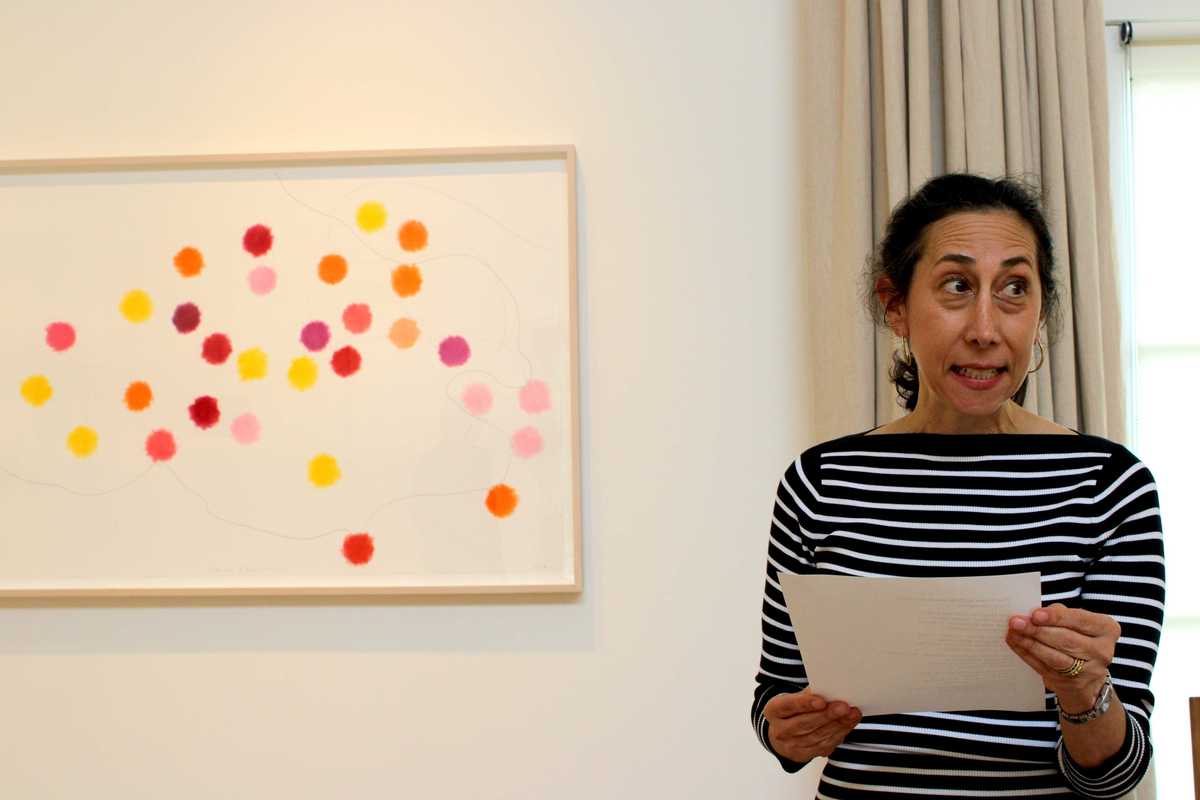
Curator Deborah Goodman Davis reads the Emily Dickinson poem “The Grass So Little Has to Do.” Spencer Finch’s “Following Three Bees (Zinnias)” buzzes in the background.

Photo by Natalia Zukerman

“The Grass Has So Little to Do,” on view at James Barron Art in Kent, takes its title from Emily Dickinson’s poem “The Grass So Little Has to Do,” written in 1862:

“The Grass so little has to do—
A Sphere of simple Green—
With only Butterflies to brood
And Bees to entertain—”

Keep ReadingShow less

Marina Kotchoubey is not a woodworker

Marina Kotchoubey is not a woodworker

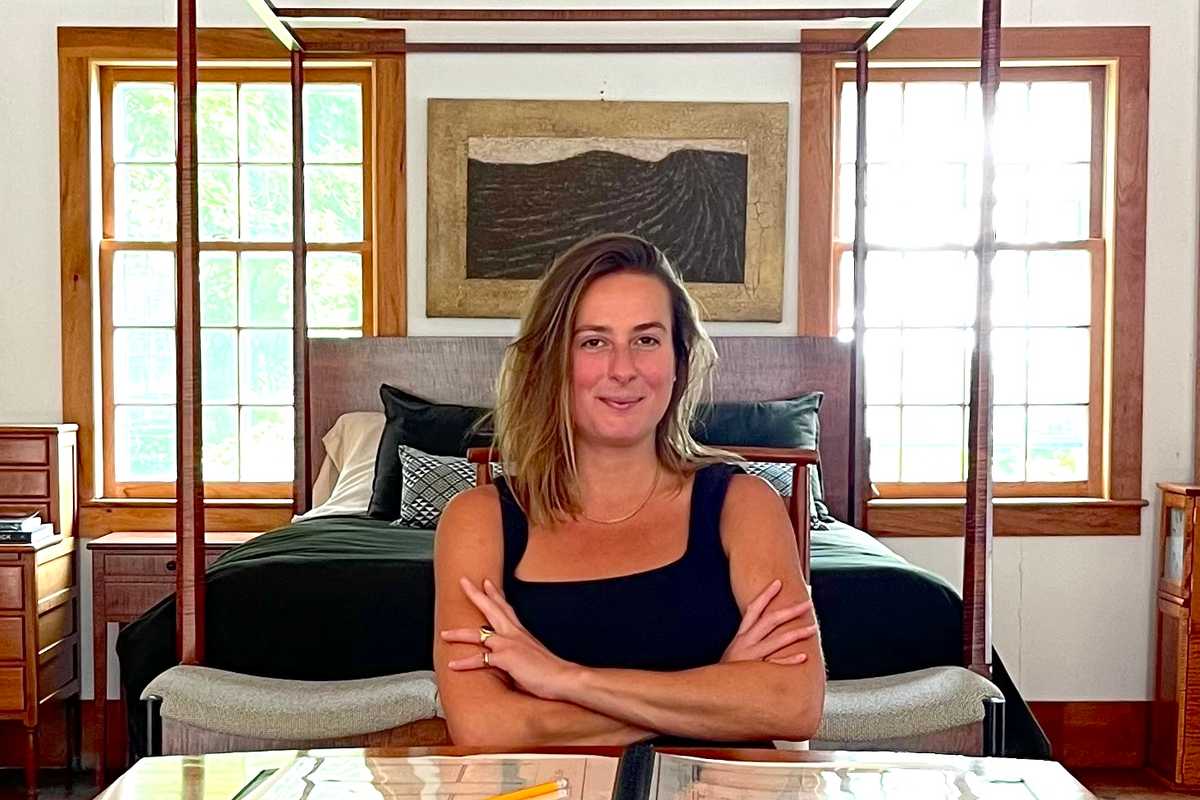
Marina Kotchoubey at the Ian Ingersoll Cabinetmakers showroom in West Cornwall.

Photo by D.H. Callahan

After 40-something years navigating the world of custom fine furniture, Ian Ingersoll was getting ready to retire. Starting off with a little dovetail stool that he sold at a shop in West Cornwall in the 1970s, he’d grown his skill and his business into something he — and the whole town — could be proud of. Shutting down that business was not an option.

Ingersoll built Ian Ingersoll Cabinetmakers, which produced mainly classical Shaker furniture, on passion: the passion he had to make a living through creative challenges and the passion of his employees, who all seem deeply in love with their craft.

Keep ReadingShow less
A legacy of giving at Norfolk Chamber Music Festival

One hundred and twenty years ago, Carl and Ellen Stoeckel commissioned New York architect E.K. Rossiter to design The Music Shed in Norfolk, Connecticut. After nearly a decade of entertaining their friends and neighbors with the finest music of the day, they built a permanent home for their beloved Litchfield County Choral Union.

The commission and full funding of the construction was not unheard of in an era when great fortunes led to public enrichment. Railroad tycoon John D. Rockefeller was instrumental in funding institutes of higher education. Steel baron Andrew Carnegie was building libraries all over the country, and famously said that a man who dies rich is a disgrace, challenging his peers to give their fortunes back to the people.

Keep ReadingShow less
google preferred source

Want more of our stories on Google? Click here to make us a Preferred Source.
Two unique exhibitions at Geary Gallery

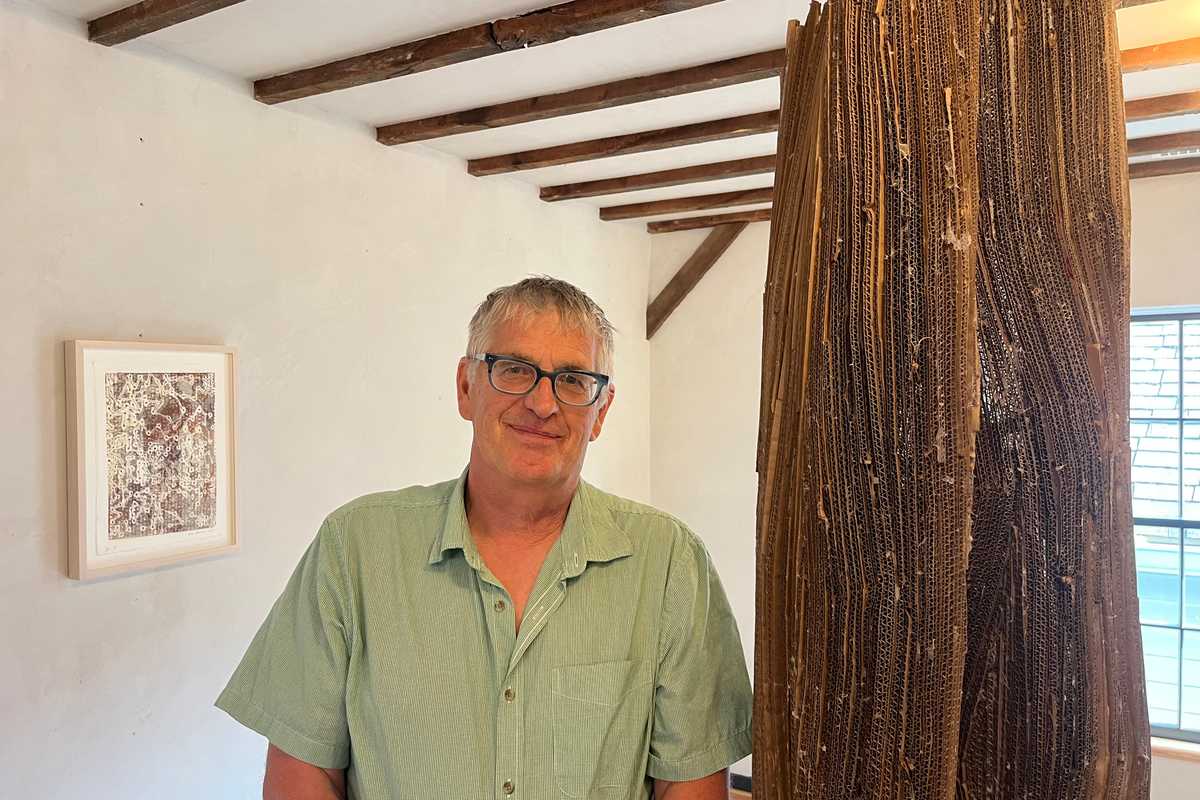
Henry Klimowicz with his sculpture, “Partial Pillar 1”

Photo by D.H. Callahan

On Saturday, Aug. 1, Geary Gallery opened its doors in Salisbury for two unique shows in its first- and second-floor gallery spaces. Art lovers flooded both floors over the course of the afternoon, giving the events a vibrant feeling that enhanced the importance of the art.

On the first floor is a show by Chicago-born, Colorado-based photographer Summers Moore, titled “Lobitos: Pueblo Fantasma,” or “Lobitos: Ghost Town.” The work centers around her daughter’s current hometown in Peru. Moore herself found a home away from home in Colorado in the mid-1980s and encouraged her children to seek out new places outside of their comfort zones.

Keep ReadingShow less

Writer’s retreat in the woods

Writer’s retreat in the woods

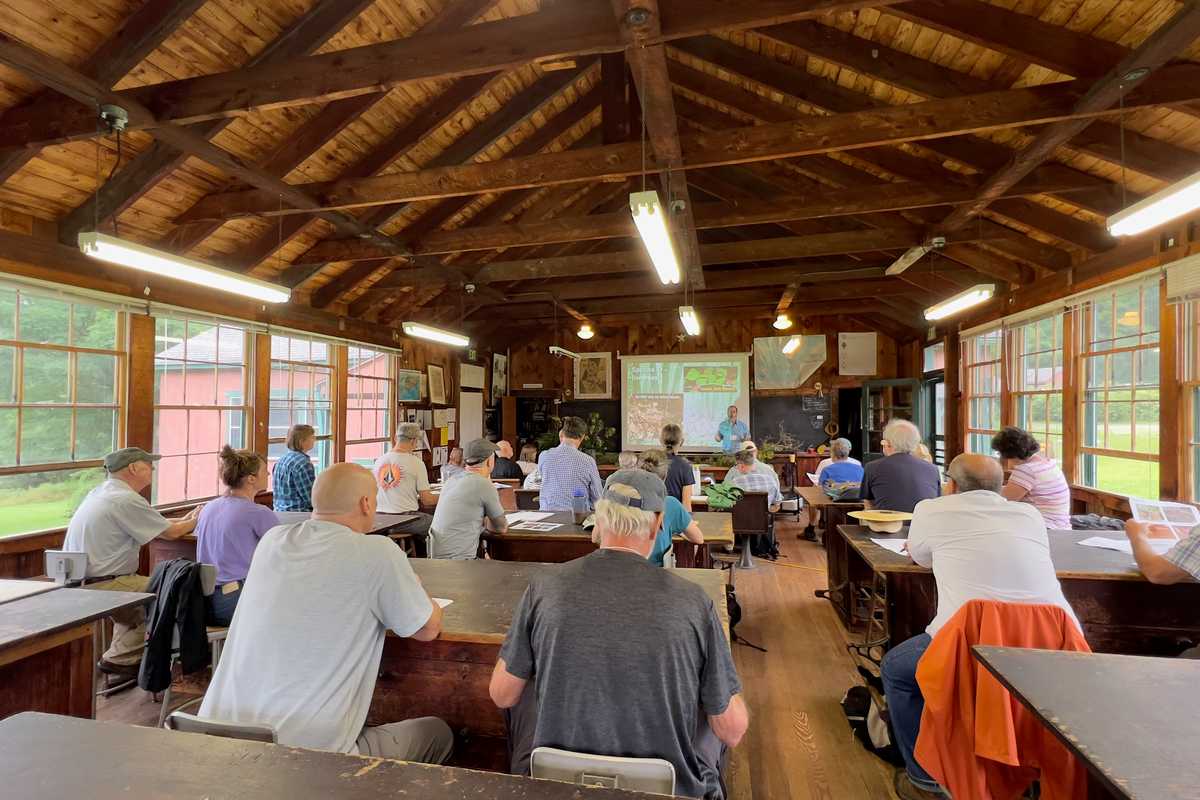
Participants in a 2024 Great Mountain Forest Woodland Academy workshop at Yale Camp.

Photo by Mike Zarfos

Great Mountain Forest (GMF) will host its first Nature Writing Retreat at the historic Yale Camp in Falls Village from Aug. 7-9, 2026. Writers of all levels are invited to draw inspiration from one of New England’s most notable forest landscapes. GMF envisions the retreat becoming an annual event celebrating writing, conservation and the relationship between people and forests.

This immersive three-day retreat reflects on the legacy of Hal Borland, the American writer and New York Times nature columnist whose work was deeply connected to this landscape. The retreat explores how wilderness shapes language, strengthens close observation and fosters environmental consciousness.

Keep ReadingShow less
From Cornwall to Rome, Adam Van Doren at Berkshire Botanical Garden

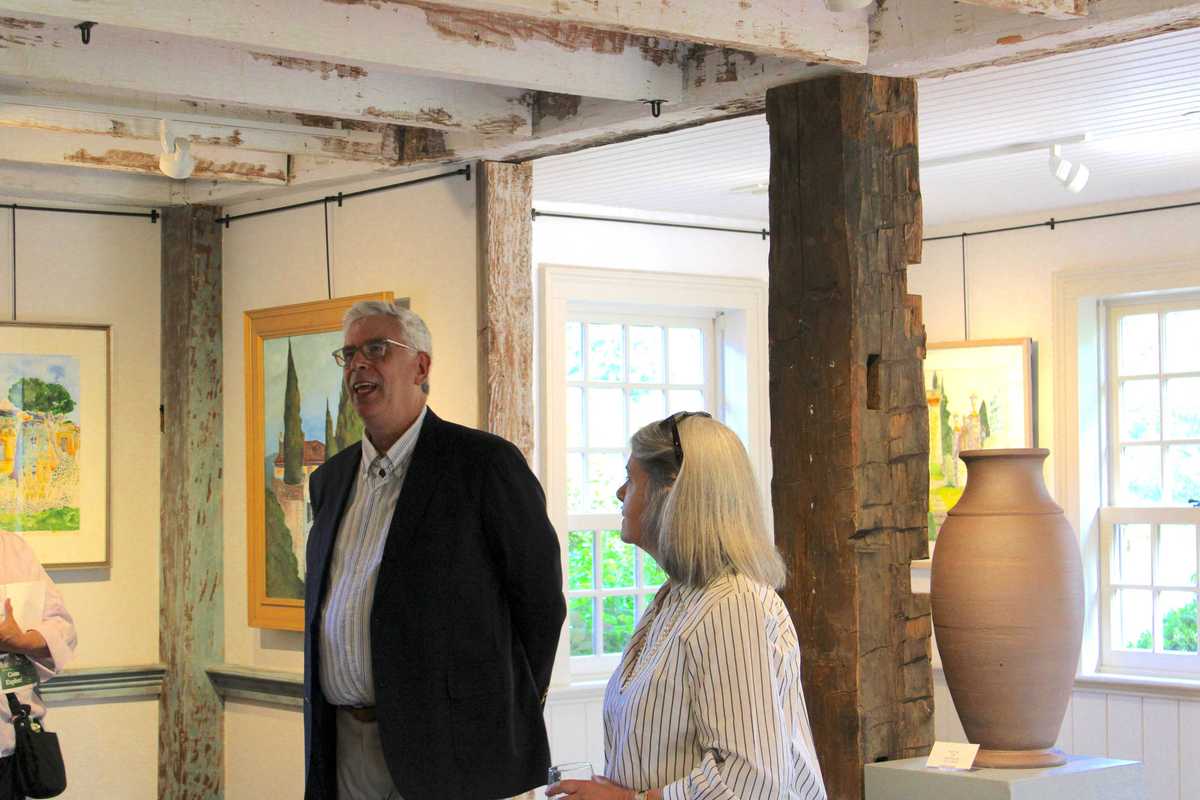
Artist Adam Van Doren and curator Donna Hassler talk to a group of visitors at the Berkshire Botanical Garden. A Stephen Proctor vessel sits to their left.

Photo by Natalia Zukerman

This summer, the Berkshire Botanical Garden in Stockbridge has hosted “Grounded in Nature: Paintings by Adam Van Doren,” an exhibition exploring the intimate relationship between architecture and the natural world.

On view for only a few more weeks in the Leonhardt Galleries, the exhibition features more than 35 watercolor and oil paintings by the New York-based artist, architect, author and Yale professor, curated by art historian Donna Hassler, director emerita of Chesterwood. The works span three distinct places that have shaped Van Doren’s artistic practice: New York City, Cornwall, Connecticut, and his travels throughout Europe.

Keep ReadingShow less
google preferred source

Want more of our stories on Google? Click here to make us a Preferred Source.
google preferred source

Want more of our stories on Google? Click here to make us a Preferred Source.