Thank you!
Your support is sustaining the future of local news in our communities.

Housatonic Meadows tree cutting triggers bill to oversee DEEP’s work
Housatonic Meadows tree cutting triggers bill to oversee DEEP’s work
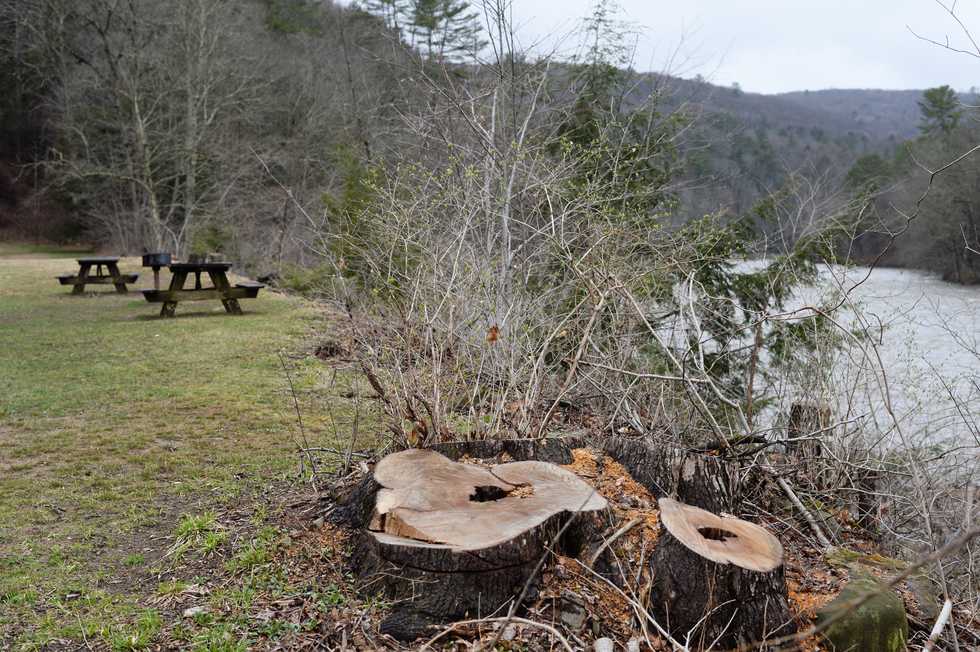
Tree stumps remain along the bank of the Housatonic River adjacent to the picnic area at Housatonic Meadows State Park. 
Photo by John Coston

SHARON — Legislation that calls for a new level of oversight over the Department of Energy and Environmental Protection’s (DEEP) management of parks and campgrounds is moving ahead in the General Assembly, initiated by last winter’s controversial tree-cutting at Housatonic Meadows State Park.

Sen. Craig Miner’s (R-30) proposal, Senate Bill No. 117, has been voted favorably out of the Environment Committee and has bipartisan support, Miner said. It’s not known how the bill might be amended on its way out of the Senate to the House, but Miner said, “It’s highly unusual for an agency to have this kind of oversight.”

Miner, who is the ranking member on the Environment Committee, said DEEP has pledged to meet with the committee to discuss the bill’s language on April 15. Besides any outcome from that meeting, Miner also envisions that the bill could face more changes, but he said he expects that it will pass both chambers.

“We are keen to pass a bill,” Rep. Maria Horn (D-64) said at a March 15 virtual public hearing held by DEEP. “So that arborists get a chance to weigh in.”

SB 117 calls for DEEP to consult with an arborist before removing a tree on the grounds that it presents a hazard. The removal last winter of about 100 oak and pine trees in the scenic, riverside park that is a popular recreational destination drew immediate protests from local residents. Many of them were primed to question the state’s decision-making based on their own expert credentials as arborists, tree wardens, horticulturalists and wildlife experts.

Last fall, the park supervisor at Housatonic had marked trees as hazardous using guidelines established by the agency. According to DEEP policy, there was no public notice or outreach, and a state contractor began cutting the trees in early November.

A few days later, as a result of public outcry, the work stopped. It resumed again in January despite a peaceful protest at the site.

“There’s no way to unwind the damage,” Miner said in an interview, “and my position still is that legislation is needed to protect against the same kind of activity from happening again.”

In its current form, SB 117 imposes various controls on DEEP. For one, before removing or pruning five or more so-called hazardous trees per acre or removing a tree that is determined to be 75 years or older or a species of special concern or a threatened or endangered species, DEEP must consult with an arborist not employed by or under contract by the state.

The bill further would require a sign posted on trees slated for removal. Anyone who objects would have to file a petition, which would be followed by a public hearing. Eventually the DEEP commissioner would be required to provide notice of the commissioner’s decision to anyone with an interest in the petition.

“This has costs associated with it,” Horn said. “We need to put a price tag on it,” she added, referring to a fiscal analysis underway in Hartford.

The bill also deals with situations when a tree is determined to be an immediate public hazard by an arborist, requiring the arborist to consider the proximity of the tree to the public, the feasibility of pruning in lieu of removal and the age and history of the tree and to determine social or scenic value. The bill also calls for tree planting to replace removed trees.

“These trees were carelessly and, in most cases, erroneously targeted for removal by DEEP. This was a travesty,” said Bruce Bennett, a Connecticut-licensed arborist and the tree warden for the town of Kent, who spoke at the March 15 public hearing.

Bennett’s input at the hearing was made as a representative of Housatonic Meadows Preservation Action (HMPA), a group of concerned citizens formed to change DEEP’s practices when it comes to designating hazardous trees, and among other things to ensure that there is a suitable remediation plan.

DEEP announced in February its intention to develop a hazard tree mitigation policy and to seek public comment. At the March 15 hearing, DEEP Commissioner Katie Dykes and Deputy Commissioner Mason Trumbull elaborated on that effort’s goals to serve public safety, protect natural resources and provide more public notice and communication.

“How can we do better?” asked Eric Ott, director of engineering and field support services at DEEP, who also spoke at the hearing.

Up to now, DEEP has acted as the sole decision-maker when a tree is identified as a public hazard, and the decision to remove a tree typically is left to park managers, who lack credentials as arborists or tree wardens. DEEP also lacks a process to review such park manager decision-making.

The HMPA group also seeks remediation to the Housatonic Meadows grounds and is working with DEEP to propose a plan of replanting along with other restoration work.

Katherine Freygang, an ecologist and environmental educator in Cornwall, is a member of HMPA and leads restoration planning for the group comprised of more than a dozen people, including DEEP representatives. It has met with DEEP on the Housatonic Meadows site to air concerns and discuss solutions.

The scope of the restoration that HMPA envisions is comprehensive. It considers restoration of the riverbank, including planting of deep-rooted trees for stabilization, new plantings of native trees, shrubs and ground covers along with removal of invasive species.

HMPA also is taking wildlife habitats, recreational amenities and educational outreach into consideration. Freygang commented that the park provides educational value to the region, along with economic value and what she called its greatest commodity: recreation.

“Housatonic Meadows is such an environmental representation of our area,” Freygang said. “We are committed to keeping it very healthy.”

Latest News

‘So Little to Do,’ so much to discover at James Barron Art

Curator Deborah Goodman Davis reads the Emily Dickinson poem “The Grass So Little Has to Do.” Spencer Finch’s “Following Three Bees (Zinnias)” buzzes in the background.

Photo by Natalia Zukerman

“The Grass Has So Little to Do,” on view at James Barron Art in Kent, takes its title from Emily Dickinson’s poem “The Grass So Little Has to Do,” written in 1862:

“The Grass so little has to do—
A Sphere of simple Green—
With only Butterflies to brood
And Bees to entertain—”

Keep ReadingShow less

Marina Kotchoubey is not a woodworker

Marina Kotchoubey is not a woodworker

Marina Kotchoubey at the Ian Ingersoll Cabinetmakers showroom in West Cornwall.

Photo by D.H. Callahan

After 40-something years navigating the world of custom fine furniture, Ian Ingersoll was getting ready to retire. Starting off with a little dovetail stool that he sold at a shop in West Cornwall in the 1970s, he’d grown his skill and his business into something he — and the whole town — could be proud of. Shutting down that business was not an option.

Ingersoll built Ian Ingersoll Cabinetmakers, which produced mainly classical Shaker furniture, on passion: the passion he had to make a living through creative challenges and the passion of his employees, who all seem deeply in love with their craft.

Keep ReadingShow less
A legacy of giving at Norfolk Chamber Music Festival

One hundred and twenty years ago, Carl and Ellen Stoeckel commissioned New York architect E.K. Rossiter to design The Music Shed in Norfolk, Connecticut. After nearly a decade of entertaining their friends and neighbors with the finest music of the day, they built a permanent home for their beloved Litchfield County Choral Union.

The commission and full funding of the construction was not unheard of in an era when great fortunes led to public enrichment. Railroad tycoon John D. Rockefeller was instrumental in funding institutes of higher education. Steel baron Andrew Carnegie was building libraries all over the country, and famously said that a man who dies rich is a disgrace, challenging his peers to give their fortunes back to the people.

Keep ReadingShow less
google preferred source

Want more of our stories on Google? Click here to make us a Preferred Source.

Two unique exhibitions at Geary Gallery

Henry Klimowicz with his sculpture, “Partial Pillar 1”

Photo by D.H. Callahan

On Saturday, Aug. 1, Geary Gallery opened its doors in Salisbury for two unique shows in its first- and second-floor gallery spaces. Art lovers flooded both floors over the course of the afternoon, giving the events a vibrant feeling that enhanced the importance of the art.

On the first floor is a show by Chicago-born, Colorado-based photographer Summers Moore, titled “Lobitos: Pueblo Fantasma,” or “Lobitos: Ghost Town.” The work centers around her daughter’s current hometown in Peru. Moore herself found a home away from home in Colorado in the mid-1980s and encouraged her children to seek out new places outside of their comfort zones.

Keep ReadingShow less

Writer’s retreat in the woods

Writer’s retreat in the woods

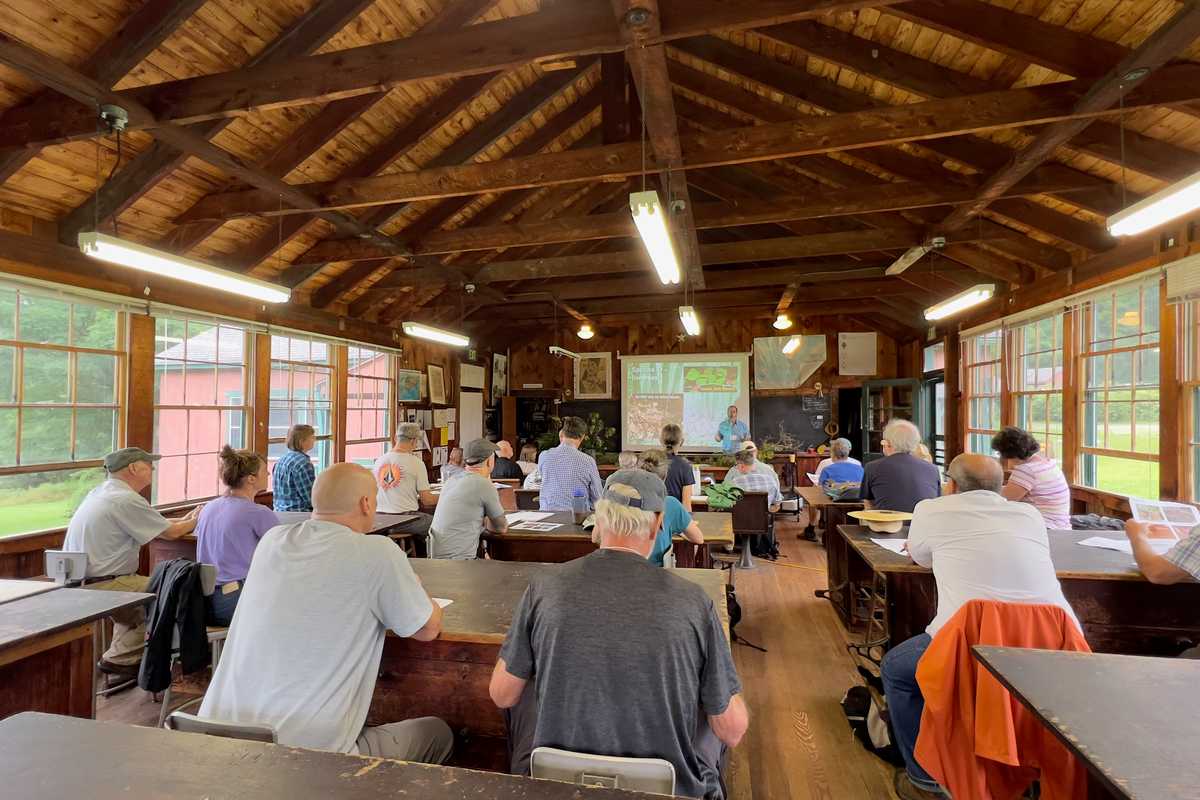
Participants in a 2024 Great Mountain Forest Woodland Academy workshop at Yale Camp.

Photo by Mike Zarfos

Great Mountain Forest (GMF) will host its first Nature Writing Retreat at the historic Yale Camp in Falls Village from Aug. 7-9, 2026. Writers of all levels are invited to draw inspiration from one of New England’s most notable forest landscapes. GMF envisions the retreat becoming an annual event celebrating writing, conservation and the relationship between people and forests.

This immersive three-day retreat reflects on the legacy of Hal Borland, the American writer and New York Times nature columnist whose work was deeply connected to this landscape. The retreat explores how wilderness shapes language, strengthens close observation and fosters environmental consciousness.

Keep ReadingShow less
From Cornwall to Rome, Adam Van Doren at Berkshire Botanical Garden

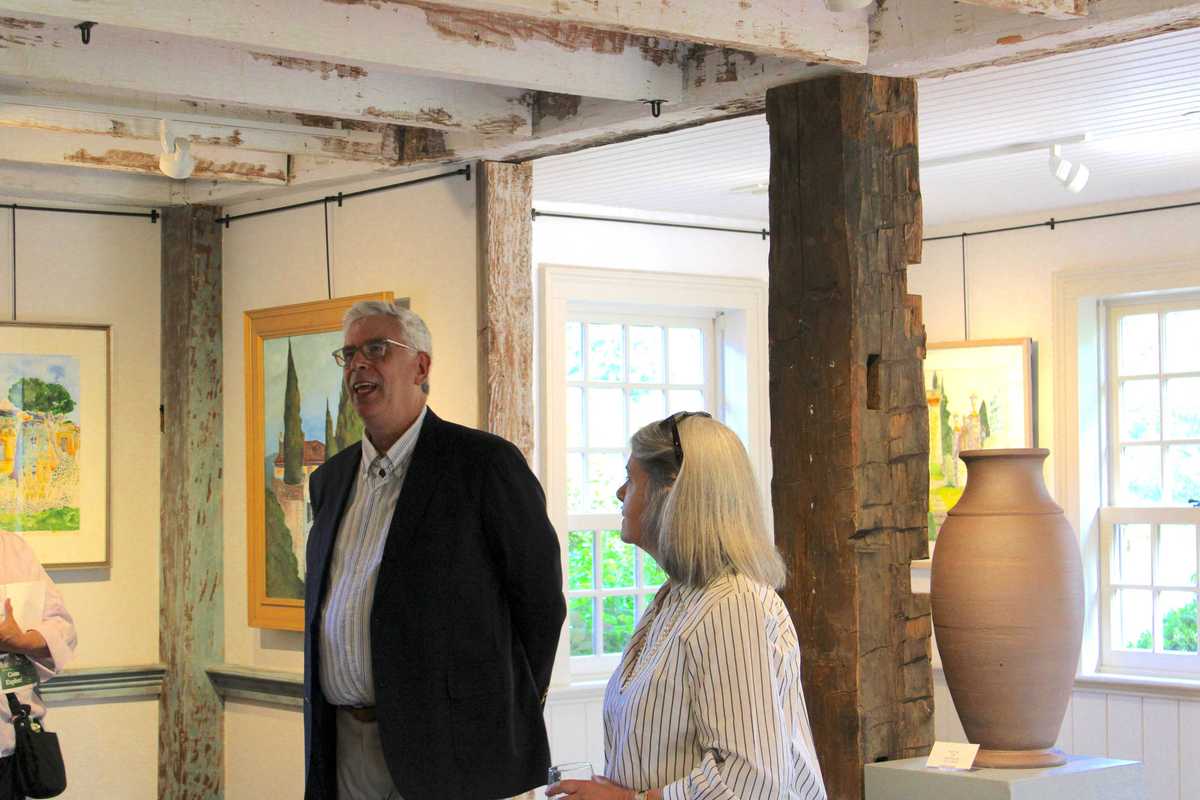
Artist Adam Van Doren and curator Donna Hassler talk to a group of visitors at the Berkshire Botanical Garden. A Stephen Proctor vessel sits to their left.

Photo by Natalia Zukerman

This summer, the Berkshire Botanical Garden in Stockbridge has hosted “Grounded in Nature: Paintings by Adam Van Doren,” an exhibition exploring the intimate relationship between architecture and the natural world.

On view for only a few more weeks in the Leonhardt Galleries, the exhibition features more than 35 watercolor and oil paintings by the New York-based artist, architect, author and Yale professor, curated by art historian Donna Hassler, director emerita of Chesterwood. The works span three distinct places that have shaped Van Doren’s artistic practice: New York City, Cornwall, Connecticut, and his travels throughout Europe.

Keep ReadingShow less
google preferred source

Want more of our stories on Google? Click here to make us a Preferred Source.
google preferred source

Want more of our stories on Google? Click here to make us a Preferred Source.