Sheil soars to ski jumping gold at Junior Nationals

Salisbury Winter Sports Association ski jumper Islay Sheil, right, and teammate Caroline Chor placed first at Junior Nationals.
Provided


Salisbury Winter Sports Association ski jumper Islay Sheil, right, and teammate Caroline Chor placed first at Junior Nationals.
SALISBURY — Team SWSA reached new heights at the 2025 Junior Nationals Ski Jumping competition held in Park City, Utah.
Islay Sheil, 15, of Lakeville, won first place and a gold medal in the team competition with teammate Caroline Chor from the Ford Sayre Ski Club. They competed in the U16 category.
The annual event featured the best jumpers aged 12 to 19 in the U.S.
“Standing on the top of the podium was an unbelievable feeling,” Sheil said. “And I was also so happy that Seth was there as part of the coaching staff.”
Sheil is the first Salisbury Winter Sports Association athlete that has earned gold in the Junior National competition in many years, if ever.
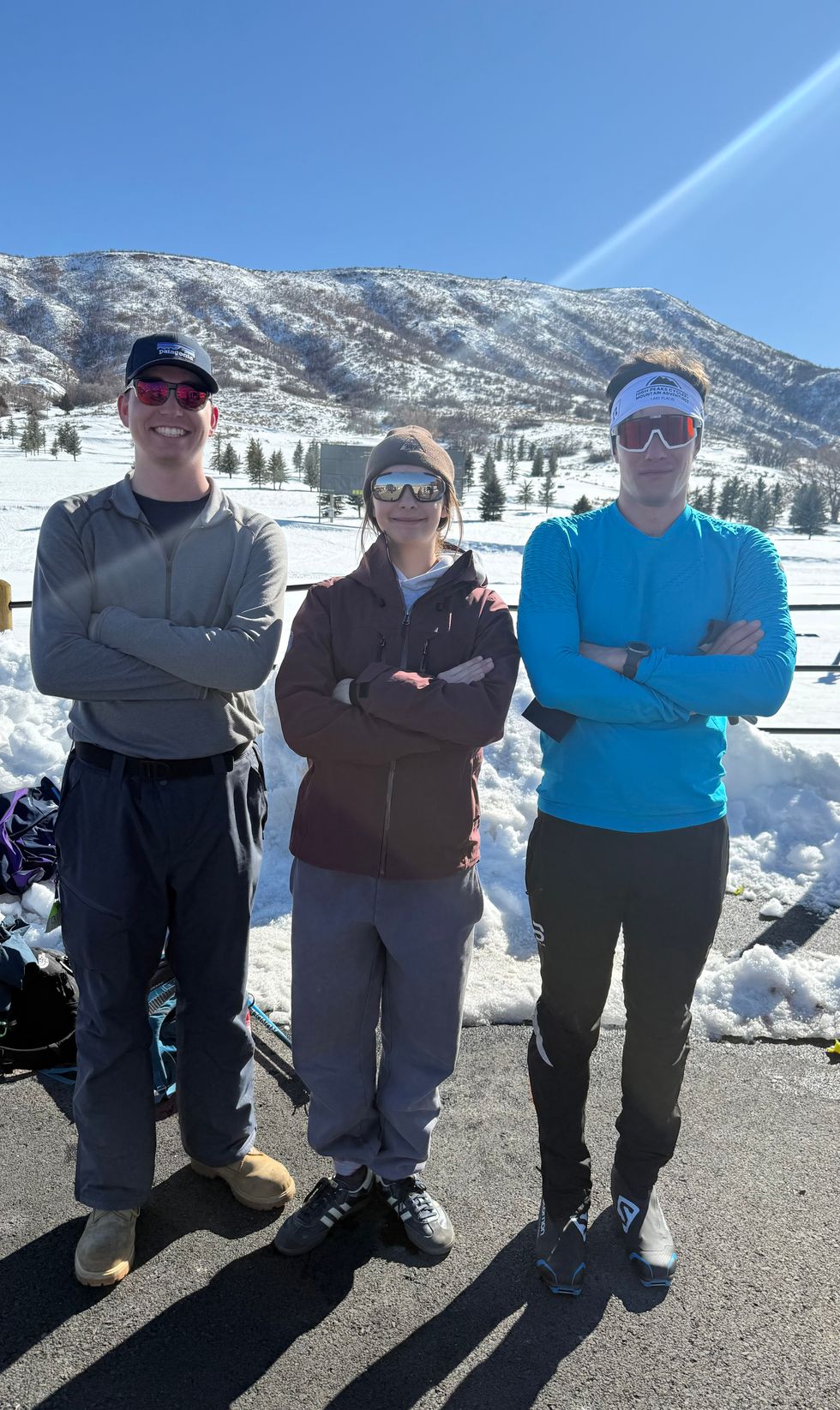
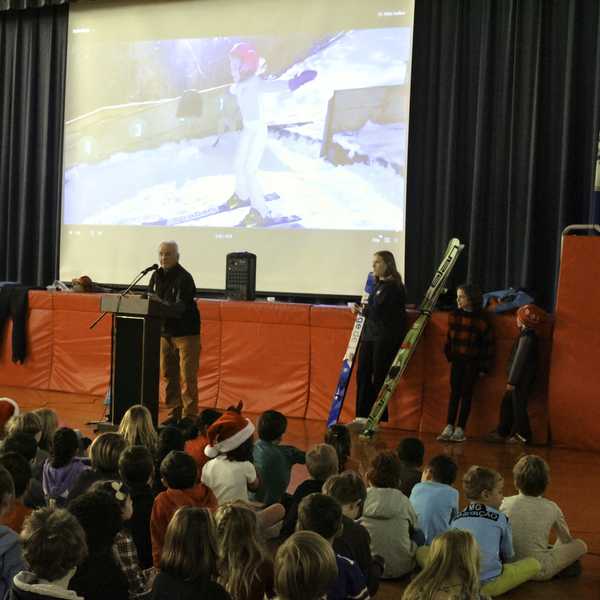
Seth Gardner, a SWSA jumper and coach gained his own notoriety when he was named assistant Junior National coach, a first in recent decades for SWSA.
“Coaching at the Junior National competition for the first time was an extraordinary experience,” Gardner said, “It was inspiring to see the growth of all of the athletes throughout the week.” He added that he was excited to bring back to Salisbury what he had learned in Park City “to help our athletes grow.”
Each year, the Junior Nationals rotate locations among the five divisions. SWSA will next host the event in 2027.
To learn more about SWSA visit jumpfest.org.

Lakeville Journal
“Amenia’s Spycatcher,” a new historical drama by George Bistransin, brings the Revolutionary War era to life through the story of Amenia residents Ephraim and Mary Paine, whose lives intersected with espionage, loyalty and the struggle for independence. Presented by the Amenia Historical Society at Amenia Town Hall, Aug. 21 and 22 at 8 p.m. and Aug. 23 at 2 p.m. Admission is free.
Aly Morrissey
The Salisbury Band will perform its final summer concert on Aug. 29 at the Scoville Memorial Library.
SALISBURY — The Salisbury Band will close out its summer season with an annual outdoor concert on the lawn of the Scoville Memorial Library on Saturday, Aug. 29, at 3 p.m., weather permitting.
Now in its 98th year, the community band has been a fixture at concerts, parades and other events around the Northwest Corner since its founding in 1928. The group draws amateur musicians from Salisbury and surrounding towns across the tri-state area and is often recognizable by its signature white uniforms and red vests.
The band most recently performed at the Lakeville Town Grove on the Fourth of July. Its annual appearances have long been tied to community traditions in Salisbury, including Memorial Day observances, which the band has participated in since 1931.
Originally known as the Lakeville-Salisbury Band, the group was founded by local insurance agent and musician Harry Eggleston at a time when town bands were a popular form of community entertainment. Over the decades, its musicians have performed throughout Connecticut and neighboring New York and Massachusetts. The group formally became the Salisbury Band in 1982.
Attendees at the Aug. 29 concert are encouraged to bring lawn chairs. The performance will conclude the band’s summer season, with activities resuming in the spring. New members are welcome.
Patrick L. Sullivan
Artist Robert Cronin, left, and Hunt Library volunteer Garth Kobal prior to Cronin’s retrospective talk Thursday, Aug. 13.
FALLS VILLAGE — Painter Robert Cronin provided an overview of his career – including a close encounter with Pablo Picasso – at the David M. Hunt Library Thursday, Aug. 13, shortly after the opening of his current exhibit of paintings on the library’s ArtWall, on view through Sept. 11.
While Cronin, 90, is known today for his prolific body of work including abstract paintings, he began his foray into art with an attempt at industrial design — an attempt to make a 14-inch model of an automobile, to be more specific.
Cronin said that in the 1950s, General Motors sponsored a competition that brought select young designers to the Midwest to meet GM executives.
“If you won first prize in your state, you were flown to Detroit,” Cronin said of the contest, in which he saw some success, although he wasn’t invited to Michigan.
He participated throughout all four years of high school in the early 1950s and earned honorable mention a couple of times. As a prize, he remembers winning an X-Acto knife set, which impressed the young man.
Cronin said his interest gradually shifted from industrial design to fine art, and at the Rhode Island School of Design he “made an impression” on the faculty and fellow students with an exercise he completed for “2D class.”
“The professor hung it over a window for the whole semester,” Cronin recounted.
During the talk, he showed two slides: one a portrait of his girlfriend at the time and one self-portrait, along with photos of his abstract art pieces.
“I enjoyed the instinctive connection of abstraction and the discipline of representation,” he said.
Ultimately, Cronin’s career went in the abstract direction.
In 1969, now an established artist and art teacher, Cronin and his wife, Connie, traveled to Nice, France, and the surrounding area for a five-week stay.
One day they decided to drive to the nearby town of Vallauris to see Pablo Picasso’s pottery at the Galerie Madoura.
As they left the gallery, a Lincoln Continental pulled up, looking ostentatious and out of place.
Pablo Picasso, a very small man, emerged from the Lincoln, a very large car.
“He was wearing a bathrobe, basically,” Cronin said. “We just flipped.”
Connie managed to take a furtive snapshot, but they didn’t want to impose.
So they went for lunch instead.
On the way back to their car, the Lincoln appeared again, heading toward them.
“I said, you wave, I’ll get the picture.”
Picasso, recognizing them from the earlier encounter, leaned out the window and said ‘bonjour’ with a big smile. “He had such a happy face,” Cronin said.
Cronin had a Kodak Instamatic camera and, although he got a photo of Picasso going by in the passenger seat of the Lincoln, it wasn’t “THE” photo.
“This would have been a famous, iconic photo,” said Cronin. “But I missed it.”

Want more of our stories on Google? Click here to make us a Preferred Source.
Roxana Robinson
Tom Pannullo, Chris Dunlop, and Ed and Kim Bahr of Mike’s Beehives, in their store at 80 Holmes Road in Goshen.With them is a honeycomb that a bear pulled from a tree in Sharon at Mudge Pond. The team was called to save and relocate the hive.
“When you are working with bees, you are entering their world. The vibration from the wings, the wax smell, the movement of the bees. It’s all very relaxing.” — Ed Bahr, Owner of Mike’s Beehives
GOSHEN — What do you do when yellow jackets invade a shed and defend it by stinging people and dogs who trespass? One solution is to call Mike’s Beehives in Goshen. With knowledge of all things bees, the company will relocate everything from honey bee swarms to hornet and yellow jacket nests.
Ed Bahr of Mike’s Beehives recently removed a yellow jacket nest from a local shed, dressing himself in protective gear and suctioning the insects into what’s known as a bee box. The process is designed to avoid harm to bees.
Not only does Bahr remove the bees from various locations, he saves the nests as part of an elaborate relocation process. Despite a couple stings to his legs, he remained cheerful and took the yellow jackets to a wooded area in northwest Connecticut.
Bahr said he has been working with bees since he was about five-years-old, when he began helping his father with beekeeping.
“My job was turning the handle on the honey extractor,” Bahr said. As he grew older, he would accompany his father on visits to the hives, learning by watching.
Eventually, Bahr partnered with and worked alongside Mike Rice, founder of Mike’s Beehives, and after learning more about bees, bee removal and how to build hives, he bought the business.
“Beekeeping has made a huge surge since Covid,” Bahr said, adding that gardens, canning produce, raising chickens, and keeping bees became popular after the COVID-19 pandemic. Chickens seem to be declining, he said, but beekeeping is still “going strong.”
In addition to bee swarm removal and hive maintenance services, Bahr’s team — including his wife, Kim, Tom Pannullo and Chris Dunlop — offers a variety of products. From beekeeping tools, handmade artisan hives, bees themselves and local raw honey, their store on 80 Holmes Road in Goshen is a one-stop-shop for aspiring beekeepers.
Classes on beekeeping are also offered in February and March and are taught by Bahr himself.
“I’ve taught hundreds of people,” he said.
They sell honey from their own hives and also lip balm and salves, made from the beeswax that results from honey extraction. Books about honey and bees are also available. On the second floor of the store is a viewing room where visitors can observe bees through glass as they work.
Beyond the shop’s walls, more than 100 honey bee hives can be found on the property.
Bahr, Dunlop, and Pannullo recently removed a decades-old honeybee colony from a tree at Mudge Pond in Sharon after a bear had ripped out a large section of honeycomb.They relocated the bees to Goshen. A video of the procedure, taken by Dunlop is on view at the store.
Everyone at Mike’s Beehives seems to enjoy their work, in spite of the hazards of being stung.Bahr emphasized that a calm attitude is necessary in beekeeping.“They can sense fear and nervousness and that puts them on alert. I talk to them calmly.They can’t hear you, but they feel the vibration.”
He described beekeeping as being peaceful. “When working with bees, you are entering their world, and it is very soothing and calming. The vibration from the wings, the wax smell, the movement of the bees. It’s all very relaxing,” he said.
The bee language involves the “wag tail dance,” Bahr said. “Bees have no ears and can’t talk.Communication is done by vibration and scent.”
When a bee returns to the hive, “it shakes its back end, turns and shakes, turns and shakes, to tell the others the directions to find clover, an orchard, or wherever there is nectar and pollen.”
He added, “They pick up on that vibration. They feel it through their feet in the honeycomb.”
For more information, visit mikesbeehivesllc.com.
Patrick L. Sullivan
‘It’s about dam time,’ reads one of the cheeky display cards at a new exhibit on rewilding at the Salisbury Association, now on view.
SALISBURY — A new exhibit at the Salisbury Association explores ways to reintroduce native plants, animals and landscapes to the region.
“Rewilding” looks at conservation efforts large and small, including steps homeowners can take on their own properties.
For “small landscapes” such as gardens and backyards, homeowners can remove invasive plants and replace them with native flowering plants, shrubs and trees.
Other measures include adding window stickers that are visible to birds but unobtrusive to people inside, helping to reduce avian crashes into homes.
Minimizing outdoor lighting also cuts down on light pollution that impacts insects, and not allowing cats to roam freely protects the bird and small rodent populations.
The exhibit text points out that a century ago, northwest Connecticut was largely deforested as a result of trees being cut for agriculture and for the charcoal and iron industries. As a result, only about one to three percent of the local forest is truly “old growth.”
Land trusts, including the Salisbury Association Land Trust, have been acquiring undeveloped properties in an effort to reconnect forest habitats with each other. The “Follow the Forest” initiative, for example, is a multi-state program that connects forested areas from the Hudson Highlands to the Canadian border.
The exhibit covers river bank and aquatic habitat restoration efforts by groups such as the Housatonic Valley Association and Trout Unlimited. This includes removing old dams and fixing culverts so that fish and other animals can move freely from one side of a stream that runs under a road to the other.
And, the exhibit covers the reintroduction of native animals, such as the New England cottontail rabbit, which has been largely supplanted by a lookalike species, the Eastern cottontail rabbit.
A reception for the exhibit will be held at the Salisbury Association building at 24 Main St. in Salisbury on Friday, Sept. 4, from 4 to 6 p.m.
Patrick L. Sullivan
FALLS VILLAGE — The year-long celebration of America’s 250th anniversary continued in Falls Village on Saturday, Aug. 15, with a bustling downtown and volunteers dressed in Colonial-era garb at a festival hosted by the Falls Village-Canaan Historical Society.
Highlights included reenactors, house tours, horse-drawn carriage rides and music.
Shortly after the event kicked off, the Historical Society’s Judy Jacobs rolled out from the Society’s headquarters on Railroad Street behind the wheel of a modern-day utility vehicle while dressed in period costume.
Jacobs made her way up to the Beebe Hill Schoolhouse, where Krista Barger and Tanya Golden delivered lessons on writing in cursive with a quill pen to a group of students.
Everyone was in period costume and character, except for a couple of moments when the teachers added some contemporary context for the child actors or visitors crowded into the tiny schoolhouse.
Golden said the one-room schoolhouse served students in kindergarten through eighth grade from 1843 to 1914. Its largest enrollment was 51 students.

Golden told the children that Beebe Hill was staffed almost exclusively by single women who boarded with local families.
The one exception was a male teacher who was allegedly strict and unpopular. The teacher was so disliked, volunteers said, that the boys decided the best course of action was to gang up on him and throw him out the window.
“That window,” said Golden, pointing to the north side of the building.
Some wondered about the fate of the strict and unpopular male teacher.
“He didn’t die,” Golden said. “But he didn’t come back either.”
At the Green, Marlinspike – a musical group consisting of Rachel Gall on fiddle, Cole Vanseters on guitar and Dan Whelan on banjo and vocals – started their set with a spirited rendition of “Paul Jones’ Victory.”
A horse-drawn carriage clopped by en route to pick up passengers farther up Main Street, while visitors ambled over to the Historical Society for reenactors and demonstrations. The Center on Main hosted a program on Alexander Hamilton later in the afternoon, and students from Lee H. Kellogg School sold drinks and snacks to raise money for the eighth grade class trip to Washington, D.C.

Want more of our stories on Google? Click here to make us a Preferred Source.

Want more of our stories on Google? Click here to make us a Preferred Source.