Thank you!
Your support is sustaining the future of local news in our communities.

Some reproductive Connecticut history

If, as legend has it, Lincoln called Harriet Beecher Stowe “the little lady who started the big war” with “Uncle Tom’s Cabin,” I guess New Haven’s Estelle Griswold could qualify as the lady who started the big culture war.

Griswold, who died in 1981, gave her name to Griswold v Connecticut, the 1965 Supreme Court decision that overturned an 1879 Connecticut law prohibiting the use of “any drug, medicinal article or instrument for the purpose of preventing conception.”

More significantly, the Griswold decision was the first to determine that the right to privacy is protected by the Constitution. Griswold thereby begat Roe v Wade and the Court’s ruling that a woman’s decision to have an abortion was protected as a private action between her and her doctor.

 I interviewed Griswold, who was executive director of the Connecticut Planned Parenthood League, 50 years ago when I worked for the Hartford Courant. She and Dr. C. Lee Buxton, chairman of Yale’s Department of Obstetrics and Gynecology, had been charged with violating the old law at the birth control clinic they ran at the corner of Whitney Avenue and Trumbull Street in New Haven. They were found guilty and fined $100 each.

The rarely enforced law prohibited married and unmarried couples from using birth control devices and forbade their dissemination and sale by organizations like Griswold’s Planned Parenthood League and drug stores, which sold condoms under the counter.

The law was one of many “Comstock Laws,” named for New Canaan native Anthony Comstock, a YMCA worker turned postal inspector, that were passed by the federal government and the states in the 19th century. Comstock devoted his long life to the suppression of what he considered vice and managed to convince Congress and many states like Connecticut to pass versions of his law banning contraceptives and books. In doing so, he imposed morality as he saw it on an entire nation.

Over the years, Connecticut notables like Katharine Hepburn’s mother, President Taft’s brother and Taft School founder Horace Taft and Dr. Hilda Standish worked unsuccessfully for the law’s repeal against the opposition of the then powerful Connecticut Catholic bishops.

A 1940 raid on a Waterbury clinic led to the first test case, but the law was upheld by the Connecticut Supreme Court and Connecticut’s law remained on the books long after it had been repealed by most states, making Connecticut something of a national joke.

Then, in 1961, Buxton and Griswold got themselves arrested and after their conviction was upheld on appeal, it reached the Supreme Court.

The law was invalidated by the Court by a vote of 7-2 on the grounds that it violated “the right to marital privacy.” Although the right to privacy is not explicitly stated in the Constitution, seven justices found it in two amendments. The dissenters, Justices Hugo Black and Potter Stewart, a liberal and a moderate, maintained the right to privacy was not where the others said it was.

Although Republican Stewart (Hotchkiss ’33) argued in his dissent that the Connecticut law was Constitutional, he memorably wrote it was also “an uncommonly silly law.”

Eight years later, with Black retired and Stewart voting with the majority, the Court ruled abortion was protected as a private decision by a woman and her doctor. The vote was again 7-2, with only Kennedy appointee Byron White and Nixon appointee William Rehnquist dissenting.

Roe launched the culture war that has raged intermittently over the past 40 years and recently enjoyed a revival when President Obama required church-run organizations like colleges and hospitals to provide birth control coverage with their health insurance. This historic gaffe divided the nation and even found Obama faithful like Connecticut U.S. Representatives Rosa DeLauro and John Larson on opposing sides.

When the president offered a compromise, the Catholic bishops decided it wasn’t enough and seemed to divide not only the country, but their own church, with the bishops and priests on one side and the nuns, Catholic charities and the laity on the other.

With the number of sexually active American women practicing birth control running the gamut from 98 to 99.9 percent by various estimates, this does not appear to be a winning stance for the bishops, whose credibility on sexual matters has suffered in recent years.

But the culture war will continue this election year, at least through the primary season, as Republican candidates have long fooled their social issue-conscious base by promising if nominated and elected, there will be Constitutional amendments for all, from banning abortions, flag burning and gay marriages to requiring prayer in schools.

Simsbury resident Dick Ahles is a retired journalist. Email him at dahles@hotmail.com.

Latest News

‘So Little to Do,’ so much to discover at James Barron Art

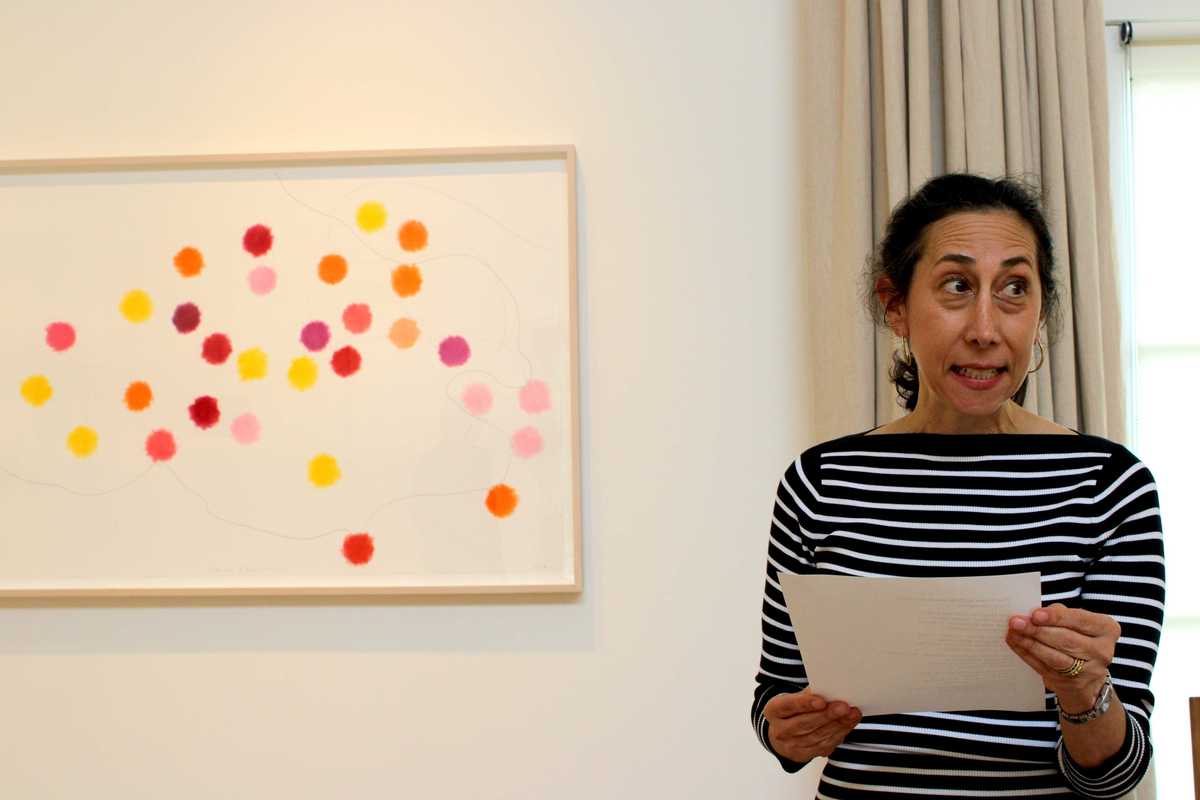
Curator Deborah Goodman Davis reads the Emily Dickinson poem “The Grass So Little Has to Do.” Spencer Finch’s “Following Three Bees (Zinnias)” buzzes in the background.

Photo by Natalia Zukerman

“The Grass Has So Little to Do,” on view at James Barron Art in Kent, takes its title from Emily Dickinson’s poem “The Grass So Little Has to Do,” written in 1862:

“The Grass so little has to do—
A Sphere of simple Green—
With only Butterflies to brood
And Bees to entertain—”

Keep ReadingShow less

Marina Kotchoubey is not a woodworker

Marina Kotchoubey is not a woodworker

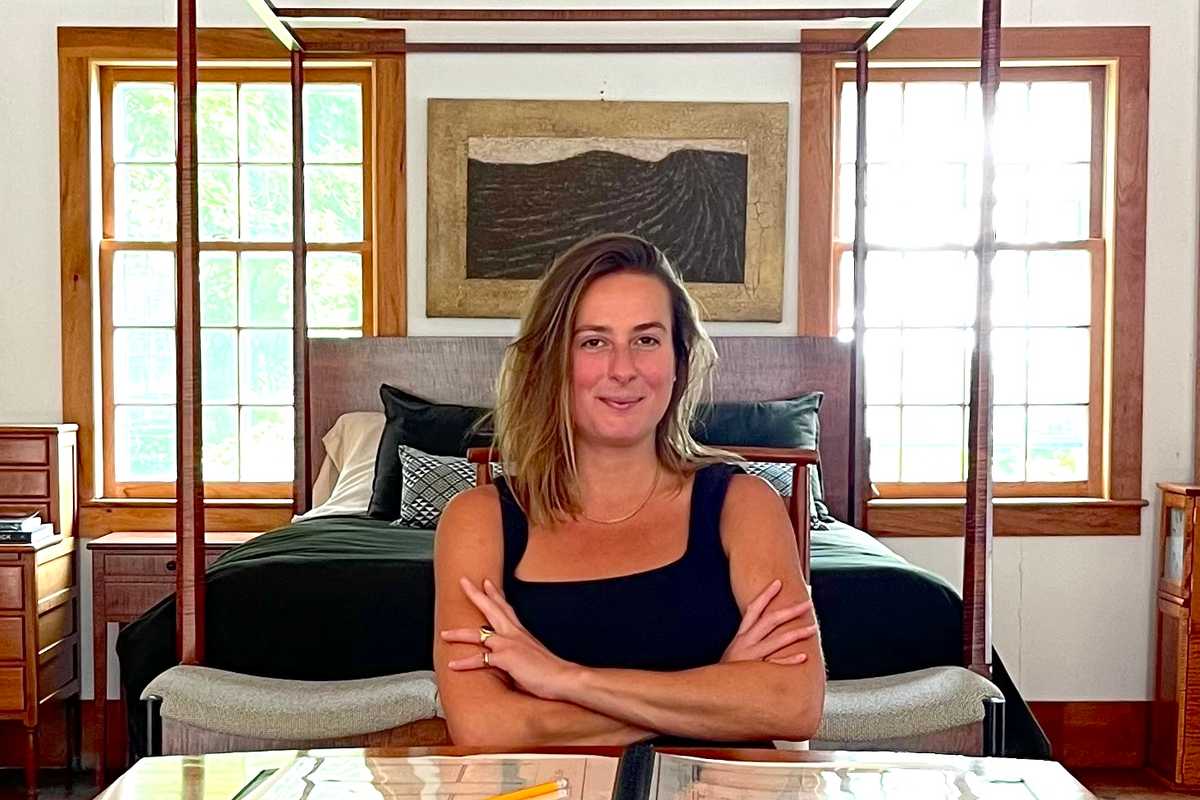
Marina Kotchoubey at the Ian Ingersoll Cabinetmakers showroom in West Cornwall.

Photo by D.H. Callahan

After 40-something years navigating the world of custom fine furniture, Ian Ingersoll was getting ready to retire. Starting off with a little dovetail stool that he sold at a shop in West Cornwall in the 1970s, he’d grown his skill and his business into something he — and the whole town — could be proud of. Shutting down that business was not an option.

Ingersoll built Ian Ingersoll Cabinetmakers, which produced mainly classical Shaker furniture, on passion: the passion he had to make a living through creative challenges and the passion of his employees, who all seem deeply in love with their craft.

Keep ReadingShow less
A legacy of giving at Norfolk Chamber Music Festival

One hundred and twenty years ago, Carl and Ellen Stoeckel commissioned New York architect E.K. Rossiter to design The Music Shed in Norfolk, Connecticut. After nearly a decade of entertaining their friends and neighbors with the finest music of the day, they built a permanent home for their beloved Litchfield County Choral Union.

The commission and full funding of the construction was not unheard of in an era when great fortunes led to public enrichment. Railroad tycoon John D. Rockefeller was instrumental in funding institutes of higher education. Steel baron Andrew Carnegie was building libraries all over the country, and famously said that a man who dies rich is a disgrace, challenging his peers to give their fortunes back to the people.

Keep ReadingShow less
google preferred source

Want more of our stories on Google? Click here to make us a Preferred Source.
Two unique exhibitions at Geary Gallery

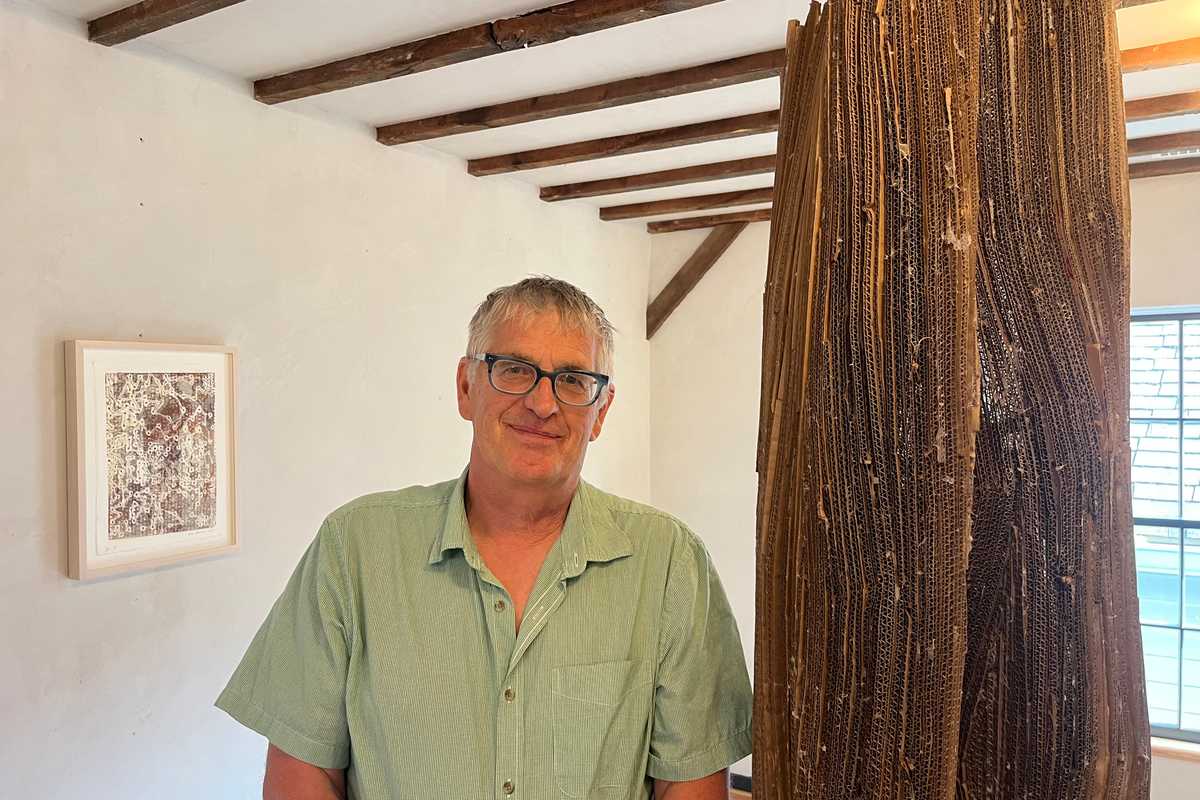
Henry Klimowicz with his sculpture, “Partial Pillar 1”

Photo by D.H. Callahan

On Saturday, Aug. 1, Geary Gallery opened its doors in Salisbury for two unique shows in its first- and second-floor gallery spaces. Art lovers flooded both floors over the course of the afternoon, giving the events a vibrant feeling that enhanced the importance of the art.

On the first floor is a show by Chicago-born, Colorado-based photographer Summers Moore, titled “Lobitos: Pueblo Fantasma,” or “Lobitos: Ghost Town.” The work centers around her daughter’s current hometown in Peru. Moore herself found a home away from home in Colorado in the mid-1980s and encouraged her children to seek out new places outside of their comfort zones.

Keep ReadingShow less

Writer’s retreat in the woods

Writer’s retreat in the woods

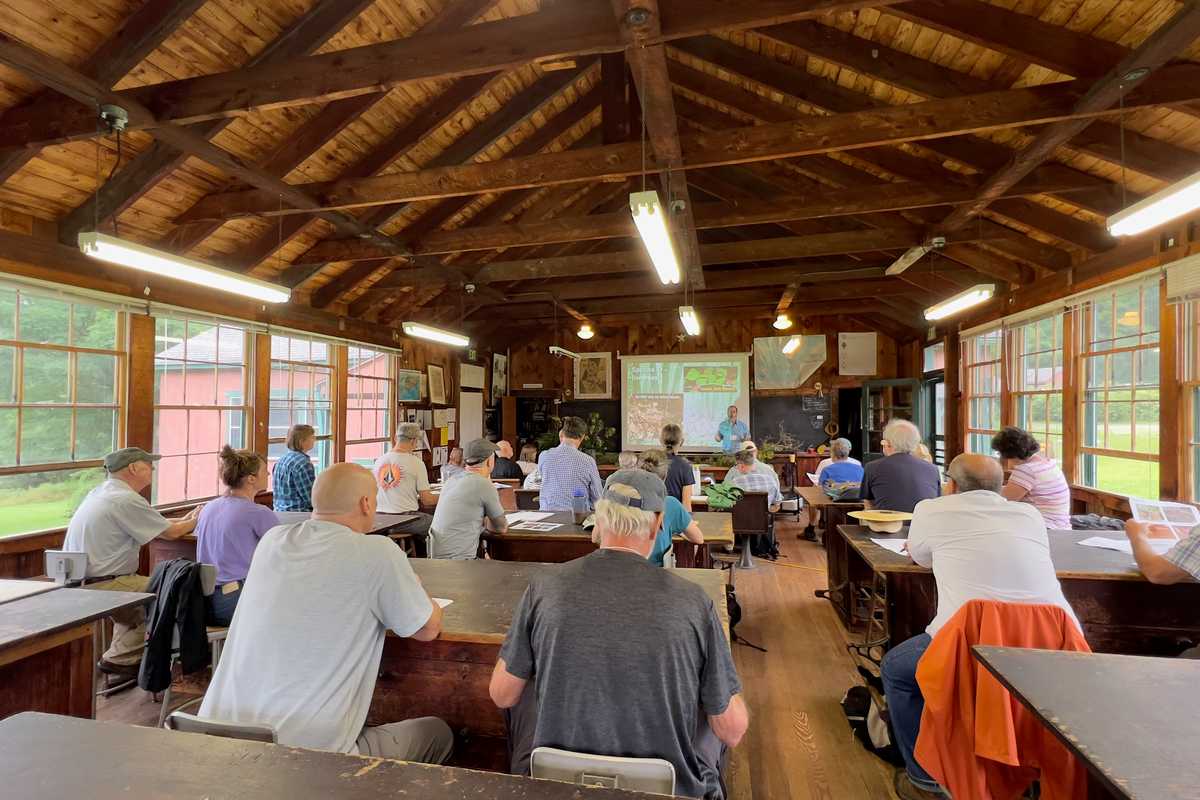
Participants in a 2024 Great Mountain Forest Woodland Academy workshop at Yale Camp.

Photo by Mike Zarfos

Great Mountain Forest (GMF) will host its first Nature Writing Retreat at the historic Yale Camp in Falls Village from Aug. 7-9, 2026. Writers of all levels are invited to draw inspiration from one of New England’s most notable forest landscapes. GMF envisions the retreat becoming an annual event celebrating writing, conservation and the relationship between people and forests.

This immersive three-day retreat reflects on the legacy of Hal Borland, the American writer and New York Times nature columnist whose work was deeply connected to this landscape. The retreat explores how wilderness shapes language, strengthens close observation and fosters environmental consciousness.

Keep ReadingShow less
From Cornwall to Rome, Adam Van Doren at Berkshire Botanical Garden

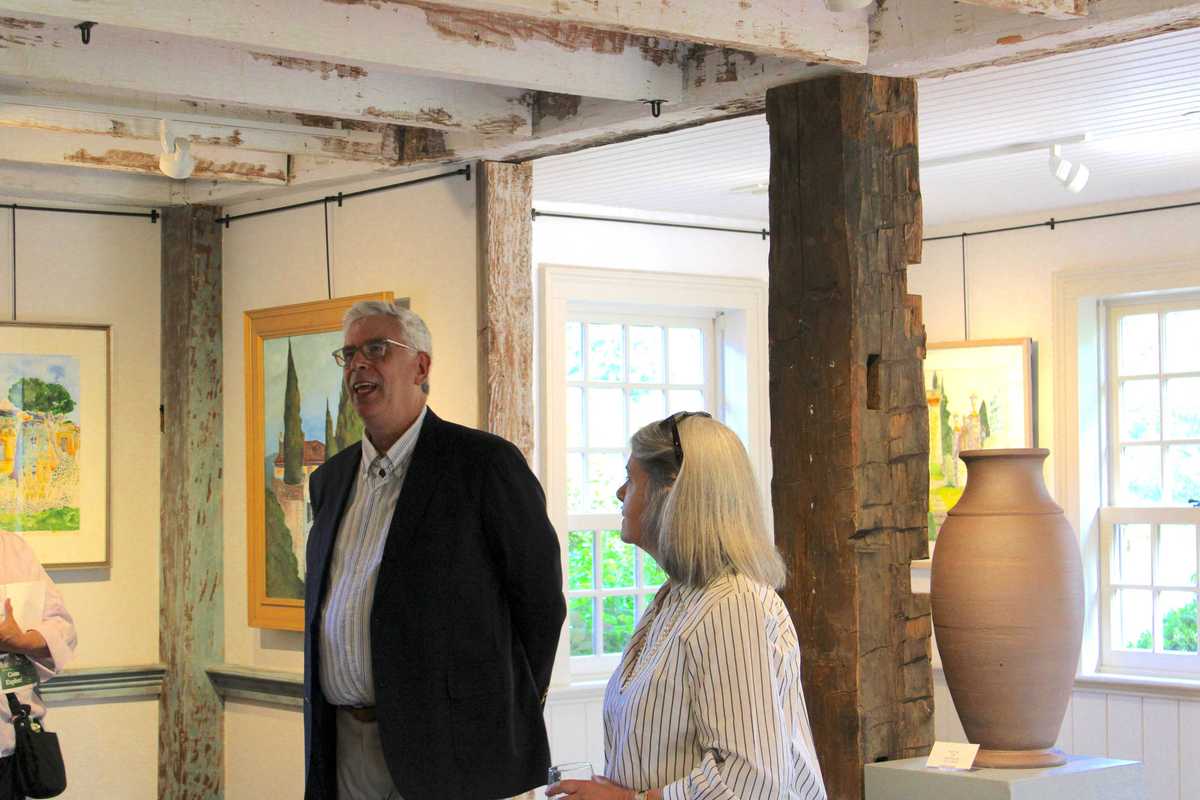
Artist Adam Van Doren and curator Donna Hassler talk to a group of visitors at the Berkshire Botanical Garden. A Stephen Proctor vessel sits to their left.

Photo by Natalia Zukerman

This summer, the Berkshire Botanical Garden in Stockbridge has hosted “Grounded in Nature: Paintings by Adam Van Doren,” an exhibition exploring the intimate relationship between architecture and the natural world.

On view for only a few more weeks in the Leonhardt Galleries, the exhibition features more than 35 watercolor and oil paintings by the New York-based artist, architect, author and Yale professor, curated by art historian Donna Hassler, director emerita of Chesterwood. The works span three distinct places that have shaped Van Doren’s artistic practice: New York City, Cornwall, Connecticut, and his travels throughout Europe.

Keep ReadingShow less
google preferred source

Want more of our stories on Google? Click here to make us a Preferred Source.
google preferred source

Want more of our stories on Google? Click here to make us a Preferred Source.