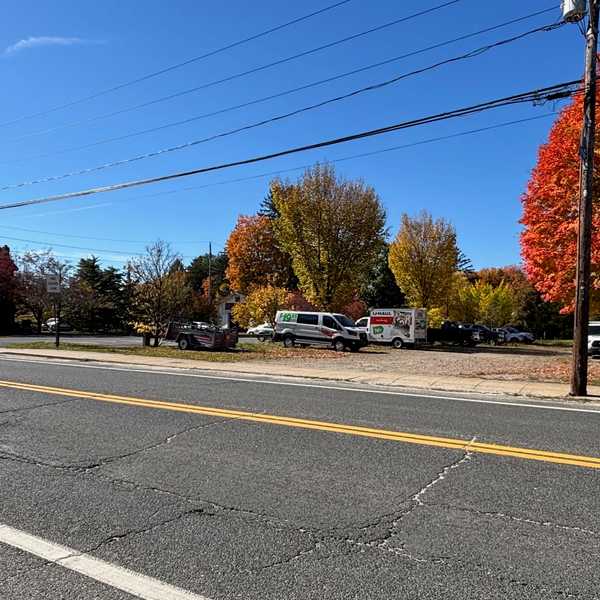
NORTH EAST — Talks regarding the proposed supermarket slated for the Boulevard District moved from the Planning Board’s domain to the Town Board’s, as the subject of water service was broached last week. The Town Board held a special meeting at Town Hall on Thursday, April 7, to conduct that discussion among supermarket applicant Southern Realty & Development, LLC (represented by John Joseph), project engineer Rich Rennia, project architect Ray Nelson, Town Engineer Ray Jurkowski, Attorney to the Town Warren Replansky and the members of the Town Board. The goal of the meeting, according to town Supervisor Dave Sherman, was to hash out a framework of how to approach the concept of water service for the as-of-yet-unnamed supermarket planned for Route 44 East, near the Connecticut border.First choice, exploring other options While the conversation focused on the 10-acre site owned by Quinmill Properties Inc., which Southern Realty & Development, LLC (SRD) is looking to develop, SRD acknowledged its first choice is still to come to an agreement with C&S Wholesalers, which runs the Grand Union supermarket in Millerton and leases that space from property owner Robert Trotta. That pursuit has thus far been unsuccessful.At last week’s meeting, Rennia gave an overview of the applicant’s second option.“The Quinmill property site, we’ll develop that site and put in an almost 36,000-sqare-foot supermarket and redo the entrance into Ken Thompson’s building, and move that [entrance] farther to the west, and have one joint entrance in,” Rennia said, adding there would be a large loop around the building for truck traffic. The engineer also said there is “plenty of room” to install a septic system.“There is room to install a private well and put together a private water system,” Rennia said, before reviewing the applicant’s water service options. “Seeing that the water district is very close, about 1,200 feet down Route 44, west to the site, [there] is the possibility of connecting to that system. There are two ways: One is an expansion of the district and one is to create, out of the district, a user contract agreement between the developer and the town.”Rennia said either way the same 8-inch water line extension would be used.Who wants in, who wants outJoseph interjected that the adjoining property owners, Ken Thompson (owner of Thompson’s Plaza) and Basil Gabriel (owner of Basil’s Auto Shop) “have no need or desire to connect” to the town’s water district. He added the supermarket would like to be an out-of-district user. It expects to use approximately 2,000 gallons of water a day, which led the developer to describe the market as “not a tremendous water user,” but added it would be willing to cooperate with the municipality as needed.“We would construct [it], and also, if the town felt at a later date it needed to form a district and bring those people in, we would be happy to contribute our share or even pay the district at that time,” he said. “But at this point we would try to keep it as simple as possible.”Rennia sent a letter dated March 3, 2011, to the town supervisor. The matter was put succinctly.“It is anticipated that Southern Realty & Development, LLC would bear the costs to expand the water district including construction, design and permitting,” he stated. “The proposed project will require an estimated 2,000 gallons per day for normal consumption purposes and fire flow needs are 1,000 gallon per minute.”It’s the details that countCouncilman Dave McGhee raised an important point, reminding those present the town’s water district receives its supply from the village.“First of all I think it isn’t going to be up too much to the Town Board — it’s up to the Village Board if they’re going to be able to make another district. They’re the ones that control the water. Secondly, I’m very interested if there’s enough pressure to sustain all that way out there. I hope you do.“I will throw in this comment,” he added. “I know you have different ideas, I’ve lived here all my life, and you should be able to hook onto a line at the state line by Thompson Plaza and Basil’s, because they’re not going to stay there. Once we’re going this far, whether we do [the supermarket] or not, we should be able to hook up. Things are going to change; once somebody offers [those businesses out by the state line money to buy them out] they’re not going to stay there.”Councilman Carl Stahovec then brought up the wetlands issue and the buffer that usually accompanies them.“The last project had a 300-foot buffer,” he said. “You obviously don’t have that here. I’d be interested to see where that’s going. We’ve been getting letters [concerning wetlands]; another issue is the bog turtles. That’s another hurdle that’s there.”The applicant has engaged a biologist to do a bog turtle survey, which will be conducted sometime this month. The developer said in more than two decades doing his work he’s never seen the turtles yet.“As long as there’s a habitat there don’t have to be turtles,” Councilman Steven Merwin rebutted.Who is SRD? At that point Sherman asked Joseph what his exact relationship to Southern Realty & Development was.“I’m it,” responded Joseph, later adding he works with another investor. “We are owners, operators, of shopping centers. We acquire land and develop on behalf of tenants and then they become our tenants and they rent from us.”Getting off track and regaining focusTalk quickly reverted to focus on water. Merwin raised concerns about whether the village could handle the load, or if another water tank might be needed. He made reference to the town’s decision in the 1990s to not build another storage tank, which caused a brief skirmish with the town supervisor. The two quickly settled back to the business at hand.“We need to look out for the village on this,” Merwin said.“You’re right,” Replansky said. “The village has to make sure it has the capacity for this. The village can look at the plans for the proposed development on the site and see what the water requirements are, but if they’re talking about a district expansion, they have to look at the other properties then to see if they have the capacity.”“I don’t want the public to pay for anything,” McGhee said, adding an escrow account must be established.Two escrow accounts will actually be created; one escrow account will be for the planning process reviewed by the Planning Board and the other will be for the professional review undertaken by the Town Board. Neither account has been created yet, nor has a dollar amount been set for either of the two accounts, according to the town supervisor.
Latest News
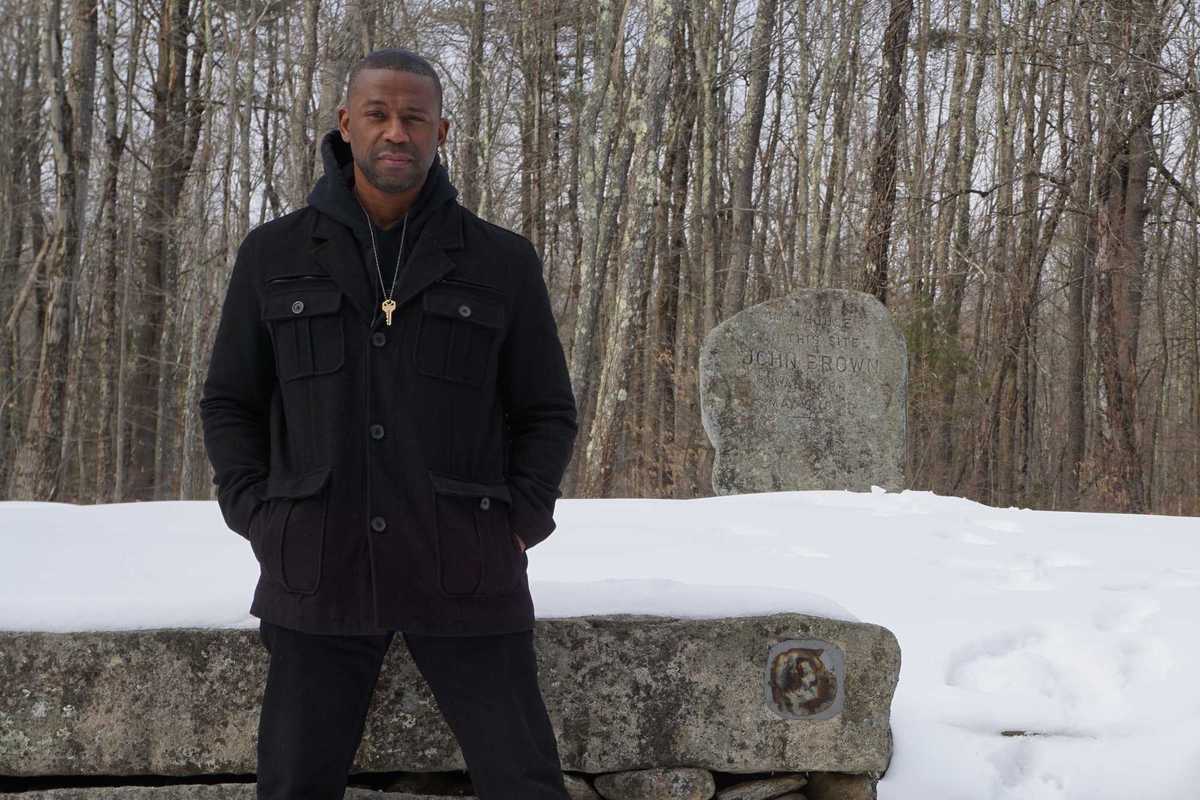
Doug Tallamy’s work in progress: saving the planet one backyard at a time
Natalia Zukerman
Sep 30, 2026
Windacre, a 25-acre property in Millerton will be the site of “Work in Progress,” an afternoon with acclaimed entomologist, New York Times bestselling author and Homegrown National Park co-founder Doug Tallamy.
Provided
For nearly three decades, Doug Tallamy, a professor at the University of Delaware and co-founder of Homegrown National Park, has studied the intricate relationships between native plants, insects, birds and the ecosystems that sustain them. His books, including “Bringing Nature Home” and “Nature’s Best Hope,” have helped shift the conversation about conservation from something that happens primarily in parks and preserves to something ordinary people can practice on the land around them.
On Sunday, Oct. 4, Tallamy will bring that conversation to Windacre in Millerton for “Work in Progress: Toward Native Fields,” an outdoor gathering exploring both the possibilities and the complications of restoring private land for biodiversity.
Over the past several years, Windacre owners Amy Chase Gulden and Randy Ramusack have been restoring their 25-acre property on Silver Mountain, confronting many of the questions familiar to anyone who has tried to turn good ecological intentions into reality: What should stay? What should go? Where should a meadow be? How much can one realistically manage? And how perfect does any of it need to be?
“We’re not gonna talk about perfection,” he said in a recent interview. “We do want the majority of the plant biomass on your property to be native. We want them to be the correct species of native.”
By “correct,” Tallamy means plants that are doing ecological work — particularly the “keystone” species that support disproportionate numbers of insects, pollinators and other wildlife.
“I could build a hundred percent native landscape that’s very unproductive just because not all species are productive,” he said. “You wanna favor the ones that are supporting the food web the best, supporting the pollinators the best.”
And then? “Observe,” he said.
“It’s very dynamic. It’s this constant dance,” Tallamy said.
Tallamy knows something about the long game. He and his wife, Cindy, have spent 26 years restoring ecological function to their own 10-acre property in Oxford, Pennsylvania. When they arrived, the land had been mowed for hay and was heavily invaded by nonnative plants.
Today, he can look out his window and see something very different. But he is quick to dispel the idea that restoration eventually reaches a state of completion.
“Our challenge to maintain the ecological productivity that we now have is constant management,” he said. “If we were to go away for five years and come back, it would not look like this.”
That reality is particularly relevant at Windacre, where Tallamy expects invasive plants to be part of the conversation. Bittersweet, for example, might grow among milkweed on a property, creating the kind of dilemma that makes ecological restoration more complicated than simply pulling everything unwanted.
“Timing of the management is really important,” Tallamy said. Milkweed dies back in winter while bittersweet remains, creating an opportunity to target the invasive vine with less risk to the native plants growing alongside it.
Tallamy will be seeing Windacre for the first time at the event, and that, too, is part of the point. Rather than presenting a finished landscape as a model to reproduce, “Work in Progress” offers the property as a living question.
“How much is mowed? I don’t know,” Tallamy said. “Everybody wants to maintain their viewscape. They don’t wanna block anything. But there are ways to do that. You know, where should a meadow be? Where should the forest be?”
He will also look for some of the ecological clues already present: milkweed, fall asters, goldenrods and, especially, oaks.
“Oaks are the most productive woody plant that we have,” he said.
For migrating birds, even one well-chosen tree can matter.
“Even if you have one tree in your yard, migrating birds will stop there if it’s the right tree,” Tallamy said. “It’s the diner. It’s where they stop to eat when they’re migrating.”
That image gets to the heart of Homegrown National Park. The organization asks people to imagine millions of privately controlled pieces of land not as isolated yards, gardens and properties, but as potential pieces of a connected ecological network.
Every restored property, he said, can help fill a blank space between larger parks and preserves. Even isolated efforts can have remarkable results. Before a neighbor joined their efforts, Tallamy and his wife were essentially an ecological island. Yet they documented 62 species of birds breeding on their 10 acres. Tallamy has also photographed 1,388 species of moths there.
“We’re trying to change the culture so that this is not the odd way of landscaping,” Tallamy said. “We want this to become the dominant, the default landscape.”
Right now, he argues, the default is essentially reversed.
“Everybody starts with a dead landscape, and then you have to work hard to change it,” he said. “That’s just backwards.”
Tallamy’s sense of urgency comes from his life as an entomologist. The disappearance of insects and birds is not, in his telling, simply a sad loss of nature around us. Biodiversity is part of the machinery that makes human life possible.
“We’re losing our birds. We’re losing our insects. We’re losing everything,” he said. “And if we do, we’re gonna lose humans too, because those are the organisms that run the ecosystems that generate our life support.”
He offers a deliberately stark analogy.
“If I said we had an oxygen crisis, we were losing oxygen on the planet, people would listen,” he said. “Well, biodiversity is the oxygen of our ecosystems. That’s what keeps us going.”
Yet Tallamy’s prescription is strikingly accessible. A landscape, he said, has four basic ecological jobs: support pollinators, support a food web, sequester carbon and manage the watershed in which it lies.
“You can look at those four things and look at your property and say, ‘What can I do to my property this year to improve each one of those functions?’” he said.
“Even if it’s just one little thing.”
And if that one little thing fails?
Tallamy has a story for that, too. Years ago, he planted an ash tree in the wrong soil. It survived but sat there for 20 years without growing an inch.
“So, I did that wrong. So what?” he said. “I learned that wasn’t the right place to put it, so next time you put it someplace else.”
“Work in Progress: Toward Native Fields” will be held Sunday, Oct. 4, from 11:30 a.m. to 1:30 p.m. at Windacre in Millerton. The event includes a seasonal brunch and an opportunity to explore the property; walking shoes are encouraged. For information, donation and registration, visit bit.ly/4yYkzAP.
Keep ReadingShow less
Celebrating Dick Hermans’ life built around community
Natalia Zukerman
Sep 30, 2026
Dick Hermans in the Oblong Bookstore on Millerton\u2019s Main Street in 1985.
Provided
No matter what I’ve done, I’m trying to be useful to the communities I’m associated with.
— Dick Hermans
When Dick Hermans receives the Estabrook Community Leadership Award on Oct. 11, he will accept it for a lifetime of work that has taken many forms: bookseller, radio host, school board member, advocate for the Harlem Valley Rail Trail, business owner, volunteer and, perhaps most importantly, a person who has consistently looked for ways to be useful to the communities around him.
The Lakeville Journal and The Millerton News will present Hermans with the 2026 award at the annual Jubilee celebration at the Sharon Playhouse. The award honors outstanding leadership in community service and was inspired by Mary Lou and Robert Estabrook, former owners of the newspapers who believed that strengthening a community extended well beyond the work of publishing a newspaper.
For Hermans, the award has prompted some reflection about why he has spent so much of his life involved in community projects.
“I was thinking about it this morning: Why do I do what I do?” he said. “And I think no matter what I’ve done, whether it’s been school board or rail trail, I’m trying to be useful to the communities I’m associated with.”
Hermans is perhaps best known as the longtime co-founder and steward of Oblong Books in Millerton, a business that began almost by accident. He and his first wife, Holly Nelson, were living in Millerton and looking for something to do during the winter. They had been painting houses, including the Grange Hall in Millerton, a job Hermans got through his aunt, who belonged to the Grange.
At the time, Hermans was also working in insurance for his father, doing collections.
“It was fine except I was doing collections, and it really kind of left me cold,” he said.
He and Nelson began thinking about what they might do together. Nelson was an avid reader, while Hermans had studied journalism and had worked in a record store. They noticed a chain of book and record stores operating elsewhere in the Hudson Valley and decided to follow that model.
And so Oblong was born.

“We really learned it by the seat of our pants,” Hermans said.
The business would eventually become a beloved and integral part of Millerton’s commercial life. But although Hermans may have learned the book business as he went, his affinity for retail — and for the connections that happen across a counter — had begun much earlier.
As a child, his second-grade teacher operated a little cardboard pencil shop in the classroom, and Hermans still remembers the satisfaction of selling a pencil for a nickel.
“I really liked selling somebody a pencil for a nickel,” he recalled. “I can remember that experience, and it was so pleasant.”
Later, while living in Arizona, he helped establish a food co-op and worked at the counter.
“I kind of knew that I liked doing that kind of thing,” he said. “It’s a nice way to be pleasant with people, but without making too much commitment to them.”
His relationship with Millerton also predates Oblong. His grandparents lived in the village, and he first came to Millerton as a baby. Over the years, he has watched the town change through several generations.
He remembers a Millerton with a much broader array of businesses, when stores such as Delson’s, the Main Street department store that stood for nearly 40 years in what is now Millerton’s Antiques Center, seemed to carry almost everything a resident might need.
“You could find everything from a set of dishes to a shotgun,” he recalled.
The rise of shopping malls changed that kind of downtown retail, he said, but Millerton has remained a lively commercial village.
“For us, it’s been a great place to have business,” Hermans said. “It’s a busy village.”
For Hermans, running a store was never simply about selling books and records. It was a way of being part of a place.
Music has remained another constant. Hermans continues to sell music at Oblong and hosts the radio program “New Harmony” on WKZE. The business of selling music has changed dramatically over the years, particularly with the rise of streaming, but Hermans has adapted.
He was initially reluctant to bring vinyl records back into the store because of their expense. But about four or five years ago, he began stocking LPs again, and they have become the main form of music the store sells.
He finds that many of the customers buying them are reconnecting with music they loved years ago.
“I do best with classic albums that people may have had when they were young,” he said. “And now that they’re retired, they want to hear it again.”
Hermans still reviews between 700 and 1,200 new music releases each week through the store’s distributor, Alliance Entertainment, carefully deciding what belongs on Oblong’s shelves.
That same commitment to place has led Hermans into a wide range of community projects. His work with the Harlem Valley Rail Trail is among the efforts he mentions when reflecting on his years of civic involvement. He has also served on the school board and has been involved with the Millerton Business Alliance and the Irondale Schoolhouse. He is now involved with The New Pine Plains Herald, which he sees as complementary to the work of The Millerton News and The Lakeville Journal.
“I really think that the important thing about this award is that people understand what a newspaper does to connect them to their community,” he said. “And if that means anything to their lives, they gotta support it.”
Hermans knew Mary Lou and Robert Estabrook and remembers them as people who were deeply conscious of their responsibilities to the community.
“They were really nice folks,” he said. “They were very conscious of what their role in the community was.”
There is, in fact, still plenty on his plate. Hermans admits he needs to scale back because he has taken on more than his current abilities can comfortably accommodate.
“To be given this award is very special,” he added. “But I don’t feel like I’m done.”
Keep ReadingShow less
Tending the Fire: Homelands PowWow brings Mohican culture home to the Berkshires
Natalia Zukerman
Sep 30, 2026
Members of the Stockbridge-Munsee tribe at Homelands PowWow in 2025.
Joeseph Plante New Media Storytellers
Our goal is to continue building an annual gathering that honors the history, culture and traditions of the Stockbridge-Munsee Band of Mohicans in their original Homelands.
For the Stockbridge-Munsee Mohican people, the Berkshires are not simply a place to visit. They are ancestral homelands.
On Saturday and Sunday, Oct. 3 and 4, the Homelands PowWow returns to Shakespeare & Company in Lenox, Massachusetts for its second year, bringing members of the Stockbridge-Munsee community together with neighbors and visitors for two days of traditional dance, drumming, food, art and cultural sharing.
The Homelands PowWow was founded by enrolled Stockbridge-Munsee tribal members and Massachusetts-based allies to strengthen connections between Mohican people and their ancestral lands in the region. Proceeds from the gathering help cover travel and lodging expenses for tribal members making the journey from Wisconsin.
That distance is the result of generations of displacement. The Stockbridge Mohicans were forced from Massachusetts to New York in the mid-1780s amid mounting pressure on their land. Their displacement continued in stages westward, including to Indiana, before the tribe settled in Wisconsin in the 1820s and 1830s. Today, the Stockbridge-Munsee Community, Band of Mohican Indians, is a federally recognized tribal nation based in Wisconsin.
Its connection to this region, however, has never disappeared. Mohican ancestral homelands encompass the Hudson River Valley and surrounding areas, including what is now western Massachusetts. The Homelands PowWow creates an opportunity for tribal members to gather on those lands again while sharing traditions with the wider community.
In 2025, the inaugural Homelands PowWow brought Mohican community members back to the Berkshires for a gathering organizers described as the first of its kind in the region in centuries.
This year’s theme, “Tending the Fire,” reflects an intention to make that return an enduring tradition.
“Our goal is to continue building an annual gathering that honors the history, culture and traditions of the Stockbridge-Munsee Band of Mohicans in their original Homelands,” organizers state on the event website.
The weekend is open to the public and will feature traditional dancing and live drumming, as well as Indigenous artists, makers and food vendors. Grand Entry, the ceremonial opening of the powwow, takes place at noon both days.
Among those helping organize the gathering is Shawn Stevens, an enrolled member of the Stockbridge-Munsee Band of Mohicans and a Mohican language scholar who has served on the Tribal Language and Culture Committee and Historic Preservation Committee. Stockbridge-Munsee elder Ginger Stevens, a traditional dancer and longtime advocate for cultural preservation, serves as the organization’s Mohican travel coordinator.
Organizers are also careful to distinguish the nonprofit behind the powwow from the tribal government: Homelands PowWow does not officially represent or speak for the Stockbridge-Munsee Tribal Council. Instead, its work is centered on creating opportunities for connection and helping Stockbridge-Munsee people return to their ancestral homelands.
For tickets, a complete schedule and more information, visit homelandspowwow.org.
Keep ReadingShow less

Want more of our stories on Google? Click here to make us a Preferred Source.
Ancram Center’s “A Number” doubles questions of identity
D.H. Callahan
Sep 30, 2026
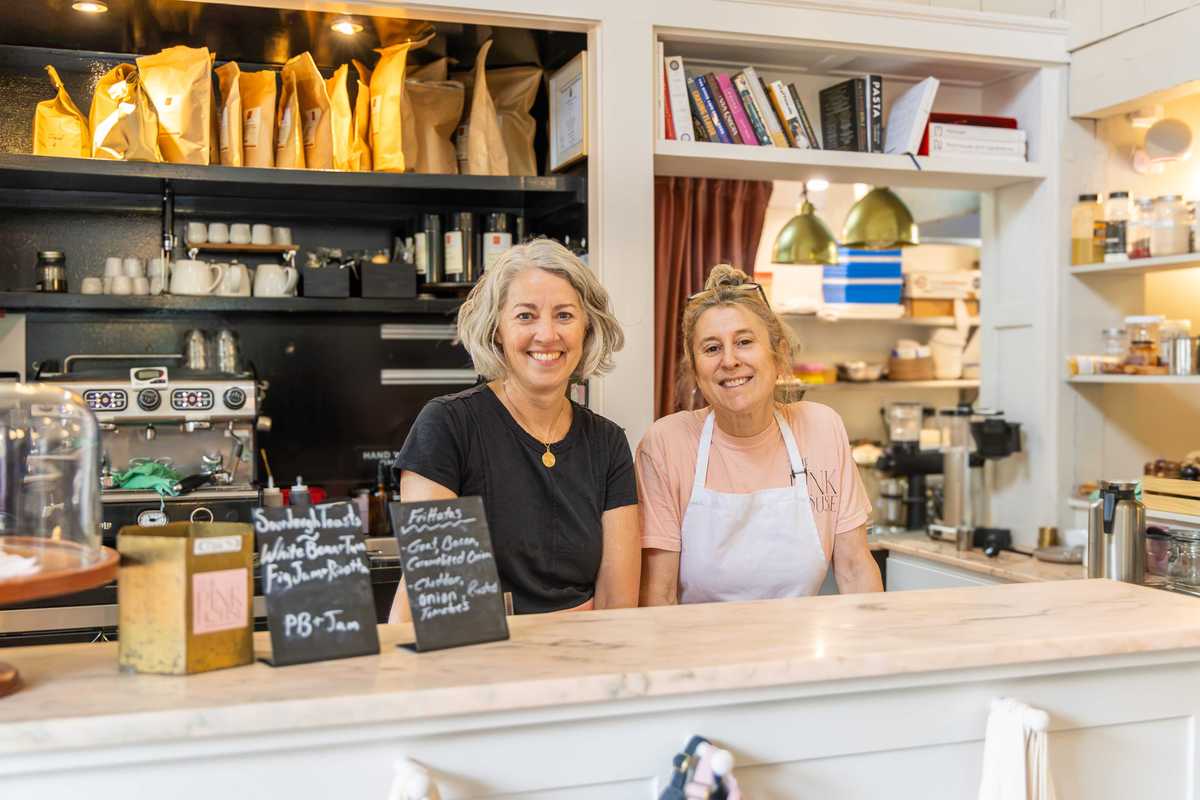
Ledbetter (left) and Wojda (right) on the set of “A Number” at Ancram Center for the Arts.
Jeff Mousseau
How would you feel if you found out you weren’t the only you — if there was an exact replica of you? What if you found out that you’d been cloned? Would you believe that you’re the real you? Would you suspect you might be a copy of the original? How could you be sure anything about your life was real? These are some of the questions posed in Caryl Churchill’s play “A Number,” opening at the Ancram Center for the Artson Oct. 1.
Churchill was born in London in 1938 and has been hailed by the theaterl world as one of the strongest voices of her time to take on sexual politics and feminist themes. Her works garner pointedly considered analysis from the highest levels of theatrical intellectualism. Basically, it’s about as far from “The Lion King” as you can get. While she’s experimented with dance theater in the past, “A Number” is much more stripped down, highlighting Churchill’s chosen themes and the skills of both actors on stage.
In “A Number,” Churchill explores the existential ramifications for a man who discovers he’s been cloned. With only two actors — John Wojda playing the father and Drew Ledbetter as the son and his clones — the play play uses a spare, intimate structure to explore complex questions.. Premiering in 2002, “A Number” examines identity, individuality and the implications of human cloning.
Ledbetter, who takes on multiple versions of the same person, has performed in a variety of Off-Broadway and regional productions, including “Hamlet” and “King Lear.” He’s appeared in “The Blacklist” and HBO’s “Succession” and was featured in the WordPlay e-Book version of Shakespeare’s “Romeo and Juliet,” which pairs acted video scenes with the original written word.
Wojda, who’s appeared in several Broadway productions, also has extensive experience with Shakespeare, including “The Merchant of Venice” and “MacBeth.” He has toured nationally with “Spring Awakening” and internationally with “West Side Story,” itself an adaptation of “Romeo and Juliet.” Like Ledbetter, Wojda has also appeared in “The Blacklist” but boasts a robust list of other television productions, including “Blue Bloods,” “Mr. Robot,” “Madam Secretary” and iterations of “Law and Order.”
For tickets to “A Number,” visit www.ancramcenter.org.
Keep ReadingShow less
Dispatches from the Farm
Janna Siller
Sep 30, 2026
Adamah Farm crew members planning out the day’s tasks on a late September day.
Janna Siller
“Dispatches from the farm” is a new, periodic column offering a firsthand look at the rhythms, challenges and rewards of farming through the eyes of a local farmer.
The thing about plants is that they can’t get up and move. When a storm like last weekend’s nor’easter threatens to roll through, you can’t just round everybody up and settle them safely on the sofa for movie night.
Over my 15 years of growing vegetables in Falls Village, I’ve exerted my will over all kinds of conditions, from drought to humidity to crows with a taste for cantaloupe. That’s what farming is all about. You zip around the field, hopping on and off tractors, moving hoses and chasing weeds, all in an effort to arrange conditions in favor of your crops. It is the crops’ job to gulp up sunlight and move water through their stems, to transform solar energy into your next pesto or ratatouille or butternut squash soup. It is the job of the farmer to irrigate just enough but not too much, to slice dandelion leaves without damaging delicate cabbage roots, to pander and pamper and stay in tune with what plants need to thrive.
The easy part of farming is trusting plants’ resilience. I have seen bright green shoots barrel ahead out of a plant torn to shreds by hail. I’ve watched wilty, heat-stressed seedlings turn rigid overnight and greet the next morning with vigor. The hard part is letting go of what you can’t control. As our crops lapped up Friday’s gentle sunshine and I considered the weekend forecast, I imagined roots holding tight to wet earth and branches supporting each other in sideways, pelting rain. I made sure all of our storage crops were already harvested and tucked away. I battened down the sides of our greenhouses and wished the remaining field crops good luck.
The nor’easter didn’t materialize too dramatically in our corner of New England. A few broken branches and debris blown about, nothing like the July Fourth storm that sent half a tree crashing onto the deer fence and left crates of fresh veggies in coolers without power.

Farming is an exercise in acceptance. To do it well and return year after year, you have to balance hubris and humility. The prize can often be a certain equanimity, a training in the art of moving into the next day even when the last one scrambled all your plans.
Epic change is not always about the unexpected. It also comes like clockwork on the seasonal calendar. As I type, the last of summer’s watermelons wait naively on the vine for a few hot days to finish ripening. Broccoli are holding their leaves wide as they did in June and July, only to find that the hours of sunlight decrease with each earlier sunset. Plants can’t pick up and go south or call the manager to order a bonus round of sunshine. Their growth slows and they get a resigned look to the hue of their leaves, so different from the frenzied growth of summer.
The release of fall is not tragic or gloomy. It is not an ending because so many fall tasks are about setting up for the new beginnings in spring.
We turn the vines that yielded thousands of pounds of fruit into the soil, where healthy microbes feast on their rotting stems. Then we plant cover crops — a mix of cereal grains like rye and oats and legumes like peas, vetch and clover. Cover crops hold the soil and its nutrients in place over winter, feeding the soil food web and adding organic matter that next season’s crops will need to grow.
We sort sprinklers and repair hoses. We inventory tarps. We take notes about which plants did well where and how we might try a new approach for this or that. We stack crates of cured garlic and onions and winter squash in a cool, dark room.
We save seeds from tomatoes and beans and lettuce, carefully labeling each variety for next season’s long, sunny days.
Janna Siller is the farm director at Adamah, a community farm in Falls Village offering CSA shares, educational programs and a food access program.
Keep ReadingShow less
Pinchas Zukerman brings an all-Beethoven program to Hotchkiss
Thomas Jensen
Sep 30, 2026
Pinchas Zukerman to perform at Hotchkiss Oct. 4
Cheryl Mazak
The passion, drama and energy of Beethoven will fill Katherine M. Elfers Hall at The Hotchkiss School on Oct. 4, when world-renowned violinist Pinchas Zukerman is joined by pianist Shai Wosner for a special recital.
The 4:30 p.m. program at the Esther Eastman Music Center will feature three of Beethoven’s celebrated violin sonatas: Violin Sonata No. 4 in A minor, Op. 23; Violin Sonata No. 5 in F major, Op. 24, “Spring”; and Violin Sonata No. 7 in C minor, Op. 30.
Beethoven’s Violin Sonata No. 4 in A minor, Op. 23, is a three-movement chamber work marked by stark emotional contrasts and dramatic energy. Its three movements take the listener on quite a journey.
The first, a Presto in A minor in an unusual 6/8 meter, is propelled by an urgent, relentless, tarantella-like rhythm. Intensely minor and austere, it creates tension and sets the mood for what follows.
Next, an Andante scherzoso, più allegretto in A major serves as both a slow movement and a playful, subtle scherzo. It features intricate, delicate fugal textures and a trilling second theme. The third movement is an Allegro molto, back in A minor. An anxious, turbulent rondo finale, it features middle sections in which Beethoven playfully misaligns the timing of the violin and piano, creating a tense, out-of-sync dialogue that eventually collapses into a quiet, gloomy conclusion.
Violin Sonata No. 5 in F major, Op. 24, “Spring,” was Beethoven’s first violin sonata to depart from the traditional three-movement Classical format by adding a brief scherzo. Its four distinct movements will give Zukerman and Wosner ample opportunity to display their technique and musical interplay.
Driven by a soaring, lyrical opening theme shared between violin and piano, the first movement is an Allegro in F major. Next comes an Adagio molto espressivo in B-flat major, a deeply sentimental, songlike dialogue that builds on gentle variations.
The third movement, Scherzo: Allegro molto, is a brief, comic interlude featuring rhythmic playfulness as the two instruments purposefully fall out of sync. The fourth movement, Rondo: Allegro ma non troppo, is a grand finale written in a pleasant, courtly style with contrasting dramatic shifts.
Beethoven’s Violin Sonata No. 7 in C minor, Op. 30, begins with an Allegro con brio featuring a dramatic and tense opening movement. It is the first of Beethoven’s sonata-allegro movements to break with tradition by omitting the exposition repeat.
Next comes an Adagio cantabile in A-flat major. Serene, deeply lyrical and comforting, it contrasts with the intensity of the first movement, flowing like an expressive song and offering a momentary emotional respite.
The third movement, Scherzo: Allegro, is short, playful and sharply rhythmic, contrasting with the overall somber gravity of the sonata. The finale, Allegro: Presto, returns to C minor. Restless, suspenseful and driving, it builds immense tension before exploding into a furious Presto coda. Beethoven ends the work with a sizzle.
Zukerman and Wosner perform Sunday, Oct. 4, at 4:30 p.m. at The Hotchkiss School in Lakeville. Admission is free and first-come, first-served.
Keep ReadingShow less

Want more of our stories on Google? Click here to make us a Preferred Source.
loading