Latest News
Rail history comes to life during revived Railroad Days in North Canaan
Ruth Epstein
Aug 12, 2026
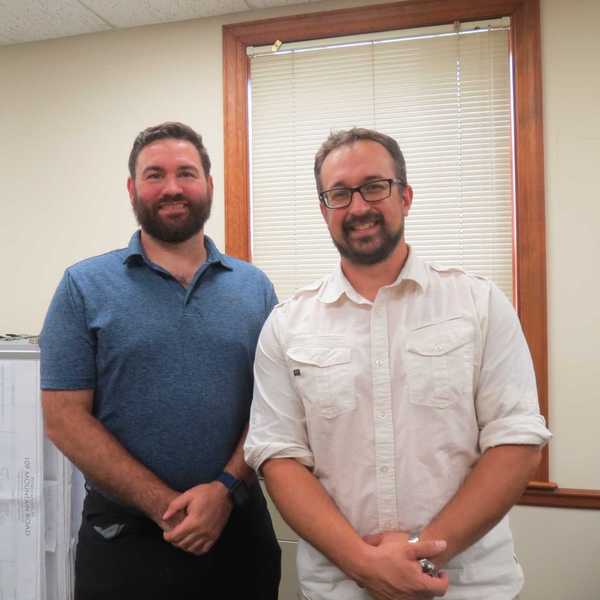
Connor Maher peers out from the 1953 locomotive built for the Boston and Maine Railroad. He was part of a group that saved the car from being salvaged. It stopped by North Canaan’s Railroad Days this weekend on its way to a permanent home at the Danbury Railway Museum.
Ruth Epstein
NORTH CANAAN – Trains chugged into North Canaan Saturday for Railroad Days, delighting rail enthusiasts and visitors who simply enjoy the sights and sounds of the rails.
Visitors strolled the grassy area behind Canaan Union Depot, taking in the trains on display, while some ventured up steep steps to tour open cars.
Railroad Days began in the 1960s as a way to celebrate Canaan’s railroading heritage. The depot, built in 1872, became a focal point at the intersection of the north-south Housatonic Railroad and the east-west Connecticut Western Railroad. The Victorian structure helped fuel the town’s growth.
Eventually, it housed commercial enterprises until 2001, when it was heavily damaged by an arson fire. The town rallied to have it restored. Today, the depot houses railroad and accordion museums on the premises.
The Railroad Days celebration has ebbed and flowed over the years, but recently the town’s Events Committee revived the event with a stronger railroad presence.
One train that captured a lot of attention Saturday was the locomotive built for the Boston-Maine line in 1953 by EMD, a branch of General Motors. Connor Mahar of Madbury, N.H., and Mike Labouliere of Berlin, N.H., who work in the railroad industry, were there to explain its significance.
“It served a long life in freight yards to carry local freight in the Boston area,” Mahar said. “Then up to three years ago, it was used on a short line railroad in Pittston, Pennsylvania.”
The two share a passion for trains — Mahar owns one caboose and Labouliere owns two — and when they learned in the fall of 2023 that the locomotive was going to be scrapped, they dove into action to save it. They joined forces with others, calling themselves Team 1127, the number on the train. With help from individuals and groups, they were successful in reaching the goal of $65,000 needed to save it. The car will now have a home at the Danbury Railway Museum.
Both men said their love of trains began in their childhoods, fueled by their fathers.
“Railroads always had their own appeal,” Mahar said. “They’re often forgotten by preservationists who mainly concentrate on buildings. People forget they are the backbone of the country.”
Labouliere added, “They are still the most efficient way to move items.”

PJ Bailly, operations manager and rain master of Housatonic Railroad, was primarily responsible for gathering the participants for the event. Among those represented were the Danbury Railway Museum, Berkshire Scenic Railroad, Friends of the Valley in Essex, New Haven Technical Society, Naugatuck Railroad, Connecticut Operational Life Services, a Roger Williams train and the Falls Village-Canaan Historical Society.
The Housatonic Railroad recently purchased the Canaan Union Depot and is housing most of its operations there. The freight line extends from Pittsfield to Danbury, with a branch going east to Derby, covering a total of 50 miles in Connecticut and 36.5 in Massachusetts.
Bailly said Housatonic Railroad is working on new initiatives, including purchasing more EPA-efficient engines and upgrading its fleet. The railroad has bought five engines in the past two years and also plans to clean up the rail yards on Route 7 south of town.
“Housatonic aims to partner with, and cooperate with, the community,” Bailly said. “We’re trying to reach out. We’ll be offering a Hazmat training session in the near future and are planning other programs. We’re here today not just to show trains, but to support the town. It deals with us every day, so we’re trying to give back.”
The railroad also has job openings in several areas, and Bailly encouraged interested people to apply.
Keep ReadingShow less
Growing the next generation of local journalists
Lakeville Journal
Aug 12, 2026
Every summer, our newsroom becomes more than a place where stories are written—it becomes a classroom, a workshop, and, we hope, the starting point for future careers in local journalism.
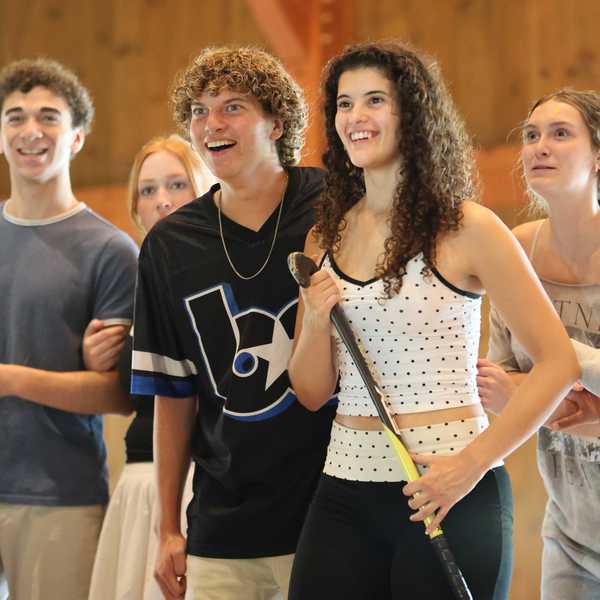
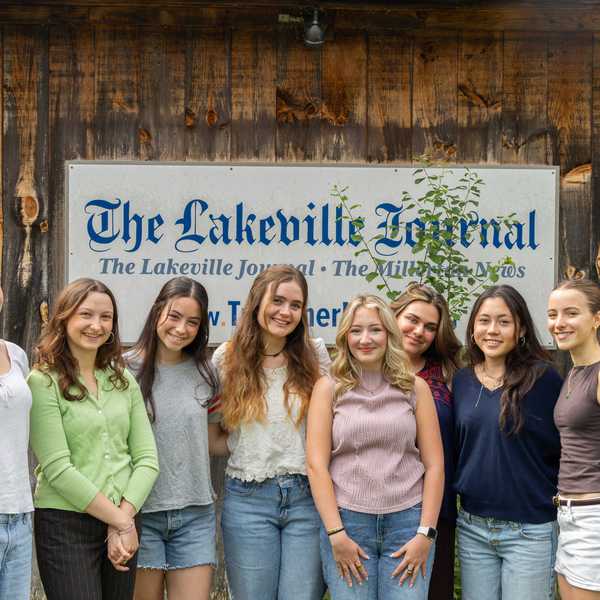
This year, eight interns joined The Lakeville Journal and The Millerton News for an intensive six-week experience that immersed them in community reporting. Three were high school students attending Housatonic Valley Regional High School, The Hotchkiss School and Loomis Chaffee School. The remaining five were college students from Ithaca College, Marist University, the University of Connecticut, Loyola University and Northwestern University.Although they arrived with different backgrounds and varying levels of journalism experience, they all shared a connection to the Northwest Corner of Connecticut or neighboring Dutchess County and a curiosity about the communities most call home.
Rather than watching from the sidelines, the interns became part of the newsroom. They covered local events, interviewed residents, wrote feature stories, attended meetings, and worked alongside our editors and reporters as they learned how local journalism comes together—from the first interview to the final edit. Along the way, they discovered that reporting is equal parts preparation, persistence, curiosity and listening.
Their education extended well beyond reporting assignments. Throughout the summer, community leaders and media professionals volunteered their time to lead weekly workshops on subjects that every journalist should understand.
Attorney and LJMN Media Inc. board member Devereaux Chatillon explored media law and intellectual property. Veteran photographer Anne Day shared practical techniques for creating stronger images, even using a smartphone. Francesca Donner, former gender editor at The New York Times and founder of The Persistent, challenged the interns to think critically about female representation in journalism. Compass editor Natalia Zukerman discussed the art of interviewing, while our news editors Christian Murray, Aly Morrissey and Nathan Miller offered practical lessons in reporting, feature writing and the newsroom process.
Perhaps the greatest lessons, however, came from simply being out in the community.
Several interns told us they now pay far more attention to what’s happening around them than they did before the program. Others said the experience pushed them beyond their comfort zones, whether that meant approaching strangers for interviews or covering busy public events. One intern joked about discovering “there can be a lot of drama over a tennis court,” a reminder that every community has stories waiting to be uncovered. Another described the experience as “breaking the bubble”—seeing familiar towns through fresh eyes and recognizing the people and issues that shape everyday life.
This week, each intern shares what they learned during the summer on pages B1 and B2.
Programs like this depend on people who know that local journalism matters. We are deeply grateful to the William and Mary Greve Foundation and individual donors for their generous support of this year’s summer internship program. We also welcomed one intern through our partnership with Marist University, another investment in developing future journalists.
That investment couldn’t be more important.
Strong communities need strong, reliable local reporting and coverage of town halls, school boards, housing, healthcare, environmental issues, local businesses, sports, and the countless stories that rarely make national headlines but shape daily life here.
The newsroom will feel a little quieter when they head back to school, but we have every reason to believe we’ll be hearing from many of them again.
Keep ReadingShow less

Want more of our stories on Google? Click here to make us a Preferred Source.
Let's hear it - August 13, 2026
Lakeville Journal
Aug 12, 2026
This Week
With summer reading programs, including the Children’s Summer Reading Program at Scoville Memorial Library, wrapping up for the season, we’re curious about what our community has been reading.
What book has been your favorite summer read and why did you like it?
Send your responses to social@lakevillejournal.com by Monday, Aug. 17 at 10 a.m. or comment on Facebook or Instagram.
We’ll publish a selection in next week’s paper.
Last Week’s Question
Do you support speed cameras in our communities? Why or why not?
“Well, speed cameras, I understand the privacy concerns and it is a legitimate worry. Maybe we can pass legislation requiring warrants for governmental entities using the images for anything other than traffic citations. But speed limits are there for a reason, saving lives being a significant one. It is probably not a bad idea to encourage adherence and I can’t think of a better way to do so than by fines. I am a big believer in sin taxes — they are good way to generate needed revenue for our localities, and they are a tax of choice, not of obligation. That being said, if I am driving down the road, my blinker not flashing from a turn I made two weeks ago, not hogging the middle, keeping the traffic flowing, the authorities should be clasping me on the shoulder, murmuring, “Well done, elderly gentleman, well done!” Not handing me a ticket. Whatever, it’s fine. Just, just that simple justice demands, when somebody pulls out suddenly in front of me from Jackson Road and proceeds all the way to West Cornwall at some 15 to 20 miles below the limit, well, they should get nailed too.”
— Peter Demy, West Cornwall
“No. It’s an invasion of privacy and we never voted for it.”
— Rich Devman
“Protecting kids in school zones is something everyone can agree on. The question is whether we want more automated government surveillance or real law enforcement. Speed cameras may catch some speeders, but they also create privacy concerns, reduce due process, and can become revenue generators rather than safety tools. If a town truly wants safer roads, invest in better road design, visible police patrols, and stricter penalties for reckless drivers—not a network of cameras watching law-abiding citizens. Government should prove these cameras are about safety, not money, and keep them limited, transparent, and accountable.”
— Cluckers Farm
“Speeding cars is a problem on my tiny street. Too many of my neighbors seem to feel they’re at Lime Rock race track. If not speed cameras, maybe speed bumps. No one likes those either but they’re not invasive. Better yet—just slow down for god’s sake!!”
— Anita Holmes
“As we used to say in East Germany: “Stasi ‘raus!””
— Matthias Weiss
Keep ReadingShow less
Letters to the Editor - August 13, 2026
Lakeville Journal
Aug 12, 2026
Appreciation to all for a successful 19th Annual Jane Lloyd Fund Clambake
On Saturday, July 25, the Jane Lloyd Fund was proud to host our 19th Annual Clambake. It was once again a gorgeous day to be with friends, family, and neighbors to raise money for local individuals and families affected by cancer.
On behalf of the Jane Lloyd Fund Advisory Board, I want to express our heartfelt gratitude to everyone who made this year’s event such a tremendous success. Thank you to those who attended, our generous sponsors and donors, and the many volunteers whose hard work made the day possible. Whether you donated your time, talents, resources, or simply joined us in support, you made a meaningful difference.
The Jane Lloyd Fund exists to help members of our community who are struggling with the financial burden of cancer. By providing assistance with everyday living expenses, we help ease some of the stress so patients and their families can focus on what matters most—their health and healing.
Volunteers make events like our Annual Clambake possible. They are central to our organization and reflect the spirit of the Jane Lloyd Fund and our community. We want to thank each and every volunteer who has helped over the past 19 years. Thank you for your time, your effort, and your willingness to do the unglamorous work that still matters immensely. Thank you for showing up with competence, compassion, and kindness, And thank you for remembering, year after year, that community isn’t measured by who we are when things are easy, it’s measured by who we choose to be when someone needs help.
As we reflect on another successful Clambake, we are reminded that the true measure of our community is not simply in what we accomplish, but in how we care for one another. Together we are bringing hope, easing burdens and reminding our neighbors that they are never alone in their fight.
With heartfelt appreciation, we thank everyone who joined us for the 19th Annual Jane Lloyd Fund Clambake. Your generosity and compassion once again turned this annual event into a true celebration of community spirit and hope. We look forward to continuing this important mission together for many years to come.
Tanya Tedder
Scott Davis
Donna Lloyd Stoetzner
Brierley Lloyd Hannon
Salisbury
Thank you for laser light celebration
Thanks to everyone who joined us on Satre Hill the evening of August 2nd for the 250th anniversary celebration we postponed from that eventful July 4th night.
A large crowd, a spectacular laser light show, a DJ playing crowd pleasers, a food truck, free ice cream sandwiches and giant beach balls for the kids—it was a fun community party enjoyed by everyone!
The Salisbury Association is grateful for all the volunteers who helped with the event.Special thanks to SWSA for allowing us to use the ski jump hill and their facilities there.
Cynthia Walsh
President
Salisbury Association
Gratitude from Hotchkiss Library of Sharon
Just in time, last week’s downpours ceased and the sun came out for the 28th Annual Sharon Summer Book Signing, now a three-day weekend offering something for everyone.
Crowds gathered to meet the authors, purchase books, attend author brunches, dinners and cocktail parties, enjoy Saturday’s cookbook demonstrations, and laugh with joy at the free Kids’ Carnival on Sunday. It all unfolded seamlessly due to the incredible hard work of more than 40 volunteers, our hardworking staff, and dedicated board members who did everything from carrying boxes of books and tending bar to selling tickets and hosting events.
Since all proceeds support the Hotchkiss Library of Sharon’s operating budget, the hundreds of people who participated are key players in helping us to fulfil our mission as Sharon’s community center and to safeguard free access to information.Thanks so much to everyone who participated – your generosity funds programs for everyone – from toddlers to seniors. We are so grateful to all of you. We can’t do it without you.
With gratitude,
Gretchen Hachmeister
Executive Director
Lorna D. Edmundson
President,
Board of Directors
Sharon
The revenge of Socrates meets Oppenheimer
“Here a slop - there a slop - everywhere a-slop-slop”.. - just a little tune that pops into my head every time I navigate the news these days. AI and its attendant breathlessly reverberating falderall is making me feel like a four year old trying to learn all the verses to that childhood epic ‘Old MacDonald’.“Whoa.. how many chickens? goats? pigs?” AI is now audtioning to be, in my old-timer cranky estimation - ‘The Revenge of Socrates’ meets Oppenheimer at Alamogordo “I am become death - the destroyer of worlds.”
You see, I grew up in ancient times in the 1950’s and 60’s in rural Massachusets. Back then, there was an electricity that would, now and again, pulse through your veins when one of those wizards at Bell Labs came up with something mind-bendingly clever and cool - like transistors. You know, for radios -so you could carry music around with you as you bopped down the street.
Well, the ‘now and again’ wonder of appreciating and celebrating how some of our very best and brightest have figured out some new secrets of the universe to assist mankind on its journey, easing physical labor or simply enhancing the enjoyment of our modern lives has become something else -for me. The feeling is more like when, at the age of 16, I strapped an empty burlap sack to my backside under the 100 degree heat of a summertime tobacco net. I then sat and skivyed along dusty quarter mile long rows succoring the tobacco plants so they would grow straight, strong, tall and healthy. Healthy, so that the leaves could be harvested, dried, ‘processed’, rolled, packaged and shipped all over the world - to the devil’s bargain delight of all those addictees (sorry -customers).
To the first half of my thesis -‘AI is The Revenge of Socrates’. Socrates, you see, from what I’ve read in books, was totally against the written word. He thought it would, if pursued, pollute the mental accuity of people. No more training your mind to remember words, thus concepts, thus enabling a high level of truthful evaluation of reality and ideas.
The second half - ‘..meets Oppenheimer at Alamogordo “I am become death - the destroyer of worlds.”’AI-Anthropic, I’ve read, has come up with and is proceeding apace with a quaint little ‘legal’ sommersaulting assault on the the history of the written word. It lost in court when it tried to ‘pirate’ books to train its AI, so it moved on to buying, scanning - and then shredding the books (to cover it’s copyright violating behind).
Oh to be a fly on the wall in any of the 21st century boardrooms worldwide - filled with all of those ‘we know best-ies’ who have decided to move on from the passe capitalistic catechism of creative destruction to the newly minted millenial mantra - AI data centers will save humanity.
Memory is strange. Put it in a human brain and it learns. Put it on a chip and it earns. “Ee, i, ee, i, Oh!”
Michael Moschen
Cornwall Bridge
We need a new foreign policy
We need a new foreign policy. A recent issue of Esquire, celebrating the 250th anniversary of the Declaration of Independence contained a startling fact that too many of us are unaware of – 239 of our 250-year history has been spent at war. Just since 1945, the U.S. has been involved in dozens of wars, all of which we have lost.
Our tax dollars are being used to finance a war economy. We devote more money to the military than any other country on the planet and more than the next 10 countries combined. The Trump regime is proposing, and our Congress will probably appropriate 1.5 trillion dollars to fund the Department of War in the coming fiscal year.And, that’s not all of it, additional billions devoted to undermining other countries’ governments covertly through the C.I.A. are appropriated and unaccounted for annually.
In all these wars, the U.S. has killed or stood by while others under its influence have killed millions of innocent people. For documentation, see, “War Made Indivisible” by Norman Solomon. Our war making and support for aggression has not gone unnoticed around the world. In a survey conducted between January and March 2026 in 98 countries of over 94,146 people world-wide, the Democracy Perception Index 2026, a majority of those asked believed the U.S. is the most dangerous country on the planet.
Our foreign policy has long been based on domination not cooperation. Increasingly, it relies on military intervention and political interference in the affairs of other countries using assassination of foreign leaders and the targeting of civilians as its main tools. In addition to these crimes, these wars are bankrupting us with billions in debt. The U.S. military is also a major source of pollution contributing to the destruction of our planet’s environment. See the film, Earth’s Greatest Enemy by Abbey Martin. And, most importantly, this foreign policy is being carried out with the consent of Congress but not the voters.
A majority of Americans are against the war with Iran; recent primary election results demonstrate widespread rejection of Israeli aggression and U.S. complicity in Gaza. Millions of Americans are against wars of aggression and forever wars. This is support for a different foreign policy; one based on peaceful-co-existence and non-aggression. Honest diplomacy, not war, is the main engine of a successful foreign relations strategy. A strengthening of the United Nations and the principles of mutual respect and cooperation among nations is something for us to fight for.
Leonard Polletta
Lakeville
We need new speed limits, not surveillance
“Speed camera debate continues across Northwest Corner towns” in the August 6th issue of the Lakeville Journal would have been better titled, “Local politicians smell potential new revenue source.” We don’t need more of Big Brother’s watchful eye, we need less of it. At some time or other, almost everyone drives faster than a posted speed limit. Speed limits were assigned to local roads by traffic engineers more than 70 years ago. Automobiles in the 1950s and 1960s were larger, heavier, had poorer brakes, less precise steering, and less sophisticated tires.
Today’s cars are infinitely safer and are capable of negotiating 35 MPH roads at 50 MPH. Yet, when is the last time a speed limit on a local road was raised? The solution, to me, would be to simply do nothing. What we are witnessing is traffic flowing at prevailing rates, which may be somewhat faster than traffic engineers stipulated 70 years ago. Speed limits on local roads should be considered suggestions. The majority of the driving public has common sense and good judgement. Those who don’t never had it in the first place and saddling the rest of with artificially low speed limits will not magically equip them with it. If we really wanted to cut down on speed-related accidents we would limit speeds on all roads to 25 MPH. We don’t do that because we accept a certain number of accidents as the price we pay for convenience and expediency. Politicians should not waste their time seeking solutions to problems that do not exist.
Richard Kopec
Sharon
Keep ReadingShow less
Turning Back the Pages - August 13, 2026
Norma Bosworth
Aug 12, 2026
125 years ago — August 1901
THE JOURNAL this week begins its fifth year, and thanks are due the public for generous support and cooperation. The Journal has at all times endeavored to faithfully represent its section as home paper should, and hopes the public will continue to bestow its patronage and assistance.
Modern day editor’s note: This week begins The Journal’s 130th year of publication and this year marks 5 years as a 501(c)(3) nonprofit organization. We are as grateful today for the support of our community as our predecessors were 125 years ago.
Genial John Belcher has purchased a new driving horse, a sweet one they say.
100 years ago — August 1926
Jack Wells of Brooklyn recently caught a five pound pickerel at Twin Lakes. The fish measured 27 inches in length.
A government airplane came to grief near West Cornwall last Sunday. It is understood the two pilots saw that their gas was running low and looked around for a place to land. They selected a cornfield belonging to Eugene Wickwire, and in landing made a miscalculation of the distance, the plane coming to a stop against a stone wall and barb wire fence, and receiving considerable damage. The pilots escaped injury. The plane was taken apart and towed to Hartford for repairs.
Thomas Graham, formerly of this place, is in the Winsted hospital as the result of injuries received when he was struck by an automobile on Gay Street, Winsted, Monday evening. He was carried in an unconscious condition by two automobilists from the street and left in a barn nearby where he was found later. He sustained five broken ribs and his left arm was fractured. The automobilists, who are unknown, carried Mr. Graham to the barn thinking he was dead, and left without notifying anyone of the accident. The injured man is the father of Mrs. Peter Phillips.
Mrs. Katherine Johnson Ashe is spending the summer near Asheville, N.C. Mrs. Ashe writes that Asheville was named after her husband’s “great-great-grandfather who was a distinguished general in the Revolutionary war.”
50 years ago — August 1976
A former Salisbury resident has become “foster father” to a young male chimpanzee and is helping him learn to communicate more clearly with human beings. The “father” is Walter Benesch, a graduate of Housatonic Valley Regional High School, and son of Louise Benesch of Amesville. His “foster son” is a 2 ½ year old chimp, Nim Chimpsky, whose name is a take-off on that of Noam Chomsky. Chomsky, a noted linguistics expert at Massachusetts Institute of Technology, is known for his skepticism on the subject of chimpanzee research, Benesch said. In Project Nim, Benesch cares for the young chimp like a parent, feeding him, putting him to bed and taking him to visit friends.
CANAAN — Age and ill health have left undimmed Grete Stuckgold passionate commitment to the world of opera. Confined to Geer Memorial Extended Care Facility for the past three years since she suffered a stroke in New York City, the 80-year-old former opera star continues to follow opera through Saturday morning broadcasts. “I’ve become emotionally involved,” she says. Mrs. Stuckgold’s interest in opera is no passing fancy. She has devoted her life to the art and was for 15 years prima donna with the New York Metropolitan Opera House. She has sung most of the major soprano roles during her career, and has appeared in nearly every European country, all the states of the Union and every Canadian province.
ASHLEY FALLS — Sheila Angus, Sheffield correspondent for The Lakeville Journal, produced some shattering news Monday morning when she drove her car through the window of the Ashley Falls Post Office. When Mrs. Angus pulled up in front of the post office she had difficulty in getting her gear shift into the parking position. “The car just refused to stop,” she said,” and I found myself going into the plate glass window. There were no personal injuries, thank heaven, but you should see the post office!”
25 years ago — August 1976
Housatonic Valley Regional High School senior Candace Deeds spent the last six months in Costa Rica, studying at a high school and teaching at an elementary school. She also found time to check out some of the beaches. “I’ve never experienced anything like them before,” she said of the finely crushed seashells that made the soft shimmering sand.
These items were taken from The Lakeville Journal archives at Salisbury’s Scoville Memorial Library, keeping the original wording intact as possible.
Keep ReadingShow less

Want more of our stories on Google? Click here to make us a Preferred Source.
loading