Live theater has a long and robust legacy of outreaching into the local community, be it in ancient Greece and the Hellenic era, the Romans, medieval times, pre- and post-Renaissance, Elizabethan England and onward through our current modern live theater, which will certainly evolve in years to come.
This was generally done to bring live productions — music and dance, pantomimes, comedic plays — to the masses, who were frequently less educated and certainly of small means. True, archaeologists have unearthed and explored majestic amphitheaters in ancient Greece and Rome, and even in Cornwall (no, not our Cornwall) and the southwest of England. Yet most performances were taken to the people rather than drawing audiences to a permanent structure.
Depending on the area of the performances, the plays were performed in the middle of the street, on maneuvered wooden pageant wagons in the streets of great cities. All the staging for traveling productions — the precursors of our modern “touring” productions — was considered temporary and expected to be removed upon the completion of the performances. The upside: They would attract large masses of audiences in outdoor markets and festivals who could investigate the scene as they passed by. The downside: It was not an environment conducive to elaborate staging and performances.
This new type of stage changed the number of people who could view the plays: Instead of people having to travel to the church to see the play, the stage and the play could now come to them. The wagons often made cycles through towns or cities and would perform the acts multiple times so people could view them. The wagons would be dragged through the area and the actors would perform their roles over and over for the changing audiences.
In Sharon and neighboring communities, The Sharon Playhouse has been proudly instrumental in engaging directly with our community.
We’ve partnered with local support groups, as we did with Project Sage of Lakeville for our popular 2023 production of “Oliver!”
In conjunction with our 2023 production of “Lifespan of a Fact,” The Sharon Playhouse partnered with The Salisbury Forum and The Lakeville Journal to co-sponsor a presentation and audience talkback on the hot issue of truth in journalism.
We worked with the Hotchkiss Library of Sharon to make its “Little Women” community read a success.
The Playhouse had a season-long presence with a fun raffle at the Kent Memorial Library’s popular book sale on weekends.
We conducted a season-long trivia contest with theater ticket prizes to test the theater knowledge of our community — hundreds of responses proved that people enjoyed that, and were pretty much on target.
We’ve even taken productions out into local cemeteries for spooky Halloween play readings.
And as of 2023, just like you, The Sharon Playhouse is now a “homeowner,” with the purchase of a lovely building near Sharon Hospital to house our visiting casts and crews.
From a statistical perspective, look at the additional myriad ways that The Sharon Playhouse has touched our community and beyond.
During the 2023 season, The Sharon Playhouse:
—Provided jobs for 250 professional theater artists, actors, technicians, musicians and educators.
—Welcomed 16,000 patrons to the Playhouse.
—Offered over 95 live, in-person performances of 22 theater productions.
—Produced 10 fully staged youth productions, four of which were original works.
—Offered 55 on-site educational theater classes for more than 700 students and participated in three off-site school residencies with 300 students.
—Provided theater education and training to more than 1,000 students.
So, add attending live theater to your list of 2024 New Year’s resolutions, and make sure to keep this one. It’s physically and mentally healthy for all of us.
Thank you all for your patronage during The Sharon Playhouse’s record-breaking 2023 season. Stay tuned for announcements about upcoming productions and the 2024 season. This year looks to be a geopolitically turbulent one and, in keeping with the theme of this series, The Sharon Playhouse is striving to bring some extra relief and joy into our audiences’ lives. For more information, and to make a donation to help us keep you mentally and physically fit, please go to www.sharonplayhouse.org
Lee A. Davies is a Member of the Board of Directors of The Sharon Playhouse and a resident of Cornwall Bridge. You can reach him with comments and/or questions at leeadavies4@gmail.com.

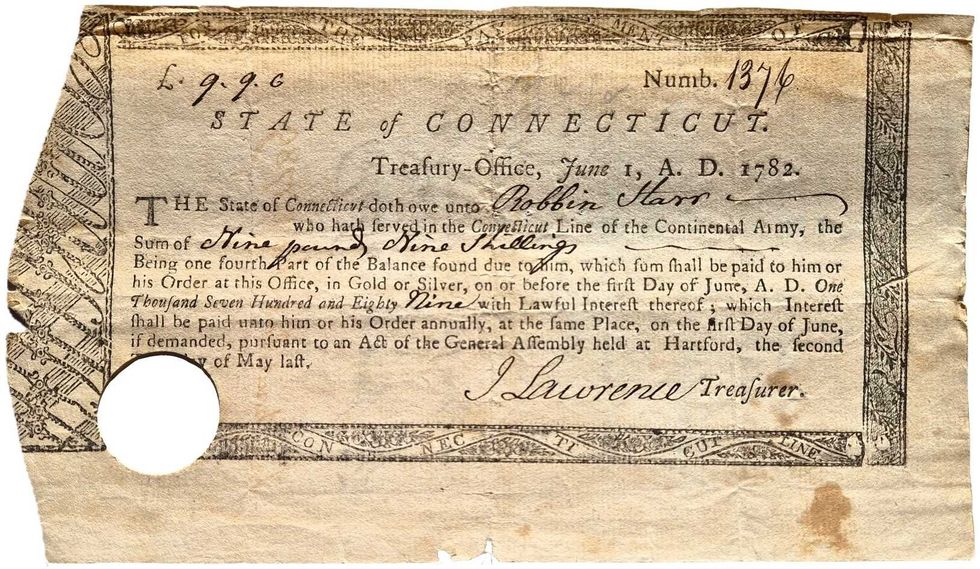 Pay Bill for Robin Starr’s service in the Continental Army.Courtesy the Alex Breanne Corporation
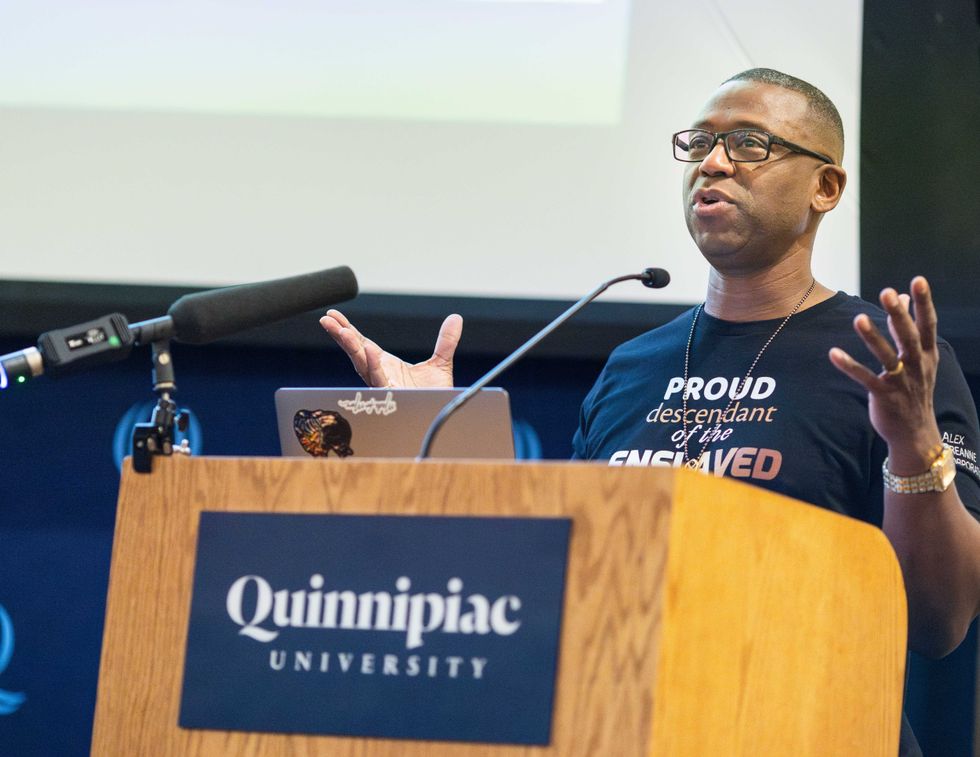 John Mills speaking at Quinnipiac University.Courtesy the Alex Breanne Corporation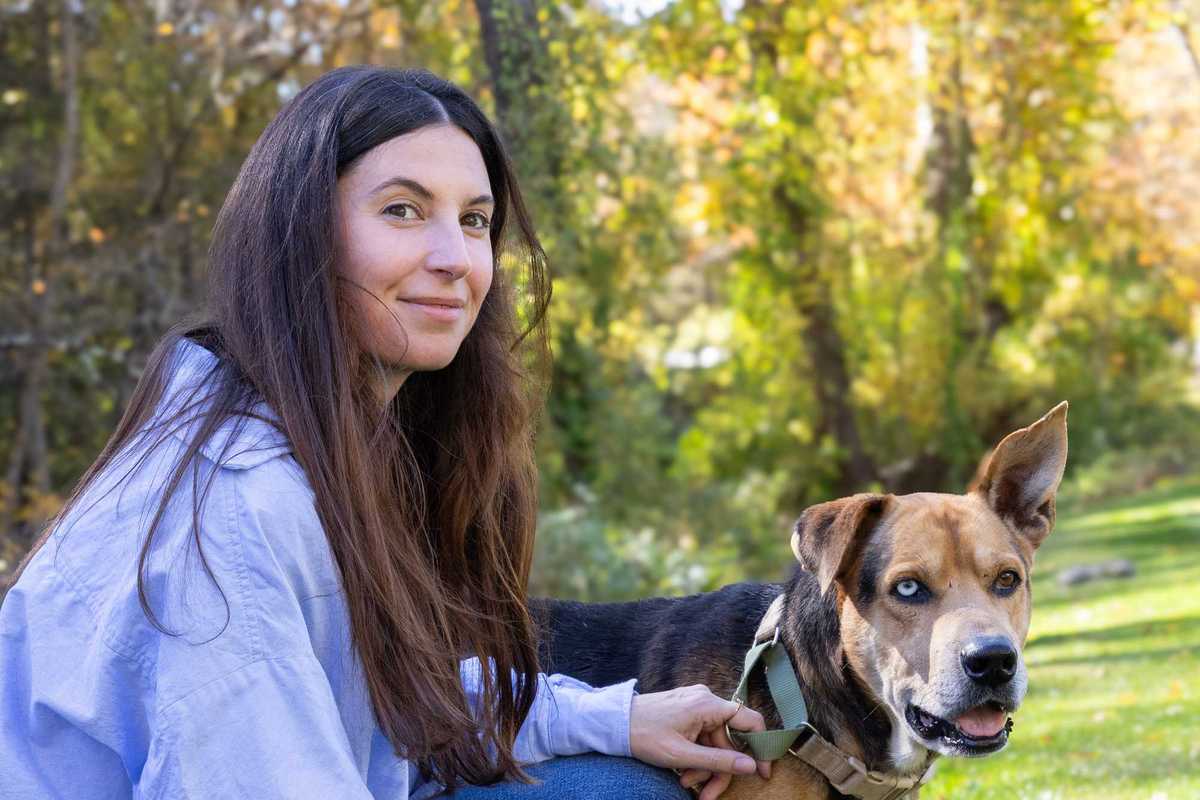
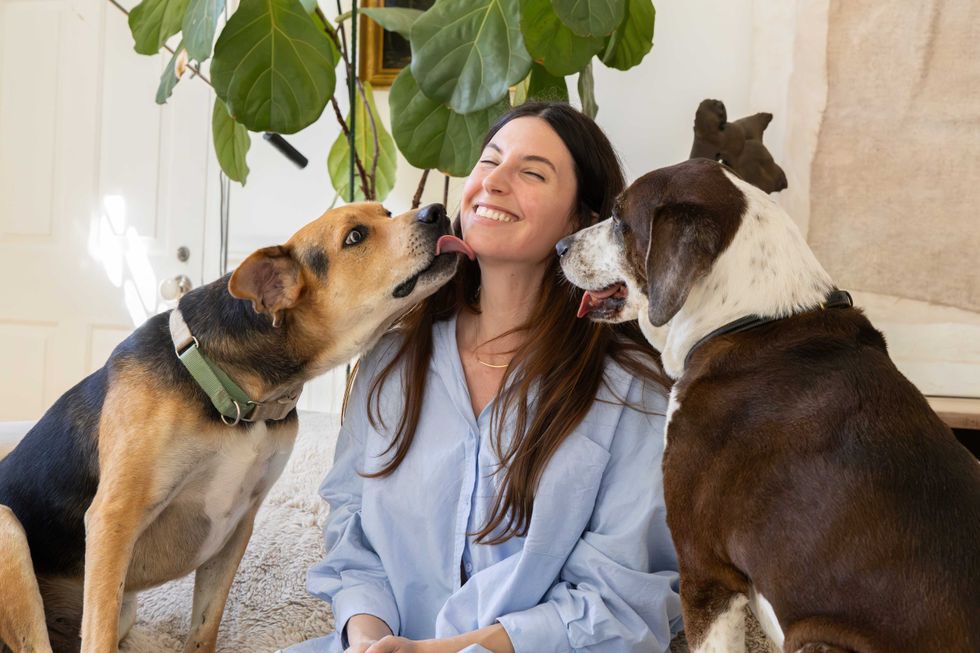 Stephanie Saetta,with her rescue dog George and Blue (left), a shepherd mix awaiting his forever home.Madi Long
 Blue, a 7 year-old Shepard mix, is waiting for his forever home. Madi Long