MILLBROOK — “I wanted to find a way to work with people and give back to the community. I could not go into a hospice room alone but when you go in with a dog sometimes words are not necessary,” said Susan Fireman, executive director and trainer of Canine Links in Millbrook.Canine Links is a not-for-profit organization that pairs people and their dogs as trained teams who become certified to work as volunteers in different facilities, giving back to the community. Canine Links was started by a group of local individuals who had the time, energy and passion for therapy dog work and wanted to start a local organization. They did so six months ago and have already graduated 12 teams — that number is growing as more and more organizations use their services. Canine Link teams serve organizations in the Hudson Valley, Manhattan, the Berkshires, Litchfield County and elsewhere in Connecticut. Entities that receive their services are called “partnering facilities,” and include places like Cardinal Hayes Home and School for Children, Alden Place Elementary School, the Fountains of Millbrook retirement community, Northern Dutchess Hospital, Geer Community Center, Noble Horizons, Columbia Memorial Hospital, Central Berkshire School District, Southern Berkshire School District, Dutchess Community College and Vassar College.How Canine Links works is that anyone 16 or older with a dog of any breed between the ages of 6 months to 12 years could potentially be a Canine Links volunteer. Fireman has and will train and certify all types of breeds, from chihuahuas to German shepherds to pit bulls. She does a temperament test before the humans and dogs can join the organization. Therapy dogs must have a good temperament, she said, because they work with a range of personalities. Once the temperament test is completed volunteers and their dogs can enroll in a six- or 12-week training course. Classes in Millbrook are held at Center for Veterinary Care. Classes are an hour long and once a week. The six-week course is $250 and the 12-week course is $500; 20 percent of the dogs at Canine Links are on scholarship, which is available for people with financial hardship.Once the dog has graduated and is certified from Canine Links, everything done with the dog is tax-deductible if connected with volunteering.“Our teams work with the school psychologists, special education teachers and help the children integrate into the schools when they have emotional difficulties,” said Fireman. “These dogs receive a lot of good training when they graduate; they are certified because certification implies training.”Canine Links makes sure all facilities are safe before sending in their volunteers. Fireman matches teams with facilities to ensure they are best suited for a particular facility. Alden Place Elementary School in the Millbrook Central School District has four canine teams that work with children with reading issues. The special education teacher selects the books and the children who work in the program. Canine Link teams work once a week in the school district and are supervised by the principal.“The handler comes in with the dog and the child will sit on a bean bag and read a special book to the dog [rather than the class] and the handler ... will help the child depending on what the child’s needs are.”Fireman said that in a Newsweek article she read children’s reading scores go up an average of 90 words a minute, to 140 words a minute, when the child reads to a nonjudgmental presence, like dogs. At Dutchess Community College and Vassar College, Canine Links has been asked to bring teams in during exams to help students deal with stress. Canine Links is also on call with Columbia Memorial Hospital’s hospice service.At Southern Berkshire School District Canine Links works with children with disabilities.“Our team works with some kids with real disabilities where the adult and dog may walk around the school with the child,” Fireman said. “Other children in the school come over to pet the dog and the child with special needs gets to share their special friend with other children. Helping the child to have a sense of feeling special and accepted in the community of the school is important.”Some partnering facilities with children with special needs will have Canine Link teams come in once a week and the dog will become the class mascot. Children are sometimes able to teach the dog tricks, groom the dog, talk with the dog and work with the dog. Fireman said this contact with therapy dogs teaches children about empathy and sharing. Cardinal Hayes Home and School for the Children was recently added to Canine Links’ list of partnering facilities. “These children have multiple disabilities and dogs have a way of reaching out in a way that humans can’t do,” Fireman said of the teams that work with Cardinal Hayes.The president of Canine Links is Mark Condon, who is a biology professor at Dutchess Community College. Condon’s dog, Dutchess, is a well-known therapy dog who works with people with autism. Condon said that studies show that children with autism spectrum disorder who work with autism assistance dogs have shown improved safety at home and in public, improved motor skills, reduced anxiety in children with reduced parental stress and improved social interactions. In 2011 Dutchess had surgery to remove both of her eyes. Dutchess’s blindness and ability to work with people with autism has made her an inspiration to many. Fireman said Canine Links is fortunate to have Condon as its president.Fireman has been a dog trainer for 20 years. She began to look for ways to work with her dog because she said she wanted to do some good in the world. After reading about therapy dogs Fireman was inspired. Fireman took her German shepherd to Columbia Memorial Hospital and did hospice work there with her dog for three years. She and the president of Columbia Memorial Hospital, Jane Ehrlich, were the first therapy teams to go into a New York State hospital 16 years ago. According to Fireman it’s been rewarding, and she encourages others to consider it. She said for those who love dogs and the idea of helping people it’s the perfect way to volunteer. Those interested in getting involved with Canine Links should go to www.cltherapydogs.org or call Fireman at 855-595-4651. To find out more about Therapy Dog Dutchess go to www.dutchessthetherapydog.com.
Latest News
Let's Hear It - September 17, 2026
Lakeville Journal
Sep 16, 2026

This Week
As summer comes to an end and the days begin to get a little cooler, signs of fall are starting to appear all around us. The leaves are beginning to change, the evenings are getting shorter, and a new season of activities and traditions is just around the corner.
What fall activities are you looking forward to?
Send your responses to social@lakevillejournal.com by Monday, Sept. 21 at 10 a.m. or comment on Facebook or Instagram.
We’ll publish a selection in next week’s paper.
Last Week’s Question
If you had $1 million to make a meaningful difference in housing affordability in your community, what. would you do — whether it’s a new idea, a different approach to something already being tried or a way to make an existing effort work better?
“Invest in a project to utilize shipping containers to make solar powered homes”
— Johnny Martin, Millerton
“Donate it to the Cornwall Housing group so they could put it towards a project.”
—Michelle Shipp Schatz-Mullins, Cornwall
“Help the Village build a sewer.”
—Beth Sherman, Millerton
“Fees, lawyers, local zoning meetings alone are a million.”
—Edward Matson, Kent
Keep ReadingShow less
Letters to the Editor - September 17, 2026
Lakeville Journal
Sep 16, 2026
Put $1M to work for housing affordability
If I had $1 million to improve housing affordability in Litchfield County, I would create a revolving Housing Opportunity Fund. Instead of spending the entire amount on one or two homes, I would use it to help local housing trusts acquire land or properties, provide down-payment assistance for qualified buyers, convert appropriate existing buildings into housing, and help cover some of the upfront costs that can prevent good housing projects from ever getting started.
The goal would be simple: make that $1 million work more than once. Whenever possible, money would return to the fund through resale provisions, shared-equity programs and other partnerships so it could be used to help the next household.
I would also love to see some of that investment go toward smaller homes on smaller lots throughout our towns. Affordable housing does not always have to mean a large development. Thoughtfully placed homes can preserve the character of our small towns while creating real opportunities for people to live here.
Because affordable housing is about so much more than housing. It helps keep families in our communities, children in our schools, local employees close to their jobs, and seniors in the towns they have called home for years.
One million dollars won’t solve Litchfield County’s housing crisis. But if we use it as seed money to attract additional grants, private donations and matching funds, that $1 million could become several million dollars in housing investment and create opportunities for generations instead of funding just one project.
Karen Rios
Sharon
Thank you for reminder of how friends should treat each other
The Sharon Playhouse production of Come From Away is timely not only for the 25th anniversary of September 11 but also as a reminder of the special relationship between Canadians and Americans. When Newfoundlanders welcomed thousands of stranded Americans and others headed to the United States in 2001, they were not just acting as gracious small town folk living their Rock values; they were also enacting the relationship that Canadians and Americans have built by crossing our shared border — the longest undefended border in the world. The heart of the U.S.-Canada relationship is, as the historians Marcus Lee Hansen and John Bartlet Brebner put it in 1941, the mingling of the Canadian and American peoples.
It is that relationship — not to mention the story of Gander or the shared sacrifices made by Canadian and American soldiers in both World Wars and Afghanistan — that Donald Trump is now tearing asunder. He tosses out random national insults on social media and purports to rename Great Lakes. Worse, in the name of a quixotic and pointless trade war, Trump is attacking Canadian sovereignty. He and his negotiators attempted to strong arm Canada into sacrificing its language policy, forego its sovereign right to make trade pacts with third countries without American approval, and dismantle its unionized automobile industry. Meanwhile, he leaves the very Canadians celebrated in Come From Away wondering how literally to take his repeated threats to annex their country.
Leaving the theater, I could not help but feel ashamed and embarrassed that my country is repaying the kindness of our neighbors with such ugly attacks. Thank you to the Sharon Playhouse for the reminder of how friends and neighbors should treat each other — and for a reminder of how Canadians and Americans acted before Donald Trump.
Jacob Remes
Sharon
Demand private capital with public for housing
If I had $1 million to make a meaningful difference in housing affordability in Salisbury and across Litchfield County, I would not build anything. I’d put the million on the table and ask: Who will match it?
Banks benefit from our deposits. The state collects our taxes at 4.5% even for income levels below the ALICE line. Half a dozen under the radar but flush foundations exist in and around the NW Corner and Litchfield Hills to solve problems individual philanthropy alone does not. Private wealth in this corner of Connecticut is extraordinary — both collective and individual. Additionally, talent--planning, engineering, building and sourcing experts abound here in the hills. We only must unlock the talent, take the time, and marry the money and resources to build velocity.
For every public dollar, let’s demand private capital beside it. Use town surplus to de-risk bank investment. Use philanthropy to unlock state dollars. Use state dollars to make private development possible. Turn $1 million into $5 million, then $10 million—and create a revolving fund that keeps doing it again.
Deploy it surgically: incentivize the owner of the old barn, the dated garage apartment, and empty cottage, the donated acre, tired duplex. Septic. Surveys. Acquisition. Construction. Use a portion of the initial million dollar investment to eliminate the obstacles between possible and occupied.
Allocate a third of the dollars to secure and hire one extraordinary, extremely well-paid person for a three year term whose entire job is to connect the money to the opportunity—and let that person move like the same machine that helped create this region’s wealth to begin with. Litchfield County does not suffer scarcity. We suffer from a failure to mobilize our resources for fear of change. But change is the law and it can be managed effectively to maintain aesthetics, which I have come to understand, for better or worse, is a most unvirtuous but voracious value of this region. By creating housing options rather than housing developments, NIMBY becomes IMBY, incentivized by tax credits and attractive buildouts to house the people--landscapers, teachers, nurses, bank tellers, baristas, bar tenders, housekeepers, domestic and custodial engineers and caretakers who also constitute the majority “working class’ volunteers who make life and comparatively low mill rates possible for the ultra rich.
If we simply become willing to first acknowledge, without shame, our region’s enormous public and private wealth, then we can leverage it to ensure that the people who make this place work can actually afford to live here. A million dollars compounds through interest and ingenuity. The wealthy know exactly how this works and many would be thrilled to devote our talent and time to a plan that works for others.
Theodora Jones
The sound of life
‘Hwack!’ That’s the sound of competition, of going at it full-bore, no holding back. Way back when, that sound -‘Hwack!’, generated a shiny trophy, a signpost of achievement in time. However, in that instance, among others to come, I learned quickly that it was the ‘Hwack!’ that was the truth of that moment — not the trophy. The ‘Hwack!’was a sound of life.
Fifty nine years ago I was twelve, and an all-star infielder (short-stop) finishing up my little-league baseball career. At the end of the season our town’s collection of all-stars played a neighboring town’s. My whole family was at the game watching. My best friend and classmate played 2nd base on our team. We were both good hitters. Neither he nor I had personally created a ‘Hwack!’ in a game.
That day it all changed. He batted 2nd and I batted cleanup-4th. The second time through the batting order my friend hit his first home run.
A real ‘Hwack!’. I instantly had two competing feelings well-up inside. I was both proud of him — and real jealous. Three minutes later I came to bat. I hustled into the batters box. I was so darn hungry for the opposing pitcher to throw the ball — ’cause I had to keep up. [I had an older brother. I always had to keep up.] Sure enough, all the pent up emotion - happiness, jealousy, challenge, hunger, grit -welled up inside me, and. I got a pitch to hit -a fastball. I jumped on it.
The ‘HeWaaack!!’ sounded and felt like an explosion. The kind of wondrously mysterious explosion that could just take you to the moon. Just for that instant the 32” solid hickory bat - felt liquid. It pulsed with a thick as molasses sound-barrier breaking transfer of energy - from the ball, to every muscle and bone in my body, to my heart, to my brain - finally reversing field travelling back to the bat - where it ‘sweet-spotted’ that ball, arcing it up and up, and over that homerun fence. All of it in slow motion, landing poetically right where my family stood watching the game.
“Whoee! Whoee! Whoee!” were the words I heard coming out of my mouth as I bounced ‘round the bases, ending up where I started, at home plate -with all of our teammates gathered to celebrate. My best friend and I shook hands congratulating each other. We both felt on top of the world because we had done something (finally) that was difficult to do, felt stupendous doing it, and helped our team win. The togetherness we felt and shared with all of our teammates and coaches was the icing on the cake.
The competion within the competition, between two good friends, enabled me to make the earnest and ultimately successful attempt to go beyond what I had, up to that point been able to achieve. He showed me the way.
I hope the 16 year-olds ‘Hwack’-ing away creating AI can hear their own sounds of life.
Michael Moschen
Cornwall Bridge
Keep ReadingShow less

Want more of our stories on Google? Click here to make us a Preferred Source.
Turning Back the Pages - September 17, 2026
Norma Bosworth
Sep 16, 2026
125 years ago — September 1901
LIME ROCK — Matthew Patterson recently received a silver medal from the Canadian government as a token of his services during the Fenian raid in ‘71. The medal is suitably inscribed and is considerably heavier than a silver dollar. It depends from a silk tri-color and pin, and altogether makes a very neat souvenir.
Brook Pit Mining Company have closed down for a few days to make repairs.
W.P. Bradley while standing in his yard last Thursday was astonished to see a large bald head eagle fly over in a westerly direction. Mr. Bradley says the bird was the largest he ever saw.
100 years ago — September 1926
Good bye to the straw hat till next summer, but how about those eye shades. Isn’t it time for them also to join the straw lid and the bathing suit on the closet shelf.
Mr. Robert Fowlkes has been putting a new roof on his house.
50 years ago — September 1976
Six daily and 10 weekend bus trips through the Housatonic Valley and Berkshire Mountains by Bonanza Bus Lines began Sunday. Five northbound trips originate in New York City and serve the Northwest Corner towns of Kent, Cornwall Bridge, West Cornwall, Falls Village and Canaan. Continuing through Massachusetts, the line also serves Sheffield and Great Barrington.
SALISBURY — The selectmen appointed James Rutledge Tuesday night to succeed Frank Markey as manager of the Town Grove. Mr. Markey is retiring on Oct. 15 and Mr. Rutledge will begin his duties Oct. 8.
A new roof is being installed on the Farnum Apartments in Lakeville. Formerly the Farnum Tavern, originally erected in 1795, it is owned by Sidney Terhune.
Archbishop John F. Whealon will be in Sharon on Saturday, Sept. 25, to honor Mrs. Maurice McCann with an Archdiocesan Medal for Outstanding Service. The archbishop, who will celebrate Mass at St. Bernard’s at 5:30 p.m., usually bestows this medal at his office but wishes to present it in person to Mrs. McCann. The Archdiocesan Medal expressed gratitude to Mrs. McCann for her outstanding service to the Archdiocese of Hartford. Mrs. McCann, who is well-known in the community for her many years of work as coordinator for special education in Regional District No. 1, has been playing the organ and contributing to the musical life of the parish for 40 years.
Kimberly Fincke returned to her home in Lakeville Tuesday afternoon after spending several days in Sharon Hospital following an accident on the Salisbury Central School playground. Kim, a third-grader, suffered a fractured skull Friday when she fell from a slide. She was taken to the hospital by the Salisbury Volunteer Ambulance and was treated in the intensive care unit, then in the pediatric unit before being released. Her mother said Tuesday she “is doing just fine,” but will not be able to return to school immediately.
Undefeated East Canaan Package trounced Brazzale’s Bulldozers 12-5 last Wednesday in an exciting finale to the area’s slow-pitch softball tourney. Some 400 people looked on as a five-run outburst in the seventh inning clinched the victory for East Canaan.
Sheffield selectmen skirted an international incident Monday night when they received a letter from Paris protesting the proposed establishment of a pig farm on Boardman Street in Sheffield. “Paris, France?” said one selectman, looking at the letter in amazement. The French Connection is Madame Bonnie H. Durrance, who owns 67 acres of land on Boardman Street near the land where Sheffielder Bernard Fryc plans to establish a pig farm. Announcement of Fryc’s intentions started a donnybrook in Sheffield a month ago when approximately 15 Boardman Street residents descended on a Board of Selectmen’s meeting, and later on a Planning Board meeting, to cry foul. They were armed with a protest petition signed by some 20 other residents. Madame Durrance wrote that she plans to retire to her Sheffield property someday and beseeched the selectmen to block “all efforts to establish a pig farm or anything similarly disagreeable on or near Boardman Street.” “Bernie’s pigs again?” said selectman Dana Bartholomew. “She is beating a dead horse!” Richard Kirchner, chairman of the Board of Selectmen, said the board will tell Madame Durrance what they told the other Boardman Street protestors: they can do nothing to prevent the pig farm unless a health violation develops. “That has been agricultural land,” said Kirchner, “and that’s the way Fryc plans to keep it, as far as we know.”
CORNWALL — Acting on a request from the Dark Entry Forest Association, the Planning and Zoning Commission Monday night recommended that the town abandon its right-of-way on a section of Dudleytown Road in Dark Entry Forest. The section in question begins at the end of the improved part of Dudleytown Road, coming in from its junction with Route 45. The portion is about 1 ½ miles long and runs through Dark Entry Forest, ending at the Lay property.
25 years ago — September 2001
People all around the Northwest Corner and the world Tuesday were stunned to learn that two commercial airplanes loaded with passengers had crashed, 20 minutes apart, into the twin towers complex at the southern end of New York City. While still reeling from that blow, they learned that another airliner had crashed into the Pentagon in Washington D.C., and a fourth plane, supposedly aimed for the nation’s capital or Camp David, had crashed in a field in southwestern Pennsylvania.
SHARON — The Robert Frueh Memorial Woods was dedicated Saturday in a ceremony on Tichnor Road and attended by generations of the Frueh family, members of the Sharon Land Trust and those who dwell near the 17 acres presented to the land trust by the family.
Adventurous Rollie Holst-Grubbe, 2, set off alone Monday to explore a creek near his mom’s office at Laidlaw Transportation on Farnum Road. Darlene Holst-Grubbe called local emergency medical services workers to help track him down but a neighbor recognized the traveling tyke and brought him back where he belonged.
CANAAN — The smell of smoke sent Yvonne Clarke investigating her Sodom Road home Friday afternoon. As soon as she spied the smoke coming from the louvered dressing room doors off her bedroom, she called 911. Two hours later, volunteer firefighters from Canaan and Norfolk had doused the second-floor blaze, preventing the fire from spreading beyond the bedroom. Mrs. Clarke lost all her clothes and many of the dolls she had stored upstairs, part of the inventory in her home-based business, “The Country Doll House.”
These items were taken from The Lakeville Journal archives at Salisbury’s Scoville Memorial Library, keeping the original wording intact as possible.
Keep ReadingShow less
Voices from our community about the housing we need for a healthy, vibrant future
Mary Close Oppenheimer
Sep 16, 2026
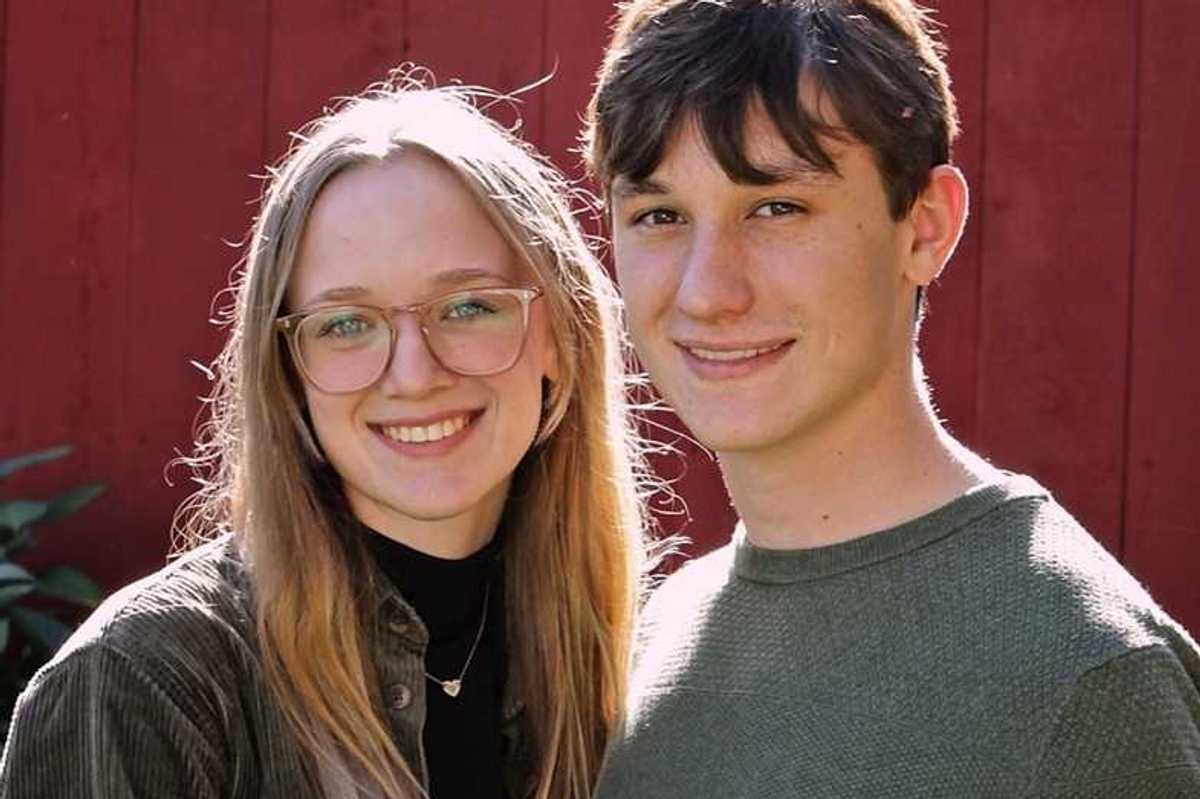
Jordan Seibert and Riley Bossi
Shelly Dinelle
There’s a reason people say, “It takes a village to raise a child.” To thrive, a child needs a safe, stable place to call home. That’s the bedrock for health, dignity, and the chance to build a bright future. What kind of “village” does it take to create these homes?
Motivated by compassion and a drive to make housing more accessible, it took the Foundation for Norfolk Living years of hard work to create ten affordable homes at Haystack Woods. The “village” turned out to be a patchwork of support that included financial help from the DOH, a construction mortgage through Northwest Community Bank, and a Community Development Block Grant to purchase the property and pay for the road and infrastructure. The result? Two- and three-bedroom homes reserved for first-time homebuyers earning 60-80% of Litchfield County’s median income, and selling for $159,000 to $261,000. The condominium homes are deed-restricted and net-zero thanks to energy-efficient construction, solar panels, and battery storage, meaning the homebuyers will have no energy costs! Curious? Just Google “Haystack Woods” to learn more. It’s a remarkable accomplishment.
More hard work has produced another remarkable accomplishment. Right after Jordan Seibert (22) graduated from college, she and her fiancé Riley Bossi (21) purchased one of the homes this summer. Neither had parental help, so both juggled commuting to classes, online courses, and multiple jobs to save up. Jordan graduated from Charter Oak State College, majoring in criminal justice, which she says “Is great for nonprofit work”. Riley will graduate next May from Central Connecticut University with a degree in computer science.
Jordan says, “There’s a good group here. I believe we’re the youngest owners by about 10 years. The other folks seem to be in their 30s. They have young kids, which is exciting. It’s a real community... This house will definitely allow us to put down roots and start growing... Lindsay, Kate and Lou Barbagallo at the Foundation, and even David Jones, the builder, were all super helpful...”
She also says, “The mortgage process was very simple, considering it seemed to be such a new project and idea... We really knew nothing and went in completely blind. We learned a lot through Webster Bank, who encouraged us and taught us what we needed to do to buy a house... We took an online homebuyer education course through the Housing Development Fund (HDF), and we also met with one of their counselors who advised us and made sure we were prepared for the home-buying process. The course was required for us to receive CHFA (The Connecticut Housing Finance Authority) assistance. Completing the required education allowed us to qualify for a reduced, fixed-rate mortgage of 5.875%... The Foundation also encouraged us to take a class for financial benefits to see, through the State, what we could be approved for - any help or benefits. And then, just on our own, we decided to take extra Zoom classes to get a better understanding of everything.”
Jordan emphasizes, “I really want to highlight the Foundation and how forward-thinking they were, and I want to thank them and everyone who was involved. Just the affordability, sustainability, and quality, all being hand in hand. It’s just a great idea, and they executed it perfectly. I can’t thank them enough. It’s so great. The home is beautiful. It’s in a perfect location. There are no issues, no problems. Everything is perfect!”
Mary Close Oppenheimer is a member of the Salisbury Affordable Housing Commission.
Keep ReadingShow less
Selectmen back $113,000 request for new ambulance
Patrick L. Sullivan
Sep 16, 2026
FALLS VILLAGE — The Board of Selectmen approved a request from the Fire Commission for $113,000 toward a new ambulance scheduled for delivery in November.
The selectmen acted during their regular monthly meeting Monday, Sept. 14.
The money would come from a town account designated for emergency services vehicles and equipment. The request now goes to the Board of Finance, which would refer it to a town meeting for final approval.
The ambulance will cost about $202,000, with the remaining $89,000 coming from Falls Village Volunteer Fire Department funds.
Andrea Downs, a member of the town’s volunteer ambulance squad, said new ambulances can cost as much as $450,000. The department instead chose a smaller, simpler and more maneuverable vehicle.
The squad’s last ambulance was added in 2000, she said.
The selectmen also approved a request from Nikki Blass, librarian at Lee H. Kellogg School, for $201.33 for new bookshelves.
First Selectman Dave Barger read a letter from 20 Pine Grove residents requesting signs or flashing lights where Pine Grove enters Belden Street, also known as Route 126. The residents said limited sight lines make it difficult to see oncoming traffic when turning onto Belden Street.
Barger expressed sympathy with the residents’ concerns but noted that Belden Street is a state road and the town has no authority over traffic-control measures there.
However, Barger said he is meeting with a state Department of Transportation official this week and will add the Pine Grove request to his list.
Hazel McGuire, who attended the meeting, asked whether the state official could also consider signs near Grassy Hill Cemetery on Route 126. Barger said he would add the request to his list.
Barger also reported that Cardinal Engineering is evaluating the Cobble Road culvert.
“By the time this is done, it will be the Seventh Wonder of the World,” he said.
Keep ReadingShow less
Want more of our stories on Google? Click here to make us a Preferred Source.
loading