Latest News
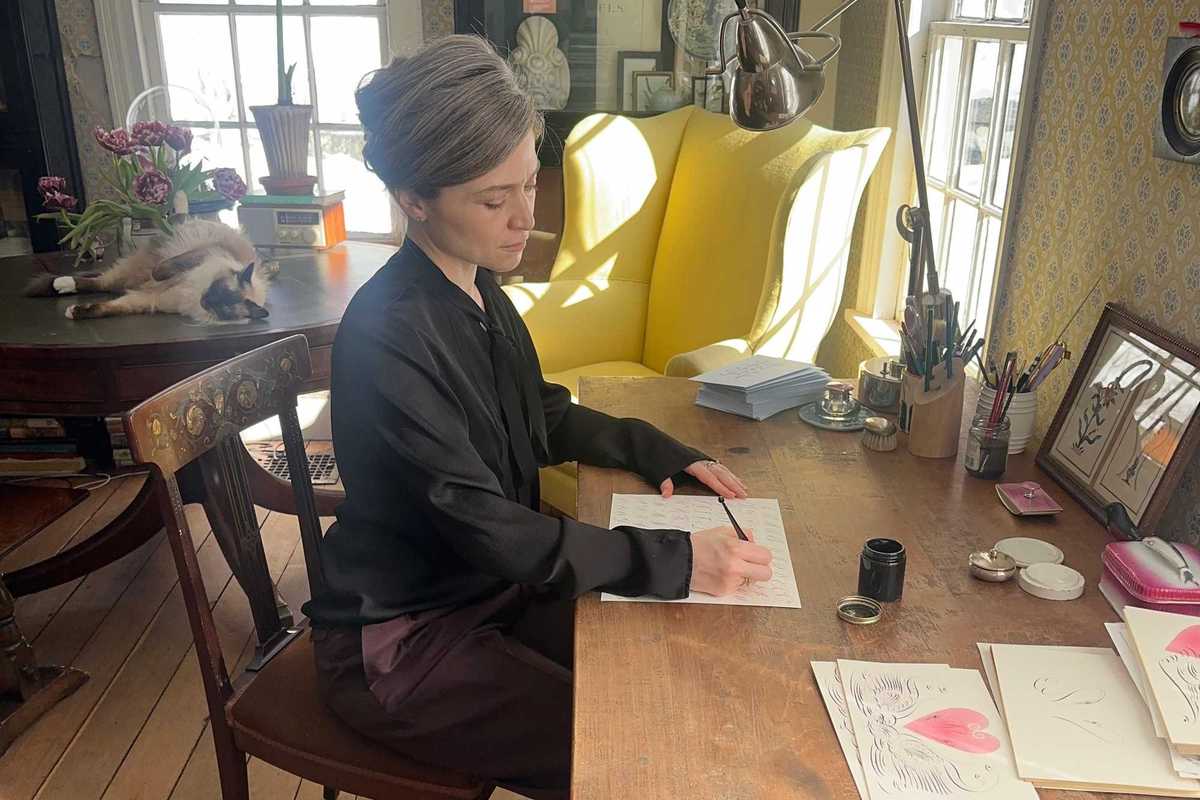
Melissa Gamwell, hand lettering with precision and care.
Kevin Greenberg
Each piece makes a gift, a note or even a Christmas tree seem more personal, more considered, and more connected to humanity. Since then, demand for her personalized, hand-lettered tags, ornaments and cards has only grown, appearing in mailboxes across the region and at shops like the Cornwall Whale and Marton & Davis in Chatham, New York. Her precision is remarkable, and to watch her create these one-of-a-kind pieces is an art all unto itself.
In recent months, we’ve seen a deluge of stories on digital replacement. Data managers, bankers and even therapists are being replaced by computer programs in mass waves of layoffs. But what many still find surprising about the proliferation of nonhuman competitors in the job market is how it’s affecting the arts. Illustrators, animators, photographers, musicians and even on-screen actors are being supplanted by bots touted as “artificial intelligence agents.”
But calligraphy — and handwriting in general — has been in the crosshairs of mechanical progress for centuries. There was a time, if you can believe it, when writing anything required ink, paper and sometimes even a living, breathing human scribe. No typewriters, no word processors, no voice-to-text programs.
Then came Gutenberg’s printing press. Sure, it changed the world for the better, ensuring a greater distribution of ideas, and helping spark some of the most important political movements in history. But it also marked one of the first moments when technology replaced the artistic work of the human hand. Over the centuries, printers, designers and technologists have continued to innovate. Today, with Photoshop or Illustrator, an entire universe of alphabets exists, from ornate and embellished to precise and futuristic — all designed to replace the human hand.
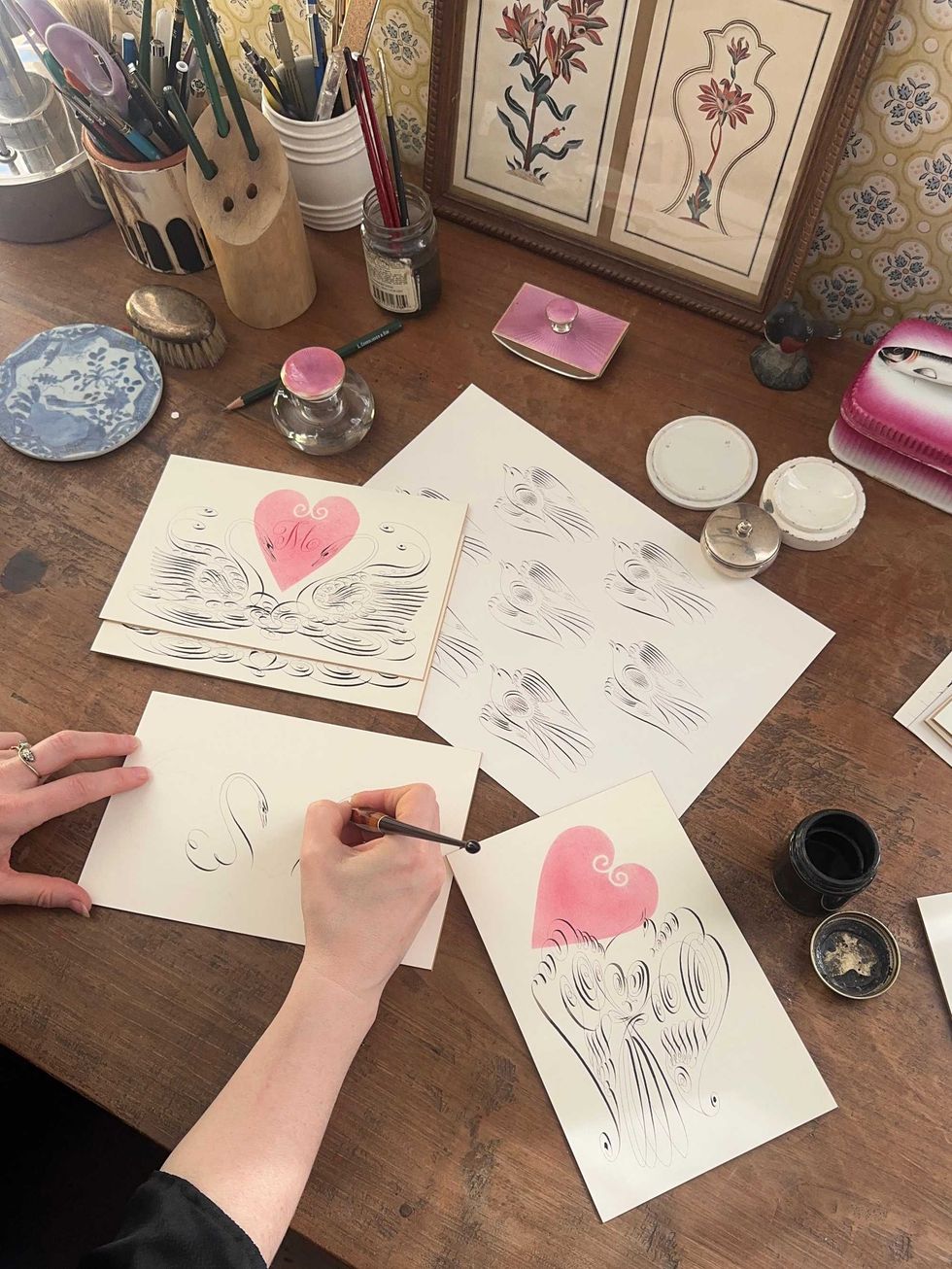 Melissa Gamwell, crafting custom Valentine’s Day cards in her office in Cornwall. Kevin Greenberg
Yet, despite this centuries-long assault from technology, Gamwell has found her own way to thrive. Largely self-taught, she combines her drawing and industrial design background with an old-school New England childhood in Maine that involved “very tangible, hands-on, creative problem-solving using many materials.” Raised by “parents who loved antiquarian books, often filled with hand-written dedications,” hers was the kind of upbringing in which “traditional practices were cherished and flaunted” — a time and place with “hand-painted lettering on churches, street signage, the stones in beautiful churchyard cemeteries, and log books.”
Those early impressions have stayed with her, heightening her appreciation of sometimes overlooked details.
“There’s so much ephemera floating around with traces of beautiful handwriting to see everywhere, even now in Connecticut,” she said.
Even in a digital age, she keeps technology at a distance.
“You will not find ChatGPT on my phone, and you will usually not find my phone on me,” she said. Instead, she opts for a notebook, a scrap of paper or the back of a receipt. Sometimes, she goes even further, gathering black walnuts from trees on her property to make the specialized ink for her practice.
Gamwell’s approach to her craft is also philosophical. “There is no better feeling than working through something with your own brain and your own hands, even if you find it less exemplary than you would hope. And it only uses the water you’re already consuming. Do you need to convey an idea? Draw it, however horrific or childish. Write it, even if you never learned proper grammar — because you’ve always had programs do it,” she said.
“Sometimes I think that everything I like is ‘historic’ but it’s really that I just find more value in the traditional methods, which are still alive and well, and desperately in need of stewards for the future.”
After nearly 400 years of pressure, it’s encouraging to see handwriting — an art form that once seemed destined for obsolescence — still thriving, one careful stroke at a time. And thanks to Gamwell, perhaps there’s a new generation of observers, collectors and future calligraphers ready to carry it forward.
D.H. Callahan is a voice actor, creative director and trail steward. He lives with his wife, artist Lane Arthur, in West Cornwall, Connecticut.

Want more of our stories on Google? Click here to make us a Preferred Source.
New works on display at Kenise Barnes Fine Art in Kent
D.H. Callahan
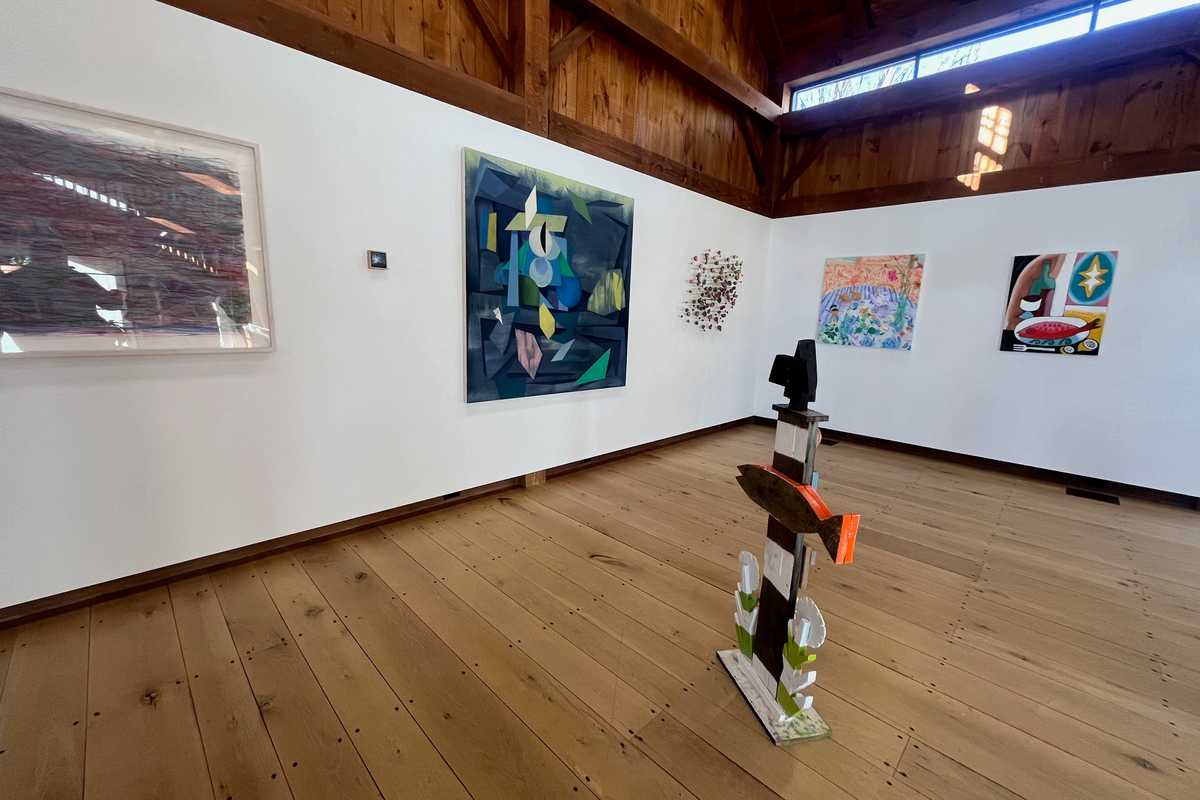
An intricate woodcut print by Eve Stockton and the organized chaos of Margaret Neill’s abstract drawings dazzled the eye. But much of the show’s distinctive texture came from its sculptural works.
Catherine Latson’s wire structures, tightly wrapped in hand-dyed threads, bring to mind pastel- hued sea anemones and become more impressive upon closer inspection. Translucent, hanging cast-resin vampire bats by Tristan Fitch blend into the ceiling until viewed up close, when they become an inescapable presence.
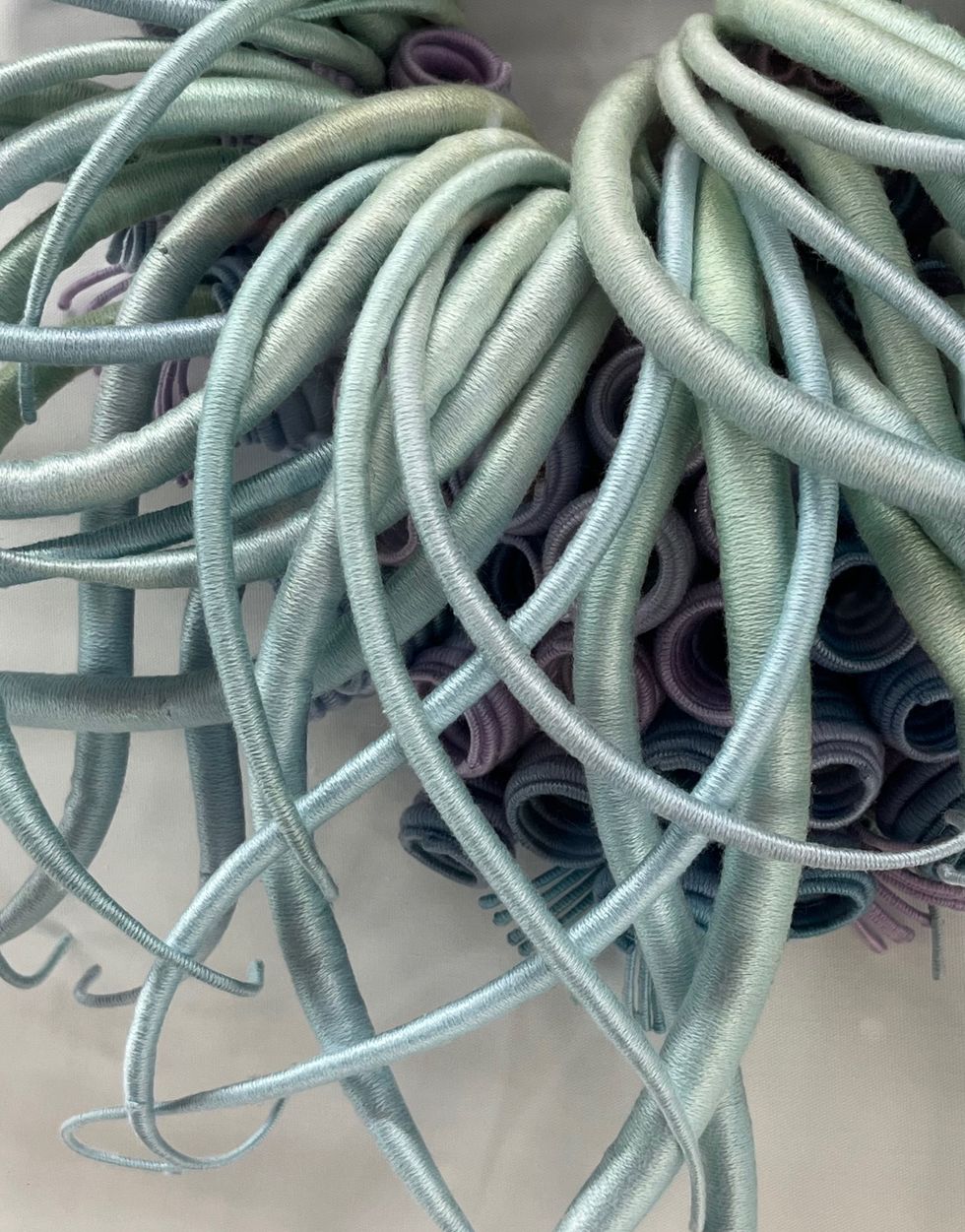 Detail of“Specimen 42” by Catherine Latson at KBFAD.H. Callahan
An intriguing sculpture by Julie Maren features acorn caps affixed to the wall, filled with vibrant, shimmering colors.
Paintings and a sculpture crafted from reclaimed wood by Maine-based artist Matt Barter demonstrated the range of mediums represented by a single artist.
While some of the works are already spoken for, all are on view through late April.
For more information, visit kbfa.com
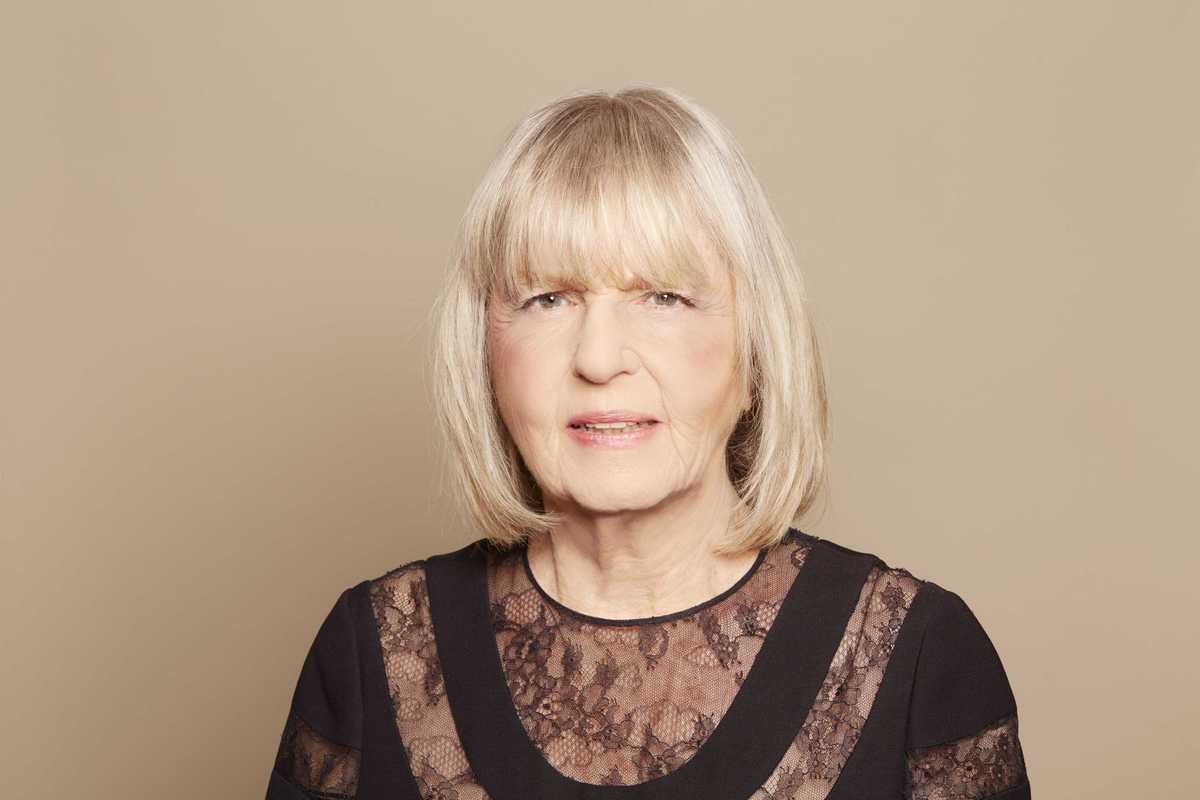
Harriet Newman Cohen
Provided
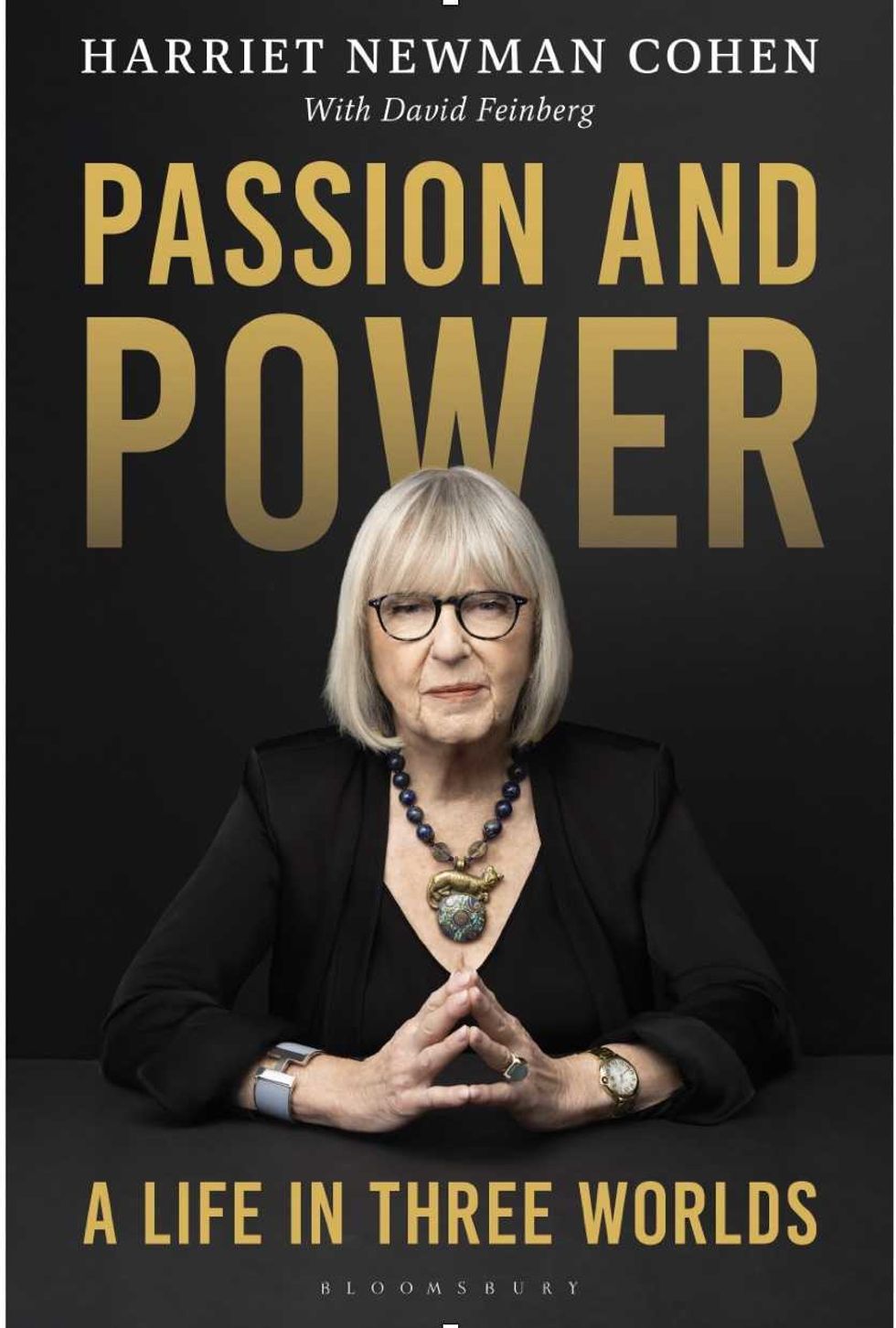 Provided
Cohen writes fearlessly, with a good dose of wry humor, about her own struggles balancing marriage and divorce, raising four daughters, entering Brooklyn Law School in 1971 at age 38, and her ensuing legal career. According to Bernstein, “Passion and Power” is as much about the reshaping of American cultural norms as it is about one remarkable woman’s role at the forefront of legal and social transformation.
Cohen’s work in the legal profession has been pivotal to social change. A 2021 HBO documentary, “Nuclear Family,” directed by Ry Russo-Young, chronicles the landmark custody struggle of Russo-Young’s parents, a queer couple who hired Cohen as their lawyer.
Cohen is an honest storyteller, unflinching in admitting her mistakes and rightly proud of her accomplishments. Her story ranges from tales of her father’s fortune made producing the Hula-Hoop to her memory of schoolmate Kiki Bader — Ruth Bader Ginsburg — as a cheerleader waving pom-poms in Brooklyn. She also writes of her deep love of family, the stultifying suburban life of her first marriage, mentorship by legal icon Louis Nizer and riding the wave of social revolution that buoyed her career.
Norfolk author Gillian Linden writes of her step-grandmother, “Harriet Newman Cohen is a funny, edifying guide — precise, curious, warm. Entirely unsentimental. Marriage and its many paths is rich territory. This book is filled with the strange, glamorous, desperate and sadistic characters you hope to meet in the very best novels.”
For details, visit norfolklibrary.org
Want more of our stories on Google? Click here to make us a Preferred Source.