
Thank you!
Your support is sustaining the future of local news in our communities.

Try fibrous artichokes

Sometimes scientific research is just so amazing, especially when it comes to food and nutrition. I started to do research on artichokes, because my friend Wendy said she associates them with Christmas; and because my friend Ann was cooking them in a particularly wonderful way last week when I stopped by her house (recipe to follow, I promise).It turns out that artichokes are particularly rich in cancer-fighting antioxidants (which also help slow the aging process and ward off Alzheimer’s disease) and are in fact one of the only non-fruits in the top 10 list for edible antioxidants. If you’ve been paying attention to nutrition news, this should come as a complete surprise since all the other edibles in the top 10 list are things that have a very rich exterior color — raspberries, cranberries, blueberries and, coming in at number one, the mysteriously labeled “small red bean.” Who knows what that is?Artichokes, in case you’ve never seen one, are anything but richly colored. Muted would be more the adjective that jumps to mind. Moss-colored, perhaps.Apparently they are the exception to the rule about rich coloring. So, eat artichokes to fight cancer and old age. They are also an excellent diet food, very rich in fiber — but avoid the temptation to dunk each tender leaf into a bowl of melted butter or a mayonnaise-based sauce.You will roll your eyes as I say this but artichokes are actually really delicious even with no sauce at all. However, this is a reality-based health column, so we will skip ahead to discussing sauces. As noted, my friend Ann was cooking artichoke the other day and inspired me. I don’t have her exact recipe and in fact I’m fairly certain that an exact recipe does not exist. She simply trimmed her artichoke and cooked it in a small saucepan, covered with water and olive oil and some herbs.It smelled amazing, she promised that it tastes delicious and, she added, “You can use the cooking liquid as a dipping sauce.”For those of us who like a little guidance in the kitchen, here is a recipe adapted from one I found at the website www.organicauthority.com.Boiled artichokesServes twoTwo artichokes, half of a lemon, 3 tablespoons of butter and 3 of olive oil, 1 small shallot, peeled and minced, 2 tablespoons of lemon juice, 2 tablespoons of chopped fresh herbs such as thyme or tarragon, coarse salt and freshly ground pepper.In case you’ve never tried to clean an artichoke before, the first thing you need to know is that the tips are as spiky as rose thorns, so you need to exercise some care. The first thing you want to do is trim off the first couple layers of leaves, which are usually short and hard and not that nice to eat.Then take a sharp, heavy knife and cut off the top of the artichoke, so that you are cutting away all the spiked tips of the remaining leaves. Cut off the stem, if there is one (if you cut away the exterior of the stem and cook it, it’s tasty and creamy, like the artichoke heart).Find a pot that’s big enough to hold your artichokes comfortably, without crowding. Fill it about two thirds of the way with water. Add the butter, oil, lemon juice, shallot and herbs and salt and pepper. Boil the water.Meanwhile, cut your artichokes in quarters lengthwise. Carefully dig out the sharp, light-colored inner leaves and the fuzzy surface that covers the artichoke heart (it’s easier than it sounds and it will be obvious what you need to do when you cut them open).Drop the artichokes carefully into your cooking liquid and let them bubble away, loosely covered. They are done when you can pull a leaf off the heart with a gentle tug; this should take only about 10 minutes. Remove the artichokes (they need to be a little cool before you can eat them) and continue to boil the cooking liquid for a while until it reduces to a state that is flavorful and enticing enough to use as a wet dip. This could take as much as a half hour, so plan your meal accordingly. You’ll probably need to adjust the seasonings a little; you can never have too much lemon juice in an artichoke dip.

Latest News

‘So Little to Do,’ so much to discover at James Barron Art

Curator Deborah Goodman Davis reads the Emily Dickinson poem “The Grass So Little Has to Do.” Spencer Finch’s “Following Three Bees (Zinnias)” buzzes in the background.

Photo by Natalia Zukerman

“The Grass Has So Little to Do,” on view at James Barron Art in Kent, takes its title from Emily Dickinson’s poem “The Grass So Little Has to Do,” written in 1862:

“The Grass so little has to do—
A Sphere of simple Green—
With only Butterflies to brood
And Bees to entertain—”

Keep ReadingShow less
Marina Kotchoubey is taking care of business

Marina Kotchoubey at the Ian Ingersoll Cabinetmakers showroom in West Cornwall.

Photo by D.H. Callahan

After 40-something years navigating the world of custom fine furniture, Ian Ingersoll was getting ready to retire. Starting off with a little dovetail stool that he sold at a shop in West Cornwall in the 1970s, he’d grown his skill and his business into something he — and the whole town — could be proud of. Shutting down that business was not an option.

Ingersoll built Ian Ingersoll Cabinetmakers, which produced mainly classical Shaker furniture, on passion: the passion he had to make a living through creative challenges and the passion of his employees, who all seem deeply in love with their craft.

Keep ReadingShow less
A legacy of giving at Norfolk Chamber Music Festival

One hundred and twenty years ago, Carl and Ellen Stoeckel commissioned New York architect E.K. Rossiter to design The Music Shed in Norfolk, Connecticut. After nearly a decade of entertaining their friends and neighbors with the finest music of the day, they built a permanent home for their beloved Litchfield County Choral Union.

The commission and full funding of the construction was not unheard of in an era when great fortunes led to public enrichment. Railroad tycoon John D. Rockefeller was instrumental in funding institutes of higher education. Steel baron Andrew Carnegie was building libraries all over the country, and famously said that a man who dies rich is a disgrace, challenging his peers to give their fortunes back to the people.

Keep ReadingShow less
google preferred source

Want more of our stories on Google? Click here to make us a Preferred Source.
Two unique exhibitions at Geary Gallery

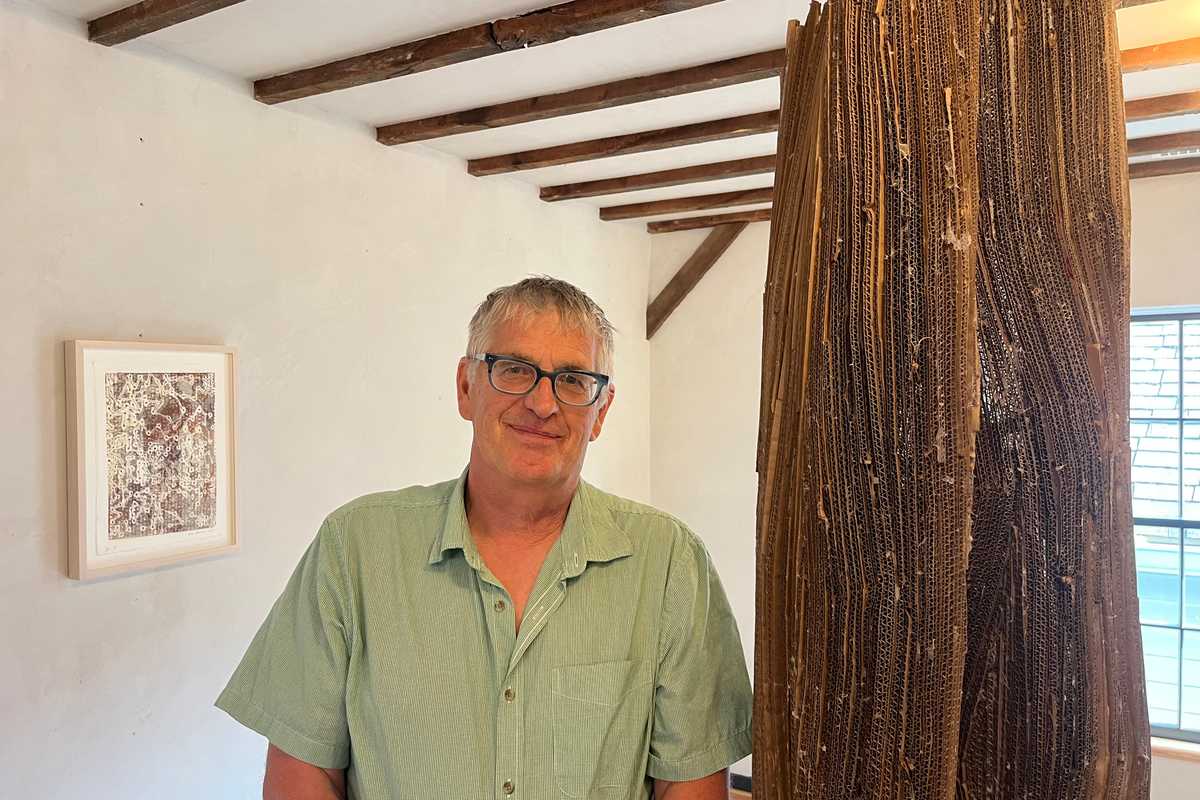
Henry Klimowicz with his sculpture, “Partial Pillar 1”

Photo by D.H. Callahan

On Saturday, Aug. 1, Geary Gallery opened its doors in Salisbury for two unique shows in its first- and second-floor gallery spaces. Art lovers flooded both floors over the course of the afternoon, giving the events a vibrant feeling that enhanced the importance of the art.

On the first floor is a show by Chicago-born, Colorado-based photographer Summers Moore, titled “Lobitos: Pueblo Fantasma,” or “Lobitos: Ghost Town.” The work centers around her daughter’s current hometown in Peru. Moore herself found a home away from home in Colorado in the mid-1980s and encouraged her children to seek out new places outside of their comfort zones.

Keep ReadingShow less

Writer’s retreat in the woods

Writer’s retreat in the woods

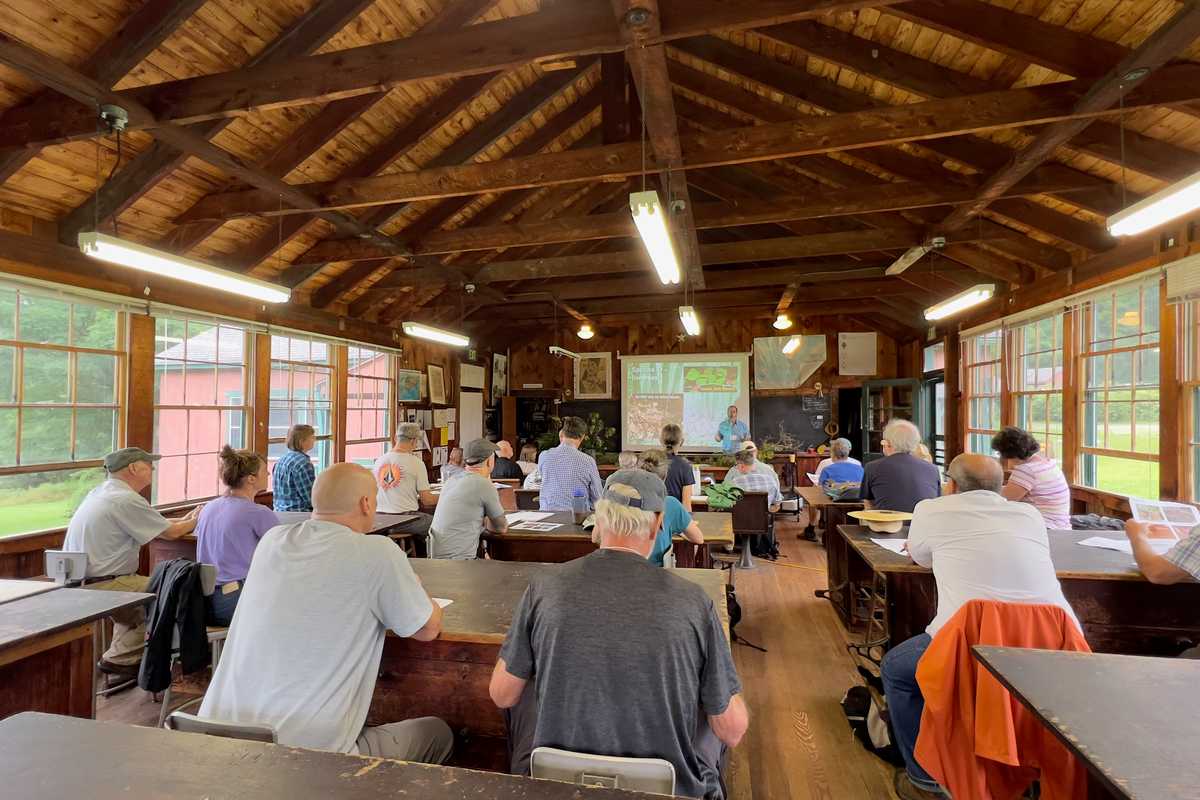
Participants in a 2024 Great Mountain Forest Woodland Academy workshop at Yale Camp.

Photo by Mike Zarfos

Great Mountain Forest (GMF) will host its first Nature Writing Retreat at the historic Yale Camp in Falls Village from Aug. 7-9, 2026. Writers of all levels are invited to draw inspiration from one of New England’s most notable forest landscapes. GMF envisions the retreat becoming an annual event celebrating writing, conservation and the relationship between people and forests.

This immersive three-day retreat reflects on the legacy of Hal Borland, the American writer and New York Times nature columnist whose work was deeply connected to this landscape. The retreat explores how wilderness shapes language, strengthens close observation and fosters environmental consciousness.

Keep ReadingShow less
From Cornwall to Rome, Adam Van Doren at Berkshire Botanical Garden

Artist Adam Van Doren and curator Donna Hassler talk to a group of visitors at the Berkshire Botanical Garden. A Stephen Proctor vessel sits to their left.

Photo by Natalia Zukerman

This summer, the Berkshire Botanical Garden in Stockbridge has hosted “Grounded in Nature: Paintings by Adam Van Doren,” an exhibition exploring the intimate relationship between architecture and the natural world.

On view for only a few more weeks in the Leonhardt Galleries, the exhibition features more than 35 watercolor and oil paintings by the New York-based artist, architect, author and Yale professor, curated by art historian Donna Hassler, director emerita of Chesterwood. The works span three distinct places that have shaped Van Doren’s artistic practice: New York City, Cornwall, Connecticut, and his travels throughout Europe.

Keep ReadingShow less
google preferred source

Want more of our stories on Google? Click here to make us a Preferred Source.
google preferred source

Want more of our stories on Google? Click here to make us a Preferred Source.