Thank you!
Your support is sustaining the future of local news in our communities.

A volunteer’s view from Tijuana: The long, uncertain slog to ‘the other side’

Part 1 of 2

Note from the author: This series is based on a long face-to-face interview with Sharon resident Abby Nathanson, clarifications she provided in response to emailed questions, as well as photos, statistics, and several articles Abby sent to enrich my piece. Finally, my understanding of the asylum process was augmented by news articles on Tijuana and immigration at the southern border.


The Tijuana of my memories is a sleepy border town, entertaining day-tourists like me from San Diego with colorful Mexican restaurants and quaint souvenir shops. Yet these days the San Ysidro Port of Entry connecting Tijuana and San Diego is the busiest land border crossing in the Western Hemisphere. With an average of 90,000 people passing through the crossing northbound each day, 70,000 in cars and 20,000 by foot, Tijuana has changed.

“It’s the capital of the world. It’s mind-blowing!” said Abby Nathanson, who volunteered to help migrants in Tijuana during her Christmas holiday. What Abby saw was an international city, bustling with immigrants arriving daily from Central and South America, the Middle East, Africa and Asia. And she heard Farsi, French, Russian, Q’eqchi, Urdu, and of course Spanish on the street. As Abby told me, “Wherever they’re originally from, rumor among migrants has turned Tijuana into a popular place to try to get into the United States.”

After November flooding rendered the vast tent city in Tijuana’s sports arena, Benito Juarez, unsanitary, 2,000 migrants were moved to El Barratel, a former nightclub on the southern outskirts of town, 10 miles away from the U.S. Port of Entry at El Chaparrel, where migrants are processed for possible asylum. Thus, migrants have taken over abandoned buildings and created rogue tent villages nearby — one, comprised of tents pitched five deep, lies directly against the wall. 

During the year, Abby directs a leadership program for Latino high school students and a residential fellowship year for college graduates at Grace Episcopal Church in Millbrook, N.Y. Fluent in Spanish and French, Abby arrived in Tijuana, hoping to use her language skills to prepare migrants for the “credible fear” interviews that, at best, lead to their being provisionally designated a refugee, and so placed on the docket for a formal court hearing for asylum in San Diego. 

What Abby found was an array of governmental organizations and nongovernmental organizations, churches and other voluntary organizations in Tijuana, each trying to assist the migrants according to its own philosophy and strategy. After an abortive stint with a New York-based church group, which was having difficulty matching volunteers’ skills to its prioritized tasks, Abby joined an ad hoc group of gringos who were preventing the eviction of migrants, who had been given permission to use an abandoned warehouse from its owner, by placing themselves at the warehouse entrance, between the migrants and the federal Mexican police. 

Abby also joined Al Otro Lado (meaning both on, and to, the other side), a courageous legal advocacy organization that serves indigent refugees, migrants and deportees on both sides of the border. In Tijuana, Al Otro Lado occupies three stories of Enclave Caracol, a space that doubles as a food coop, vegan café, bicycle workshop and music venue. Working alongside Al Otro Lado’s legal team, Abby translated the five requirements for passing the “credible fear” interview into understandable Spanish or French for migrants from Haiti and Central America.  

A handout, or “manita” (little hand), created by Al Otro Lado shows a hand with five fingers, each with a point that must be made during the interview proving they are refugees, and argues that, “your case is in your hands.” Though their case may be partly in their hands, their hands are unfortunately tied. This is because the five points they must make are based on the definition of a refugee developed by the United Nations following Hitler’s genocide of Jews, gypsies, communists and homosexuals during World War II. Thus, the migrants must prove that they have fled ongoing violence, rather than starvation, economic destitution, or the devastation of their land; and that this violence is based on their race, religion, nationality, or other group membership, rather than caused by gangs, drug traffickers, domestic abuse, and the corrupt police and judiciary left by failed states, which is the current situation. Being forced to slot the conditions from which they are fleeing into ill-fitting niches, it is hard to imagine the migrants making the most convincing cases in their own behalf.

Part 2 continues next time.


Carol Ascher, who lives in Sharon, has published seven books of fiction and nonfiction, as well as many essays and stories. She is the guardian of a young Guatemalan. Abby Nathanson can be reached at abby@epicjustice.org.

Latest News

Sam Lardner returns to the Northwest Corner for Vecinos Seguros 2 benefit

Sam Lardner and Barcelona will play a benefit for Vecinos Seguros 2 at Salisbury Congregational Church on Friday, July 24.

Virgo Martinez

On Friday, July 24, musician and educator Sam Lardner and his band, Barcelona, will take the stage at Salisbury Congregational Church for a benefit concert supporting Vecinos Seguros 2, an all-volunteer organization that provides emergency assistance and rapid-response support to immigrant families in Northwest Connecticut affected by U.S. Immigration and Customs Enforcement activity.

Lardner, who attended and later taught at The Hotchkiss School in Lakeville before moving to Spain in 1997, still considers the Northwest Corner his home in the United States. “It’s such a special place,” he said.

Keep ReadingShow less
Karina Powers and the power of tradition

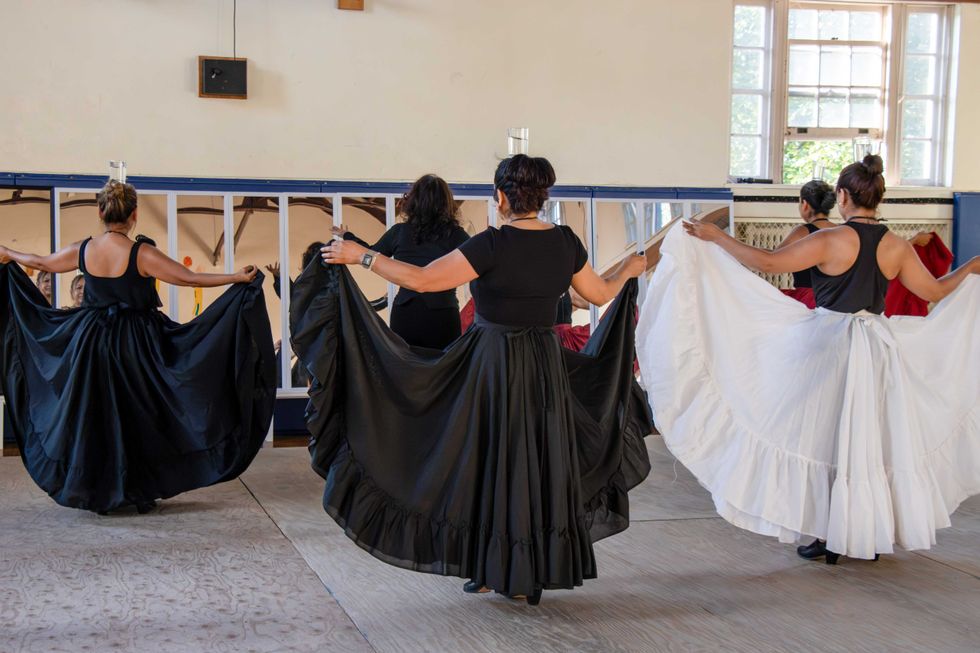
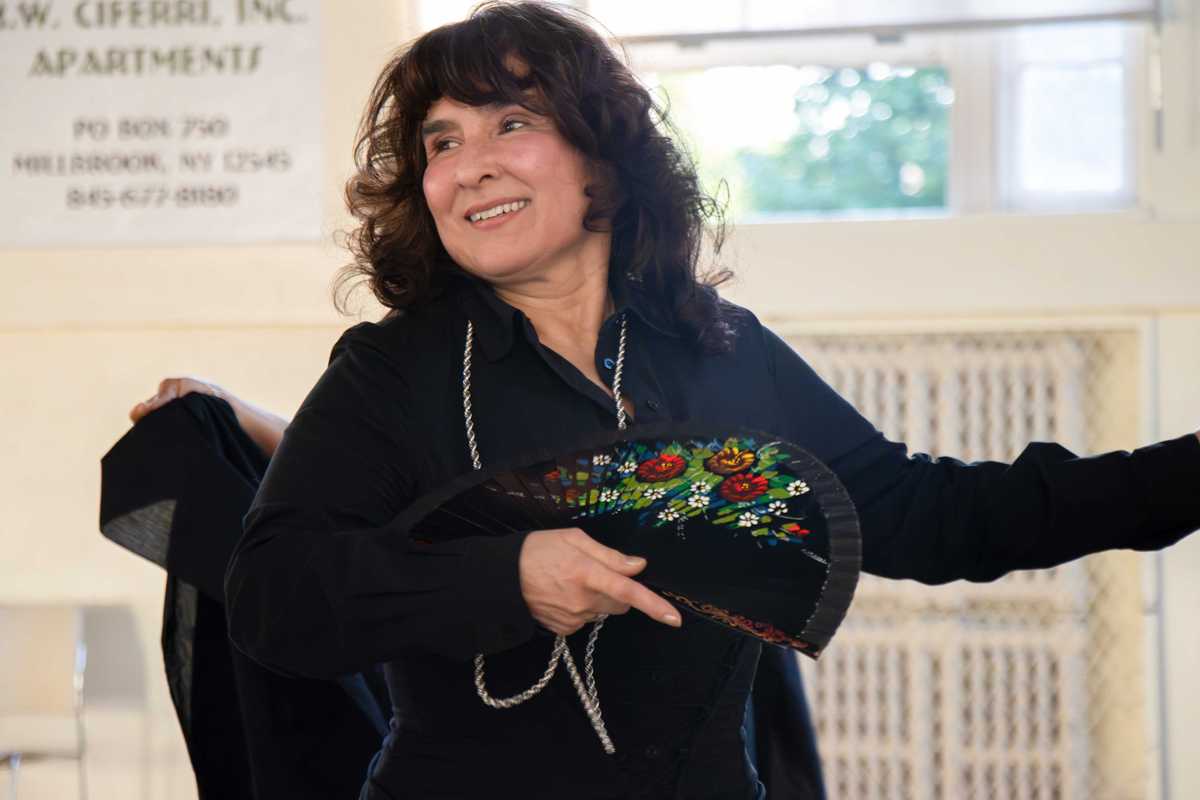
Karina Powers teaches traditional dances from Mexico in Millbrook.

Lucia Iandolo
This is an art and the arts unite nations.
—Karina Powers

Karina Powers began dancing at 4 years old. A professional dancer, singer, performer and Mexican folklore dance professor from Baja California, Mexico, she is the youngest of three sisters who were all involved in the arts. Powers now teaches traditional Mexican dances to adults through her company, Compañía De Danza Folklórica Regional Mexicana, in Millbrook. She said she has a strong passion for the history and art that exist within the dances she teaches, and she hopes to instill that passion in her students.

“Many of them have never danced this type of dance,” said Powers. “They’re from Mexico, but they came to the United States at a young age to work. They have that dream to learn, and now they have this opportunity.”

Keep ReadingShow less
Across generations at Litchfield Jazz Festival

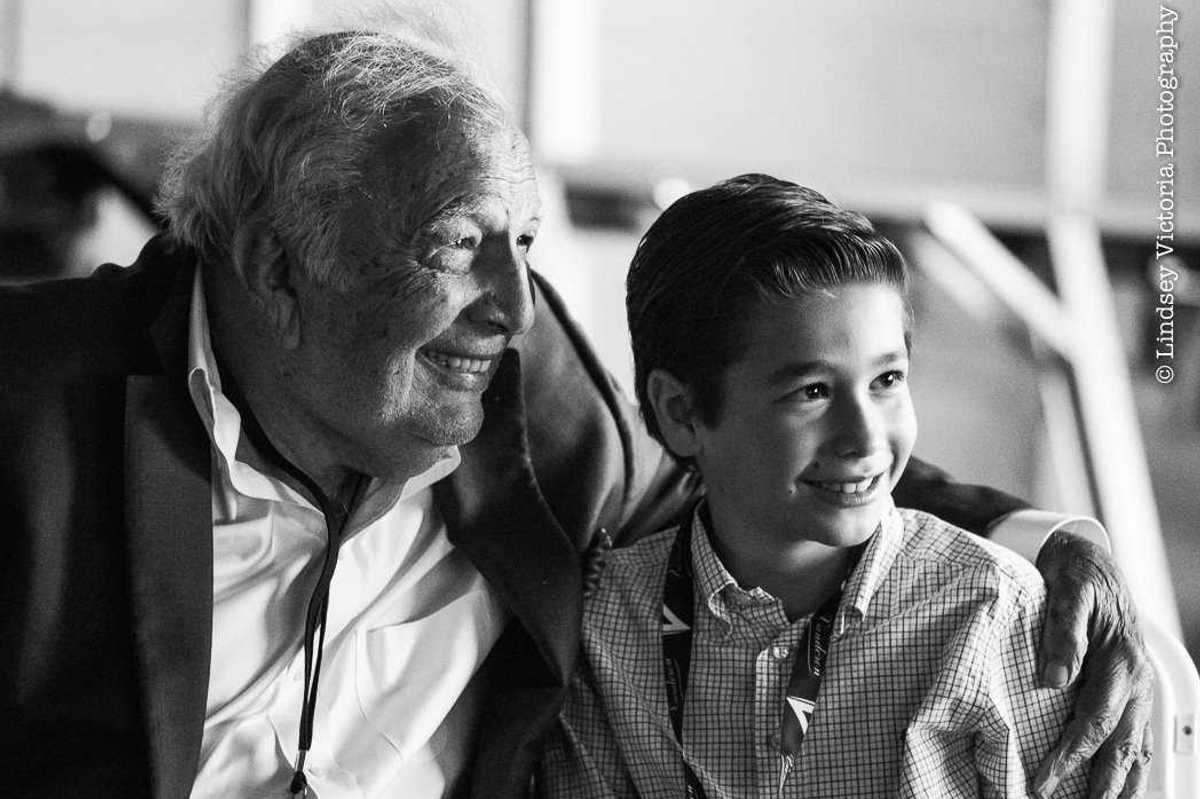
Bucky Pizzarelli and Brandon Goldberg at the Litchfield Jazz Festival in 2017.

Lindsey Victoria Photography

The Litchfield Jazz Festival opens its 2026 season on Friday, July 24, at the Frederick Gunn School in Washington, Connecticut. The evening will feature a gala and a concert led by saxophonist Don Braden featuring the Litchfield Jazz Fest Dectet.

The festival began in 1996 and has been going strong ever since. The list of past performers reads like a who’s who of modern jazz greats, including Christian McBride, Soulive, Joshua Redman, Dave Douglas, Brad Mehldau and John Scofield, all of whom helped revive the genre for a new generation of fans at the turn of the millennium. Vocalists like Diana Krall, Dionne Warwick and Dr. John have made appearances as well. And, of course, the festival has been graced by established masters like saxophonists Sonny Rollins and Wayne Shorter; guitarist Bucky Pizzarelli; bassist Rufus Reid; drummers Roy Haynes and Tito Puente; the Preservation Hall Jazz Band; and pianists Dave Brubeck and local legend Ahmad Jamal.

Keep ReadingShow less
google preferred source

Want more of our stories on Google? Click here to make us a Preferred Source.
No grumbling here: Children’s theater camp returns

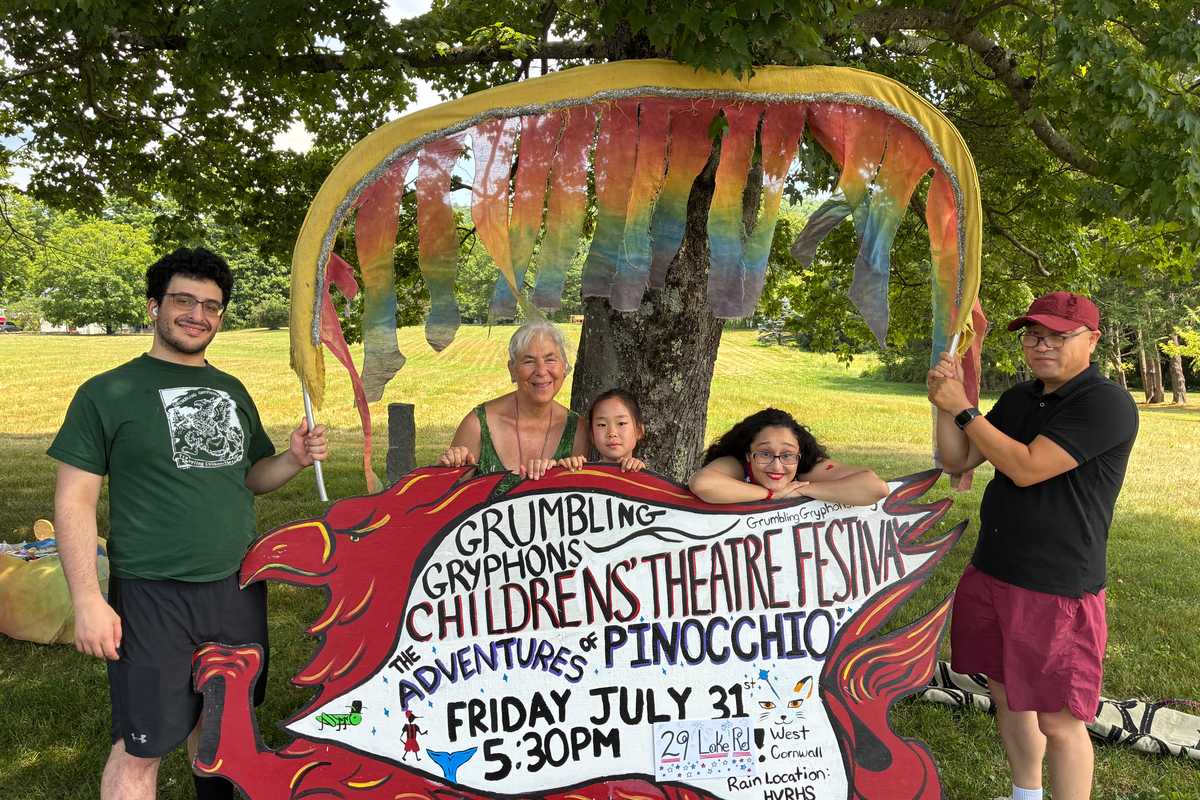
Danny Saed, assistant director of “Pinocchio”; his mother and co-founder of Grumbling Gryphons Leslie Elias; theater arts camper Joyce Sun; artist and counselor Natalie Resto; and Steven Sun, Joyce Sun’s father.

Jack Sheedy

Leslie Elias wants you to understand something about the group she calls Grumbling Gryphons Traveling Children’s Theater: “I like to say that we try not to grumble.”

For 46 years, she has used the nonprofit to educate and entertain children in the performing arts. Summer after summer, young campers learn about acting, singing, mask-making, costume-making and scenery painting. This year, as in years past, a five-day theater arts camp will culminate in a live performance of one of Elias’ original plays, guaranteed, she hopes, to quell all grumbling.

Keep ReadingShow less

Sea bass and shrimp gumbo

Sea bass and shrimp gumbo

Sea bass and shrimp gumbo

Bobby Graham

Each month, Dugazon owners Bobby Graham and Matthew Marden share a recipe inspired by the traditions, stories and sense of welcome at the heart of their shop in Sharon, Connecticut. Visit Dugazon at 19 W. Main St. Wednesday-Sunday, 11 a.m. to 5 p.m. and online at dugazonshop.com.

This month we’re sharing one of our favorite comfort foods: sea bass and shrimp gumbo. While gumbo has a reputation for being a labor of love, this version skips the traditional roux, making it surprisingly approachable. The ingredient list may seem long, but once everything is prepped, it comes together quickly, rewarding you with a rich, flavorful bowl that’s perfect any time of year. Many of the pantry staples you’ll need for this recipe can be found right here at Dugazon.

Keep ReadingShow less
Sweet Petunia: a benefit to support Random Harvest

Alt folk duo Sweet Petunia to perform a benefit at Random Harvest on Saturday, July 25.

Provided

On Saturday, July 25, Americana/Alt Folk duo Sweet Petunia will perform at Random Harvest in Craryville, a worker-owned market, café and community space that supports farmers and brings people together through locally sourced food. The concert comes just months after the fatal two-vehicle crash at the intersection of Route 23 and County Route 7 that devastated the hamlet, disrupted local businesses and left a lasting emotional impact on the community.

After the crash, Random Harvest remained open and committed to connecting people through food and community. Simpson said the duo looks forward to contributing to a healing experience through their music.

Keep ReadingShow less
google preferred source

Want more of our stories on Google? Click here to make us a Preferred Source.

google preferred source

Want more of our stories on Google? Click here to make us a Preferred Source.