Wedding announcement

@sampaiowalzphoto


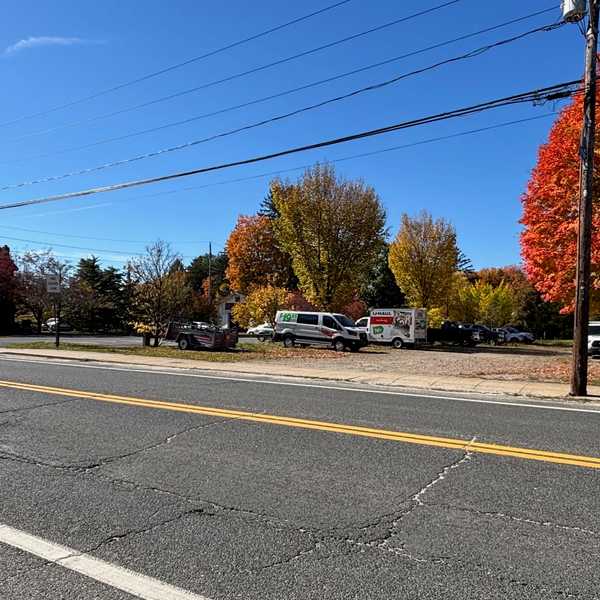
Natalie Rittenhouse Boyse and Whitcomb Johnson were married at Trinity Lime Rock, on July 27. The daughter of Eleanore and Matt Boyse, of Washington, D.C. and Salisbury, Natalie graduated from Hotchkiss, Johns Hopkins, Hopkins SAIS, and is Global Programs Manager for ORF America. Whit, a producer, graduated from Palmer Trinity School and SMU.
Aly Morrissey
SHARON – Representatives from the Sharon Housing Trust appeared before the Board of Education June 8, seeking assistance with a water supply issue that could affect plans to convert the former Sharon Community Center into four affordable apartments.
Architect and Housing Trust board member Andrew Ferentinos said engineers determined the building’s planned fire sprinkler system will require a dedicated water line. The Housing Trust had intended to connect the building to water service from neighboring properties it owns, but discovered the existing infrastructure lacks sufficient capacity.
Ferentinos outlined three possible solutions, including trenching across Route 44 to connect directly to the water main, replacing the existing line between Sharon Center School and the community center, or tapping into the school’s water service before the school’s meter. A decision may be needed by the end of June because the state is expected to pave Route 44 in August.
During the discussion, contractor Will Case said the school’s water service appears to be supplied by an aging two-inch pipe that may eventually need replacement. He suggested any future upgrade could provide additional capacity for both properties.
Board members raised questions about liability, insurance and costs. Housing Trust representatives said the organization would pay for any work needed to support the project. No decision was made, and further engineering analysis and discussion are expected later this month.
In the meantime,BOE decided to allow Case to dig two test pits this weekend to check for ledge – or solid bedrock – and to more closely examine the existing pipes. Further discussion is expected to be held during a special BOE meeting later this month as plans would need to be finalized and in motion by early July, according to Ferentinos.
Geoffrey Olans
Gary Hufner, left, and Geoff Olans
‘Excuse me, Gary!” “No, EX-CUSE me, Geoff!” That sarcastically polite exchange captures a key aspect of my relationship with Gary Hufner, my co-driver at The Lakeville Journal Company. En route to our deliveries, our conversations are typically punctuated by friendly jibes, jousting and…peals of laughter.
If you’ve seen a solidly-built middle-aged man with a toothy grin and two days of grayish stubble wearing a short-sleeved shirt and a Tractor Supply baseball cap, you may have seen Gary. If you’ve seen someone matching this description bounding along outside of La Bonne’s with a bundle of newspapers, you’ve definitely seen him.
When I first met Gary about a year and a half ago, we seemed to have little in common. I’m a fan of podcasts; Gary hates them. I like lively roundtable conversations about politics and philosophy; he rolls his eyes at the mere mention. My go-to is singer-songwriter music and jazz; he gets restless if he’s not listening to bluegrass, country or Americana. Hmmm. Tricky.
Yet surprisingly, this odd-couple dynamic has worked amazingly well. Despite (or possibly because of) our feisty exchanges, we enjoy each other’s company and have become good friends. We’ve certainly learned a ton from one another: Because of me, Gary is more aware of the importance of the Strait of Hormuz, what Mulligatawny Soup is, and who Wendell Barry is. Because of him, I’ve learned much more about the history, backroads and personalities of this wonderful area we live in.
One day, driving south on Route 41 from The Hotchkiss School to Sharon, Gary pointed west to two trees in the middle of a large field, Mudge Pond shimmering in the far distance. “Know about Twin Oaks?” he asked. “No, what’s to know?” I responded. He then recounted the story of two iconic oak trees, integral to one of the most cherished vistas in Litchfield County, Connecticut, that had been around since before the American Revolution. The two original trees, he explained, were felled in storms and replaced with much younger ones by the Sharon Land Trust in 2013.
Another day, driving south on Route 7 towards Kent, a mile and a half south of Cornwall Bridge, Gary alerted me to a colossal moss-covered boulder that juts out onto the left side of the road. “As a prank, local teenagers put a little stick between the chin of the boulder and the ground to scare drivers into thinking that a megaton weight could easily come crashing down on them!”
I’ve driven both these roads for years and, until recently, was never aware of these little details, little details that can make a big difference into one’s understanding of a place.
Gary gets into some funny situations.
For instance, there is an older woman at a cafe on our route who goes gaga every time she sees Gary. With a very pronounced New York City accent, she holds court like the local mayor and goes out of her way to make sure that everyone within earshot has been introduced. Given their mutual affection, she once joked that maybe she and Gary should date. But Gary, playing along, said he’d need to see her financials first.
As we make our way along our delivery routes every Wednesday and Thursday, Gary and I come into contact with scores of people and we do our best to learn and remember their names. But there will always be that awkward and embarrassing moment when we come upon someone whose name we desperately want to remember but can’t. Gary’s gambit for not getting tied up in this knot is sleight of hand. “Oh, hi,” he’ll say, “good to see you! I always forget how to spell your last name.” This approach has backfired, of course, as when the answer he once got was “S-M-I-T-H!”
Parked in front of the Sharon Package Store, one of the more than fifty retail accounts we deliver newspapers to, Gary showed me a video of a farm engine he’d picked up the previous weekend. When not working for the Journal, Gary is buying, selling, repairing and collecting antique machinery and gadgetry, mainly but not exclusively farm related. This would include tractors, hit-and-miss engines, corn grinders, ice tongs, egg scales, mangles, etc. There’s a water motor from the 1890s sitting outside the front entrance of the Lakeville Journal Company’s office in Falls Village that once powered our printing press. He’d like to try to get it going again.
I often ask Gary to be my teacher, especially when it comes to farming and machinery. One day my question to him was pretty basic: “So, how does a 4-stroke engine work?” “All you really need to know is this,” he answered, “intake-compression-power-exhaust.” I couldn’t be sure whether he was describing a 4-stroke engine or the nature of our topsy-turvy relationship!
Geoffrey Olans delivers The Lakeville Journal and The Millerton to retail outlets on Wednesday, Thursday, and the occasional Friday. He lives in Millerton.
Lakeville Journal
This Week
Region One officials are beginning a yearlong study of how its schools are organized. The study is expected to look at long-term questions around enrollment, costs and how schools serve students across the region. Consolidation is not the only question, but it is likely to be one of the most closely watched.
What should matter most as Region One studies the future of its schools: cost, educational opportunity, town identity, travel time or something else?
Send your responses to publisher@lakevillejournal.com by Monday, June 8 at 10 a.m. or comment on Facebook or Instagram.
We’ll publish a selection in next week’s paper.
Last Week’s Question
Where do you shop for groceries?
How do price, selection, distance, hours,
or transportation shape where you go?
“Mostly Stop & Shop in Canaan - the cost of the gas to get to and from anywhere else completely negates any savings from going somewhere less expensive, unless I happen to be going that way already.”
— Ashlee Baldwin, North Canaan
“Big Y in Great Barrington, Stop and Shop in Canaan for anything quick, and BJs in Torrington/Costco in Waterbury for bulk stuff.”
— Wintress Ross
“We shop at LaBonne’s Markets here in Salisbury. It’s convenient and their employees are all very friendly and always helpful. Their meat and seafood are top quality and the available products in every department are too. I tend to plan our meals around their weekly flyer and it works very well for the two of us.”
— Barbara Marshall, Salisbury
“Guido’s in Great Barrington because you can’t beat the quality of foods and staff. Farmer’s Market and farm stands for produce and local meats. The Local in West Cornwall for produce and local meats. For a few items in between Guido’s runs, we go to Sharon Farm Market or Kent IGA depending on what other errands I’m running.
— Michelle Shipp Schatz-Mullins, Cornwall
“I live in Sharon so I visit Sharon Market 3 times a week for cold cuts, bread, prepared foods or a sandwich. I also shop at LaBonne’s in Salisbury twice a month. For major shopping I go to Stop & Shop in either Canaan or Torrington”
— Johnny Martin, Sharon
“Aldi’s is definitely worth the drive, what costs over $150 at Big Y or Stop & Shop is usually around $50 there.”
— Tony Baker
“Canaan Stop & Shop and once a month trip to BJ’s. Plus, I will bike to LaBonne’s for something special.”
— Roxi Foster, Falls Village
“TriCorner FEED in Millerton. As single mom and head of household they are a life saver with their income based sliding scale memberships. Plus everything is local and fresh and they do a good latte!”
— Ali DeProdocini, Salisbury

Want more of our stories on Google? Click here to make us a Preferred Source.

Mac Gordon
At the end of 2025 President Trump told the world that he was interested in acquiring Greenland and would take it by force if necessary, stating that it was a matter of national security.
His Cabinet officials and others began echoing his remarks regarding the national security need to better control the region, especially with climate change opening up the arctic area to shipping and possible submarine warfare for the first time. But in truth, the President’s interest in Greenland arose more from his life-long obsession with size; Greenland was by far the world’s largest island. As a child he he was in love with the Great Wall of China and it became the inspiration for his proposed wall between the US and Mexico. His giant ballroom for the White House continues his strange obsession.
In addition to his concern for national security and his obsession with bigness, Trump had been studying the history of American imperialism and was favorably impressed by our military capture and control of foreign territory. He was prepared to try his own foreign adventures.
During World War 2 the U.S. had several small military bases on Greenland and the relations with the Greenlanders and Denmark (whose colony it was then) were good. Over the postwar years the U.S. eventually closed all the bases save one but Denmark (who still controls Greenland’s foreign affairs) had been accommodating to any new American military proposals.
So what’s so different now? Global warming has melted much of the northern ice thus opening the area to at least limited navigation and both Russia and China have been interested. Without much elaboration, the U.S. Defense and State departments have told us that this poses a formidable security threat requiring U.S. control of Greenland to counter. But most security analysts consider this a shortsighted point of view. An even more vulnerable area to foreign intruders would be from northern Alaska to the Arctic Circle. As former Alaskan governor Sarah Palin was supposed to have said,“I can see Russia from my back porch!”However the U.S. has done little or nothing to fortify this area militarily. On the face of it, it would seem more appropriate for the U.S. to shift its defensive attention to the western side of the continent.At the same time it would make sense for NATO rather than the U.S. to oversee Greenland’s only partly frozen, more navigable waterway. The U.S. is still a most prominent member of NATO thus permitting us to have some say in what happens there but the considerable animosity between Trump and Greenland and Denmark would be largely avoided. And as a bonus, perhaps Canada (a NATO member) might be drawn into being a more active member of the Western military alliance.
During the past four months, closed door trilateral meetings have been held in Washington, at the behest of the US State Department with officials from both Denmark and Greenland to discuss the future of the island.
Over the past year Trump’s verbal tirades have scared and angered people and their governments all over the world. A variety of recent polls weighing popular feelings in eight western European countries toward the U.S. government have all shown major disfavor regarding American foreign policy, particularly because of threats against Greenland. Especially in Denmark and in Greenland where several hundred protesters gathered in the capital, Nuuk last week to protest continued US involvement in their affairs and specifically the opening of a much larger new USconsulate In Nuuk to “commemorate” its opening. Protesters carried signs with messages such as “Greenland is not for sale” and “Dump Trump”. The U.S. sent over an uninvitedSpecial Envoy, Louisiana Governor Jeff Landry, a notoriously impolitic individual who, shortly after arriving told everyone that could hear him “it’s time for Washington to put its foot back on this Arctic territory” and other insulting remarks.
Meanwhile back in Washington talks continue. The American demands are sosteep; Greenlandic officials fear that they amount to a major imposition on their sovereignty, such as a possible veto over what businesses might be permitted to operate in the territory. Meanwhile, the former Danish Prime minister Mette Frederiksen, a strong supporter of Greenland,is about to be replaced and is no longer in the discussions.
The parties are discussing cooperation on the development of natural resources. The island is loaded with oil, natural gas, uranium, rare earths and other critical minerals. However, much of it is buried deep beneath Greenland’s glacial ice. The Trump administration is especially interested in the island’s buried wealth and wants to make sure that other nations, particularly China and Russia, are kept away from it.Although he likes to denythe significance of global warming, Trump knows that Greenland’s underground riches are becoming more accessible year by year.
Trump’s war in Iran is going badly with no real end in sight and he is looking to get out. He wants a new, more promising theater for his international adventures and is hoping to capture Cuba next (although he has already nearly done so by an economic siege).Then many think he may indulge his continuing obsession and make another attempt to take Greenland.
Can you believe it?
Architect G. Mackenzie Gordon, A.I.A., lives in Lakeville.

Want more of our stories on Google? Click here to make us a Preferred Source.
Want more of our stories on Google? Click here to make us a Preferred Source.
Trump’s smash and grab of the Treasury
James Speyer
On the very first day of his second term, Donald Trump pardoned all of the “J6ers” — those Trump supporters who, at his behest, sought on January 6, 2021 to prevent the peaceful transfer of power to Joe Biden by laying siege to the Capitol and violently attacking the Capitol police defending it. Hundreds of these traitors were convicted of felonies and imprisoned.
The pardons were a monstrous and unparalleled breach of the public trust and poured salt on the gaping wound the country suffered on that darkest of days for our democracy.
On May 18, 2026, Trump plumbed even greater depths of depravity. Through his acting Attorney General Todd Blanche — that thug with a law license who had previously served as Trump’s criminal defense attorney — he announced the creation of a $1.776 billion “anti-weaponization” fund, which he subsequently made clear was intended to reward the pardoned J6ers. Even some Republicans could not contain their disgust. Senator Mitch McConnell, for example, described it as a “slush fund to pay people who assault cops” and called it “morally wrong” and “utterly stupid.”
The fate of the slush fund is unclear. After some initial Republican pushback, Blanche told Congress that he does not intend to move forward with it, but he refused to put that pledge in writing. Even after Blanche’s comments, Trump told the press he “loves” the slush fund and “think[s] it’s so important.” Senate Republicans, meanwhile, killed a proposed bill that would have abolished the fund. So the matter is far from dead, and it remains important to understand why this unholy scheme is so rotten, even apart from the moral indefensibility of enriching cop-beating traitors.
Under the Constitution, only Congress holds the power of the purse, and the slush fund has not been sanctioned by Congress. So where do Trump and Blanche intend to get the money to pay the J6ers? The answer is that they devised a scheme to circumvent the constitutional bar on appropriations unapproved by Congress and pay the J6ers out of the United States Treasury, with our taxpayer dollars.
This plan is probably themost brazen act of corruption in presidential history. It is based on a criminal conspiracy to defraud the United States. Here’s how it works and why it’s illegal:
According to Blanche, the money for the slush fund will come out of what’s known as the Judgment Fund of the Department ofJustice. On a regular basis, Congress appropriates money to this Fund to enable DOJ to pay out court-ordered judgments and settlements. Congress granted DOJ a certain amount of limited discretion to disburse these funds, in order to avoid having to make a separate appropriation for each of the thousands of judgments or settlements it pays out each year.
But, by statute, to receive money from the Judgment Fund, a claimant must have a valid court order or a “compromise settlement” of a lawsuit. So Trump and Blanche came up with a lawsuit: Trump sued the IRS over the (admittedly) unlawful release of his tax returns and claimed $10 billion in damages. Then they purported to “settle” this claim for $1.776 billion, theoretically unlocking the money available in the Judgment Fund.
The problem with this scheme — and why it’s illegal— is that the lawsuit and the ensuing “settlement” were entirely bogus.
The lawsuit was a sham from the outset. Under the Constitution, federal courts can only adjudicate actual “cases” or “controversies.” This requires a bona fide dispute between two distinct, adversarial parties. Trump’s lawsuit against the IRS lacked the necessary adversity of interest, because he controls his opponent. As he has said repeatedly, “I’m sort of suing myself.” Since there was no true case or controversy, there was no lawsuit that the court could adjudicate.
Moreover, even if this supposed lawsuit qualified as a case or controversy, it would still be utterly meritless and could not warrant any payout. The Justice Department had compelling defenses to it, including that it was barred by the statute of limitations because Trump brought it too many years past thedate his returns were disclosed. But instead of asserting any defense, the Department chose to lay down.
The $1.776 billion “settlement” of this bogus, collusive lawsuit is necessarily equally bogus and collusive. There cannot be a “compromise settlement” if there is no valid dispute to be compromised.
The bad faith, sham nature of the “settlement” is underscored by the fact that the returns of thousands of other taxpayers were also disclosed simultaneously with Trump’s returns, and many of those taxpayers also sued. Rather than settling those cases for any amounts (much less billions), the DOJ has vigorously fought attempts at recovery.
The amount of the “settlement” also highlights the phoniness of the entire undertaking. The notion that Trump should obtain control of almost $2 billion to dispense as he pleases because his tax returns were unlawfully disclosed is absurd on its face. Trump and Blanche have not even tried to justify this obscene amount.
By cooking up an ersatz lawsuit and “resolving” it with an equally ersatz “settlement,” the Trump/Blanche scheme violates the statute governing the Judgment Fund. Instead of a legitimate claim to taxpayer funds to resolve an actual dispute, this scheme instead defrauds the government and loots the Treasury.
It also constitutes a fraud on the court. Lawyers are under a sworn duty not to file lawsuits for improper or bad faith purposes. The only reason Trump filed his lawsuit was to create a false veneer of legitimacy for his claimto Judgment Fund dollars.
Judges do not like being unwittingly enlisted in fraudulent schemes. That explains why Judge Kathleen Williams, who presides over the lawsuit, has ordered Trump and the Justice Department to explain their conduct, and has ordered briefing on whether it should be considered a fraud on the court.
Regardless of any action Judge Williams takes, the fact remains that Trump and Blanche appear to have organized a criminal conspiracy to defraud the United States Treasury out of nearly $2 billion. Every lawyer involved in this sordid venture should be investigated for potential disbarment, and all involved should be investigated for potential criminal prosecution. There will be no such prosecutions in this administration. But there very well may be in the next: the statute of limitations won’t expire on this crime until 2031.
James Speyer is a lawyer and a volunteer with Lawyers Defending American Democracy. He lives in Sharon.