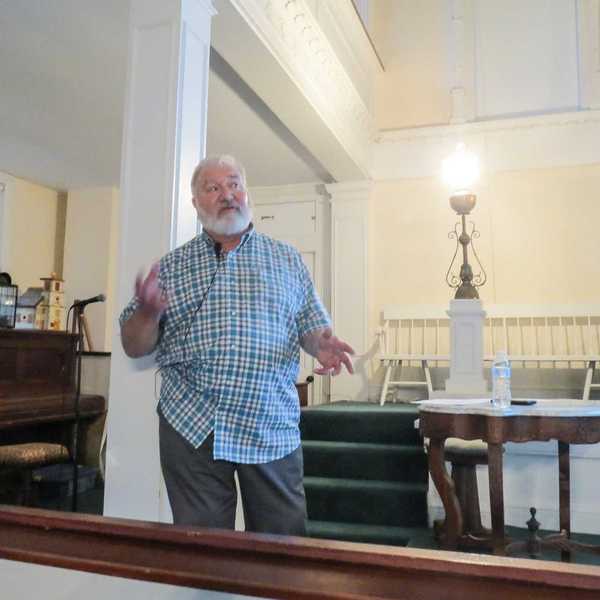
The flood of 1955 was more than a natural disaster for Winsted, Connecticut. It was a defining event that changed the town forever, according to historian Hamish Lutris, who discussed the flood and its aftermath during a presentation Aug. 7 at the American Mural Project.
“For Winsted, this is really the operative event in their post-World War II history,” Lutris said. “Winsted, for better or worse, has never really been the same since that flood. Half of Main Street got kind of wiped out.”
Lutris’ presentation, “Inundated: Connecticut’s Great Flood of 1955,” was part of the American Mural Project’s “History After Hours” series. The program included sections of the PBS documentary “The Flood of ’55,” narrated by Charlie Bagley, a PowerPoint presentation created by Lutris and photo displays of the flood in Winsted, Unionville, Barkhamsted, New Hartford, Torrington and Canton.
About 75 people attended the event. When people attend a presentation about the flood of 1955, you might expect some of them to talk about how they survived it. But even some people whose homes were not flooded had stories about how it affected their lives.
New Hartford resident Corinne Rebillard said she grew up atop Highland Avenue in Torrington. On Aug. 19, 1955, she and her family were high above the flood, while fellow townspeople in the Naugatuck River Valley below felt its full fury.
“We had no destruction whatsoever,” Rebillard said. “But we lost power, and we had to go to the spring over by Wright’s barn (on Route 4), because we had no running water. I took a bath in a big tub on the patio.”
Of the 200 businesses on Main Street, 170 were destroyed, Lutris said. Contemporary accounts estimated the damage totaled more than $27 million in 1955 dollars, not including public and private utilities. Of the 87 people who died in Connecticut, seven were from Winsted.
It was a one-two punch by hurricanes Connie and Diane, which produced a total of 35 inches of rain, he said. To add insult to injury, Hurricane Ione in October, though lacking the force of Connie or Diane, caused another $20 million in damage and took 17 more lives in the state, he said.
Connecticut’s river systems are beneficial to farming and industry, but they also make the state susceptible to flooding, Lutris said. “We’ve got a lot of water, right? This, of course, is also what created the industrial state of Connecticut, and that is water power, right? And so what happens is, in the 1800s, we’re going to start taking advantage of all of this flowing water that’s going from the north, basically to the south, and that’s where we’re going to start putting factories,” he said.
But the flip side is the risk of flooding. The rains of Connie and Diane brought floods that wiped out 17 major bridges in Connecticut and even caused Winsted’s Highland Lake to overflow, carrying new and used cars from a dealership to float down onto Main Street, he said.
Lutris lives in Winchester and has taught history in several community colleges in Connecticut. He said he lectures on a variety of historical topics at libraries and historical societies and tries to bring history to life for his listeners. Dates of wars and deaths of kings are only the skeleton of history, he said. “You know when the Civil War was, but if you really want to know what it was like, read letters from soldiers,” he said.
Attending the event was Edward Bachman, who said he did not live in the area in 1955 but in 1963 bought a house in Pleasant Valley that had been through the flood. “Water came to the first floor and filled the crawl space with silt,” he said, based on stories he’d heard.
Paul Hart, a member of the Barkhamsted Historical Society, said he learned of a family who became trapped overnight on a bridge in Pleasant Valley. “Trees were coming down and slamming into the bridge,” he said. “They tried to cross to get out of Pleasant Valley, and it was washed out on the east side, and they came back to the west side, and it just washed out, trapping them on the bridge.”
In the December 2024 issue of “Squire’s Tavern Quarterly,” the newsletter of the Barkhamsted Historical Society, Hart writes, “Standing on the bridge, the water was up to their shins. The family was terrified before being rescued by boat the next day.”
AMP’s special photo exhibit, “Inundated: Connecticut’s Great Flood of 1955,” will be available for viewing with regular AMP admission Fridays and Saturdays 10 a.m. to 5 p.m. and Sundays noon to 5 p.m. through Aug. 29. The next “History After Hours” event will be Sept. 11, a live performance of “The Guys,” a one-act play presented by Herstory Theater.
American Mural Project is at 90 Whiting St., Winsted. For more information, visit americanmuralproject.org or call 860-379-3006.




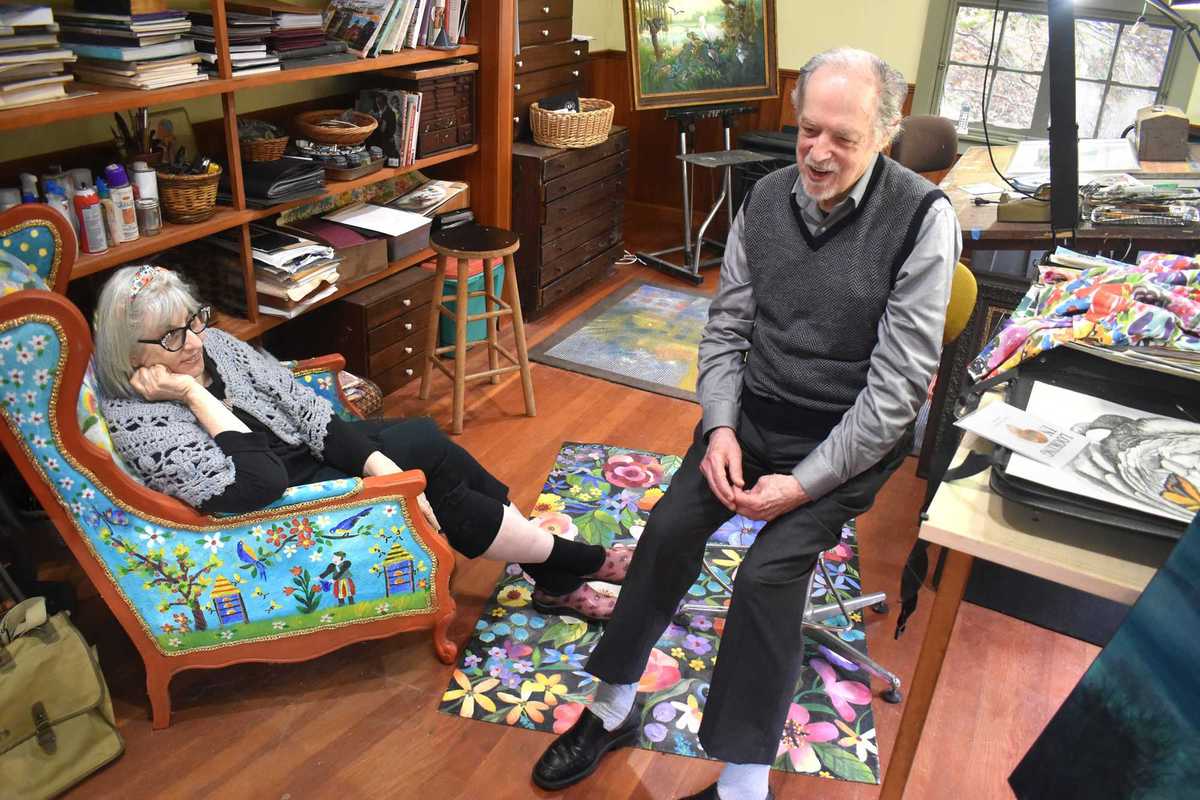
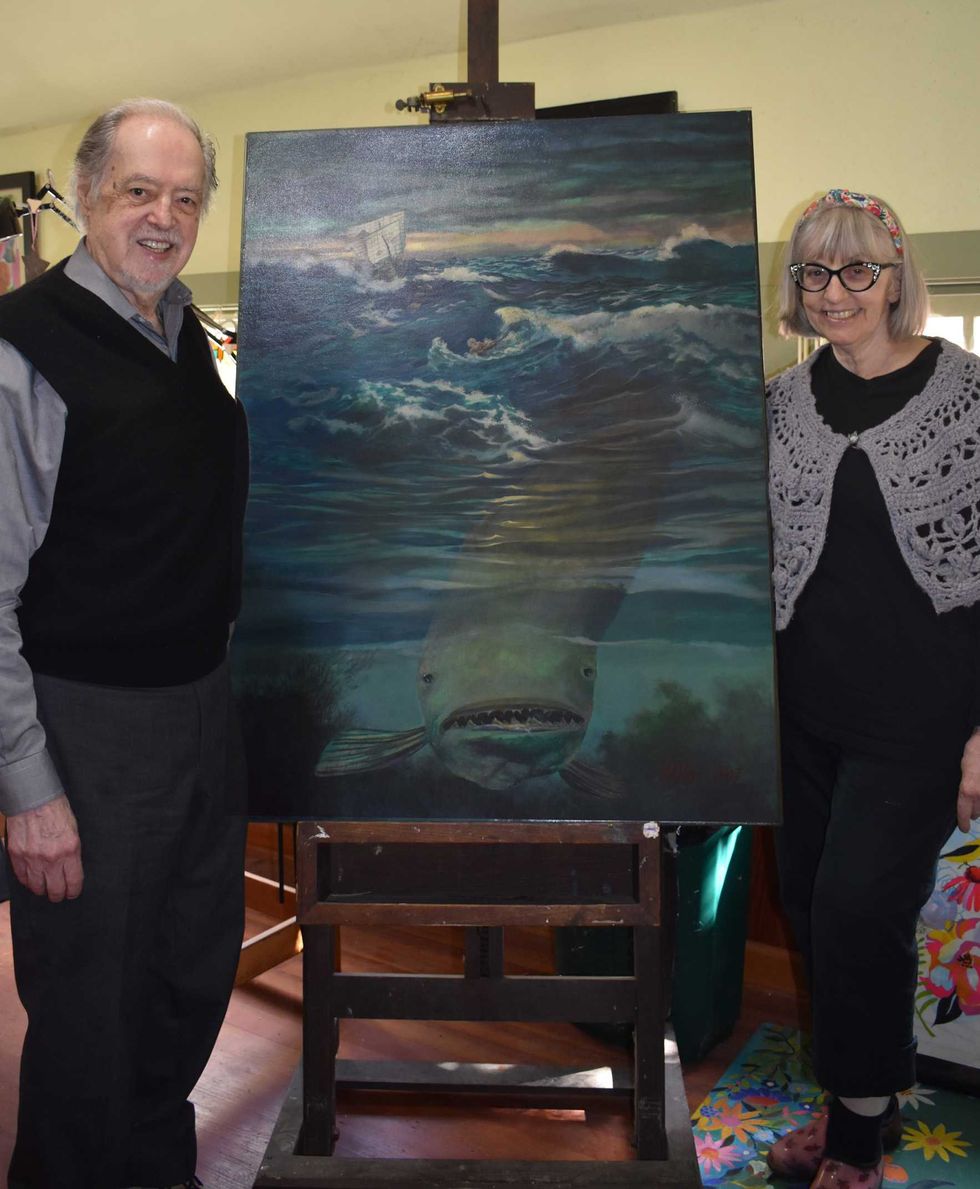 Justine and Victor Valla in their studio with a painting of Victor’s,”Jonah and the Whale.” Robin Roraback


 A ceramic vase by Kathleen Heidemann.Provided
 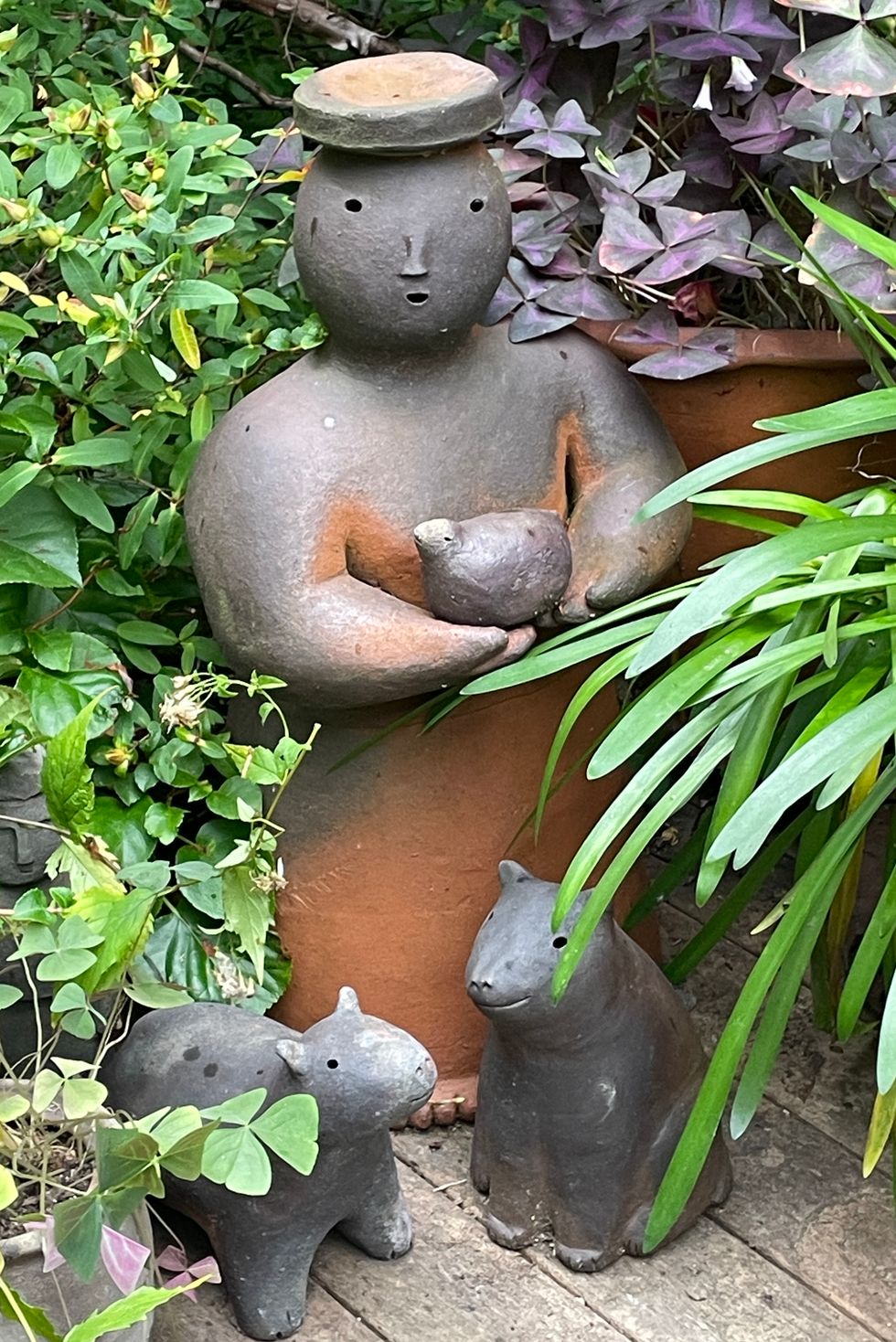 Joy Brown’s delightful ceramic sculptures.Provided