Thank you!
Your support is sustaining the future of local news in our communities.

What compassion really looks like

Try 20–plus years of dedication. Try compassion surpassing all norms of safety and possibility. Try helping 200,000 people including 144,000 refugees without a sou (a penny).

Evan Atar Adaha is a doctor surgeon. In a land caught between political strife and racial genocide, this man has been steadfastly treating all comers, regardless of color, creed, race, tribe, or religion. Evan is now in Maban County in South Sudan. Yes, South Sudan, the same country you hear about on the news where killings are commonplace in the five–year Civil War there and across the border in Sudan. South Sudan only gained independence in 2011.

In the tiny village of Bunj, thousands arrive carrying the wounded, the sick, and the needy. Most are fleeing from the Blue Nile State up north where genocide is a daily occurrence. Evan runs a hospital in Bunj... well, hospital may be a bit of an overstatement. 

Most of the hospital consists of tents, some patched, some perishing under the near-equatorial sun and monsoon rains.  He has two X-ray machines, powered by generators, but one is broken. The only light is in the surgical operating room, when the current can be kept running. There is a shortage of fuel and the old machines constantly break down. As for hospital wards… well, wards may be a misnomer as most of the beds are outside in the open air.

Dr. Evan Atar Adaha is the only, repeat only, doctor surgeon and his hospital is the only surgical clinic or hospital in the whole of the Upper Nile region. How big is that area? It’s 30,028 square miles, or larger than Massachusetts, New Hampshire, Connecticut and Rhode Island combined.

Evan is getting a top award from the UN this week. The award is called the Nansen Refugee Award. “Dr. Atar’s work through decades of civil war and conflict is a shining example of profound humanity and selflessness,” said Filippo Grandi, the UN High Commissioner for Refugees.  “Through his tireless efforts, thousands of lives have been saved, and countless men, women and children provided with a new chance to rebuild a future.”

In 2011, Evan packed up his hospital fleeing to South Sudan with his staff and as much equipment as he could transport. Most of it was on foot, hundreds of miles, pulling carts with equipment. That journey that took a month.  Arriving in Bunj, he set up his first surgical theatre in an abandoned local health center, stacking tables to create a raised operating table. 

Since that first day, Evan has worked tirelessly to find money, somewhere, yet always continued training young people to become nurses and midwives. “We treat everyone here regardless of who they are — refugee, internally displaced, host community,” says Evan. 

“The one rule we have is that no weapons are allowed in the hospital. If you bring a weapon, then we will not treat you. Sometimes it is difficult, but most people now agree ...  I am most happy when I realize that the work that I have done has saved somebody from suffering or has saved a life ... It’s only when you are face-to-face with people who have left everything and are sick with malaria, or are malnourished, or have a bullet wound that you realize how desperate the need for help is.”

The prize money he’s getting is already allocated for hospital equipment ... he asked the UN not to write a check but see if member states could donate what he needs. He gave a list that is reported to be 20 pages long. A South African rubber glove company is shipping supplies. A British company is sending IV bags and related supplies. A German pharma company is sending drugs and supplies.  So far, the United States has offered no comment, aid, or support.

Peter Riva, a former resident of Amenia Union, now lives in New Mexico.

Latest News

‘So Little to Do,’ so much to discover at James Barron Art

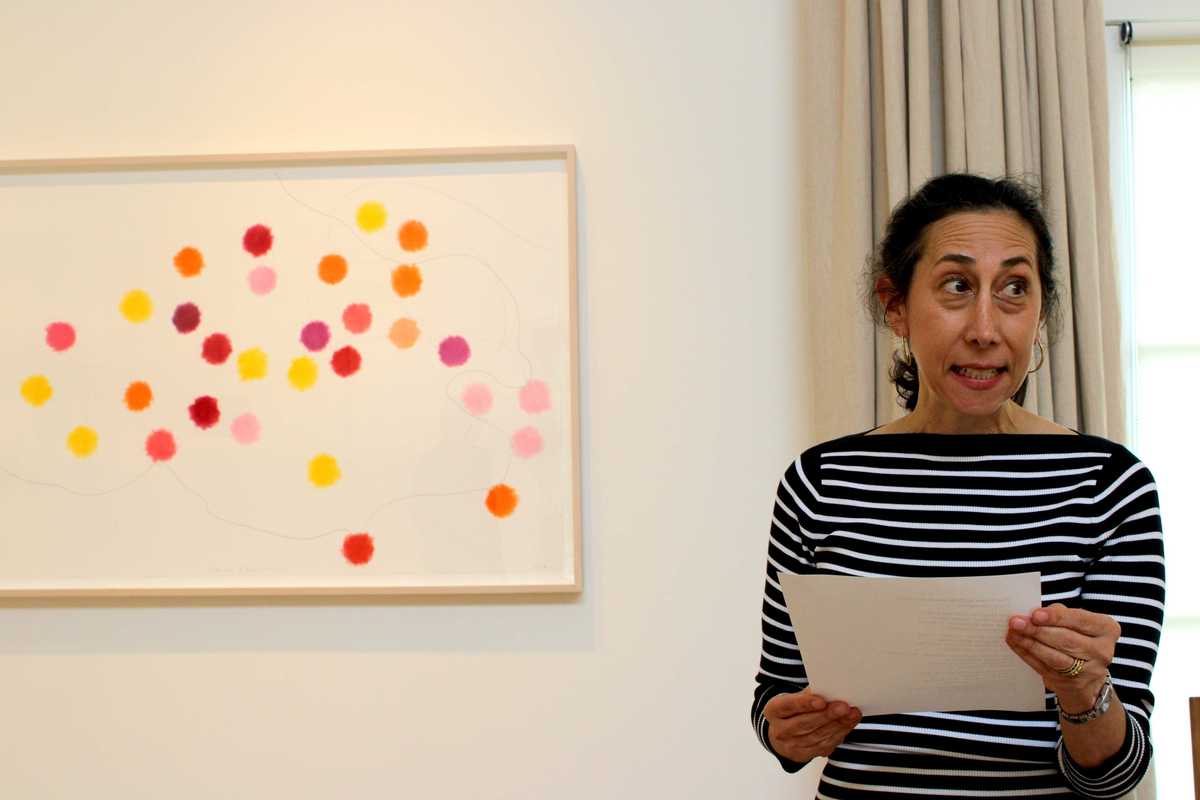
Curator Deborah Goodman Davis reads the Emily Dickinson poem “The Grass So Little Has to Do.” Spencer Finch’s “Following Three Bees (Zinnias)” buzzes in the background.

Photo by Natalia Zukerman

“The Grass Has So Little to Do,” on view at James Barron Art in Kent, takes its title from Emily Dickinson’s poem “The Grass So Little Has to Do,” written in 1862:

“The Grass so little has to do—
A Sphere of simple Green—
With only Butterflies to brood
And Bees to entertain—”

Keep ReadingShow less

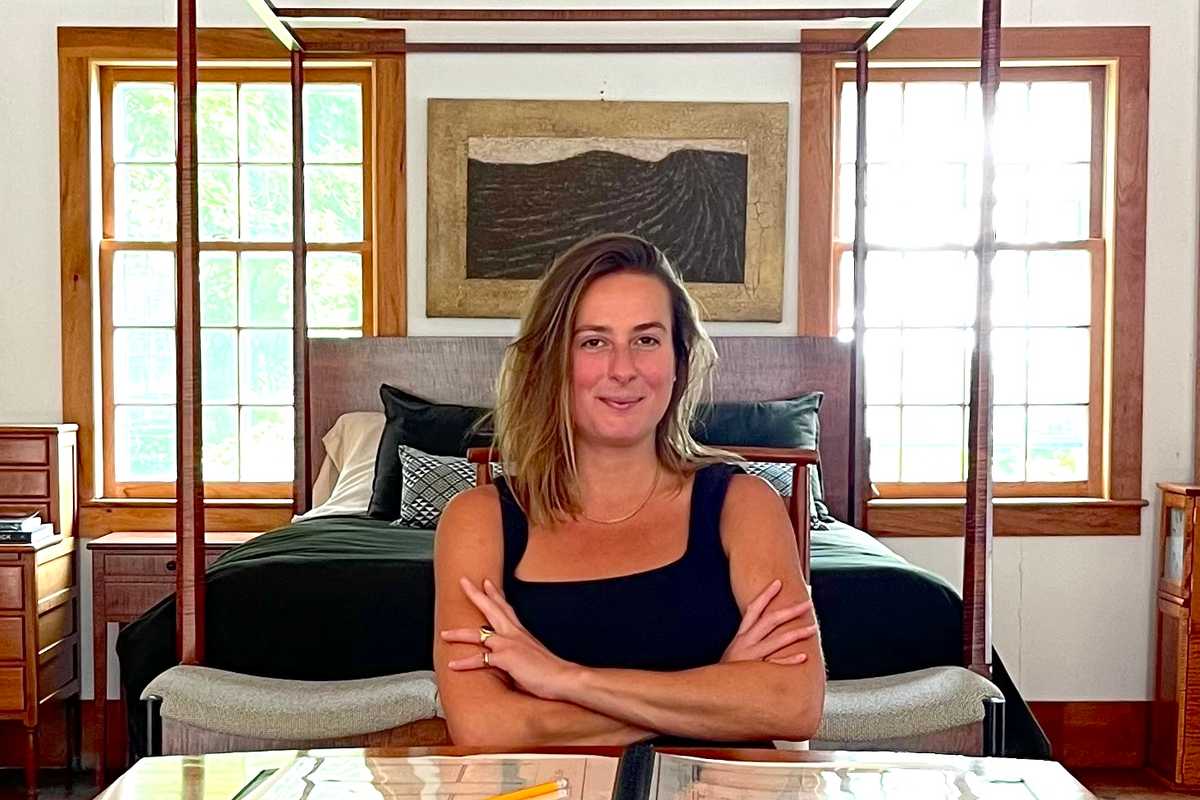
Marina Kotchoubey is not a woodworker

Marina Kotchoubey is not a woodworker

Marina Kotchoubey at the Ian Ingersoll Cabinetmakers showroom in West Cornwall.

Photo by D.H. Callahan

After 40-something years navigating the world of custom fine furniture, Ian Ingersoll was getting ready to retire. Starting off with a little dovetail stool that he sold at a shop in West Cornwall in the 1970s, he’d grown his skill and his business into something he — and the whole town — could be proud of. Shutting down that business was not an option.

Ingersoll built Ian Ingersoll Cabinetmakers, which produced mainly classical Shaker furniture, on passion: the passion he had to make a living through creative challenges and the passion of his employees, who all seem deeply in love with their craft.

Keep ReadingShow less
A legacy of giving at Norfolk Chamber Music Festival

One hundred and twenty years ago, Carl and Ellen Stoeckel commissioned New York architect E.K. Rossiter to design The Music Shed in Norfolk, Connecticut. After nearly a decade of entertaining their friends and neighbors with the finest music of the day, they built a permanent home for their beloved Litchfield County Choral Union.

The commission and full funding of the construction was not unheard of in an era when great fortunes led to public enrichment. Railroad tycoon John D. Rockefeller was instrumental in funding institutes of higher education. Steel baron Andrew Carnegie was building libraries all over the country, and famously said that a man who dies rich is a disgrace, challenging his peers to give their fortunes back to the people.

Keep ReadingShow less
google preferred source

Want more of our stories on Google? Click here to make us a Preferred Source.
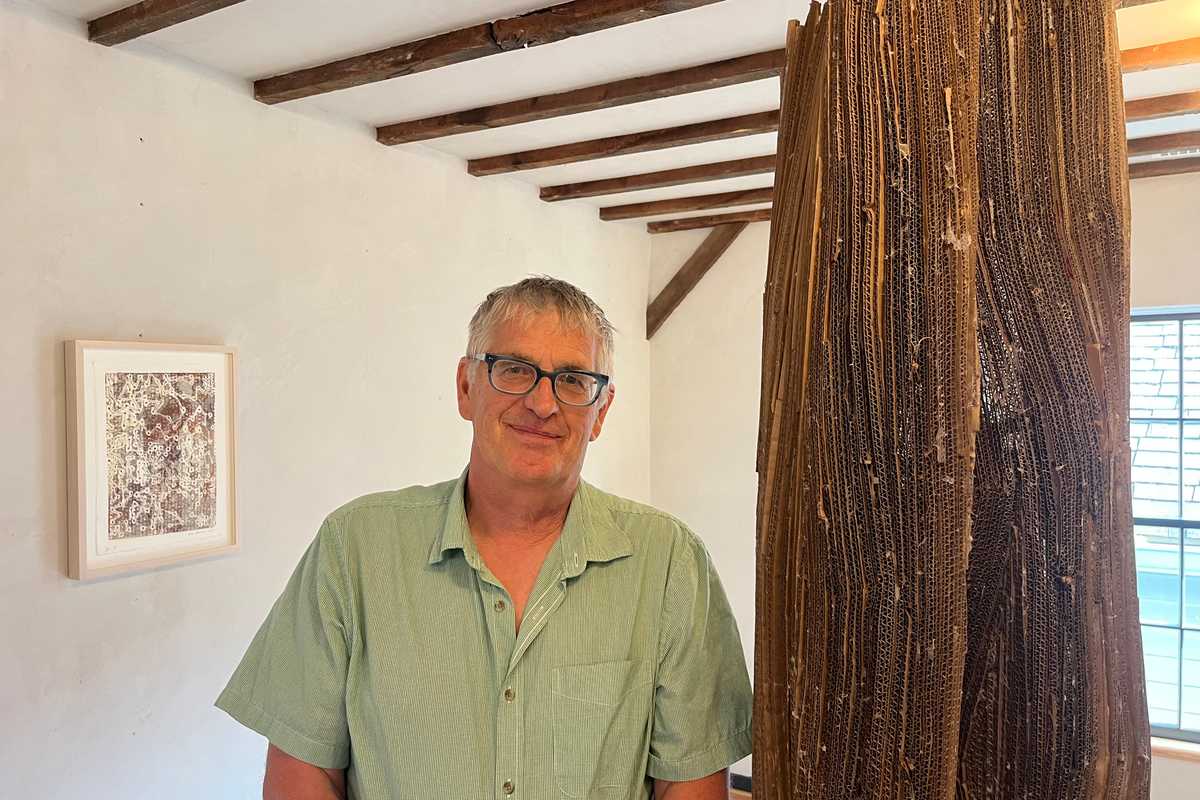
Two unique exhibitions at Geary Gallery

Henry Klimowicz with his sculpture, “Partial Pillar 1”

Photo by D.H. Callahan

On Saturday, Aug. 1, Geary Gallery opened its doors in Salisbury for two unique shows in its first- and second-floor gallery spaces. Art lovers flooded both floors over the course of the afternoon, giving the events a vibrant feeling that enhanced the importance of the art.

On the first floor is a show by Chicago-born, Colorado-based photographer Summers Moore, titled “Lobitos: Pueblo Fantasma,” or “Lobitos: Ghost Town.” The work centers around her daughter’s current hometown in Peru. Moore herself found a home away from home in Colorado in the mid-1980s and encouraged her children to seek out new places outside of their comfort zones.

Keep ReadingShow less

Writer’s retreat in the woods

Writer’s retreat in the woods

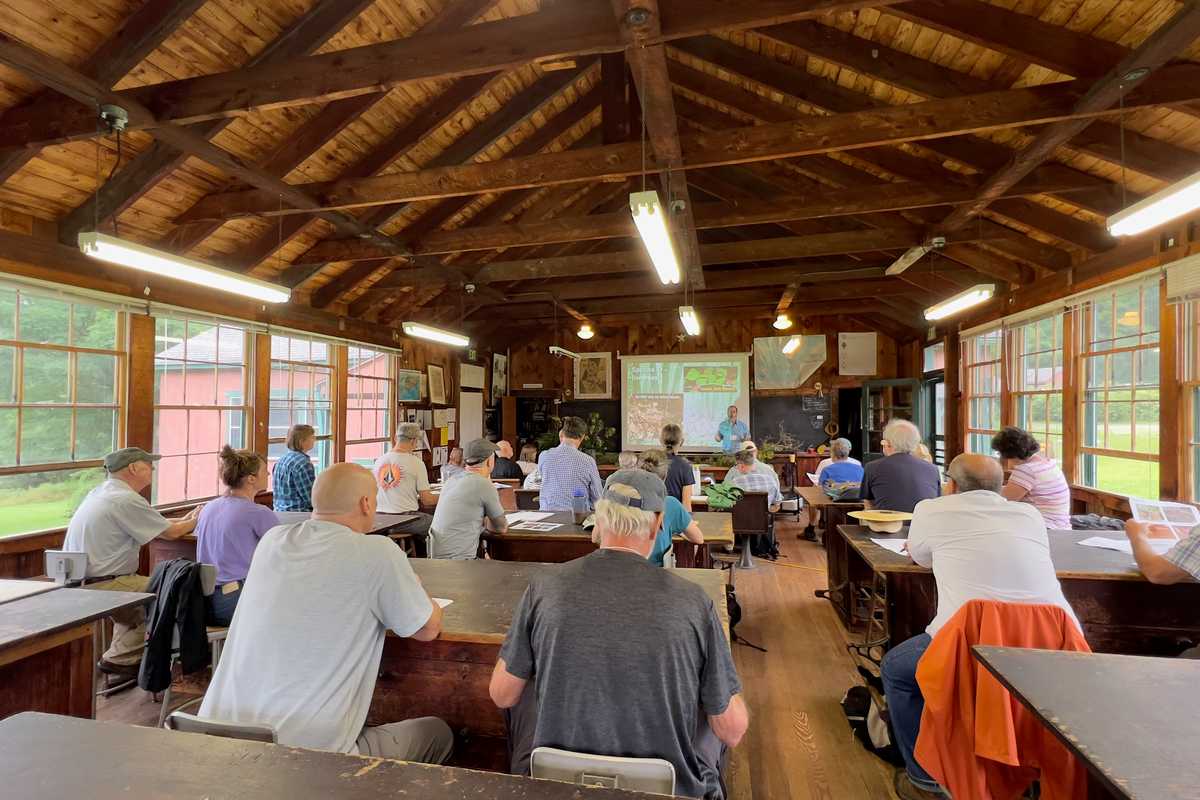
Participants in a 2024 Great Mountain Forest Woodland Academy workshop at Yale Camp.

Photo by Mike Zarfos

Great Mountain Forest (GMF) will host its first Nature Writing Retreat at the historic Yale Camp in Falls Village from Aug. 7-9, 2026. Writers of all levels are invited to draw inspiration from one of New England’s most notable forest landscapes. GMF envisions the retreat becoming an annual event celebrating writing, conservation and the relationship between people and forests.

This immersive three-day retreat reflects on the legacy of Hal Borland, the American writer and New York Times nature columnist whose work was deeply connected to this landscape. The retreat explores how wilderness shapes language, strengthens close observation and fosters environmental consciousness.

Keep ReadingShow less
From Cornwall to Rome, Adam Van Doren at Berkshire Botanical Garden

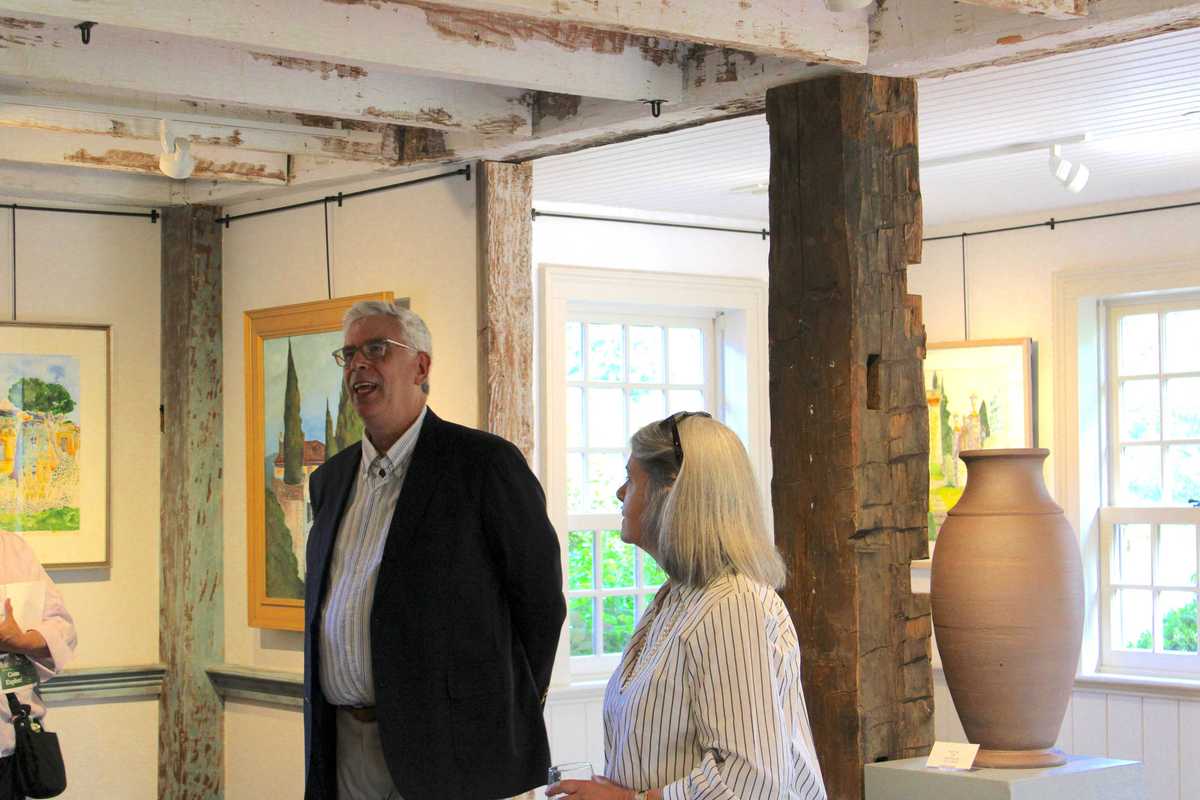
Artist Adam Van Doren and curator Donna Hassler talk to a group of visitors at the Berkshire Botanical Garden. A Stephen Proctor vessel sits to their left.

Photo by Natalia Zukerman

This summer, the Berkshire Botanical Garden in Stockbridge has hosted “Grounded in Nature: Paintings by Adam Van Doren,” an exhibition exploring the intimate relationship between architecture and the natural world.

On view for only a few more weeks in the Leonhardt Galleries, the exhibition features more than 35 watercolor and oil paintings by the New York-based artist, architect, author and Yale professor, curated by art historian Donna Hassler, director emerita of Chesterwood. The works span three distinct places that have shaped Van Doren’s artistic practice: New York City, Cornwall, Connecticut, and his travels throughout Europe.

Keep ReadingShow less
google preferred source

Want more of our stories on Google? Click here to make us a Preferred Source.
google preferred source

Want more of our stories on Google? Click here to make us a Preferred Source.